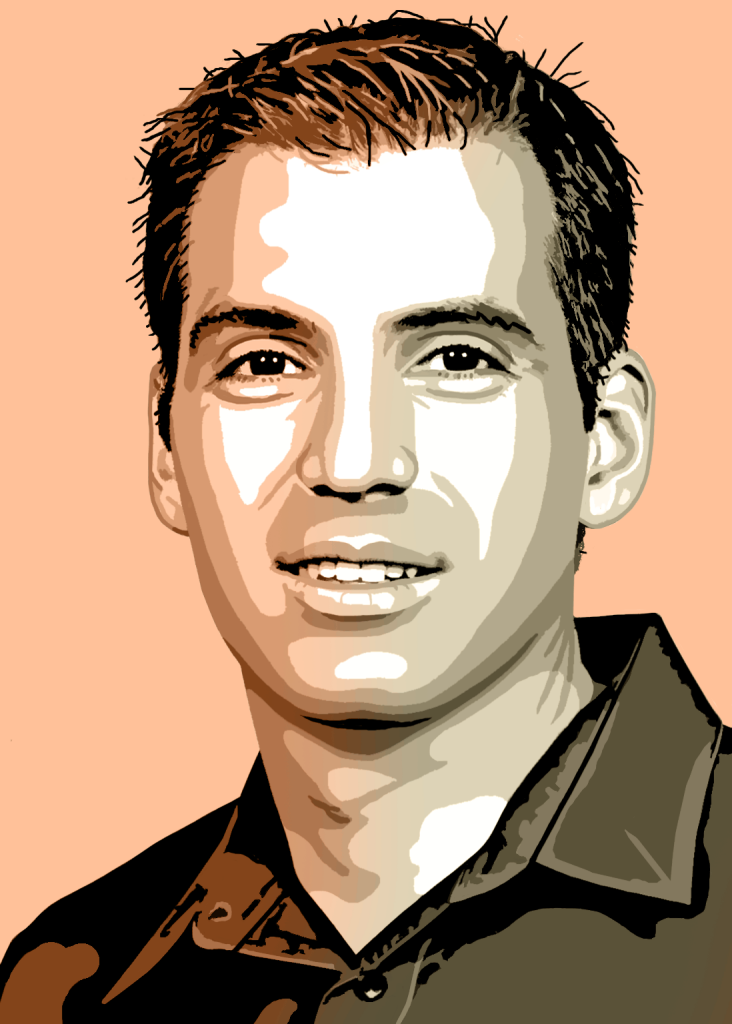
Sara Fridovich-Keil
Algorithms & Optimizations
Healthcare
Computational Imaging
Algorithms & Optimizations
Healthcare
Computational Imaging
The Ghosh group engages in cross-disciplinary collaborations and welcomes students from diverse academic backgrounds. Most projects focus on addressing challenges in fundamental physics and astrophysics using computational and AI/ML tools, making the group a natural fit for students with strong skills or interests in these areas. We develop methods to automate theoretical physics calculations using reinforcement learning and LLM agents, enabling rapid testing of new theories. We also work on simulation, experimental design and high-dimensional statistical inference techniques powered by AI to accelerate scientific discovery. Data analysis problems at the scale of the Large Hadron Collider or multi-messenger astronomy often demand rapid decision-making, and we design efficient AI algorithms that can be deployed on fast hardware to meet these challenges.
Dr. Dickson is the Vassar Woolley Professor of Chemistry & Biochemistry and has been at Georgia Tech since 1998. He was a Senior Editor of The Journal of Physical Chemistry from 2010-2021, and his research has been continuously funded (primarily from NIH) since 2000. Dr. Dickson has developed quantitative bio imaging and signal recovery/modulation schemes for improved imaging of biological processes and detection of medical pathologies. His work on fluorescent molecule development and photoswitching of green fluorescent proteins was recognized as a key paper for W.E. Moerner’s 2014 Nobel Prize in Chemistry. Recently, Dr. Dickson’s lab has developed rapid susceptibility testing of bacteria causing blood stream infections. Their rapid recovery methods, coupled with rigorous multidimensional statistics and machine learning have led to very simple, highly accurate and fast methods for determining the appropriate treatment within a few hours after positive blood cultures. These hold significant potential for drastically improving patient outcomes and reducing the proliferation of antimicrobial resistance.
Dr. Dickson's group is developing novel spectroscopic, statistical, and imaging technologies for the study of dynamics in biology and medicine.
Dr. Deo came to Georgia Tech in August 2007 as an Assistant Professor of Nuclear and Radiological Engineering. Prior, he was a postdoctoral research associate in the Materials Science and Technology Division of the Los Alamos National Laboratory. He studied radiation effects in structural materials (iron and ferritic steels) and nuclear fuels (uranium dioxide). He also obtained research experience at Princeton University (Mechanical Engineering), Lawrence Livermore National Laboratory, and Sandia National Laboratories.
Amirali Aghazadeh is an Assistant Professor in the School of Electrical and Computer Engineering and also program faculty of Machine Learning, Bioinformatics, and Bioengineering Ph.D. programs. He has affiliations with the Institute for Data Engineering and Science (IDEAS) and Institute for Bioengineering and Biosciences. Before joining Georgia Tech, Aghazaeh was a postdoc at Stanford and UC Berkeley and completed his Ph.D. at Rice University. His research focuses on developing machine learning and deep learning solutions for protein and small molecular design and engineering.
Jacob Abernethy is an Associate Professor in the College of Computing at Georgia Tech. He started his faculty career in the Department of Electrical Engineering and Computer Science at the University of Michigan. He completed his Ph.D. in Computer Science at the University of California at Berkeley, and then spent two years as a Simons postdoctoral fellow at the CIS department at UPenn. Abernethy's primary interest is in Machine Learning, with a particular focus in sequential decision making, online learning, online algorithms and adversarial learning models. He did his Master's degree at TTI-C, and his Bachelor's Degree at MIT.
Dr. Alexeev came to Georgia Tech at the beginning of 2008 as an assistant professor. His research background is in the area of fluid mechanics. He uses computer simulations to solve engineering problems in complex fluids, multiphase flows, fluid-structure interactions, and soft materials. As a part of his graduate research at Technion, he investigated resonance oscillations in gases and probed how periodic shock waves excited at resonance can enhance agglomeration of small airborne particles, a process which is important in air pollution control technology. He also investigated wave propagation in vibrated granular materials and its effect on fluidization of inelastic granules. During postdoctoral studies at TU Darmstadt, he examined how microstructures on heated walls can be harnessed to control thermocapillary flows in thin liquid films and to enhance heat transport in the fluid. That could be beneficial in many practical applications, especially in microgravity. At the University of Pittsburgh, he studied the motion of micrometer-sized, compliant particles on patterned substrates to develop efficient means of controlling movement of such particles in microfluidic devices. Such substrates are needed to facilitate various biological assays and tissue engineering studies dealing with individual cells.
Data Mining & Analytics; IT Economics; Internet Infrastructure & Operating Systems Network science is an emerging discipline focusing on the analysis and design of complex systems that can be modeled as networks. During the last decade or so network science has attracted physicists, mathematicians, biologists, neuroscientists, engineers, and of course computer scientists. I believe that this area has the potential to create major scientific breakthroughs, especially because it is highly interdisciplinary. We have applied network science methods to investigate the "hourglass effect" in developmental biology. The developmental hourglass' describes a pattern of increasing morphological divergence towards earlier and later embryonic development, separated by a period of significant conservation across distant species (the "phylotypic stage''). Recent studies have found evidence in support of the hourglass effect at the genomic level. For instance, the phylotypic stage expresses the oldest and most conserved transcriptomes. However, the regulatory mechanism that causes the hourglass pattern remains an open question. We have used an evolutionary model of regulatory gene interactions during development to identify the conditions under which the hourglass effect can emerge in a general setting. The model focuses on the hierarchical gene regulatory network that controls the developmental process, and on the evolution of a population under random perturbations in the structure of that network. The model predicts, under fairly general assumptions, the emergence of an hourglass pattern in the structure of a temporal representation of the underlying gene regulatory network. The evolutionary age of the corresponding genes also follows an hourglass pattern, with the oldest genes concentrated at the hourglass waist. The key behind the hourglass effect is that developmental regulators should have an increasingly specific function as development progresses. Analysis of developmental gene expression profiles from Drosophila melanogaster and Arabidopsis thaliana provide consistent results with our theoretical predictions. We are currently working on the inference and analysis of functional and brain networks. More information about this project will be posted soon.
My work is on excitable media, complex systems, and pattern formation, using a combined approach of theory, experiments, and computer simulations.
Interested in: Complex Systems, Experimental physiology, Biophysics, High performance computing and GPU.
Bioinformatics