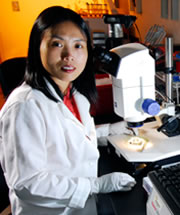
Yuhong Fan

Yuhong Fan's profile picture
yuhong.fan@biology.gatech.edu
Associate Professor
Georgia Research Alliance Distinguished Scholar
Phone
404-385-1312
Office
Petit Biotechnology Building, Office 2313
Additional Research
  • Bioinformatics
  • Chromatin
  • Epigenetics,  Epigenomics & Epidrugs
  • Gene Expression
  • Stem Cell Biology
  • Stem Cell Differentiation
Google Scholar
http://scholar.google.com/citations?hl=en&user=ESfeLxQAAAAJ&view_op=list_works&pagesize=100

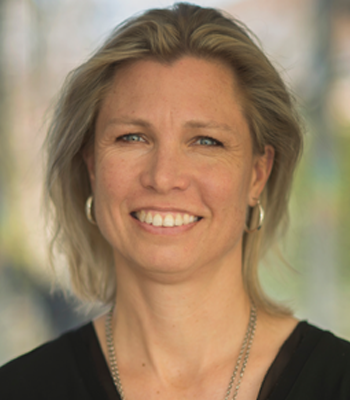
Julia Kubanek

Julia Kubanek's profile picture
julia.kubanek@biosci.gatech.edu

Julia Kubanek serves as Georgia Tech’s Vice President for Interdisciplinary Research and is a professor in the School of Biological Sciences and the School of Chemistry and Biochemistry. In this role, she oversees and supports interdisciplinary activities at Georgia Tech including the Interdisciplinary Research Institutes (IRIs); the Pediatric Technology Center (PTC), the Novelis Innovation Hub; the Center for Advanced Brain Imaging (CABI); and the Global Center for Medical Innovation (GCMI). She also partners across the institute on developing and advancing new research initiatives based on student and faculty interests, expertise, and societal need.

Kubanek has held several previous leadership roles at Georgia Tech, including Associate Dean for Research in the College of Sciences and Associate Chair in the School of Biological Sciences. She joined the faculty at Georgia Tech in 2001. Her areas of research interest include chemical signaling among organisms (especially in aquatic systems), natural products chemistry, metabolomics, chemical biology, and drug discovery. She has authored approximately 100 research articles on marine plankton and coral reef chemical ecology, and on the discovery, mechanism of action, and biosynthesis of marine natural products. She was awarded the NSF CAREER Award in 2002, the Presidential Early Career Award for Scientists and Engineers (PECASE) in 2004, and was elected Fellow of the American Association for the Advancement of Science (AAAS) in 2012. In 2016, she served as chair of the Gordon Research Conference in Marine Natural Products; since 2016, she has chaired the Scientific Advisory Board of the Max Planck Institute for Chemical Ecology. Kubanek received her B.Sc. in Chemistry from Queen’s University, Canada, in 1991 and her Ph.D. in at the University of British Columbia in 1998, and performed postdoctoral research at the University of California – San Diego and the University of North Carolina at Wilmington.

Professor
Vice President of Interdisciplinary Research
Phone
404-894-8424
Office
ES&T 2242
Additional Research

All organisms use chemicals to assess their environment and to communicate with others. Chemical cues for defense, mating, habitat selection, and food tracking are crucial, widespread, and structurally and functionally diverse. Yet our knowledge of chemical signaling is patchy, especially in marine environments. In our research we ask, "How do marine organisms use chemicals to solve critical problems of competition, disease, predation, and reproduction?" Our group uses an integrated approach to understand how chemical cues function in ecological interactions, working from molecular to community levels. We also use ecological insights to guide discovery of novel pharmaceuticals and molecular probes. In collaboration with other scientists, our most significant scientific achievements to date are: 1) characterizing the unusual molecular structures of antimicrobial defenses that protect algae from pathogens and which show promise to treat human disease; 2) understanding that competition among single-celled algae (phytoplankton) is mediated by a complex interplay of chemical cues that affect harmful algal bloom dynamics; 3) unraveling the molecular modes of action of antimalarial natural products towards developing new treatments for drug-resistant infectious disease; 4) discovering that progesterone signaling and quorum sensing are key pathways in the alternating sexual and asexual reproductive strategy of microscopic invertebrate rotifers - animals whose evolutionary history was previously thought to preclude either cooperative behavior (quorum sensing) typically associated with bacteria and hormonal regulation via progesterone typically seen in vertebrates; 5) identifying a novel aversivechemoreception pathway in predatory fish thatresults inrapid recognition and rejectionofchemically defended foods, thereby protecting these foods (prey) from predators. Ongoing projects include: 1) Waterborne chemical cues in the marine plankton: a systems biology approach (including metabolomics); 2) Exploration, conservation, and development of marine biodiversity in Fiji and the Solomon Islands (including drug discovery, mechanisms of action, and chemical ecology); 3) The role of sensory environment and predator chemical signal properties in determining non-consumptive effect strength in cascading interactions on oyster reefs; 4) Regulation of red tide toxicity by chemical cues from marine zooplankton; 5) Chemoreception of prey chemical defenses on tropical coral reefs.

Google Scholar
https://scholar.google.com/citations?user=AxeeT2wAAAAJ&hl=en&oi=ao

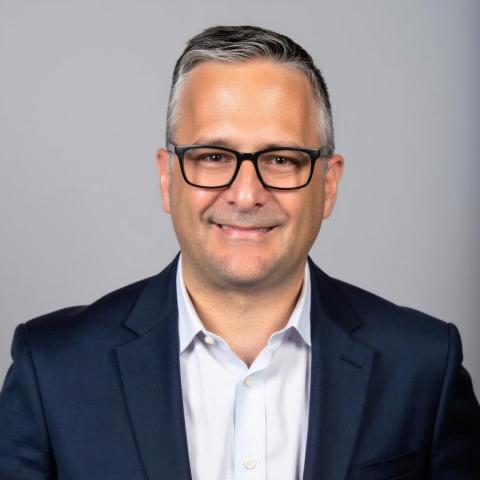
Facundo Fernandez

A man with gray hair and black glasses wearing a button-up shirt under a navy blazer
facundo.fernandez@chemistry.gatech.edu

Facundo was born in Buenos Aires, Argentina. He received his MSc in Chemistry from the College of Exact and Natural Sciences, Buenos Aires University in 1995 and his PhD in Analytical Chemistry from the same University, in 1999.  In August 2000, he joined the research group of Prof. Richard N. Zare in the Department of Chemistry at Stanford University.  His work focused on several aspects of Hadamard transform time-of-flight mass spectrometry with an emphasis on coupling this technique to capillary-format separation methods.  In 2002, he joined the group of Prof. Vicki Wysocki in the Department of Chemistry at the University of Arizona, to develop novel tandem mass spectrometers for gas-phase peptide ion studies. In 2004 he joined the School of Chemistry and Biochemistry at the Georgia Institute of Technology where he currently holds the position of Vasser-Woolley Endowed Professor in Bioanalytical Chemistry and Associate Chair for Research and Graduate Training. He is the author of over 185 peer-reviewed publications and numerous invited presentations at national and international conferences. He has received several awards, including the NSF CAREER award, the CETL/BP Teaching award, the Ron A. Hites best paper award from the American Society for Mass Spectrometry, and the Beynon award from Rapid Communications in Mass Spectrometry, among others. He serves on the editorial board of The Analyst and as an Associate editor for the Journal of the American Society for Mass Spectrometry. His current research interests include the field of metabolomics and the development of new ionization, imaging, machine learning and ion mobility spectrometry tools for probing composition and structure in complex molecular mixtures. In his (limited) free time, Facundo enjoys a number of activities that include camping with his family, rock climbing, paddling, archery, photography and ham radio. 

Vasser Woolley Foundation Chair in Bioanalytical Chemistry
Professor; School of Chemistry and Biochemistry
Phone
404.385.4432
Office
Environmental Science and Technology Building - L1244
Additional Research

Mass Spectrometry (MS) is one of the key analytical methods used to identify and characterize small quantities of biological molecules embedded in complex matrices. Although MS has found widespread use, improvements are still needed to extend its application to the grand challenges of this century. Since starting my position at Georgia Tech in 2004, my group members and I have used an integrated strategy with roots in bioanalytical chemistry, instrumentation development, bioinformatics, and theoretical modeling to focus on questions of great societal and scientific significance. To this purpose, we have integrated with cross-cutting teams devoted to problems that range from explaining the origins of life on Earth and diagnosing cancer at an early stage, to tracking the sources and prevalence of counterfeit pharmaceuticals worldwide. The common theme along these questions is the need for highly accurate tools for quantifying, identifying, and imaging trace chemicals in complex mixtures. Research in our lab uses state-of-the-art mass spectrometry, ion mobility gas-phase separations,ultrahigh performance liquid chromatography, and new soft ion generation techniques. We investigate the obtained data using machine learning and other powerful bioinformatic approaches. Our group is very dynamic, and each student pursues more than one project at a time, usually in collaboration with other group members or with other research groups at GT or elsewhere. Graduate and undergraduate students are trained in a variety of bioanalytical instrumentation/methodologies, with an emphasis on the fundamentals. We are analytical mass spectrometrists at heart, and strive to answer "big" scientific questions or questions with a large societal impact.

Google Scholar
https://scholar.google.com/citations?hl=en&tzom=240&user=7FB1qOYAAAAJ

James Gumbart

James Gumbart's profile picture
gumbart@physics.gatech.edu

My lab is focused on understanding how proteins and other biological systems function at a molecular level. To probe these systems, we carry out molecular dynamics simulations, modeling biological behavior one atom at a time. The simulations serve as a "computational microscope" that permits glimpses into a cell's inner workings through the application of advanced software and high-powered supercomputers. We are particularly interested in how bacteria utilize unique pathways to synthesize proteins and insert them into both the inner and outer membranes, how they import nutrients across two membranes, and how their cell walls provide shape and mechanical strength.

Associate Professor
Phone
404-385-0797
Office
Howey W202
Additional Research

Computational Chemistry

Research Focus Areas
University, College, and School/Department
Google Scholar
https://scholar.google.com/citations?user=DOMzcTgAAAAJ&hl=en

Melissa Kemp

Melissa Kemp's profile picture
melissa.kemp@bme.gatech.edu

Melissa Lambeth Kemp received her B.S. in Nuclear Engineering from MIT and her Ph.D. in Bioengineering from University of Washington. Dr. Kemp joined the faculty at Georgia Tech in 2006 after completing postdoctoral training at MIT. Her expertise is in computational modeling of metabolism and signal transduction, as well as developing statistical modeling tools to examine network relationships in high-dimension datasets. One major aspect of her research program linking ROS – the byproducts of aerobic metabolism – to the fundamental way that cells interpret instructions from their environment, their neighbors, and their own genetic blueprint. Specific applications of her diverse work include systems modeling of transient phosphatase oxidation of kinase cascades, patient-specific differences in cytotoxicity to redox-cycled chemotherapeutics and radiation, and the coordination of oxidative metabolism with epithelial-to-mesenchymal transition. Her research program also includes a component of developing high-throughput screening methods for assaying cue-signal-response relationships in cells and analytical tools for single cell gene expression. 

Dr. Kemp currently serves as the Research Director of the multi-site NSF Engineering Research Center “Cell Manufacturing Technologies”. In her former role as Associate Director of the NSF Science and Technology Center “Emergent Behavior of Integrated Cellular Systems”, she spearheaded the multi-site center’s computational activities by developing agent-based models of context-dependent cellular decisions to generate new hypotheses of intercellular communication in pluripotent stem cell differentiation and emergent patterning; this work continues currently in quantifying organizational principles and spatial relationships in iPSC-derived tissues from multi-omics data. Dr. Kemp’s career honors include a Whitaker Graduate Fellowship, Merck/CSBi postdoctoral fellowship, Georgia Cancer Coalition Distinguished Scholar, NIH New Innovator Award, and the CSB2 Prize for Innovative Measurement Methods from the Council for Systems Biology in Boston.

Professor
Georgia Cancer Coalition Distinguished Cancer Scholar
Phone
404-385-6341
Office
EBB 3019
Additional Research

Systems biology, computational modeling, redox metabolism and signal tranduction.The Kemp Lab is focused on understanding how metabolism influences the decisions that cells make. Aging, stem cell differentiation, cancer metastasis, and inflammation rely on progressive changes in metabolism resulting in increased levels of reactive oxygen species. Collectively, the accumulation of these molecules is known as cellular oxidation, and pathological levels are referred to as oxidative stress. Our lab develops systems biology tools for investigating how cellular oxidation influences cellular fate and interpretation of cues from the extracellular environment. We are interested in the collective behavior that arises during stem cell differentiation, immune cell responses, or drug treatments from metabolic diversity in individual cells. Because of the numerous biochemical reactions involved, we develop computational models and analytical approaches to understand how complex protein network properties are influenced by redox-sensitive proteins; these proteins typically have reactive thiol groups that are post-translationally regulated in the presence of reactive oxygen species to alter activity and/or function. Experimentally, we develop novel high-throughput single cell techniques for the detection and quantification of intracellular oxidation.

Google Scholar
https://scholar.google.com/citations?user=WUN5ok8AAAAJ&hl=en

Christine Heitsch

Christine Heitsch's profile picture
heitsch@math.gatech.edu

Christine Heitsch is Professor of Mathematics at Georgia Tech, with courtesy appointments in Biological Sciences and Computational Science & Engineering as well as an affiliation with the Petit Institute for Bioengineering & Bioscience.

She is also Director of the new Southeast Center for Mathematics and Biology (SCMB), an NSF-Simons MathBioSys Research Center, and finishing her tenure directing the GT Interdisciplinary Mathematics Preparation and Career Training (IMPACT) Postdoctoral Program.

Heitsch's research interests lie at the interface between discrete mathematics and molecular biology, specifically combinatorial problems "as motivated by" and "with applications to" fundamental biomedical questions like RNA folding.

Students interested in pursuing graduate studies in discrete mathematical biology can do so through a number of GT PhD programs including Bioinformatics or Quantitative Biosciences as well as Algorithms, Combinatorics, and Optimization (ACO), Computational Science & Engineering (CSE), and (of course) Mathematics.
 

Professor
Phone
404-894-4758
Office
Skiles 211B
Additional Research

Heitsch's research interests lie at the interface between discrete mathematics and molecular biology, specifically combinatorial problems "as motivated by" and "with applications to" fundamental biomedical questions like RNA folding.

Research Focus Areas
University, College, and School/Department

Christopher Rozell

Christopher Rozell's profile picture
crozell@gatech.edu
Professor; School of Electrical and Computer Engineering
Director; Sensory Information Processing Lab
Phone
404.385.7671
Office
Centergy One 5218
Additional Research

Biological and computational vision Theoretical and computational neuroscience High-dimensional data analysis Distributed computing in novel architectures Applications in imaging, remote sensing, and biotechnology Dr. Rozell's research interests focus on the intersection of computational neuroscience and signal processing. One branch of this work aims to understand how neural systems organize and process sensory information, drawing on modern engineering ideas to develop improved data analysis tools and theoretical models. The other branch of this work uses recent insight into neural information processing to develop new and efficient approaches to difficult data analysis tasks.

Google Scholar
http://scholar.google.com/citations?user=JHuo2D0AAAAJ&hl=en&oi=ao

Munmun De Choudhury

Munmun De Choudhury's profile picture
munmund@gatech.edu

Munmun De Choudhury is a Professor at the School of Interactive Computing in Georgia Institute of Technology. She is renowned for her groundbreaking contributions to the fields of computational social science, human-computer interaction, and digital mental health. Through fostering interdisciplinary collaborations across academia, industry, and public health sectors. De Choudhury and her collaborators have contributed significantly to advancing the development of computational techniques for early detection and intervention in mental health, as well as in unpacking how social media use benefits or harms mental well-being. De Choudhury's contributions have been recognized worldwide, with significant scholarly impact evidenced by numerous awards like induction into the SIGCHI Academy and the 2023 SIGCHI Societal Impact Award. Beyond her academic achievements, She is a proactive community leader, a persistent contributor to policy-framing and advocacy initiatives, and is frequently sought for expert advice to governments, and national and international media.


Professor in the School of Interactive Computing; Director of Social Dynamics and Well-Being Laboratory; Co-Lead of Children's Healthcare of Atlanta Pediatric Technology Center at Georgia Tech's Patient-Centered Care Delivery
Phone
4043858603
Additional Research
  • Social Media
  • Social Computing
  • Computational Social Science
  • Mental Health
  • Natural Language

Eva Dyer

Eva Dyer's profile picture
evadyer@gatech.edu

Dyer’s research interests lie at the intersection of machine learning, optimization, and neuroscience. Her lab develops computational methods for discovering principles that govern the organization and structure of the brain, as well as methods for integrating multi-modal datasets to reveal the link between neural structure and function.

Assistant Professor
Phone
404-894-4738
Office
UAW 3108
Additional Research

Eva Dyer’s research combines machine learning and neuroscience to understand the brain, its function, and how neural circuits are shaped by disease. Her lab, the Neural Data Science (NerDS) Lab, develops new tools and frameworks for interpreting complex neuroscience datasets and building machine intelligence architectures inspired by the brain. Through a synergistic combination of methods and insights from both fields, Dr. Dyer aims to advance the understanding of neural computation and develop new abstractions of biological organization and function that can be used to create more flexible AI systems.

Research Focus Areas
Google Scholar
https://scholar.google.com/citations?user=Sb_jcHcAAAAJ&hl=en

Josiah Hester

Josiah Hester's profile picture
josiah@gatech.edu

Josiah Hester works broadly in computer engineering, with a special focus on wearable devices, edge computing, and cyber-physical systems. His Ph.D. work focused on energy harvesting and battery-free devices that failed intermittentently. He now focuses on sustainable approaches to computing, via designing health wearables, interactive devices, and large-scale sensing for conservation. 
   
His work in health is focused on increasing accessibility and lowering the burden of getting preventive and acute healthcare. In both situations, he designs low-burden, high-fidelity wearable devices that monitor aspects of physiology and behavior, and use machine learning techniques to suggest or deliver adaptive and in-situ interventions ranging from pharmacological to behavioral. 
   
His work is supported by multiple grants from the NSF, NIH, and DARPA. He was named a Sloan Fellow in Computer Science and won his NSF CAREER in 2022. He was named one of Popular Science's Brilliant Ten, won the American Indian Science and Engineering Society Most Promising Scientist/Engineer Award, and the 3M Non-tenured Faculty Award in 2021. His work has been featured in the Wall Street Journal, Scientific American, BBC, Popular Science, Communications of the ACM, and the Guinness Book of World Records, among many others.

BBISS Faculty Director for Civic Innovation and AI
Catherine M. and James E. Allchin Early Career Professor
Professor
Director, Ka Moamoa – Ubiquitous and Mobile Computing Lab
Office
TSRB 246