Young-Hui Chang

Young-Hui Chang's profile picture
yh.chang@ap.gatech.edu

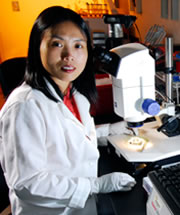
Young-Hui Chang is a professor in the School of Biological Sciences, Associate Dean of Faculty for College of Sciences, and director of research in the Georgia Tech Comparative Neuromechanics Lab where he studies the neuromechanics of movement in humans and other animals. Chang’s aim is to understand fundamental principles by which we control our movements as we move through our physical environment. This requires knowledge of the neural control of movement, the biomechanics of our musculoskeletal system, and the physics of our environmental interactions. The team also studies how our body adapts to acute and chronic changes. This involves processes of motor learning that are involved in everything from clinical rehabilitation to elite sports performance.

Professor
Phone
404-894-9993
Office
1309 B
Additional Research

Biomechanics

Neural signaling

Neuromechanics

Google Scholar
https://scholar.google.com/citations?user=97Xv4U4AAAAJ&hl=en&oi=ao

Greg Gibson

Greg Gibson's profile picture
greg.gibson@biology.gatech.edu

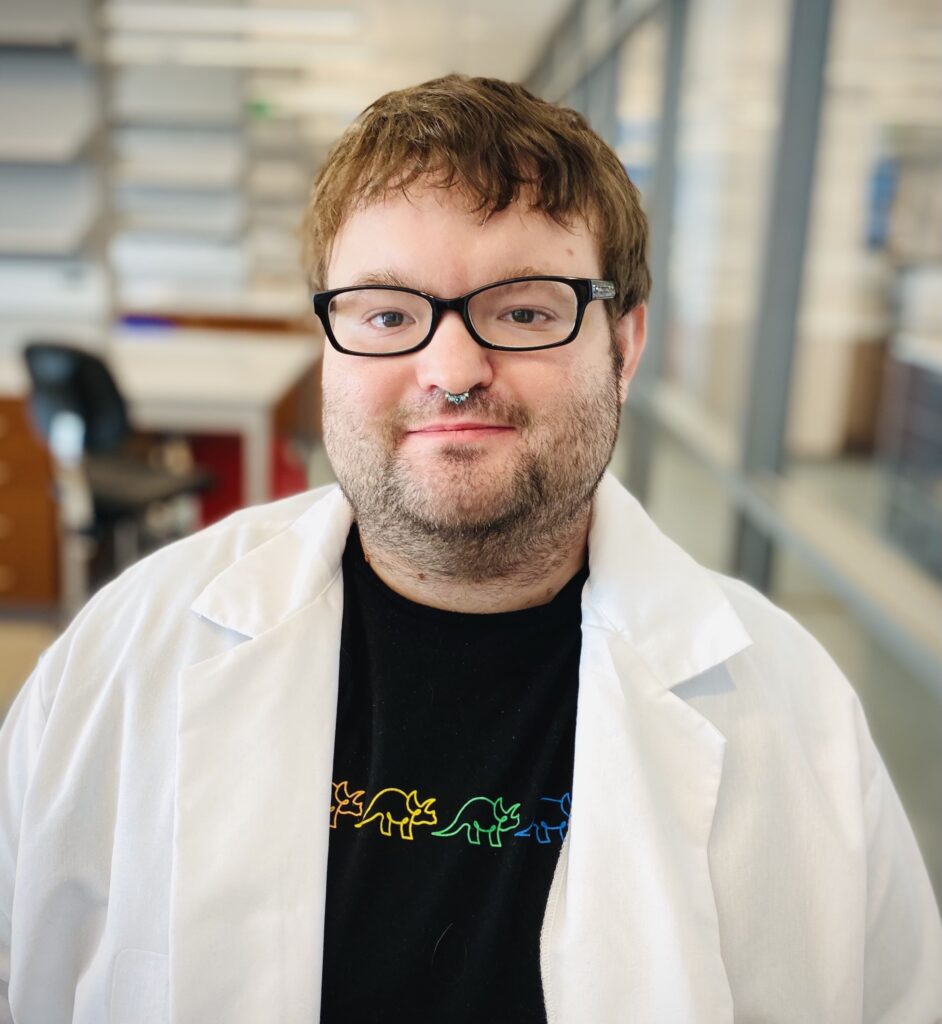
Greg Gibson is Professor of Biology and Director of the Center for Integrative Genomics at Georgia Tech. He received his BSc majoring in Genetics from the University of Sydney (Australia) and PhD in Developmental Genetics from the University of Basel. After transitioning to quantitative genetic research as a Helen Hay Whitney post-doctoral fellow at Stanford University, he initiated a program of genomic research as a David and Lucille Packard Foundation Fellow at the University of Michigan. He joined the faculty at Georgia Tech in Fall of 2009, after ten years at North Carolina State University where he developed tools for quantitative gene expression profiling and genetic dissection of development in the fruitfly Drosophila. He is now collaborating with the Center for Health Discovery and Well Being on integrative genomic analyses of the cohort. Dr Gibson is an elected Fellow of the American Association for the Advancement of Science, and serves as Section Editor for Natural Variation for PLoS Genetics. He has authored a prominent text-book, a "Primer of Genome Science" as well as a popular book about genetics and human health, "It Takes a Genome".

Professor
Director, Center for Integrative Genomics
Adjunct Professor, School of Medicine, Emory University
Phone
404-385-2343
Office
EBB 2115A
Additional Research
Quantitative Evolutionary Genetics. After 15 years working on genomic approaches to complex traits in Drosophila, my group has spent much of the past 10 years focusing on human quantitative genetics. We start with the conviction that genotype-by-environment and genotype-by-genotype interactions are important influences at the individual level (even though they are almost impossible to detect at the population level). We use a combination of simulation studies and integrative genomics approaches to study phenomena such as cryptic genetic variation (context-dependent genetic effects) and canalization (evolved robustness) with the main focus currently on disease susceptibility.​ Immuno-Transcriptomics.As one of the early developers of statistical approaches to analysis of gene expression data, we have a long-term interest in applications of transcriptomics in ecology, evolution, and lately disease progression. Since blood is the mostaccessible human tissue, we've examined how variation is distributed within and among populations, across inflammatory and auto-immune states, and asked how it relates to variation in immune cell types. Our axes-of-variation framework provides a new way of monitoring lymphocyte, neutrophil, monocyte and reticulocyte profiles from whole peripheral blood. Most recently we have also been collaborating on numerous studies of specific tissues or purified cell types in relation to such diseases as malaria, inflammatory bowel disease, juvenile arthritis, lupus, and coronary artery disease. Predictive Health Genomics. Personalized genomic medicine can be divided into two domains: precision medicine and predictive health. We have been particularly interested in the latter, asking how environmental exposures and gene expression, metabolomic and microbial metagenomics profiles can be integrated with genomesequencing or genotyping to generate health risk assessments. A future direction is incorporation of electronic health records into genomic analyses of predictive health. Right now it is easier to predict the weather ten years in advance than loss of well-being, but we presume that preventative medicine is a big part of the future of healthcare.​
Google Scholar
https://scholar.google.com/citations?user=e4_ZXcwAAAAJ&hl=en&oi=ao

Yuhong Fan

Yuhong Fan's profile picture
yuhong.fan@biology.gatech.edu
Associate Professor
Georgia Research Alliance Distinguished Scholar
Phone
404-385-1312
Office
Petit Biotechnology Building, Office 2313
Additional Research
  • Bioinformatics
  • Chromatin
  • Epigenetics,  Epigenomics & Epidrugs
  • Gene Expression
  • Stem Cell Biology
  • Stem Cell Differentiation
Google Scholar
http://scholar.google.com/citations?hl=en&user=ESfeLxQAAAAJ&view_op=list_works&pagesize=100

Andrew McShan

Andrew McShan, Ph.D.
andrew.mcshan@chemistry.gatech.edu

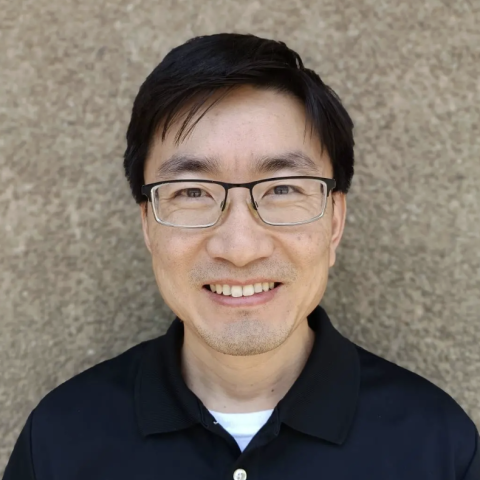
The questions that keep us up at night are: How does the immune system present and recognize antigens to combat disease? What are the molecular features involved in stimulating robust and specific immune responses? How can we exploit distinct features of immune recognition to develop new treatments for disease? Our research centers on answering these important questions. We focus on the CD1 family of major histocompatibility complex class I (MHC-I) related proteins, which present both self and foreign lipids to αβ, γδ, and natural killer T cells. Examples of CD1 complexes involved in the adaptive and innate immune response to human disease include those associated with lipids derived from cancerous cells (Leukemia, Carcinoma, Lymphoma, Melanoma), wasp/bee venom including yellowjackets of the genus Vespula who represent Georgia Tech's mascot Buzz (Hymenoptera venom allergy), bacterial pathogens (Mycobacterium tuberculosis - Tuberculosis, Borrelia burgdorferi - Lyme Disease, Pseudomonas aeruginosa - Pneumonia), viral pathogens (HSV-1 - Herpes, HBV - Hepatitis B), marine sponges, and self cells in autoimmune disease (Dermatitis, Psoriasis, Lysosomal Storage Disease). Recent studies have shown that CD1 can also associate with and present a much broader range of antigens, such as skin oils that lack a discernible hydrophilic head group, lipopeptides, and non-lipid small molecules. Unlike peptide antigen presentation by high polymorphic human MHC-I complexes for which therapeutics must be tailored to a patients genetic background, the non-polymorphic nature of CD1 means that lipid/CD1 molecules are attractive candidates for donor-unrestricted (i.e. universal and patient-haplotype independent) vaccines and immunotherapy treatments. Progress in the development of lipid/CD1 mediated therapies has been hindered by an incomplete understanding in several important features of the CD1 antigen processing and presentation pathway as well as a lack of structural information for clinically relevant lipid/CD1 complexes. We aim to address these knowledge gaps with our research.
 

Assistant Professor
Phone
404.385.6052
Office
MoSE G022
Research Focus Areas

Wei Sun

Wei Sun's profile picture
wei.sun@bme.gatech.edu
Adjunct Associate Professor
Chief Executive Officer, Sutra Medical Inc.
Phone
404-385-1245
Office
TEP 206
Additional Research
Heart Valve Biomechanics, Engineering Analysis, and Medical Device R&D 
Google Scholar
https://scholar.google.com/citations?user=C5skj5gAAAAJ&hl=en

C. Ross Ethier

C. Ross Ethier's profile picture
ross.ethier@bme.gatech.edu

Prof. Ethier was originally trained as a mechanical engineer, receiving his Ph.D. from MIT in 1986 working in the lab of Roger D. Kamm. He then joined the University of Toronto, where he was a Professor of Bioengineering, Mechanical Engineering and Ophthalmology, and latterly the Director of the Institute of Biomaterials and Biomedical Engineering. Prior to joining Georgia Tech/Emory, Professor Ethier was the Head of the Department of Bioengineering at Imperial College, London from 2007-12. 

His research is in the biomechanics of cells and whole organs. His specific research topics include glaucoma (biomechanics of aqueous humour drainage in the normal and glaucomatous eye, and the mechanical and cellular response of optic nerve tissues to intraocular pressure), study of hemodynamic basis of arterial disease.

Professor
Georgia Research Alliance Lawrence L. Gellerstedt, Jr. Eminent Scholar in Bioengineering
Phone
404-385-0100
Office
Petit Biotechnology Building, Office 2306
Additional Research
"Biomechanics and mechanobiology, glaucoma, osteoarthritis, regenerative medicine, intraocular pressure control, optic nerve head biomechanics. We work at the boundaries between mechanics, cell biology and physiology to better understand the role of mechanics in disease, to repair diseased tissues, and to prevent mechanically-triggered damage to tissues and organs. Glaucoma is the second most common cause of blindness. We carry out a range of studies to understand and treat this disease. For example, we are developing a new, mechanically-based, strategy to protect fragile neural cells that, if successful, will prevent blindness. We are developing protocols for stem-cell based control of intraocular pressure. We study the mechanobiology and biomechanics of neurons and glial cells in the optic nerve head. We also study VIIP, a major ocular health concern in astronauts. Osteoarthritis is the most common cause of joint pain. We are developing paradigms based on magneto-mechanical stimulation to promote the differentiation and (appropriate) proliferation of mesenchymal stem cells."
Google Scholar
http://scholar.google.com/citations?user=YdRM39wAAAAJ

Sheng Dai

Sheng Dai's profile picture
sheng.dai@ce.gatech.edu

Sheng Dai, Ph.D., P.E., earned his degrees from Tongji University and Georgia Tech. He worked as an ORISE postdoc at the National Energy Technology Laboratory of the U.S. Department of Energy, and returned to Georgia Tech as a faculty member in 2015. He is currently an associate professor in the School of Civil and Environmental Engineering, Ocean Science and Engineering. and holds a courtesy appointment at the School of Earth and Atmospheric Sciences at Georgia Tech.

Dr. Dai's group addresses emerging energy and environment challenges through studying subsurface geomechanics, geomaterials characterization, energy geotechnics, bio-inspired geotechnics, flow in porous media, and granular dynamics. His research has been funded by federal funding agencies (DOE, NSF, NASA, DOT), national labs (INL, NETL), and industry (AECOM, GTI, Leidos).  Dr. Dai has been recognized for his research and teaching, including being a recipient of the NSF CAREER award, the ORISE Fellowship, the Bill Schutz Junior Faculty Teaching Award, and the Class of 1969 Teaching Fellows at Georgia Tech.

He is an associated editor of the Journal of Geophysical Research: Solid Earth and Advances in Geo-Energy Research, an editorial advisor of Geomechanics for Energy and Environment, and serves on the Pressure Core Advisory Board for U.S. Geological Survey, the GOM2 Marine Test Technical Advisory Committee for UT/DOE, the National Gas Hydrate Program for NETL, and the Task Force Leader of TC308 Energy Geotechnics of ISSMGE. 

Assistant Professor, School of Civil and Environmental Engineering
Phone
(404)385-4757
Additional Research

Oil/Gas; Combustion; Electronics; Energy Harvesting; Energy Storage; Thermal Systems

University, College, and School/Department

Alexandra Peister

Alexandra Peister's profile picture
alexandra.peister@morehouse.edu

Dr. Alexandra Peister is an associate professor in the Biology Department at Morehouse College.

Associate Professor
Phone
404-653-7879
Office
Hope Hall 315
Additional Research
Evaluation of stem cell sources for engineering 3D bone, fat, cartilage and muscle.
Research Focus Areas
University, College, and School/Department
Google Scholar
http://scholar.google.com/scholar?hl=en&q=alexandra+peister&btnG=Search&as_sdt=80001&as_ylo=&as_vis=0

Susan Margulies

Susan Margulies's profile picture
susan.margulies@gatech.edu

Dr. Susan S. Margulies leads the U.S. National Science Foundation’s Directorate for Engineering in its mission to transform our world for a better tomorrow by driving discovery, inspiring innovation, enriching education, and accelerating access. With an annual budget of nearly $800 million, the NSF’s Engineering Directorate provides over 40 percent of federal funding for fundamental research in engineering at academic institutions, and it distributes more than 1500 awards supporting research and education each year. Projects funded by the Engineering Directorate span frontier research to generate new knowledge, problem-driven research to identify new solutions to societal challenges, and application-driven research to translate discoveries to uses that benefit society.

In partnership with industry and communities across the nation, the NSF’s investments in engineering research and education lead to innovative technologies and sustainable impacts in health, agriculture, clean energy and water, resilient infrastructure, advanced manufacturing and communication systems, and many other areas. NSF support also builds the Nation’s workforce capacity in engineering and supports the diversity and inclusion of engineers at all career stages. Together, the NSF’s investments in engineering research and education enhance prosperity, equity and quality of life for all Americans.

Margulies joined the NSF as the assistant director for the Directorate for Engineering in August 2021 after leading the Wallace H. Coulter Department of Biomedical Engineering at the Georgia Institute of Technology and Emory University. While on detail at the NSF, she is a professor and Georgia Research Alliance Eminent Scholar at Georgia Tech and Emory. She received her B.S.E. in mechanical and aerospace engineering at Princeton University, her Ph.D. in bioengineering from the University of Pennsylvania, and post-doctoral training at the Mayo Clinic. She joined the faculty at the University of Pennsylvania in 1993 as an assistant professor, rising through the ranks to professor. In 2017 she became the first faculty member tenured in both the Georgia Institute of Technology and Emory University, and she was a department chair in both the college of engineering at Georgia Tech and Emory’s school of medicine. 

Margulies is internationally recognized for pioneering studies spanning the micro-to-macro scales and across species to identify mechanisms underlying brain injuries in children and adolescents and lung injuries associated with mechanical ventilation, leading to improved injury prevention, diagnosis and treatments. She has launched numerous training and mentorship programs for students and faculty, created institute-wide initiatives to enhance diversity and inclusion, and led innovative projects in engineering education. 

Margulies’ transdisciplinary scholarly impact has been recognized by her election as fellow of the American Society of Mechanical Engineers, the Biomedical Engineering Society, and the American Institute for Medical and Biological Engineering, and as a member of the National Academy of Engineering and the National Academy of Medicine.  

Professor
National Science Foundation Engineering Directorate
Phone
404-385-5038
Office
UAW 2116
Additional Research
Biomechanics of brain injury, pediatric head injury, soft tissue mechanics, ventilator-induced lung injury, lung mechanics, pathways of cellular mechanotransduction, and tissue injury thresholds.My research in head injury will continue to focus on how and why head injuries occur in adults and children and to improve detection and treatment strategies. At Georgia Tech, I will be continuing that research, looking at innovative biomarkers and new devices to detect mild traumatic brain injuries. At Emory, my research will be focused on animal models for diffuse as well as focal brain injuries—incorporating developments at Georgia Tech into our preclinical model. I also look forward to close collaborations with Children's Healthcare of Atlanta and Emory University faculty to improve the outcomes after traumatic brain injuries.
Google Scholar
https://scholar.google.com/citations?user=tLrQhzIAAAAJ&hl=en

Hanjoong Jo

Hanjoong Jo's profile picture
hjo@bme.gatech.edu

Dr. Hanjoong Jo is John and Jan Portman Professor in the Coulter Department of Biomedical Engineering (BME) at Georgia Tech and Emory University, and Professor of Medicine at Emory University. He is also the Associate Chair of Emory in BME Department. Upon graduation from Korea University, Dr. Jo received PhD under the co-mentorship of Professors John Tarbell (Chemical Engineering) and Ted Hollis (Physiology) at Pennsylvania State University in 1989. Following postdoctoral training in Jay McDonald Lab at Washington University in St. Louis and University of Alabama at Birmingham, he became Assistant Professor in Pathology and BME. Dr. Jo joined the BME Department at Georgia Tech and Emory University in 2000. He directs the Cardiovascular Mechanobiology and Nanomedicine lab. His lab studies how mechanical force associated with blood flow regulates vascular biology and cardiovascular disease, especially atherosclerosis, aortic valve (AV) calcification, and abdominal aortic aneurysms. He has published more than 150 peer-reviewed papers and edited two books. He developed the mouse model of atherosclerosis, known as partial carotid ligation model, induced by disturbed flow. His work led to the discovery of several genes (mechanosensitive genes and microRNAs) and epigenetic controlling mechanisms that are regulated by bad blood flow and play key roles in atherosclerosis and AAA. By targeting some of these mechanosensitive genes, his lab has been able to treat atherosclerosis and AAA in mice. His lab is now working on nanotechnologies to developing targeted gene and drug therapies in an effort to translate mouse studies toward clinical application. He is an elected fellow of American Institute of Medical and Biological Engineering, Biomedical Engineering Society, American Heart Association and American Physiological Society. He serves as associate editors and editorial board members of several cardiovascular and biomedical engineering journals including Scientific Reports, Circulation Research, Atherosclerosis Thrombosis Vascular Biology, Am J Physiology, Cell Molecular Bioengineering and Cardiovascular Engineering and Technology. He also has been serving as reviewers and chairs of study sections of the NIH, NSF, Veterans Administration and Am Heart Association. He also organized several international meetings, and in 2012, he served as the Chair of the Annual BME Society Meeting. He is also the founding President of Korean-American BME Society and Chairs of US-Korea Annual BMES Workshops since 2013. He has been a Distinguished Visiting Professor at Ewha Womans University and Chonbuk National University.

John and Jan Portman Professor
Associate Chair for Emory BME
Coulter Department of Biomedical Engineering
Phone
404-712-9654
Office
Emory HSRB E170
Additional Research
Cardiovascular Mechanobiology and Nanomedicine LabRole of blood flow in Atherosclerosis, and Aortic valve diseaseMechanosensitive genes, MicroRNAs, and Epigenomic Regulation in Atherosclerosis and Aortic valve diseaseTherapeutics development for atherosclerosis and Aortic valve diseaseNanomedicine - In vivo RNA and drug delivery
Google Scholar
https://scholar.google.com/citations?user=gkRJZzQAAAAJ&hl=en