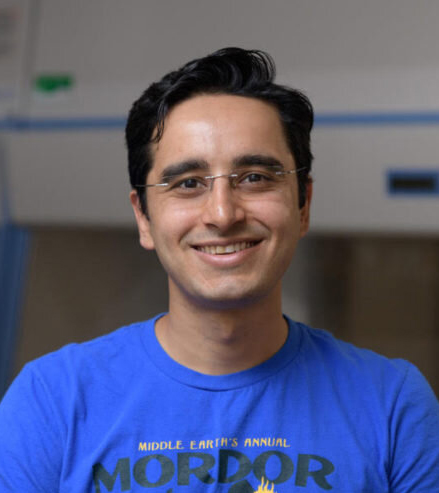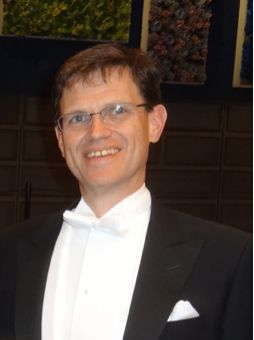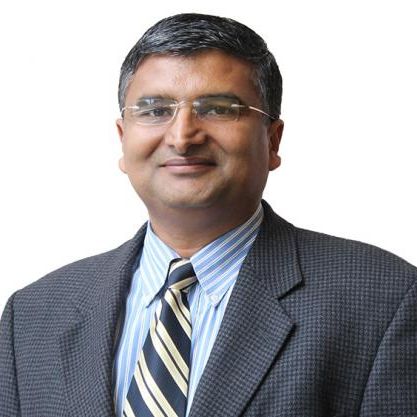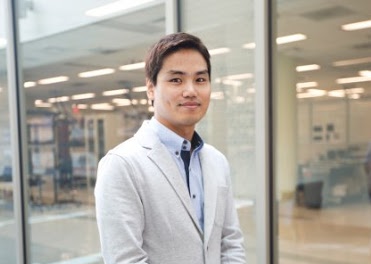
Edward Botchwey

Edward Botchwey's profile picture
edward.botchwey@bme.gatech.edu

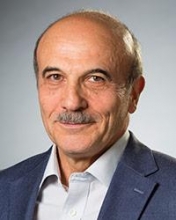
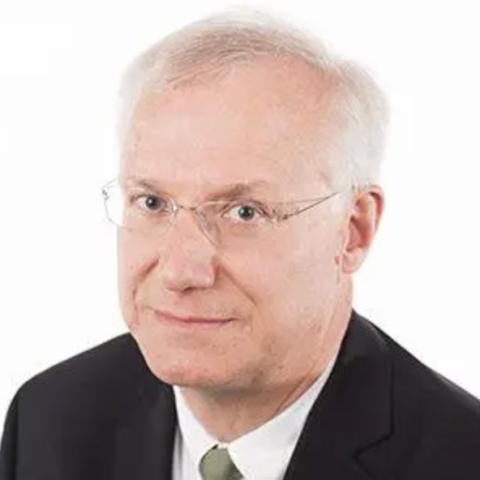
Edward Botchwey received a B.S. in mathematics from the University of Maryland at College Park in 1993 and both M.E. and Ph.D. degrees in materials science engineering and bioengineering from the University of Pennsylvania in 1998 and 2002 respectively. He was recruited to the faculty at Georgia Tech in 2012 from his previous position at the University of Virginia. His current position is associate professor in the Wallace H. Coulter Department of Biomedical Engineering at Georgia Tech and Emory University. Botchwey is former Ph.D. fellow of the National GEM Consortium, a former postdoctoral fellow of the UNCF-Merk Science Initiative, and a recipient of the Presidential Early Career Awards for Scientists and Engineers from the National Institutes of Health. 

Botchwey’s research focuses on the delivery of naturally occurring small molecules and synthetic derivatives for applications in tissue engineering and regenerative medicine. He is particularly interested in how transient control of immune response using bioactive lipids can be exploited to control trafficking of stem cells, enhance tissue vascularization, and resolve inflammation. Botchwey serves on the Board of Directors of the Biomedical Engineering Society (BMES) and serves as the secretary to the Biomedical Engineering Decade committee.

Botchwey, his wife Nisha Botchwey (also a GT faculty member) and three children reside in east Atlanta in the Lake Claire neighborhood. Botchwey is also an avid cyclist and enjoys reading YA fantasy, behavioral neuroscience and Christian theology books in his personal time.

Professor, Wallace H. Coulter Department of Biomedical Engineering
Phone
404.385.5058
Additional Research

Biomaterials, cellular materials, in situ characterization, tissue engineering, tissue engineering and biomaterials, microvascular growth and remodeling, stem cell engineering.
Google Scholar
https://scholar.google.com/citations?hl=en&user=eyPY0LsAAAAJ&view_op=list_works&sortby=pubdate

Mark Borodovsky

Mark Borodovsky's profile picture
borodovsky@gatech.edu

Dr. Borodovsky and his group develop machine learning algorithms for computational analysis of biological sequences: DNA, RNA and proteins. Our primary focus is on prediction of protein-coding genes and regulatory sites in genomic DNA. Probabilistic models play an important role in the algorithm framework, given the probabilistic nature of biological sequence evolution.

Regents' Professor
Director, Center for Bioinformatics and Computational Genomics
Senior Advisor in Bioinformatics, Division of High Consequence Pathogens and Pathology, Centers for Disease Control and Prevention in Atlanta
Phone
404-894-8432
Office
EBB 2105
Additional Research
  • ML and pattern recognition methods in bioinformatics and biological systems
  • Chromatin
  • Epigenetics
  • Bioinformatics
Google Scholar
https://scholar.google.com/citations?user=ciQ3dn0AAAAJ&hl=en&oi=ao

Andreas Bommarius

Andreas Bommarius's profile picture
andreas.bommarius@chbe.gatech.edu

Andreas (Andy) S. Bommarius is a professor of Chemical and Biomolecular Engineering as well of Chemistry and Biochemistry at the Georgia Institute of Technology in Atlanta, GA.  He received his diploma in Chemistry in 1984 at the Technical University of Munich, Germany and his Chemical Engineering B.S. and Ph.D. degrees in 1982 and 1989 at MIT, Cambridge, MA.

From 1990-2000, he led the Laboratory of Enzyme Catalysis at Degussa (now Evonik) in Wolfgang, Germany, where his work ranged from immobilizing homogenous catalysts in membrane reactors to large-scale cofactor-regenerated redox reactions to pharma intermediates.

At Georgia Tech since 2000, his research interests cover green chemistry and biomolecular engineering, specifically biocatalyst development and protein stability studies.  His lab applies data-driven protein engineering to improve protein properties on catalysts ranging from ene and nitro reductases to cellobiohydrolases.  Bommarius has guided the repositioning of the curriculum towards Chemical and Biomolecular Engineering by developing new courses in Process Design, Biocatalysis and Metabolic Engineering, as well as Drug Design, Development, and Delivery (D4), an interdisciplinary course with Mark Prausnitz.

Andy Bommarius in 2008 became a Fellow of the American Institute of Medical and Biological Engineering.  Since 2010, he is Director of the NSF-I/UCR Center for Pharmaceutical Development (CPD), a Center focusing on process development, drug substance and product stability, and novel analytical methods for the characterization of drug substances and excipients.

Professor, School of Chemical and Biomolecular Engineering, School of Chemistry and Biochemistry
RBI Initiative Lead: A Renewables-based Economy from WOOD (ReWOOD)
Phone
404-385-1334
Office
EBB 5018
Additional Research

Biomolecular engineering, especially biocatalysis, biotransformations, and biocatalyst stability. Biofuels. Enzymatic Processing; Biochemicals; Chip Activation.

Google Scholar
https://scholar.google.com/citations?user=rH4O5RQAAAAJ&hl=en&oi=ao

Saad Bhamla

Saad Bhamla's profile picture
saadb@chbe.gatech.edu

Saad Bhamla studies biomechanics across species to engineer knowledge and tools that inspire curiosity.

Saad Bhamla is an assistant professor of biomolecular engineering at Georgia Tech. A self-proclaimed "tinkerer," his lab is a trove of discoveries and inventions that span biology, physics and engineering. His current projects include studying the hydrodynamics of insect urine, worm blob locomotion and ultra-low-cost devices for global health. His work has appeared in the New York Times, the Economist, CNN, Wired, NPR, the Wall Street Journal and more.

Saad is a prolific inventor and his most notable inventions includes a 20-cent paper centrifuge, a 23-cent electroporator, and the 96-cent hearing aid. Saad's work is recognised by numerous awards including a NIH R35 Outstanding Investigator Award, NSF CAREER Award, CTL/BP Junior Faculty Teaching Excellence Award, and INDEX: Design to Improve Life Award. Saad is also a National Geographic Explorer and a TED speaker. Newsweek recognized Saad as 1 of 10 Innovators disrupting healthcare.

Saad is a co-founder of Piezo Therapeutics.

Outside of the lab, Saad loves to go hiking with his partner and two dogs (Ollie and Bella).

Assistant Professor
Phone
404-894-2856
Office
ES&T L1224
Additional Research
  • Biotechnology
  • Complex Systems
  • Materials and Nanotechnology
Google Scholar
https://scholar.google.com/citations?user=1tRXS9gAAAAJ&hl=en

Robert Dickson

Robert Dickson's profile picture
robert.dickson@chemistry.gatech.edu

Dr. Dickson is the Vassar Woolley Professor of Chemistry & Biochemistry and has been at Georgia Tech since 1998. He was a Senior Editor of The Journal of Physical Chemistry from 2010-2021, and his research has been continuously funded (primarily from NIH) since 2000. Dr. Dickson has developed quantitative bio imaging and signal recovery/modulation schemes for improved imaging of biological processes and detection of medical pathologies. His work on fluorescent molecule development and photoswitching of green fluorescent proteins was recognized as a key paper for W.E. Moerner’s 2014 Nobel Prize in Chemistry. Recently, Dr. Dickson’s lab has developed rapid susceptibility testing of bacteria causing blood stream infections. Their rapid recovery methods, coupled with rigorous multidimensional statistics and machine learning have led to very simple, highly accurate and fast methods for determining the appropriate treatment within a few hours after positive blood cultures. These hold significant potential for drastically improving patient outcomes and reducing the proliferation of antimicrobial resistance.

Professor
Phone
404-894-4007
Office
MoSE G209A
Additional Research

Dr. Dickson's group is developing novel spectroscopic, statistical, and imaging technologies for the study of dynamics in biology and medicine.

Google Scholar
https://scholar.google.com/citations?user=p8fJn9EAAAAJ&hl=en&oi=sra

Jaydev Desai

Jaydev Desai's profile picture
jaydev@gatech.edu

Jaydev P. Desai, Ph.D, is currently a Professor and BME Distinguished Faculty Fellow in the Wallace H. Coulter Department of Biomedical Engineering at Georgia Tech. Prior to joining Georgia Tech in August 2016, he was a Professor in the Department of Mechanical Engineering at the University of Maryland, College Park (UMCP). He completed his undergraduate studies from the Indian Institute of Technology, Bombay, India, in 1993. He received his M.A. in Mathematics in 1997, M.S. and Ph.D. in Mechanical Engineering and Applied Mechanics in 1995 and 1998 respectively, all from the University of Pennsylvania. He was also a Post-Doctoral Fellow in the Division of Engineering and Applied Sciences at Harvard University. He is a recipient of several NIH R01 grants, NSF CAREER award, and was also the lead inventor on the "Outstanding Invention of 2007 in Physical Science Category" at the University of Maryland, College Park. He is also the recipient of the Ralph R. Teetor Educational Award. In 2011, he was an invited speaker at the National Academy of Sciences "Distinctive Voices" seminar series on the topic of "Robot-Assisted Neurosurgery" at the Beckman Center. He was also invited to attend the National Academy of Engineering's 2011 U.S. Frontiers of Engineering Symposium. He has over 150 publications, is the founding Editor-in-Chief of the Journal of Medical Robotics Research, and Editor-in-Chief of the Encyclopedia of Medical Robotics (currently in preparation). His research interests are primarily in the area of image-guided surgical robotics, rehabilitation robotics, cancer diagnosis at the micro-scale, and rehabilitation robotics. He is a Fellow of the ASME and AIMBE.

Professor and Distinguished Faculty Fellow, Wallace H. Coulter Department of Biomedical Engineering
Associate Director, Institute for Robotics and Intelligent Machines
Director, Georgia Center for Medical Robotics
Phone
404.385.5381
Office
UA Whitaker Room 3112
Additional Research

Image-guided surgical robotics, Rehabilitation robotics; Cancer diagnosis at the micro-scale.

Google Scholar
https://scholar.google.com/citations?hl=en&user=hpbQN-AAAAAJ&view_op=list_works&sortby=pubdate

W. Hong Yeo

W. Hong Yeo's profile picture
woonhong.yeo@me.gatech.edu

Dr. Yeo holds the titles of G.P. "Bud" Peterson and Valerie H. Peterson Endowed Professor, as well as Harris Saunders Jr. Endowed Professor, in the Woodruff School of Mechanical Engineering and the Coulter Department of Biomedical Engineering at Georgia Tech. He is also the director of the Wearable Intelligent Systems and Healthcare Center (WISH Center) and the KIAT-Georgia Tech Semiconductor Electronics Center (K-GTSEC). Dr. Yeo's research focuses on understanding the fundamentals of soft materials, deformable mechanics, interfacial physics, manufacturing, and the integration of hard and soft materials for the development of biomedical systems. He earned his Ph.D. in mechanical engineering and genome sciences from the University of Washington in Seattle and subsequently worked as a postdoctoral research fellow at the University of Illinois at Urbana-Champaign. With over 180 peer-reviewed publications, Dr. Yeo has contributed to many prestigious journals, including Nature Materials, Nature Machine Intelligence, Nature Communications, and Science Advances. He is an IEEE Senior Member and has received numerous awards, including the Visiting Professorship from the Institute Jean Lamour at the Université de Lorraine in France, the Lucy G. Moses Lectureship Award at the Mount Sinai School of Medicine, the NIH Trailblazer Young Investigator Award, the IEEE Outstanding Engineer Award, the Emory School of Medicine Research Award, the Imlay Innovation Award, the American Heart Association Innovative Project Award, the Sensors Young Investigator Award, the Med-X Young Investigator Award, and the Outstanding Service Award from the Korea Institute for Advancement of Technology, as well as the Outstanding Yonsei Scholar Award. Dr. Yeo is also the founder of two startup companies: Huxley Medical, Inc. and WisMedical, Inc.

Professor, Woodruff School of Mechanical Engineering
Faculty, Wallace H. Coulter Department of Biomedical Engineering
Director, WISH Center
Phone
404.894.9425
Office
Marcus Nano 4133
Additional Research

Human-machine interface; hybrid materials; bio-MEMS; Soft robotics. Flexible Electronics; Human-machine interface; hybrid materials; Electronic Systems, Devices, Components, & Packaging; bio-MEMS; Soft robotics. Yeo's research in the field of biomedical science and bioengineering focuses on the fundamental and applied aspects of biomolecular interactions, soft materials, and nano-microfabrication for the development of nano-biosensors and soft bioelectronics.

Google Scholar
https://scholar.google.com/citations?hl=en&user=ryhsv18AAAAJ&view_op=list_works&sortby=pubdate

Kyle Allison

Kyle Allison's profile picture
kyle.r.allison@emory.edu

Kyle Allison is a bioengineer and chemical engineer whose research has focused on understanding the behavior of bacteria in order to improve antibiotics. The Allison Lab tracks individual bacteria using microscopy approaches they developed.  Kyle and his lab have made foundational discoveries in the metabolite potentiation of antibiotics, the resuscitation of persistent bacteria, and the multicellularity of E. coli (the best-studied unicellular organism).  Kyle was named to the first “30 under 30” list in Science by Forbes Magazine and received the NIH Director’s Early Independence Award to bypass traditional postdoctoral training. His research has been published in Nature, PNAS, Molecular Systems Biology, Nature Methods, Nature Chemical Biology, and other journals.  Kyle also holds a master’s degree in literature and wrote his thesis on James Joyce’s Finnegans Wake.

Assistant Professor, Department of Medicine/Infectious Disease, Emory University
Phone
404-727-6974
Office
Emory HSRB E146
Additional Research

Antibiotics, Systems Biology, Multicellularity

Research Focus Areas
Google Scholar
https://scholar.google.com/citations?user=Gn-HTRUAAAAJ&hl=en

Amirali Aghazadeh

Amirali Aghazadeh's profile picture
aaghazadeh3@gatech.edu

Amirali Aghazadeh is an Assistant Professor in the School of Electrical and Computer Engineering and also program faculty of Machine Learning, Bioinformatics, and Bioengineering Ph.D. programs. He has affiliations with the Institute for Data Engineering and Science (IDEAS) and Institute for Bioengineering and Biosciences. Before joining Georgia Tech, Aghazaeh was a postdoc at Stanford and UC Berkeley and completed his Ph.D. at Rice University. His research focuses on developing machine learning and deep learning solutions for protein and small molecular design and engineering.
 

Assistant Professor
Phone
713-257-5758
Office
CODA S1209
Google Scholar
https://scholar.google.com/citations?hl=en&user=87wBxzUAAAAJ&view_op=list_works&sortby=pubdate

Alexander T. Adams

Alexander Adams
aadams322@gatech.edu

Dr. Adams’ research focuses on designing, fabricating, and implementing new ubiquitous and wearable sensing systems. Alex leverages sensing, signal processing, and fabrication techniques to design, deploy, and evaluate novel sensing technologies. In particular, point-of-care technologies for remote health monitoring and diagnostics.

Originally a musician, Alex became fascinated by how he could capture and manipulate sounds through analog hardware and digital signal processing, which led him back to his hometown (Concord, NC). He completed his BS at the University of North Carolina at Charlotte in 2014 and his Ph.D. at Cornell University in 2021 (advised by Professor Tanzeem Choudhury). Alex then became the resident Research Scientist for the Precision Behavioral Health Initiative at Cornell Tech (NYC) until the fall of 2022, when he joined the School of Interactive Computing at the Georgia Institute of Technology as faculty in HCI, Robotics, and human-centered computing. He is also a PhD program faculty member in the Coulter Department of Biomedical Engineering, with affiliations in the Institute of People and Technology, the Institute of Bioengineering and Bioscience, and the Institute for Neuroscience, Neurotechnology, and Society. As Director of the Uncommon Sense Labs, Dr. Adams explores how we can meet people where they are with a novel sensing system that enables lab-quality health assessments for chronic disease, fetal-maternal health, substance use disorder, and chronic pain at the point of care and in rural settings.

Assistant Professor
Office
237 TSRB
Google Scholar
https://scholar.google.com/citations?hl=en&user=assJWZYAAAAJ&view_op=list_works&sortby=pubdate