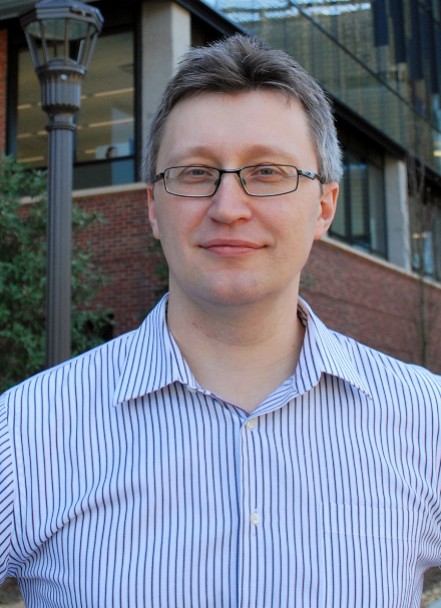
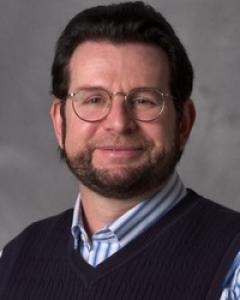
Anton V. Bryksin
As a student, Aqua Asberry, HT(ASCP)CM, studied chemistry and was determined to become a forensic scientist. An intuitive mentor steered her towards histology, and Ms. Asberry is currently Research Histology Manager at Parker H. Petit Institute for Bioengineering and Bioscience at Georgia Tech.
Dr. Rahnev received his Ph.D. in Psychology from Columbia University in 2012. After completing a 3-year post-doctoral fellowship at UC Berkeley, he joined Georgia Tech in 2015 where he is currently Blanchard Early Career professor. His research focuses on perceptual decision making – the process of internally representing the available sensory information and making decisions on it. Dr. Rahnev uses a wide variety of methods such as functional magnetic resonance imaging (fMRI), transcranial magnetic stimulation (TMS), psychophysics, computational modeling, and deep neural networks (DNNs). Dr. Rahnev’s work appears in high-impact journals such as Behavioral and Brain Sciences, PNAS, Nature Communications, and Nature Human Behavior. He has received over $3.5M in funding, including PI grants from NIH, NSF, and the Office of Naval Research.
Big Data
Human Augmentation
Dr. Emily D. Sanders is an Assistant Professor in the Woodruff School of Mechanical Engineering at Georgia Tech. She obtained her Ph.D. at Georgia Tech in 2021, where she developed new topology optimization methods for design of tension-only cable nets, elastostatic cloaking devices, and multiscale structures and components. Dr. Sanders hold a bachelor’s degree from Bucknell University and a master’s degree from Stanford University.
Yue Chen is an assistant professor in the Department of Biomedical Engineering, GT/Emory. He received his Ph.D. degree in Mechanical Engineering from Vanderbilt University, M.S. in Mechanical Engineering from Hong Kong Polytechnic University, and a B.S. in Vehicle Engineering from Hunan University. His research focused on designing, modeling, and control of continuum robots and apply them in medicine.
My research focuses on three major areas: (a) understanding and improving worker well-being, (b) temporal dynamics in team contexts, and (c) research methods. Collectively, my research seeks to improve our understanding of optimal human functioning more generally, across time, and within specific contexts (e.g., organizational, teams).