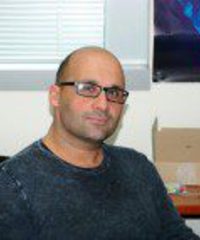
Sheng Dai

Sheng Dai's profile picture
sheng.dai@ce.gatech.edu

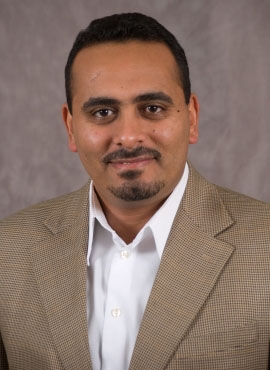
Sheng Dai, Ph.D., P.E., earned his degrees from Tongji University and Georgia Tech. He worked as an ORISE postdoc at the National Energy Technology Laboratory of the U.S. Department of Energy, and returned to Georgia Tech as a faculty member in 2015. He is currently an associate professor in the School of Civil and Environmental Engineering, Ocean Science and Engineering. and holds a courtesy appointment at the School of Earth and Atmospheric Sciences at Georgia Tech.

Dr. Dai's group addresses emerging energy and environment challenges through studying subsurface geomechanics, geomaterials characterization, energy geotechnics, bio-inspired geotechnics, flow in porous media, and granular dynamics. His research has been funded by federal funding agencies (DOE, NSF, NASA, DOT), national labs (INL, NETL), and industry (AECOM, GTI, Leidos).  Dr. Dai has been recognized for his research and teaching, including being a recipient of the NSF CAREER award, the ORISE Fellowship, the Bill Schutz Junior Faculty Teaching Award, and the Class of 1969 Teaching Fellows at Georgia Tech.

He is an associated editor of the Journal of Geophysical Research: Solid Earth and Advances in Geo-Energy Research, an editorial advisor of Geomechanics for Energy and Environment, and serves on the Pressure Core Advisory Board for U.S. Geological Survey, the GOM2 Marine Test Technical Advisory Committee for UT/DOE, the National Gas Hydrate Program for NETL, and the Task Force Leader of TC308 Energy Geotechnics of ISSMGE. 

Assistant Professor, School of Civil and Environmental Engineering
Phone
(404)385-4757
Additional Research

Oil/Gas; Combustion; Electronics; Energy Harvesting; Energy Storage; Thermal Systems

University, College, and School/Department

Nick Sahinidis

Nick Sahinidis's profile picture
nikos@gatech.edu

Nick Sahinidis is the Butler Family Chair and Professor in the H. Milton Stewart School of Industrial and Systems Engineering and the School of Chemical and Biomolecular Engineering at Georgia Tech. His current research activities are at the interface between computer science and operations research, with applications in various engineering and scientific areas, including: global optimization of mixed-integer nonlinear programs: theory, algorithms, and software; informatics problems in chemistry and biology; process and energy systems engineering. Sahinidis has served on the editorial boards of many leading journals and in various positions within AIChE (American Institute of Chemical Engineers). He has also served on numerous positions within INFORMS (Institute for Operations Research and the Management Sciences), including Chair of the INFORMS Optimization Society. He received an NSF CAREER award, the INFORMS Computing Society Prize, the MOS Beale-Orchard-Hays Prize, the Computing in Chemical Engineering Award, the Constantin Carathéodory Prize, and the National Award and Gold Medal from the Hellenic Operational Research Society. Sahinidis is a member of the U.S. National Academy of Engineering and a fellow of AIChE and INFORMS.

Gary C. Butler Family Chair, School of Chemical and Biomolecular Engineering
Professor, School of Industrial and Systems Engineering and School of Chemical and Biomolecular Engineering
Phone
(404) 894-3036
Research Focus Areas

Nian Liu

Nian Liu's profile picture
nliu82@mail.gatech.edu

Nian Liu began as an Assistant Professor at Georgia Institute of Technology, School of Chemical and Biomolecular Engineering in January 2017. He received his B.S. in 2009 from Fudan University (China), and Ph.D. in 2014 from Stanford University, where he worked with Prof. Yi Cui on the structure design for Si anodes for high-energy Li-ion batteries. In 2014-2016, he worked with Prof. Steven Chu at Stanford University as a postdoc, where he developed in situ optical microscopy to probe beam-sensitive battery reactions. Dr. Liu 's lab at Georgia Tech is broadly interested in the combination of nanomaterials, electrochemistry, and light microscopy for understanding and addressing the global energy challenges. Dr. Liu is the recipient of the Electrochemical Society (ECS) Daniel Cubicciotti Award (2014) and American Chemical Society (ACS) Division of Inorganic Chemistry Young Investigator Award (2015).

Associate Professor, School of Chemical and Biomolecular Engineering
Robert G. Miller Faculty Fellow, School of Chemical and Biomolecular Engineering
Phone
404-894-5103
Office
ES&T 1230
Additional Research

Electronic Systems; Packaging and Components; Nanostructures & Materials; Optoelectronics Photonics & Phononics; Semiconductors; Materials & Processes

Google Scholar
https://scholar.google.com/citations?user=nvMAHY8AAAAJ&hl=en

Nagi Gebraeel

Nagi Gebraeel's profile picture
nagi.gebraeel@isye.gatech.edu

Professor Nagi Gebraeel is the Georgia Power Early Career Professor and Professor in the H. Milton Stewart School of Industrial and Systems Engineering at Georgia Tech. He received his MS and PhD from Purdue University in 1998 and 2003, respectively.

Dr. Gebraeel's research interests lie at the intersection of Predictive Analytics and Machine Learning in IoT enabled maintenance, repair and operations (MRO) and service logistics. His key focus is on developing fundamental statistical learning algorithms specifically tailored for real-time equipment diagnostics and prognostics, and optimization models for subsequent operational and logistical decision-making in IoT ecosystems. Dr. Gebraeel also develops cyber-security algorithms intended to protect IoT-enabled critical assets from ICS-type cyberattacks (cyberattacks that target Industrial Control Systems). From the standpoint of application domains, Dr. Gebraeel has general interests in manufacturing, power generation, and service-type industries. Applications in Deep Space missions are a recent addition to his research interests, specifically, developing Self-Aware Deep Space Habitats through NASA's HOME Space Technology Research Institute.

Dr. Gebraeel leads Predictive Analytics and Intelligent Systems (PAIS) research group at Georgia Tech's Supply Chain and Logistics Institute. He also directs activities and testing at the Analytics and Prognostics Systems laboratory at Georgia Tech's Manufacturing Institute. Formerly, Dr. Gebraeel served as an associate director at Georgia Tech's Strategic Energy Institute (from 2014 until 2019) where he was responsible for identifying and promoting research initiatives and thought-leadership at the intersection of Data Science and Energy applications. He was also the former president of the Institute of Industrial and Systems Engineers (IISE) Quality and Reliability Engineering Division, and is currently a member of the Institute for Operations Research and the Management Sciences (INFORMS), and IISE (since 2005).

Georgia Power Associate Professor, School of Industrial Systems Engineering
Phone
404.894.0054
Office
Groseclose Building, Room 327
Additional Research
  • Data Mining
  • IoT
  • Sensor-based Prognostics & Degradation Modeling
  • Reliability Engineering
  • Service Logistics
  • System Design & Optimization
  • Cyber/ Information Technology
Research Focus Areas

Martha Grover

Martha Grover's profile picture
martha.grover@chbe.gatech.edu

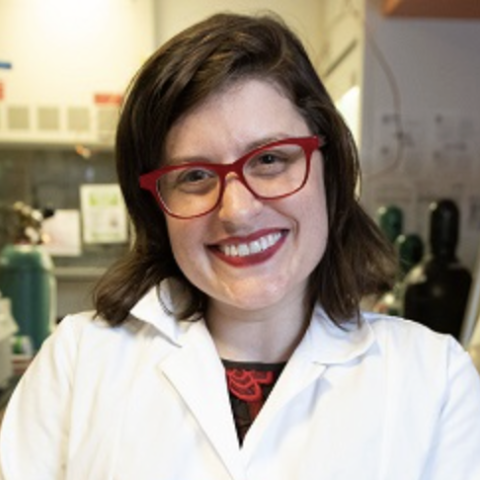
Grover’s research activities in process systems engineering focus on understanding macromolecular organization and the emergence of biological function. Discrete atoms and molecules interact to form macromolecules and even larger mesoscale assemblies, ultimately yielding macroscopic structures and properties. A quantitative relationship between the nanoscale discrete interactions and the macroscale properties is required to design, optimize, and control such systems; yet in many applications, predictive models do not exist or are computationally intractable.

The Grover group is dedicated to the development of tractable and practical approaches for the engineering of macroscale behavior via explicit consideration of molecular and atomic scale interactions. We focus on applications involving the kinetics of self-assembly, specifically those in which methods from non-equilibrium statistical mechanics do not provide closed form solutions. General approaches employed include stochastic modeling, model reduction, machine learning, experimental design, robust parameter design, and estimation.

Professor, School of Chemical and Biomolecular Engineering
James Harris Faculty Fellow, School of Chemical and Biomolecular Engineering
Member, NSF/NASA Center for Chemical Evolution
Phone
404.894.2878
Office
ES&T 1228
Additional Research

Colloids; Crystallization; Organic and Inorganic Photonics and Electronics; Polymers; Discrete atoms and molecules interact to form macromolecules and even larger mesoscale assemblies, ultIMaTely yielding macroscopic structures and properties. A quantitative relationship between the nanoscale discrete interactions and the macroscale properties is required to design, optimize, and control such systems; yet in many applications, predictive models do not exist or are computationally intractable. The Grover group is dedicated to the development of tractable and practical approaches for the engineering of macroscale behavior via explicit consideration of molecular and atomic scale interactions. We focus on applications involving the kinetics of self-assembly, specific those in which methods from non-equilibrium statistical mechanics do not provide closed form solutions. General approaches employed include stochastic modeling, model reduction, machine learning, experimental design, robust parameter design, estIMaTion, and optimal control, monitoring and control for nuclear waste processing and polymer organic electronics

Google Scholar
https://scholar.google.com/citations?hl=en&user=PgpLoqIAAAAJ&view_op=list_works&sortby=pubdate

Seung Soon Jang

Seung Soon Jang's profile picture
SeungSoon@mse.gatech.edu

Seung Soon Jang joined the School of Materials Science and Engineering at the Georgia Institute of Technology in July 2007. Jang worked at Samsung Electronics and the Materials and Process Simulation Center (MSC) at CalTech performing various researches in nanoelectronics, fuel cell, and interfacial systems as a director of Supramolecular Technology for six years.

His research interest includes computations and theories to characterize and design nanoscale systems based on the molecular architecture-property relationship, which are especially relevant to molecular electronics, molecular machines, fuel cell technology and biotechnology.

Professor, School of Materials Science and Engineering
Director, Computational NanoBio Technology Lab
Phone
404.385.3356
Office
Love 351
Additional Research

Jang's research interest is to characterize and design nanoscale systems based on the molecular architecture-property relationship using computations and theories, which are especially relevant to designing new biomaterials for drug delivery and tissue engineering. Currently, he is focusing on 1) NanoBio-mechanics for DNA, lipid bilayer, and hydrogel systems; 2) Molecular interaction of Alzheimer proteins with various small molecules. Dr. Jang is also interested in various topics such as nanoelectronics, nanostructured energy technologies for fuel cell, battery and photovoltaic devices.;Computational mechanics; Nanostructured Materials; Polymeric composites; Biomaterials; Fuel Cells; Delivery and Storage

Google Scholar
https://scholar.google.com/citations?hl=en&user=SW0u-asAAAAJ&view_op=list_works&sortby=pubdate

Jennifer Glass

Jennifer Glass's profile picture
jennifer.glass@eas.gatech.edu

The Glass research group studies the microbes that made Earth habitable, and, more specifically, the microbial mechanisms underpinning cryptic transformations of methane and nitrous oxide in oxygen-free ecosystems. Why focus on the microbial world? The Earth has been constantly inhabited for four billion years. For three-quarters of that time, life was solely microbial. Ancient microbes produced the gases that warmed the planet to clement temperatures when the sun was faint, and that invented the molecular machines that drive biogeochemical cycles. The co-evolution of Earth and life is woven into the fabric of our research group, which examines the interplay between microbes and the greenhouses gases that control planetary temperature. Our research informs the microbial metabolisms that (i) made the early Earth habitable for life, (ii) make the deep subsurface habitable for life, (iii) serve as biosignatures for life on exoplanets, and (iv) play crucial roles in regulating atmospheric fluxes of greenhouse gases on our warming planet.

Associate Professor, School of Earth and Atmospheric Sciences
Phone
404.894.3942
Additional Research

Anaerobic oxidation of methane, Environmental controls on greenhouse gas cycling, with afocus on methane and nitrous oxide, in terrestrial and marineecosystems Biogeochemical cycles of bioessential trace elements Marine microbiology, with a focus on anaerobic metabolisms Influence of trace metal bioavailability on microbial carbon and nitrogen cycling Integrating omic and geochemical datasets Co-evolution of microbial metabolisms and ocean chemistry over Earthhistory,

Google Scholar
https://scholar.google.com/citations?user=zKOyWKQAAAAJ&hl=en

Timothy Charles Lieuwen

Timothy Charles Lieuwen's profile picture
tim.lieuwen@aerospace.gatech.edu

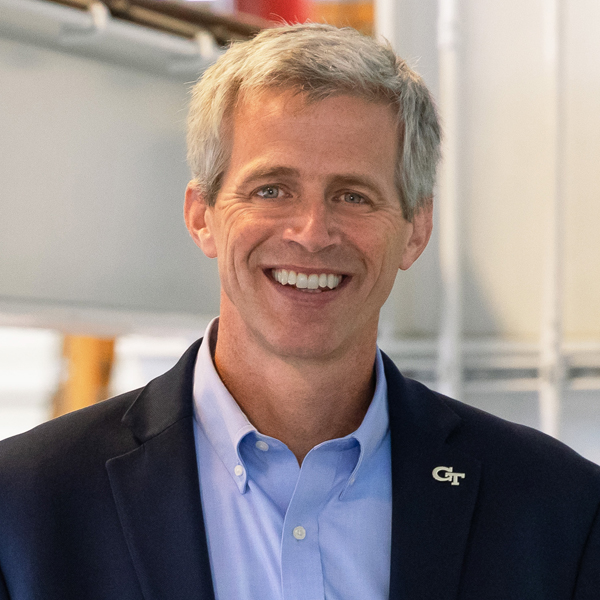
Tim Lieuwen is the executive vice president for Research at the Georgia Institute of Technology. In this role, he oversees the Institute’s $1.4+ billion portfolio of research, economic development, and sponsored activities. This includes leadership of the Georgia Tech Research Institute (GTRI), the Enterprise Innovation Institute, 11 interdisciplinary research institutes (IRIs), and related research administrative support units.

In his 25-plus years at Georgia Tech, Lieuwen earned his master’s and Ph.D. degrees in mechanical engineering (1996 and 1999, respectively) and has held multiple leadership positions. He has been the executive director of the Strategic Energy Institute (SEI) and served as the interim chair of the Daniel Guggenheim School of Aerospace Engineering in 2023.

Lieuwen has received numerous honors and recognition for his work in clean energy systems and policy, national security, and regional economic development. Additionally, he has been awarded the titles of Regents’ Professor and the David S. Lewis, Jr. Chair in AE. He is also a member of the National Academy of Engineering and is a fellow of the American Society of Mechanical Engineers and the American Institute of Aeronautics and Astronautics.

Executive Vice President for Research (EVPR)
Regents' Professor, Guggenheim School of Aerospace Engineering
Phone
(404) 894-8885
Office
Carnegie 020
Additional Research

Acoustics; Fluid Mechanics; Combustion; Signal Processing

Michael Rodgers

Michael Rodgers
michael.rodgers@ce.gatech.edu

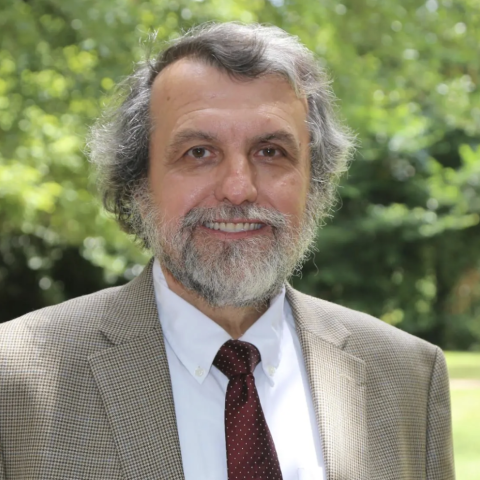
Dr. Rodgers is the director of the Georgia Tech Air Quality Laboratory, holding academic and/or research appointments in the Georgia Tech Schools of Civil and Environmental Engineering, Earth and Atmospheric Sciences, and Public Policy. Dr. Rodgers has a long and distinguished record in air quality research, serving as principal investigator on research projects totaling more than $20 million since 1988 including numerous projects on field and laboratory measurements of pollutants and instrument development and intercomparison. Current activities include managing projects GRASP (Georgia Rural Aerosol Sampling Program) and ON-RAMP (On-Road Ammonia Measurement Program) both of which focus on particulate emissions, conversion and fate. In the area of mobile source emissions, he directs Georgia Tech's efforts in vehicle remote sensing and model validation and is Co-Principal Investigator on the development of the MEASURE model. Dr. Rodgers serves on EPA�s Mobile Source Technical Advisory Subcommittee and Emissions Modeling Workgroup, the U.S. Technical Advisory Group to the International Standards Organization, ASTM International�s Committee D-22 on the Analysis of Atmospheres as well a numerous other technical and policy advisory committees.

Research

Modeling and simulation of vehicle activity and emissions, Statistical analysis of vehicle emissions data, Environmental policy analysis, Laboratory and field measurements of gaseous and particulate pollutants including vehicle remote sensing and instrumented vehicles

Emeritus Regents Researcher, School of Civil and Environmental Engineering
Director, Georgia Tech Air Quality Laboratory
Phone
(404) 385-0569
Additional Research

Climate/Environment; Electric Vehicles; Smart Infrastructure

University, College, and School/Department