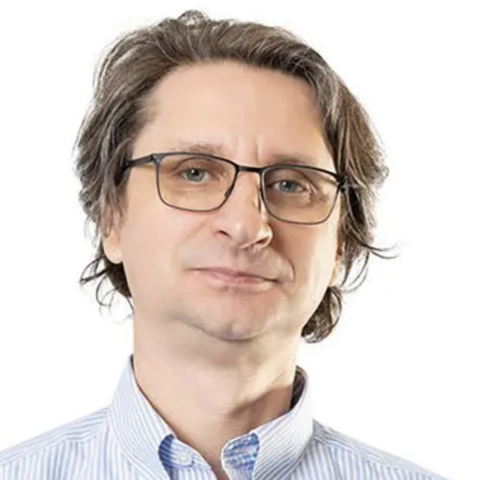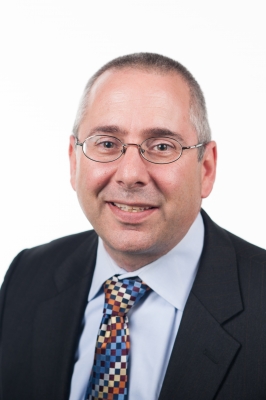
Robert Butera

Robert Butera's profile picture
rbutera@gatech.edu
Chief Research Operations Officer
Professor
Phone
404-894-2935
Office
UAW 3111
Additional Research

Neuromodulation of peripheral nerve activity real-time control methods applied to electrophysiology measurements Autonomic modulation of visceral organs. Our laboratory combines engineering and neuroscience to tackle real-world problems. We utilize techniques including intracellular and extracellular electrophysiology, computational modeling, and real-time computing.

Research Focus Areas
Google Scholar
https://scholar.google.com/citations?hl=en&user=_DT8jHD7dGYJ&view_op=list_works&sortby=pubdate
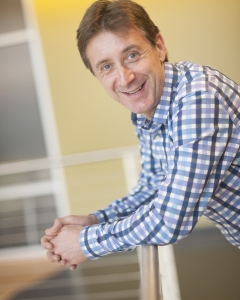
Sam Brown

Sam Brown's profile picture
sam.brown@biology.gatech.edu

Sam Brown's lab studies the multi-scale dynamics of infectious disease. Their goal is to improve the treatment and control of infectious diseases through a multi-scale understanding of microbial interactions. Their approach is highly interdisciplinary, combining theory and experiment, evolution, ecology and molecular microbiology in order to understand and control the multi-scale dynamics of bacteria pathogens.

Professor
Office
ES&T 2244
Additional Research
Evolutionary microbiology, bacterial social life, virulence and drug resistance
Google Scholar
https://scholar.google.co.uk/citations?user=ZgN-OgMAAAAJ&hl=en

Mark Borodovsky

Mark Borodovsky's profile picture
borodovsky@gatech.edu

Dr. Borodovsky and his group develop machine learning algorithms for computational analysis of biological sequences: DNA, RNA and proteins. Our primary focus is on prediction of protein-coding genes and regulatory sites in genomic DNA. Probabilistic models play an important role in the algorithm framework, given the probabilistic nature of biological sequence evolution.

Regents' Professor
Director, Center for Bioinformatics and Computational Genomics
Senior Advisor in Bioinformatics, Division of High Consequence Pathogens and Pathology, Centers for Disease Control and Prevention in Atlanta
Phone
404-894-8432
Office
EBB 2105
Additional Research
  • ML and pattern recognition methods in bioinformatics and biological systems
  • Chromatin
  • Epigenetics
  • Bioinformatics
Google Scholar
https://scholar.google.com/citations?user=ciQ3dn0AAAAJ&hl=en&oi=ao

Aishik Ghosh

Aishik Ghosh's profile picture
AishikGhosh@physics.gatech.edu

The Ghosh group engages in cross-disciplinary collaborations and welcomes students from diverse academic backgrounds. Most projects focus on addressing challenges in fundamental physics and astrophysics using computational and AI/ML tools, making the group a natural fit for students with strong skills or interests in these areas. We develop methods to automate theoretical physics calculations using reinforcement learning and LLM agents, enabling rapid testing of new theories. We also work on simulation, experimental design and high-dimensional statistical inference techniques powered by AI to accelerate scientific discovery. Data analysis problems at the scale of the Large Hadron Collider or multi-messenger astronomy often demand rapid decision-making, and we design efficient AI algorithms that can be deployed on fast hardware to meet these challenges.

Assistant Professor; School of Physics
Office
Howey W506
Additional Research
  • Astrophysics
  • Experiment Design
  • Generative Models
  • High-Dimensional Statistics
  • Neuro-Symbolic AI
  • Particle Physics
University, College, and School/Department
Google Scholar
https://scholar.google.com/citations?hl=en&user=_jloZDAAAAAJ&view_op=list_works&sortby=pubdate
Robert Dickson

Robert Dickson's profile picture
robert.dickson@chemistry.gatech.edu

Dr. Dickson is the Vassar Woolley Professor of Chemistry & Biochemistry and has been at Georgia Tech since 1998. He was a Senior Editor of The Journal of Physical Chemistry from 2010-2021, and his research has been continuously funded (primarily from NIH) since 2000. Dr. Dickson has developed quantitative bio imaging and signal recovery/modulation schemes for improved imaging of biological processes and detection of medical pathologies. His work on fluorescent molecule development and photoswitching of green fluorescent proteins was recognized as a key paper for W.E. Moerner’s 2014 Nobel Prize in Chemistry. Recently, Dr. Dickson’s lab has developed rapid susceptibility testing of bacteria causing blood stream infections. Their rapid recovery methods, coupled with rigorous multidimensional statistics and machine learning have led to very simple, highly accurate and fast methods for determining the appropriate treatment within a few hours after positive blood cultures. These hold significant potential for drastically improving patient outcomes and reducing the proliferation of antimicrobial resistance.

Professor
Phone
404-894-4007
Office
MoSE G209A
Additional Research

Dr. Dickson's group is developing novel spectroscopic, statistical, and imaging technologies for the study of dynamics in biology and medicine.

Google Scholar
https://scholar.google.com/citations?user=p8fJn9EAAAAJ&hl=en&oi=sra

Chaitanya Deo

Chaitanya Deo's profile picture
chaitanya.deo@nre.gatech.edu

Dr. Deo came to Georgia Tech in August 2007 as an Assistant Professor of Nuclear and Radiological Engineering. Prior, he was a postdoctoral research associate in the Materials Science and Technology Division of the Los Alamos National Laboratory. He studied radiation effects in structural materials (iron and ferritic steels) and nuclear fuels (uranium dioxide). He also obtained research experience at Princeton University (Mechanical Engineering), Lawrence Livermore National Laboratory, and Sandia National Laboratories.

Professor, Woodruff School of Mechanical Engineering
Phone
(404) 385.4928
Additional Research
  • Nuclear Thermal Systems
  • Materials In Extreme Environments
  • Computational mechanics
  • Materials Failure and Reliability
  • Ferroelectronic Materials
  • Materials Data Sciences

Greg Eisenhauer

Greg Eisenhauer's profile picture
eisen@cc.gatech.edu
Greg Eisenhauer is a research scientist in the College of Computing at the Georgia Institute of Technology and Technical Director of the Center for Experimental Research in Computer Systems. His research focuses on data-intensive distributed applications in enterprise and high-performance systems. Technical topics of interest include: high-performance I/O for petascale machines; efficient methods for managing large-scale systems, techniques for runtime performance and behavior monitoring, understanding and control; middleware for high-performance data movement and in transit data processing, QoS-sensitive data streaming in pervasive and wide-area systems, and experimentation with representative applications in the high-performance computing and enterprise domains. He received the Bachelor's of Computer Science (1983) and a Master's of Computer Science (1985) from the University of Illinois, Urbana-Champaign. He received his Ph.D. from the Georgia Institute of Technology in 1998. His thesis work demonstrated object-based methods for efficient program monitoring and steering of distributed and parallel programs using event-based monitoring techniques and code annotations.
Senior Research Scientist
Phone
404.894.3227
Additional Research
  • Large-Scale or Distributed Systems
  • Software & Applications

Amirali Aghazadeh

Amirali Aghazadeh's profile picture
aaghazadeh3@gatech.edu

Amirali Aghazadeh is an Assistant Professor in the School of Electrical and Computer Engineering and also program faculty of Machine Learning, Bioinformatics, and Bioengineering Ph.D. programs. He has affiliations with the Institute for Data Engineering and Science (IDEAS) and Institute for Bioengineering and Biosciences. Before joining Georgia Tech, Aghazaeh was a postdoc at Stanford and UC Berkeley and completed his Ph.D. at Rice University. His research focuses on developing machine learning and deep learning solutions for protein and small molecular design and engineering.
 

Assistant Professor
Phone
713-257-5758
Office
CODA S1209
Google Scholar
https://scholar.google.com/citations?hl=en&user=87wBxzUAAAAJ&view_op=list_works&sortby=pubdate
Jacob Abernethy

Jacob Abernethy's profile picture
prof@gatech.edu

Jacob Abernethy is an Associate Professor in the College of Computing at Georgia Tech. He started his faculty career in the Department of Electrical Engineering and Computer Science at the University of Michigan. He completed his Ph.D. in Computer Science at the University of California at Berkeley, and then spent two years as a Simons postdoctoral fellow at the CIS department at UPenn. Abernethy's primary interest is in Machine Learning, with a particular focus in sequential decision making, online learning, online algorithms and adversarial learning models. He did his Master's degree at TTI-C, and his Bachelor's Degree at MIT.

Director for Student Engagement, IDEaS

Alexander Alexeev

Alexander Alexeev's profile picture
alexander.alexeev@me.gatech.edu

Alexander Alexeev came to Georgia Tech at the beginning of 2008 as an assistant professor. His research background is in the area of fluid mechanics. He uses computer simulations to solve engineering problems in complex fluids, multiphase flows, fluid-structure interactions, and soft materials. As a part of his graduate research at Technion, he investigated resonance oscillations in gases and probed how periodic shock waves excited at resonance can enhance agglomeration of small airborne particles, a process which is important in air pollution control technology. He also investigated wave propagation in vibrated granular materials and its effect on fluidization of inelastic granules. During postdoctoral studies at TU Darmstadt, he examined how microstructures on heated walls can be harnessed to control thermocapillary flows in thin liquid films and to enhance heat transport in the fluid. That could be beneficial in many practical applications, especially in microgravity. At the University of Pittsburgh, he studied the motion of micrometer-sized, compliant particles on patterned substrates to develop efficient means of controlling movement of such particles in microfluidic devices. Such substrates are needed to facilitate various biological assays and tissue engineering studies dealing with individual cells.

Professor, Woodruff School of Mechanical Engineering
Additional Research
  • Computational Fluid Mechanics
Research Focus Areas