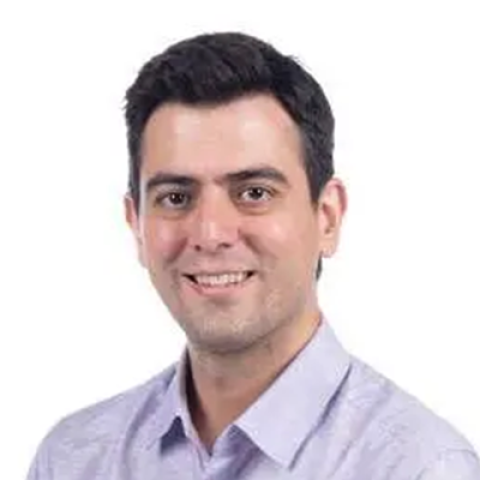
Johnna Temenoff

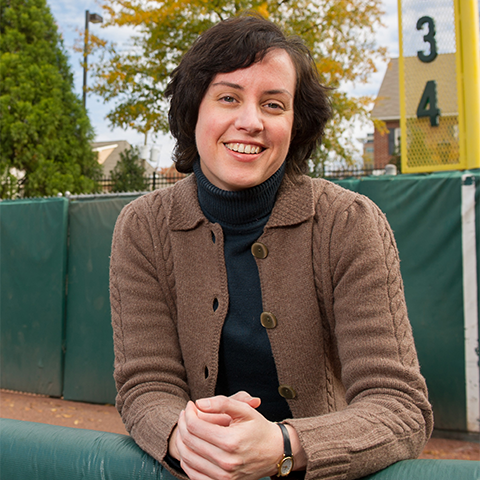
Johnna Temenoff headshot
johnna.temenoff@bme.gatech.edu

Dr. Johnna S. Temenoff is the Carol Ann and David D. Flanagan Professor at the Coulter Department of Biomedical Engineering at Georgia Tech/Emory University. She is also currently the Director of the NSF Engineering Research Center in Cell Manufacturing Technologies (CMaT) and the Director of the Marcus Center for Therapeutic Cell Characterization and Manufacturing (MC3M). Scientifically, Dr. Temenoff is interested in scaling culture of therapeutic cells and tailoring the molecular interactions between glycosaminoglycans and proteins/cells for use in regenerative medicine applications.  Her laboratory focuses primarily on promoting repair after injuries to the tissues of the shoulder, including cartilage, tendon, and muscle.

Dr. Temenoff has been honored with several prestigious awards, such as the NSF CAREER Award, Arthritis Foundation Investigator Award, and Society for Biomaterials (SFB) Clemson Award for Contributions to the Literature, and was named to the College of Fellows of the American Institute for Medical and Biological Engineers (AIMBE), as a Fellow of the Biomedical Engineering Society (BMES), as a Fellow of the International Academy of Medical and Biological Engineering (IAMBE) and as a Fellow of Biomaterials Science and Engineering, International Union of Societies for Biomaterials Science and Engineering (IUSBSE).  She has co-authored a highly successful introductory textbook - Biomaterials: The Intersection of Biology and Materials Science, by J.S. Temenoff and A.G. Mikos (now in a 2nd edition), for which Dr. Temenoff and Dr. Mikos were awarded the American Society for Engineering Education’s Meriam/Wiley Distinguished Author Award for best new engineering textbook. 

Carol Ann and David D. Flanagan Professorship II
Director, NSF Engineering Research Center for CMaT
Marcus Center for Therapeutic Cell Characterization and Manufacturing (MC3M)
Phone
404-385-5026
Office
Petit 2305
Google Scholar
https://scholar.google.com/citations?user=DfhHdN8AAAAJ&hl=en&oi=ao

Vicki Wysocki

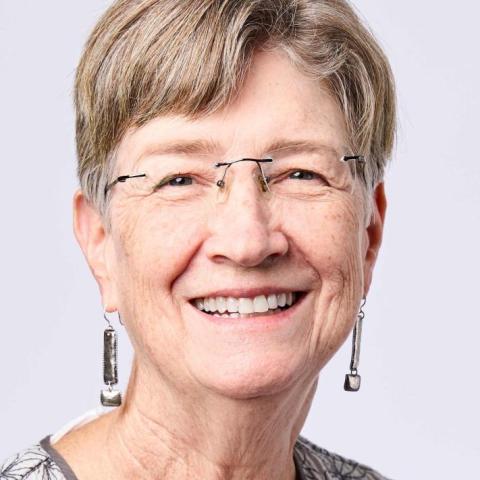
Vicki Wysocki's profile picture
vwysocki3@gatech.edu

Professor Wysocki received her bachelor of science in Chemistry at Western Kentucky University in 1982 and her Ph.D. in Chemistry at Purdue University in 1987.
Wysocki did her postdoc work at the Naval Research Laboratory as a National Research Council fellow Virginia Commonwealth University. She became an Assistant Professor in 1990 and an Associate Professor in 1994.
Wysocki went to the University of Arizona in 1996, was promoted to Professor in 2000, and served as Chair of the Department of Chemistry and Biochemistry.
From 2012 to 2024, Wysocki was an Ohio Eminent Scholar, Director of the Campus Chemical Instrument Center, and Professor in the Department of Chemistry and Biochemistry at the Ohio State University.
On Oct. 1, 2024, she became Professor and Chair of the School of Chemistry and Biochemistry at the Georgia Institute of Technology.
   
   Major awards
   2022 International Mass Spectrometry Foundation Thomson Medal,
   2022 ACS Analytical Division Chemical Instrumentation award,
   2017 ACS Field and Franklin Award,
   2009 ASMS Distinguished Contribution Award

School Chair
Professor
Phone
520-907-0764
Office
Molecular Science and Engineering Building - 2201B

Daniel Hass

Assistant Professor Daniel Hass
dthass@emory.edu

Vision is energy-intensive. Mutations that impair a person's ability to generate energy disproportionately affect vision. Common diseases that cause blindness may also be related to a failure of the eye to generate sufficient energy to serve its needs. Our goal is to understand the metabolic function of individual cells in visual tissues, primarily the retina and retinal pigment epithelium. We want to know which cells in the eye carry out particular metabolic processes (glycogen synthesis, nucleotide synthesis, etc.), what causes a cell to be metabolically 'wired' as it is, the extent to which retina generates metabolic intermediates de novo vs. from circulating, and the extent to which neurodegenerative diseases such as age-related macular degeneration and glaucoma are linked to metabolic impairments.

Assistant Professor
Office
Emory Clinic B, Room 5602
University, College, and School/Department

Robert Dickson

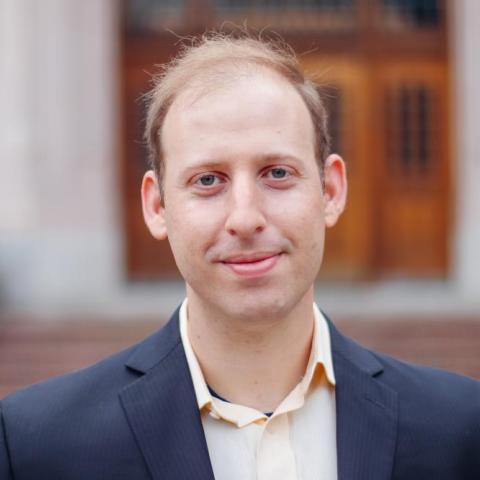
Robert Dickson's profile picture
robert.dickson@chemistry.gatech.edu

Dr. Dickson is the Vassar Woolley Professor of Chemistry & Biochemistry and has been at Georgia Tech since 1998. He was a Senior Editor of The Journal of Physical Chemistry from 2010-2021, and his research has been continuously funded (primarily from NIH) since 2000. Dr. Dickson has developed quantitative bio imaging and signal recovery/modulation schemes for improved imaging of biological processes and detection of medical pathologies. His work on fluorescent molecule development and photoswitching of green fluorescent proteins was recognized as a key paper for W.E. Moerner’s 2014 Nobel Prize in Chemistry. Recently, Dr. Dickson’s lab has developed rapid susceptibility testing of bacteria causing blood stream infections. Their rapid recovery methods, coupled with rigorous multidimensional statistics and machine learning have led to very simple, highly accurate and fast methods for determining the appropriate treatment within a few hours after positive blood cultures. These hold significant potential for drastically improving patient outcomes and reducing the proliferation of antimicrobial resistance.

Professor
Phone
404-894-4007
Office
MoSE G209A
Additional Research

Dr. Dickson's group is developing novel spectroscopic, statistical, and imaging technologies for the study of dynamics in biology and medicine.

Google Scholar
https://scholar.google.com/citations?user=p8fJn9EAAAAJ&hl=en&oi=sra

Jaydev Desai

Jaydev Desai's profile picture
jaydev@gatech.edu

Jaydev P. Desai, Ph.D, is currently a Professor and BME Distinguished Faculty Fellow in the Wallace H. Coulter Department of Biomedical Engineering at Georgia Tech. Prior to joining Georgia Tech in August 2016, he was a Professor in the Department of Mechanical Engineering at the University of Maryland, College Park (UMCP). He completed his undergraduate studies from the Indian Institute of Technology, Bombay, India, in 1993. He received his M.A. in Mathematics in 1997, M.S. and Ph.D. in Mechanical Engineering and Applied Mechanics in 1995 and 1998 respectively, all from the University of Pennsylvania. He was also a Post-Doctoral Fellow in the Division of Engineering and Applied Sciences at Harvard University. He is a recipient of several NIH R01 grants, NSF CAREER award, and was also the lead inventor on the "Outstanding Invention of 2007 in Physical Science Category" at the University of Maryland, College Park. He is also the recipient of the Ralph R. Teetor Educational Award. In 2011, he was an invited speaker at the National Academy of Sciences "Distinctive Voices" seminar series on the topic of "Robot-Assisted Neurosurgery" at the Beckman Center. He was also invited to attend the National Academy of Engineering's 2011 U.S. Frontiers of Engineering Symposium. He has over 150 publications, is the founding Editor-in-Chief of the Journal of Medical Robotics Research, and Editor-in-Chief of the Encyclopedia of Medical Robotics (currently in preparation). His research interests are primarily in the area of image-guided surgical robotics, rehabilitation robotics, cancer diagnosis at the micro-scale, and rehabilitation robotics. He is a Fellow of the ASME and AIMBE.

Professor and Distinguished Faculty Fellow, Wallace H. Coulter Department of Biomedical Engineering
Associate Director, Institute for Robotics and Intelligent Machines
Director, Georgia Center for Medical Robotics
Phone
404.385.5381
Office
UA Whitaker Room 3112
Additional Research

Image-guided surgical robotics, Rehabilitation robotics; Cancer diagnosis at the micro-scale.

Google Scholar
https://scholar.google.com/citations?hl=en&user=hpbQN-AAAAAJ&view_op=list_works&sortby=pubdate

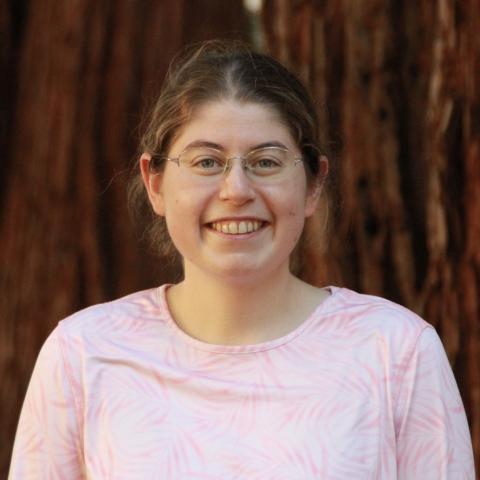
Woon Ju Park

Woon Ju Park headshot
woonju@gatech.edu

Woon Ju Park is an Assistant Professor of Psychology at Georgia Tech. She received her PhD in Brain and Cognitive Science from University of Rochester and completed her postdoctoral training from University of Washington. At Georgia Tech, she leads the Cortical Resilience Lab where she studies visual and auditory processing, brain plasticity, and perception in typical and atypical populations. Her work combines behavioral experiments, computational modeling, and multimodal neuroimaging (structural, functional, diffusion, and quantitative MRI) to understand how the human brain adapts to changes in sensory input, particularly in individuals with different sensory experiences (e.g., children with ASD, older adults, and those with early or late-onset visual impairments). Her research has been supported by prestigious awards such as the NIH K99/R00 Pathway to Independence Award. Dr. Park is committed to interdisciplinary approaches and integrating insights from neuroscience, psychology, and engineering to advance both basic science and assistive technologies.  

Assistant Professor
Office
JS Coon, Room 225
University, College, and School/Department
Google Scholar
https://scholar.google.com/citations?user=5LuGpVgAAAAJ&hl=en

W. Hong Yeo

W. Hong Yeo's profile picture
woonhong.yeo@me.gatech.edu

Dr. Yeo holds the titles of G.P. "Bud" Peterson and Valerie H. Peterson Endowed Professor, as well as Harris Saunders Jr. Endowed Professor, in the Woodruff School of Mechanical Engineering and the Coulter Department of Biomedical Engineering at Georgia Tech. He is also the director of the Wearable Intelligent Systems and Healthcare Center (WISH Center) and the KIAT-Georgia Tech Semiconductor Electronics Center (K-GTSEC). Dr. Yeo's research focuses on understanding the fundamentals of soft materials, deformable mechanics, interfacial physics, manufacturing, and the integration of hard and soft materials for the development of biomedical systems. He earned his Ph.D. in mechanical engineering and genome sciences from the University of Washington in Seattle and subsequently worked as a postdoctoral research fellow at the University of Illinois at Urbana-Champaign. With over 180 peer-reviewed publications, Dr. Yeo has contributed to many prestigious journals, including Nature Materials, Nature Machine Intelligence, Nature Communications, and Science Advances. He is an IEEE Senior Member and has received numerous awards, including the Visiting Professorship from the Institute Jean Lamour at the Université de Lorraine in France, the Lucy G. Moses Lectureship Award at the Mount Sinai School of Medicine, the NIH Trailblazer Young Investigator Award, the IEEE Outstanding Engineer Award, the Emory School of Medicine Research Award, the Imlay Innovation Award, the American Heart Association Innovative Project Award, the Sensors Young Investigator Award, the Med-X Young Investigator Award, and the Outstanding Service Award from the Korea Institute for Advancement of Technology, as well as the Outstanding Yonsei Scholar Award. Dr. Yeo is also the founder of two startup companies: Huxley Medical, Inc. and WisMedical, Inc.

Professor, Woodruff School of Mechanical Engineering
Faculty, Wallace H. Coulter Department of Biomedical Engineering
Director, WISH Center
Phone
404.894.9425
Office
Marcus Nano 4133
Additional Research

Human-machine interface; hybrid materials; bio-MEMS; Soft robotics. Flexible Electronics; Human-machine interface; hybrid materials; Electronic Systems, Devices, Components, & Packaging; bio-MEMS; Soft robotics. Yeo's research in the field of biomedical science and bioengineering focuses on the fundamental and applied aspects of biomolecular interactions, soft materials, and nano-microfabrication for the development of nano-biosensors and soft bioelectronics.

Google Scholar
https://scholar.google.com/citations?hl=en&user=ryhsv18AAAAJ&view_op=list_works&sortby=pubdate

Kyle Allison

Kyle Allison's profile picture
kyle.r.allison@emory.edu

Kyle Allison is a bioengineer and chemical engineer whose research has focused on understanding the behavior of bacteria in order to improve antibiotics. The Allison Lab tracks individual bacteria using microscopy approaches they developed.  Kyle and his lab have made foundational discoveries in the metabolite potentiation of antibiotics, the resuscitation of persistent bacteria, and the multicellularity of E. coli (the best-studied unicellular organism).  Kyle was named to the first “30 under 30” list in Science by Forbes Magazine and received the NIH Director’s Early Independence Award to bypass traditional postdoctoral training. His research has been published in Nature, PNAS, Molecular Systems Biology, Nature Methods, Nature Chemical Biology, and other journals.  Kyle also holds a master’s degree in literature and wrote his thesis on James Joyce’s Finnegans Wake.

Assistant Professor, Department of Medicine/Infectious Disease, Emory University
Phone
404-727-6974
Office
Emory HSRB E146
Additional Research

Antibiotics, Systems Biology, Multicellularity

Research Focus Areas
Google Scholar
https://scholar.google.com/citations?user=Gn-HTRUAAAAJ&hl=en

Amirali Aghazadeh

Amirali Aghazadeh's profile picture
aaghazadeh3@gatech.edu

Amirali Aghazadeh is an Assistant Professor in the School of Electrical and Computer Engineering and also program faculty of Machine Learning, Bioinformatics, and Bioengineering Ph.D. programs. He has affiliations with the Institute for Data Engineering and Science (IDEAS) and Institute for Bioengineering and Biosciences. Before joining Georgia Tech, Aghazaeh was a postdoc at Stanford and UC Berkeley and completed his Ph.D. at Rice University. His research focuses on developing machine learning and deep learning solutions for protein and small molecular design and engineering.
 

Assistant Professor
Phone
713-257-5758
Office
CODA S1209
Google Scholar
https://scholar.google.com/citations?hl=en&user=87wBxzUAAAAJ&view_op=list_works&sortby=pubdate