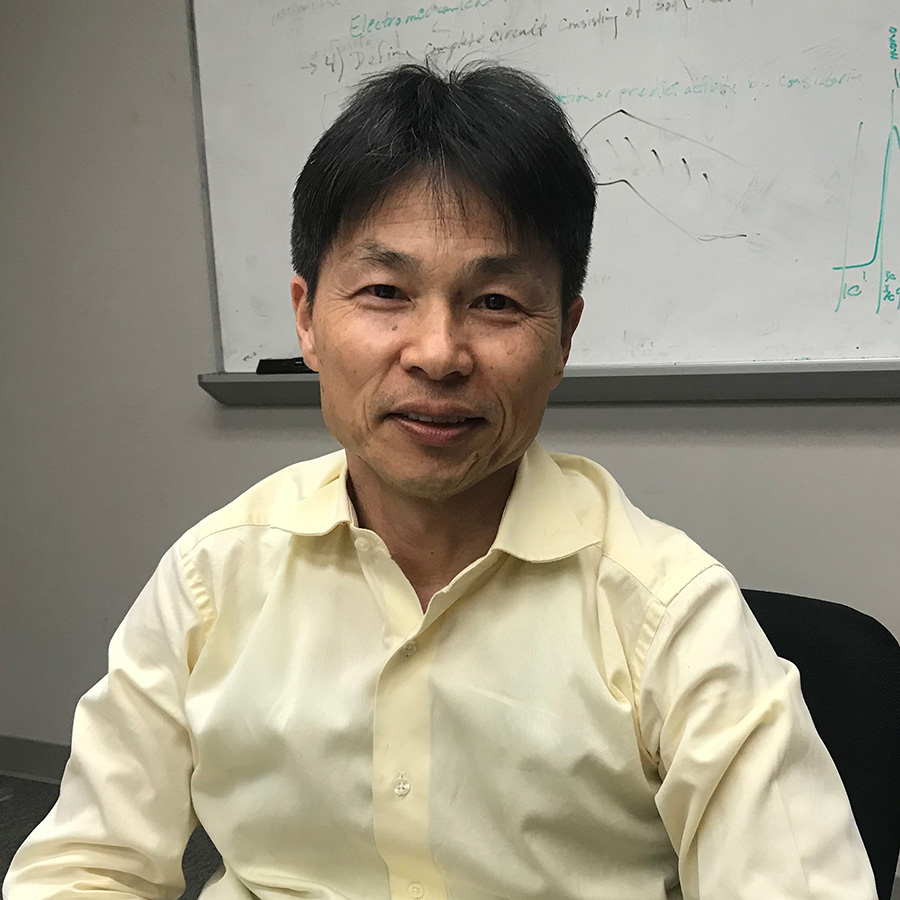
Aaron Young

Aaron Young's profile picture
aaron.young@me.gatech.edu

Aaron Young is an Associate Professor in Mechanical Engineering and is interested in designing and improving powered orthotic and prosthetic control systems for persons with stroke, neurological injury or amputation. His previous experience includes a post-doctoral fellowship at the University of Michigan in the Human Neuromechanics Lab working with exoskeletons and powered orthoses to augment human performance. He has also worked on the control of upper and lower limb prostheses at the Center for Bionic Medicine (CBM) at the Rehabilitation Institute of Chicago. His master's work at CBM focused on the use of pattern recognition systems using myoelectric (EMG) signals to control upper limb prostheses. His dissertation work at CBM focused on sensory fusion of mechanical and EMG signals to enable an intent recognition system for powered lower limb prostheses for use by persons with a transfemoral amputation.

Associate Professor, George W. Woodruff School of Mechanical Engineering
Director, EPIC Lab
Phone
404.385.5306
Office
GTMI 433
Additional Research

Powered prosthesis; EMG signal processing. Young's research is focused on developing control systems to improve prosthetic and orthotic systems. His research is aimed at developing clinically translatable research that can be deployed on research and commercial systems in the near future. Some of the interesting research questions are how to successfully extract user intent from human subjects and how to use these signals to allow for accurate intent identification. Once the user intent is identified, smart control systems are needed to maximally enable individuals to accomplish useful tasks. For lower limb devices, these tasks might include standing from a seated position, walking, or climbing a stair. We hope to improve clinically relevant measures with powered mechatronic devices, including reducing metabolic cost, improving biomechanics and decreasing the time required to perform daily tasks of living.

Google Scholar
https://scholar.google.com/citations?hl=en&user=NkM21vEAAAAJ&view_op=list_works&sortby=pubdate

Vladimir Tsukruk

Vladimir Tsukruk's profile picture
vladimir@mse.gatech.edu

Vladimir V. Tsukruk is a Dean’s Distinguished Professor of Engineering at the School of Materials Science and Engineering, Georgia Institute of Technology, a founding Director of Microanalysis Center, and founding co-director of DoD BIONIC Center of Excellence.  He received MS degree in physics from the National University of Ukraine, PhD in polymer science and DSc in chemistry from the National Academy of Sciences of Ukraine. He carried out his post-doc research at the U. Marburg, Darmstadt TU, and U. Akron.

He serves on the Editorial Advisory Boards of ten professional journals and as an Associate Editor at ACS Applied Materials and Interfaces. He has co-authored more than 400 refereed articles in archival journals and five books, which have been cited more than 15,500 times with H-index of 60 (WoS).  He has organized ten professional symposia and trained about 70 students currently employed in industry, academia, and national labs.  His research in the field of surfaces, interfaces, directed assembly of synthetic/natural polymers and nanostructures, and bioinspired hybrid nanomaterials has been recognized by The Georgia Tech Outstanding Research Author Award (2015), the Humboldt Lectureship (2011), Humboldt Research Award (2010) and the National Science Foundation Special Creativity Award (2006) among others.

Regents' Professor, School of Materials Science and Engineering
Phone
404.894.6081
Office
M Building 3100M
Additional Research

Bio-Inspired Materials; Surfaces and Interfaces; Biomolecular-Solids; Optical Materials; Smart materials. Bionanocomposites, hybrid nanomaterials, optically active materials, photonic materials, responsive materials, and sensors.

Google Scholar
https://scholar.google.com/citations?hl=en&user=vs3ogn8AAAAJ&view_op=list_works&sortby=pubdate

Matthew Torres

Matthew Torres's profile picture
matthew.torres@biology.gatech.edu

Matt is a former Tar Heel from UNC Chapel Hill. His training is in mass spectrometry-based proteomics and G protein signaling. He has been investigating PTMs since 2001. He is also a co-director of the Systems Mass Spectrometry Core (SYMS-C) facility at Georgia Tech.

Associate Professor
Phone
404-385-0401
Office
EBB 4009
Additional Research

Bioinformatics. My lab integrates mass spectrometry and experimental cell biology using the yeast model system to understand how networks of coordinated PTMs modulate biological function. Now well into the era of genomics and proteomics, it is widely appreciated that understanding individual genes or proteins, although necessary, is often not sufficient to explain the complex behavior observed in living organisms. Indeed, placing context on the dynamic network of relationships that exist between multiple proteins is now one of the greatest challenges in Biology. Post-translational modifications (PTMs, e.g. phosphorylation, ubiquitination and over 200 others), which can be readily quantified by mass spectrometry (MS), often mediate these dynamic relationships through enhancement or disruption of binding and/or catalytic properties that can result in changes in protein specificity, stability, or cellular localization. We use a combination of tools including quantitative mass spectrometry, yeast genetics, dose-response assays, in vitro biochemistry, and microscopy to explore testable systems-level hypotheses. My current research interests can be grouped into four main categories:(1)coordinated PTM-based regulation of dynamic signaling complexes, (2) cross-pathway coordination by PTMs, (3) PTM networks in stress adaptation, and (4) technology development for rapid PTM network detection.

Research Focus Areas
Google Scholar
https://scholar.google.com/citations?user=YU_CG7wAAAAJ&hl=en&oi=ao

Stephen Sprigle

Stephen Sprigle's profile picture
stephen.sprigle@design.gatech.edu

Stephen Sprigle is a Professor at the Georgia Institute of Technology with appointments in Bioengineering, Industrial Design and the George W. Woodruff School of Mechanical Engineering. 

A biomedical engineer with a license in physical therapy, Sprigle directs the Rehabilitation Engineering and Applied Research Lab (REARLab), which focuses on applied disability research and development. The REARLab’s research interests include the biomechanics of wheelchair seating and posture, pressure ulcer prevention, and manual wheelchair propulsion. Its development activities include standardized wheelchair and cushion testing and the design of assistive and diagnostic technologies. Sprigle teaches design-related classes in both the Schools of Industrial Design and Mechanical Engineering.

Professor
Phone
404-385-4302
Office
Architecture 0155
Additional Research
Applied research and device development targeting the increased heath and function of persons with disabilities. Specific areas of interest include: wheeled mobility and seating, pressure ulcer prevention and treatment; design of diagnostic tissue interrogation devices; design of assistive technology. Wheeled Mobility and Seating; Pressure Ulcer Prevention and Treatment; Design of Diagnostic Tissue Interrogation Devices; Design of Assistive Technologies

Minoru Shinohara

Minoru  Shinohara's profile picture
shinohara@gatech.edu

Physiological and biomechanical mechanisms underlying fine motor skills and their adjustments and adaptations to heightened sympathetic nerve activity, aging or inactivity, space flight or microgravity, neuromuscular fatigue, divided attention, and practice in humans. He uses state-of-the-art techniques in neuroscience, physiology, and biomechanics (e.g., TMS, EEG, fMRI, single motor unit recordings, microneurography, mechanomyography, ultrasound elastography, and exoskeleton robot) in identifying these mechanisms.

Associate Professor; School of Biological Sciences
Phone
404.894.1030
Office
555 14th St | Suite 1309C
Additional Research

Neuromuscular Physiology

Google Scholar
https://scholar.google.com/citations?hl=en&user=oIbxZhIAAAAJ&view_op=list_works&sortby=pubdate

Krishnendu Roy

Krishnendu Roy's profile picture
krish.roy@gatech.edu

 In August 2023, Krishnendu Roy joined Vanderbilt University as the Bruce and Bridgitt Evans Dean of Engineering and a University Distinguished Professor in Biomedical Engineering, and Pathology, Microbiology, and Immunology, with a secondary appointment in Chemical and Biomolecular Engineering.

Previously, Roy served as Robert A. Milton Endowed Chair for the Coulter Department of Biomedical Engineering at Georgia Tech. He is also the former Director of the NSF Engineering Research Center (ERC) for Cell Manufacturing Technologies (CMaT), Center for ImmunoEngineering at Georgia Tech, and Marcus Center for Therapeutic Cell Characterization and Manufacturing. 

His overall research interests are in developing novel concepts for stem cell engineering as well as polymer controlled delivery of biological factors, especially for nucleic acid therapeutics (DNA, SiRNA and oligos) and immunoengineering. Currently, his group is involved in the following major areas of research; (a) Developing novel concepts to produce biodegradable surface functionalized micro-and nanoparticles for targeted and sustained delivery of nucleic acids, proteins, peptides and other immune modulators. In particular he is interested in developing multi-agent vaccine delivery systems for cancer and infectious diseases as well as immunotherapies for autoimmune diseases. (b) Creating spatio-temporally patterned polymer scaffolds for directed compartmental differentiation of stem cells into multiple lineages. (c) Engineering an artificial thymic niche for directed differentiation of stem cells into functional, antigen- specific T cells. (e) The development of novel nanoimprinting techniques to generate shape specific, environmentally triggered drug nanocarriers.

Faces of Research - Profile Article

Bruce and Bridgitt Evans Dean of Engineering at Vanderbilt University
University Distinguished Professor
Professor of Biomedical Engineering
Professor of Pathology, Microbiology and Immunology
Professor of Chemical and Biomolecular Engineering
Phone
404.385.6166
Additional Research
The overall goal of our research endeavor is the development of new biomaterial-based strategies for gene/drug delivery and stem cell engineering. Towards this, my laboratory focuses on three major directions: (a) design and development of novel delivery systems for nucleic-acid based immunotherapy and cancer chemotherapy (b) engineering complex microenvironments to study and manipulate stem cells and understand their behavior in biomimetic, three-dimensional conditions and (c) developing novel engineering tools and high throughput methods to generate functional T cells and Dendritic cells from stem cells.
Google Scholar
http://scholar.google.com/citations?user=c8qOg2YAAAAJ&hl=en

H. Jerry Qi

H. Jerry Qi's profile picture
qih@me.gatech.edu

H. Jerry Qi is a professor and the Woodruff Faculty Fellow in the George W. Woodruff School of Mechanical Engineering at Georgia Institute of Technology. He received his bachelor degrees (dual degree), master and Ph.D. degree from Tsinghua University (Beijing, China) and a ScD degree from Massachusetts Institute of Technology (Boston, MA, USA). After one year postdoc at MIT, he joined University of Colorado Boulder as an assistant professor in 2004, and was promoted to associate professor with tenure in 2010. He joined Georgia Tech in 2014 as an associate professor with tenure and was promoted to a full professor in 2016. Qi is a recipient of NSF CAREER award (2007). He is a member of Board of Directors for the Society of Engineering Science. In 2015, he was elected to an ASME Fellow. The research in Qi's group is in the general area of soft active materials, with a focus on 1) 3D printing of soft active materials to enable 4D printing methods; and 2) recycling of thermosetting polymers. The material systems include: shape memory polymers, light activated polymers, vitrimers. On 3D printing, they developed a wide spectrum of 3D printing capability, including: multIMaTerial inkjet 3D printing, digit light process (DLP) 3D printing, direct ink write (DIW) 3D printing, and fused deposition modeling (FDM) 3D printing. These printers allow his group to develop new 3D printing materials to meet the different challenging requirements. For thermosetting polymer recycling, his group developed methods that allow 100% recycling carbon fiber reinforced composites and electronic packaging materials. Although his group develops different novel applications, his work also relies on the understanding and modeling of material structure and properties under environmental stimuli, such as temperature, light, etc, and during material processing, such as 3D printing. Constitutive model developments are typically based on the observations from experiments and are then integrated with finite element through user material subroutines so that these models can be used to solve complicated 3D multiphysics problems involving nonlinear mechanics. A notable example is their recent pioneer work on 4D printing, where soft active materials is integrated with 3D printing to enable shape change (or time in shape forming process). Recently, his developed a state-of-the-art hybrid 3D printing station, which allows his group to integrate different polymers and conduct inks into one system. Currently, his group is working on using this printing station for a variety of applications, including printed 3D electronics, printed soft robots, etc.

Professor, Woodruff School of Mechanical Engineering
Woodruff Faculty Fellow, Woodruff School of Mechanical Engineering
Phone
404.385.2457
Office
MRDC 4104
Additional Research

Additive/Advanced Manufacturing; micro and nanomechanics; Recycling; Soft Materials; Conducting Polymers

Google Scholar
https://scholar.google.com/citations?hl=en&user=JSjlLTgAAAAJ&view_op=list_works&sortby=pubdate

David Ku

David Ku's profile picture
david.ku@me.gatech.edu

Selected recent publications:

➤ Robert G. Mannino, Eric J. Nehl, Sarah Farmer, Amanda Foster Peagler, Maren C. Parsell, Viviana Claveria, David Ku, David S. Gottfried, Hang Chen, Wilbur A. Lam, and Oliver Brand, “The critical role of engineering in the rapid development of COVID-19 diagnostics: Lessons from the RADx Tech Test Verification Core” Science Advances. 9, eade4962 (2023). https://www.science.org/doi/10.1126/sciadv.ade4962

➤ Liu ZL, Bresette C, Aidun CK, Ku DN. (2021) SIPA in 10 milliseconds: VWF tentacles agglomerate and capture platelets under high shear. Blood Advances doi.org/10.1182/bloodadvances.2021005692

➤ Kim DJ, Ku DN. “Structure of shear-induced platelet aggregated clot formed in an in vitro arterial thrombosis model” Blood Adv (2022) 6 (9): 2872–2883. doi.org/10.1182/bloodadvances.2021006248

➤ Kim DJ, Bressette C, Liu Z, Ku DN. Occlusive thrombosis in arteries.  APL Bioengineering  2019;3, 041502. https://doi.org/10.1063/1.5115554

Licensed Patents

➤ Ku, D.N., Wootton, D.M., Greer-Braddon, L., “Poly(vinyl Alcohol) Cryogel,” No. 5,981,826 and 6,231,605, issued May 15, 2001. Licensed; created prosthetic cartilage; acquired by Wright Medical. $645 million

➤ Denoziere, G., Ku, D.N., “Methods of Producing PVA Hydrogel Implants and Related Devices,” issued U.S. Patent No. 8,038,920, Licensed to Mimedx.  Market cap >$600 million.

Regents Professor
Lawrence P. Huang Chair in Engineering and Entrepreneurship
Executive Director, Atlantic Pediatric Device Consortium
Phone
404-894-6827
Office
Petit Biotechnology Building, Office 2307
Additional Research
New Project: Lysis of platelet clots to treat heart attacksBackground: Heart attacks and strokes come from a sudden thrombosis or accumulation of platelets in an artery.Our Findings: Our group has discovered the biophysical reason for this sudden occlusion and multiple points of therapy to prevent or dissolve the platelet-rich clot. Current Objectives: Quantify the architecture and strength of the thrombus to prevent or dissolve the thrombus using nano-devices and synthetic proteins.
Google Scholar
https://scholar.google.com/citations?user=PayZMckAAAAJ&hl=en

YongTae (Tony) Kim

YongTae (Tony) Kim's profile picture
yongtae.kim@me.gatech.edu

Kim joined the Woodruff School of Mechanical Engineering as an Assistant Professor in July 2013. Prior to his current appointment, he was a Postdoctoral Associate in the David H. Koch Institute for Integrative Cancer Research at MIT, where he developed biomimetic microsystems for probing nanoparticle behaviors in the inflamed endothelium and for synthesizing therapeutic and diagnostic nanomaterials. His doctorate research at CMU focused on closed-loop microfluidic control systems for lab-on-a-chip applications to biochemistry and developmental biology. Prior to his Ph.D., he was a researcher in areas of dynamics, controls, and robotics at R&D Divisions of Hyundai-Kia Motors and Samsung Electronics for six years.

Associate Professor, Woodruff School of Mechanical Engineering
Phone
404.385.1478
Office
Marcus 3134
Additional Research

Multifunctional Materials; Biosensors; Bio-MEMS; Tissue Engineering

Google Scholar
https://scholar.google.com/citations?hl=en&user=Q13X9mMAAAAJ&view_op=list_works&sortby=pubdate