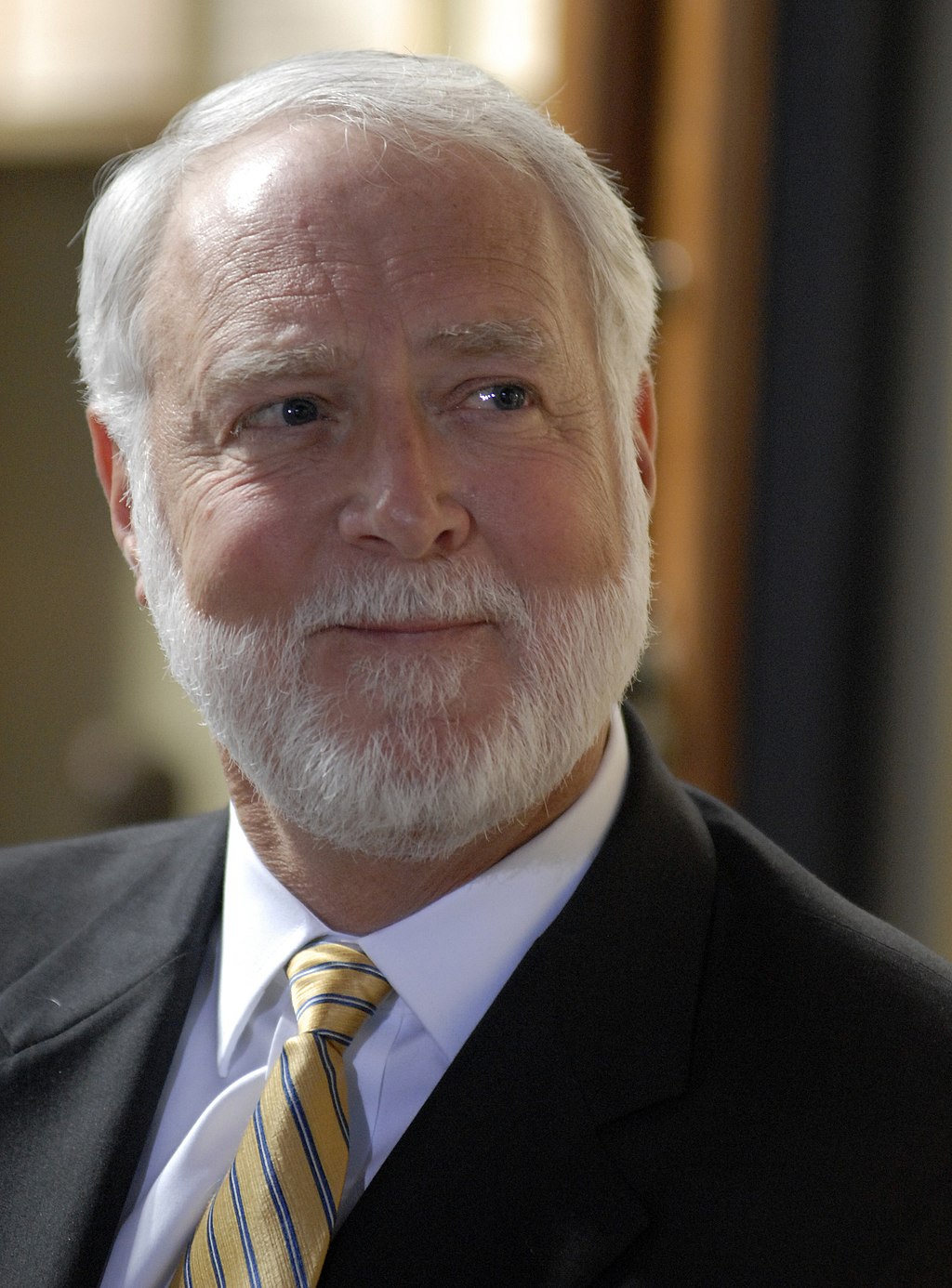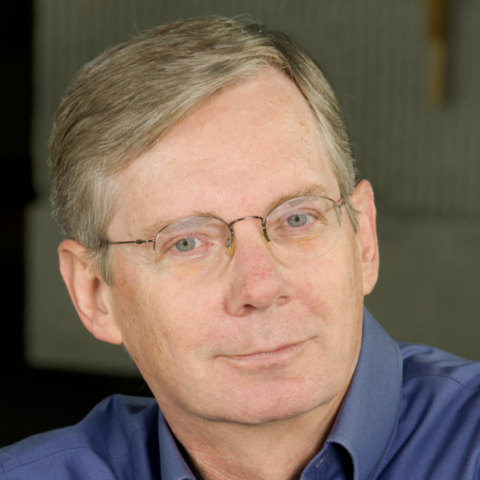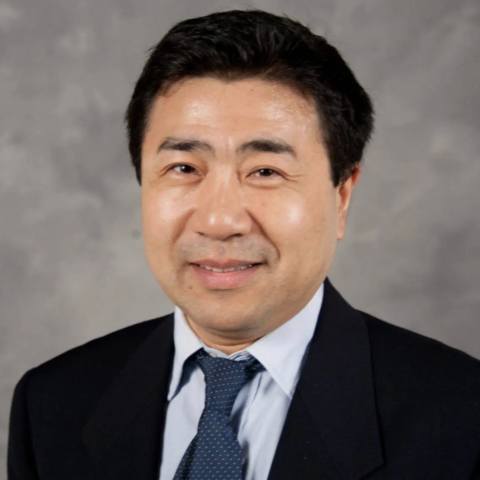
Jingfeng Wang

Jingfeng Wang's profile picture
jingfeng.wang@ce.gatech.edu

Biography

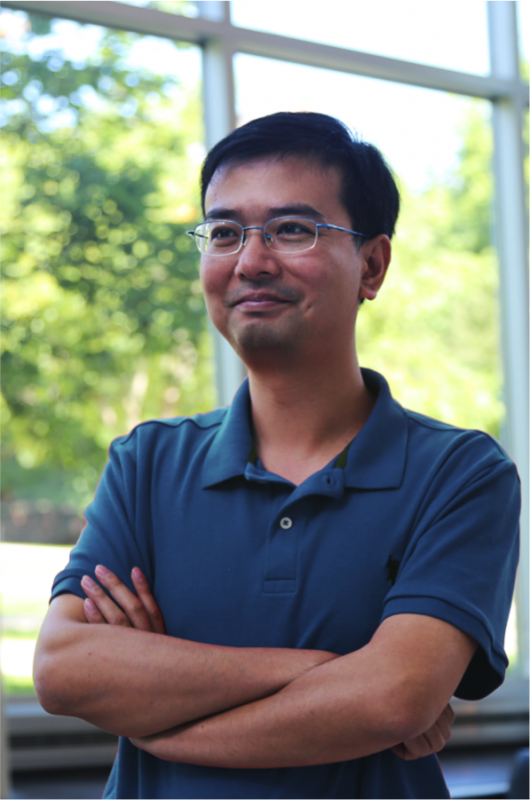
Dr. Jingfeng Wang is a professor in the School of Civil and Environmental Engineering. He obtained a BS in 1984 and a MS in 1987 from Peking University. He received his Sc.D. (Ph.D.) in Hydrometeorology from Massachusetts Institute of Technology (MIT) in February 1997. Dr. Wang was a Post-Doctoral Associate from February 1997 to January 2000, a Research Associate from February 2000 to February 2009 at MIT, and an Assistant Researcher from March 2009 to August 2011 at University of California at Irvine. Dr. Wang was a Principal Research Engineer from September 2011 to July 2012 at Georgia Tech.  Dr. Wang joined Georgia Tech faculty as an Associate Professor in 2012 and earned tenure in 2018. Dr. Wang was an Honorary Visiting Professor at Flinders University, Australia, May – July 2016. 

Research

Dr. Wang's research fields include foundations and models of global water-energy-carbon cycles, non-equilibrium thermodynamics of heat and radiation transfer, Amazon deforestation and regional climate dynamics, and Bayesian probability and statistics.  

Education

  1. Sc.D.             Massachusetts Institute of Technology      1997 
  2. M.S.              Peking University                                             1987 
  3. B.S.               Peking University                                             1984  

Teaching

Dr. Wang teaches undergraduate and graduate courses in Hydrology and co-teaches Vertically-Integrated-Projects (VIP).  

Distinctions & Awards

  • Plenary Speaker, 2nd Global Evapotranspiration Symposium, 2023 
  • AGU Editors’ Citation for Excellence in Refereeing for Earth and Space Science, 2020 
  • AGU’s Outstanding Reviewers, 2018 
  • Warren Lecturer, University of Minnesota, 2018 
  • Overseas Scholarships, Tsinghua University, China, 2017 
  • Visiting International Research Fellowship, Flinders University, Australia, 2016 

Publications

  1. Cho, K., Abraham, S., Kumar, S. V., and Wang, J. (2025), Remote Sensing of Live Fuel Moisture for Wildfires Using SMAP Satellite Observations, Geophysical Research Letters, 52, e2025GL117025. https://doi.org/10.1029/2025GL117025  
  2. Zhou, W., L. Zhang, A. Y. Sheshukov, J. Wang, M. Zhu, K. Sargsyan, D. Xu, D. Liu, T. Zhang, V. Mazepa, A. Sokolov, V. Valdayskikh, A. Vasiliev, V. N. Tran, & V. Ivanov (2025), A Novel Framework to Project the Permafrost Fate with Explicit Quantification of Soil Property and Future Climate Uncertainties, Journal of Geophysical Research - Earth Surface, 130, e2024JF008168. https://doi.org/10.1029/2024JF008168  
  3. Kim, T., Zhou, W., Tran, V. N., Zhang, L., Wang, J., Zhu, M., Sheshukov, A. V., Zhang, T., Liu, D., Mazepa, V. S., Sokolov, A. A., Valdayskikh, V. V., and Ivanov, V. I. (2025), Biases in radiative flux observations due to precipitation across the Arctic forest-tundra ecotone, Agricultural and Forest Meteorology, 74, 110814. https://doi.org/10.1016/j.agrformet.2025.110814  
  4. Farooq, U., Liu, H., Zhang, Q., Wang, J., Shen, L. (2025), Global Lake Evaporation Estimates by Integrating Penman Method with Equilibrium Temperature Approach, Journal of Hydrometeorology, 26 (9), 1301 – 1313. https://doi.org/10.1175/JHM-D-24-0146.1  
  5. Sun, H., Fu, L., Wang, W., Xue, J., Wang, J., Liao, W., Li, H., Sun, X., Yang, Y., Wang, J., Zhang, H., Chen, F., Zheng, Q., Meng, C., Zhang, W. (2025), Explore the relationship between Bowen ratio and Evapotranspiration in Wetlands using the Maximum Entropy Production Model, Journal of Hydrology, 661, Part B, 133586. https://doi.org/10.1016/j.jhydrol.2025.133586  
Associate Professor, School of Civil and Environmental Engineering
Phone
(404) 385-4653
Additional Research

Water

Research Focus Areas
University, College, and School/Department

Terry Sturm

Terry Sturm
terry.sturm@ce.gatech.edu

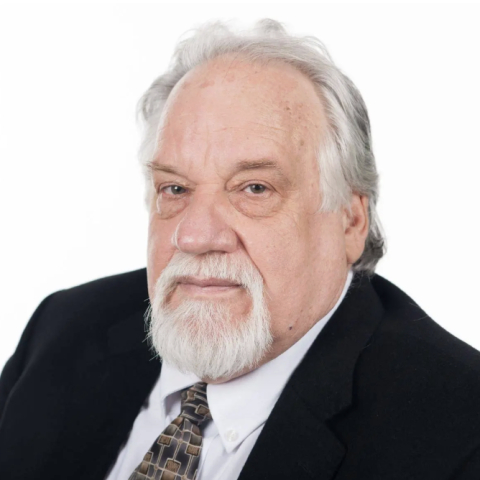
Dr. Terry W. Sturm received B.S. and M.S. degrees in civil engineering from the University of Illinois and a Ph.D. in mechanics and hydraulics from the University of Iowa at the Iowa Institute of Hydraulic Research. A licensed professional engineer (PE), he holds the rank of professor in the School of Civil and Environmental Engineering at the Georgia Institute of Technology where he teaches a graduate course sequence in open channel hydraulics and sediment transport. In addition, he has taught continuing education courses on river hydraulics, culvert design, and bridge scour. His most recent experimental research centers around the sediment-water interface in natural watercourses and the hydrodynamic processes that occur there such as flow resistance, cohesive sediment resuspension, and local bridge and spillway scour. He is the author of numerous research publications on thermal hydraulics, open channel flow resistance, compound channel hydraulics, bridge abutment scour, and resuspension of cohesive sediments, and he has written a textbook on open channel hydraulics published by McGraw-Hill which is in its second edition. Dr. Sturm's research has been supported by agencies such as the National Academy of Sciences, National Science Foundation, U.S. Geological Survey, Georgia Department of Transportation, Federal Highway Administration, Environmental Protection Agency, and the U. S. Army Corps of Engineers. In 2008, Dr. Sturm was named the Georgia Engineer of the Year in Education by the Georgia Engineering Alliance. He is a Life Member of ASCE, and he served from 2010 to 2014 as Chief Editor of the ASCE Journal of Hydraulic Engineering. In 2013, Dr. Sturm received the ASCE-EWRI Hunter Rouse Hydraulic Engineering Award.

Research

Hydraulic structures, Open channel flow resistance, Compound channel hydraulics, Sediment transport, Erosion control at construction sites, Scour around bridge foundations, Cohesive sediment re-suspension

Professor Emeritus, School of Civil and Environmental Engineering
Phone
(404) 894-2218
Additional Research

Smart Infrastructure; Climate/Environment

University, College, and School/Department

Brian Stone

Brian Stone's profile picture
stone@gatech.edu

Brian Stone is a key expert in energy utilization, conservation, climate change, and social and environmental impacts.

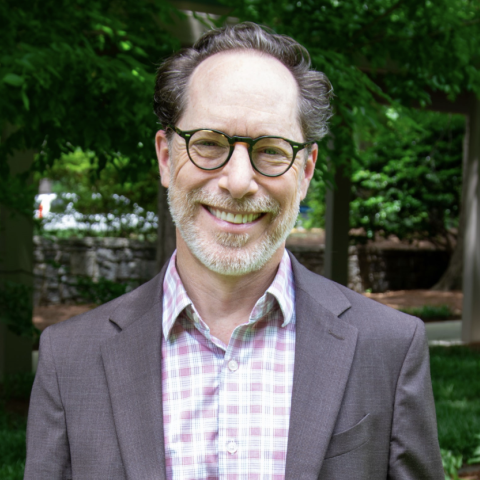
Brian Stone Jr. is a Professor in the School of City and Regional Planning at the Georgia Institute of Technology, where he teaches urban environmental planning and directs the Urban Climate Lab. Stone’s program of research is focused on urban scale drivers of climate change and has been supported by the National Science Foundation, US Centers for Disease Control and Prevention, and US Environmental Protection Agency. His work on urbanization and climate change is regularly featured in The New York Times, The Washington Post, and on National Public Radio. He is author of The City and the Coming Climate: Climate Change in the Places We Live, which received a Choice Outstanding Academic Title Award, and the recently published Radical Adaptation: Transforming Cities for a Climate Changed World (Cambridge University Press). Stone holds degrees in environmental management and urban planning from Duke University and the Georgia Institute of Technology.

Biography:

Brian Stone Jr., Ph.D., is a Professor in the School of City and Regional Planning at the Georgia Institute of Technology, where he teaches in the area of urban environmental planning and design. Stone's program of research is focused on the spatial drivers of urban environmental phenomena, with an emphasis on urban scale climate change, and is supported by the National Science Foundation, U.S. Centers for Disease Control and Prevention, and U.S. Environmental Protection Agency.

He is Director of the Urban Climate Lab at Georgia Tech. Stone's work on urbanization and climate change has been featured on CNN and National Public Radio, and in print media outlets such as The New York Times and The Washington Post.

He is author of Radical Adaptation: Transforming Cities for a Climate Changed World (Cambridge University Press, 2024) and The City and the Coming Climate: Climate Change in the Places We Live (Cambridge University Press), which received a Choice Outstanding Academic Title Award for 2012. Stone holds degrees in environmental management and planning from Duke University and the Georgia Institute of Technology.

Teaching Interest:

Professor Stone's teaching interests focus on the role of the built environment in amplifying or moderating environmental impacts such as extreme heat, flooding, and associated health effects. He regularly teaches classes on environmental planning, climate change management, and planning theory.

Research Interest:

Professor Stone's research focuses on the spatial drivers of urban environmental phenomena, with a particular emphasis on urban-scale climate change. He is Director of the Georgia Tech Urban Climate Lab.

List of Recent Scholarly Work:

Gronlund, Carina, Hondula, David, Mallen, Evan, O’Neill, Marie, Rajput, Mayuri, Krayenhoff, Scott, Broadbent, Ashley, Grijalva, Santiago, Larsen, Larissa, Harlan, Sharon, Stone, Brian. 2025. Advancing extreme heat risk assessments to better capture individually-experienced temperatures: A new approach to describe individual and subgroup vulnerabilities. Environmental Health Perspectives, in press.  

Huang, Kangning, Stone, Brian, Guan, Cheng, Liang, Jiayong. 2025. “Declining urban density attenuates rising population-weighted exposure to surface heat extremes.” Nature Scientific Reports, 15: 13860.

Jiang, Timothy, Krayenhoff, Scott, Martilli, Alberto, Nazarian, Negin, Stone, Brian, Voogt, James 2025. “Prioritizing urban heat adaptation infrastructure based on multiple outcomes: Comfort, health and energy.” Proceedings of the National Academy of Sciences, 122: e2411144122.

Stone, Brian. 2024. Radical Adaptation: Transforming Cities for a Climate Changed World. New York: Cambridge University Press.

Dey, Shuv, Mallen, Evan, Stone, Brian, Joshi, Yogendra. 2024. “Using Multiscale Atmospheric Modeling to Explore the Impact of Surface Albedo on Anthropogenic Heat Release.” Journal of Heat and Mass Transfer, 146: 052901-1-052901-12.

Stone, Brian, Mallen, Evan, Gronlund, Carina, Hondula, David, O’Neil, Marie, Rajput, Mayuri, Grijalva, Santiago, Lanza, Kevin, Harlon, Sharon, Larsen, Larissa, Augenbroe, Godfried, Krayenhoff, Scott, Broadbent, Ashley, Georgescu, Matei. 2023. “How Blackouts During Heat Waves Amplify Climate Risk.” Environmental Science & Technology, 57: 8245-8255.

Professor, School of City & Regional Planning
Director, Urban Climate Lab
Phone
(404) 894-6488
Additional Research

City and Regional Planning; Climate/Environment; System Design & Optimization

Xing Xie

Xing Xie's profile picture
xing.xie@ce.gatech.edu

 Xing Xie is the Carlton S. Wilder Assistant Professor in the School of Civil and Environmental Engineering at Georgia Institute of Technology. Prior to joining Georgia Tech, he was a post-doctoral scholar at California Institute of Technology. He received his B.S. (2006) and M.S. (2008) degrees in Environmental Science & Engineering from Tsinghua University, and a second M.S. degree (2012) in Materials Science & Engineering and a Ph.D. degree (2014) in Civil & Environmental Engineering from Stanford University. His research focuses on the applications of innovative materials for sustainable and reliable water and energy. He has worked on many projects related to water treatment and reuse, microbial detection and quantification, energy and resource recovery, energy storage, etc. He has published more than 60 peer-reviewed articles with more than 6,000 citations

Carlton S. Wilder Junior Professor, School of Civil and Environmental Engineering
Assistant Professor, School of Civil and Environmental Engineering
Phone
404.894.9723
Office
ES&T 3236
Additional Research

Water & wastewater treatment; Energy & resources recovery; Energy storage; Salinity energy & desalination; self-sustained sanitation; Oil-water separation; Environmental monitoring

Google Scholar
https://scholar.google.com/citations?user=XiHhfOkAAAAJ&hl=en

Armistead Russell

Armistead Russell's profile picture
ted.russell@ce.gatech.edu

Prof. Armistead (Ted) Russell is the Howard T. Tellepsen Chair and Regents’ Professor of Civil and Environmental Engineering at Georgia Tech, where his research is aimed at better understanding the dynamics of air pollutants at urban and regional scales and assessing their impacts on health and the environment to develop approaches to design strategies to effectively  improve air quality.  He earned his M.S. and Ph.D. degrees in Mechanical Engineering at the California Institute of Technology, conducting his research at Caltech’s Environmental Quality Laboratory.  His B.S. is from Washington State University. Dr. Russell was a member of EPA’s Clean Air Science Advisory Committee (CASAC) and a member of the National Research Council’s Board on Environmental Studies and Toxicology.    He has served on and chaired multiple NASEM committees.  He chaired the CASAC NOx-SOx, Secondary NAAQS review panel, the Ambient Air Monitoring Methods Subcommittee and the Council on Clean Air Compliance Analysis’ Air Quality Modeling Subcommittee. 

Research

Professor Russell’s research interests are conducting fundamental and applied studies on air quality modeling, health effects of air pollutants, aerosol dynamics, environmental economics and control strategy design, atmospheric chemistry, computer modeling and numerical methods, including application of emerging artificial intelligence approaches to improving air quality and environmental management globally.

Education

Ph.D., California Institute of Technology, 1985

M.S., California Institute of Technology, 1980

B.S., Washington State University, 1979

Teaching

Professor Russell’s teaching interests include environmental engineering principles and their application to critical issues, air quality and the formation, fate and impacts of air pollution, and mathematical methods in environmental engineering.

Distinctions & Awards

  • Dixy Lee Ray Medal, ASME (2025)
  • Arthur Stern Distinguished Paper Award, Journal of Air and Waste Management (2023)
  • Foreign Fellow, Canadian Academy of Engineering (2023)
  • Environmental Science and Technology, Super-Reviewer (2021)
  • Frank A. Chambers Excellence in Air Pollution Control Award, Air and Waste Management Association (2020)
Regents' Professor, School of Civil and Environmental Engineering
Howard T. Tellepsen Chair, School of Civil and Environmental Engineering
Phone
(404) 894-3079
Additional Research

Climate/Environment

Research Focus Areas
University, College, and School/Department

G. Wayne Clough

G. Wayne Clough's profile picture
wayne.clough@ce.gatech.edu

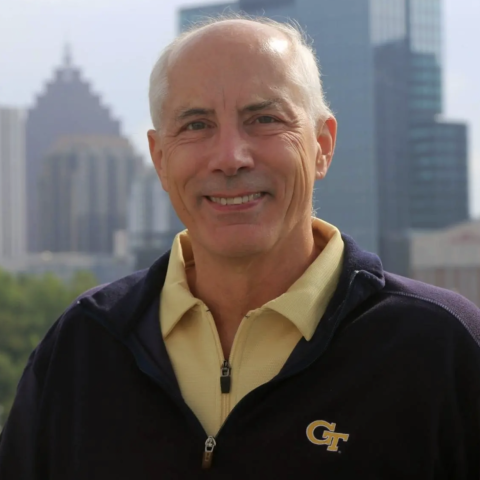
Gerald Wayne Clough is President Emeritus of the Georgia Institute of Technology (Georgia Tech) and former Secretary of the Smithsonian Institution. A graduate of Georgia Tech in civil engineering, he was the first alumnus to serve as President of the Institute. 

The Clough Undergraduate Learning Commons, which officially opened its doors in August 2011, is named in his honor. Clough has garnered many other awards and honors, including the title of President Emeritus, two Norman Medals, eight honorary degrees, and membership in the National Science Board.

After earning his doctorate, Clough began his academic career as an assistant professor at Duke University in 1969. He joined the faculty at Stanford University in 1974 first as an associate professor and then later as full professor. In 1982, he joined the faculty of Virginia Tech as a professor of civil engineering and served as head of their Department of Civil Engineering for seven years. In 1990, Clough became dean of the Virginia Tech College of Engineering. Clough continued his research and instruction of graduate students at Virginia Tech in addition to his administrative responsibilities. Clough's research focused on geotechnical engineering, including earthquake studies, numerical analysis, soil structure interaction, in-situ testing, and underground openings. In 1993, he became provost and vice president for academic affairs at the University of Washington. Clough cofounded the United States Universities Council of Geotechnical Engineering Research (USUCGER), and served as the organization's first president during 1993.

Secretary Emeritus, Smithsonian Institution
President Emeritus
Phone
(404) 385-2755
Additional Research

Climate/Environment

Research Focus Areas
University, College, and School/Department

William Drummond

William  Drummond's profile picture
bill.drummond@coa.gatech.edu

Biography:

William J. (Bill) Drummond is an associate professor in the College of Design at the Georgia Institute of Technology (Atlanta, Georgia), and directs the Georgia Tech Master of Science degree in Geographic Information Science and Technology.

He graduated from Duke University summa cum laude and Phi Beta Kappa, majoring in history. He then earned a Master of Divinity degree from Gordon-Conwell Theological Seminary and a biblical studies Master of Theology degree from Union Presbyterian Seminary in Richmond, Virginia. After serving for two years as minister of a North Carolina Presbyterian church, he earned a PhD in City and Regional Planning from the University of North Carolina at Chapel Hill. 

He has taught at Georgia Tech since 1987. Over the last several years his courses have included climate change planning, land conservation, sustainable urban development, socioeconomic GIS, programming for GIS, and PhD quantitative research methods.

His current research includes work on population forecasting with advanced time-series models, the relationship between urban form and greenhouse gas emissions, and new methods of estimating building-level and neighborhood-level greenhouse gas emissions.

In his spare time he enjoys running, church activities, and, of course, ACC basketball.

Teaching Interest:

I teach primarily methods and geographic information systems classes, including Socioeconomic GIS, Climate Change Analytics, and a PhD-level statistics class. On occasion I teach Land Conservation, Introduction to Climate Change Planning, and Sustainable Urban Development.

Research Interest:

My primary research interest is in climate change mitigation. I work on climate-related projects funded by the U.S Department of Energy, the Atlanta Regional Commission, the state of Georgia Environmental Protection Division, and the Ray C. Anderson Foundation.

List of Recent Scholarly Work:

My recent scholarly products have been tools and analyses related to climate change.  I am the lead developer for the Drawdown Georgia GHG Emissions Trackers (https://drawdownga.org/tracker), which estimate local GHG emissions at the county and municipal level across the state of Georgia.  I provided technical analyses for the state of Georgia's first climate action plan (https://www.epa.gov/system/files/documents/2024-03/georgia_psverp.pdf) and the Atlanta Regional Commission's Comprehensive Climate Action Plan (not yet publicly available).

Degrees with Year of Award:

Ph.D., December 1989.  University of North Carolina, Chapel Hill, North Carolina, Doctor of Philosophy, Department of City and Regional Planning.  Advisor: Edward J. Kaiser
    
Th.M., May 1980.  Union Theological Seminary, Richmond, Virginia.  Master of Theology.
    
M.Div., May 1979.  Gordon-Conwell Theological Seminary, South Hamilton, Massachusetts.  Master of Divinity, summa cum laude.
    
A.B., May 1975.  Duke University, Durham, North Carolina.  Bachelor of Arts (History), summa cum laude, Phi Beta Kappa.

Associate Professor, School of City and Regional Planning
MS-GIST Program Director, Associate Director, Center for Geographic Information Systems
Phone
(404) 894-2350
Additional Research

City and Regional Planning; Climate/Environment

Casey Wichman

Casey Wichman's profile picture
wichman@gatech.edu

Dr. Casey Wichman is an applied microeconomist working on issues at the intersection of environmental and public economics. His research focuses on how people interact with the natural and built environment, and what that behavior reveals about the value of environmental amenities. His research spans water and energy demand, valuation of environmental resources and infrastructure, urban transportation, public goods provision, demand for outdoor recreation, and climate change. Methodologically, he relies on the application of program evaluation techniques, often using large micro-data sets, to estimate causal effects of environmental policies on economic behavior. 

Prior to joining Georgia Tech, Dr. Wichman served as the Research Director of the Energy and Environment Lab at the University of Chicago and as a Fellow at Resources for the Future, an environmental economics think-tank in Washington, DC. He received his Ph.D. from the University of Maryland in 2015, and his doctoral work earned outstanding doctoral dissertation awards from both the Association of Environmental and Resource Economists and the Association of Agricultural and Applied Economists.

Associate Professor, School of Economics
Additional Research

Applied EconometricsEnvironmental EconomicsPublic Economics

Jennifer Kaiser

Jennifer Kaiser's profile picture
jennifer.kaiser@ce.gatech.edu

In the Kaiser group, we work to improve the understanding of the emissions and atmospheric processes that influence air quality and climate. Our research focuses largely on volatile organic compounds (VOCs), which are reactive organic species that are precursors to ozone and aerosol. Our work is grounded in insights from field, and aimed at understanding atmospheric composition at broad spatial and temporal scales.

Education

Ph.D., Chemistry, University of Wisconsin-Madison, 2016 B.S., Chemistry, Wittenberg University, 2010

Research

Remote Sensing Atmospheric composition and chemistry Biogenic and anthropogenic emissions  Global chemistry-transport modeling In-situ and remote sensing

Research Keywords

Atmospheric Chemistry, Aerosols & Clouds

Associate Professor, School of Earth and Atmospheric Sciences
Phone
(404) 894-2644
Additional Research

Climate/EnvironmentAtmospheric Chemistry, Aerosols & CloudsRemote SensingAtmospheric composition and chemistryBiogenic and anthropogenic emissionsGlobal chemistry-transport modelingIn-situ and remote sensing

Research Focus Areas

Nga Lee (Sally) Ng

Nga Lee (Sally) Ng's profile picture
ng@chbe.gatech.edu

Dr. Ng is the Love Family Professor in the School of Chemical & Biomolecular Engineering and the School of Earth & Atmospheric Sciences at the Georgia Institute of Technology. She earned her Ph.D. in Chemical Engineering from the California Institute of Technology and was a postdoctoral scientist at Aerodyne Research Inc.

Dr. Ng’s research focuses on the understanding of the chemical mechanisms of aerosol formation and composition, as well as their health effects. Her group combines laboratory chamber studies and ambient field measurements to study aerosols and air quality using advanced mass spectrometry techniques. Dr. Ng leads the establishment of the first, high time-resolution, long-term aerosol measurement network in the U.S.: Atmospheric Science and Chemistry mEasurement NeTwork (ASCENT), for characterization of aerosol chemical composition and physical properties, and their impacts on climate, human health, and ecosystems.

Love Family Professor, School of Chemical & Biomolecular Engineering, School of Earth & Atmospheric Sciences
SEI Senior Advisor: Energy & Health
Phone
(404) 385-2148
Office
ES&T 2222
Additional Research

Climate/Environment

Research Focus Areas
University, College, and School/Department