Aruna Weerasekara
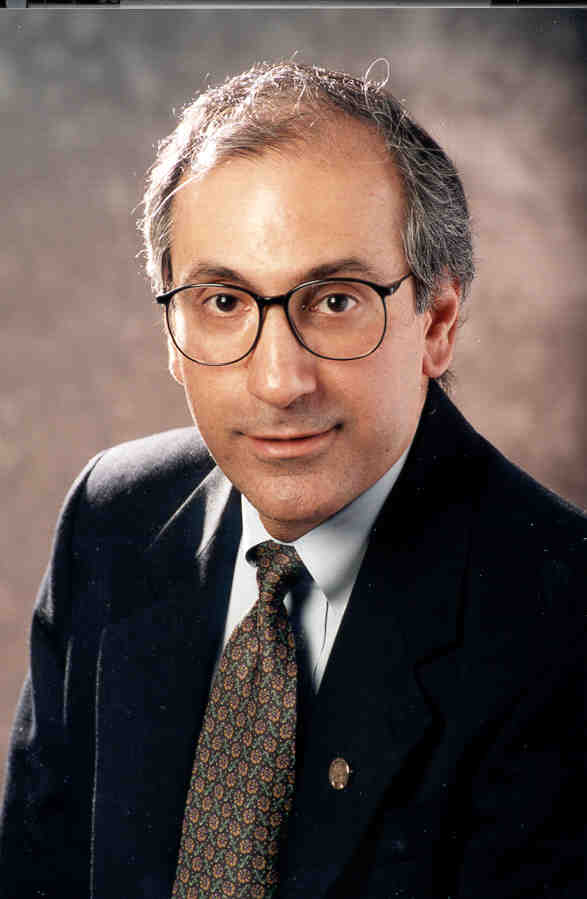
Dr. Aidun joined the Woodruff School as a Professor in 2003 after completion of a two-year period as program director at the National Science Foundation. He began at Tech in 1988 as an Assistant Professor at the Institute of Paper Science and Technology. Prior, he was a research Scientist at Battelle Research Laboratories, Postdoctoral Associate at Cornell University and Senior Research Consultant at the National Science Foundation's Supercomputer Center at Cornell.
Dr. Aidun's research is at the intersection between fundamentals of the physics of complex fluids/thermal transport and applications to engineering and biotransport. He has a diverse research portfolio in fluid mechanics, bioengineering, renewable bioproducts and decarbonization of industrial processes.
A major focus has been to understand the physics of blood cell transport and interaction with glycoproteins (e.g., vWF) with applications to cardiovascular diseases.
Computational analysis of cellular blood flow in the cardiovascular system with applications to platelet margination, thrombus formation, and platelet activation in artificial heart valves. Thermal Systems. Chemical Recovery; Papermaking.
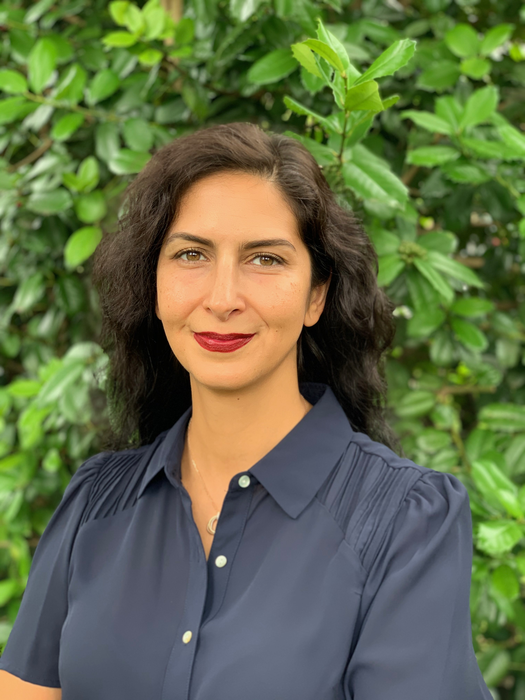
Nazanin Bassiri-Gharb joined Georgia Tech in summer 2007 as an assistant professor at the George W. Woodruff School of Mechanical Engineering. Prior to this, she was a senior engineer in the materials and device R&D group of MEMS Research and Innovation Center at QUALCOMM MEMS Technologies, Inc. Her work included characterization and optimization of optical and electric response of IMOD displays and research on novel materials for improved processing and reliability of IMOD. Bassiri-Gharb's research interests are in smart and energy-related materials (e.g. ferroelectric and multiferroic materials) and their application to nano- and micro-electromechanical systems. Her research projects integrate novel micro and nanofabrication techniques and processes and study of the fundamental science of these materials at the nanoscale, at the interface of physical and electrochemical phenomena.
Ferroelectronic Materials; Functional Materials; In-Situ Characterization; Piezoelectronic Materials; Multiscale Modeling; Organic Electronics
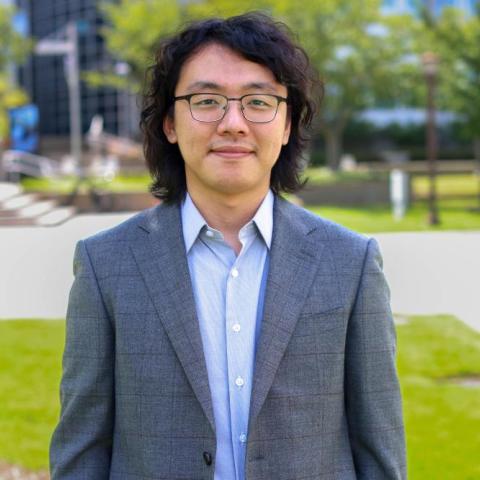
Dr. Alam joined the George W. Woodruff School of Mechanical Engineering as an assistant professor in January 2026. His primary research interests include efficient algorithms and methods for AI-native engineering applications. His group, Inference Lab, focuses on foundational AI for engineering tasks, physics-integrated AI, and robot learning for unstructured manufacturing tasks. Before joining Georgia Tech, he was a postdoctoral associate at MIT. Dr. Alam has received several national and international awards including Google research scholar awards in Applied science in 2024, Ford Best Paper award at IDECTC 2025, SEIKM Best paper award at IDETC 2025, Best paper award at MSEC 2020.
3D printing; Additive/Advanced Manufacturing; Biomaterials; Composites; Emerging Technologies; Nanocomposites; Nanomanufacturing; Manufacturing, Mechanics of Materials, Bioengineering, and Micro and Nano Engineering. Advanced manufacturing and materials processing of metallic, polymeric, ceramic, and composite materials for applications in life sciences, propulsion, and energy. Professor Das directs the Direct Digital Manufacturing Laboratory and Research Group at Georgia Tech. His research interests encompass a broad variety of interdisciplinary topics under the overall framework of advanced design, prototyping, direct digital manufacturing, and materials processing particularly to address emerging research issues in life sciences, propulsion, and energy. His ultIMaTe objectives are to investigate the science and design of innovative processing techniques for advanced materials and to invent new manufacturing methods for fabricating devices with unprecedented functionality that can yield dramatic improvements in performance, properties and costs.
Tony G. Chen is an Assistant Professor at Georgia Tech. His research focuses on designing mechanical intelligent mechanisms for various robotics applications. Mechanical intelligence focuses on developing mechanisms and robotic platforms that make challenges for perception, control, and autonomy easier or more robust for natural, unstructured, and often unpredictable environments by virtue of their physical designs. To achieve this design approach, two main and common methods are often deployed: rapid prototyping and bio-inspiration. Chen is especially interested in three major research application areas: (i) field robotics where designing new robotic mobility platforms or equipping existing platforms with capabilities of manipulation, (ii) manipulation tasks in home and industrial environments, and (iii) biomimetic robotics for biological study.
Dr. Deo came to Georgia Tech in August 2007 as an Assistant Professor of Nuclear and Radiological Engineering. Prior, he was a postdoctoral research associate in the Materials Science and Technology Division of the Los Alamos National Laboratory. He studied radiation effects in structural materials (iron and ferritic steels) and nuclear fuels (uranium dioxide). He also obtained research experience at Princeton University (Mechanical Engineering), Lawrence Livermore National Laboratory, and Sandia National Laboratories.
Nuclear; Thermal Systems; Materials In Extreme Environments; computational mechanics; Materials Failure and Reliability; Ferroelectronic Materials; Materials Data Sciences
Baratunde A. Cola is a professor in the George W. Woodruff School of Mechanical Engineering and the School of Materials Science and Engineering at the Georgia Institute of Technology. He received his degrees from Vanderbilt University and Purdue University, all in mechanical engineering, and was a starting fullback on the Vanderbilt football team as an undergrad. Cola has received a number of prestigious early career research awards including the Presidential Early Career Award for Scientist and Engineers (PECASE) in 2012 from President Obama for his work in nanotechnology, energy, and outreach to high school art and science teachers and students; the AAAS Early Career Award for Public Engagement with Science in 2013; and the 2015 Bergles-Rohsenow Young Investigator Award in Heat Transfer from the American Society of Mechanical Engineers. In addition to research and teaching, Cola is the founder and CEO of Carbice Corporation, which sells a leading thermal management solution for the global electronics industry.
Carbon Nanotubes; Electronic Materials; Heat Transfer; Integrated Photonics; Nanoelectronics