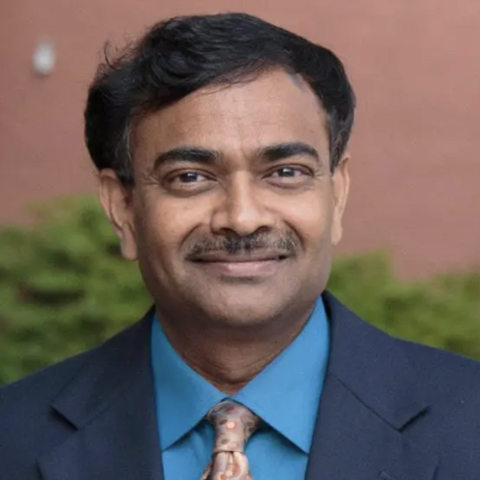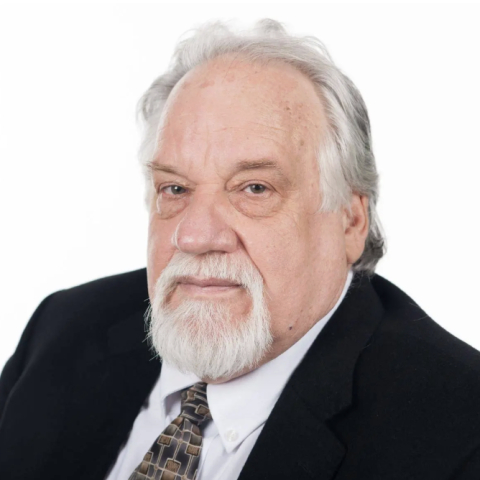
Paul Mayne

Paul Mayne's profile picture
paul.mayne@ce.gatech.edu

Professor Paul W. Mayne is an international researcher with a focus on in-situ testing, geotechnical site characterization, foundation systems, and the evaluation of soil & rock properties. Particular interests include the use, conduct, and interpretation of the cone penetrometer, seismic piezocone, and flat dilatometer, evaluation of shallow and deep foundation systems, and ground modification techniques. From 1977-1987, Paul served in geotechnical consulting practice in the Washington DC-Virginia-Maryland region. After receiving a doctorate from Cornell University, he joined the civil & environmental engineering faculty at Georgia Tech in 1990. He served as the Geosystems Engineering Team Leader from 2000 to 2010, 2012-2014, and 2016. During his residency at GT, Paul served as the chair (2001-2013) of the ISSMGE Technical Committee TC 102 (formerly TC16): Ground Property Characterization by In-Situ Tests (http://www.webforum.com/tc102) and later served as ISSMGE Vice President for North America (www.issmge.org). With Dr. Peter Robertson, Dr. Mayne hosted and co-edited the two-volume proceedings entitled Geotechnical Site Characterization (ISC-1, 1998) held in Atlanta. In 2000, he co-edited the ASCE GSP No. 97 entitled Innovations & Applications in Geotechnical Site Characterization for the Geo-Institute conference held in Denver. He is the senior author of the National Highway Institute manual on Subsurface Investigations: Geotechnical Site Characterization (2002) and a co-author on the FHWA Geotechnical Engineering Circular (2002) on Evaluation of Soil & Rock Properties and GSP 124 GeoSupport 2004 on foundations. In September 2004, the 2nd Intl. Conf. on Site Characterization (ISC) held in Portugal resulted in the two-volume proceedings: Geotechnical & Geophysical Site Characterization, for which he was a co-editor. Paul served as senior editor for GSP 138 on Site Characterization & Modeling at the 2005 ASCE GeoFrontiers Conference in Austin. Dr. Mayne was selected by the National Academies to prepare the NCHRP Synthesis 368 on the Cone Penetration Test (2007) which is available at:www.trb.org.  He co-edited the proceedings Geotechnical & Geophysical Site Characterization 2008 (ISC-3, Taipei, 2008) and served as host chair and co-editor for two volumes entitled:  Deformational Characteristics of Geomaterials (2008).  In 2009, he prepared GeoEngineering Design Using the CPT for ConeTec. Together with Dr. Peter K. Robertson, Paul co-edited the 3-volume proceedings for the Second International Symposium on Cone Penetration Testing (CPT’10) that was held in Huntington Beach/CA (www.usucger.org).  He also co-edited the proceedings for the 4th International Conference on Site Characterization (ISC-4) held in Pernambuco, Brazil (2012). Most recently, Paul contributed 4 of the 11 chapters to the new NCHRP 258 Document Subsurface Investigations Manual (2019) published by the National Academies Press for the Transportation Research Board (www.trb.org). Dr. Mayne has delivered international lectures, including a number of invited keynotes presentations, and participated in over 125 continuing education courses.  Paul Mayne is an active member of ASCE, ASTM, TRB, USUCGER, DFI, ADSC, CGS, and ISSMGE and has served as a recent consultant on projects located in the USA, Canada, Australia, Europe, and Asia. He is licensed as a professional registered engineering in Virginia. He is married, has one daughter, and plays bass guitar. 

Research

In-situ testing, Site characterization, Geotechnical parameter identification, Foundation systems, Soil properties determination, Geostatic stress state, Ground improvement by dynamic compaction and plasma arc vitrification

Professor Emeritus, School of Civil and Environmental Engineering
Phone
(404) 894-6226
Additional Research

Geosystems

University, College, and School/Department

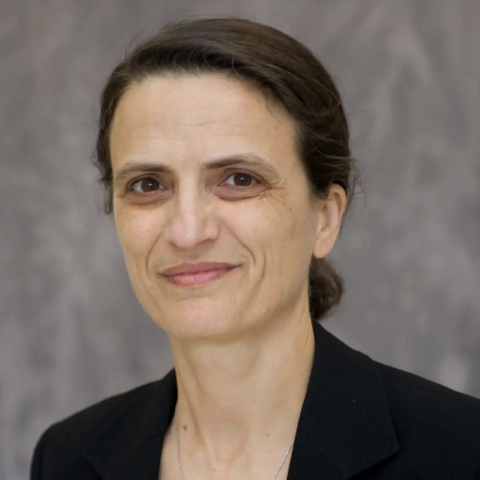
Sotira Yiacoumi

Sotira Yiacoumi's profile picture
sotira.yiacoumi@ce.gatech.edu

Dr. Sotira Z. Yiacoumi is currently a Professor in the School of Civil and Environmental Engineering at the Georgia Institute of Technology. She received a Diploma of Engineering degree from the Aristotle University, Greece, in 1985, and M.S. and Ph.D. degrees from Syracuse University in 1987 and 1992, respectively. After receiving her Ph.D. degree, she joined the School of Civil and Environmental Engineering at the Georgia Institute of Technology as an Assistant Professor and was promoted to the rank of Associate Professor in 1997. Her research interests include colloidal and interfacial phenomena in environmental and energy systems. Her research contributions span the following areas: sorption phenomena, colloidal phenomena, influence of sorption on colloidal behavior, molecular techniques, and novel environmental processes. She has co-authored the book "Kinetics of Metal Ion Adsorption from Aqueous Solutions: Models, Algorithms, and Applications." In 1997, she received a National Science Foundation Career Award, entitled "CAREER: Influence of Sorption Rates on Particle Flocculation Kinetics." She was the chair of the organizing committee for the 77th American Chemical Society Colloid and Surface Science Symposium, which was held at the Georgia Institute of Technology during June 15-18, 2003.

Research

Interfacial and colloidal phenomena in environmental systems, Sorption of metal ions from aqueous solutions, Sorption/desorption of organic compounds from aqueous solutions by natural particles, Colloidal particle interactions in aquatic systems, Bubble interactions in gas/liquid reactive systems, Influence of sorption rates on particle flocculation kinetics

Professor, School of Civil and Environmental Engineering
Phone
(404) 894-2639
Additional Research

Separations Technology; Water

Research Focus Areas
University, College, and School/Department

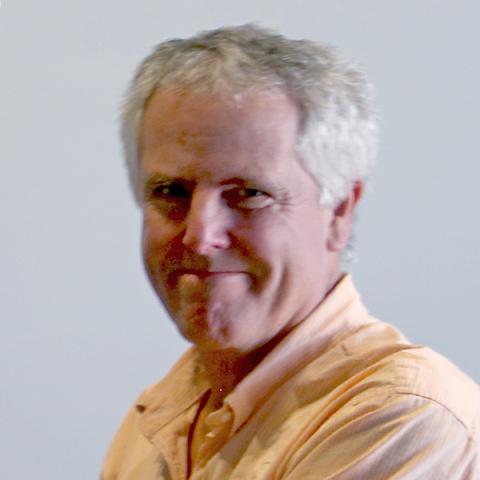
James Mulholland

James Mulholland's profile picture
james.mulholland@ce.gatech.edu

Jim Mulholland is a Professor in the School of Civil & Environmental Engineering at Georgia Tech. He received a B.S. in Mechanical Engineering from Cornell in 1979, M.S. in Mechanical Engineering from Stanford in 1981, and Ph.D. in Chemical Engineering from M.I.T. in 1992. Between M.S. and Ph.D., he worked for an energy R&D firm and as a research engineer at EPA's air research center. He has been on the faculty in the Environmental Engineering Program at Georgia Tech since 1993. His research includes study of the formation and control of air pollutants, in particular organic combustion byproducts, and air quality data analysis for use in epidemiologic studies.

Research

Combustion byproduct formation and control, Incineration, Thermochemistry of polycyclic aromatic hydrocarbons and chlorinated aromatic species, Molecular modeling, Spatio-temporal analysis of ambient air pollutants

Associate Chair for Graduate Programs and Research Innovation
Professor, School of Civil and Environmental Engineering
Phone
(404) 894-1695
Additional Research

Climate/Environment; Combustion

University, College, and School/Department

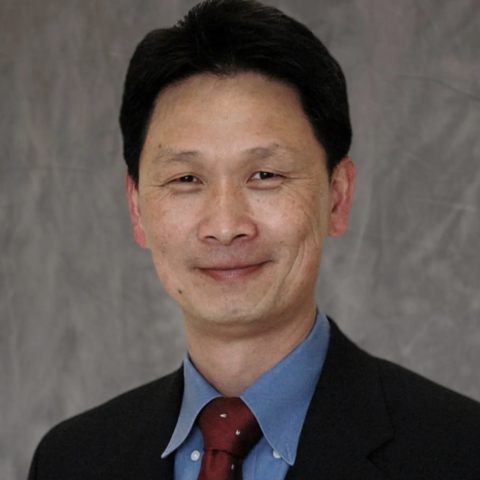
Srinivas Peeta

Srinivas Peeta's profile picture
srinivas.peeta@ce.gatech.edu

Dr. Srinivas Peeta is the Frederick R. Dickerson Chair and Professor in the School of Civil and Environmental Engineering and the H. Milton Stewart School of Industrial and Systems Engineering at Georgia Institute of Technology. He is also Principal Research Faculty at the Georgia Tech Research Institute. He is the Co-Editor-in-Chief of the journal Transportation Research Part B: Methodological. Dr. Peeta is a Distinguished Alumnus of the Indian Institute of Technology (Madras) and an American Society of Civil Engineers (ASCE) Fellow. He received his B.Tech., M.S., and Ph.D. degrees from the Indian Institute of Technology (Madras), Caltech, and The University of Texas at Austin, respectively. Prior to Georgia Tech, Dr. Peeta was the Jack and Kay Hockema Professor in Civil Engineering at Purdue University up to 2018. From 2006 to 2018, he served as the founding Director of the NEXTRANS Center, formerly the U.S. Department of Transportation’s (USDOT’s) Federal Region 5 University Transportation Center (UTC). He was also the founding Associate Director of USDOT’s Center for Connected and Automated Transportation (CCAT), the Region 5 UTC, from 2016 to 2018. Dr. Peeta was a past Chair (2007-2013) of the Transportation Network Modeling Committee of the Transportation Research Board (TRB) of the National Academies.

Dr. Peeta has authored over 515 technical publications, including over 450 in peer-reviewed journals and conference proceedings. He has over 600 talks/lectures in several countries, including 165 invited talks. He has received over $56 million in research funding. Dr. Peeta is on the Editorial Advisory Boards of the Journal of Intelligent Transportation Systems, Transportmetrica B: Transport Dynamics, Journal of Blockchain and Intelligent Computing, Frontiers in Built Environments, and Transportation in Developing Economies. He is an Advisory Board member of Korean Society of Civil Engineering’s Journal of Civil Engineering. Some of his recognitions include the INFORMS Transportation Science Best Dissertation Award (1994), U.S. NSF CAREER Award (1997), ASCE Walter Huber Research Prize (2009), TRB Blue Ribbon Committee Award (2013), and several paper awards from conferences (ASCE, IEEE, TRB, ACM) and journals. Several of his students have received best dissertation/thesis awards from professional organizations such as CUTC, IATBR and COTA. His research interests broadly span transportation and infrastructure systems, and multiple methodological areas. His work in the area of dynamic traffic assignment represents a standard for research reference, and has guided the U.S. Department of Transportation’s development of a deployable architecture for real-time route guidance in large-scale transportation systems equipped with advanced information dissemination technologies.

Research

Professor Peeta’s research interests are multidisciplinary and span several methodological domains related to transportation and infrastructure systems, and the role of emerging technologies. His research focuses on the development of advanced optimization and control methods, AI/ML techniques, econometric and behavioral approaches, driving simulator-based environments, and system-of-systems paradigms for complex transportation systems. His research also explores the roles of autonomy, automation, connectivity, electrification, shared mobility, and information and communication systems for the movement of people and freight. His work includes modeling, analysis, and management of traffic and transportation networks, with an emphasis on dynamic traffic assignment, real-time traffic control, human-machine interactions, mixed-traffic environments, vehicle-human-infrastructure interactions, and intelligent transportation systems. The research integrates concepts from operations research, systems engineering, behavior and psychological theories, and transportation analytics to improve efficiency, reliability, and sustainability of transportation infrastructure.

Education

Ph.D. in Civil Engineering

The University of Texas at Austin

1994

M.S. in Civil Engineering

California Institute of Technology

1989

B.Tech. in Civil Engineering

Indian Institute of Technology – Madras

1988


Teaching

Professor Peeta’s teaching is centered on transportation systems engineering and operations research topics at both undergraduate and graduate levels. His instruction encompasses transportation systems analysis, traffic flow theory, transportation network modeling, transportation demand modeling, optimization techniques, and intelligent transportation systems. Professor Peeta emphasizes a rigorous quantitative approach and practical problem-solving skills in his courses, aiming to prepare students for analytical and decision-making challenges in transportation engineering. In recent years, his courses have had an additional focus on the roles of emerging transformative technologies and emerging AI/ML methods in transportation systems.

Distinctions & Awards

  • 2026 Co-Editor-in-Chief, Transportation Research, Part B
  • 2025 ACM SIGSPATIAL Best Paper Award; Spatial Intelligence for Smart and Connected Communities
  • 2025 TRB AEP35 Best Paper Award; Committee on Effects of Information and Communication Technologies on Travel Choices
  • 2024 Fellow, American Society of Civil Engineering
Frederick R. Dickerson Chair
Professor, School of Civil and Environmental Engineering
University, College, and School/Department

Patricia Mokhtarian

Patricia Mokhtarian's profile picture
patmokh@gatech.edu

Patricia Mokhtarian is a Regents Professor and the Clifford and William Greene, Jr. Professor of Civil and Environmental Engineering (CEE) at the Georgia Institute of Technology.  Prior to joining Georgia Tech in 2013, she served 23 years on the CEE faculty at the University of California, Davis, after spending several years in regional transportation planning and consulting in Southern California.  Prof. Mokhtarian has specialized in the study of attitudinal influences on travel behavior for more than 45 years, and has authored or co-authored nearly 200 peer-reviewed journal articles, as well as numerous book chapters and research reports.  She is among the most highly-cited scholars in travel behavior research, with more than 41,000 citations and an h-index of 98 (Google Scholar). She is a past Chair of the International Association for Travel Behaviour Research, and received a Lifetime Achievement Award from that society in 2021.  Prof. Mokhtarian was elected to the US National Academy of Engineering in 2024, and serves on the editorial boards of ten transportation journals.

Research

A key research interest has been the impact of telecommunications technology on travel behavior (particularly teleworking adoption and impacts). Additional interests include the influence of the built environment on travel behavior, accounting for self-selection biases in modeling behavior, attitudes toward travel itself, time use and multitasking, incorporating attitudes into practice-oriented travel demand forecasting models, impacts of autonomous vehicles, congestion-response behavior, and subjective well-being.

Education

Ph.D., Northwestern University, 1981

M.S., Northwestern University, 1977

B.A., Florida State University, 1975

Teaching

At the undergraduate level, Prof. Mokhtarian teaches upper-division probability and statistics, and at the graduate level she teaches statistical analysis, survey (questionnaire) design and analysis, and discrete choice modeling.

Distinctions & Awards

  • Invited speaker, endowed lecture series: “How Much Do Attitudinal Variables Improve Travel Demand Models?  Evaluation Using an Overlap Sample from an Attitude-rich Survey and the 2017 National Household Travel Survey”. University of Michigan, Department of Civil & Environmental Engineering Richart-Woods Lecture, February 13, 2025.
  • Appointed Regents’ Professor, Georgia Institute of Technology, 2024.
  • Elected to the National Academy of Engineering, 2024.
  • In 2024, my student Dr. Xinyi Wang received the prestigious and competitive Eric I. Pas Dissertation Prize of the International Association for Travel Behaviour Research, given to the best doctoral thesis in travel behavior in the world, among those completed in calendar year 2023.
  • Best PhD Thesis Award to my student Dr. Xinyi Wang, Sigma Xi, Georgia Institute of Technology, 2024.
  • Best PhD Thesis Award to my student Dr. Xinyi Wang, School of Civil and Environmental Engineering, Georgia Institute of Technology, 2023.
  • “Latent class model with an error structure: Investigating potential unobserved associations between latent segmentation and behavior generation” (by Sung Hoo Kim and Patricia L. Mokhtarian) selected for the Outstanding Paper Award of Committee AEP 35 (The Effects of Information and Communication Technologies on Transportation Choices) of the Transportation Research Board, 2024 Annual Meeting.
  • One of six members (and the only woman) of the inaugural class of Northwestern University Transportation Center Fellows, recognizing “impactful contributions to the transportation profession in research, policy, practice or education, and special connections to the Transportation Center and Northwestern University”, November 17, 2023.
  • My students won the (U.S.) Council of University Transportation Centers Wootan Awards for Outstanding PhD Dissertation in Policy & Planning (F. Atiyya Shaw) and Outstanding MS Thesis in Policy & Planning (Xinyi Wang), in 2021.
  • International Association for Travel Behaviour Research 2021 Lifetime Achievement Award, given to someone who has “made fundamental and sustained contributions to travel behaviour research for a substantial period (typically at least 25 years) up to the present time”; is “widely known, at the very least among the IATBR community”; and has “influenced the field through her/his writings, teaching, service, and nurturing of younger professionals”, June 2, 2021 online, and December 14, 2022 in person.
  • Outstanding Industry Contributor Award, “given to an individual who in embodying the Zephyr Principles, has selflessly contributed to the good of the industry through the body of their work”, bestowed by the Zephyr Foundation (https://zephyrtransport.org/), a non-profit dedicated to “advancing rigorous transportation and land use decision-making for the public good by advocating for and supporting improved travel analysis, and facilitating its implementation”, March 24, 2021.
  • Clifford and William Greene, Jr. Professorship, School of Civil and Environmental Engineering, Georgia Institute of Technology, 2021 – present.
  • Named a National Associate of the National Academies of Sciences, Engineering, and Medicine, February 5, 2020.
Regents' Professor, School of Civil and Environmental Engineering
Clifford and William Greene, Jr. Professor, School of Civil and Environmental Engineering
Phone
(404) 385-1443
Additional Research

Electric Vehicles; Smart Infrastructure

University, College, and School/Department

Michael Hunter

Michael Hunter's profile picture
michael.hunter@ce.gatech.edu

Dr. Hunter is a Professor in the School of Civil and Environmental Engineering at Georgia Institute of Technology. His primary teaching and research interests are in transportation operations and design, specializing in adaptive signal control, traffic simulation, and arterial corridor operations. Dr. Hunter obtained his B.S. in Civil Engineering from Rensselaer Polytechnic University (1992), his M.S. in Civil Engineering from the University of Texas at Austin (1994), and his Ph.D. in Civil Engineering from the University of Texas at Austin (2003). After obtaining his M.S. he worked as a transportation engineer for several years at the Sear-Brown Group in Rochester, NY.

Dr. Hunter has been highly active in research, teaching, and service. He has been principal investigator of sponsored research for a variety of sponsors including local, state, and federal agencies, and industry. Dr. Hunter has led two significant transportation research centers, the Georgia Transportation Institute (GTI, 2012 to present) and the National Center for Transportation Systems Productivity and Management (NCTSPM, 2012 to 2017). Dr. Hunter is actively researching simulation, digital twins, connected and autonomous vehicles, signal control optimization with AI, smart cities, connected infrastructure, and disruptive and emerging technologies within the transportation systems context.  

Research

Dr. Hunter has extensive research experience in simulation, digital twins, hardware-in-the-loop-simulation, and software-in-the-loop-simulation. His projects have explored the modeling of arterials, freeways, corridors, and parking facilities.  He has extensively studied adaptive control, emerging technologies, signal optimization with AI and Reinforcement Learning, etc. His efforts have included two real-time corridor digital twin models, one in Atlanta, GA, and one in Chattanooga, TN. He has studied emergency vehicle preemption and transit priority, including multi-agent Reinforcement Learning (DQN and PPO) optimization. Dr. Hunter has developed traffic flow simulations for capturing the effect of aggressive human driver interaction with autonomous vehicles on traffic. Dr. Hunter has also undertaken numerous efforts in the development and analysis of performance metrics. He has conducted safety research, studying the impact of various safety treatments, such as the mode of flash at an intersection, don't block the box treatments, innovating signage and lane markings, etc.

Education

Ph.D., Civil Engineering, The University of Texas at Austin, 2003

M.S., Civil Engineering, The University of Texas at Austin, 1994

B.S., Civil Engineering, Rensselaer Polytechnic Institute, 1992

Associate of Science, Engineering Science, Hudson Valley Community College, 1990

Teaching

Dr. Hunter’s teaching is practice focused, teaching at the undergraduate and graduate level. Topics in his courses include transportation safety, operations, design, and planning. Dr. Hunter stresses engineering fundamentals, innovation, and intuition, as well as exploring the application of emerging methods such as AI and RL.  His courses stress the importance of the design user, that is, ensuring that our transportation operations and design are focused on the strengths and capabilities of the people that use the transportation system, whether driving a vehicle, crossing the street, riding a bicycle or scooter, or riding transit. Recently, Dr. Hunter developed a new course merging a common simulation tool utilized in practice with fundamental concepts, pulling away the black box nature of many simulation tools.

Distinctions & Awards

  • Winner of the Transportation Research Board D. Grant Mickle Award (2019)
  • Best Paper Award – Transportation Research Board, Operational Effects of Geometrics Committee, AHB65. (2019)
  • Mobility Award. City of Atlanta’s North Avenue Smart Corridor Project (Project Co-PI). Smart City Expo World Congress. Barcelona. November 2018. (2018)
  • Best Abstract Award, PTV America’s User Group Meeting (2011)
  • Best Paper Award, Principles of Advanced and Distributed Simulation Conference (2010)
  • Transportation Research Board Operational Effects of Geometrics Committee, Best Paper Award (2010)

Publications

  1. Mers, B., M. Hunter, K. Watkins. Demographic Breakdown of Transit Rider Satisfaction. Transportation Research Record, Journal of the Transportation Research Board, Sage Publications, 2678 (6), 656-666. June 2024.
  2. Saroj, A., S. Roy, A. Guin, M. Hunter. Impact of Connected Corridor Volume Data Imputations on Digital Twin Performance Measures. International Journal of Transportation Science and Technology. Elsevier. June 2023. 
  3. Guin, G., K. Robinson, H. Unthank, S. Roy, and M. Hunter. Impact of Restricted Crossing U-Turns on Vehicular Emission, Transportation Research Record, Journal of the Transportation Research Board, Sage Publications, May 2023.
  4. Manjunatha, P., S. Roy, L. Elefteriadou, A. Guin, and M. Hunter. Evaluation of the Operational Effects of Autonomous and Connected Vehicles through Microsimulation. Transportation Research Record, Journal of the Transportation Research Board, Sage Publications, December 2022.  
  5. Saroj, S., A. Guin, and M. Hunter. Development of a Connected Corridor Real-Time Data-Driven Traffic Digital Twin Simulation Model. Journal of Transportation Engineering, Part A: Systems. American Society of Civil Engineers, Volume 147, Issue 12, Dec 2021.
Professor, School of Civil and Environmental Engineering
Phone
(404) 385-1243
Additional Research

Electric Vehicles; Smart Infrastructure

University, College, and School/Department

Sheldon Jeter

Sheldon Jeter's profile picture
sheldon.jeter@me.gatech.edu

Dr. Jeter's research background includes systems and theoretical thermo-dynamics, and heat and mass transfer, thermal and fluid energy systems, engineering education, and advanced engineering thermodynamics. He began at Tech in 1978 as a Research Engineer.

Research

Dr. Jeter's research interests include both basic and applied research. His basic research is focused on two-phase heat and mass transfer, such as the experimental investigation of heat transfer to boiling liquids, whereas his theoretical basic research includes work on the thermodynamics of mixtures and radiation.

Dr. Jeter's applied research is largely devoted to improving the performance of existing energy systems and developing innovative energy systems, particularly fluid and thermal energy systems.

Distinctions & Awards

  • Registered Professional Engineer in Georgia

Patents

  • Electrode Arrangement for Electrohydrodynamic Enhancement of Heat and Mass Transfer, with S.I. Abdel-Khalik, U.S. Patent No. 6,374,909, April 23, 2002.
  • A Film Pump for Applying a Monolayer Film Over Water Surfaces, U. S. Patent No. 5,558,845, with M. T. Pauken and S. I. Abdel-Khalik, October 1996.
  • Loop Timing Chain, U. S. Patent 4,027,792, June 7, 1977
  • Tufting Needle, U. S. Patent 4,015551, April 5, 1977

Representative Publications

  • F. F. Abedelall, et al. 2005. Pressure Drop Caused by Abrupt Flow Area Changes in Small Channels. Experimental Thermal and Fluid Science 29, 425-434.
  • S. M. Jeter and Hany A. M. Al-Ansary. 2004. Numerical and Experimental Analysis of Single-Phase and Two-Phase Flow in Ejectors. The International Journal of HVAC Research 10(4), 521-538.
  • S. M. Jeter, C. C. Pascual and S. I. Abdel-Khalik. 2002. Visualization of Boiling Bubble Dynamics Using a Flat Uniformly Heated Transparent Surface. International Journal of Heat and Mass Transfer 45, 691-696.
  • R. M. Stoddard, et al. 2002. Onset of Flow Instability and Critical Heat Flux in Thin Horizontal Annuli. Experimental Thermal and Fluid Sciences 26, 1-14.
  • T. M. Remley, et al. 2001. Validation of EHD-Enhanced Nucleate Boiling Correlations. ASHRAE Transactions 107, 326-336.
Associate Professor, Woodruff School of Mechanical Engineering
Phone
(404) 894-3211
Additional Research

Energy Storage; Solar; Thermal Systems

University, College, and School/Department

Jingfeng Wang

Jingfeng Wang's profile picture
jingfeng.wang@ce.gatech.edu

Biography

Dr. Jingfeng Wang is a professor in the School of Civil and Environmental Engineering. He obtained a BS in 1984 and a MS in 1987 from Peking University. He received his Sc.D. (Ph.D.) in Hydrometeorology from Massachusetts Institute of Technology (MIT) in February 1997. Dr. Wang was a Post-Doctoral Associate from February 1997 to January 2000, a Research Associate from February 2000 to February 2009 at MIT, and an Assistant Researcher from March 2009 to August 2011 at University of California at Irvine. Dr. Wang was a Principal Research Engineer from September 2011 to July 2012 at Georgia Tech.  Dr. Wang joined Georgia Tech faculty as an Associate Professor in 2012 and earned tenure in 2018. Dr. Wang was an Honorary Visiting Professor at Flinders University, Australia, May – July 2016. 

Research

Dr. Wang's research fields include foundations and models of global water-energy-carbon cycles, non-equilibrium thermodynamics of heat and radiation transfer, Amazon deforestation and regional climate dynamics, and Bayesian probability and statistics.  

Education

  1. Sc.D.             Massachusetts Institute of Technology      1997 
  2. M.S.              Peking University                                             1987 
  3. B.S.               Peking University                                             1984  

Teaching

Dr. Wang teaches undergraduate and graduate courses in Hydrology and co-teaches Vertically-Integrated-Projects (VIP).  

Distinctions & Awards

  • Plenary Speaker, 2nd Global Evapotranspiration Symposium, 2023 
  • AGU Editors’ Citation for Excellence in Refereeing for Earth and Space Science, 2020 
  • AGU’s Outstanding Reviewers, 2018 
  • Warren Lecturer, University of Minnesota, 2018 
  • Overseas Scholarships, Tsinghua University, China, 2017 
  • Visiting International Research Fellowship, Flinders University, Australia, 2016 

Publications

  1. Cho, K., Abraham, S., Kumar, S. V., and Wang, J. (2025), Remote Sensing of Live Fuel Moisture for Wildfires Using SMAP Satellite Observations, Geophysical Research Letters, 52, e2025GL117025. https://doi.org/10.1029/2025GL117025  
  2. Zhou, W., L. Zhang, A. Y. Sheshukov, J. Wang, M. Zhu, K. Sargsyan, D. Xu, D. Liu, T. Zhang, V. Mazepa, A. Sokolov, V. Valdayskikh, A. Vasiliev, V. N. Tran, & V. Ivanov (2025), A Novel Framework to Project the Permafrost Fate with Explicit Quantification of Soil Property and Future Climate Uncertainties, Journal of Geophysical Research - Earth Surface, 130, e2024JF008168. https://doi.org/10.1029/2024JF008168  
  3. Kim, T., Zhou, W., Tran, V. N., Zhang, L., Wang, J., Zhu, M., Sheshukov, A. V., Zhang, T., Liu, D., Mazepa, V. S., Sokolov, A. A., Valdayskikh, V. V., and Ivanov, V. I. (2025), Biases in radiative flux observations due to precipitation across the Arctic forest-tundra ecotone, Agricultural and Forest Meteorology, 74, 110814. https://doi.org/10.1016/j.agrformet.2025.110814  
  4. Farooq, U., Liu, H., Zhang, Q., Wang, J., Shen, L. (2025), Global Lake Evaporation Estimates by Integrating Penman Method with Equilibrium Temperature Approach, Journal of Hydrometeorology, 26 (9), 1301 – 1313. https://doi.org/10.1175/JHM-D-24-0146.1  
  5. Sun, H., Fu, L., Wang, W., Xue, J., Wang, J., Liao, W., Li, H., Sun, X., Yang, Y., Wang, J., Zhang, H., Chen, F., Zheng, Q., Meng, C., Zhang, W. (2025), Explore the relationship between Bowen ratio and Evapotranspiration in Wetlands using the Maximum Entropy Production Model, Journal of Hydrology, 661, Part B, 133586. https://doi.org/10.1016/j.jhydrol.2025.133586  
Associate Professor, School of Civil and Environmental Engineering
Phone
(404) 385-4653
Additional Research

Water

Research Focus Areas
University, College, and School/Department

Terry Sturm

Terry Sturm
terry.sturm@ce.gatech.edu

Dr. Terry W. Sturm received B.S. and M.S. degrees in civil engineering from the University of Illinois and a Ph.D. in mechanics and hydraulics from the University of Iowa at the Iowa Institute of Hydraulic Research. A licensed professional engineer (PE), he holds the rank of professor in the School of Civil and Environmental Engineering at the Georgia Institute of Technology where he teaches a graduate course sequence in open channel hydraulics and sediment transport. In addition, he has taught continuing education courses on river hydraulics, culvert design, and bridge scour. His most recent experimental research centers around the sediment-water interface in natural watercourses and the hydrodynamic processes that occur there such as flow resistance, cohesive sediment resuspension, and local bridge and spillway scour. He is the author of numerous research publications on thermal hydraulics, open channel flow resistance, compound channel hydraulics, bridge abutment scour, and resuspension of cohesive sediments, and he has written a textbook on open channel hydraulics published by McGraw-Hill which is in its second edition. Dr. Sturm's research has been supported by agencies such as the National Academy of Sciences, National Science Foundation, U.S. Geological Survey, Georgia Department of Transportation, Federal Highway Administration, Environmental Protection Agency, and the U. S. Army Corps of Engineers. In 2008, Dr. Sturm was named the Georgia Engineer of the Year in Education by the Georgia Engineering Alliance. He is a Life Member of ASCE, and he served from 2010 to 2014 as Chief Editor of the ASCE Journal of Hydraulic Engineering. In 2013, Dr. Sturm received the ASCE-EWRI Hunter Rouse Hydraulic Engineering Award.

Research

Hydraulic structures, Open channel flow resistance, Compound channel hydraulics, Sediment transport, Erosion control at construction sites, Scour around bridge foundations, Cohesive sediment re-suspension

Professor Emeritus, School of Civil and Environmental Engineering
Phone
(404) 894-2218
Additional Research

Smart Infrastructure; Climate/Environment

University, College, and School/Department