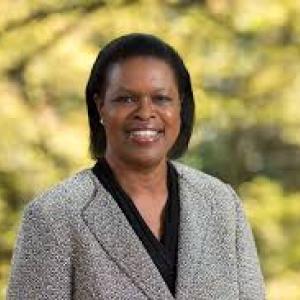
Omar Asensio

Omar Asensio's profile picture
asensio@pubpolicy.gatech.edu

Omar I. Asensio is an Associate Professor in the Jimmy and Rosalynn Carter School of Public Policy and the Director of the Data Science & Policy Lab at Georgia Tech. During the 2023-2024 academic year, he was a fellow at the Institute for Business in Global Society at Harvard Business School. Professor Asensio’s research focuses on climate and electrification strategies at the intersection of technology, AI, and sustainability. He employs large-scale data, field experiments, and human-in-the-loop AI systems to address innovation challenges in energy systems, transportation, and human mobility. He contributed to the zero emission vehicles (ZEV) policy guidance for COP26 and the Glasgow Climate Pact.

Prof. Asensio is a member of the U.S. National Academies of Sciences, Engineering, and Medicine (NASEM) New Voices 2021 cohort, which recognizes early- to-mid career leaders for exceptional contributions to science, engineering and medicine. He is a two-time former chair of the Natural Resource, Energy, and Environmental Policy section of APPAM, and is the recipient of the 2023 Faculty Excellence in Research Award from the Ivan Allen College. At Georgia Tech, he is a Brook Byers Institute for Sustainable Systems (BBISS) Fellow and a faculty affiliate of the Institute for Data Engineering & Science (IDEaS), the Machine Learning Center, and the Strategic Energy Institute (SEI).

Professor Asensio has received multiple awards for his research, including the National Science Foundation CAREER Award, the Alliance for Research on Corporate Sustainability (ARCS) Emerging Scholar Award, and the Research Impact on Practice Award (RIPA) from the Academy of Management’s Organizations & the Natural Environment Division (ONE-NBS). His work has been published in leading journals such as Nature Energy, Nature Sustainability, and PNAS. 

Professor Asensio’s research and teaching have been supported by awards from the National Science Foundation, Microsoft, ESRI, the U.S. State Department’s Diplomacy Lab, and the U.S. Department of Energy. His work has informed policy advisory communications for the U.S. National Academy of Sciences, the UK government, the United Nations Economic Commission for Latin America and the Caribbean, and the IndiaAI initiative. His research has been featured in popular press, including Bloomberg, Scientific American, Motor Trend, Fast Company, NPR’s All Things Considered, Yahoo! News, The Huffington Post, and the Washington Post.

Dr. Asensio serves as Associate Editor of Data & Policy journal published by Cambridge University Press. He earned his doctorate in Environmental Science & Engineering with specialties in Economics from UCLA.

Associate Professor, School of Public Policy
Additional Research
  • Cyber/ Information Technology
  • Strategic Planning
  • Building Technologies
  • Electric Vehicles
  • Policy/Economics
  • Public Policy
  • Energy Efficiency and Conservation

Bryan Norton

Bryan Norton's profile picture
bryan.norton@pubpolicy.gatech.edu

Dr. Bryan Norton is a Professor of Philosophy in the School of Public Policy. He received his PhD in philosophy from the University of Michigan in 1970, specializing in the philosophy of science and conceptual change in, and across, scientific disciplines. He writes on inter-generational equity, sustainability theory, bio-diversity policy and on valuation methods. His specialty is the integration of spatio-temporal scaling considerations into sustainability criteria. He is currently working to develop a flexible notion of sustainability that recognizes the challenges of rapidly changing climate.

Education:

  • Ph.D., University of Michigan, Philosophy, 1970
  • BA, University of Michigan, Political Science, 1966

Awards and
Distinctions:

  • Class of 1934 Distinguished Professor Award, Georgia Institute of Technology, 2006.
  • Gilbert White Fellow, Resources for the Future, 1985-56 (one-year Research Fellowship in residence at Resources, for the Future, Washington, D.C.)
  • Graduated with Distinction, and Honors in Political Science, U. of Mich.,1966

Areas of
Expertise:

  • Biodiversity Policy
  • Conservation History
  • Ecological Economics
  • Environmental Decision Making
  • Philosophy Of Conservation Biology
  • Sustainability Theory
  • Thought Of Aldo Leopold
Professor, School of Public Policy
Phone
(404) 894-6511
Additional Research

Policy/Economics

Research Focus Areas

Aaron Levine

Aaron Levine's profile picture
aaron.levine@pubpolicy.gatech.edu

Aaron D. Levine is Associate Dean for Research and Outreach in the Ivan Allen College of Liberal Arts and Professor in the School of Public Policy at Georgia Tech. He also holds an appointment as a Guest Researcher in the Division of Reproductive Health at the Centers for Disease Control and Prevention. He is a member of the leadership team for the NSF Engineering Research Center for Cell Manufacturing Technologies (CMaT), leading ethics and policy research for the center. He seved as Co-Director for CMaT's Engineering Workforce Development activities from 2017 to 2022. His research focuses on the intersection between public policy and bioethics. Much of his work has examined the development of stem cell science, particularly research using human embryonic stem cells, and the translation of novel cell therapies. He also writes extensively on the oversight of contentious areas of medicine, such as assisted reproductive technology. In 2012, he received a NSF CAREER award to examine the impact of ethical controversy on graduate science education and the development of scientific careers.  He serves as Vice-Chair for Bioethics on the International Society for Cell & Genel Therapy’s Committee on the Ethics of Cell and Gene Therapy and recently completed a three-year term as an elected member of the Board of Directors of the American Society for Bioethics and Humanities. He is also a long-time member of the International Society for Stem Cell Research, the Association for Public Policy Analysis and Management, and the American Association for the Advancement of Science.

Aaron has a long-standing interest in science communication and is the author of Cloning: A Beginner's Guide (Oneworld Publications, 2007), an accessible introduction to the science of cloning and embryonic stem cells and the ethical and policy controversies this science inspires. He was an AAAS Leshner Leadership Institute Public Engagement Fellow for 2019-2020. You can follow Aaron on twitter at @aarondlevine.

He completed his Ph.D. in Public Affairs at Princeton University, where his dissertation research examined the impact of public policy on the development of human embryonic stem cell science.  He also holds an M. Phil. from the University of Cambridge, where, as a Churchill Scholar, he studied computational biology at the Sanger Centre and developed algorithms to help analyze the human genome sequence, and a B.S. in Biology from the University of North Carolina at Chapel Hill, where he was a Morehead Scholar.

Professor, School of Public Policy
Associate Dean for Research and Outreach, Ivan Allen College of Liberal Arts
Phone
404-385-3329
Office
DM Smith 216
Additional Research

The impact of ethical controversy on scientific research, with a particular emphasis on emerging biomedical technologies.Recent work has focused on a range of issues related to stem cell policy (including state-level science policy and the rise of unproven stem cell therapies) as well as the oversight of assisted reproduction.

Google Scholar
http://scholar.google.com/citations?user=PPRGxBgAAAAJ&hl=en

Daniel Matisoff

Daniel Matisoff's profile picture
matisoff@gatech.edu

Daniel Matisoff teaches and conducts research in the areas of public policy, energy policy, and corporate sustainability. His research focuses on the effectiveness and efficiency of comparative approaches to addressing environmental problems and the adoption and diffusion of energy technologies and policies. He currently is a fellow with the Brook Byers Institute for Sustainability, and is affiliated with the Strategic Energy Institute and Center for Urban Innovation. He has participated in over $4 million of sponsored research through the National Science Foundation, the European Union Center for Excellence, the German Academic Exchange Service, the Georgia Department of Transportation, and the National Electric Energy Testing Research and Applications Center. His recent research has resulted in publications in the Review of Environmental Economics and Policy, Environmental and Resource Economics, Energy Economics, Environmental Science and Technology, Energy Policy, and Business Strategy and the Environment, among other outlets. His current research interests include: evaluating the effectiveness of voluntary eco-labeling programs; the effectiveness of incentives for solar electricity; the adoption of smart grid technologies and policies; and the impact of large scale solar adoption on consumer rates and bills.

Professor, School of Public Policy
Phone
(404) 385-0504
Additional Research

Building Technologies; Policy/Economics

Kaye Husbands Fealing

Kaye Husbands Fealing's profile picture
khf@pubpolicy.gatech.edu

Kaye Husbands Fealing is the Assistant Director of the Social, Behavioral and Economic Sciences at the National Science Foundation (NSF) and co-chair of the Subcommittee on Social and Behavioral Sciences of the Committee on Science of the National Science & Technology Council (NSTC). She is the former Dean of the Ivan Allen College of Liberal Arts at the Georgia Institute of Technology and a former Chair of the School of Public Policy Georgia Tech, where she currently holds the title professor. She specializes in science of science and innovation policy, the public value of research expenditures, and broadening participation in STEM fields and the workforce.

Prior to her positions at Georgia Tech, Husbands Fealing taught at the Humphrey School of Public Affairs, University of Minnesota, and she was a study director at the National Academy of Sciences. Prior to the Humphrey School, she was the William Brough professor of economics at Williams College, where she began her teaching career in 1989. She developed and was the inaugural program director for NSF's Science of Science and Innovation Policy program and co-chaired the Science of Science Policy Interagency Task Group, chartered by the Social, Behavioral and Economic Sciences Subcommittee of the NSTC. At NSF, she also served as an Economics Program director. Husbands Fealing was a visiting scholar at Massachusetts Institute of Technology’s Center for Technology Policy and Industrial Development, where she conducted research on NAFTA’s impact on the Mexican and Canadian automotive industries, and research on strategic alliances between aircraft contractors and their subcontractors.

Husbands Fealing is an elected member of the American Academy of Arts and Sciences, is an Elected Fellow of the National Academy of Public Administration, an Elected Fellow of the American Association for the Advancement of Science (AAAS). She was awarded the 2023 Carolyn Shaw Bell Award from the American Economic Association's Committee on the Status of Women in the Economics Profession, and the 2017 Trailblazer Award from the National Medical Association Council on Concerns of Women Physicians. She is a member of the International Women’s Forum-Georgia Chapter, and member of the YWCA's Academy of Women Achievers. She serves as a member on AAAS' Executive Board, the National Academy of Public Administration's board, the trustee board for the R. Howard Dobbs Jr. Foundation, and the Society for Economic Measurement's board. She has served on several committees and panels, including: AAAS committees; National Academies’ panels; Council of Canadian Academies panels; American Academy of Arts and Sciences working groups; NSF’s Social, Behavioral, and Economic Sciences Advisory Committee, STEM Education Advisory Committee, and the Committee on Equal Opportunities in Science and Engineering; NIH’s National Institute of General Medical Sciences Council; General Accountability Office’s Science, Technology Assessment, and Analytics Polaris Council; and American Economic Association’s Committee on the Status of Women in the Economic Profession. At Georgia Tech, she co-chaired the Arts@Tech Institute Strategic Planning committee, and she has served on the Institute for Data Engineering and Science Council, the Intellectual Property Advisory Board, and other committees.

Husbands Fealing holds a Ph.D. in economics from Harvard University, and a B.A. in mathematics and economics from the University of Pennsylvania.

Professor, School of Public Policy
Assistant Director of the Social, Behavioral and Economic Sciences at the National Science Foundation (NSF)
Office
Savant 171
Additional Research
  • Data Policy
  • Public Policy