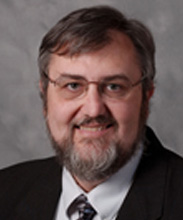
Brian Woodall

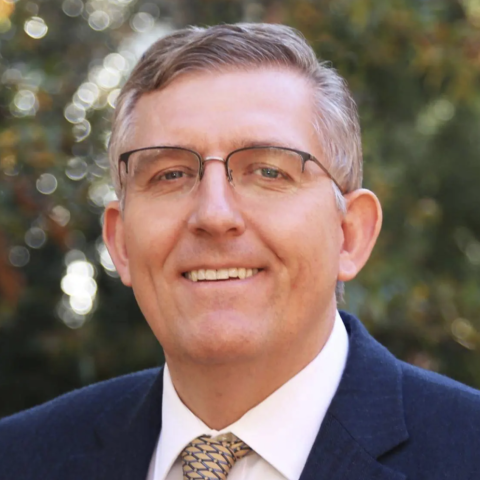
Brian Woodall's profile picture
brian.woodall@inta.gatech.edu

Brian Woodall received his PhD from the University of California at Berkeley, and, prior to joining Georgia Tech's faculty, held full-time faculty positions at the University of California at Irvine and Harvard University.  He has held visiting appointments at the University of Tokyo, Tokyo Institute of Technology, Tohoku University, and Kobe University.  He is the author of Growing Democracy in Japan (University Press of Kentucky), Japan Under Construction (University of California Press), and Japan's Changing World Role (Japan Society), and co-editor of Elections in Japan, Korea, and Taiwan Under the Single Non-Transferable Vote (University Michigan Press).  His research and teaching utilize the tools of comparative institutional analysis to illuminate a variety of issues, including disaster governance, megaregion sustainability, and sustainable energy security.  Dr. Woodall's recent work has appeared in Progress in Disaster ScienceInternational Journal of Urban Sciences, Transportation Research Interdisciplinary Perspectives, Journal of Urban Planning and Development, Transportation Research Record, and Resilient Cities and Structures.  He is also the creator of the Japanese Cabinets and Cabinet Members Dataset, which is accessible via the Harvard Dataverse.  Dr. Woodall has received funding from the Fulbright Commission, Coca-Cola Foundation, U.S.-Japan Friendship Commission, the Abe Fellowship Program of the Social Science Research Council, the University of California Pacific Rim Research Program, and the Japan Foundation.  In addition, he serves as Associate Director of the Nakatani RIES Program and as a member of Kobe University's Board of Advisors.  Dr. Woodall was decorated by the Government of Japan with The Order of the Rising Sun, Gold Rays with Rosette for his contributions to academic exchange and mutual understanding between Japan and the United States.

Education:

  • Ph.D., University of California at Berkeley (Political Science)

Awards and Distinctions:

  • The Order of the Rising Sun, Gold Rays with Rosette
  • Member of Kobe University Advisory Board
  • Fulbright Scholar (Japan)
  • Abe Fellow (Social Science Research Council)
  • Japan Foundation Dissertation Fellow
  • Chancellor Dissertation Fellow (UC-Berkeley)
  • Philo Sherman Bennett Prize in Political Science

Areas of Expertise:

  • Comparative Institutional Analysis
  • Disaster Governance
  • Energy Security
  • Japanese And East Asian Affairs
  • Marine Ecosystem Sustainability
  • Megaregion Sustainability
  • Sustainable Development
  • Urban Science
Professor Emeritus, Sam Nunn School of International Affairs
Phone
(404) 894-1902
Research Focus Areas

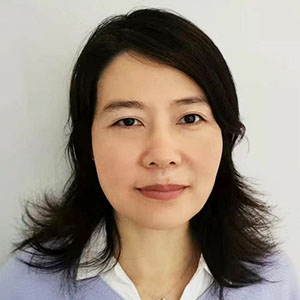
Zhaohui (Julene) Tong

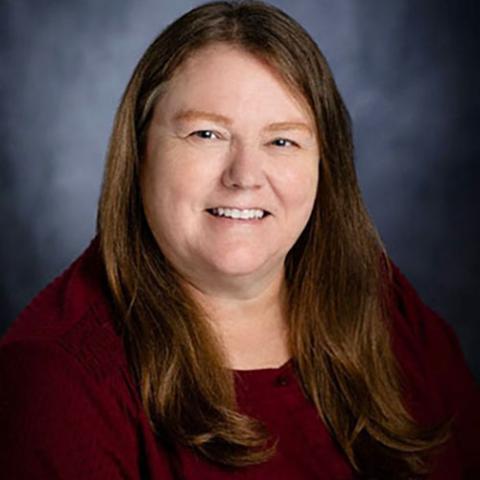
Zhaohui (Julene) Tong's profile picture
zt7@gatech.edu

The Tong Lab tackles challenges in the interdisciplinary areas of bioresource engineering and sustainable chemistry. We develop innovative technologies for producing chemicals, materials, energy, and fuels from renewable resources.

Current research interests include:

  • Functional biomaterials for high-efficiency circular economy
  • Platform chemicals and hydrocarbon fuels from renewable resources
  • Sustainable process control and modeling
  • Nano-biomaterial synthesis and self-assembling
  • Polymer degradation and recycling

Disciplines:

  • Materials and Nanotechnology

  • Energy and Sustainability

Associate Professor, School of Chemical and Biomolecular Engineering
Phone
404.894.3098
Office
ES&T 2226

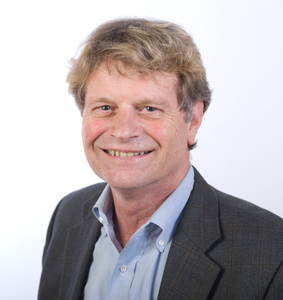
Bryan Norton

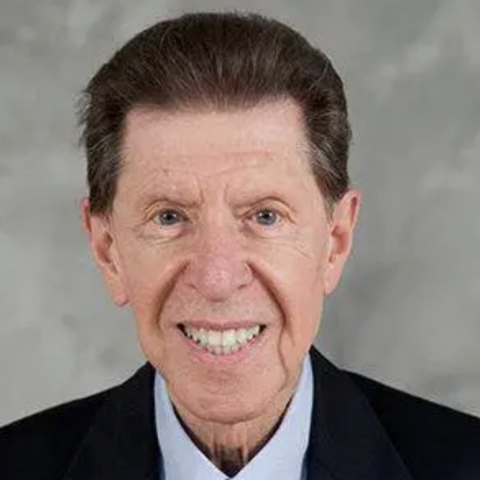
Bryan Norton's profile picture
bryan.norton@pubpolicy.gatech.edu

Dr. Bryan Norton is a Professor of Philosophy in the School of Public Policy. He received his PhD in philosophy from the University of Michigan in 1970, specializing in the philosophy of science and conceptual change in, and across, scientific disciplines. He writes on inter-generational equity, sustainability theory, bio-diversity policy and on valuation methods. His specialty is the integration of spatio-temporal scaling considerations into sustainability criteria. He is currently working to develop a flexible notion of sustainability that recognizes the challenges of rapidly changing climate.

Education:

  • Ph.D., University of Michigan, Philosophy, 1970
  • BA, University of Michigan, Political Science, 1966

Awards and
Distinctions:

  • Class of 1934 Distinguished Professor Award, Georgia Institute of Technology, 2006.
  • Gilbert White Fellow, Resources for the Future, 1985-56 (one-year Research Fellowship in residence at Resources, for the Future, Washington, D.C.)
  • Graduated with Distinction, and Honors in Political Science, U. of Mich.,1966

Areas of
Expertise:

  • Biodiversity Policy
  • Conservation History
  • Ecological Economics
  • Environmental Decision Making
  • Philosophy Of Conservation Biology
  • Sustainability Theory
  • Thought Of Aldo Leopold
Professor, School of Public Policy
Phone
(404) 894-6511
Additional Research

Policy/Economics

Research Focus Areas

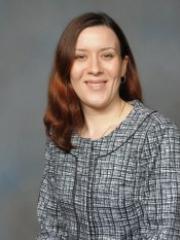
Anna Erickson

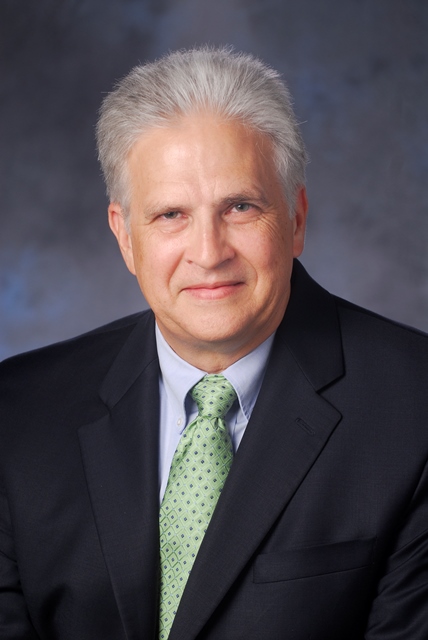
Anna  Erickson's profile picture
anna.erickson@me.gatech.edu
Professor, Woodruff School of Mechanical Engineering
Woodruff Professor
Additional Research

Nuclear

Donald Webster

Donald Webster's profile picture
dwebster@ce.gatech.edu

Biography

Dr. Donald Webster received his Ph.D. in mechanical engineering from the University of California at Berkeley in 1994. After a postdoctoral research position at Stanford University and a non-tenure track faculty position at the University of Minnesota, he joined the faculty at Georgia Tech in September 1997. For nearly two decades, he has been part of the School's leadership team, serving as an affinity group coordinator 2012-2014, the associate chair for undergraduate programs 2007-2012, the associate chair for graduate programs 2012-2013, and the associate chair for finance and administration 2013-2018. In May 2018, he became the Karen and John Huff School Chair. Dr. Webster's research expertise lies in environmental fluid mechanics, with an emphasis on the influence of fluid mechanics and turbulence on biological systems. He has authored or co-authored over 110 refereed research articles.  In recognition of these contributions, Dr. Webster is a Sustaining Fellow of the Association for the Sciences of Limnology and Oceanography (ASLO) and a Fellow of the American Society of Civil Engineers (ASCE).  In 2016, his work on pteropod (i.e., the flying sea snail) biomechanics was featured in the New York Times among over 80 news agencies. Dr. Webster has been very active in professional service. He has served on the editorial board for the journal Experiments in Fluids since 2006 and has served on numerous conference and symposium advisory committees as well as other society committees. Dr. Webster developed several special topical sessions for the Ocean Science Meeting as well as the American Physical Society Division of Fluid Dynamics annual meeting, and used these forums to define the area of “Ecological Fluid Mechanics,” which broadly seeks to address the role that fluid motion, flow gradients, and chemical stirring play in shaping organism behavior, interactions, recruitment, reproduction, and community structure. Dr. Webster holds a professional engineering license (PE) in Georgia.

Research

Dr. Webster's research expertise lies in environmental fluid mechanics, with an emphasis on the influence of fluid mechanics and turbulence on biological systems. His contributions have been in three arenas: 1) illuminating the fluid mechanics processes related to sensory biology and biomechanics; 2) developing advanced experimental techniques and facilities; and 3) translating research results into bio-inspired design. Examples of innovative and creative contributions include turbulent chemical plume tracking by blue crabs, biologically-inspired design of a robotic tracker of turbulent chemical plumes, tomographic (3D) particle image velocimetry of zooplankton propulsion (krill, copepods, pteropods, daphnids), zooplankton aggregations around oceanic thin layer structure, and copepod-turbulence interactions. 

Education

Ph.D. Mechanical Engineering          University of California at Berkeley         1994

M.S. Mechanical Engineering            University of California at Berkeley         1991

B.S. Mechanical Engineering             University of California at Davis             1989

Teaching

Dr. Webster's educational activities include teaching courses in fluid mechanics, as well as rigid body dynamics.  He is known for his efforts to develop effective blended (or flipped) classroom pedagogy for engineering mechanics courses.  He has documented the effectiveness of the approach via a series of publications.  Dr. Webster played a key role in developing the Bachelor of Science in Environmental Engineering program at Georgia Tech and served on the steering committee to develop Georgia Tech's interdisciplinary Ph.D. program in Ocean Science & Engineering.  Further, he served as co-PI on an NSF-supported Integrative Graduate Education and Research Training (IGERT) grant to train students in the physics, chemistry, and ecology of chemical and hydrodynamic signaling in aquatic communities. Finally, he served as PI for an NSF-supported Revolutionizing Engineering Departments (RED) grant to lead a cultural shift and re-imagine the Civil Engineering and Environmental Engineering curriculum. 

Distinctions & Awards

  • Fellow, American Society of Civil Engineers, 2023
  • Felton Jenkins, Jr. Hall of Fame Faculty Award, 2020 (University System of Georgia Excellence in Teaching Award)
  • Fellow, ACC Academic Leaders Network, 2019
  • Sustaining Fellow, 2018; Fellow, 2015, Association for the Sciences of Limnology and Oceanography (ASLO)
  • Student Recognition of Excellence in Teaching: Class of 1934 CIOS Honor Roll, 2020
  • Class of 1940 Course Survey Teaching Effectiveness Award, 2017, 2015
  • Class of 1934 Outstanding Innovative Use of Education Technology Award, 2015
  • Geoffrey G. Eichholz Faculty Teaching Excellence Award, 2014
  • British Petroleum / CETL Junior Faculty Teaching Excellence Award, 2001

Publications

  1. Connor, A.A., M. Mohaghar, and D.R. Webster (2025) Hydrodynamics of active metachronal swimming modes in Antarctic krill, Euphausia superba. Marine Biology 172: 135 (20pp). https://doi.org/10.1007/s00227-025-04680-x
  2. Muscalus, A.C., K.A. Haas, and D.R. Webster (2025) Effects of primary ship waves in a far-field waterway network. ASCE Journal of Waterway, Port, Coastal, and Ocean Engineering.  151(4): 04025014 (19pp). https://doi.org/10.1061/JWPED5.WWENG-2199
  3. Ruszczyk, M., D.R. Webster, and J. Yen (2024) The response of a freshwater copepod to small-scale, dissipative eddies in turbulence.  Limnology & Oceanography 69: S17–S31.  https://doi.org/10.1002/lno.12402  Note: This paper appears in an invited special issue “Life in Turbulent Waters: Exploring Unsteady Biota-Flow Interactions Across Scales”.
  4. Mohaghar, M. and D.R. Webster (2024) Hydrodynamics of cruise swimming and turning maneuvers in Euchaeta antarcticaScientific Reports 14: 28217 (15pp).  https://doi.org/ 10.1038/s41598-024-76439-1
  5. Muscalus, A.C., K.A. Haas, and D.R. Webster (2024) Observations of primary ship waves at the margin of a confined tidal river.  ASCE Journal of Waterway, Port, Coastal, and Ocean Engineering. 150(5): 04024009 (16pp).  https://doi.org/10.1061/JWPED5.WWENG-2062
Karen and John Huff School Chair, School of Civil and Environmental Engineering
Professor, School of Civil and Environmental Engineering
Phone
(404) 894-6704
University, College, and School/Department

Susan Burns

Susan Burns headshot
susan.burns@ce.gatech.edu

Susan E. Burns, Ph.D., P.E., F.ASCE is a professor in the School of Civil and Environmental Engineering and associate chair for administration and finance at the Georgia Institute of Technology in Atlanta, Georgia, USA. Burns earned a B.C.E. in civil engineering (1990), an M.S. in civil engineering (1996), an M.S. in environmental engineering (1996), and Ph.D. in civil engineering (1997), all from Georgia Tech. After completing her Ph.D., Professor Burns joined the faculty at the University of Virginia where she served for over seven years. In 2004, she joined the faculty at Georgia Tech as an associate professor. 

Burns' research focuses on applications in geoenvironmental engineering, with particular emphasis on the productive reuse of waste materials including dredged sediments, fly ash, and biomass fly ash, treatment of highway stormwater runoff using engineered materials, erosion control of soils on highway rights-of-way, interfacial behavior of organic- and inorganic-coated soils, the transport and behavior of microbubbles in otherwise saturated porous media, and the hydraulic conductivity and consolidation properties of fine-grained soils using seismic piezocone penetration testing (SPCPT). Funding for her research group has come from federal, state, and industry sources, including a CAREER Award from the National Science Foundation in 2000. Burns has also received major funding from the US Department of Energy, the US Army Corps of Engineers, the US Department of Education, the Virginia Transportation Research Council, the Georgia Department of Transportation, Southern Company, and other industrial sources. 

Burns is a recipient of the National Science Foundation CAREER award, the Arthur Casagrande Professional Development Award (ASCE), the Edmund Friedman Young Engineer Award (ASCE), the Alumni Board of Trustees Teaching Award (University of Virginia), and the David Harrison III Award for Undergraduate Advising (University of Virginia). She was awarded a University Teaching Fellowship (University of Virginia), and was named a Class of 1969 Teaching Scholar (Georgia Tech) and a Class of 1969 Teaching Fellow (Georgia Tech). Most recently, she was selected as the recipient of the 2012 CEE appreciation award (CEE, Georgia Tech) and a 2012 Class of 1934 Teaching Effectiveness Award. She was elected Fellow of the American Society of Civil Engineers in 2013. 

Burns has served as the president of the United States Universities Council on Geotechnical Education and Research (USUCGER), an organization of approximately 400 professors of geotechnical engineering in the US and abroad (www.usucger.org). She is a past member of the National Research Council's (NRC) Standing Committee on Geological and Geotechnical Engineering, and a past member of the NRC's Committee on Assessment of the Performance of Engineered Waste Containment Barriers. She has chaired the American Society of Civil Engineers/GeoInstitute Geoenvironmental Engineering Committee, and is a past member of the GeoInstitute Awards Committee, and the Transportation Research Board's Committee on Physicochemical Phenomena in Soils. Additionally, she served as an editorial board member for ASCE's Journal of Geotechnical and Geoenvironmental Engineering. She served on the organizing committee for the International Symposium on Deformational Characteristics of Geomaterials (IS Atlanta 2008) and the Fifth International Conference on Scour and Erosion, and served as the editor for proceedings at both conferences. 

At Georgia Tech, Burns has chaired the School of Civil and Environmental Engineering's graduate committee, served on the School's statutory advisory committee, served as the graduate coordinator for the Geosystems Group, and served as the group leader for the geosystems group in the School of Civil and Environmental Engineering. She was the School's associate chair for undergraduate programs for five years before taking over as associate chair for finance and administration in 2018. At the Institute level, she has served as a member of the Academic Senate and General Faculty Assembly and the Student Academic and Financial Affairs Committee.

Associate Vice President for Research Operations and Infrastructure
Professor, School of Civil and Environmental Engineering
Associate Chair for Finance & Administration; School of Civil & Environmental Engineering
Phone
404.894.2285
Additional Research

Geosystems; Geomaterials; Materials Design; Nanocomposites; Transport of Microbubbles

Google Scholar
https://scholar.google.com/citations?hl=en&user=3biQ8LkAAAAJ&view_op=list_works&sortby=pubdate

Charles Liotta

Charles Liotta's profile picture
charles.liotta@chemistry.gatech.edu

Dr. Liotta’s research activities involve both synthetic-organic and physical-organic chemistry.  His major interests lie in the areas of structure-property relationships, kinetics and mechanisms of organic reactions, asymmetric synthesis, homogeneous and heterogeneous catalysis (phase transfer catalysis), the development of environmentally benign tunable (supercritical fluids, near critical water, gas expanded liquids)and smart (reversible ionic liquids, DMSO substitutes) solvent systems, and molecular thermodynamics, solution theory, and phase equilibria. A fundamental goal of Dr. Liotta’s research is the development of sustainable and environmentally benign chemicals and chemical processes.  Dr. Liotta has been collaborating with Dr. Charles A. Eckert for approximately 20 years.

Research 

Organic Chemistry; Flow chemistry applied to synthesis in the chemical industry; Physical organic chemistry

Regents' Professor Emeritus, School of Chemistry & Biochemistry
Phone
(404) 894-4048
Additional Research

Catalysis; Biofuels

Research Focus Areas

Gabriel Rincon-Mora

Gabriel Rincon-Mora's profile picture
rincon-mora@gatech.edu

Gabriel Alfonso Rincón-Mora is Motorola Solutions Foundation Professor, Fellow of the National Academy of Inventors (NAI), Fellow of the American Association for the Advancement of Science (AAAS), Fellow of the Institute of Electrical and Electronics Engineering (IEEE), and Fellow of the Institution of Engineering and Technology (IET) for contributions to power-conditioning and energy-harvesting microchips. He was with Texas Instruments in 1994–2004 and has been with the Georgia Institute of Technology since 1999. He was Visiting Professor at National Cheng Kung University in Taiwan in 2011-2019, Director of the Georgia Tech Analog Consortium in 2001-2004, and Director of the TI Analog Fellowship Program in 2001-2015. His body of work includes 12 books, 8 handbooks, 4 book chapters, 44 patents, over 200 articles, 25 educational videos, over 26 commercial power-chip products released to production, 25 educational videos, educational SPICE code for over 200 analog and power circuits, and over 170 keynote addresses, distinguished lectures, and research seminars.

He was inducted into Georgia Tech's Council of Outstanding Young Engineering Alumni, named one of "The 100 Most Influential Hispanics" by Hispanic Business, included in "List of Notable Venezuelan Americans" in Science, and selected IEEE Distinguished Lecturer. He received the National Hispanic in Technology Award, Charles E. Perry Visionary Award, IEEE Charles A. Desoer Technical Achievement Award, Distinguished Faculty Achievement Award, Three-Year Patent Award, IEEE Joseph M. Biedenbach Outstanding Engineering Educator Award, IEEE Outstanding Educator Award, Orgullo Hispano Award, Hispanic Heritage Award, State of California Commendation Certificate, and IEEE Service Award.

Education

  • Ph.D., Electrical Engineering, Georgia Institute of Technology, 1996  
  • M.S., Electrical Engineering, Georgia Institute of Technology, 1994
  • B.S., Electrical Engineering, Florida International University, 1992 

Research Interests

Professor Rincón-Mora’s research focuses on power-conditioning and energy-harvesting integrated circuits that supply, sustain, and integrate microsystems for portable and embedded applications. He explores, develops, and designs silicon-based microchips that draw power from tiny batteries, fuel cells, magnetically coupled coils, and generators that harness ambient energy from motion, light, temperature, and radiation to energize and power wireless microsensors for biomedical, consumer, and industrial use. His work includes low-power analog and mixed-signal circuits, voltage references and regulators, switching power supplies, battery chargers, and energy-harvesting microsystems.

Teaching Interests

Professor Rincón-Mora’s teaching encompasses core electrical engineering topics, including analog circuits, power electronics, and integrated-circuit design. He is committed to providing students with a strong foundation in circuit analysis and design principles at both undergraduate and graduate levels. His teaching approach emphasizes practical understanding and application, fostering student engagement and preparation for careers in electrical engineering and related fields.

Publications

  • Pratyush Manocha, Gabriel A. Rincón‑Mora, Transistor Frequency‑Response Analysis…, Electronics, 2025.
  • Tiancheng Zhao, Gabriel A. Rincón‑Mora, Unraveling Negative Feedback Translations…, IEEE TCAS‑II, 2025.
  • Linyuan Cui, Gabriel A. Rincón‑Mora, Designing Low‑Loss SL‑MI/O CMOS Power Supplies, IEEE TCAS‑I, 2025.
  • Guillaume Guérin, Gabriel A. Rincón‑Mora, Compact Switched‑Inductor Power Supplies…, Electronics, 2024.
  • Utsav Vasudevan, Gabriel A. Rincón‑Mora, Digital LDO Analysis…, Electronics, 2024.
Professor, School of Electrical and Computer Engineering
Phone
(404) 385-2768
Additional Research

Electronics; Electrical Grid

Research Focus Areas