Yashwanth Kumar Nakka

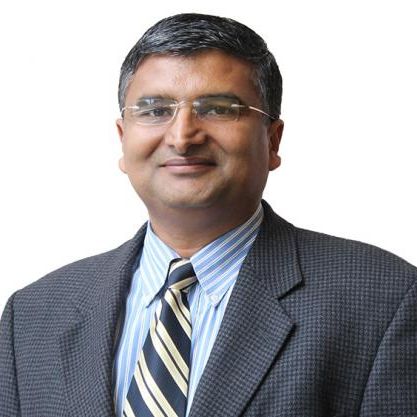
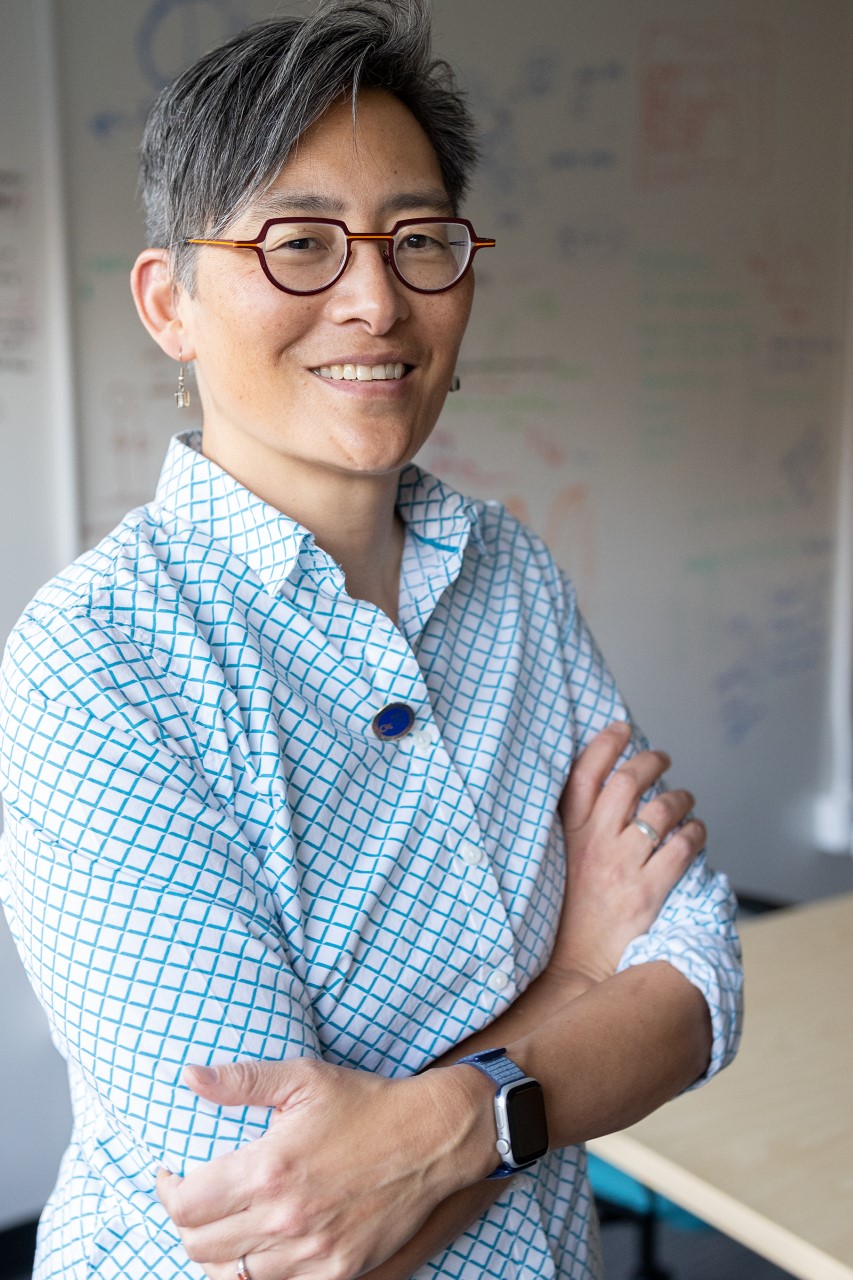
Photo of Yashwanth Kumar Nakka
ynakka3@gatech.edu

Yashwanth Nakka is the director of the Aerospace Robotics Laboratory at Georgia Tech. His research interests broadly include designing aerospace autonomous systems, spacecraft autonomy, planning (guidance) under uncertainty, and nonlinear dynamics and control. Earlier, he was a Robotics Technologist (2021-2024) at NASA Jet Propulsion Laboratory, where he led the research and development planning, controls, and estimation tasks on CADRE, EELS, and DARPA LINC. He received a B. Tech. in aerospace engineering from the Indian Institute of Space Science and Technology, India, in 2011, an M. Sc. degree in aerospace engineering from the University of Illinois Urbana-Champaign, IL, USA, in 2016, and an M. Sc. degree and a Ph.D. in space engineering from California Institute of Technology, CA, USA, in 2017, and 2021, respectively. He was an engineer for the GSAT-15 and 16 missions at the Indian Space Research Organization from 2011 to 2014. He received the JPL CADRE Team Award for his work on multi-agent autonomy. He won the best student paper award at the 2021 American Institute of Aeronautics and Astronautics Guidance, Navigation, and Controls conference and the best paper award at the 11th International Workshop on Satellite Constellations and Formation Flying.
 

Education

  • Ph.D. in Space Engineering - California Institute of Technology 2017 - 2021
  • M.S. in Space Engineering - California Institute of Technology 2016-2017
  • M.S. in Aerospace Engineering - University of Illinois Urbana-Champaign 2014-2016
  • B.Tech in Aerospace Engineering - Indian Institute of Space Science Technology 2007 - 2011

Distinctions & Awards

  • NASA Jet Propulsion Laboratory CADRE Team Award, 2024
  • Best Student Paper Award at AIAA Guidance, Navigation and Control Conference, 2021
  • David and Catherine Thompson Graduate Fellowship Fund for Space, 2020
  • Best Paper Award at 11th International Workshop on Satellite Constellations and Formation Flying, 2019
  • Keck Institute of Space Studies Affiliate, 2019
  • Excellent Reviewer Nomination, Journal of Guidance Control and Dynamics, 2018
  • Darryl G. Greenmayer Fellowship Recipient, 2016
  • Outstanding Performance Award, Indian Space Research Organization (ISRO), 2012 and 2013
  • Indian Space Research Organisation (ISRO) Scholarship Recipient, 2007 - 2011
Assistant Professor, Daniel Guggenheim School of Aerospace Engineering
Office
ESM Building 205

W. Hong Yeo

W. Hong Yeo's profile picture
woonhong.yeo@me.gatech.edu

Dr. Yeo holds the titles of G.P. "Bud" Peterson and Valerie H. Peterson Endowed Professor, as well as Harris Saunders Jr. Endowed Professor, in the Woodruff School of Mechanical Engineering and the Coulter Department of Biomedical Engineering at Georgia Tech. He is also the director of the Wearable Intelligent Systems and Healthcare Center (WISH Center) and the KIAT-Georgia Tech Semiconductor Electronics Center (K-GTSEC). Dr. Yeo's research focuses on understanding the fundamentals of soft materials, deformable mechanics, interfacial physics, manufacturing, and the integration of hard and soft materials for the development of biomedical systems. He earned his Ph.D. in mechanical engineering and genome sciences from the University of Washington in Seattle and subsequently worked as a postdoctoral research fellow at the University of Illinois at Urbana-Champaign. With over 180 peer-reviewed publications, Dr. Yeo has contributed to many prestigious journals, including Nature Materials, Nature Machine Intelligence, Nature Communications, and Science Advances. He is an IEEE Senior Member and has received numerous awards, including the Visiting Professorship from the Institute Jean Lamour at the Université de Lorraine in France, the Lucy G. Moses Lectureship Award at the Mount Sinai School of Medicine, the NIH Trailblazer Young Investigator Award, the IEEE Outstanding Engineer Award, the Emory School of Medicine Research Award, the Imlay Innovation Award, the American Heart Association Innovative Project Award, the Sensors Young Investigator Award, the Med-X Young Investigator Award, and the Outstanding Service Award from the Korea Institute for Advancement of Technology, as well as the Outstanding Yonsei Scholar Award. Dr. Yeo is also the founder of two startup companies: Huxley Medical, Inc. and WisMedical, Inc.

Professor, Woodruff School of Mechanical Engineering
Faculty, Wallace H. Coulter Department of Biomedical Engineering
Director, WISH Center
Phone
404.894.9425
Office
Marcus Nano 4133
Additional Research

Human-machine interface; hybrid materials; bio-MEMS; Soft robotics. Flexible Electronics; Human-machine interface; hybrid materials; Electronic Systems, Devices, Components, & Packaging; bio-MEMS; Soft robotics. Yeo's research in the field of biomedical science and bioengineering focuses on the fundamental and applied aspects of biomolecular interactions, soft materials, and nano-microfabrication for the development of nano-biosensors and soft bioelectronics.

Google Scholar
https://scholar.google.com/citations?hl=en&user=ryhsv18AAAAJ&view_op=list_works&sortby=pubdate

Alexander T. Adams

Alexander Adams
aadams322@gatech.edu

Dr. Adams’ research focuses on designing, fabricating, and implementing new ubiquitous and wearable sensing systems. Alex leverages sensing, signal processing, and fabrication techniques to design, deploy, and evaluate novel sensing technologies. In particular, point-of-care technologies for remote health monitoring and diagnostics.

Originally a musician, Alex became fascinated by how he could capture and manipulate sounds through analog hardware and digital signal processing, which led him back to his hometown (Concord, NC). He completed his BS at the University of North Carolina at Charlotte in 2014 and his Ph.D. at Cornell University in 2021 (advised by Professor Tanzeem Choudhury). Alex then became the resident Research Scientist for the Precision Behavioral Health Initiative at Cornell Tech (NYC) until the fall of 2022, when he joined the School of Interactive Computing at the Georgia Institute of Technology as faculty in HCI, Robotics, and human-centered computing. He is also a PhD program faculty member in the Coulter Department of Biomedical Engineering, with affiliations in the Institute of People and Technology, the Institute of Bioengineering and Bioscience, and the Institute for Neuroscience, Neurotechnology, and Society. As Director of the Uncommon Sense Labs, Dr. Adams explores how we can meet people where they are with a novel sensing system that enables lab-quality health assessments for chronic disease, fetal-maternal health, substance use disorder, and chronic pain at the point of care and in rural settings.

Assistant Professor
Office
237 TSRB
Google Scholar
https://scholar.google.com/citations?hl=en&user=assJWZYAAAAJ&view_op=list_works&sortby=pubdate

Alper Erturk

Alper Erturk's profile picture
alper.erturk@me.gatech.edu

Erturk began at Georgia Tech in May 2011 as an Assistant Professor, he was promoted to Associate Professor with tenure in 2016 and became a full Professor in 2019. Prior to joining Georgia Tech, he worked as a Research Scientist in the Center for Intelligent Material Systems and Structures at Virginia Tech (2009-2011). His postdoctoral research interests included theory and experiments of smart structures for applications ranging from aeroelastic energy harvesting to bio-inspired actuation. His Ph.D. dissertation (2009) was centered on experimentally validated electromechanical modeling of piezoelectric energy harvesters using analytical and approxIMaTe analytical techniques. Prior to his Ph.D. studies in Engineering Mechanics at Virginia Tech, Erturk completed his M.S. degree (2006) in Mechanical Engineering at METU with a thesis on analytical and semi-analytical modeling of spindle-tool dynamics in machining centers for predicting chatter stability and identifying interface dynamics between the assembly components.

Woodruff Professor, Woodruff School of Mechanical Engineering
Phone
404.385.1394
Office
Love 126
Additional Research

Structural Dynamics; Vibrations; Smart Materials & Structures; Energy Harvesting; Acoustic Metamaterials; Acoustics and Dynamics; Smart materials; Piezoelectronic Materials; Metamaterials; Energy Harvesting

Research Focus Areas
Google Scholar
https://scholar.google.com/citations?hl=en&user=OwypZqcAAAAJ&view_op=list_works&sortby=pubdate

Lena Ting

Lena Ting's profile picture
lting@emory.edu

I am an engineer and neuroscientist focused on how the brain and body cooperate to allow us to move. Fundamental abilities like standing and walking appear effortless until we–or someone we love–loses that ability. Movement is impacted in a wide range of diseases because it involves almost all parts of the brain and body, and their interactions with the environment. How we move is also highly individualized, changing across our lifetimes as a function of our experiences, and adapting in different situations. As such, assessing and treating movement impairments remains highly challenging. My approach is to dissect the complexities of how we move in health and disease by bridging what may seem to be disparate fields across engineering, neuroscience, and physiology. Our current application areas are Parkinson’s disease, stroke, aging and cerebral palsy, and we are interested in extending our work toward mild cognitive impairment and concussion.

My lab uses robotics, computation, and artificial intelligence to identify new physiological principles of sensing and moving that are enabling researchers to personalize rehabilitation and medicine. Primarily, we study people in the lab, studying brain and muscle activity in relationship to the body’s biomechanics in standing and walking. We use and develop robotic devices for assessing and assisting human movement, while interpreting brain and muscle activity to personalize the interactions. Our novel computer simulations of muscle, neurons, and joints establish a virtual platform for predicting how movements change in disease and improve with interventions. Recently, we have demonstrated the critical role of cognitive function motor impairment that may increase fall risk, suggesting that how we move and how we think may be closely related. Current projects include developing physiologically-inspired controllers to enable exoskeletons to enhance user balance, identifing individual differences that predict response to gait rehabilitation in stroke survivors, and developing more precise and physiologically-based methods to interpret clinical motor test outcomes.

Professor, McCamish Foundation Distinguished Chair in Biomedical Engineering
Co-Director, Georgia Tech and Emory Neural Engineering Center
Professor, Rehabilitation Medicine, Division of Physical Therapy
Phone
404-727-2744
Office
Emory Rehabilitation Hospital R225
Additional Research
  • Neuroscience 
  • Human-robot interaction
Google Scholar
https://scholar.google.com/citations?user=bCR6nLcAAAAJ&hl=en&oi=sra

Shreyas Kousik

Shreyas Kousik's profile picture
shreyas.kousik@me.gatech.edu

Shreyas Kousik is an assistant professor in the George W. Woodruff School of Mechanical Engineering. Previously, Shreyas was a postdoctoral scholar at Stanford University, working in the ASL under Prof. Marco. Kousik completed a postdoc with Prof. Grace Gao in the NAV Lab. He received his Ph.D. in Mechanical Engineering at the University of Michigan, advised by Prof. Ram Vasudevan in the ROAHM Lab and received his undergraduate degree in Mechanical Engineering at Georgia Tech, advised by Prof. Antonia Antoniou.

Kousik’s research is focused on guaranteeing safety in autonomy via collision avoidance methods for robots. His lab’s goal is to translate safety in math to safety on real robots by exploring ways to model uncertainty from autonomous perception and estimation systems and ensure that these models are practical for downstream planning and control tasks

Assistant Professor
Google Scholar
https://scholar.google.com/citations?hl=en&user=cb0xkZ4AAAAJ&view_op=list_works&sortby=pubdate

Mohsen Moghaddam

Mohsen Moghaddam's profile picture
mohsen.moghaddam@gatech.edu

Mohsen Moghaddam is the Gary C. Butler Family Associate Professor in the H. Milton Stewart School of Industrial and Systems Engineering and the George W. Woodruff School of Mechanical Engineering at the Georgia Institute of Technology. He directs the Symbiotic and Augmented Intelligence Lab (SAIL), where his research focuses on developing human-centered computational models, algorithms, and tools at the intersection of AI and spatial computing to enhance learning and creativity in various cognitive and psychomotor tasks within industrial settings. Previously, Dr. Moghaddam was an Assistant Professor in the Department of Mechanical and Industrial Engineering and an Affiliated Faculty with the Khoury College of Computer Sciences at Northeastern University in Boston. He has also served as a Visiting Professor with the HumanTech project at Politecnico di Milano and as a Visiting Scholar at the Next Level Lab, Harvard University. Dr. Moghaddam earned his PhD in Industrial Engineering from Purdue University and completed a Postdoctoral Associate position at the GE-Purdue Partnership in Research and Innovation in Advanced Manufacturing. His research has been supported by the U.S. National Science Foundation, the U.S. Defense Advanced Research Projects Agency, the U.S. Navy, and industry partners.

Gary C. Butler Family Associate Professor
Office
Groseclose 318
Additional Research
  • Extended Reality
  • Human-Robot Interaction
Google Scholar
https://scholar.google.com/citations?hl=en&user=WeaLV4QAAAAJ&view_op=list_works&sortby=pubdate

Edvard P.G. Bruun

Assistant Professor Edvard P.G. Bruun
edvard.bruun@ce.gatech.edu

Dr. Edvard Bruun joined the faculty in the School of Civil and Environmental Engineering at the Georgia Institute of Technology in August 2024. He completed his Ph.D. (2024) in Civil and Environmental Engineering at Princeton University. Dr. Bruun is also a licensed professional engineer in Canada and worked as a structural engineer at Arup before pursuing his Ph.D.

Dr. Bruun’s research centers on robotic automation for the assembly and disassembly of large-scale building components. He develops computational methods to design geometrically complex yet material-efficient structures that demand robotic fabrication for their construction. By harnessing the spatial precision and multifunctionality of cooperative multi-robot systems, Dr. Bruun coordinates multiple industrial robotic arms to execute intricate tasks. These include providing temporary structural support and facilitating the addition, removal, or repurposing of building components in collaboration with human operators.

Assistant Professor
Phone
647.241.3198
Office
Mason 3140A
Additional Research
  • Cooperative Robotic Fabrication
  • Construction Automation
  • Pre-Fabrication
  • Scaffold-Free (Dis)Assembly
IRI And Role
Google Scholar
https://scholar.google.com/citations?hl=en&user=G-YOXQoAAAAJ&view_op=list_works&sortby=pubdate

Sean Wilson

Sean Wilson, Collaborative Autonomy Branch Chief / Director of the Robotarium Lab
sean.wilson@gtri.gatech.edu

Sean Wilson is a Senior Research Engineer serving as the Collaborative Autonomy Branch Chief for the Aerospace, Transportation & Advanced Systems Laboratory at the Georgia Tech Research Institute (GTRI). Additionally, he serves as the Director of the Robotarium Lab (https://www.robotarium.gatech.edu/) at Georgia Tech, which enables people around the world to deploy robotic algorithms onto robotic hardware free of charge.

He received M.S. and Ph.D. degrees in mechanical engineering from Arizona State University in 2017 and a B.A. degree in physics and mathematics from the State University of New York at Geneseo in 2012. He previously served as a postdoctoral fellow at the Georgia Institute of Technology.

Dr. Wilson’s research interests include remotely-accessible robotic hardware, collaborative autonomy, as well as the control of multi-agent and swarm robotic systems. 

Senior Research Engineer
Collaborative Autonomy Branch Chief / Director of the Robotarium Lab
Office
CCRF B11-3133D
Additional Research
  • Swarm Robotics
  • Distributed Control
  • Multi-Robot Systems Collective Behaviors
  • Bio-Inspired Robotics
IRI And Role
GTRI
Geogia Tech Research Institute > Aerospace, Transportation & Advanced Systems Laboratory
Google Scholar
https://scholar.google.com/citations?user=Bhz3UroAAAAJ&hl=en

Ashok Goel

Ashok Goel's profile picture
ashok.goel@cc.gatech.edu

Ashok Goel is a Professor of Computer Science in the School of Interactive Computing at Georgia Institute of Technology in Atlanta, USA. He obtained his Ph.D. from The Ohio State University. At Georgia Tech, he is also the Director of the Ph.D. Program in Human-Centered Computing, a Co-Director of the Center for Biologically Inspired Design, and a Fellow of Brook Byers Institute for Sustainable Systems. For more than thirty years, Ashok has conducted research into artificial intelligence, cognitive science and human-centered computing, with a focus on computational design, modeling and creativity. His recent work has explored design thinking, analogical thinking and systems thinking in biological inspired design (https://www.youtube.com/watch?v=wiRDQ4hr9i8), and his research is now developing virtual research assistants for modeling biological systems. Ashok teaches a popular course on knowledge-based AI as part of Georgia Tech's program on Online Masters of Science in Computer Science. He has pioneered the development of virtual teaching assistants, such as Jill Watson, for answering questions in online discussion forums (https://www.youtube.com/watch?v=WbCguICyfTA). Chronicle of Higher Education recently called virtual assistants exemplified by Jill Watson as one of the most transformative educational technologies in the digital era. Ashok is the Editor-in-Chief of AAAI's AI Magazine.

Professor; School of Interactive Computing
Director| Ph.D. program in Human-Centered Computing; College of Computing
Co-Director; Center for Biologically Inspired Design
Fellow; Brook Byers Institute for Sustainable Systems
Office
GVU/TSRB
Additional Research
  • Artificial Intelligence
  • Cognitive Science
  • Computational Design
  • Computational Creativity
  • Educational Technology
  • Design Science
  • Learning Science and Technology
  • Human-Centered Computing
Google Scholar
https://scholar.google.com/citations?hl=en&user=VjNg25EAAAAJ&view_op=list_works&sortby=pubdate