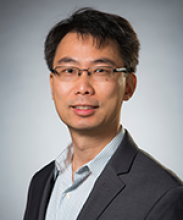
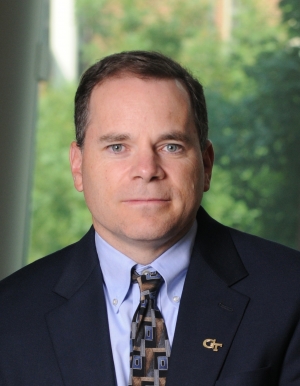
Molei Tao

Molei Tao's profile picture
mtao@gatech.edu

Molei Tao received B.S. in Math & Physics in 2006 from Tsinghua Univ. (Beijing) and Ph.D. in Control & Dynamical Systems with a minor in Physics in 2011 from Caltech (advisor: Houman Owhadi, co-advisor: Jerry Marsden). Afterwards, he worked as a postdoc in Computing & Mathematical Sciences at Caltech from 2011 to 2012, and then as a Courant Instructor at NYU from 2012 to 2014. From 2014 on, he has been an assistant, and then associate professor in School of Math at Georgia Tech. He is a recipient of W.P. Carey Ph.D. Prize in Applied Mathematics (2011), American Control Conference Best Student Paper Finalist (2013), NSF CAREER Award (2019), AISTATS best paper award (2020), IEEE EFTF-IFCS Best Student Paper Finalist (2021), Cullen-Peck Scholar Award (2022), GT-Emory AI.Humanity Award (2023), a Plenary Speaker at Georgia Scientific Computing Symposium (2024), a Keynote Speaker at (2024) International Conference on Scientific Computing and Machine Learning, SONY Faculty Innovation Award (2024), Best Poster Award at 2024 international conference “Recent Advances and Future Directions for Sampling” held at Yale, and Richard Duke Fellowship (2025).

Professor, School of Mathematics
Phone
(404) 894-8380;
Additional Research
  • Energy Harvesting
  • Smart Infrastructure

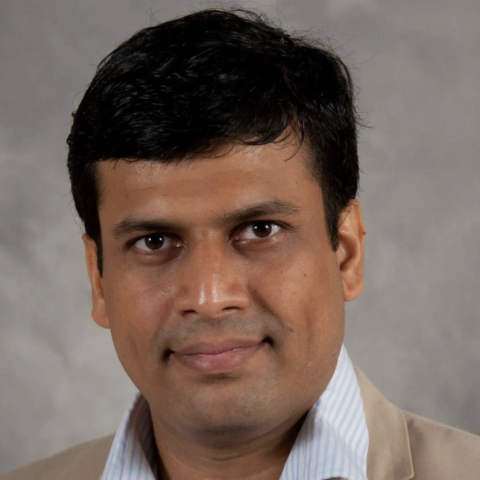
Edmond Chow

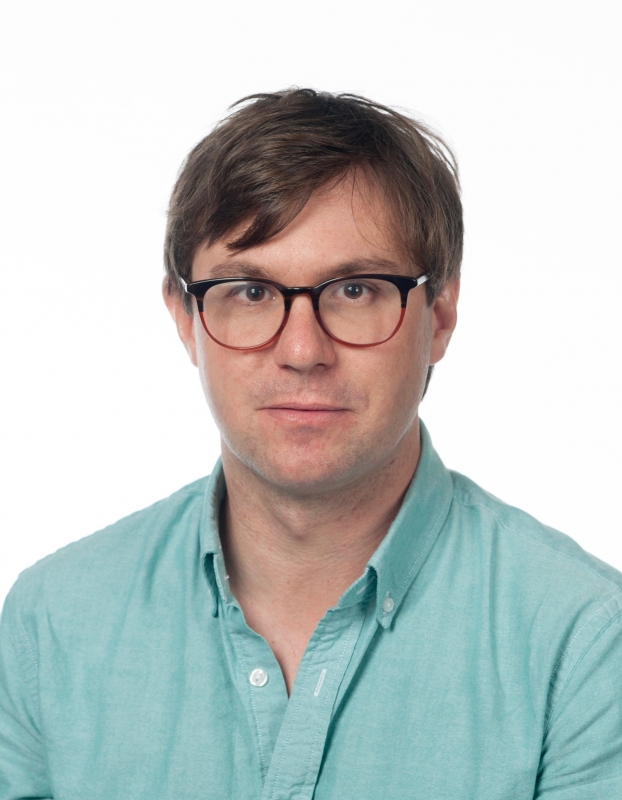
 Edmond Chow's profile picture
echow@cc.gatech.edu

Edmond Chow is a Professor in the School of Computational Science in the College of Computing. He previously held positions at D. E. Shaw Research and Lawrence Livermore National Laboratory. His research is in developing and applying numerical methods and high-performance computing to solve large-scale scientific computing problems and seeks to enable scientists and engineers to solve larger problems more efficiently using physical simulation. Specific interests include numerical linear algebra (preconditioning, multilevel methods, sparse matrix computations) and parallel methods for quantum chemistry, molecular dynamics, and Brownian/Stokesian dynamics.  Chow earned an Honors B.A.Sc. in systems design engineering from the University of Waterloo, Canada, in 1993, and a Ph.D. in computer science with a minor in aerospace engineering from the University of Minnesota in 1997. Chow was awarded the 2009 ACM Gordon Bell prize and the 2002 Presidential Early Career Award for Scientists and Engineers (PECASE).

Professor, School of Computational Science and Engineering
Phone
404.894.3086
Office
CODA S1311
Additional Research
  • Materials 
  • Data Sciences
  • Cyber/ information technology
  • Quantum information sciences
Google Scholar
https://scholar.google.com/citations?hl=en&user=jGqGKGMAAAAJ&view_op=list_works&sortby=pubdate

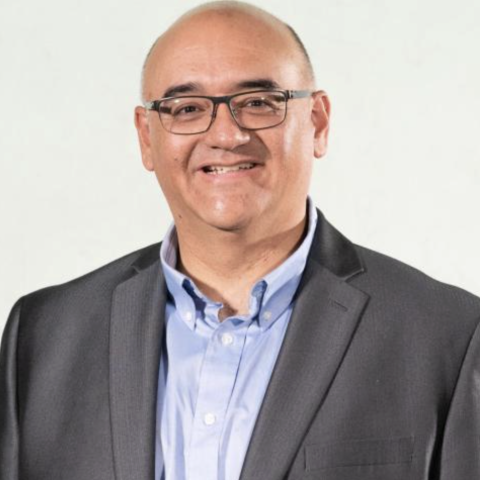
Martin Mourigal

Martin Mourigal's profile picture
mourigal@gatech.edu

Martin Mourigal received the B.S in aterials from Ecole des Mines de Nancy in 2004. He later received his M.S. and Ph.D. in physics from Ecole Polytechnique Federale (EPFL) located in Lausanne, Switzerland in 2007 and 2011, respectively. He was also a postdoctoral research fellow in John Hopkins University from 2011 until 2014. He joined Georgia Tech in 2015 and is currently the Dunn Family Professor in the School of Physics. Mourigal's lab focuses on the study of collective electronic and magnetic phenomena in quantum materials. His research exploits the unique strengths of neutron and X-ray scattering to probe the organization and the dynamics of matter at the nanoscale. 

In addition to his own lab research, Mourigal is the co-director of the Georgia Tech Quantum Alliance, a university wide program that will work towards solving problems in optimization, cryptography, and artificial intelligence. Mourigal was awarded the Cullen Peck Faculty Scholar Award from Georgia Tech in 2019. He was also awarded the National Science Foundation CAREER Award for excellence as a young educator and researcher in 2018.

Dunn Family Professor, School of Physics
Initiative Lead, Georgia Tech Quantum Alliance
Phone
404.385.5669
Office
Howey C202
Additional Research
  • Quantum Materials
  • Micro and Nanomechanics
  • Ferroelectronic Materials
  • Materials Data Sciences
  • Electronics
University, College, and School/Department
Google Scholar
https://scholar.google.com/citations?hl=en&user=utYY3jYAAAAJ&view_op=list_works&sortby=pubdate

Rampi Ramprasad

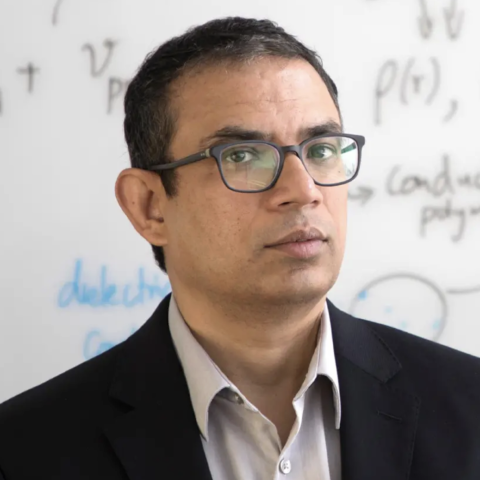
Rampi Ramprasad's profile picture
rampi.ramprasad@mse.gatech.edu

Ramprasad joined the School of Materials Science and Engineering at Georgia Tech in February 2018. Prior to joining Georgia Tech, he was the Centennial Term Professor of Materials Science and Engineering at the University of Connecticut. He joined the University of Connecticut in Fall 2004 after a 6-year stint with Motorola’s R&D laboratories at Tempe, AZ. Ramprasad received his B. Tech. in Metallurgical Engineering at the Indian Institute of Technology, Madras, India, an M.S. degree in Materials Science and Engineering at the Washington State University, and a Ph.D. degree also in Materials Science and Engineering at the University of Illinois, Urbana-Champaign.

Ramprasad’s area of expertise is in the development and utilization of computational and data-driven (machine learning) methods aimed at the design and discovery of new materials. Materials classes under study include polymers, metals and ceramics (mainly dielectrics and catalysts), and application areas include energy production and energy storage. Prof. Ramprasad’s research has been funded by the Office of Naval Research (ONR), the National Science Foundation (NSF), the Department of Energy (DOE), the Army Research Office (ARO), and Toyota Research Institute (TRI). He has lead a ONR-sponsored Multi-disciplinary University Research Initiative (MURI) in the past to accelerate the discovery of polymeric capacitor dielectrics for energy storage, and is presently leading another MURI aimed at the understanding and design of dielectrics tolerant to enormous electric fields.

Ramprasad is a Fellow of the American Physical Society, an elected member of the Connecticut Academy of Science and Engineering, and the recipient of the Alexander von Humboldt Fellowship and the Max Planck Society Fellowship for Distinguished Scientists.

Michael E. Tennenbaum Family Chair, Materials Science and Engineering
Georgia Research Alliance Eminent Scholar in Energy Sustainability
Phone
404.385.2471
Office
Love 366
Additional Research
  • Data Analytics
  • Materials discovery
  • Energy Storage
  • Modeling
  • Electronic Materials
  • Electronics
University, College, and School/Department

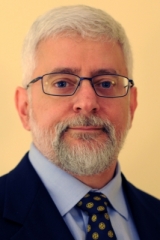
Pascal Van Hentenryck

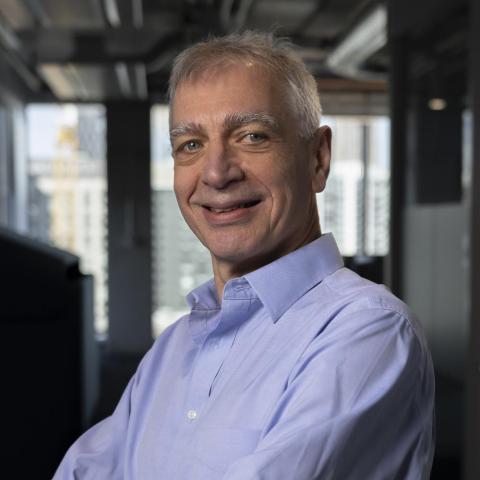
Pascal Van Hentenryck's profile picture
pascal.vanhentenryck@isye.gatech.edu

Pascal Van Hentenryck is an A. Russell Chandler III Chair and Professor in the H. Milton Stewart School of Industrial and Systems Engineering at Georgia Tech. Prior to this appointment, he was a professor of Computer Science at Brown University for about 20 years, he led the optimization research group (about 70 people) at National ICT Australia (NICTA) (until its merger with CSIRO), and was the Seth Bonder Collegiate Professor of Engineering at the University of Michigan. Van Hentenryck is also an Honorary Professor at the Australian National University.

Van Hentenryck is a Fellow of AAAI (the Association for the Advancement of Artificial Intelligence) and INFORMS (the Institute for Operations Research and Management Science). He has been awarded two honorary doctoral degrees from the University of Louvain and the university of Nantes, the IFORS Distinguished Lecturer Award, the Philip J. Bray Award for teaching excellence in the physical sciences at Brown University, the ACP Award for Research Excellence in Constraint Programming, the ICS INFORMS Prize for Research Excellence at the Intersection of Computer Science and Operations Research, and an NSF National Young Investigator Award. He received a Test of Time Award (20 years) from the Association of Logic Programming and numerous best paper awards, including at IJCAI and AAAI. Van Hentenryck has given plenary/semi-plenary talks at the International Joint Conference on Artificial Intelligence (twice), the International Symposium on Mathematical Programming, the SIAM Optimization Conference, the Annual INFORMS Conference, NIPS, and many other conferences. Van Hentenryck is program co-chair of the AAAI’19 conference, a premier conference in Artificial Intelligence.

Van Hentenryck’s research focuses in Artificial Intelligence, Data Science, and Operations Research. His current focus is to develop methodologies, algorithms, and systems for addressing challenging problems in mobility, energy systems, resilience, and privacy. In the past, his research focused on optimization and the design and implementation of innovative optimization systems, including the CHIP programming system (a Cosytec product), the foundation of all modern constraint programming systems and the optimization programming language OPL (now an IBM Product). Van Hentenryck has also worked on computational biology, numerical analysis, and programming languages, publishing in premier journals in these areas.

Van Hentenryck runs the Seth Bonder summer Camp in Computational and Data Science for middle- and high-school students every summer. 

Director, AI Institute for Advances in Optimization
A. Russell Chandler III Chair, School of Industrial and Systems Engineering
Professor, School of Industrial and Systems Engineering
Phone
(404) 385-5538
Additional Research

Electric Vehicles

David S. Sholl

David S.  Sholl's profile picture
david.sholl@chbe.gatech.edu

Sholl’s research focuses on materials whose macroscopic dynamic and thermodynamic properties are strongly influenced by their atomic-scale structure. Much of this research involves applying computational techniques such as molecular dynamics, Monte Carlo simulations and quantum chemistry methods to materials of interest. Although the group's work is centered on computational methods, it involves extensive collaboration with experimental groups and industrial partners.

David Sholl is the Executive Director and Vice Provost for the University of Tennessee-Oak Ridge Innovation Institute (UT-ORII). More information about UT-ORII is available at utorii.com. David also leads ORNL’s Transformational Decarbonization Initiative. From 2013-2021 David was the School Chair of Chemical & Biomolecular Engineering at Georgia Tech. In 2022-2023, he was a Portfolio Strategy Advisor for DOE’s Office of Clean Energy Demonstrations (OCED), where he was the lead author OCED’s inaugural multiyear program plan. He is a Fellow of AIChE and AAAS and in 2024 was elected to the National Academy of Engineering. 

Dr. Sholl has published hundreds of peer-reviewed articles and several books, including Density Functional Theory: A Practical Introduction (with Jan Steckel, 2009) and Success and Creativity in Scientific Research: Amaze Your Friends and Surprise Yourself (2021). His research has primarily focused on using materials modeling methods to develop new materials and processes for chemical separations and energy applications. He has advised over 80 PhD students and postdoctoral researchers.

View Sholl’s ORNL bio here.

Education

B.Sc. 1992, The Australian National UniversityM.Sc. 1993, University of ColoradoPh.D. 1995, University of Colorado

Professor, School of Chemical and Biomolecular Engineering
Phone
404.894.2822
Office
ES&T 2214
Additional Research
  • Metal-Organic Frameworks
  • Separation Membranes
  • Separations Technology
  • Carbon Capture
  • Hydrogen
  • SMART Manufacturing
  • Sustainable Manufacturing
  • Biochemicals
Google Scholar
https://scholar.google.com/citations?hl=en&user=BR7UkKYAAAAJ&view_op=list_works&sortby=pubdate

Phanish Suryanarayana

Phanish Suryanarayana's profile picture
phanish.suryanarayana@ce.gatech.edu

Phanish Suryanarayana joined the School of Civil and Environmental Engineering at the Georgia Institute of Technology in August 2011. He received his B.Tech. from Indian Institute of Technology, Madras, India in 2005. He obtained his M.S. in Aeronautics from California Institute of Technology in 2006. Subsequently, he received his Ph.D. in Aeronautics from California Institute of Technology in 2011 for his thesis titled "Coarse-graining Kohn-Sham Density Functional Theory". His research interests are in the areas of multiscale modeling, ab-initio calculations, density functional theory, continuum mechanics and smart materials. Overall, he is interested in developing efficient numerical methods for solving problems arising in a variety of fields. On a personal level, Dr. Suryanarayana is a sports enthusiast. He plays badminton, cricket, waterpolo, and ultimate frisbee. He also is an avid gamer (PC) and enjoys playing bridge and other board game

Professor, School of Civil and Environmental Engineering
Phone
404.894.2773
Office
Mason 5139A
Additional Research
  • Computational Materials Science
  • Energy Use & Conservation
  • High Performance Computing
Google Scholar
https://scholar.google.com/citations?hl=en&user=emIr7xQAAAAJ&view_op=list_works&sortby=pubdate

Santiago Grijalva

Santiago Grijalva's profile picture
sgrijalva@ece.gatech.edu

Dr. Grijalva joined the Georgia Institute of Technology in the summer of 2009 as Associate Professor of Electrical and Computer Engineering. He is the Director of the Advanced Computational Electricity Systems (ACES) Laboratory, where he conducts research on real-time power system control, informatics, and economics, and renewable energy integration in power. From 2012-2015, Dr. Grijalva served as the Strategic Energy Institute (SEI) Associate Director for Electricity Systems, responsible for coordinating large efforts on electricity research and policy at Georgia Tech. Dr. Grijalva received the Electrical Engineer degree from EPN-Ecuador in 1994, the M.S. Certificate in Information Systems from ESPE-Ecuador in 1997, and the M.S. and Ph.D. degrees in Electrical Engineering from the University of Illinois at Urbana-Champaign in 1999 and 2002, respectively. He was a post-doctoral fellow in Power and Energy Systems at the University of Illinois from 2003 to 2004. From 1995 to 1997, he was with the Ecuadorian National Center for Energy Control (CENACE) as engineer and manager of the Real-Time EMS Software Department. From 2002 to 2009, he was with PowerWorld Corporation as a senior software architect and developer of innovative real-time and optimization applications used today by utilities, control centers, and universities in more than 60 countries. Dr. Grijalva is a leading researcher on ultra-reliable architectures for critical energy infrastructures. He has pioneered work on de-centralized and autonomous power system control, renewable energy integration in power, and unified network models and applications. He is currently the principal investigator of various future electricity grid research projects for the US Department of Energy, ARPA-E, EPRI, PSERC as well as other Government organizations, research consortia, and industrial sponsors. Research interests: Power system and smart grid computation De-centralized and autonomous power control architectures Ultra-reliable electricity internetworks Seamless integration of large-scale renewable energy Electricity markets design and power system economics

Georgia Power Distinguished Professor, School of Electrical and Computer Engineering
Phone
(404) 894-2974
Office
VL E284
Additional Research
  • AI for Power Generation
  • Electrical Grid
  • Energy Storage
  • System Design & Optimization

Sriram Chockalingam

Sriram Chockalingam's profile picture
srirampc@gatech.edu
Sriram Chockalingam is a Research Scientist at the Institute for Data Engineering and Science (IDEaS). He develops high performance computing algorithms and implementations for IDEaS research efforts and collaborations. Dr. Chockalingam's research interests focus on development of sequential and parallel algorithms for network reverse engineering in systems biology, Bayesian network structure learning and approximate sequence matching with applications in Bioinformatics. He has over a decade of experience in developing software in both industry and academia targeted towards solving data science problems.
Research Scientist
University, College, and School/Department

Anton Leykin

Anton Leykin's profile picture
leykin@math.gatech.edu

Anton Leykin conducts research in nonlinear algebra with an emphasis on algorithm design and applications. His recent work centers on computer algebra, spanning topics from computer-assisted proofs to hybrid symbolic–numerical computation to parallel computing. He is also interested in applying methods from algebra and geometry to problems in science and engineering, with applications in areas such as computer vision and astrodynamics.

Professor; School of Mathematics
Office
Skiles 109
University, College, and School/Department
Google Scholar
https://scholar.google.com/citations?user=ztNR6w8AAAAJ