Vijay Ganesh

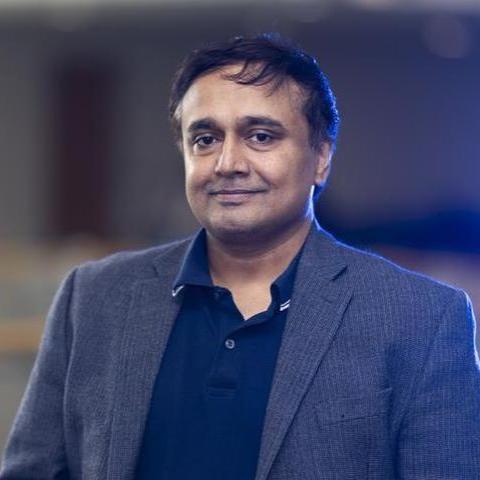
Vijay Ganesh, Professor of Computer Science
vganesh@gatech.edu

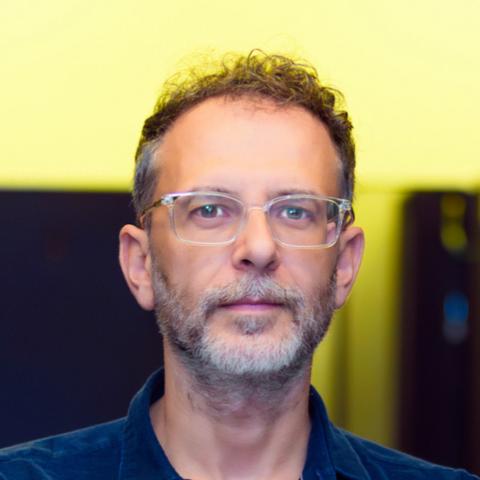
Dr. Vijay Ganesh is a professor of computer science at the Georgia Institute of Technology. Prior to joining Georgia Tech in 2023, Vijay was a professor at the University of Waterloo in Canada from 2012 to 2023 and a research scientist at the Massachusetts Institute of Technology from 2007 to 2012. Vijay completed his PhD in computer science from Stanford University in 2007. Vijay's primary area of research is the theory and practice of SAT/SMT solvers, and their application in AI, software engineering, security, mathematics, and physics. In this context he has led the development of many SAT/SMT solvers, most notably, STP, Z3str4, AlphaZ3, MapleSAT, and MathCheck. He has also proved several decidability and complexity results in the context of first-order theories. More recently he has started working on topics at the intersection of learning and reasoning, especially the use of machine learning for efficient solvers, and the use of solvers aimed at making AI more trustworthy, secure, and robust. For his research, Vijay has won over 30 awards, honors, and medals to-date, including an ACM Impact Paper Award at ISSTA 2019, ACM Test of Time Award at CCS 2016, and a Ten-Year Most Influential Paper citation at DATE 2008.

Professor
Office
Klaus Advanced Computing Building, Room 2320
Additional Research
  • AI for Scientific and Mathematical Discovery
  • Automated Reasoning - SAT/SMT Solvers and Provers
  • NeuroSymbolic AI via Reasoning and Learning
  • Secure and Trustworthy AI and Machine Learning
Google Scholar
https://scholar.google.com/citations?hl=en&user=YP23eR0AAAAJ&view_op=list_works&sortby=pubdate

N Apurva Ratan Murty

N Apurva Ratan Murty's profile picture
ratan@gatech.edu

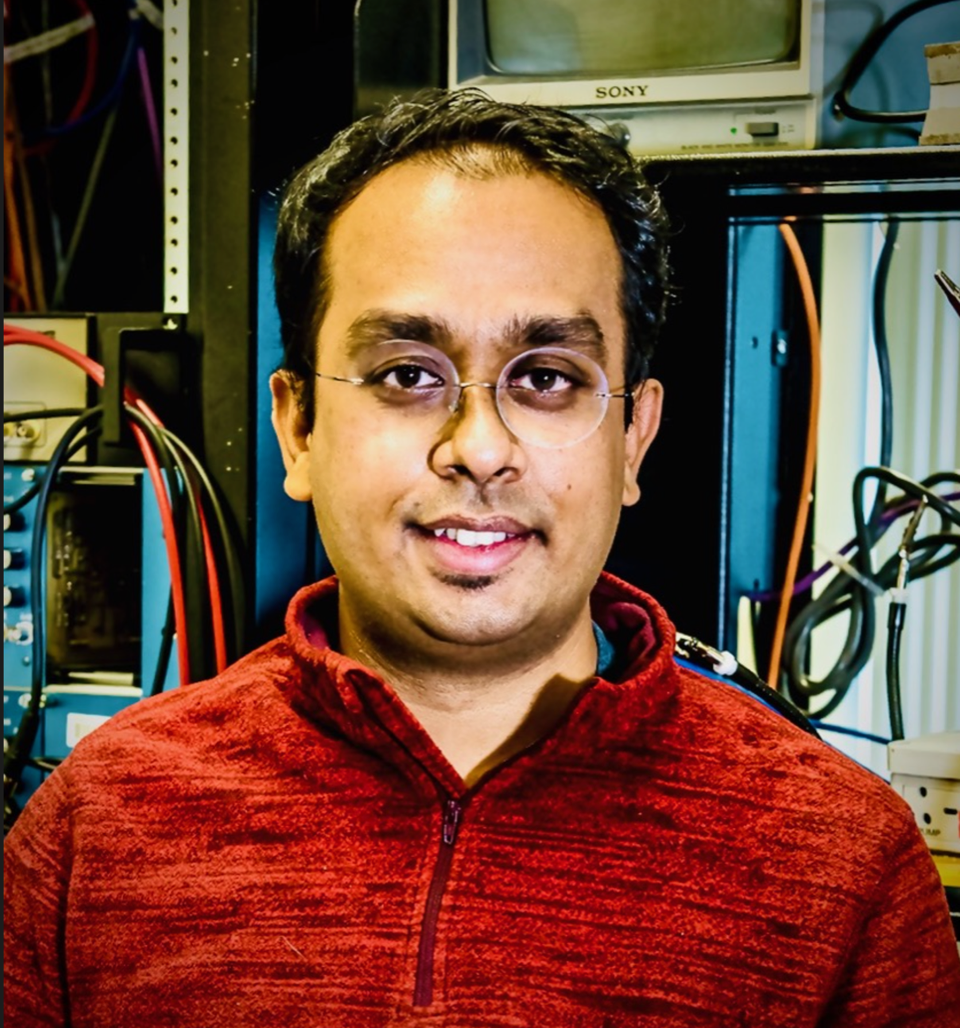
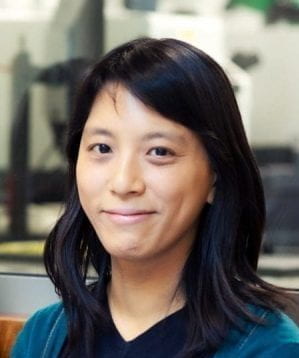
Ratan is an Assistant Professor of Cognition and Brain Science in the School of Psychology at Georgia Tech, and the Director of the Murty Lab (murtylab.com). He obtained his PhD from Indian Institute of Science (IISc) Bangalore and was a postdoctoral researcher in the Kanwisher and DiCarlo labs at MIT before moving to Georgia Tech. Research in the Murty Lab aims to uncover the neural codes and algorithms that enable us to see. The central theme of the lab's work is to integrate biological vision with artificial models of vision. The lab combines the benefits of closed-loop experimental testing (using 3T/7T human functional-MRI) with cutting-edge computational methods (like deep neural networks, generative algorithms, and AI interpretability) toward a new computationally precise understanding of human vision. This research also guides the development of neurally mechanistic biologically constrained models aimed to uncover a better understanding of the neurobiological changes that underlie perceptual abnormalities such as agnosias.

Assistant Professor
Office
131, JS Coon Building
Research Focus Areas

Peter Kasson

Peter Kasson's profile picture
peter.kasson@chemistry.gatech.edu

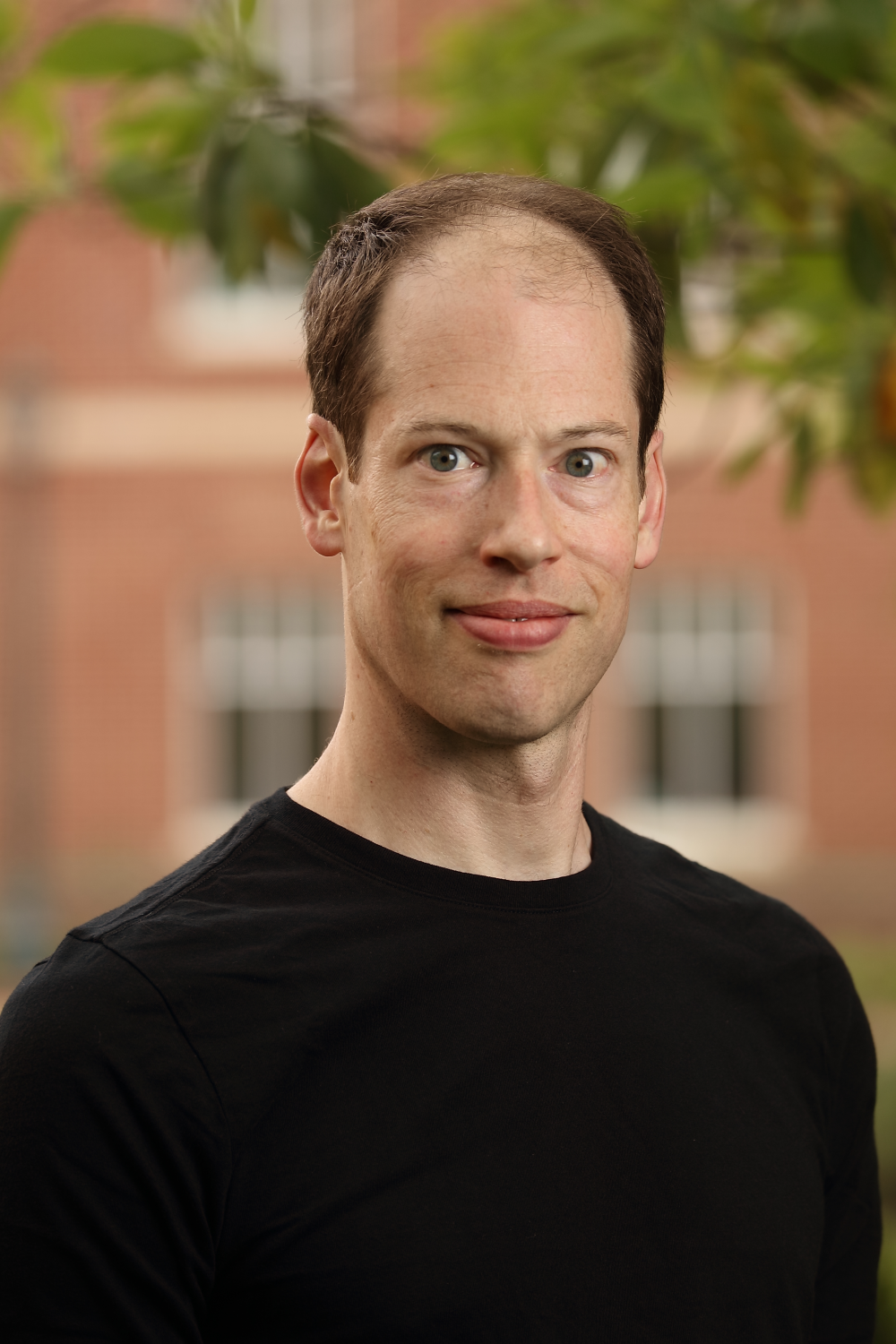
Peter Kasson is an international leader in the study of biological membrane structure, dynamics, and fusion, with particular application to how viruses gain entry to cells. His group performs both high-level experimental and computational work – a powerful combination that is critical to advancing our understanding of this important problem. His publications describe inventive approaches to the measurement of viral fusion rates and characterization of fusion mechanisms, and to the modeling of large-scale biomolecular and lipid assemblies. He has applied these insights to the prediction of pandemic outbreaks and drug resistance, with particular attention to Zika, SARS-CoV-2, and influenza pathogens in recent years. See https://kassonlab.org/ for more information.

Professor of Chemistry and Biomedical Engineering

Saurabh Sinha, Ph.D.

Saurabh Sinha, Ph.D. 's profile picture

Saurabh Sinha received his Ph.D. in Computer Science from the University of Washington, Seattle, in 2002, and after post-doctoral work at the Rockefeller University with Eric Siggia, he joined the faculty of the University of Illinois, Urbana-Champaign, in 2005, where he held the positions of Founder Professor in Computer Science and Director of Computational Genomics in the Carl R. Woese Institute for Genomic Biology until 2022. He joined Georgia Institute of Technology in 2022, as Wallace H. Coulter Distinguished Chair in Biomedical Engineering, with joint appointments in Biomedical Engineering and Industrial & Systems Engineering. Sinha’s research is in the area of bioinformatics, with a focus on regulatory genomics and systems biology. Sinha is an NSF CAREER award recipient and has been funded by NIH, NSF and USDA. He co-directed an NIH BD2K Center of Excellence and was a thrust lead in the NSF AI Institute at UIUC. He led the educational program of the Mayo Clinic-University of Illinois Alliance, and co-led data science education for the Carle Illinois College of Medicine. Sinha has served as Program co-Chair of the annual RECOMB Regulatory and Systems Genomics conference and served on the Board of Directors for the International Society for Computational Biology (2018-2021). He was a recipient of the University Scholar award of the University of Illinois, and selected as a Fellow of the AIMBE in 2018.

Wallace H. Coulter Distinguished Chair in Biomedical Engineering
Professor
Office
3108 UAW

Vida Jamali

Vida Jamali's profile picture
vida@gatech.edu

Vida Jamali earned her Ph.D. in chemical and biomolecular engineering from Rice University under the guidance of Professor Matteo Pasquali and her B.S. in chemical engineering from Sharif University of Technology. Jamali was a postdoctoral researcher in Professor Paul Alivisato's lab at UC Berkeley and Kavli Energy Nanoscience Institute before joining Georgia Tech. The Jamali Research Group uses experimental, theoretical, and computational tools such as liquid phase transmission electron microscopy, rheology, statistical and colloidal thermodynamics, and machine learning to study the underlying physical principles that govern the dynamics, statistics, mechanics, and self-organization of nanostructured soft materials, in and out of thermal equilibrium, from both fundamental and technological aspects.

Assistant Professor, School of Chemical and Biomolecular Engineering
Phone
404.894.5134
Office
ES&T 1222
Additional Research

Studying dynamics and self-assembly of nanoparticles and macromolecules in heterogeneous chemical and biological environmentsInvestigating individual to collective behavior of active nanomachinesHarnessing the power of machine learning to understand physical rules governing nanostructured-soft materials, design autonomous microscopy experimentation for inverse material design, and develop new statistical and thermodynamic models for multiscale phenomena

Hannah Choi

Hannah Choi's profile picture
hannahch@gatech.edu

Hannah Choi is an Assistant Professor in the School of Mathematics at Georgia Tech. Her research focuses on mathematical approaches to neuroscience, with primary interests in linking structures, dynamics, and computation in data-driven brain networks at multiple scales. Before coming to Georgia Tech, she was a postdoctoral fellow at the University of Washington and also a visiting scientist at the Allen Institute for Brain Science, and spent one semester at the Simons Institute for the Theory of Computing at the University of California, Berkeley as a Patrick J McGovern Research Fellow. She received her Ph.D. in Applied Mathematics from Northwestern University and her BA in Applied Mathematics from the University of California, Berkeley.

Assistant Professor
University, College, and School/Department

Garrett Stanley

Garrett Stanley's profile picture
garrett.stanley@bme.gatech.edu

Garrett Stanley is the McCamish Foundation Distinguished Chair in the Department of Biomedical Engineering at Georgia Tech and Emory University and is the Co-Director of the Georgia Tech Neural Engineering Center. He has formal training, both at undergraduate and doctorate levels, in engineering (specifically trained in Control Theory through all of his graduate work), and has worked extensively in the field of neuroscience, specifically in sensory processing in the brain, and more specifically in vision and somatosensation (touch). 

From 1999 to 2007, he was an Associate Professor in the Division of Engineering & Applied Sciences at Harvard University, where he was the leader of the Harvard Biocontrols Laboratory. Professor Stanley is now a faculty member in the Department of Biomedical Engineering at Georgia Tech/Emory University (2008-2013 Associate Professor, 2014-present Full Professor), and leads several programmatic efforts at the interface between basic neuroscience and neurotechnology (Co-Direct the GT Neural Engineering Center, Direct Computational Neuroscience training program, Director of Graduate Studies, etc.). In terms of research, he is the leader of the Neural Coding group in the Laboratory for Neuroengineering. 

The research of his group has been funded by the National Institute of Health, National Science Foundation, the Office of Naval Research, DARPA, and several private foundations. Prof. Stanley’s group routinely publishes our research in the top Neuroscience journals, along with more technical work in engineering journals. He is considered a leader in the field nationally and internationally.

McCamish Foundation Distinguished Chair
Carol Ann and David D. Flanagan Professor
BME Faculty Fellow
Phone
404-385-5037
Office
UAW 3107
Research Focus Areas
Google Scholar
https://scholar.google.com/citations?user=zJQPWQwAAAAJ&hl=en

Peng Qiu

Peng Qiu's profile picture
peng.qiu@bme.gatech.edu

Peng Qiu is a professor in the Wallace H. Coulter Department of Biomedical Engineering at Georgia Tech School of Engineering and Emory University School of Medicine. 

His research interests are in the areas of bioinformatics and computational biology, focusing on machine learning, data integration, statistical signal processing, control systems and optimization. 

In particular, he is interested in developing machine learning methods to advance single-cell data science, with applications in characterizing cellular heterogeneity, identifying cancer biomarkers, understanding disease progression, reconstructing gene regulatory networks, etc.

Professor
Phone
404-385-1656
Office
EBB 2107
Additional Research
  • Computational Biology
  • Machine Learning
Google Scholar
https://scholar.google.com/citations?user=huPJapcAAAAJ

Jeff Skolnick

Jeff Skolnick's profile picture
skolnick@gatech.edu
Regents’ Professor, School of Biological Sciences
Director, Center for the Study of Systems Biology
Mary and Maisie Gibson Chair & GRA Eminent Scholar in Computational Systems Biology
Additional Research
  • Computational Biology
  • Health & Life Sciences
Research Focus Areas
University, College, and School/Department

Anqi Wu

Anqi Wu's profile picture
anqiwu@gatech.edu

Anqi Wu is an Assistant Professor at the School of Computational Science and Engineering (CSE), Georgia Institute of Technology. She was a Postdoctoral Research Fellow at the Center for Theoretical Neuroscience, the Zuckerman Mind Brain Behavior Institute, Columbia University. She received her Ph.D. degree in Computational and Quantitative Neuroscience and a graduate certificate in Statistics and Machine Learning from Princeton University. Anqi was selected for the 2018 MIT Rising Star in EECS, 2022 DARPA Riser, and 2023 Alfred P. Sloan Fellow. Her research interest is to develop scientifically-motivated Bayesian statistical models to characterize structure in neural data and behavior data in the interdisciplinary field of machine learning and computational neuroscience. She has a general interest in building data-driven models to promote both animal and human studies in the system and cognitive neuroscience.

Assistant Professor
Phone
323-868-1604
Research Focus Areas