Margaret Kosal

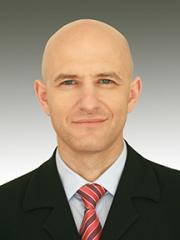
Margaret Kosal's profile picture
margaret.kosal@inta.gatech.edu

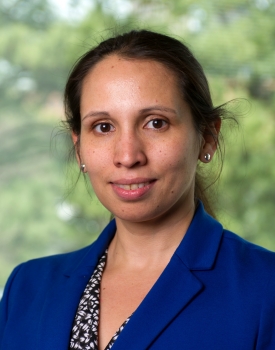
Margaret E. Kosal's research explores the relationships among technology, strategy, and governance. Her research focuses on two, often intersecting, areas: reducing the threat of weapons of mass destruction (WMD) and understanding the role of emerging technologies for security. Her work aims to understand and explain the role of technology and technological diffusion for national security at strategic and operational levels. In the changing post-Cold War environment, the most advanced military power no longer guarantees national or international security in a globalized world in which an increasing number of nation-states and non-state actors have access to new and potentially devastating dual-use capabilities. The long-term goals of her work are to understand the underlying drivers of technological innovation and how technology affects national security and modern warfare. She is interested in both the scholarly, theoretical level discourse and in the development of new strategic approaches and executable policy options to enable US dominance and to limit the proliferation of unconventional weapons. On the question of understanding the impact of emerging technology on national and international security her research considers what role will nanotechnology, cognitive science, biotechnology, and converging sciences have on states, non-state actors, balance of power, deterrence postures, security doctrines, nonproliferation regimes, and programmatic choices. Through examination of these real applications on the science (benign and defensive) and potential (notional) offensive uses of nanotechnology, she seeks to develop a model to probe the security implications of this emerging technology. The goal of the research is not to predict new specific technologies but to develop a robust analytical framework for assessing the impact of new technology on national and international security and identifying policy measures to prevent or slow proliferation of new technology - the next generation “WMD” - for malfeasant intentions. Kosal is the author of Nanotechnology for Chemical and Biological Defense (Springer Academic Publishers, 2009), which explores scenarios and strategies regarding the benefits and potential proliferation threats of nanotechnology and other emerging sciences for international security. She is also Director of the Sam Nunn Security Fellows Program and Co-Director of the Program on Emerging Technology within the Center for International Strategy, Technology, and Policy (CISTP).  Kosal was recently appointed Adjunct Scholar to the Modern War Institute at the US Military Academy/West Point. From 2012-2013, she as a senior advisor to the Chief of Staff of the US Army as part of his inaugural Strategic Studies Group (SSG). Before joining the Sam Nunn School of International Affairs, she was Science and Technology Advisor within the Office of the Secretary of Defense (OSD). Kosal also served as the first liaison to the Biological and Chemical Defense Directorate at the Defense Threat Reduction Agency (DTRA). She has been recognized for her leadership across the U.S. federal government, specifically for efforts to coordinate across the DoD as part of the interagency Nonproliferation and Arms Control Technology Working Group, reporting to the National Security Council (NSC), and as member of the interagency federal group charged with leading the National Nanotechnology Initiative (NNI). Kosal was nominated to and led the U.S. involvement in the NATO Nanotechnology for Defense Working Group. Her awards include the 2015 CETL/BP Junior Faculty Teaching Excellence Award, 2014 Georgia Tech Junior Faculty Outstanding Undergraduate Research Mentor Award, 2012 Ivan Allen Jr Legacy Award, 2010 INTAGO Faculty Award, CETL Class of 1969 Teaching Scholar, the OSD Award for Excellence, 2007 UIUC Alumni Association Recent Alumni Award, the President’s Volunteer Service Award, American Association for the Advancement of Science (AAAS) Defense Policy Fellow, and the Society of Porphyrins and Phthalocyanines Dissertation Research Award. Currently, she serves on the editorial board of the scholarly journals Studies in Conflict and Terrorism, the Journal of Strategic Security, the Journal of Defense Management, and Global Security: Health Science and Policy. Education: Ph.D., Chemistry, University of Illinois at Urbana-Champaign B.S., Chemistry, University of Southern California Awards and Distinctions: Senior Adjunct Scholar to the Modern War Institute at the U.S. Military Grand Challenges Faculty Fellow, AY2015-2016 & AY 2016-2017 2015-2016 CETL Class of 1969 Teaching Scholar 2015 CETL/BP Junior Faculty Teaching Excellence Award Gold Star Award in Recognition of the Highest Level of Accomplishment in Research, Ivan Allen College of Liberal Arts Dean Griffith Teaching Recognition – “Thank a Teacher” Award 2014 Georgia Tech Junior Faculty Outstanding Undergraduate Research Mentor Award Ivan Allen Jr. Legacy Faculty Award, 2012 INTAGO Faculty of the Year, 2010 Office of the Secretary of Defense Award for Excellence, 2007 University of Illinois at Urbana-Champaign Recent Alumni Award, 2007 President’s Volunteer Service Award, 2007 American Associatio for the Advancement of Science (AAAS) Science & Technology Fellowship, 2005-2007 American Chemical Society’s Chemical and Engineering News Top 2002 Supramolecular Chemistry research paper Areas of Expertise: Biotechnology Emerging Technology Military Nanotechnology National Security Nonproliferation Nuclear Weapons Terrorism US Foreign & Defense Policy

Professor, Sam Nunn School of International Affairs
Director, Sam Nunn Security Program
Editor-in-Chief, Politics and the Life Sciences
Phone
404-894-9664
Office
Habersham 303
Additional Research

Defense / National Security; Cyber Technology; Policy/Economics

Google Scholar
https://scholar.google.com/scholar?hl=en&q=margaret+Kosal&btnG=&as_sdt=1,11&as_sdtp=&oq=margaret

Gleb Yushin

Gleb Yushin's profile picture
gleb.yushin@mse.gatech.edu

Gleb Yushin is a Professor at the School of Materials Science and Engineering at Georgia Institute of Technology and a Co-Founder of several companies, including Sila Nanotechnologies, Inc.. For his contributions to materials science, Yushin has received numerous awards and recognitions, including Kavli Fellow Award, R&D 100 Award (Y-Carbon's application), Honda Initiation Grant Award, National Science Foundation CAREER Award, Air Force Office of Scientific Research Young Investigator Award, and several distinctions from National Aeronautics and Space Administration (NASA), such as Nano 50 Award. Dr. Yushin has co-authored over 30 patents and patent applications, over 100 invited presentations and seminars and over 100 publications on nanostructured Electronic Materials related applications, including papers in Science, Nature Materials and other leading journals. His current research is focused on advancing energy storage materials and devices for electronics, transportation and grid applications.

Professor, School of Materials Science and Engineering
Phone
404.385.3261
Office
Love 371
Additional Research

CharacterizationMeasurementsPhotovoltaicsPolymersProcessing, Fabrication, & ManufacturingSynthesis

Google Scholar
https://scholar.google.com/citations?hl=en&user=TwX62mwAAAAJ&view_op=list_works&sortby=pubdate

Mark Styczynski

Mark Styczynski's profile picture
mark.styczynski@chbe.gatech.edu

Mark Styczynski is an Associate Professor in the School of Chemical & Biomolecular Engineering at the Georgia Institute of Technology (Georgia Tech), doing research at the interface of synthetic and systems biology as applied to metabolic systems. His synthetic biology work focuses on the development of low-cost, minimal-equipment biosensors for the diagnosis of nutritional deficiencies in the developing world. His systems biology work uses computational and experimental methods to characterize metabolic dynamics and regulation using metabolomics data. He has received young investigator awards from the NSF, DARPA, and ORAU. He has won multiple department-and institute-level teaching awards at Georgia Tech. He founded and was the first president of the Metabolomics Association of North America (MANA), and is a Council Member in the Engineering BiologyResearch Consortium.

Professor, School of Chemical and Biomolecular Engineering
Phone
404-894-2825
Office
EBB 4013
Additional Research

Modelling and controlling metabolic dynamics and regulation (metabolic engineering). Biofuels. Systems biology-based experimental and bioinformatics analysis of metabolism Synthetic biology for the development of biosensors and diagnostics The main focus of theStyczynski groupis the experimental and computational study of the dynamics and regulation of metabolism, with ultIMaTe applications in metabolic engineering, biotechnology, and biosensors/diagnostics.

Google Scholar
https://scholar.google.com/scholar?q=Mark+P+Styczynski&hl=en

Shu Jia

Shu Jia's profile picture
shu.jia@gatech.edu

We strive to innovate in ways that both advance the imaging science and also impact biological and translational research. We are particularly interested in new imaging physics, bottom-up opto-electronic system design, as well as new principles for light propagation, light-matter interaction and image formation in complex biological materials, especially at the single-molecule level. Toward the application end, we have expertise in a wide range of imaging instrumentation and techniques, such as super-resolution, adaptive optics, light-field, miniaturized, light-sheet, computational microscopy and endoscopy.

Assistant Professor, Wallace H. Coulter Department of Biomedical Engineering
Phone
404.894.0290
Office
UAW 2112
Additional Research

Single-molecule biophotonicsSuper-resolution imagingAdvanced optical microscopy and instrumentation

Google Scholar
https://scholar.google.com/citations?hl=en&user=pcEf8kcAAAAJ&view_op=list_works&sortby=pubdate

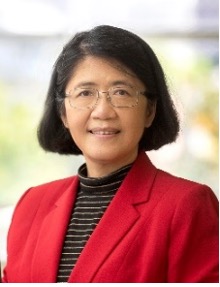
May Dongmei Wang

May Dongmei Wang's profile picture
maywang@bme.gatech.edu

May Dongmei Wang, Ph.D., is The Wallace H Coulter Distinguished Faculty Fellow, professor of BME, ECE and CSE, Director of Biomedical Big Data Initiative, and Georgia Distinguished Cancer Scholar. She is also Petit Institute Faculty Fellow, Kavli Fellow, Fellow of AIMBE, Fellow of IEEE, and Fellow of IAMBE. She received BEng from Tsinghua University China and MS/PhD from Georgia Institute of Technology (GIT). Dr. Wang’s research and teaching are in Biomedical Big Data and AI-Driven Biomedical Health Informatics and Intelligent Reality (IR) for predictive, personalized, and precision health. She has published over 270 referred journal and conference proceeding articles (13,500+ GS-Citations) and delivered over 280 invited and keynote lectures. Dr. Wang’s research has been supported by NIH, NSF, CDC, GRA, GCC, VA, Children’s Healthcare of Atlanta, Enduring Heart Foundation, Wallace Coulter Foundation, Carol Ann and David Flanagan Foundation, Shriner’s Hospitals, Microsoft Research, HP, UCB, and Amazon.

Dr. Wang chairs IEEE Engineering in Medicine and Biology Society (EMBS) BHI-Technical Community and ACM Special Interest Group in Bioinformatics (SIGBio), and is the Senior Editor of IEEE Journal of Biomedical & Health Informatics (IF=7.02), and Associate Editor for IEEE Transactions on BME, and IEEE Review of BME. She was IEEE EMBS Distinguished Lecturer and PNAS (Proceeding of National Academy of Sciences) Emerging Area Editor. During the past decade, Dr. Wang has been a standing panelist for NIH Study Sections, NSF Smart and Connect Health, and Brain Canada, and has co-chaired and helped organize more than 10 conferences by IEEE Engineering in Medicine and Biologics  Gordon Research Conferences, ACM Special Interest Groups in Bioinformatics, and IEEE Future Directions.

Dr. Wang received GIT Outstanding Faculty Mentor for Undergrad Research Award and Emory University MilliPub Award for a high-impact paper cited over 1,000 times. She was selected into 2022 Georgia Tech LeadingWomen Program and 2021 Georgia Tech Provost Emerging Leaders Program. Previously, she was Carol Ann and David Flanagan Distinguished Faculty Fellow, GIT Biomedical Informatics Program Co-Director in ACTSI, and Bioinformatics and Biocomputing Core Director in NIH/NCI-Sponsored U54 Center for Cancer Nanotechnology Excellence.

Professor of BME, ECE, and CSE
The Wallace H. Coulter Distinguished Faculty Fellow
Director of Biomedical Big Data Initiative and Georgia Distinguished Cancer Scholar, Petit Institute Faculty Fellow, Kavli Fellow
AIMBE Fellow, IAMBE Fellow, IEEE Fellow Board of Directors of American Board of AI in Medicine,
Georgia Institute of Technology and Emory University
Phone
404-385-2954
Office
UAW 4106
Additional Research
  • Artificial Intelligence
  • Bioinformatics
  • Health & Life Sciences
Research Focus Areas
Google Scholar
https://scholar.google.com/citations?user=iCx27kUAAAAJ&hl=en&oi=sra

Pamela Peralta-Yahya

Pamela Peralta-Yahya's profile picture
pperalta-yahya@chemistry.gatech.edu

Peralta-Yahya has been part of Georgia Tech since 2012. Her diverse research group composed of chemists, biologists, and chemical engineers works in the area of engineering biology, drawing from principles of biochemistry and engineering to build systems for chemical detection and production. Specifically, her group focuses on the development of G protein-coupled receptors for biotechnology and biomedical applications, and the engineering of biological systems for the production of fuels and functionalized plant natural products. Early on, her work was recognized with several awards including a DARPA Young Faculty Award, a DuPont Young Professor Award, a Kavli Fellowship by the US Academy of Science, and an NIH MIRA award. Her group’s key accomplishments are 1) the standardization of GPCR-based sensors in yeast to reduce the cost and accelerate the pace of drug discovery for these receptors, which are the target of over 30% of FDA approved drugs, and 2) the development of advanced biofuels, including pinene, which, when dimerized, has sufficient energy content to power rockets and missiles.  Today, her group is funded to work on these and other cutting edge areas – including how to power a rocket returning from Mars and how to make synthetic cells learn without evolution – by the National Institutes of Health, the National Science Foundation, the Department of Energy, and NASA.

Professor, School of Chemistry and Biochemistry
Phone
404.894.4228
Office
MoSE 2100P
Additional Research

Bio-Inspired Materials; Biofuels; Cell biophysics; Cellular Materials; Biochemistry; Biomanufacturing; Energy; Biomaterials

Google Scholar
https://scholar.google.com/citations?hl=en&user=yUlt4sYAAAAJ&view_op=list_works&sortby=pubdate

Hang Lu

Hang Lu's profile picture
hang.lu@gatech.edu

Hang Lu received her B.S. from the University of Illinois, Urbana-Champaign and her M.S.C.E.P and Ph.D. from the Massachusetts Institute of Technology. She is currently the Associate Dean for Research and Innovation in the College of Engineering and C. J. "Pete" Silas Chair, School of Chemical & Biomolecular Engineering at the Georgia Institute of Technology. Lu's research interests involve the interface of engineering and biology and her lab, the Lu Fluidics Group, is conducting research at these interface levels. The Lu Fluidics Group engineers BioMEMS (Bio Micro-Electro-Mechanical System) and microfluidic devices to address questions in neuroscience, cell biology, and biotechnology that are difficult to answer using conventional techniques.

Faces of Research - Profile Article

Associate Dean for Research and Innovation, College of Engineering
C. J. "Pete" Silas Chair, School of Chemical and Biomolecular Engineering
Phone
404.894.8473
Office
EBB 3017
Additional Research

Microfluidic systems for high-throughput screens and image-based genetics and genomicsSystems biology: large-scale experimentation and data miningMicrotechnologies for optical stimulation and optical recordingBig data, machine vision, automationDevelopmental neurobiology, behavioral neurobiology, systems neuroscienceCancer, immunology, embryonic development, stem cells

Google Scholar
https://scholar.google.com/citations?hl=en&user=DDKNuYgAAAAJ&view_op=list_works&sortby=pubdate

Rudolph Gleason

Rudolph Gleason's profile picture
rudy.gleason@me.gatech.edu

Rudolph (Rudy) L. Gleason began at Tech in Fall 2005 as an assistant professor. Prior, he was a postdoctoral fellow at Texas A&M University. He is currently a professor in the School of Mechanical Engineering and the School of Biomedical Engineering in the College of Engineering. Gleason’s research program has two key and distinct research aims. The first research aim is to quantify the link between biomechanics, mechanobiology, and tissue growth and remodeling in diseases of the vasculature and other soft tissues. The second research aim is to translate engineering innovation to combat global health disparities and foster sustainable development in low-resource settings around the world. Gleason serves as a Georgia Tech Institute for People and Technology initiative lead for research activities related to global health equity and wellbeing.

Professor, Mechanical Engineering and Biomedical Engineering
Joint Appointment in the School of Biomedical Engineering
Phone
404-385-7218
Office
TEP 205
Additional Research

Cardiovascular mechanics, soft tissue growth and remodeling, and tissue engineering

Google Scholar
https://scholar.google.com/scholar?hl=en&as_sdt=0,11&q=rl+gleason+jr&oq=RL+Gleason

Julien Meaud

Julien Meaud's profile picture
julien.meaud@me.gatech.edu

Julien Meaud joined Georgia Tech as an Assistant Professor of Mechanical Engineering in August 2013. Before joining Georgia Tech, he worked as a research fellow in the Vibrations and Acoustics Laboratory and in the Computational Mechanics Laboratory at the University of Michigan, Ann Arbor. 

Dr. Meaud investigates the mechanics and physics of complex biological systems and the mechanics and design of engineering materials using theoretical and computational tools. 

One of his research interests is auditory mechanics. In this research, he develops computational multiphysics models of the mammalian ear based on the finite element method. The mammalian ear is a nonlinear transducer with excellent frequency selectivity, high sensitivity, and good transient capture. The goal of this basic scientific research is to better understand how the mammalian ear achieves these characteristics. This research could have important clinical applications as it could help in the development of better treatment and the improvement of diagnostic tools for hearing loss. It could also have engineering applications, such as the design of biometic sensors. This research is truly interdisciplinary as it includes aspects of computational mechanics, structural acoustics, nonlinear dynamics, biomechanics and biophysics. 

Dr. Meaud is also interested in the mechanics, design and optimization of composite materials, particularly of their response to cyclic loads. Tradtional engineering and natural materials with high damping (such as rubber) tends to have low stiffness. However, the microarchitecture of composite materials that consist of a lossy polymer and a stiff constituent can be designed to simultaneously obtain high stiffness and high damping. Using computational tools such as finite element methods and topology optimization, the goal of Dr. Meaud's research is to design composite materials with these unconventional properties. One of his future goal is to extend the design of these materials to the finite strain regime and high frequency ranges, in order to obtained materials tailored for the targetted application. This research includes aspects of mechanics of materials, computational mechanics and structural dynamics. 

In Dr. Meaud's research group, students will learn theoretical and computational techniques that are used extensively to solve engineering problems in academic research and industry. Students will develop knowledge and expertise in a broad array of mechanical engineering areas. The knowledge that students will gain in computational mechanics, nonlinear and structural dynamics, structural acoustics, dynamics and composite materials could be applied to many domains in their future career.

Associate Professor
Phone
404-385-1301
Office
Love 129
Additional Research

Meaud investigates the mechanics and physics of complex biological systems and the mechanics and design of engineering materials using theoretical and computational tools. One of his research interests is auditory mechanics. In this research, he develops computational multiphysics models of the mammalian ear based on the finite element method. The mammalian ear is a nonlinear transducer with excellent frequency selectivity, high sensitivity, and good transient capture. The goal of this basic scientific research is to better understand how the mammalian ear achieves these characteristics. This research could have important clinical applications as it could help in the development of better treatment and the improvement of diagnostic tools for hearing loss. It could also have engineering applications, such as the design of biometic sensors. This research is truly interdisciplinary as it includes aspects of computational mechanics, structural acoustics, nonlinear dynamics, biomechanics and biophysics. Dr. Meaud is also interested in the mechanics, design and optimization of composite materials, particularly of their response to cyclic loads. Tradtional engineering and natural materials with high damping (such as rubber) tends to have low stiffness. However, the microarchitecture of composite materials that consist of a lossy polymer and a stiff constituent can be designed to simultaneously obtain high stiffness and high damping. Using computational tools such as finite element methods and topology optimization, the goal of Dr. Meaud's research is to design composite materials with these unconventional properties. One of his future goal is to extend the design of these materials to the finite strain regime and high frequency ranges, in order to obtained materials tailored for the targetted application. This research includes aspects of mechanics of materials, computational mechanics and structural dynamics.

Research Focus Areas
Google Scholar
https://scholar.google.com/citations?user=jJTt8i8AAAAJ&hl=en&oi=ao

Raymond P. Vito

Raymond P. Vito's profile picture
rpvito@gatech.edu

Having retired as Vice Provost, Dr. Vito is a Professor Emeritus of Mechanical Engineering and currently works part-time. He was one of the founders of The InVenture Prize and has been pivotal in the creation, development, evolution and delivery of the CREATE-X program. His startup expertise is in the area of medical devices, an area where he has conducted research and holds several patents.

Dr. Vito began his research career in nonlinear vibrations but switched within two years of receiving his Ph.D. to biomechanics, especially soft tissue mechanics. He began at Tech in 1974 as an Assistant Professor. Prior, he was a Postdoctoral Fellow at McMaster University, Canada.

Professor Emeritus
Phone
404-894-2792
Office
Petit Biotechnology Building, Office 2308
Additional Research
Dr. Vito's research interest is in the mechanical determinants of rupture of atherosclerotic plaque. Plaque rupture is important in stroke and heart attack because it precipitates the formation of a thrombus (blood clot) which then breaks away and causes an obstruction of flow. Experiments and modeling are used to determine what compositional factors predispose a plaque to rupture. Dr. Vito collaborates with people interested in detecting vulnerable plaque using magnetic resonance imaging and with others who want to intervene with drugs or genetic manipulation to reduce the likelihood of plaque rupture. His current research is sponsored by the National Science Foundation.
Google Scholar
http://scholar.google.com/scholar?q=raymond+p+vito&hl=en&btnG=Search&as_sdt=80001&as_sdtp=on