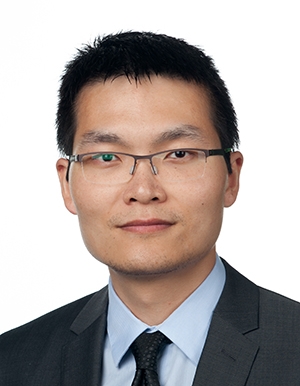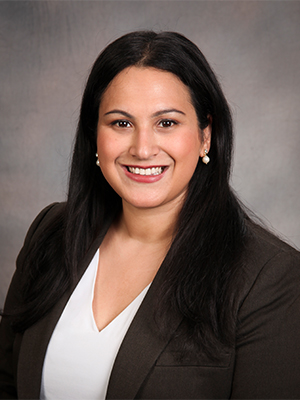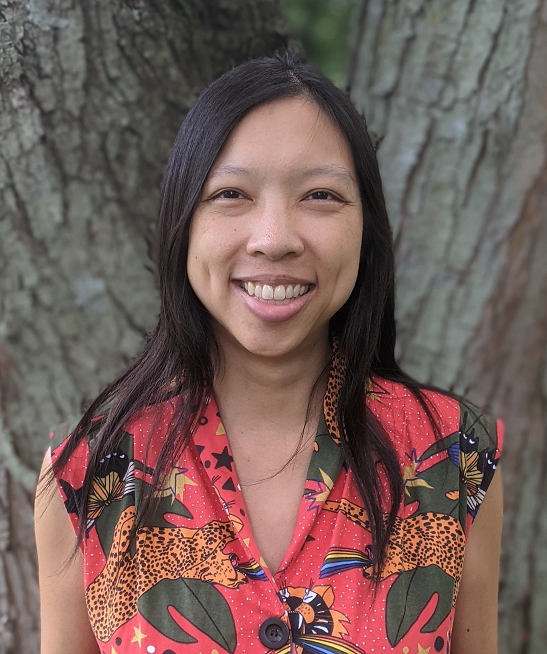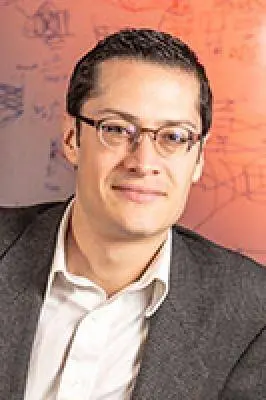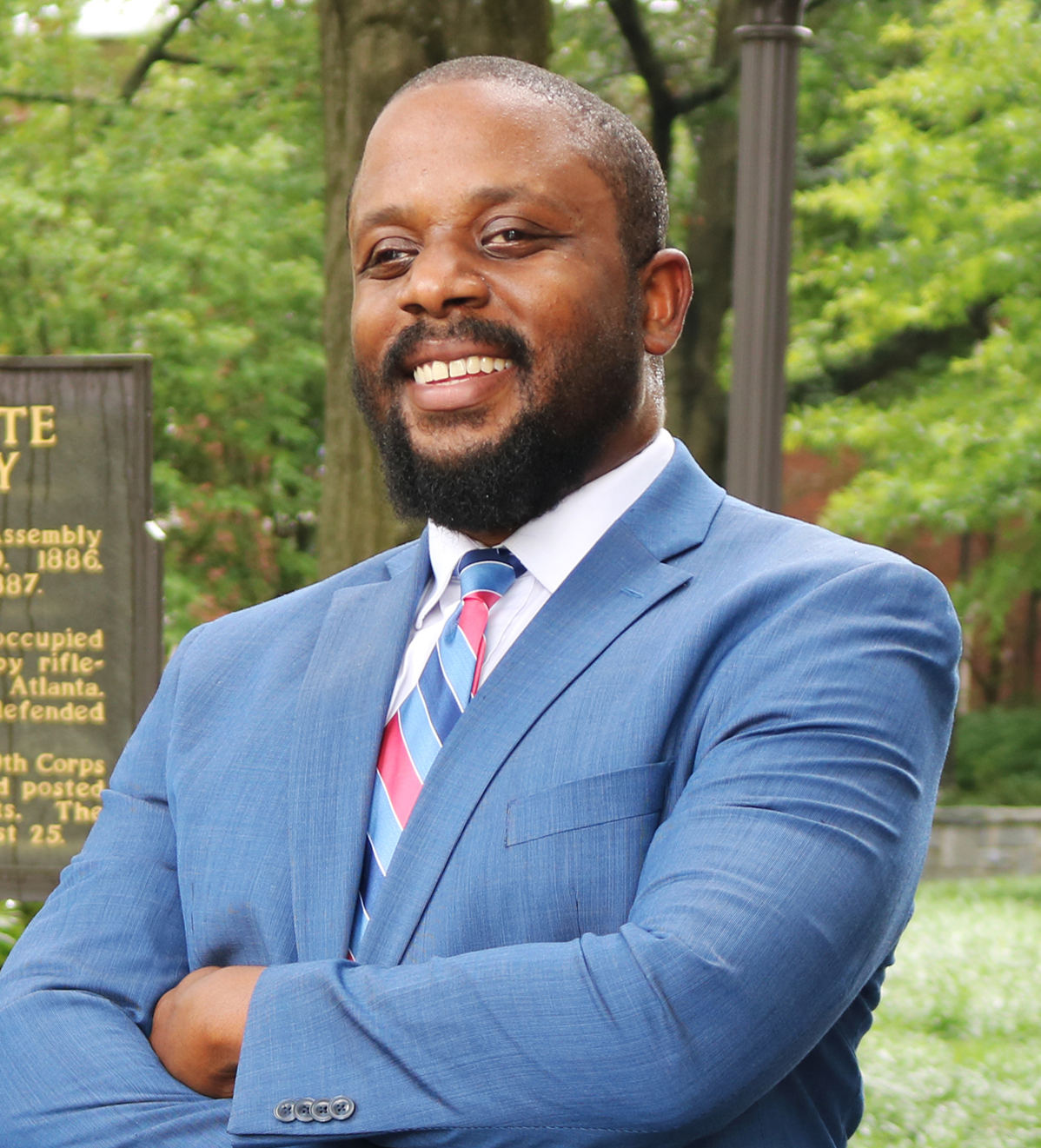
Lewis Wheaton

Lewis Wheaton's profile picture
lewis.wheaton@ap.gatech.edu

Dr. Lewis A. Wheaton received his Ph.D. in Neuroscience and Cognitive Sciences from the University of Maryland, College Park in 2005. He was a fellow at the National Institutes of Health (Medical Neurology Branch, 2001-2005) studying neural function and recovery of motor control after stroke. In mid-2005 he was awarded a post-doctoral fellowship at the Baltimore Veterans Affairs Medical Center (Maryland) where he performed neuroscience research in aging and stroke motor control in Veterans.

In 2008, Dr. Wheaton joined the School of Applied Physiology at Georgia Tech as an Assistant Professor. He became tenured in 2014 and is currently an Associate Professor in Biological Sciences. Dr. Wheaton is the Director of the Cognitive Motor Control Laboratory at Georgia Tech, engaged in over $1 million in state and federal research funding focused on understanding aspects of human motor control rehabilitation in aging, stroke and amputation. His lab has employed numerous high school, undergraduate, graduate, and post-doctoral fellows. He is the course director for 4 courses in the School of Biological Sciences (Human Neuroimaging, Movement Disorders, Human Neuroanatomy, and the History of Neuroscience). He has Chaired/Co-Chaired 3 international conferences focused on motor control research and clinical outcomes, obtaining funding by federal and private sources. His research has yielded several manuscript publications in the field of motor control neuroscience, several focused expert reviews, and numerous conference presentations both in the US and abroad.

Dr. Wheaton is also an adjunct Associate Professor in the Department of Rehabilitation at Emory School of Medicine and a Member of the Children’s Center for Neurosciences Research at the Emory Children’s Pediatric Research Center.

Dr. Wheaton earned a BS (Biology) degree at Radford University (VA). He is an active parent volunteer at his children's schools and in the local community.

Associate Professor
Adjunct Associate Professor, Department of Rehabilitation Medicine, Emory University
Phone
404-385-2339
Office
555 14th Street 1309E
Additional Research

The Cognitive Motor Control Laboratory seeks to understand neurophysiology guiding skillful human-object interactions in upper extremity motor control. We use neuroimaging to identify anatomical and physiological circuits in humans that guide successful skilled behavior. Our clinical studies consider neural systems that can suffer injury or dysfunction related to deficits in skillful motor control, and how to utilize surrogate neural circuits in restorative motor therapies in stroke and upper limb amputation.
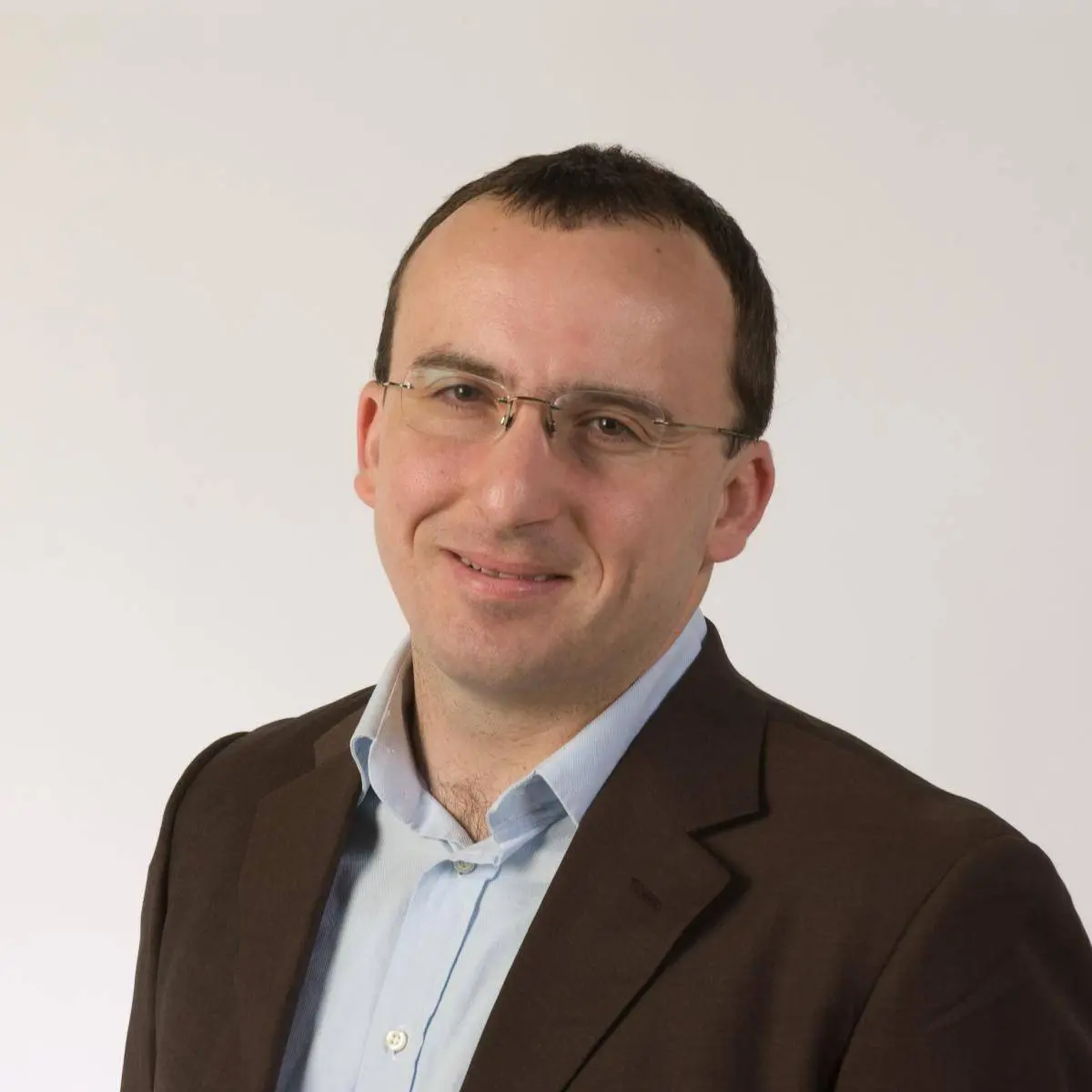

Research Focus Areas
Google Scholar
https://scholar.google.com/citations?user=Z_kEGKcAAAAJ&hl=en

Kostas Konstantinidis

Kostas Konstantinidis's profile picture
kostas.konstantinidis@gatech.edu

Dr. Kostas Konstantinidis joined the Georgia Institute of Technology as an Assistant Professor in November 2007. He received his BS in Agriculture Sciences from the Aristotle University of Thessaloniki (Greece) in 1999. He continued his studies at the Center for Microbial Ecology at Michigan State University (East Lansing, MI) under the supervision of Prof. James M. Tiedje, where he obtained a PhD in 2004. His PhD studies were fully supported by the Bouyoukos Fellowship program and were devoted in advancing our understanding of the ecology and physiology of soil bacteria through the comparative analysis of their whole-genome sequences. This research resulted in a NSF-funded project to advance the species definition for prokaryotes, which also fostered a short post-doc position at the Center for Microbial Ecology. He then moved to MIT and the laboratory of Prof. Edward DeLong to get trained on innovating metagenomic techniques. His work at MIT provided important new insights into the complexity and function of oceanic microbial communities as well as how life is adapting in the deep and cold Oceans. His research interests are at the interface of genomics and computational biology in the context of microbial ecology with the overarching goal to broaden understanding of the genetic and metabolic potential of the microbial world. Advancing our knowledge on these issues is essential for a better understanding of the microbes that power, by and large, the biogeochemical cycles that sustain life on Earth and cause or control important diseases in humans and animals. He is a member of the American Society for Microbiology (ASM), the International Society for Microbial Ecology (ISME) and the Association of Environmental Engineering and Science Professors (AEESP). Konstantinidis held the Carlton S. Wilder Junior Professorship for five years and subsequently received the Maulding Faculty Fellowship in the School of Civil and Environmental Engineering.

Professor
Phone
404-385-3628
Office
ES&T 3224
Additional Research

Environmental microbiology and genomics Computational approaches for studying the ecology and evolution of microorganisms Development of genomic and proteomic techniques to investigate and quantify in-situ important microbial-mediated processes Population and single-cell genomics Assessing the extent and value of biodiversity within natural assemblages of Bacteria and Archaea Biotechnological applications of microbial functional diversity Environmental relevance of microbial diseases Our laboratory focuses on the smallest organisms on the planet, the bacteria and the archaea, which represent the largest reservoir of biodiversity on Earth, drive the life-sustaining biogeochemical cycles, and cause or control diseases in humans, animals, and plants. Our scientific interests are at the interface of microbial ecology with engineering and computational biology. The long-term goals of our research is to broaden understanding of the genetic and metabolic diversity of the microorganisms and to explore this biodiversity for biotechnological applications.

Research Focus Areas
Google Scholar
http://scholar.google.com/citations?user=cT7dxlYAAAAJ&hl=en

Marcus Cicerone

Marcus Cicerone's profile picture
cicerone@gatech.edu

Marcus T Cicerone received his Ph.D. from the University of Wisconsin – Madison in 1994, under the direction of Mark Ediger. He spent three years at Johnson & Johnson Clinical Diagnostics, served as a visiting teaching professor at Brigham Young University for two years, and subsequently joined the National Institute of Standards and Technology in 2001, where he remained for 18 years, serving as a group leader and project leader. In January 2019 he joined the Georgia Institute of Technology as a Professor of Chemistry. 

Professor Cicerone is a fellow of American Physical Society, and has received several awards for his efforts in coherent Raman-based biological imaging and for his work in dynamics of liquids and amorphous solids. These include a Johnson & Johnson Director’s Research Award, two Department of Commerce Bronze metals, the 2015 Washington Academy of Sciences Physical & Biological Sciences Award, and the 2017 Arthur S. Flemming Award.

Professor
Phone
404-894-2761
Office
G026 MoSE
Additional Research
Professor Cicerone works on development and application of spectroscopic coherent Raman imaging approaches and on dynamics of amorphous condensed matter. In the coherent Raman imaging work, his group introduced broadband (spectroscopic) coherent anti-Stokes Raman scattering (BCARS) microscopy in 2004. Since then he and his group have remained at the forefront of this field, introducing improvements such as a time-domain Kramers-Kronig transform to deal with non-causal signals for retrieving the pure Raman spectrum directly from the raw BCARS signal. The results of that work and other instrument design innovations utilizing impulsive vibrational coherence generation resulted in recognition as one of the top 10 innovations in BioPhotonics for 2014. His group has logged many imaging firsts, including the first to obtain quantitative vibrational fingerprint spectra from mammalian cells using coherent Raman imaging, and the first to identify specific structural proteins from coherent Raman imaging.His work on dynamics of amorphous condensed matter focuses on the impact of picosecond timescale spatial and temporal heterogeneity in dynamics on transport and relaxation in liquids and glasses. In 2004, he used neutron scattering to show for the first time that chemical and physical stability of proteins encapsulated in glassy sugars could be predicted by the profile of ps-timescale dynamics. Since then, he has developed a framework for calculating transport and relaxation properties of liquids and glasses over 12 orders of magnitude in time, based solely on ps-timescale dynamics, and identified the molecular origin of a relaxation process (Johari-Goldstein process) that had been observed but remained enigmatic for 50 years. He has also developed benchtop approaches accessible to pharmaceutical labs for measuring the relevant dynamics, and developed a protein stability approach for drug delivery that encapsulates proteins in nanometer-sized droplets of vitrified sugar-based glass and makes them impervious to traditional processing steps, allowing retention of ~99% of protein function or titer after all processing steps. This approach has now been used successfully in large animal trials, and has also been shown to be effective for transdermal drug delivery due to the nanometer size of the encapsulation materials.
Google Scholar
https://scholar.google.com/citations?user=ioSFE_0AAAAJ&hl=en

Nian Liu

Nian Liu's profile picture
nliu82@mail.gatech.edu

Nian Liu began as an Assistant Professor at Georgia Institute of Technology, School of Chemical and Biomolecular Engineering in January 2017. He received his B.S. in 2009 from Fudan University (China), and Ph.D. in 2014 from Stanford University, where he worked with Prof. Yi Cui on the structure design for Si anodes for high-energy Li-ion batteries. In 2014-2016, he worked with Prof. Steven Chu at Stanford University as a postdoc, where he developed in situ optical microscopy to probe beam-sensitive battery reactions. Dr. Liu 's lab at Georgia Tech is broadly interested in the combination of nanomaterials, electrochemistry, and light microscopy for understanding and addressing the global energy challenges. Dr. Liu is the recipient of the Electrochemical Society (ECS) Daniel Cubicciotti Award (2014) and American Chemical Society (ACS) Division of Inorganic Chemistry Young Investigator Award (2015).

Associate Professor, School of Chemical and Biomolecular Engineering
Robert G. Miller Faculty Fellow, School of Chemical and Biomolecular Engineering
Phone
404-894-5103
Office
ES&T 1230
Additional Research

Electronic Systems; Packaging and Components; Nanostructures & Materials; Optoelectronics Photonics & Phononics; Semiconductors; Materials & Processes

Google Scholar
https://scholar.google.com/citations?user=nvMAHY8AAAAJ&hl=en

Shaheen Dewji, Ph.D.

Shaheen Dewji, Ph.D. 's profile picture
shaheen.dewji@gatech.edu

Shaheen Azim Dewji, Ph.D., (she/her/hers) is an Assistant Professor in the Nuclear & Radiological Engineering and Medical Physics Programs at the Georgia Institute of Technology, where she leads the Radiological Engineering, Detection, and Dosimetry (RED²) research group. Dewji joined Georgia Tech following three years as faculty at Texas A&M University in the Department of Nuclear Engineering, and as a Faculty Fellow of the Center for Nuclear Security Science and Policy Initiatives (NSSPI). In her prior role at Oak Ridge National Laboratory, where she remained for almost 9 years, Dewji was Radiological Scientist in the Center for Radiation Protection Knowledge. Her research interests include development of dose coefficients, shielding design, and nuclear material detection assay using gamma-ray spectroscopy. Her recent work has focused on associated challenges in uncertainty quantification in dose estimation/reconstruction associated with the external exposure and internal uptake of radionuclides associated with applications of emergency response, defense, nuclear medicine, and occupational/public safety using Monte Carlo radiation transport codes and internal dose modeling. Dewji completed her Masters and Ph.D. degrees in Nuclear and Radiological Engineering at the Georgia Institute of Technology in Atlanta, GA and was a fellow of the Sam Nunn Security Program. She received her Bachelor of Science in Physics from the University of British Columbia. Dewji currently serves on the National Academies of Science, Engineering, and Medicine – Nuclear and Radiation Studies Board and is a member of the Board of Directors for both the American Nuclear Society and Health Physics Society.
   

Assistant Professor
Phone
404.894.5800
Office
Boggs 3-15

Yue Chen

Yue Chen's profile picture
yue.chen@bme.gatech.edu

Yue Chen is an assistant professor in the Department of Biomedical Engineering, GT/Emory. He received his Ph.D. degree in Mechanical Engineering from Vanderbilt University, M.S. in Mechanical Engineering from Hong Kong Polytechnic University, and a B.S. in Vehicle Engineering from Hunan University. His research focused on designing, modeling, and control of continuum robots and apply them in medicine.

Assistant Professor; Department of Biomedical Engineering at Georgia Tech & Emory
Phone
404.894.5586
Office
UAW4105
University, College, and School/Department
Google Scholar
https://scholar.google.com/citations?hl=en&user=dDPQH3oAAAAJ&view_op=list_works&sortby=pubdate

Ming-fai Fong

Ming-fai Fong's profile picture
ming-fai.fong@bme.gatech.edu

Ming-fai Fong is an Assistant Professor in the Coulter Department of Biomedical Engineering at Georgia Tech and Emory. She received her BS in Mechanical Engineering from MIT and Ph.D. in Neuroscience from Emory University. She completed her postdoctoral training in the Department of Brain and Cognitive Sciences at MIT and a visiting lectureship in the Neuroscience Department at Wellesley College.
 

Assistant Professor
Phone
404.894.6059
Office
UAW 3103

Francisco Robles

Francisco Robles's profile picture
francisco.robles@bme.gatech.edu

Dr. Francisco Robles is currently an adjunct assistant professor in the School of ECE and an assistant professor in the Wallace H. Coulter Department of Biomedical Engineering at the Georgia Institute of Technology and Emory University. He runs the Optical Imaging and Spectroscopy (OIS) Lab which focuses on advancing optical technologies to help improve the understanding of biological processes and the ability to identify and stage disease. The team develops and applies novel label-free linear and nonlinear spectroscopic methods, along with advanced signal processing methods, to gain access to novel forms of functional and molecular contrast for a variety of applications, including cancer detection, tumor margin assessment, and hematology. 

Dr. Robles completed a Postdoctoral Fellowship in the Department of Chemistry at Duke University (2016), earned his Ph.D. in Medical Physics at Duke University (2011), and earned a B.S. in Physics and in Nuclear Engineering from North Carolina State University (2007).

Associate Professor
Phone
404-385-2989
Office
UAW 3110
Research Focus Areas
Google Scholar
https://scholar.google.com/citations?user=8P-BCE8AAAAJ&hl=en

Brooks Lindsey

Brooks Lindsey's profile picture
brooks.lindsey@bme.gatech.edu

Dr. Lindsey previously developed matrix array transducers, adaptive beamforming strategies, and interventional devices in Stephen Smith’s lab at Duke University, where he received a Ph.D. for his work in 3D transcranial ultrasound.  While at Duke, he was the recipient of a pre-doctoral fellowship from the National Institutes of Health (NIH) as part of the Duke Medical Imaging Training Program.  He also completed postdoctoral training in the labs of Paul Dayton and Xiaoning Jiang at the University of North Carolina and North Carolina State University in contrast-enhanced ultrasound imaging and in the design and fabrication of high frequency, interventional ultrasound transducers.  During this time, he was awarded the Ruth L. Kirschstein National Research Service Award from the NIH to develop endoscopic transducers for contrast-specific imaging in pancreatic cancer.  Dr. Lindsey recently joined the Wallace H. Coulter Department of Biomedical Engineering at Georgia Tech-Emory, where he leads the Ultrasonic Imaging and Instrumentation Laboratory.  Dr. Lindsey is an active member of the IEEE Ultrasonics, Ferroelectrics, and Frequency Control Society, the Biomedical Engineering Society and the American Institute of Ultrasound in Medicine and is a member of the Technical Program Committee for the IEEE International Ultrasonics Symposium.  In 2022, Dr. Lindsey received the New Investigator award from the American Institute of Ultrasound in Medicine. At Georgia Tech, Dr. Lindsey holds a primary appointment in Biomedical Engineering.  He is also a faculty member for the Interdisciplinary Bioengineering Graduate Program and holds an adjunct appointment in the School of Electrical and Computer Engineering. Lab members have received best paper, best poster, and best student pitch awards from the IEEE UFFC Society. Research activities in the lab are currently funded by the National Institutes of Health and the National Science Foundation.

Assistant Professor
Phone
404-385-6647
Office
UAW 2107
Additional Research
Dr. Lindsey is interested in developing new imaging technologies for understanding biological processes and for clinical use.In the Ultrasonic Imaging and Instrumentation lab, we develop transducers, contrast agents, and systems for ultrasound imaging and image-guidance of therapy and drug delivery. Our aim is to develop quantitative, functional imaging techniques to better understand the physiological processes underlying diseases, particularly cardiovascular diseases and tumor progression.