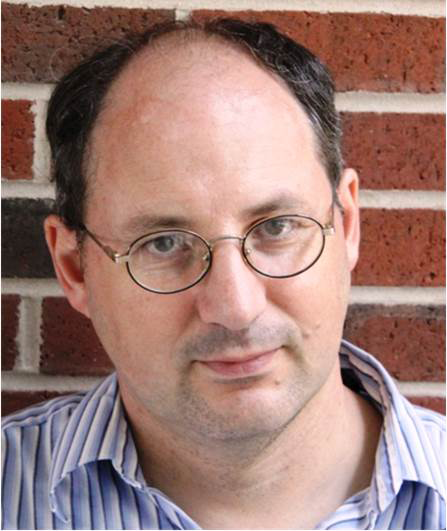
Erin Buckley
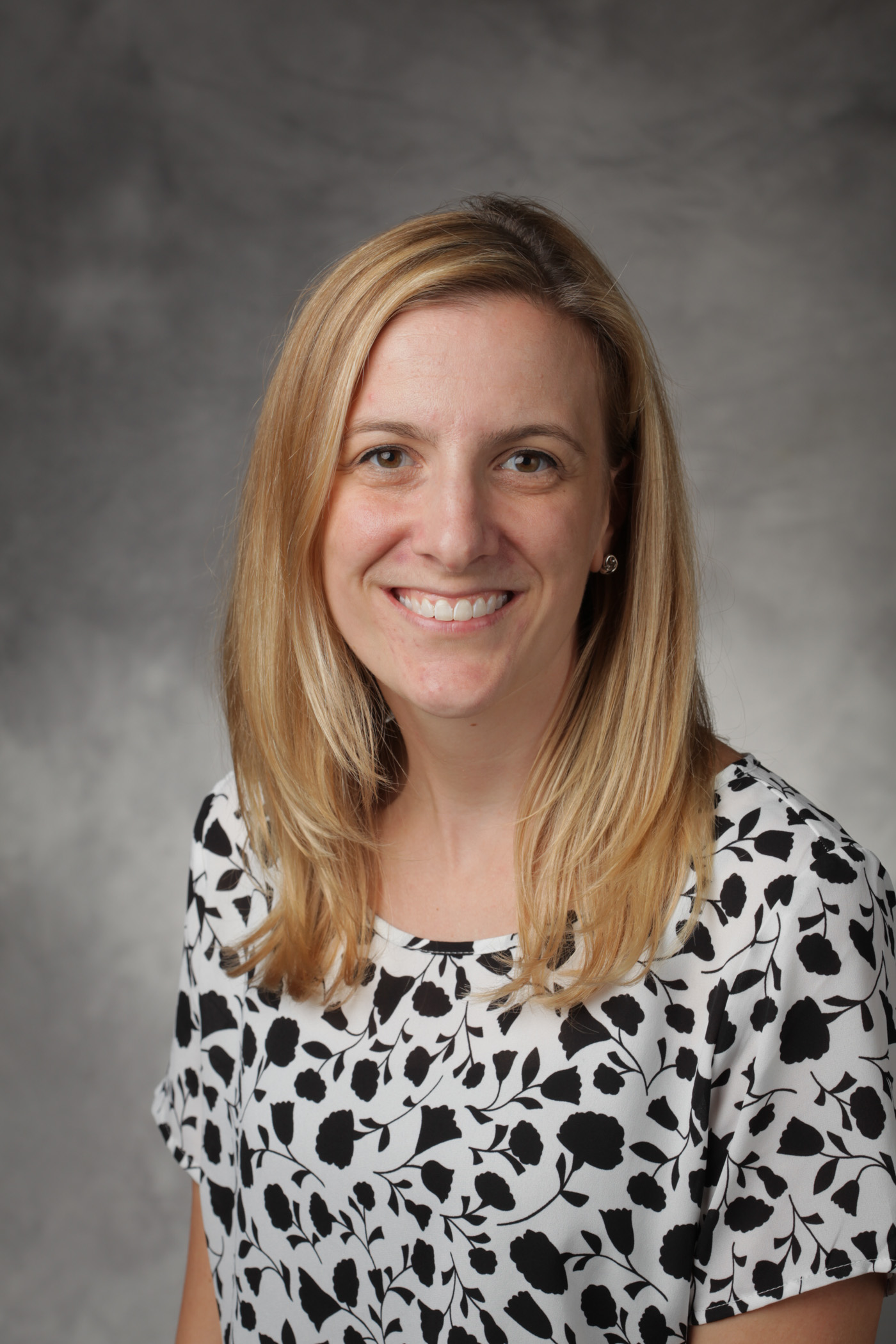
erin.buckley@emory.edu
Associate Professor
IRI And Role
University, College, and School/Department

Felipe trained as a biomedical engineer in his native Colombia before obtaining a PhD from the Biomedical Engineering department of Duke University. At Duke, working in the laboratory of Ashutosh Chilkoti, he focused on the engineering of genetically-encoded, self-assembling protein polymers. An important outcome of this PhD work was the elucidation of sequence rules to program the phase separation behavior of intrinsically disordered proteins (IDPs). Motivated by a newly acquired ability to engineer the phase behavior of IDPs, for his postdoctoral work he turned to their poorly-understood biology. To pursue skin as an outstanding biological system, Felipe joined the group of Elaine Fuchs at Rockefeller University. Felipe’s postdoctoral research led to the discovery that liquid-liquid phase separation drives the process of skin barrier formation. In 2020, he established the Quiroz Lab in the Wallace H. Coulter Department of Biomedical Engineering at Georgia Tech and Emory University, where he is currently an Assistant Professor. Felipe is the recipient of multiple research awards, including a Career Award at the Scientific Interface from the Burroughs Wellcome Fund and the NIH Director’s New Innovator Award.
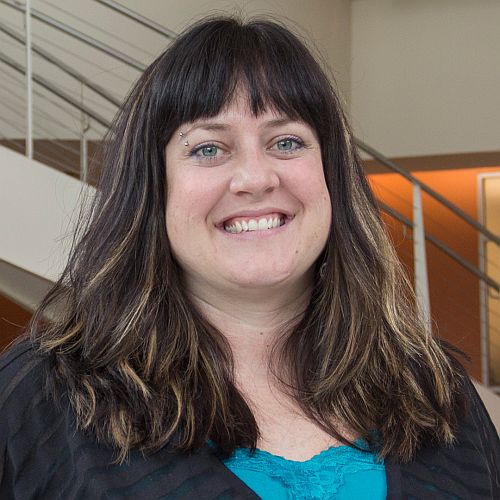
My primary interest is floating ice systems - Jupiter's moon Europa and Earth's ice shelves. I am interested in how these environments work and how they may become habitable. I have chosen to focus on Europa because of its potential to have what other places may not have: a stable source of energy from tides that can power geological cycles over the lifetime of the solar system. At its most basic form, life is like a battery, depending upon redox reactions to move electrons. A planetary proxy for this is activity, whereby a planet recycles through geologic processes, and maintains chemical gradients of which life can take advantage. Without recycling, it is possible that even once habitable environments can become inhospitable. This is where terrestrial process analogs come into the picture - by studying how ice and water interact in environments on Earth we can better understand the surface indications of such on Europa (and other icy worlds). My work provides a framework by which to remotely understand planetary cryospheres and test hypotheses, until such time as subsurface characterization becomes possible by radar sounding, landed seismology, or one day, roving submersibles. Much work remains to correlate observations and models of terrestrial icy environments - excellent process analogs for the icy satellites - with planetary observations. I think about how to incorporate melting, hydrofracture, hydraulic flow, and now brine infiltration as process analogs into constructing models for the formation of Europa's geologic terrain and to study the implications for ice shell recycling and ice-ocean interactions. The inclusion of realistic analogs in our backyard-Earth's poles -using imaging and geophysical techniques is a common thread of this work, giving tangible ways to generate and test hypotheses relevant to environments on Earth and Europa. In the long term, I envision constructing systems-science level models of the Europan environment to understand its habitability and enable future exploration. I'm lucky to work with a talented group of students, post docs, and collaborators who share this vision and continue to make my life's passion, understanding the worlds around us, tenable.
Planetary Science; Astrobiology; Cryosphere
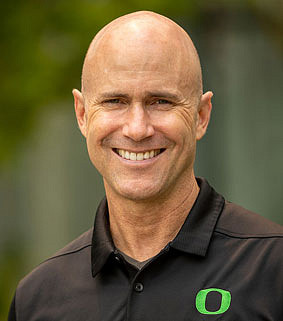
Robert E. Guldberg is the DeArmond Executive Director of the Phil and Penny Knight Campus for Accelerating Scientific Impact and Vice President of the University of Oregon. Guldberg’s research is focused on musculoskeletal mechanobiology, regenerative medicine, and orthopaedic medical devices. Over his 25+ year academic career, Dr. Guldberg has produced over 280 peer-reviewed publications, served as an advisor and board member for numerous biotechnology companies, and co-founded six start-ups. He was previously executive director of the Parker H. Petit Institute for Bioengineering and Bioscience at Georgia Tech from 2009-2018. In 2018, he was selected from a national search to lead the Knight Campus as its inaugural permanent Executive Director, where he has led the creation of its strategic plan, hired faculty into the campus’ first building opened in 2020, and launched the University of Oregon’s first ever engineering degree program. In 2021, he led the launch of Phase 2 of the Knight Campus development with the announcement of a second $500 million gift from Phil and Penny Knight. At the national level, Dr. Guldberg is past Chair of the Americas Chapter of the Tissue Engineering and Regenerative Medicine International Society (TERMIS-AM). He currently serves on the Executive Leadership Council of the Wu Tsai Human Performance Alliance, a $220 million global initiative to promote wellness and peak performance through scientific discovery and innovation. Dr. Guldberg is an elected fellow of TERMIS, the American Society of Mechanical Engineers (ASME), the American Institute for Medical and Biological Engineering (AIMBE), the Orthopaedic Research Society (ORS), and the National Academy of Inventors (NAI).
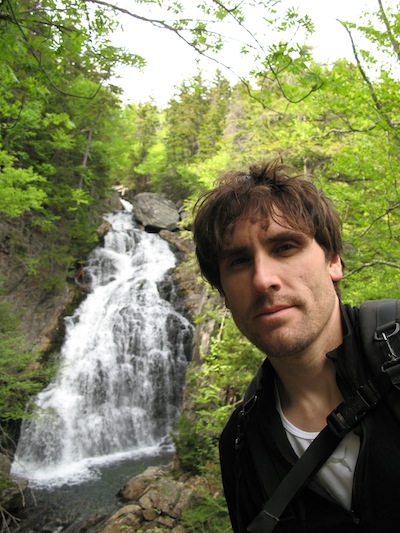
I am an environmental microbiologist interested in the dynamics of microbial systems. My research is motivated by the beliefs that microbes are a frontier for natural history and scientific discovery, and that exploring this frontier is necessary and important for understanding biological diversity and its changing role in ecosystem processes. The first major research theme in my lab explores how aquatic microbes respond to environmental change, notably declines in ocean oxygen content. The second major theme explores how life in symbiosis drives microbial evolution and ecology. My research targets diverse systems, from the marine water column to the intestinal microbiomes of fishes. This research aims to identify metabolic properties that underlie the ecology of microbes and microbe-host systems, the evolutionary context under which these functions arose, and the role of these functions in ecosystem-scale processes in a changing environment.
I am an Associate Professor in the Department of Microbiology and Immunology at Montana State University and an Adjunct Professor in the School of Biological Sciences at Georgia Tech. I received a B.A. in Biology from Middlebury College and a Ph.D. in Organismic and Evolutionary Biology from Harvard University. I worked as a Postdoctoral Fellow at MIT for two years before moving to Georgia Tech in January 2011. In February 2020, I moved my lab to the mountains of Montana. My work has been recognized through an NSF CAREER award, a Sloan Research Fellowship, and a Simons Foundation Early Career investigator award.
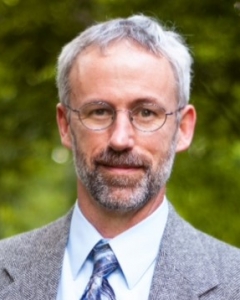
Ryanodine receptors (RyRs) are intracellular ion channels that mediate the release of calcium from intracellular stores. RyR1 and RyR2 are the predominate isoforms in skeletal and cardiac muscle, respectively where they play a central role in excitation-contraction coupling. RyRs are the largest known ion channels and are regulated by a multitude of endogenous effectors including ions, small molecules, and accessory proteins. An area of interest is the regulation of these channels by endogenous effectors, especially as it relates to altered contractile function associated with cardiac ischemia, skeletal muscle fatigue and aging.
Because of their central role in cellular calcium regulation, defects in RyR channels can lead to potentially fatal disorders. Mutations in RyR1 give rise to the pharmacogenetic skeletal muscle disorder, malignant hyperthermia (MH). RyR2 mutations have been identified in catecholaminergic polymorphic ventricular tachycardia. We are interested in determining the molecular mechanisms by which these mutations alter RyR channel function.
We analyze channel function on multiples levels of organization. Sarcoplasmic reticulum vesicle [3H]ryanodine binding is used to examine large populations of channels. We incorporate channels into artificial lipid bilayers in order to record single channel currents and assess channel kinetics. Calcium release from permeabilized muscle fibers provides a method of examining RyR function in situ. My research has two long-range goals. The first is to understand how intracellular calcium is regulated and how alterations in the regulation effects cell function. The second goal is to understand the RyR regulatory sites that might be exploited for the development of pharmacological compounds to treat disorders of cellular calcium regulation.
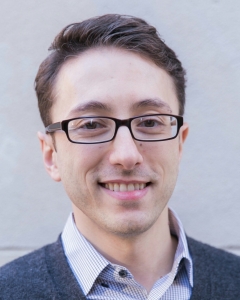
We study the simple larval nervous system of our closest invertebrate relatives, the tunicates. Tunicates, like us, belong to the Chordate phylum, but have very simple embryos and compact genomes. The laboratory model tunicate Ciona has only 177 neurons and is the only chordate with a fully mapped "connectome". We take advantage of this simplicity to understand molecular mechanisms that may underlie human neurodevelopment. We use transcriptome profiling to assay global transcriptional dynamics in neural progenitors during Ciona development, and use CRISPR/Cas9 to knock out important transcription factors and their downstream targets to understand how these gene networks control neuronal specification, morphology, physiology, neurotransmitter identity, and connectivity.
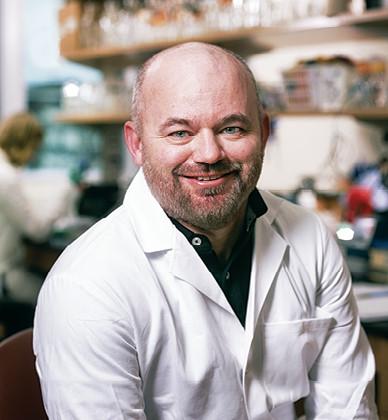
Dr. Whiteley received his B.S. degree in Zoology in 1995 from the University of Texas at Austin and his Ph.D. in Microbiology from the University of Iowa in 2001. His doctoral research involved quorum sensing and biofilm formation in the bacterium Pseudomonas aeruginosa. Following a Postdoctoral Fellowship at Stanford University in 2002, Dr. Whiteley accepted a position as an assistant professor at the University of Oklahoma/Oklahoma Health Sciences Center. In 2006, Dr. Whiteley moved to the University of Texas at Austin where he was promoted to Professor of Molecular Biosciences and Director of the LaMontagne Center for Infectious Disease. In 2017, he accepted the Bennie H. & Nelson D. Abell Chair and Georgia Research Alliance Eminent Scholar in Molecular and Cellular Biology at Georgia Institute of Technology. He also serves as Associate Director of the CF-Air Center at Emory Medical School. Dr. Whiteley has garnered numerous awards for his work including the Merck Irving S. Sigal Memorial Award for national research excellence, the Burroughs Wellcome Investigators in Pathogenesis of Infectious Disease award, recognition as a Kavli fellow of the National Academy of Sciences, the Dean’s teaching excellence award from UT-Austin, and election to the American Academy of Microbiology.
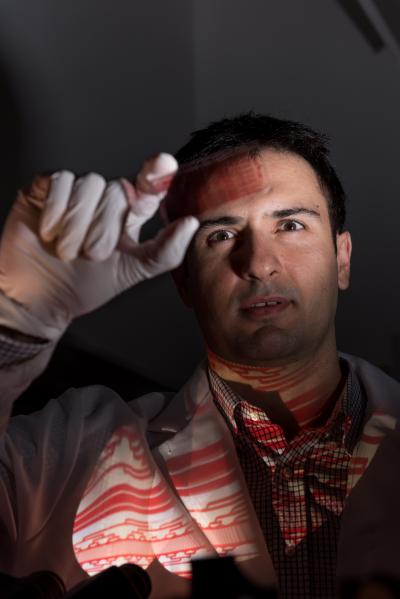
A. Fatih Sarioglu received the B.Sc. degree from Bilkent University, Ankara, Turkey in 2003, and the M.S. and Ph.D. degrees from Stanford University in 2005 and 2010, respectively, all in Electrical Engineering.
Sarioglu worked as a postdoctoral research associate at the Center for Nanoscale Science and Engineering at Stanford University from 2010 to 2012. From 2012-2014, he was a research fellow at the Center for Engineering in Medicine, Massachusetts General Hospital and Harvard Medical School. In October 2014, he joined the School of Electrical and Computer Engineering at the Georgia Institute of Technology as an assistant professor.
Sarioglu's research interests are at the interface of nano-/micro-engineering and biomedicine. He is particularly interested in developing N/MEMS-based technologies for biomedical applications.
Nano- and Micro-systems for bio-molecular sensing and imagingMicrofluidic devices for cell sorting and disease detectionHigh-throughput bio-analytical instrumentation for cellular and molecular characterizationIntegrated platforms for point-of care diagnosticsImplantable medical devices for minimally-invasive health monitoring