
Brigitte Stepanov

Brigitte Stepanov's profile picture
bstepanov@gatech.edu

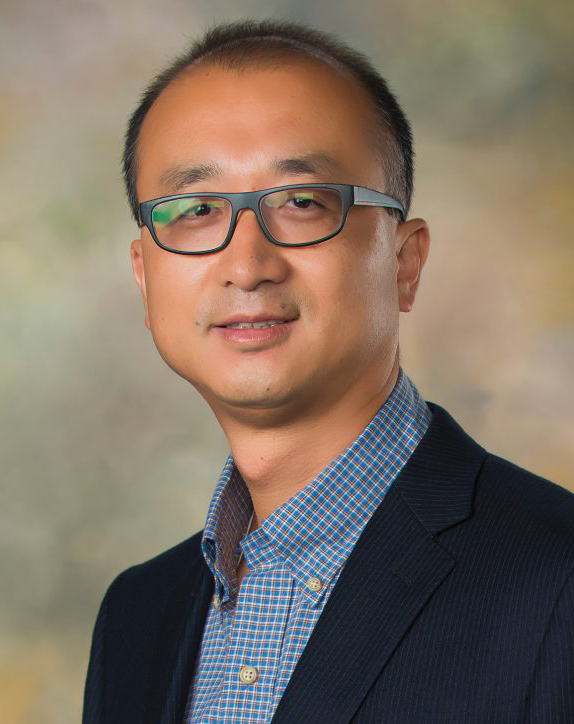
Dr. Brigitte Stepanov is a war researcher and Assistant Professor of Francophone Studies. She is the founder and director of the Energy Today Lab, an interdisciplinary research hub that reflects creatively and analytically on the energy - broadly defined from labor to thermodynamics - of our contemporary world. Her research interests focus on 20th- and 21st-century French, North African, and Sub-Saharan African literary and visual culture. Trained as a scholar of French and Francophone Studies and as a mathematician, she holds degrees from Queen’s University at Kingston in Canada and a PhD from Brown University. At Brown, she was a Fellow at the Cogut Institute for the Humanities and awarded an Archambault Award for Teaching Excellence.

Before coming to Georgia Tech, she was an Andrew W. Mellon Postdoctoral Fellow with the Department of French and Arabic at Grinnell College, where she organized the Theories of Decolonization working group with the support of a grant from Grinnell’s Center for the Humanities. She has been a Silas Palmer Fellow at the Hoover Library and Archives at Stanford University, a Lecturer at the Université Lumière Lyon 2 in France, and a selected participant of the National Endowment for the Humanities seminar “The Search for Humanity after Atrocity.” Additionally, she has trained in conflict mediation, having most recently taken part in the Peacebuilding Institute hosted by the Center for Justice and Peacebuilding at EMU.

Her current book project, Cruelty, War, Fiction: Redefining the In-Human, explores excessive forms of violence in warfare and their representation in fiction and visual media from Algeria, Rwanda, and France. She argues that the concept of cruelty is fundamental to any discussion of political instability, war, and crimes against humanity. More broadly, this project examines the relationship between the evolution of warfare over the last eighty years and shifting conceptions of the human in the face of “universal” manifestations of violence. This work is closely tied to her second research project, which examines literary, artistic, and cultural responses to radioactive fallout and its ensuing ecological crisis following France’s nuclear arsenal testing in Algeria and the South Pacific. Dr. Stepanov’s scholarship has appeared in Contemporary French & Francophone Studies, The French Review, Voix plurielles, and in the volume Memory, Voice, and Identity: Muslim Women’s Writing from Across the Middle East (Routledge, 2021). Dr. Stepanov is also the translator of works by Peter Szendy and Laura Odello and has worked with the Derrida Seminar Translation Project.

Finally, she is a photographer, focusing on archiving memory and the geometry of ecological forms. Both facets of her work are preoccupied with minute documentation – be it to collect visual reminders of patches of lichen or the detailed brickwork of a monument. Among other venues, her work has been exhibited at the Houston Center for Photography, the Ukrainian Institute of Modern Art in Chicago, the Granoff Center for the Creative Arts and AS220 in Providence. Her recent exhibit, “Why I’ll Always Dream of Poland,” supported by a grant from the Program in Judaic Studies at Brown, features photographs she took while conducting research on Holocaust remembrance in Israel, Germany, France, Ukraine, Poland, Canada, and the US. Shedding light on public mourning and memorialization, the project also reflects on personal loss and family histories and attempts to bridge the gap between private experiences and public sites of inhuman violence.

Assistant Professor, School of Modern Languages
Director, Energy Today Lab
Research Focus Areas

Thomas Fuller

Thomas Fuller's profile picture
tom.fuller@chbe.gatech.edu

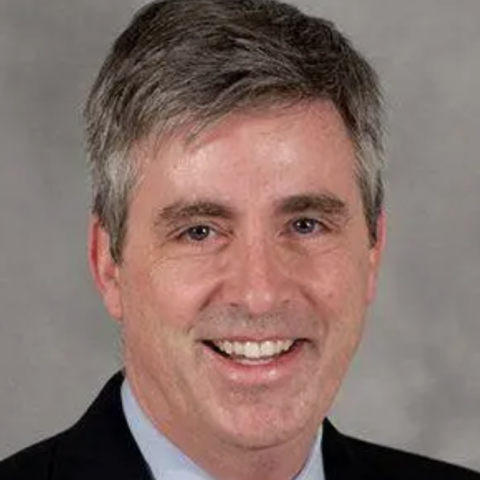
Tom Fuller is Professor of Chemical Engineering at the Georgia Tech. Dr. Fuller received a BS from the University of Utah in Chemical Engineering in 1982. Dr. Fuller then served for five years in the U.S. Navy working as a Nuclear Engineer. In 1992 he obtained a Ph.D. from UC, Berkeley also in Chemical Engineering. 

Subsequently, Dr. Fuller developed advanced lithium batteries while working as a postdoctoral fellow at Lawrence Berkeley National Laboratory. He then moved to United Technologies. He was responsible for technology development, design, assembly, and test of cell stacks for UTC Fuel Cells. 

His research group at Georgia Tech is focused on durability challenges for electrochemical systems. For the last eight years Dr. Fuller has been a Technical Editor for the Journal of the Electrochemical Society. In 2009 Dr. Fuller was named a Fellow of the Electrochemical Society.

Professor, School of Chemical and Biomolecular Engineering
Phone
(404) 894-2898
Additional Research

Electric Vehicles; Energy Storage; Hydrogen; Modeling; Materials Failure and Reliability; Energy Conversion; Energy Storage; Batteries; fuel cells

University, College, and School/Department
Google Scholar
https://scholar.google.com/citations?hl=en&user=I1RqBRoAAAAJ&view_op=list_works&sortby=pubdate

Carsten Sievers

Carsten Sievers's profile picture
carsten.sievers@chbe.gatech.edu

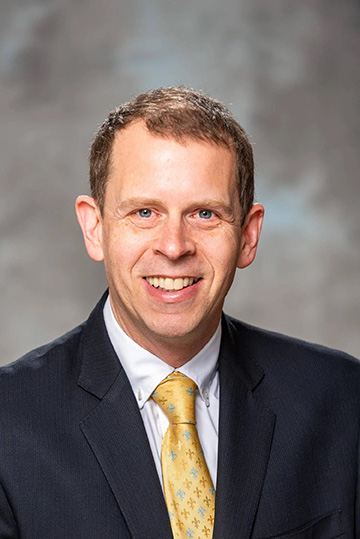
Sievers’ research interests are in heterogeneous catalysis, reactor design, applied spectroscopy, and characterization and synthesis of solid materials. Combining these interests he seeks to develop processes for the production of fuels and chemicals. His research program combines fundamental and applied research.

In fundamental studies, a suite of analytical and spectroscopic techniques (e.g. IR, NMR) is used to gain knowledge on structure-reactivity relationships of heterogeneous catalysts. Moreover, surface reactions are studied on a molecular level to identify reaction pathways over different catalysts. Information obtained from these studies provides the foundation for designing innovative catalysts.

Applied studies focus specific catalytic processes. For these projects, continuously operated flow reactor systems are designed. Different catalysts are tested for reactivity, selectivity and stability and the influence of the operating conditions is investigated. Catalyst deactivation is studied in detail to develop suitable regeneration methods or to avoid deactivation entirely by improved catalyst design. Specific projects include hydrodeoxygenation of pyrolysis oils, selective hydration of polyols, conversion of sugars into lactic acid and ethylene glycol, and selective oxidation of methane.

An important goal of Sievers’ research is to enable technology for utilization of alternative resources in order to reduce the current dependence of oil. Among these biomass is a particularly promising candidate because it is renewable and can be produced CO2 neutral.

Sievers has contributed to 80 peer reviewed publications on heterogeneous catalysis in petroleum refining (isobutane/2-butene alkylation, fluid catalytic cracking, hydrotreating), alkane activation, supported ionic liquid as catalysts for fine chemical synthesis, and biomass processing.  He is Director and Past President of the Southeastern Catalysis Society, former Program Chair and Director of the ACS Division of Catalysis Technology & Engineering, former Director of the AIChE Division of Catalysis and Reaction Engineering, and Editor of Applied Catalysis A: General.

Professor, School of Chemical and Biomolecular Engineering
Phone
404.385.7685
Office
ES&T 2218
Additional Research

Biomass; Biofuels; Catalysis; Advanced Characterization; Gasification; Biorefining; Lignin Upgrading; Catalysis; Energy & Water; Separation Technologies; Chemical Feedstocks; Sugars; Lignin & Hemicellulose

Google Scholar
https://scholar.google.com/citations?hl=en&user=qeq3njwAAAAJ&view_op=list_works&sortby=pubdate

Alexander Oettl

Alexander Oettl's profile picture
alex.oettl@scheller.gatech.edu

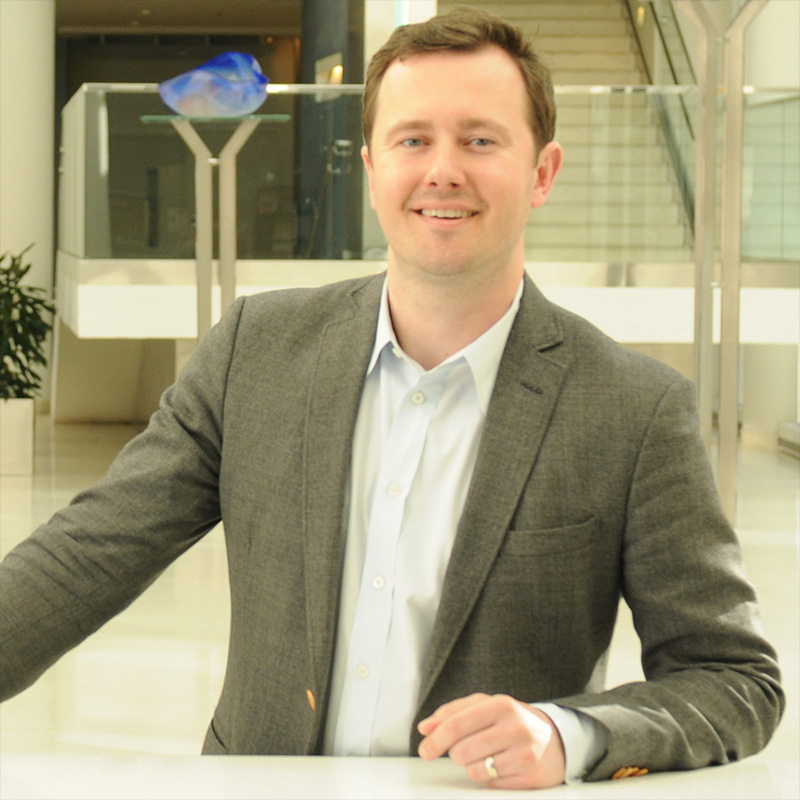
Alex Oettl joined Scheller in 2009.  His research interests include the economics of innovation, knowledge spillovers, labor mobility, and economic geography.  His current work focuses on the production and diffusion of ideas at the individual, firm, and regional level.

Professor Oettl's research has been published in Management Science, Organization Science, Nature, Journal of Financial Economics, Review of Economics and Statistics, Proceedings of the National Academy of Sciences (PNAS), Journal of Urban Economics, Research Policy, Journal of International Business Studies, profiled in multiple media outlets, and presented at business schools around the world. He is a Research Associate at the National Bureau of Economic Research and a recipient of the Kauffman Junior Faculty Fellowship in Entrepreneurship Research.

PhD Coordinator, Strategy & Innovation
Co-Site Lead, CDL-Atlanta
Associate Professor
Phone
404-385-4570
Additional Research

Economics of InnovationProduction and Diffusion of Ideas

University, College, and School/Department

Hailong Chen

Hailong Chen
hailong.chen@me.gatech.edu

Hailong Chen received his B.S. in Materials Science and Engineering from Tsinghua University in 1999, his M.S. in Chemistry from Tsinghua University in 2002, and his Ph.D. in Chemistry from Stony Brook University in 2009. Following his doctoral studies, he conducted postdoctoral research in the Department of Materials Science and Engineering (DMSE) at the Massachusetts Institute of Technology (MIT). Chen joined the faculty of Georgia Tech in November 2013, was promoted to Associate Professor with tenure in 2020, and to Professor in 2026.
 

Professor, George W. Woodruff School of Mechanical Engineering
Courtesy faculty appointment, School of Materials Science and Engineering
Courtesy faculty appointment, School of Chemistry and Biochemistry
Phone
404.385.5598
Office
Love 329
Additional Research

Chen’s research lies at the intersection of materials science, chemistry, and engineering, with a focus on the design, synthesis, and characterization of materials for electrochemical energy storage, functional and structural metals and alloys, and emerging quantum materials. His group combines solid-state chemistry, electrochemistry, and materials synthesis with advanced in situ and operando characterization, including X-ray diffraction and synchrotron-based techniques, to understand and control relationships among materials synthesis, structure, properties, and performance. A major emphasis of his research is the development of high-throughput and autonomous approaches for materials discovery and synthesis, integrating advanced characterization with AI- and machine-learning-driven materials design. An emerging research direction focuses on high-throughput synthesis and operando mapping of quantum materials phase space, with the goal of accelerating the discovery of synthesis–structure–property relationships in quantum and quantum-enabling materials. His group also develops novel synthesis strategies for nanostructured and functional materials, with broader interests in energy storage, sustainability, and emerging materials technologies.
 

Google Scholar
https://scholar.google.com/citations?user=M0ZEwtEAAAAJ&hl=en