Ashutosh Dhekne
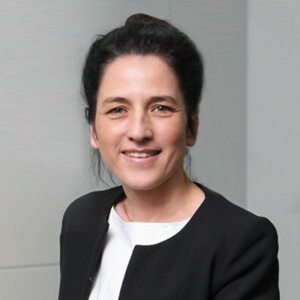
Dr. Kelly Comfort received her Ph.D. in comparative literature with a designated emphasis in critical theory from the University of California, Davis. She joined the Georgia Tech faculty as an Assistant Professor of Spanish in the School of Modern Languages in 2005, became Associate Professor in 2012, and Professor in 2023.
A specialist in Latin American literature and transatlantic modernisms, Dr. Comfort's research agenda focuses primarily on the intersections between Latin American modernismo and contemporaneous turn-of-the-century literary movements in Europe such as aestheticism and decadence.
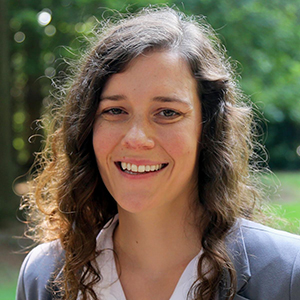
Jenny became an Assistant Professor at Georgia Tech in August 2017. She uses both modern and paleontological specimens to identify how populations, species, and communities have responded to past climate change. Her goal is to identify strategies to conserve as much biodiversity as possible given rapidly shifting climates. She received her PhD from the Dept. of Integrative Biology at UC-Berkeley, and did postdoctoral research at the National Evolutionary Synthesis Center and at the University of Washington.
Ingeborg Rocker is a senior executive of sustainable Industry Innovation & Transformation. In 2014, she joined the international software company Dassault Systemes, as the Vice President, where she developed Sustainable Cross- Industry Innovations from strategy to realization. Within this context, she launched the Smart City Project 3DEXPERIENCity, virtualizing Singapore City State and developed cyber-physical systems with the manufacturing and construction industry, placing software and hardware in the loop for the enhanced simulation, optimization, automation, operation, and maintenance of assets and processes. I. Rocker’s ongoing work focuses on sustainable cross-industry innovation fostering a circular economy.
Ingeborg is a practicing architect, who worked as lead designer with Peter Eisenman on the Memorial for the Murdered Jews of Europe in Berlin. In 2006, she co-founded Rocker-Lange Architect, a research-focused architecture firm located in Boston and Hong Kong. The office works across scales on computer-generated sustainable product design, architecture, and urbanism. The office has been recognized for its written and design work emphasizing the role the digital medium plays in the conception and realization of sustainable cross-scale design interventions.
She holds a Dipl.-Ing in Engineering from the RWTH Aachen, an MSAAD from Columbia University, and a MA, and Ph.D., from Princeton. She is an enthusiastic educator, researcher, and academic with extensive teaching experience at Princeton University, the University of Pennsylvania, and Harvard University, where she worked as an Associate and Assistant Professor in the Graduate School of Design, and served as the Director of MARCH 1 Admissions, the Director of the Digital Workshop Series, the Director of the International Exchange Programs, and the Coordinator of MARCH Core- and Option studios. She is a dedicated researcher and advised more than 40+ thesis and doctoral students.
Dr. Rocker is an academic and industry thought leader who frequently presents on sustainable industry innovation, transformation, and associated business models. Her work has been internationally published and contributes to the discourses in the industry and academy. She has presented and exhibited her work internationally and received local, national, and international recognition and awards.
Neha Kumar is an Associate Professor jointly appointed at the Sam Nunn School of International Affairs and the School of Interactive Computing at Georgia Tech. Her research lies at the intersection of human-computer interaction and global sustainable development, with a focus on global health and community informatics. Her work contributes feminist perspectives to the design and integration of emerging technologies across marginalized contexts in the Global South.
Her research has been recognized by multiple ACM Best Paper and Honorable Mention awards. Neha received the College of Computing's Lockheed Inspirational Young Faculty Award (2017) and the Lockheed Excellence in Teaching Award (2019). She currently serves as the President of ACM SIGCHI. She earned her Ph.D. in Information Management Systems from UC Berkeley, Master’s degrees in Computer Science and Education from Stanford University, and Bachelor’s in Computer Science and Applied Math from UC Berkeley.
Human-Computer Interaction for Global Development
Yuanzhi Tang is the executive director of the Strategic Energy Institute and the Georgia Power professor in the School of Earth and Atmospheric Sciences and the School of Civil and Environmental Engineering at the Georgia Institute of Technology. She is the founding director of the Center for Critical Mineral Solutions.
Tang received her bachelor’s degrees in geology and economics from Peking University, Ph.D. in geosciences from Stony Brook University, and completed her postdoctoral research in environmental chemistry at Harvard University. She has authored more than 100 peer-reviewed articles, holds three patents, and serves as co-editor in chief of Chemical Geology. She has held multiple professional leadership roles, including chair of the American Chemical Society Geochemistry Division.
Her research and leadership integrate earth, environmental, biological, materials, and sustainability sciences and innovations to advance secure, circular, and sustainable energy systems. At Georgia Tech, she leads interdisciplinary and multi-institutional collaborations with universities, national labs, industry, and state agencies to drive regional resource innovation and economic development. Her leadership emphasizes ecosystem building, workforce development, and translating research into tangible societal and economic impacts.
Tang joined the Georgia Tech faculty in 2013 as an assistant professor and is now a professor in the School of Earth and Atmospheric Sciences and the School of Civil and Environmental Engineering.
In the Kaiser group, we work to improve the understanding of the emissions and atmospheric processes that influence air quality and climate. Our research focuses largely on volatile organic compounds (VOCs), which are reactive organic species that are precursors to ozone and aerosol. Our work is grounded in insights from field, and aimed at understanding atmospheric composition at broad spatial and temporal scales.
Ph.D., Chemistry, University of Wisconsin-Madison, 2016 B.S., Chemistry, Wittenberg University, 2010
Remote Sensing Atmospheric composition and chemistry Biogenic and anthropogenic emissions Global chemistry-transport modeling In-situ and remote sensing
Atmospheric Chemistry, Aerosols & Clouds
Climate/EnvironmentAtmospheric Chemistry, Aerosols & CloudsRemote SensingAtmospheric composition and chemistryBiogenic and anthropogenic emissionsGlobal chemistry-transport modelingIn-situ and remote sensing