Saibal Mukhopadhyay

Saibal Mukhopadhyay 's profile picture
saibal.mukhopadhyay@ece.gatech.edu

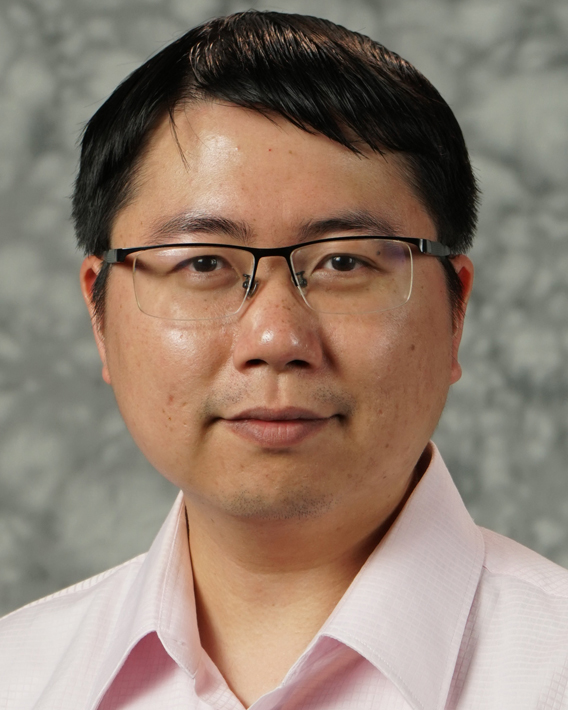
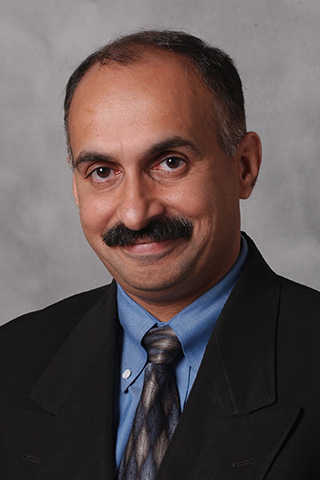
Saibal Mukhopadhyay received the bachelor of engineering degree in electronics and telecommunication engineering from Jadavpur University, Calcutta, India in 2000 and the Ph.D. degree in electrical and computer engineering from Purdue University, West Lafayette, IN, in August 2006. He joined the faculty of the Georgia Institute of Technology in September 2007. Mukhopadhyay worked at IBM T. J. Watson Research Center, Yorktown Heights, N.Y. as research staff member from August 2006 to September 2007 and as an intern in summers of 2003, 2004, and 2005. At IBM, his research primarily focused on technology-circuit co-design methodologies for low-power and variation tolerant static random access memory (SRAM) in sub-65nm silicon technologies. Mukhopadhyay has (co)-authored over 90 papers in reputed conferences and journals and filed seven United States patents

Joseph M. Pettit Professor, School of Electrical and Computer Engineering
Phone
404.894.2688
Office
KL 2356
Additional Research

Low-power, variation tolerant, and reliable VLSI systemsDevice/circuit level modeling/estimation of power, yield, and reliabilityTechnology-circuit co-design methodologiesSelf-adaptive systems with on-chip sensing and repair techniqueMemory design for VLSI applicationsUltra-low power and fault-tolerant nanoelectronics: technology, circuit, and computing platforms

Google Scholar
https://scholar.google.com/citations?hl=en&user=5KRtMEkAAAAJ&view_op=list_works&sortby=pubdate

Sung Kyu Lim

Sung Kyu Lim's profile picture
limsk@ece.gatech.edu

Sung Kyu Lim was born and grew up in Seoul, Korea, and moved to Los Angeles with his family at the age of 19. He received B.S. (1994), M.S. (1997), and Ph.D. (2000) degrees all from the Computer Science Department of University of California at Los Angeles (UCLA). During 2000-2001, he was a post-doctoral scholar at UCLA, and a senior engineer at Aplus Design Technologies, Inc. In August 2001, he joined the School of Electrical and Computer Engineering at Georgia Institute of Technology an assistant professor. He is currently the director of the GTCAD (Georgia Tech Computer Aided Design) Laboratory at the School. He recently released a CD with his rock band in Los Angeles and spends his leisure time writing/recording music

Professor, School of Electrical and Computer Engineering
Phone
404.894.0373
Office
Klaus 2360
Additional Research

Physical design automation for VLSI circuits3D circuit/packaging layout automationQuantum circuit layout automationMicro-architecture design space explorationLayout automation for reconfigurable circuitsGraph theory and combinatorial optimization

Google Scholar
https://scholar.google.com/citations?hl=en&user=kEh-m1sAAAAJ&view_op=list_works&sortby=pubdate

Asif Khan

Asif Khan's profile picture
asif.khan@ece.gatech.edu

Asif Khan is an Associate Professor in the School of Electrical and Computer Engineering with a courtesy appointment in the School of Materials Science and Engineering at the Georgia Institute of Technology. Khan’s research focuses on microelectronic devices, specifically on ferroelectric devices that address the challenges faced by the semiconductor industry due to the end of transistor miniaturization. His research group at Georgia Tech focuses on all aspects of ferroelectricity ranging from materials physics, growth, and electron microscopy to micro-/nano-fabrication of electronic devices, all the way to ferroelectric circuits and systems for artificial intelligence, machine learning, and data-centric applications.

Associate Professor, School of Electrical and Computer Engineering and School of Materials Science and Engineering
Office
Pettit 212
Additional Research

VLSI Systems and Digital Design; Microelectronics/Microsystems

Research Focus Areas
Google Scholar
https://scholar.google.com/citations?hl=en&user=oVz2tJMAAAAJ&view_op=list_works&sortby=pubdate

John D. Cressler

John D. Cressler's profile picture
cressler@ece.gatech.edu

John D. Cressler received a B.S. in physics from Georgia Tech in 1984 and both an M.S. and a Ph.D. in applied physics from Columbia University in 1987 and 1990, respectively. From 1984 to 1992 he was on the research staff at the IBM Thomas J. Watson Research Center in Yorktown Heights, NY, and from 1992 to 2002 on the engineering faculty at Auburn University. 

In 2002, he joined the faculty at Georgia Tech, where he is currently Regents Professor and Schlumberger Chair Professor of Electrical and Computer Engineering. Cressler and his team have published over 1000 scientific papers related to his research, and, to date, he has graduated 77 Ph.D. students. He is the co-author of Silicon-Germanium Heterojunction Bipolar Transistors, (2003), author of Reinventing Teenagers: the Gentle Art of Instilling Character in Our Young People (2004), editor of Silicon Heterostructure Handbook: Materials, Fabrication, Devices, Circuits, and Applications of SiGe and Si Strained-Layer Epitaxy (2006), author of Silicon Earth: Introduction to Microelectronics and Nanotechnology (2016), co-editor of Extreme Environment Electronics (2012), and author of the historical novels Emeralds of the Alhambra (2013), Shadows in the Shining City (2014), Fortune’s Lament (2018), and Merchants of Iniquity (2024). Cressler was elected Fellow of the IEEE in 2001 “for contributions to the understanding and optimization of silicon and silicon-germanium bipolar transistors.” 

Regents Professor, School of Electrical and Computer Engineering
Schlumberger Chair Professor in Electronics, School of Electrical and Computer Engineering
Phone
404-894-5161
Office
TSRB Office 521, Tech Square
Additional Research

SiGe devices and technology, device physics, mixed-signal circuit design, space radiation effects, integrated silicon photonics, cryogenic electronics and photonics, space-borne remote sensing, device-to-circuit interactions, reliability physics, extreme environment electronics and photonics, device-level simulation, and compact modeling.

Google Scholar
https://scholar.google.com/citations?hl=en&user=TDLurWIAAAAJ&view_op=list_works&sortby=pubdate

Muhannad S. Bakir

Muhannad S. Bakir's profile picture
muhannad.bakir@mirc.gatech.edu

Muhannad S. Bakir is the Dan Fielder Professor in the School of Electrical and Computer Engineering at Georgia Tech. He and his research group have received more than thirty paper and presentation awards including six from the IEEE Electronic Components and Technology Conference (ECTC), four from the IEEE International Interconnect Technology Conference (IITC), and one from the IEEE Custom Integrated Circuits Conference (CICC). Bakir’s group was awarded 2014 and 2017 Best Papers of the IEEE Transactions on Components Packaging and Manufacturing Technology (TCPMT). He is the recipient of the 2013 Intel Early Career Faculty Honor Award, 2012 DARPA Young Faculty Award, 2011 IEEE CPMT Society Outstanding Young Engineer Award, and was an Invited Participant in the 2012 National Academy of Engineering Frontiers of Engineering Symposium. Bakir is the co-recipient of the 2018 IEEE Electronics Packaging Society (EPS) Exceptional Technical Achievement Award "for contributions to 2.5D and 3D IC heterogeneous integration, with focus on interconnect technologies." He is also the co-recipient of the 2018 McKnight Foundation Technological Innovations in Neuroscience Awards. In 2020, Bakir was the recipient of the Georgia Tech Outstanding Doctoral Thesis Advisor Award.  
 
Bakir serves on the editorial board of IEEE Transactions on Components, Packaging and Manufacturing Technology (TCPMT) and IEEE Transactions on Electron Devices (TED). Dr. Bakir serves as a Distinguished Lecturer for IEEE EPS. 

Dan Fielder Professor, School of Electrical and Computer Engineering
Director, 3D Systems Packaging Research Center
Phone
404.385.6276
Office
Marcus 4135
Additional Research

Advanced cooling and power delivery for emerging system architecturesBiosensor technologies and their integration with CMOSElectrical and photonic interconnect technologiesHeterogeneous microsystem design and integration, including 2.5D and 3D ICs and packagingNanofabrication technologies

Farrokh Ayazi

Farrokh Ayazi's profile picture
farrokh.ayazi@ece.gatech.edu

Farrokh Ayazi is the Ken Byers Professor of Microsystems in the School of Electrical and Computer Engineering at the Georgia Institute of Technology, Atlanta, GA. He received the B.S. degree in electrical engineering from the University of Tehran in 1994, and the M.S. and Ph.D. degrees in electrical engineering from the University of Michigan, Ann Arbor, in 1997 and 2000, respectively. His main research interest lies in the area of Integrated Micro and Nano Electro Mechanical Systems (MEMS and NEMS), with a focus on micro and nano mechanical resonators, and mixed-signal interface circuits for MEMS and sensors. 

Ayazi is an editor for the IEEE Transactions on Electron Devices and a past editor for the IEEE/ASME Journal of Microelectromechanical Systems. He is a 2004 recipient of the National Science Foundation CAREER Award and has received the Outstanding Junior Faculty Member Award and the Richard M. Bass/Eta Kappa Nu Outstanding Teacher Award from the School of ECE at Georgia Tech. The author of over 200 refereed technical and scientific articles, Ayazi and his students have received several best paper awards at International conferences including MEMS, Transducers, Sensors, and Frequency Control Symposium. He served on the technical program committee of the IEEE International Solid State Circuits Conference (ISSCC) for six years (2004-2009). He was the chairman of the Display, Sensors and MEMS (DSM) sub-committee at the IEEE International Electron Devices Meeting (IEDM 2011). 

In 2008, he co-founded and became the CTO of Qualtré, a spinout company of his research lab that develops bulk acoustic wave gyroscopes and motion sensors for personal navigation systems. Ayazi is a fellow of IEEE and holds 50 patents in the area of MEMS and Microsystems. He was the general chair of the IEEE Micro-Electro-Mechanical-Systems (MEMS) conference in 2014, held in San Francisco, CA. 

Ken Byers Professor, School of Electrical and Computer Engineering
Director, Georgia Tech Analog Consortium
Phone
404.894.9496
Office
TSRB 448
Additional Research

Integrated Micro & Nano Electromechanical ResonatorsRF MEMSVLSI Analog Integrated CircuitsMEMS Inertial Sensors (Integrated Gyroscopes and Accelerometers)Micro and nanofabrication technologies

Research Focus Areas
Google Scholar
https://scholar.google.com/citations?hl=en&user=5RcbCosAAAAJ&view_op=list_works&sortby=pubdate

Shimeng Yu

Shimeng Yu's profile picture
shimeng.yu@ece.gatech.edu

Shimeng Yu is a professor of electrical and computer engineering at the Georgia Institute of Technology. He received the B.S. degree in microelectronics from Peking University in 2009, and the M.S. degree and Ph.D. degree in electrical engineering from Stanford University in 2011 and 2013, respectively. From 2013 to 2018, he was an assistant professor at Arizona State University.

Yu’s research interests are semiconductor devices and integrated circuits for energy-efficient computing systems. His expertise is on the emerging non-volatile memories (e.g., RRAM, ferroelectrics) for applications such as AI hardware, in-memory computing, 3D integration, etc.

Among Yu’s honors, he was a recipient of NSF Faculty Early CAREER Award in 2016, IEEE Electron Devices Society (EDS) Early Career Award in 2017, ACM Special Interests Group on Design Automation (SIGDA) Outstanding New Faculty Award in 2018, Semiconductor Research Corporation (SRC) Young Faculty Award in 2019, ACM/IEEE Design Automation Conference (DAC) Under-40 Innovators Award in 2020, IEEE Circuits and Systems Society (CASS) Distinguished Lecturer for 2021-2022, and IEEE EDS Distinguished Lecturer for 2022-2023, etc.

Yu is active in professional services. He served or is serving technical program committee for IEEE International Electron Devices Meeting (IEDM), IEEE Symposium on VLSI Technology and Circuits, ACM/IEEE Design Automation Conference (DAC), ACM/IEEE Design, Automation & Test in Europe (DATE), ACM/IEEE International Conference on Computer-Aided-Design (ICCAD), etc.  He is an editor of IEEE Electron Device Letters and a senior member of the IEEE.

Professor, School of Electrical and Computer Engineering
Phone
404.894.2571
Office
Pettit 116
Additional Research

Nanoelectronic DevicesNon-volatile MemoriesIntegrated Circuit DesignElectronic Design Automation (EDA)Deep Learning AcceleratorHardware Security

Research Focus Areas
Google Scholar
https://scholar.google.com/citations?hl=en&user=XFgMpqYAAAAJ&view_op=list_works&sortby=pubdate

Suresh Sitaraman

Suresh Sitaraman's profile picture
suresh.sitaraman@me.gatech.edu

Suresh Sitaraman is a Professor in the George W. Woodruff School of Mechanical Engineering, and leads the Flexible Hybrid Electronics Initiative at Georgia Tech and directs the Computer-Aided Simulation of Packaging Reliability (CASPaR) Lab at Georgia Tech. He is a Thrust Leader/Faculty Member, Reliability/Mechanical Design Research, 3D Systems Packaging Research Center; a Faculty Member, Georgia Tech Manufacturing Institute; a Faculty Member, Interconnect and Packaging Center, an SRC Center of Excellence, Institute for Electronics and Nanotechnology; a Faculty Member, Nanoscience and Nanotechnology, Nanotechnlogy Research Center, Institute for Electronics and Nanotechnology; a Faculty Member, Institute of Materials. Dr. Suresh Sitaraman's research is exploring new approaches to develop next-generation microsystems. In particular, his research focuses on the design, fabrication, characterization, modeling and reliability of micro-scale and nano-scale structures intended for microsystems used in applications such as aerospace, automotive, computing, telecommunicating, medical, etc. Sitaraman's research is developing physics-based computational models to design flexible as well as rigid microsystems and predict their warped geometry and reliability. His virtual manufacturing tools are able to simulate sequential fabrication and assembly process mechanics to be able to enhance the overall yield, even before prototypes are built. Sitaraman's work is developing free-standing, compliant interconnect technologies that can mechanically decouple the chip from the substrate without compromising the overall electrical functionality. This work is producing single-path and multi-path interconnect technologies as well as nanowire and carbon nanotube interconnects for electrical and thermal applications, and such interconnect technologies can be employed in flexible as well as 3D microelectronic systems. Sitaraman's research is also developing innovative material characterization techniques such as the stressed super layer technique as well as magnetic actuation test that can be used to study monotonic and fatigue crack propagation in nano- and micro-scale thin film interfaces. In addition, Sitaraman has developed fundamental modeling methodologies combined with leading-edge experimentation techniques to study delamination in the dielectric material and copper interface used in back-end-of-the-line (BEOL) stacks and through-silicon vias as well as epoxy/copper and epoxy/glass interfaces as in microelectronic packaging and photovoltaic module applications. Examining the long-term operational as well as accelerated thermal cycling reliability of solder interconnects, his work has direct implications in implantable medical devices, photovoltaic modules, computers and smart devices as well as rugged automobile and aerospace applications. Through the above-mentioned fundamental and applied research and development pursuits, Sitaraman's work aims to address some of the grand challenges associated with clean energy, health care, personal mobility, security, clean environment, food and water, and sustainable infrastructure

Regents' Professor, Woodruff School of Mechanical Engineering
Morris M. Bryan, Jr. Professor, Woodruff School of Mechanical Engineering
Phone
404.894.3405
Office
MARC 471
Additional Research

Computer-Aided Engineering; micro and nanomechanics; Fabrication; Modeling; fracture and fatigue; Flexible Electronics; Emerging Technologies

Itamar Kolvin

Itamar Kolvin's profile picture
ikolvin@gatech.edu

Itamar Kolvin received his B.Sc. (2007) in Physics and Mathematics and his M.Sc. (2009) from the Hebrew University in Jerusalem. In 2017, he completed his Ph.D. in Physics under Prof. Jay Fineberg in the Hebrew University. He was a HFSP cross-disciplinary postdoctoral fellow in the Physics Department, University of California, Santa Barbara with Pro. Zvonimir Dogic. His research interests are in the fundamentals of soft matter out-of-equilibrium: assembly, deformation, flow and fracture. Current efforts make use of model systems that are assembled of protein machineries to investigate active and adaptive material mechanics. 

Assistant Professor, School of Physics
Office
Howey Physics Building W304
University, College, and School/Department

Amanda Stockton

Amanda Stockton's profile picture
astockto@gatech.edu

Education
B.S., Chemistry, Massachusetts Institute of Technology, 2004; B.S., Aerospace Engineering, Massachusetts Institute of Technology, 2004; M.A., Chemistry, Brown University, 2006; Ph.D., Chemistry, University of California Berkeley, 2010

Research
Dr. Stockton joined the School of Chemistry and Biochemistry at the Georgia Institute of Technology in January 2015. Her research plans include (1) instrument development for in situ organic analysis in the search for extraterrestrial life, (2) microfluidic approaches to experimentally evaluating hypotheses on the origin of biomolecules and the emergence of life, and (3) terrestrial applications of these technologies for environmental analysis and point-of-care diagnostics.

Associate Professor
Phone
(404) 894-4090
Office
MoSE 1100K
Google Scholar
https://scholar.google.com/citations?user=CQ7x2L4AAAAJ&hl=en