LaToya Daniels

ldaniels31@gatech.edu
Financial Analyst III
Phone
404.894.6072
Office
1120B
IRI And Role



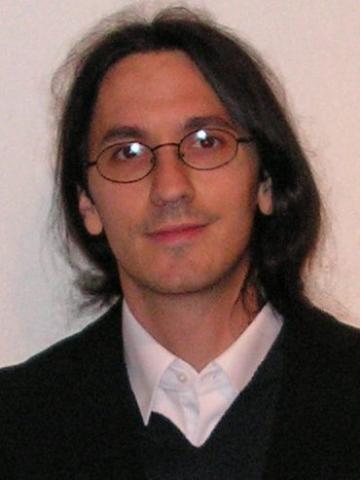
Prof. Pradalier is Associate Professor at GeorgiaTech Lorraine, the French campus of the Georgia Institute of Technology (a.k.a. GeorgiaTech) since September 2012. He defended his “Habilitation à Diriger des Recherches” (Authority to Supervise Research) in 2015 on the topic of “Autonomous Mobile Systems for Long-Term Operations in Spatio-Temporal Environments” at the National Polytechnic Institute of Toulouse (INPT).
His objective is to extend the activity of the CNRS IRL2958 GT-CNRS towards robotics, leveraging on one side the strong robotic research inside CNRS and on the other side the collaboration potential with the Robotics and Intelligent Machines (RIM) laboratory at GTL.
At the IRL, he is now the coordinator of the H2020 BugWright2 project, has been involved in H2020 project Flourish and PF7 project Noptilus, as well as in projects on environmental monitoring.
From November 2007 until December 2012, Dr. Pradalier has been deputy director in the Autonomous Systems Lab at ETH Zürich. In this role, he was the technical coordinator of the V-Charge project (IP, 2010-2014) and also involved in the development of innovative robotic platforms such as autonomous boats for environment monitoring or prototype space rovers funded by the European Space Agency. He is a founding member of the ETH start-up Skybotix, within which he was responsible for software development and integration.
From 2004 to 2007, Dr. Pradalier was a research scientist at CSIRO Australia. He was then involved in the development of software for autonomous large industrial robots and an autonomous underwater vehicle for the monitoring of the Great Barrier Reef, Australia.
He received his Ph.D. in 2004 from the National Polytechnic Institute of Grenoble (INPG) on the topic of autonomous navigation of a small urban mobility system and he is Ingénieur from the National Engineering School for Computer Science and Applied Math in Grenoble (ENSIMAG).

Charles Pippin is a Senior Research Scientist at the Georgia Tech Research Institute, GTRI. His research interests include collaborative autonomy algorithms, machine learning, and multi-robot systems. In his current work, he is investigating cooperation between autonomous systems, as part of GTRI's Unmanned Systems Initiative. Charles received a Ph.D. in Computer Science from Georgia Tech in 2013. His research advisor was Prof. Henrik I. Christensen. Charles received an M.S. in Computer Science from Georgia Tech in 2004 and holds a B.S. in Computer Science from the University of Alabama in Huntsville.
collaborative autonomy algorithms; machine learning; and multi-robot systems

Sang's research and art practice focuses on robotic and computational tools that work together with human users. His vision proposes extreme synergies between machine tools and humans, with technology essentially becoming a natural extension of our hands. This way, he challenges the fear and criticism around AI and automation that they replace human endeavors, by showing how symbiotic machines can unlock new human explorations and aesthetics. The impact of his research spans from publications in top tier HCI conferences such as CHI, TEI, and NIME, journals including Leonardo and IEEE Pervasive Computing, to design awards and art exhibitions. Several of his work were awarded the Fast Company Innovation by Design Award, and have been shown in art exhibitions at SIGGRAPH ASIA, CHI, TEI, and more. His work A Flying Pantograph was included in the Otherly Space / Knowledge exhibition at the Asia Culture Center along with some of the most prominent new media artists today. In 2014, He was an artist-in-residence at Microsoft Research Studio 99 where he created Remnance of Form - an interactive light and shadow installation. His work has received extensive media coverage from BBC, WIRED, Discovery, Fast Company and so on, and he was invited to national and international events including Sebasi+Pan, TEDx events, Seoul Digital Forum, and more. He is starting at Georgia Tech Industrial Design as an assistant professor. He has helped Artmatr in the development of a machine painting technology and its creative use through collaboration with some of today's most prominent painters. He received his Ph.D. from MIT Media Lab in 2018. Prior to that, he was a software engineer at Samsung Electronics where he led the software development of eyeCan, an open-source DIY eye-mouse designed for people with motor disability. This project became the foundation of Samsung's C-LAB. He received his Bachelor and Master of Science from KAIST, focusing on 3D Computer Vision and Machine Learning.

Prof. Matthew Flavin is an assistant professor in the School of Electrical and Computer Engineering at the Georgia Institute of Technology where he leads the Flavin Neuromachines Lab. Before joining the faculty at Georgia Tech, he was a postdoctoral researcher at Northwestern University. He received his M.S. and Ph.D. degrees in Electrical Engineering in 2017 and 2021 from the Massachusetts Institute of Technology (MIT), and he received his B.S. in Electrical Engineering in 2015 from the University of Illinois at Urbana-Champaign (UIUC). He received the NIH Ruth L. Kirschstein Institutional National Research Service Award (T32) and the Draper Laboratory Fellowship. The vision for his independent research program is to develop powerful peripheral neural interfaces and mechatronic wearables that leverage advanced sensors and intelligent systems to address important and unresolved challenges in patient care.

Autonomy

Human-Robot Interaction; Artificial Intelligence; Interactive Machine Learning
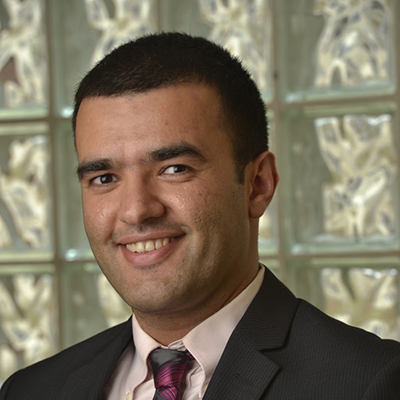
Saman Zonouz is an Associate Professor in the School of Cybersecurity and Privacy and the School of Electrical and Computer Engineering at Georgia Tech, where he directs the Cyber-Physical Security Lab (CPSec) and the Cyber-Physical Systems track of Georgia Tech's Online Master of Science in Cybersecurity. His research develops the theory and tools needed to build provably dependable and secure cyber-physical systems, spanning formal verification and reverse engineering of embedded control firmware, physics-aware attack detection and forensics, and real-time intrusion response that draws on both systems security and control theory. His group applies this work to robotic and autonomous platforms, including unmanned aerial vehicles, robotic ground vehicles, and in-vehicle networks, as well as to additive manufacturing, industrial controllers, and power-grid infrastructure. A complementary line of work on trustworthy and efficient AI includes learning-based robot motion planning and robust, compressed deep neural networks for embedded and edge deployment. He teaches courses such as “Cybersecurity of Drones” (Cybersecurity of Autonomous Vehicles), and Introduction to Cyber-Physical Systems Security.
Zonouz's research has been supported by NSF, DOE, DOW, DHS, ONR, ARPA-E, ARPA-H, and industry partners. He is a recipient of the Presidential Early Career Award for Scientists and Engineers (PECASE), the NSF CAREER Award in Cyber-Physical Systems, the NSA Significant Research in Cyber Security award, the Air Force Office of Scientific Research Faculty Fellowship, and a Google Security Hall of Fame award; his work has also received a Distinguished Paper Award at ACM CCS 2024 and the Outstanding Mid-Career Faculty Research Award from Georgia Tech's College of Computing. He received his Ph.D. in Computer Science from the University of Illinois at Urbana-Champaign and his B.Sc. in Computer Engineering from Sharif University of Technology, where he also competed internationally in RoboCup robot soccer, and won world Championship in Rescue League in Japan, Osaka 2005.