Christopher J. MacLellan

Christopher J. MacLellan's profile picture
cmaclellan3@gatech.edu

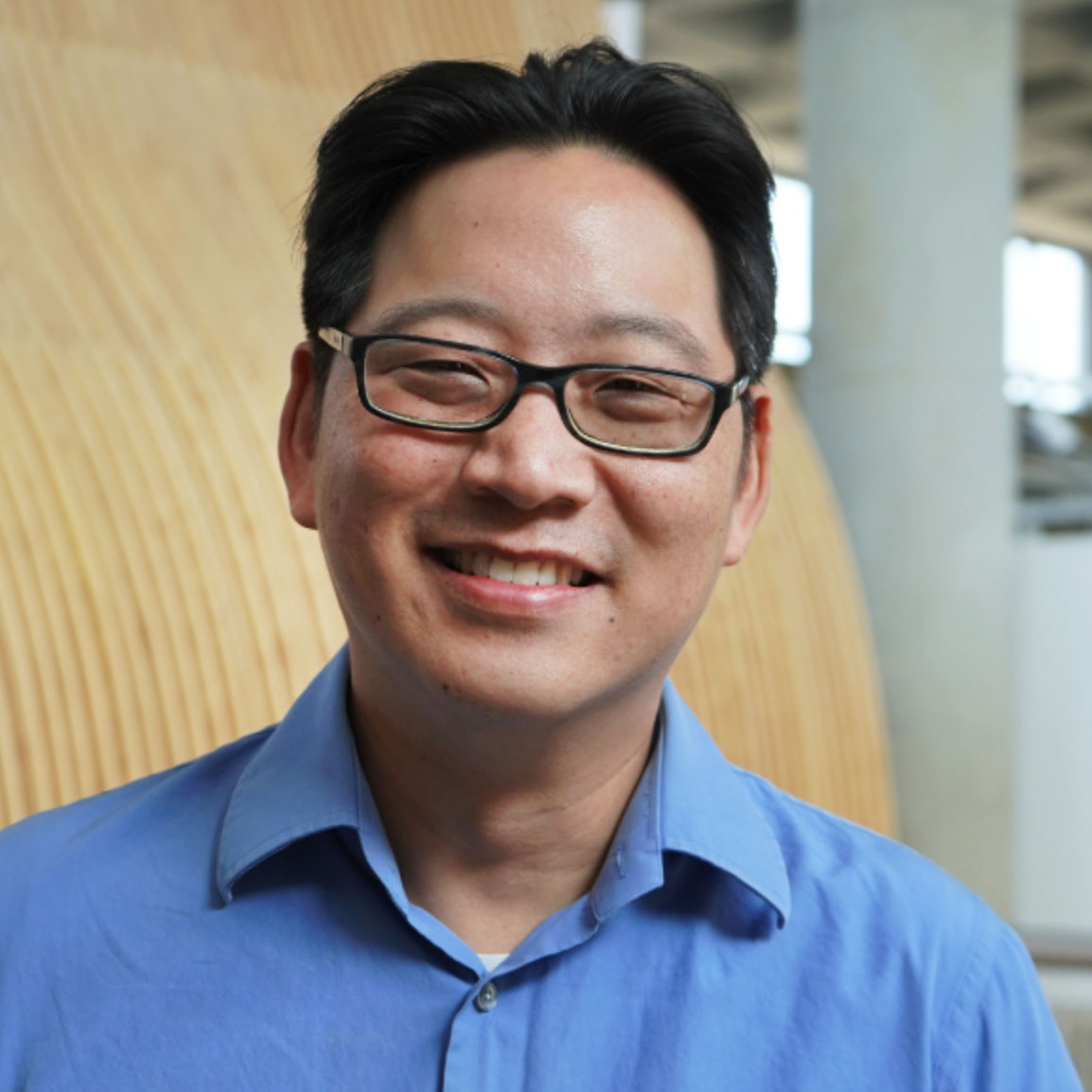
Christopher J. MacLellan is an Assistant Professor in the School of Interactive Computing at Georgia Institute of Technology, where he leads the Teachable AI Lab (TAIL; https://tail.cc.gatech.edu). His work on cognitive systems aims to advance our understanding of how people teach and learn and to build AI systems that can teach and learn like people do and in ways that are compatible with people. He explores the development of computational models of learning and how these models can support the development of AI technologies, such as intelligent tutoring systems and medical decision support systems, at scale.

He also investigates how data collected about how people learn and make decisions can be leveraged to drive the development of better cognitive models and computational learning systems. Chris has been a principal investigator on multiple sponsored project awards with DARPA, the U.S. Army, ONR, and NSF. He has also received external recognition for his work, such as the 2022 EAAI Now and Future AI Educator award as well as being named on the 2021 Technical.ly RealLIST of technologists building Philadelphia’s future.  

Prior to his position at Georgia Tech, Chris was an Assistant Professor of Information Science and Computer Science (by co-appointment) at Drexel University. Before that, he completed his PhD in Human-Computer Interaction at Carnegie Mellon University's School of Computing, where he was a fellow in the Program for Interdisciplinary Education Research (PIER).

The products of his work have immediate implications for AI-powered technology development. For example, through his work with the NSF-funded AI ALOE Institute, Chris is developing tools that let teachers build AI-powered tutors by naturally teaching an AI agent rather than programming. His work also has many broader implications, such as enabling doctors to support the development of AI-powered diagnoses tools where few training examples are available (DARPA-funded POCUS project) and for creating personal assistant agents that can engage in collaborative learning to support more effective human-machine teaming (ARL-funded STRONG project).

Research Areas: 

Artificial Intelligence; Cognitive Systems; Cognitive and Learning Sciences; Human-Computer Interaction; Learning Technology.

Assistant Professor
Research Focus Areas

Clio Andris

Clio Andris's profile picture
clio.andris@design.gatech.edu

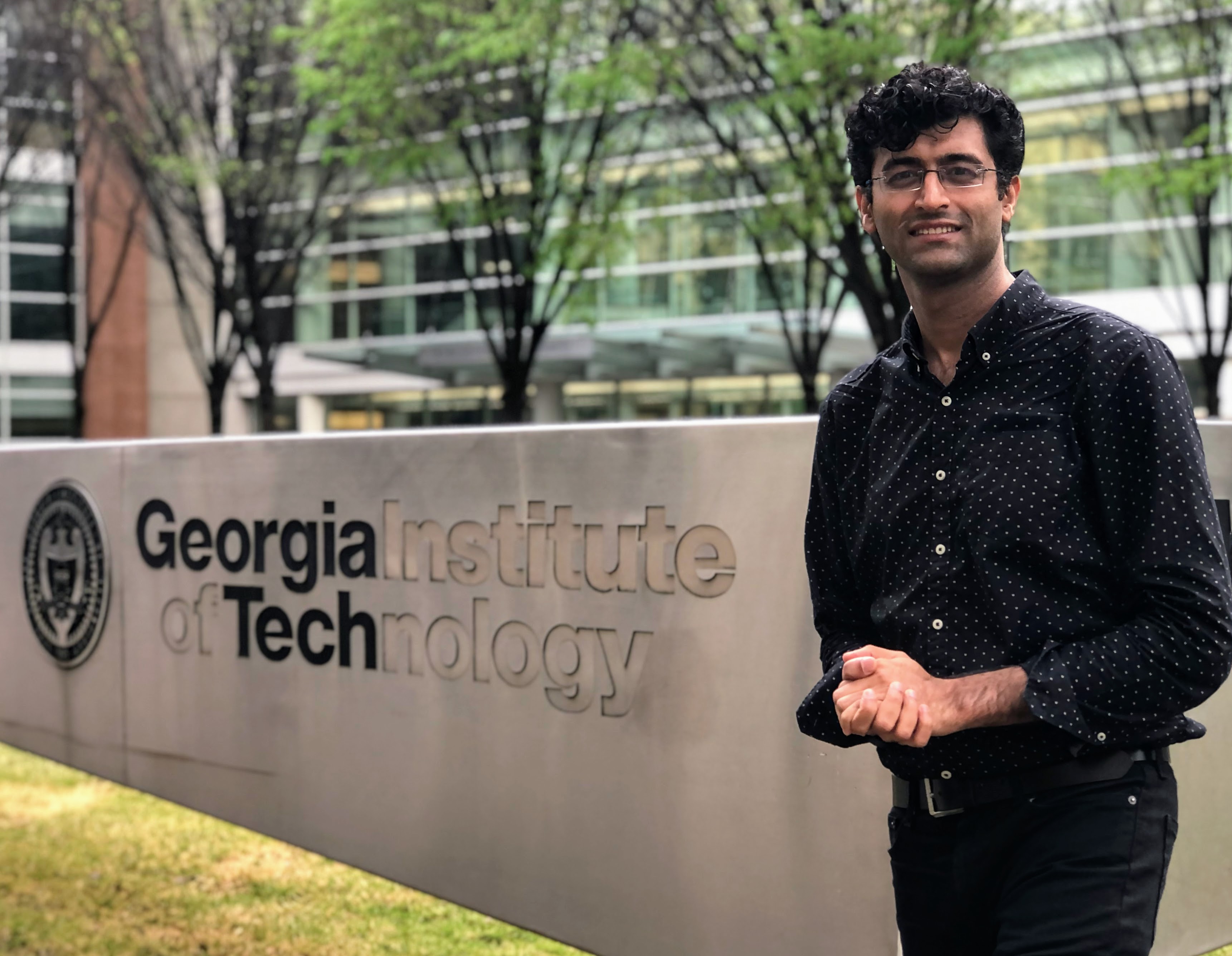
Clio Andris is an associate professor in the School of City and Regional Planning and the School of Interactive Computing at Georgia Tech. Her research is on mathematical models of social networks, social flows, and interpersonal relationships in geographic space, applied to issues of urban planning, visualization, transportation and geography. She teaches GIScience classes at multiple levels including Environmental GIS and Spatial Network Analysis, as well as classes on Information Visualization. She is a member of the Center for Spatial Planning Analytics and Visualization (CSPAV) and an affiliate of the Center for Quality Growth and Regional Development (CQGRD). She is also a member of the School of Interactive Computing's Information Visualization research group. She received her PhD from MIT in 2011 in Urban Information Systems where she was an NDSEG fellow and member of the Senseable City Lab. She held postdoctoral positions at the Singapore-MIT Alliance for Research and Technology (SMART) at the Santa Fe Institute.

Academic Specialty: 
Geographic Information Science and Technology

Associate Professor, City & Regional Planning and Interactive Computing
Director, MS-GIST Program
Phone
404.385.7215
Office
Architecture-East Building, 204-M

Karen M. Feigh

Karen M. Feigh's profile picture
karen.feigh@gatech.edu

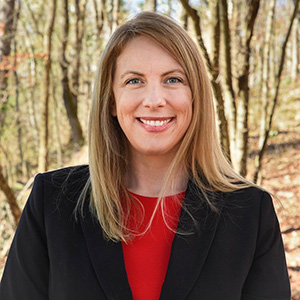
Karen M. Feigh is a Professor at Georgia Tech's Daniel Guggenheim School of Aerospace Engineering with a courtesy appointment in the School of Interactive Computing. As the director of the Georgia Tech Cognitive Engineering Center, she leads a research and education program focused on the computational cognitive modeling and design of cognitive work support systems and technologies to improve the performance of socio-technical systems. She is responsible for undergraduate and graduate level instruction in the areas of flight dynamics, human reliability analysis methods, human factors, human-automation interaction and cognitive engineering. Feigh has over 14 years of relevant research and design experience in fast-time air traffic simulation, ethnographic studies, airline operation control centers, synthetic vision systems for helicopters, expert systems for air traffic control towers, human extra-vehicular activities in space, and the impact of context on undersea warfighters. Recently her work has focused on human-autonomy teaming and the human experience of machine learning across a number of domains.

Feigh has served as both Co-PI and PI on a number of FAA, NIA, ONR, NSF and NASA sponsored projects. As part of her research, Feigh has published 35 scholarly papers in the field of Cognitive Engineering with primary emphasis on the aviation industry. She serves as an Associate Editor for the Journal of Cognitive Engineering and Decision Making. She previously served as the Chair to the Human Factor and Ergonomics Society’s Cognitive Engineering and Decision Making Technical Group, and on the National Research Council’s Aeronautics and Space Engineering Board (ASEB).

Professor & Associate Chair for Research; School of Aerospace Engineering
Director; Georgia Tech Cognitive Engineering Center
Phone
404.385.7686
Office
MK 321-3
Additional Research

Cognitive engineering; human factors; adaptive automation

Research Focus Areas
Google Scholar
https://scholar.google.com/citations?hl=en&user=y1cHmVMAAAAJ&view_op=list_works&sortby=pubdate

Arthi Rao

Arthi Rao's profile picture
arthir@gatech.edu

Arthi Rao is a research scientist at the Center for Quality Growth and Regional Development at Georgia Tech. She has had a consistent focus on Health and Place research throughout her career. She has an interdisciplinary educational and professional background in Urban Planning, Epidemiology and Geographic Information Systems (GIS) from Georgia Tech. Her research interests focus on social determinants of health, healthcare access, healthy communities, and spatial methods. She uses methods including spatial clustering, data mining/classification techniques and hierarchical modeling in her research. She has integrated these methods to create decision-support tools for academic and industrial applications.

She regularly collaborates with researchers at The Morehouse School of Medicine, Georgia Tech, and the American Planning Association as a subject matter expert on healthy communities’ research and geospatial methods. She has published in journals on the topics of Health Impact Assessment (HIA), sustainability, walkability analysis, regional planning, and therapeutic landscapes. She also teaches courses titled “Public Health and the Built Environment” and “Public Health Analytics” at Georgia Tech.

Specialization Area: Health and Environment

Part-Time Lecturer, School of City & Regional Planning
Research Scientist II, Center for Quality Growth and Regional Development
University, College, and School/Department

Lisa Marks

Lisa Marks's profile picture
lisa.marks@design.gatech.edu

Lisa Marks is a designer and educator teaching studio courses in the undergraduate and graduate programs at Georgia Tech. Her current research focuses on methods of combining endangered and traditional handcraft with algorithmic modeling in order to produce new modes of production. She has a Master of Industrial Design from Parsons School of Design and worked in New York for clients including Google, Nike, and Swarovski. 

Associate Professor
University, College, and School/Department

Tim Trent

Tim Trent's profile picture
tim.trent@gatech.edu

Tim began working as the GVU Center’s research technologist in 2018. In conjunction with IPaT, he developed, designed, and launched the Craft Lab in 2022 and is serving as the director of the Prototyping, Craft, and Usability labs. Tim provides strategic oversight of the tools and technologies present in these “innovation labs” and seeks opportunities to grow and shape the spaces to match the ever-changing research landscape. These spaces are an essential component of the research within IPaT and the broader Georgia Tech community. Tim views the spaces not only as a set of technologies like 3D printers, laser cutters, embroidery machines, etc., but also as a catalyst to bring together community members and explore new frontiers of research.

Tim has also spent much of his time at Georgia Tech working in research computing, including his roles as a Research Technologist in College of Computing’s Technology Services Organization (TSO) and as a part of IPaT’s Research Operations team. He served as interim Associate Director for Research in TSO in 2023. His focus in these areas is in DevOps and business automation with aims to match IT capabilities and capacities with the needs of end-users.

Tim holds a master of science in human-computer interaction and a graduate certificate in Management of Technology from Georgia Tech. His thesis project focused on the introductory experience to academic makerspaces and digital tools that support new users. In this work, Tim prototyped a new digital training aid for makerspaces to allow more seamless introduction for new users while satisfying training requirements.

Research Technologist II

Danielle Willkens

Danielle Willkens's profile picture
danielle.willkens@design.gatech.edu

She is an Associate Professor at Georgia Institute of Technology's School of Architecture and a practicing designer, researcher, and educator who is particularly interested in bringing architectural engagement to diverse audiences through interactive projects. Her experiences in practice and research include design/build projects, public installations, and on-site investigations as well as extensive archival work in several countries. As an avid photographer and illustrator, her work has been recognized in the American Institute of Architects National Photography Competition and she has contributed graphics to several exhibitions and publications. As an educator, she was recognized as one of two recipients of the 2017-2018 American Institute of Architecture Students (AIAS)/ Association of Collegiate Schools of Architecture (ACSA) New Faculty Teaching Award and a 2021 AIAS Educator Honor Award. 

Her research and practice experiences span design/build, early intervention design education, transatlantic studies, and historic site documentation and visualization. She was an inaugural Mellon History Teaching Fellow at Dumbarton Oaks in fall 2021 for the project "From Plantation to Protest: Visualizing Cultural Landscapes of Conflict in the American South," supporting research and development of the Race, Space, and Architecture in the United States seminar at Georgia Tech. 

Expanding experiences abroad to enrich both teaching and research agendas , she was the 2015 Society of Architectural Historians’ H. Allen Brooks Travelling Fellow. Between June 2016 and May 2017, she traveled to Iceland, the Faroe Islands, Cuba, and Japan to research the impact of tourism on cultural heritage sites; research blog posts can be found here. 

Currently, she is working with Auburn University Associate Professor Liu and an interdisciplinary team from the McWhorter School of Building Science, the Department of History, and the Media Production Group on “Walking in the Footsteps of History”, an experimental survey and modeling project to digitally reconstruct the area south of the Edmund Pettus Bridge during the 'Bloody Sunday' events of March 7, 1965. This project is working to record and represent the built environment through the use of 3D LiDAR scans, UAV photogrammetry, and digital modeling. The team was awarded a $50,000 grant 2019 National Park Service African American Civil Rights Grant Program to compile a Historic Structures Report on the Edmund Pettus Bridge in Selma, Alabama.

Willkens serves as a Georgia Tech Institute for People and Technology initiative lead for research activities related to just, resilient, and informed communities.

Associate Professor
Research Focus Areas
University, College, and School/Department

Mathieu Dahan

Mathieu Dahan's profile picture
mathieu.dahan@isye.gatech.edu

Mathieu Dahan is an Associate Professor in the H. Milton Stewart School of Industrial and Systems Engineering. His research interests are in combinatorial optimization, game theory, and predictive analytics, with applications to service operations management and disaster logistics. His primary focus is on developing strategies for improving the resilience of large-scale infrastructures — particularly, transportation and natural gas networks — in the face of correlated failures such as security attacks and natural disasters. Current projects include: (i) Strategic design of network inspection systems; and (ii) Analytics-based response operations under uncertainty.

Dr. Dahan received a Ph.D. and M.S. in Computational Science and Engineering from the Massachusetts Institute of Technology, a M.Eng. and B.Eng. from the École Centrale Paris, and a B.S. in Mathematics from Paris-Sud University. He is the recipient of the MIT Robert Thurber Fellowship, the MIT Robert Guenassia Award, the Honorable Mention for the J-WAFS Fellowships, and the Best Poster Award at the Princeton Day of Optimization.

During the summer of 2016, he worked as a research scientist intern at Amazon.com (Seattle) in the Supply Chain Optimization Technologies team. Using Machine-Learning techniques, he worked on predicting the fulfillment cost and developing a prototype to grant a fast and accurate access to future shipping cost estimates.

Associate Professor
Phone
404.385.3054
University, College, and School/Department