Karen J. Head

Karen J. Head's profile picture
khead@gatech.edu

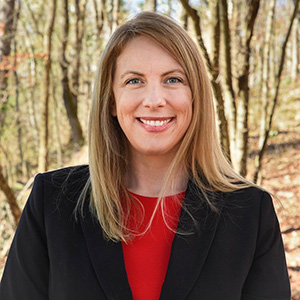
Dr. Karen Head (Ph.D. University of Nebraska, M.A. University of Tennessee, B.A. Oglethorpe University, A.A. DeKalb College) was previously the Associate Chair and Professor in Georgia Tech's School of Literature, Media, and Communication and Executive Director of the Institute-wide Communication Center. She has been at Georgia Tech since 2004.

In 2020, she was named the inaugural Poet Laureate of Fulton County, Georgia.

She is also the editor of Atlanta Review and the immediate past editor of Southern Discourse in the Center: A Journal of Multiliteracy and Innovation.

On a more unusual note, she is currently the Poet Laureate of Waffle House—a title that reflects an outreach program to bring arts awareness to rural high schools in Georgia, which has been generously sponsored by the Waffle House Foundation.

She has published five books of poetry (Lost on Purpose, Sassing, My Paris Year, On Occasion: Four Poets, One Year, and Shadow Boxes) and exhibited acclaimed digital poetry projects. Since 2006, she has been a Visiting Scholar at Technische Universität-Dortmund, Germany, where she serves as primary consultant for their academic tutoring center.

Her research focuses on higher education rhetoric, sustainable and innovative pedagogy and space design, communication theory and pedagogical practice, especially the implementation and development of writing centers, writing program administration, and multidisciplinary communication. Her book, Disrupt This! MOOCs and the Promises of Technology was published by University Press of New England in 2017.

In 2012-13, she was awarded a Georgia Tech Fund for Innovation in Research and Education Grant. Head's classes center on analyzing, critiquing, evaluating, and creating a variety of texts that demonstrate an understanding of audience and adaptation of multimodal rhetorical strategies and tools. Students and colleagues consistently rank her teaching as excellent. In 2012-13, she won the CETL/BP Junior Faculty Teaching Award. In 2019, she was honored with the Georgia Tech Outstanding Service Award.


Adjunct Professor

Christopher J. MacLellan

Christopher J. MacLellan's profile picture
cmaclellan3@gatech.edu

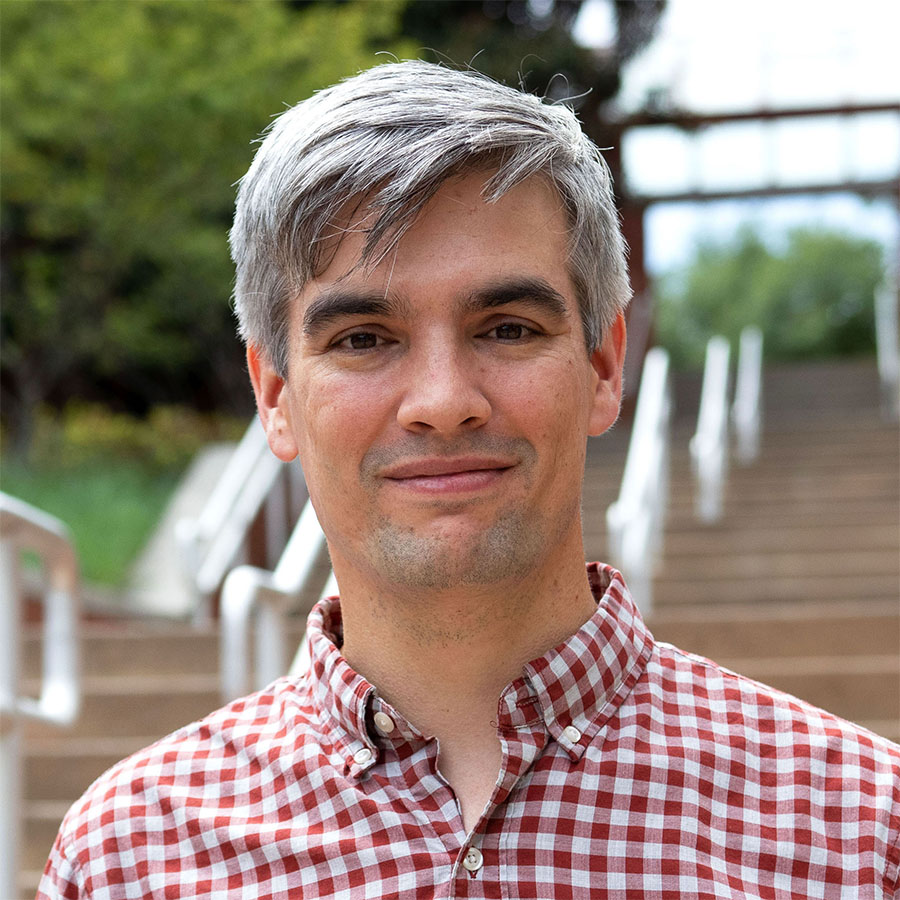
Christopher J. MacLellan is an Assistant Professor in the School of Interactive Computing at Georgia Institute of Technology, where he leads the Teachable AI Lab (TAIL; https://tail.cc.gatech.edu). His work on cognitive systems aims to advance our understanding of how people teach and learn and to build AI systems that can teach and learn like people do and in ways that are compatible with people. He explores the development of computational models of learning and how these models can support the development of AI technologies, such as intelligent tutoring systems and medical decision support systems, at scale.

He also investigates how data collected about how people learn and make decisions can be leveraged to drive the development of better cognitive models and computational learning systems. Chris has been a principal investigator on multiple sponsored project awards with DARPA, the U.S. Army, ONR, and NSF. He has also received external recognition for his work, such as the 2022 EAAI Now and Future AI Educator award as well as being named on the 2021 Technical.ly RealLIST of technologists building Philadelphia’s future.  

Prior to his position at Georgia Tech, Chris was an Assistant Professor of Information Science and Computer Science (by co-appointment) at Drexel University. Before that, he completed his PhD in Human-Computer Interaction at Carnegie Mellon University's School of Computing, where he was a fellow in the Program for Interdisciplinary Education Research (PIER).

The products of his work have immediate implications for AI-powered technology development. For example, through his work with the NSF-funded AI ALOE Institute, Chris is developing tools that let teachers build AI-powered tutors by naturally teaching an AI agent rather than programming. His work also has many broader implications, such as enabling doctors to support the development of AI-powered diagnoses tools where few training examples are available (DARPA-funded POCUS project) and for creating personal assistant agents that can engage in collaborative learning to support more effective human-machine teaming (ARL-funded STRONG project).

Research Areas: 

Artificial Intelligence; Cognitive Systems; Cognitive and Learning Sciences; Human-Computer Interaction; Learning Technology.

Assistant Professor
Research Focus Areas

Clio Andris

Clio Andris's profile picture
clio.andris@design.gatech.edu

Clio Andris is an associate professor in the School of City and Regional Planning and the School of Interactive Computing at Georgia Tech. Her research is on mathematical models of social networks, social flows, and interpersonal relationships in geographic space, applied to issues of urban planning, visualization, transportation and geography. She teaches GIScience classes at multiple levels including Environmental GIS and Spatial Network Analysis, as well as classes on Information Visualization. She is a member of the Center for Spatial Planning Analytics and Visualization (CSPAV) and an affiliate of the Center for Quality Growth and Regional Development (CQGRD). She is also a member of the School of Interactive Computing's Information Visualization research group. She received her PhD from MIT in 2011 in Urban Information Systems where she was an NDSEG fellow and member of the Senseable City Lab. She held postdoctoral positions at the Singapore-MIT Alliance for Research and Technology (SMART) at the Santa Fe Institute.

Academic Specialty: 
Geographic Information Science and Technology

Associate Professor, City & Regional Planning and Interactive Computing
Director, MS-GIST Program
Phone
404.385.7215
Office
Architecture-East Building, 204-M

Paul Manuel Aviles Baker

Paul Manuel Aviles Baker's profile picture
paul.baker@gatech.edu

Paul M.A. Baker, Ph.D., is the Senior Director, Research and Strategic Innovation at the Center for Advanced Communications Policy (CACP), and Chief Operating Officer, Center for the Development and Application of Internet of Things Technologies (CDAIT). He is also a Principal Research Scientist with the School of Public Policy. Previously he was the Associate Director of the Center for 21st Century Universities (C21U). Aside from exploring the diffusion innovation and policy in IoT, recent research projects include innovation driven workforce development, mapping the role of intermediaries in innovation networks, usability of voting technologies, implementation of accessible technologies. His work in policy studies include barriers to the adoption of wireless technologies by people with disabilities, teleworking and people with disabilities; social media innovation, online collaboration and virtual communities. He is also involved in international policy research and collaborative policy networks, especially as it relates to issues of technology and usability policy, workforce development and innovation diffusion. 

Baker holds a Ph.D. in Public Policy from George Mason University, a Master’s degree in Theological Studies from Emory University, M.P. in Urban Planning from the University of Virginia, and an M.A. in International Commerce and Policy from George Mason University. He has served on a variety of national boards and panels, and as a grant proposal reviewer for U.S. Department of Education, the Academy of Finland, the Israel Science Foundation, and the NTIA, US Department of Commerce. He serves also on editorial boards and as a reviewer for 15 journals. His co-edited (with Jarice Hanson and Jeremy Hunsinger) volume, “The Unconnected: Social Justice, Participation, and Engagement in the Information Society” was published in 2013.

COO, Center for the Development and Application of Internet of Things Technologies (CDAIT)
Phone
404-385-3367
Additional Research

Information Technology; Public Policy; Workforce Development; Disability Policy

IRI And Role
University, College, and School/Department

LaShonda Rosier

LaShonda Rosier's profile picture
lrosier3@gatech.edu

LaShonda Rosier has over 20 years of administrative experience. She gained most of her experience working for local county and city government. She is a graduate of Savannah State University with a bachelor of business administration (management) and master of business administration (MBA) from Brenau University. She serves as the program and operations manager for the CEAR Hub.

CEAR Program and Operations Manager

Paul Diederich

Paul Diederich's profile picture
paul.diederich@gatech.edu

Paul Diederich is a systems support engineer responsible for the day-to-day IT operations supporting our users. He also helps create IT solutions and played a key role in creating the Protected Health Data Infrastructure at IPaT. Paul graduated from Kennesaw State University with a bachelor's degree in Information Security Assurance. Prior to Georgia Tech, Paul did freelance IT providing technical support to individuals and companies including medical offices. He also worked at Mesa Community College as a media technician while he lived in Arizona.

Systems Support Engineer
Phone
(404) 385-3714
University, College, and School/Department

Arthi Rao

Arthi Rao's profile picture
arthir@gatech.edu

Arthi Rao is a research scientist at the Center for Quality Growth and Regional Development at Georgia Tech. She has had a consistent focus on Health and Place research throughout her career. She has an interdisciplinary educational and professional background in Urban Planning, Epidemiology and Geographic Information Systems (GIS) from Georgia Tech. Her research interests focus on social determinants of health, healthcare access, healthy communities, and spatial methods. She uses methods including spatial clustering, data mining/classification techniques and hierarchical modeling in her research. She has integrated these methods to create decision-support tools for academic and industrial applications.

She regularly collaborates with researchers at The Morehouse School of Medicine, Georgia Tech, and the American Planning Association as a subject matter expert on healthy communities’ research and geospatial methods. She has published in journals on the topics of Health Impact Assessment (HIA), sustainability, walkability analysis, regional planning, and therapeutic landscapes. She also teaches courses titled “Public Health and the Built Environment” and “Public Health Analytics” at Georgia Tech.

Specialization Area: Health and Environment

Part-Time Lecturer, School of City & Regional Planning
Research Scientist II, Center for Quality Growth and Regional Development
University, College, and School/Department

Tim Trent

Tim Trent's profile picture
tim.trent@gatech.edu

Tim Trent, research technologist at Georgia Tech, began working as the GVU Center’s research technologist in 2018. In conjunction with Institute for People and Technology (IPaT), he developed, designed, and launched the Craft Lab in 2022 and is serving as the director of the Prototyping, Craft, and Usability labs within IPaT. Tim provides strategic oversight of the tools and technologies present in these “innovation labs” and seeks opportunities to grow and shape the spaces to match the ever-changing research landscape. These spaces are an essential component of the research within IPaT and the broader Georgia Tech community. Tim views the spaces not only as a set of technologies like 3D printers, laser cutters, embroidery machines, etc., but also as a catalyst to bring together community members and explore new frontiers of research.

Tim has also spent much of his time at Georgia Tech working in research computing, including his roles as a Research Technologist in College of Computing’s Technology Services Organization (TSO) and as a part of IPaT’s Research Operations team. He served as interim Associate Director for Research in TSO in 2023. His focus in these areas is in DevOps and business automation with aims to match IT capabilities and capacities with the needs of end-users.

Tim holds a master of science in human-computer interaction and a graduate certificate in Management of Technology from Georgia Tech. His thesis project focused on the introductory experience to academic makerspaces and digital tools that support new users. In this work, Tim prototyped a new digital training aid for makerspaces to allow more seamless introduction for new users while satisfying training requirements.

Research Technologist II