Joy Arulraj

Joy Arulraj's profile picture
jarulraj3@gatech.edu

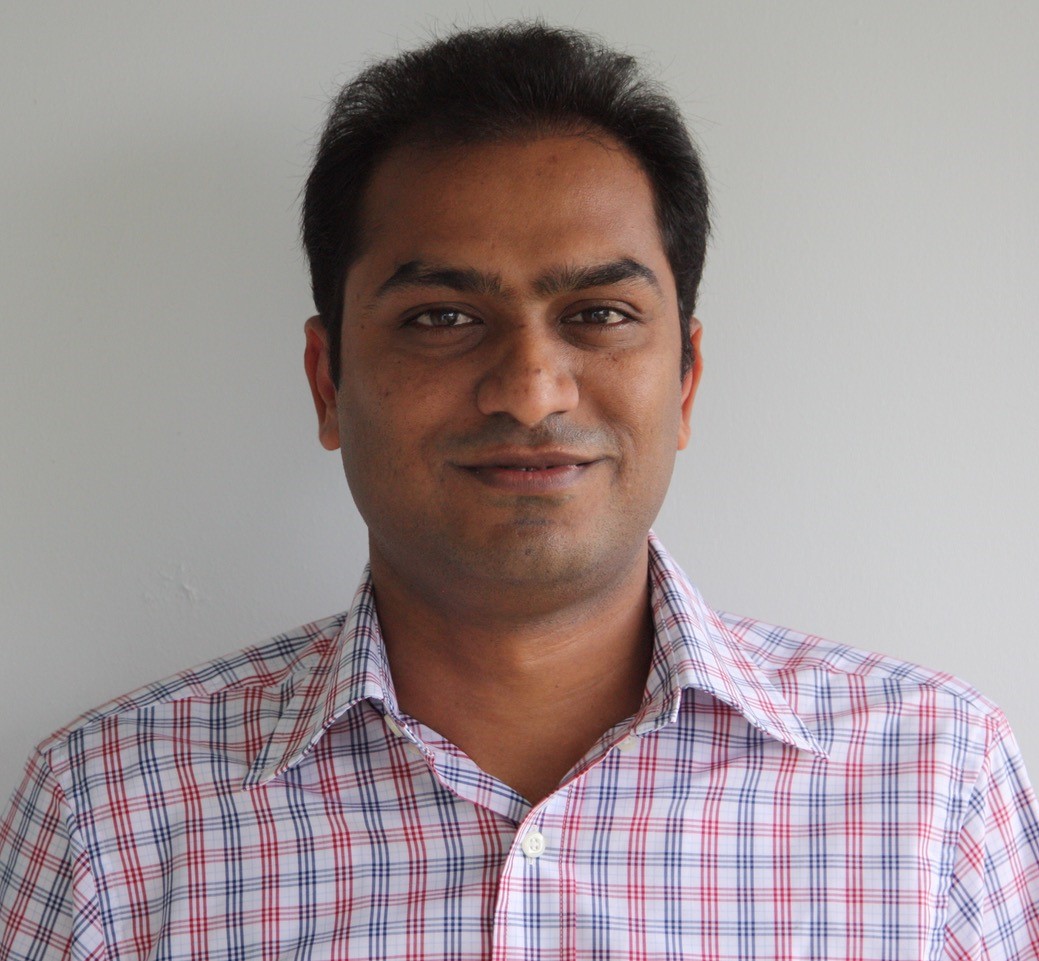
Joy Arulraj is an assistant professor in the School of Computer Science at Georgia Institute of Technology. His research interest is in database management systems, specifically large-scale data analytics, main memory systems,  machine learning, and big code analytics. At Georgia Tech, he is a member of the Database group.

Assistant Professor
Additional Research

Data Systems

Research Focus Areas
University, College, and School/Department
Google Scholar
https://scholar.google.com/citations?hl=en&user=rp8dOfAAAAAJ&view_op=list_works&sortby=pubdate

Giri Krishnan

Placeholder for headshot
giri@gatech.edu

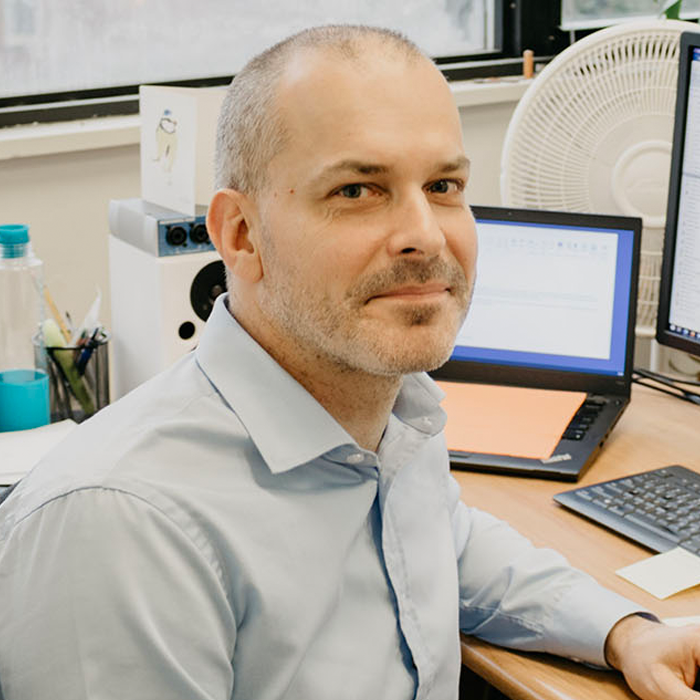
Dr Krishnan is research professor in the Georgia Tech’s Interdisciplinary Research Institute, Institute for Data Engineering and Science, School of Computational Science and Engineering, College of Computing. He is an associate director of the Center for AI in Science and Engineering. His current interest is in developing AI methods for computational science problems across many domains. He is a computational neuroscientist by training, with past work spanning across a wide range of computational modeling and AI methods. His group's current focus is on generative methods for computational workflow, neural approaches for accelerating compute intensive problems and applying interpretable methods to scientific AI for advancing scientific understanding.

Prior to joining Georgia Tech, he was research scientist at UC San Diego and his research involved developing large-scale modeling of the brain to study sleep, memory and learning. In addition, he has contributed towards neuro-inspired AI and neuro-symbolic approaches. He is broadly interested in the emergence of intelligent behavior from neural computations in the brain and AI systems. 

Dr Krishnan has more than 50 publications and his research has been supported by multiple grants from NIH and NSF. He is passionate about open-science and reproducible science and strongly believes that progress in science requires reproducibility.

Associate Director, Center for Artificial Intelligence in Science and Engineering (ARTISAN)
Principal Research Scientist
Phone
404.894.2132
Office
CODA Building
Additional Research
  • AI : Deep learning
  • Neuro-symbolic Approaches
  • Geosciences
  • Molecular Dynamics
  • Neuroscience : Theoretical and computational modeling
Research Focus Areas
Google Scholar
https://scholar.google.com/citations?hl=en&user=IGsdszkAAAAJ&view_op=list_works&sortby=pubdate

Pan Li

Pan Li's profile picture
panli@gatech.edu

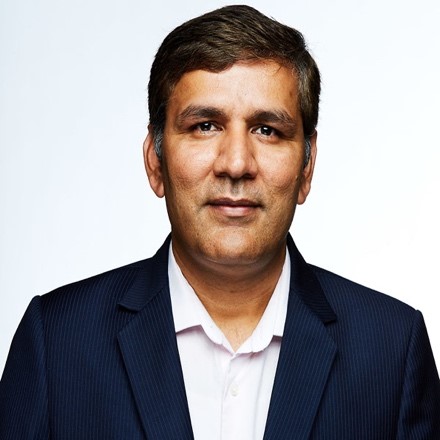
Pan Li joined Georgia Tech in 2023 Spring. Before that, Pan Li worked at the Purdue Computer Science Department as an assistant professor from the 2020 fall to the 2023 Spring. Before joining Purdue, Pan worked as a postdoc at Stanford Computer Science Department from 2019 to 2020. Pan did his Ph.D. in Electrical and Computer Engineering at the University of Illinois Urbana-Champaign. Pan Li has got the NSF CAREER award, the Best Paper award from the Learning on Graph Conference, Sony Faculty Innovation Award, JPMorgan Faculty Award.

Assistant Professor
Office
CODA Number S1219
Additional Research
  • Artificial Intelligence
  • Large-Scale Graphs
  • Machine Learning
  • Trustworthy AI for Physics
Research Focus Areas
Google Scholar
https://scholar.google.com/citations?hl=en&user=IroP0EwAAAAJ&view_op=list_works&sortby=pubdate

Bo Dai

Bo Dai's profile picture
bodai@cc.gatech.edu

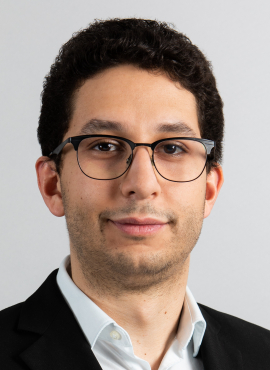
Bo Dai is a tenure-track assistant professor at Georgia Tech's School of Computational Science and Engineering. Prior to joining academia, he worked as a Staff Research Scientist at Google Brain. Bo Dai completed his Ph.D. in the School of Computational Science and Engineering at Georgia Tech, where he worked from 2013 to 2018 with Professor Le Song. His research focuses on developing principled and practical machine learning techniques for real-world applications. Bo Dai has received numerous awards for his work, including the best paper award at AISTATS 2016. He regularly serves as a (senior) area chair at major AI/ML conferences, such as ICML, NeurIPS, AISTATS, and ICLR.

Assistant Professor
Office
CODA E1342A, 756 W Peachtree St NW, Atlanta, GA 30308
Additional Research

Reinforcement Learning Data-Driven Decision Making Embodied AI

Research Focus Areas
Google Scholar
https://scholar.google.com/citations?hl=en&user=TIKl_foAAAAJ&view_op=list_works&sortby=pubdate

Nabil Imam

Nabil Imam's profile picture
nimam6@gatech.edu

Nabil Imam works at the intersection of neuroscience and artificial intelligence. His research aims to uncover principles of neural computation in the brain and apply them to advance computing technologies.

Prof. Imam joined Georgia Tech faculty in January 2022.

Assistant Professor
Additional Research
  • Computational Neuroscience
  • Neural Coding and Computation
Research Focus Areas
Google Scholar
https://scholar.google.com/citations?hl=en&user=DVK3S-AAAAAJ&view_op=list_works&sortby=pubdate

Suresh Marru

Suresh Marru's profile picture
smarru@gatech.edu

Suresh Marru is a research professor dedicated to advancing science and engineering through AI and cyberinfrastructure. Over the past two decades, he has focused on accelerating and democratizing computational science. His work includes the development of science gateways and the pioneering of the Apache Airavata distributed systems framework.

In his current role as the Director of Georgia Tech's ARTISAN Center, his team is at the forefront of pioneering efforts to integrate AI into diverse scientific domains. His group is dedicated to bridging the gap between theory, experimentation, and computation by fostering open-source integration frameworks. These frameworks automate research processes, optimize complex models, and integrate disparate scientific data with simulation engines.

Collaboration is at the heart of Suresh’s ethos. He has had the privilege of working alongside brilliant scientists and technologists, contributing to groundbreaking research in domains such as geosciences, neuroscience, and molecular dynamics. These collaborations have not only accelerated scientific discovery but have also offered valuable insights into the potential of AI in scientific innovation.

Beyond his professional endeavors, Suresh is deeply passionate about open science and open-source software. He also believes in building synergies between academia and industry. He has played an instrumental role in a series of tech startups. Currently, he serves as the Chief Technology Officer at Folia, a company dedicated to unleashing the power of annotations.

Director, Georgia Tech Center for Artificial Intelligence in Science and Engineering (ARTISAN)
Research Professor, Institute for Data Engineering and Science (IDEaS)
Phone
405.816.1686
Office
CODA 12th Floor | #1217
Additional Research

Atmospheric SciencesComputer ModelingCyberinfrastructureData Fusion and IntegrationOpen Science Integration FrameworksScience Gateway Frameworks

Google Scholar
https://scholar.google.com/citations?hl=en&user=FVWrKb0AAAAJ&view_op=list_works&sortby=pubdate

Alexander Lerch

Alexander Lerch's profile picture
alexander.lerch@gatech.edu

Alexander Lerch is Associate Dean for Research and Creative Practice and Professor at the College of Design, Georgia Institute of Technology.

Lerch's research on machine understanding of audio and music positions him at the intersection of signal processing, machine learning, and music. He aims at creating artificially intelligent software for music generation, production, and consumption.

Lerch studied Electrical Engineering at the Berlin Institute of Technology and Tonmeister (music production) at the University of Arts, Berlin; he received his PhD (Audio Communications) from the Berlin Institute of Technology in the year 2008. He co-founded the company zplane.development, an industry leader providing advanced music technology to the music industry. zplane technologies are nowadays used by millions of musicians and producers world-wide in a wide variety of products.

Lerch has published more than 60 peer-reviewed publications on a wide range of topics in audio and music analysis and processing. His textbook "An Introduction to Audio Content Analysis" was published by Wiley/IEEE Press in 2012 (2nd edition in 2023).

Associate Dean of Research and Creative Practice Professor
Associate Professor
Phone
(404) 385-7256
Additional Research
  • Artificial Intelligence for Music
  • Music Information Retrieval 
  • Audio Content Analysis
Research Focus Areas
University, College, and School/Department
Google Scholar
https://scholar.google.com/citations?user=29dF3UIAAAAJ

Manoj Bhasin

Manoj Bhasin's profile picture
manoj.bhasin@bme.gatech.edu

Dr. Bhasin's laboratory has developed strategies for analysis of transcriptome, epigenome, and proteomics data to perform multi-scale modeling of interaction among different cells molecular level and to identify novel biomarkers. He and his team are currently focusing on developing novel single-cell omics approaches to understand disease heterogeneity and the impact of treatments at single-cell resolution. He is involved in developing approaches for the analysis of multi-dimensional single-cell data by developing innovative approaches for single-cell sparsity, batch correction, annotation, and integration. Using these approaches, his group is working toward understanding: 1. Understanding heterogeneity and relapse mechanisms in pediatric hematological malignancies 2. Understanding heterogeneity and progression in multiple myeloma. 3. Development of molecular diagnostics platforms for cancer diagnosis and prognosis 4. Identification of biomarkers for early detection of pancreatic cancer, glioblastoma, and colon cancer 5. Artificial intelligence-based histopathology and radiology cancer image analysis approaches 6. Single-cell Atlas for Pediatric Cancers Additionally, our group is also developing Biomarkers associated with impaired healing of Diabetic Foot Ulcers using single-cell profiling and deep learning-driven wound image analysis. We are working collaboratively to develop innovative genomics and clinical data-driven drug repurposing approaches.

Associate Professor
Office
101 Woodruff Circle, 4th Floor East
Additional Research

Analysis of multi-dimensional single-cell data

Google Scholar
https://scholar.google.com/citations?hl=en&user=o6Mm3S4AAAAJ&view_op=list_works&sortby=pubdate

Juba Ziani

Juba Ziani's profile picture
jziani3@gatech.edu

Juba Ziani is an Assistant Professor in the H. Milton Stewart School of Industrial and Systems Engineering. Prior to this, Juba was a Warren Center Postdoctoral Fellow at the University of Pennsylvania, hosted by Sampath Kannan, Michael Kearns, Aaron Roth, and Rakesh Vohra. Juba completed his Phd at Caltech in the Computing and Mathematical Sciences department, where he was advised by Katrina Ligett and Adam Wierman.

Juba studies the optimization, game theoretic, economic, ethical, and societal challenges that arise from transactions and interactions involving data. In particular, his research focuses on the design of markets for data, on data privacy with a focus on "differential privacy", on fairness in machine learning and decision-making, and on strategic considerations in machine learning.

Assistant Professor
Office
Room 343 | Groseclose | 765 Ferst Dr NW | Atlanta, GA
Additional Research
  • Game Theory 
  • Mechanism Design 
  • Markets for Data 
  • Differential Privacy Ethics in Machine Learning 
  • Online Learning
Google Scholar
https://scholar.google.com/citations?hl=en&user=1bwPKXpo97YC&view_op=list_works&sortby=pubdate

Yunan Luo

Yunan Luo's profile picture
yunan@gatech.edu

I am an Assistant Professor in the School of Computational Science and Engineering (CSE), Georgia Institute of Technology since January 2022. I received my PhD from the Department of Computer Science at the University of Illinois Urbana-Champaign, advised by Prof. Jian Peng. Prior to that, I received my bachelor’s degree in Computer Science from Yao Class at Tsinghua University in 2016.

I am broadly interested in computational biology and machine learning, with a focus on developing AI and data science methods to reveals core scientific insights into biology and medicine. Recent interests include deep learning, transfer learning, sequence and graph representation learning, network and system biology, functional genomics, cancer genomics, drug repositioning and discovery, and AI-guided biological design and discovery.

Assistant Professor, Computational Science and Engineering
Additional Research
  • Artificial Intelligence
  • Bioengineering
  • Bioinformatics
  • Biomaterials
  • Cancer Biology
  • Drug Discovery
  • Machine Learning
  • Protein Engineering
Google Scholar
https://scholar.google.com/citations?hl=en&user=N8RBFoAAAAAJ&view_op=list_works&sortby=pubdate