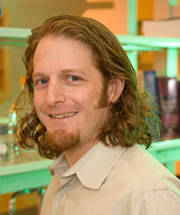
Michael Davis

Michael Davis's profile picture
michael.davis@bme.gatech.edu

Dr. Davis holds positions as a Professor in both Cardiology and Biomedical Engineering at the Wallace H. Coulter Department of Biomedical Engineering at Georgia Tech and Emory University. Additionally, he serves as an associate chair for graduate studies at BME department, and a director of the Children's Heart Research and Outcomes (HeRO) Center. He received his Ph.D. in Molecular and Systems Pharmacology at Emory University in 2003 working on molecular regulation of eNOS expression by shear stress. From 2003-2006, he completed his postdoctoral fellowship at Brigham and Women's Hospital working on cardiac tissue engineering with collaborators at the Massachusetts Institute of Technology. He moved back to Emory in 2006 to join the faculty in Division of Cardiology and Biomedical Engineering Department.
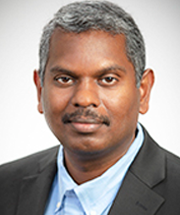
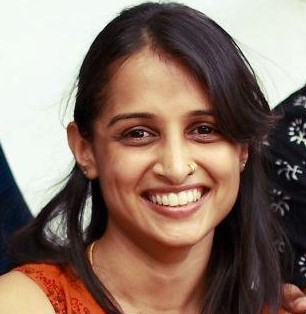
Professor
Associate Chair for Graduate Studies
Director, Children's Heart Research and Outcomes (HeRO) Center
Phone
404-727-9858
Office
Emory HSRB W486
Additional Research
"Cardiac Regeneration, stem cell therapy: Our laboratory focuses on various aspects of cardiac regeneration and preservation using molecular-based and biomaterials-based approaches to restoring function after cardiac injury."
Research Focus Areas
Google Scholar
https://scholar.google.com/citations?user=-9Pl-RAAAAAJ&hl=en&oi=sra

Lakshmi Dasi

Lakshmi Dasi's profile picture
lakshmi.dasi@gatech.edu

Lakshmi Prasad Dasi is an established researcher in the field of prosthetic heart valves, cardiovascular biomechanics, biomaterials, and devices. He is currently a tenure Professor of Biomedical Engineering, at Georgia Institute of Technology while holding the Rozelle Vanda Wesley Endowed Professorship as well as being the Associate Chair for Undergraduate Studies. He has held positions at The Ohio State University, and Colorado State University previously. He is a Fellow of the American College of Cardiology (FACC) as well as Fellow of the American Institute for Medical and Biological Engineering (FAIMBE). 

Dasi earned his Ph.D. from Georgia Institute of Technology in 2004 with a focus in fluid dynamics and turbulence. He trained as a postdoctoral fellow and research engineer under Prof. Ajit Yoganathan’s mentorship at Georgia Tech where he transformed his research focus to heart valves, devices, and cardiovascular biomechanics. In 2009, he established the Cardiovascular Biofluid Mechanics Lab (CBFL) as Assistant Professor at Colorado State University and moved to The Ohio State University in 2015 as his focus became more translational. Since 2020, his research at Georgia Tech focuses on tackling the complexity of: (a) heart valve biomechanics (native and prosthetic); (b) prosthetic heart valve engineering (conventional & trans-catheter); (c) structure-function relationships of the heart in health and disease at the embryonic, pediatric, as well as adult stages; and (d) turbulence and turbulent blood flow.

Rozelle Vanda Wesley Professor
Phone
404.385.1265
Office
TEP 237
Research Focus Areas
Google Scholar
https://scholar.google.com/citations?hl=en&user=CC7aZdcAAAAJ&view_op=list_works&sortby=pubdate

Scott Hollister

Scott Hollister's profile picture
scott.hollister@bme.gatech.edu

I am the Patsy and Alan Dorris Chair of Pediatric Technology and Professor of Biomedical Engineering at the Georgia Institute of Technology. I also direct the Center for 3D Medical Fabrication (3DMedFab) and the Tissue Engineering and Mechanics Laboratory at Georgia Tech. We develop a range of 3D printed medical devices. We have over 25 devices implanted in patients for treatment of trachecobronchomalacia.

Professor and Patsy and Alan Dorris Chair in Pediatric Technology
Phone
404-385-5506
Office
UAW 2102
Additional Research
My research interests focus on image-based computational design and 3D biomaterial printing for patient specific devices and regenerative medicine, with specific interests in pediatric applications.Clinical application interests include airway reconstruction and tissue engineering, structural heart defects, craniofacial and facial plastics, orthopaedics, and gastrointestinal reconstruction.We specifically utilize patient image data as a foundation to for multiscale design of devices, reconstructive implants and regenerative medicine porous scaffolds.We are also interested in multiscale computational simulation of how devices and implants mechanically interact with patient designs, combining these simulations with experimental measures of tissue mechanics.We then transfer these designs to both laser sintering and nozzle based platforms to build devices from a wide range of biomaterials. Subsequently, we are interested in combining these 3D printed biomaterial platforms with biologics for patient specific regenerative medicine solutions to tissue reconstruction. 
Google Scholar
https://scholar.google.com/citations?user=npoM6pUAAAAJ&hl=en

Emily Sanders

Emily Sanders's profile picture
emily.sanders@me.gatech.edu

Dr. Emily D. Sanders is an Assistant Professor in the Woodruff School of Mechanical Engineering at Georgia Tech. She obtained her Ph.D. at Georgia Tech in 2021, where she developed new topology optimization methods for design of tension-only cable nets, elastostatic cloaking devices, and multiscale structures and components. Dr. Sanders hold a bachelor’s degree from Bucknell University and a master’s degree from Stanford University.

Assistant Professor

Chethan Pandarinath

Chethan Pandarinath's profile picture
chethan@gatech.edu

Our work centers on understanding how the brain represents information and intention, and using this knowledge to develop high-performance, robust, and practical assistive devices for people with disabilities and neurological disorders. We take a dynamical systems approach to characterizing the activity of large populations of neurons, combined with rigorous systems engineering (signal processing, machine learning, and real-time systems) to advance the performance of brain-machine interfaces and neuromodulatory devices.

Adjunct Assistant Professor
Phone
404-727-2851
Office
Emory WMRB 6001
Additional Research

Our work centers on understanding how the brain represents information and intention, and using this knowledge to develop high-performance, robust, and practical assistive devices for people with disabilities and neurological disorders. We take a dynamical systems approach to characterizing the activity of large populations of neurons, combined with rigorous systems engineering (signal processing, machine learning, control theory, real-time system design) to advance the performance of brain-machine interfaces and neuromodulatory devices.

Google Scholar
https://scholar.google.com/citations?hl=en&user=M3-z9G4AAAAJ&view_op=list_works&sortby=pubdate

Paul Benkeser

Paul Benkeser's profile picture
pbenkeser@gatech.edu

Paul Benkeser is a professor and senior associate chair in the Wallace H. Coulter Department of Biomedical Engineering at Georgia Tech and Emory University. A member of the Georgia Tech faculty since 1985, he was one of the founding faculty of the Coulter Department in 1998 and served as its first associate chair for undergraduate studies.    

His early research interests were in therapeutic and diagnostic applications of ultrasound. After joining the Coulter Department he redirected his energies toward enhancing undergraduate biomedical engineering  education, with particular interests in integrating problem-driven learning and global experiential learning opportunities in the curriculum. His research and education endeavors have been funded by grants from NIH, NSF, the Department of Veterans Affairs, and the Whitaker Foundation.    

Dr. Benkeser has been active in engineering accreditation activities for ABET since 2002, serving in a number of capacities including program evaluator, EAC Commissioner, and member of its board of delegates. He is a member of the American Institute for Medical and Biological Engineering, Biomedical Engineering Society, and American Society for Engineering Education, and a senior member of the Institute of Electrical and Electronics Engineers.    

He received his BS from Purdue University and MS and PhD from the University of Illinois at Urbana-Champaign, all in electrical engineering.

Professor
Senior Associate Chair
Phone
404-894-2912
Office
UAW 2125
Additional Research
Ultrasonic bioengineering, biomedical signal and image processing, and biomedical engineering education.
Research Focus Areas
Google Scholar
https://scholar.google.com/citations?user=vmCiPaoAAAAJ&hl=en&oi=ao

Julia Babensee

Julia Babensee's profile picture
julia.babensee@bme.gatech.edu

Julia Babensee is an Associate Professor in the Walter H. Coulter Department of Biomedical Engineering at Georgia Tech and Emory University. Dr. Babensee is affiliated with the Petit Institute for Bioengineering and Bioscience and the Georgia Tech/Emory Center for the Engineering of Living Tissue. 

Dr. Babensee is a member of the Cell and Molecular Biology Research Program at Winship Cancer Institute. She is also a permanent member of the NIH Bioengineering, Technology and Surgical Sciences study section. She is actively involved in several professional societies with service including SFB Member-at-Large (2008-2009) and Program Chair for the 2012 Annual Meeting of the Biomedical Engineering Society in Atlanta, Georgia. 

Her research program is in the area of engineering of inflammatory and immune responses focused on understanding host responses to combination products. Her research interests also include: Biomaterial interactions with dendritic cells, tissue engineering for rheumatoid arthritis, and biomaterial-applied immunology.

Babensee received her Ph.D. from University of Toronto in Toronto, Canada. She completed her postdoctoral fellowship at Rice University and Baylor College of Medicine.

Associate Professor
Phone
404-385-0130
Office
Petit Biotechnology Building, Office 1315
Additional Research
Host responses to combination products, biomaterial interactions with dendritic cells, tissue engineering for rheumatoid arthritis, targeted DNA vaccine delivery, and biomaterial-applied immunology.
Google Scholar
https://scholar.google.com/citations?user=3p-9EfsAAAAJ&hl=en

Christopher J. Saldaña

Christopher J. Saldaña's profile picture
christopher.saldana@me.gatech.edu

Dr. Christopher Saldaña began working at Georgia Tech in 2014. Prior, Dr. Saldaña previously held the Harold and Inge Marcus Career Professorship at the Pennsylvania State University and worked as a research engineer at M4 Sciences Corporation. Dr. Saldaña has also previously held visiting affiliations/positions with the US Air Force Research Laboratory, the Indian Institute of Science (Bangalore, India), Technische Universität Dortmund (Dortmund, Germany), Autodesk, and Sandia National Laboratories. He has received several awards, including an NSF CAREER award, the Robert J. Hocken SME Outstanding Young Manufacturing Engineer award and an R&D100 Technology Award. He serves as an Associate Editor for IISE Transactions (Design and Manufacturing) and serves on the Editorial Boards of Manufacturing Letters, Computer Aided Design and Applications, and the ASTM Journal of Smart and Sustainable Manufacturing.

Ring Family Professor
Associate Professor
Phone
404-385-3735
Office
GTMI, Room 259
Additional Research

Additive/Advanced Manufacturing; Composites; Bio-Inspired Materials; Computer-Aided Engineering; Advanced Characterization

Google Scholar
https://scholar.google.com/citations?hl=en&user=kbB1jUkAAAAJ&view_op=list_works&sortby=pubdate

Jeff Skolnick

Jeff Skolnick's profile picture
skolnick@gatech.edu
Regents’ Professor, School of Biological Sciences
Director, Center for the Study of Systems Biology
Mary and Maisie Gibson Chair & GRA Eminent Scholar in Computational Systems Biology
Additional Research
  • Computational Biology
  • Health & Life Sciences
Research Focus Areas
University, College, and School/Department