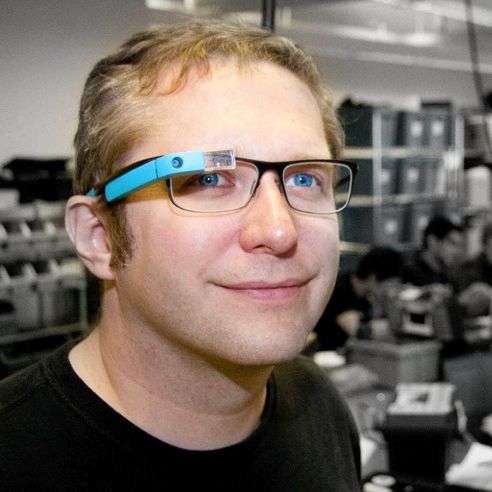
Thad Starner

Thad Starner's profile picture
thad.starner@cc.gatech.edu

Thad Starner is a Professor at the Georgia Institute of Technology's School of Interactive Computing. Thad was perhaps the first to integrate a wearable computer into his everyday life as an intelligent personal assistant. Starner's work as a Ph.D. student would help found the field of Wearable Computing. His group's prototypes and patents on mobile MP3 players, mobile instant messaging and e-mail, gesture-based interfaces, and mobile context-based search foreshadowed now commonplace devices and services. Thad has authored over 100 scientific publications with over 100 co-authors on mobile Human Computer Interaction (HCI), pattern discovery, human power generation for mobile devices, and gesture recognition, and he is a founder and current co-chair of the IEEE Technical Committee on Wearable Information Systems. His work is discussed in public forums such as CNN, NPR, the BBC, CBS's 60 Minutes, The New York Times, Nikkei Science, The London Independent, The Bangkok Post, and The Wall Street Journal.

Professor; School of Interactive Computing
Additional Research

Wearable Computing; Artificial Intelligence; Augmented Reality; Human Computer Interaction; Ubiquitous Computing

Google Scholar
https://scholar.google.com/citations?hl=en&user=qr8Vo9IAAAAJ&view_op=list_works&sortby=pubdate

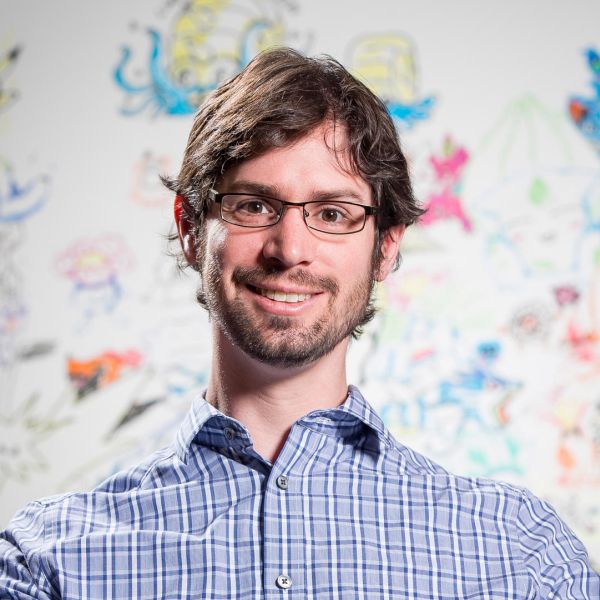
Mark Riedl

Mark Riedl's profile picture
riedl@cc.gatech.edu

Mark Riedl is a professor in the Georgia Tech School of Interactive Computing and director of the Entertainment Intelligence Lab. Mark's research focuses on the intersection of artificial intelligence, virtual worlds, and storytelling. The principle research question Mark addresses through his research is: how can intelligent computational systems reason about and autonomously create engaging experiences for users of virtual worlds and computer games. Mark's primary research contributions are in the area of artificial intelligence approaches to automated story generation and interactive storytelling for entertainment, education, and training. Narrative is a cognitive tool used by humans for communication and sense-making. The goal of my narrative intelligence research is to discover new computational algorithms and models that can facilitate the development of intelligent computer systems that can reason about narrative in order to be better communicators, entertainers, and educators. Additionally, Mark has explored the following research topics: virtual cinematography in 3D virtual worlds; player modeling; procedural generation of computer game content; computational creativity; human creativity support; intelligent virtual characters; mixed-initiative problem solving; and discourse generation. Mark earned a Ph.D. degree in 2004 from North Carolina State University. From 2004-2007, Mark was a Research Scientist at the University of Southern California Institute for Creative Technologies where he researched and developed interactive, narrative-based training systems. Mark joined the Georgia Tech College of Computing in 2007 where he continues to study artificial intelligence approaches to story generation, interactive narratives, and adaptive computer games. His research is supported by the NSF, DARPA, the U.S. Army, Google, and Disney. Mark was the recipient of a DARPA Young Faculty Award and an NSF CAREER Award.

Gitesh Ramamurthy Endowed Professor of AI
Director; Entertainment Intelligence Lab
Phone
404.385.2860
Office
CODA S1123
Additional Research
  • Artificial intelligence
  • Machine Learning
  • Storytelling
  • Game AI
  • Computer Games
  • Computational Creativity
Google Scholar
https://scholar.google.com/citations?hl=en&user=Yg_QjxcAAAAJ&view_op=list_works&sortby=pubdate

James Hays

James Hays's profile picture
hays@cc.gatech.edu

Professor Hays's research interests span computer vision, graphics, robotics, and machine learning. Before joining Georgia Tech, he was the Manning assistant professor of computer science at Brown University. James was a post-doc at Massachusetts Institute of Technology and received his Ph.D. from Carnegie Mellon University in 2009. James received his B.S. in Computer Science from Georgia Tech in 2003.

Professor; School of Interactive Computing
Principal Scientist; Argo AI
Office
CODA 11th floor
Additional Research
  • Computer Vision
  • Computer Graphics
  • Machine Learning
Google Scholar
https://scholar.google.com/citations?hl=en&user=vjZrDKQAAAAJ&view_op=list_works&sortby=pubdate