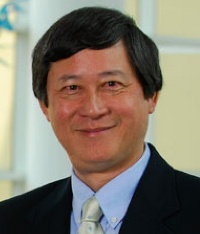
Thad Starner

Thad Starner's profile picture
thad.starner@cc.gatech.edu

Thad Starner is a Professor at the Georgia Institute of Technology's School of Interactive Computing. Thad was perhaps the first to integrate a wearable computer into his everyday life as an intelligent personal assistant. Starner's work as a Ph.D. student would help found the field of Wearable Computing. His group's prototypes and patents on mobile MP3 players, mobile instant messaging and e-mail, gesture-based interfaces, and mobile context-based search foreshadowed now commonplace devices and services. Thad has authored over 100 scientific publications with over 100 co-authors on mobile Human Computer Interaction (HCI), pattern discovery, human power generation for mobile devices, and gesture recognition, and he is a founder and current co-chair of the IEEE Technical Committee on Wearable Information Systems. His work is discussed in public forums such as CNN, NPR, the BBC, CBS's 60 Minutes, The New York Times, Nikkei Science, The London Independent, The Bangkok Post, and The Wall Street Journal.

Professor; School of Interactive Computing
Additional Research

Wearable Computing; Artificial Intelligence; Augmented Reality; Human Computer Interaction; Ubiquitous Computing

Google Scholar
https://scholar.google.com/citations?hl=en&user=qr8Vo9IAAAAJ&view_op=list_works&sortby=pubdate

Mark Riedl

Mark Riedl's profile picture
riedl@cc.gatech.edu

Mark Riedl is a professor in the Georgia Tech School of Interactive Computing and director of the Entertainment Intelligence Lab. Mark's research focuses on the intersection of artificial intelligence, virtual worlds, and storytelling. The principle research question Mark addresses through his research is: how can intelligent computational systems reason about and autonomously create engaging experiences for users of virtual worlds and computer games. Mark's primary research contributions are in the area of artificial intelligence approaches to automated story generation and interactive storytelling for entertainment, education, and training. Narrative is a cognitive tool used by humans for communication and sense-making. The goal of my narrative intelligence research is to discover new computational algorithms and models that can facilitate the development of intelligent computer systems that can reason about narrative in order to be better communicators, entertainers, and educators. Additionally, Mark has explored the following research topics: virtual cinematography in 3D virtual worlds; player modeling; procedural generation of computer game content; computational creativity; human creativity support; intelligent virtual characters; mixed-initiative problem solving; and discourse generation. Mark earned a Ph.D. degree in 2004 from North Carolina State University. From 2004-2007, Mark was a Research Scientist at the University of Southern California Institute for Creative Technologies where he researched and developed interactive, narrative-based training systems. Mark joined the Georgia Tech College of Computing in 2007 where he continues to study artificial intelligence approaches to story generation, interactive narratives, and adaptive computer games. His research is supported by the NSF, DARPA, the U.S. Army, Google, and Disney. Mark was the recipient of a DARPA Young Faculty Award and an NSF CAREER Award.

Gitesh Ramamurthy Endowed Professor of AI
Director; Entertainment Intelligence Lab
Phone
404.385.2860
Office
CODA S1123
Additional Research

Artificial intelligence; Machine Learning; Storytelling; Game AI; Computer Games; Computational Creativity

Google Scholar
https://scholar.google.com/citations?hl=en&user=Yg_QjxcAAAAJ&view_op=list_works&sortby=pubdate

James Hays

James Hays's profile picture
hays@cc.gatech.edu

Professor Hays's research interests span computer vision, graphics, robotics, and machine learning. Before joining Georgia Tech, he was the Manning assistant professor of computer science at Brown University. James was a post-doc at Massachusetts Institute of Technology and received his Ph.D. from Carnegie Mellon University in 2009. James received his B.S. in Computer Science from Georgia Tech in 2003.

Professor; School of Interactive Computing
Principal Scientist; Argo AI
Office
CODA 11th floor
Additional Research

Computer Vision; Computer Graphics; Machine Learning; Robotics

Google Scholar
https://scholar.google.com/citations?hl=en&user=vjZrDKQAAAAJ&view_op=list_works&sortby=pubdate

Rudolph Gleason

Rudolph Gleason's profile picture
rudy.gleason@me.gatech.edu

Rudolph (Rudy) L. Gleason began at Tech in Fall 2005 as an assistant professor. Prior, he was a postdoctoral fellow at Texas A&M University. He is currently a professor in the School of Mechanical Engineering and the School of Biomedical Engineering in the College of Engineering. Gleason’s research program has two key and distinct research aims. The first research aim is to quantify the link between biomechanics, mechanobiology, and tissue growth and remodeling in diseases of the vasculature and other soft tissues. The second research aim is to translate engineering innovation to combat global health disparities and foster sustainable development in low-resource settings around the world. Gleason serves as a Georgia Tech Institute for People and Technology initiative lead for research activities related to global health equity and wellbeing.

Professor, Mechanical Engineering and Biomedical Engineering
Joint Appointment in the School of Biomedical Engineering
Phone
404-385-7218
Office
TEP 205
Additional Research

Cardiovascular mechanics, soft tissue growth and remodeling, and tissue engineering

Google Scholar
https://scholar.google.com/scholar?hl=en&as_sdt=0,11&q=rl+gleason+jr&oq=RL+Gleason

Stephen Sprigle

Stephen Sprigle's profile picture
stephen.sprigle@design.gatech.edu

Stephen Sprigle is a Professor at the Georgia Institute of Technology with appointments in Bioengineering, Industrial Design and the George W. Woodruff School of Mechanical Engineering. 

A biomedical engineer with a license in physical therapy, Sprigle directs the Rehabilitation Engineering and Applied Research Lab (REARLab), which focuses on applied disability research and development. The REARLab’s research interests include the biomechanics of wheelchair seating and posture, pressure ulcer prevention, and manual wheelchair propulsion. Its development activities include standardized wheelchair and cushion testing and the design of assistive and diagnostic technologies. Sprigle teaches design-related classes in both the Schools of Industrial Design and Mechanical Engineering.

Professor
Phone
404-385-4302
Office
Architecture 0155
Additional Research
Applied research and device development targeting the increased heath and function of persons with disabilities. Specific areas of interest include: wheeled mobility and seating, pressure ulcer prevention and treatment; design of diagnostic tissue interrogation devices; design of assistive technology. Wheeled Mobility and Seating; Pressure Ulcer Prevention and Treatment; Design of Diagnostic Tissue Interrogation Devices; Design of Assistive Technologies

David Ku

David Ku's profile picture
david.ku@me.gatech.edu

Selected recent publications:

➤ Robert G. Mannino, Eric J. Nehl, Sarah Farmer, Amanda Foster Peagler, Maren C. Parsell, Viviana Claveria, David Ku, David S. Gottfried, Hang Chen, Wilbur A. Lam, and Oliver Brand, “The critical role of engineering in the rapid development of COVID-19 diagnostics: Lessons from the RADx Tech Test Verification Core” Science Advances. 9, eade4962 (2023). https://www.science.org/doi/10.1126/sciadv.ade4962

➤ Liu ZL, Bresette C, Aidun CK, Ku DN. (2021) SIPA in 10 milliseconds: VWF tentacles agglomerate and capture platelets under high shear. Blood Advances doi.org/10.1182/bloodadvances.2021005692

➤ Kim DJ, Ku DN. “Structure of shear-induced platelet aggregated clot formed in an in vitro arterial thrombosis model” Blood Adv (2022) 6 (9): 2872–2883. doi.org/10.1182/bloodadvances.2021006248

➤ Kim DJ, Bressette C, Liu Z, Ku DN. Occlusive thrombosis in arteries.  APL Bioengineering  2019;3, 041502. https://doi.org/10.1063/1.5115554

Licensed Patents

➤ Ku, D.N., Wootton, D.M., Greer-Braddon, L., “Poly(vinyl Alcohol) Cryogel,” No. 5,981,826 and 6,231,605, issued May 15, 2001. Licensed; created prosthetic cartilage; acquired by Wright Medical. $645 million

➤ Denoziere, G., Ku, D.N., “Methods of Producing PVA Hydrogel Implants and Related Devices,” issued U.S. Patent No. 8,038,920, Licensed to Mimedx.  Market cap >$600 million.

Regents Professor
Lawrence P. Huang Chair in Engineering and Entrepreneurship
Executive Director, Atlantic Pediatric Device Consortium
Phone
404-894-6827
Office
Petit Biotechnology Building, Office 2307
Additional Research
New Project: Lysis of platelet clots to treat heart attacksBackground: Heart attacks and strokes come from a sudden thrombosis or accumulation of platelets in an artery.Our Findings: Our group has discovered the biophysical reason for this sudden occlusion and multiple points of therapy to prevent or dissolve the platelet-rich clot. Current Objectives: Quantify the architecture and strength of the thrombus to prevent or dissolve the thrombus using nano-devices and synthetic proteins.
Google Scholar
https://scholar.google.com/citations?user=PayZMckAAAAJ&hl=en