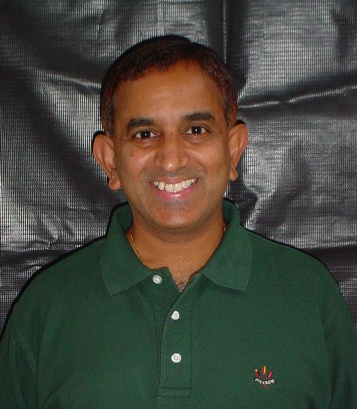
Anton Leykin

Anton Leykin's profile picture
leykin@math.gatech.edu

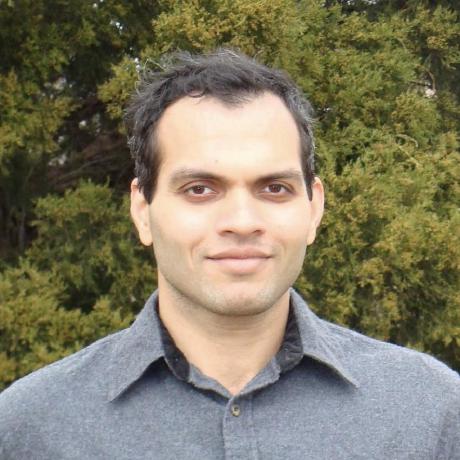
Anton Leykin conducts research in nonlinear algebra with an emphasis on algorithm design and applications. His recent work centers on computer algebra, spanning topics from computer-assisted proofs to hybrid symbolic–numerical computation to parallel computing. He is also interested in applying methods from algebra and geometry to problems in science and engineering, with applications in areas such as computer vision and astrodynamics.

Professor; School of Mathematics
Office
Skiles 109
University, College, and School/Department
Google Scholar
https://scholar.google.com/citations?user=ztNR6w8AAAAJ

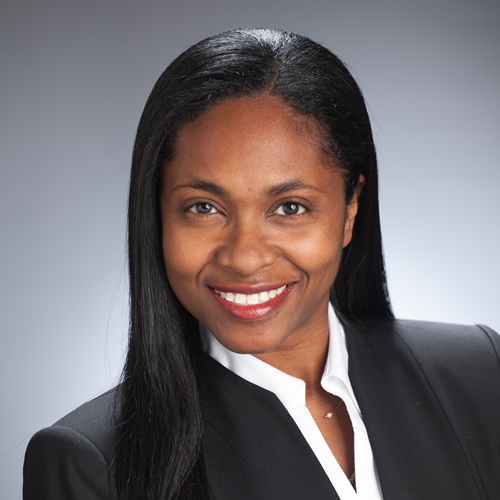
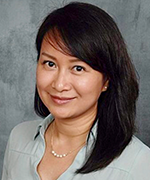
Pak Ho Chung

Pak Ho Chung's profile picture
pchung34@mail.gatech.edu

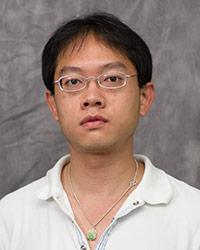
Simon Chung is a research scientist at the Institute for Data Engineering and Science. He obtained his Ph.D. degree from the University of Texas at Austin. His research interests range from UI security, improving the security and usability of authentication systems, to employing the latest hardware features to improve systems security.

Research Scientist
University, College, and School/Department

Christopher Le Dantec

 Christopher Le Dantec's profile picture
ledantec@gatech.edu

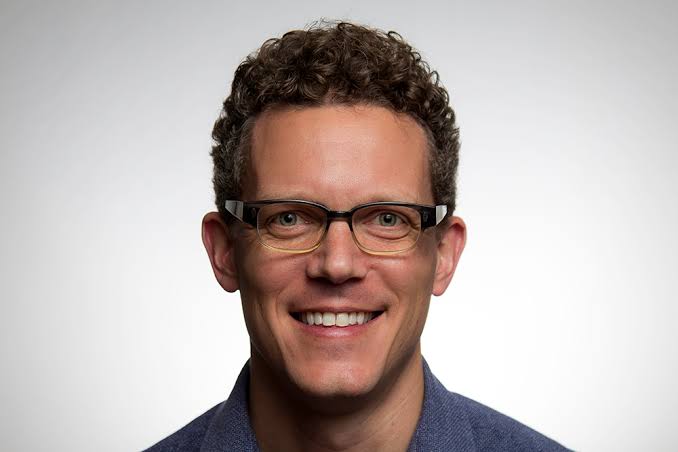
Chris Le Dantec is currently a Professor of the Practice and Director of Digital Civic Initiatives in the Khoury College of Computer Science and the College of Arts, Media and Design at Northeastern University. 

He is also an Associate Professor at the Georgia Institute of Technology, jointly appointed in the School of Interactive Computing and the School of Literature, Media, and Communication. He teaches in the Human-Centered Computing, HCI, and Digital Media programs.

Associate Professor
University, College, and School/Department

Charles David Sherrill

Charles David Sherrill's profile picture
sherrill@gatech.edu

Research in the Sherrill group focuses on the development of ab initio electronic structure theory and its application to problems of broad chemical interest, including the influence of non-covalent interactions in drug binding, biomolecular structure, organic crystals, and organocatalytic transition states. We seek to apply the most accurate quantum models possible for a given problem, and we specialize in generating high-quality datasets for testing new methods or machine-learning purposes. We have developed highly efficient algorithms and software to perform symmetry-adapted perturbation theory (SAPT) computations of intermolecular interactions, and we have used this software to analyze the nature of non-covalent pi-interactions in terms of electrostatics, London dispersion forces, induction/polarization, and short range exchange-repulsion. 

Regents Professor, School Chemistry and Biochemistry
Interim Executive Director, Institute for Data Engineering and Science
Associate Director for Research and Education, Institute for Data Engineering and Science
Phone
404.894.4037
Office
MS&E 2100N
Additional Research
  • Computational Materials Science
  • Computational Chemistry
  • High-Performance Computing
  • Machine Learning
Research Focus Areas
University, College, and School/Department
Google Scholar
https://scholar.google.com/citations?hl=en&user=PN-rzYUAAAAJ&view_op=list_works&sortby=pubdate

Umakishore Ramachandran

Umakishore Ramachandran's profile picture
rama@gatech.edu

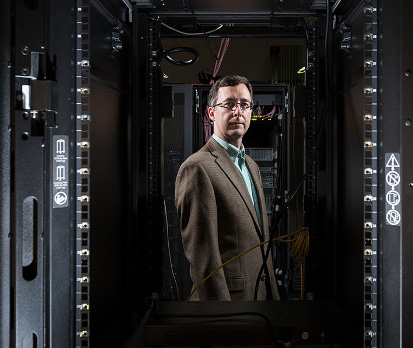
Kishore Ramachandran received his Ph.D. in Computer Science from the University of Wisconsin, Madison in 1986, and has been on the faculty of Georgia Tech since then. He led the definition of the curriculum and the implementation for an online MS program in Computer Science (OMSCS) using MOOC technology for the College of Computing, which is currently providing an opportunity for students world-wide (with an enrollment of over 10,000) to pursue a low-cost graduate education in computer science. He has served as the Director of STAR Center from 2007 to 2014, and as the Director of Korean Programs for the College of Computing from 2007 to 2011. Ramachandran has also served as the Chair of the Core Computing Division within the College of Computing. His research interests are in architectural design, programming, and analysis of parallel and distributed systems. Currently, he is leading a project that deals with large-scale situation awareness using distributed camera networks and multi-modal sensing with applications to surveillance, connected vehicles, and transportation. He is the recipient of an NSF PYI Award in 1990, the Georgia Tech doctoral thesis advisor award in 1993, the College of Computing Outstanding Senior Research Faculty award in 1996, the College of Computing Dean's Award in 2003 and 2014, the College of Computing William "Gus'' Baird Teaching Award in 2004, the "Peter A. Freeman Faculty Award" from the College of Computing in 2009 and in 2013, the Outstanding Faculty Mentor Award from the College of Computing in 2014, and became an IEEE Fellow in 2014.

Thrust Lead for Cloud Computing, IDEaS
Professor
University, College, and School/Department

Renata Rawlings-Goss

Renata Rawlings-Goss's profile picture
rrawlings.goss@gatech.edu
Dr. Rawlings-Goss is responsible for interfacing with industry to cultivate industrial partnerships and embedded innovations labs, organizing workshops, retreats on topics relevant to emerging initiatives, job fairs, and numerous other activities. She builds bridges between industry and IRI activities. Renata brings rich experience in Big Data technology and policy from the National Science Foundation and the White House Office of Science and Technology Policy. During her tenure, she co-led inter-agency Big Data initiatives and led the formation of the National Data Science Organizers group. She is a biophysicist and her scientific work, at the University of Pennsylvania and the University of Michigan-Ann Arbor, was focused on biophysics, bioinformatics and next-generation genomics research. She also plays the lead role in managing the NSF South Big Data Innovation Hub from Georgia Tech. Dr. Rawlings-Goss has a Ph.D. in Biophysics.
IDEaS Director of Industry Engagement
Additional Research

Bioinformatics

University, College, and School/Department