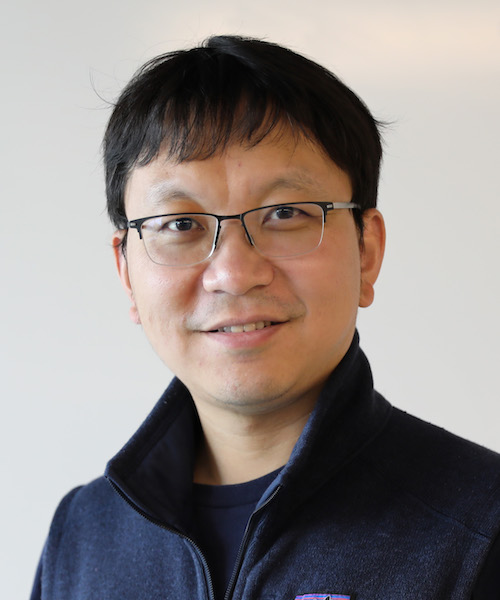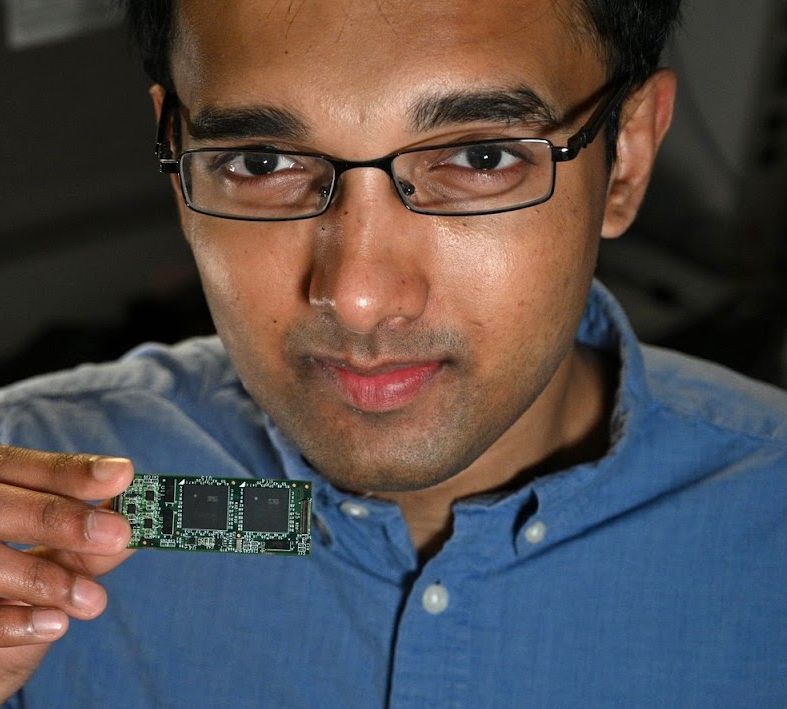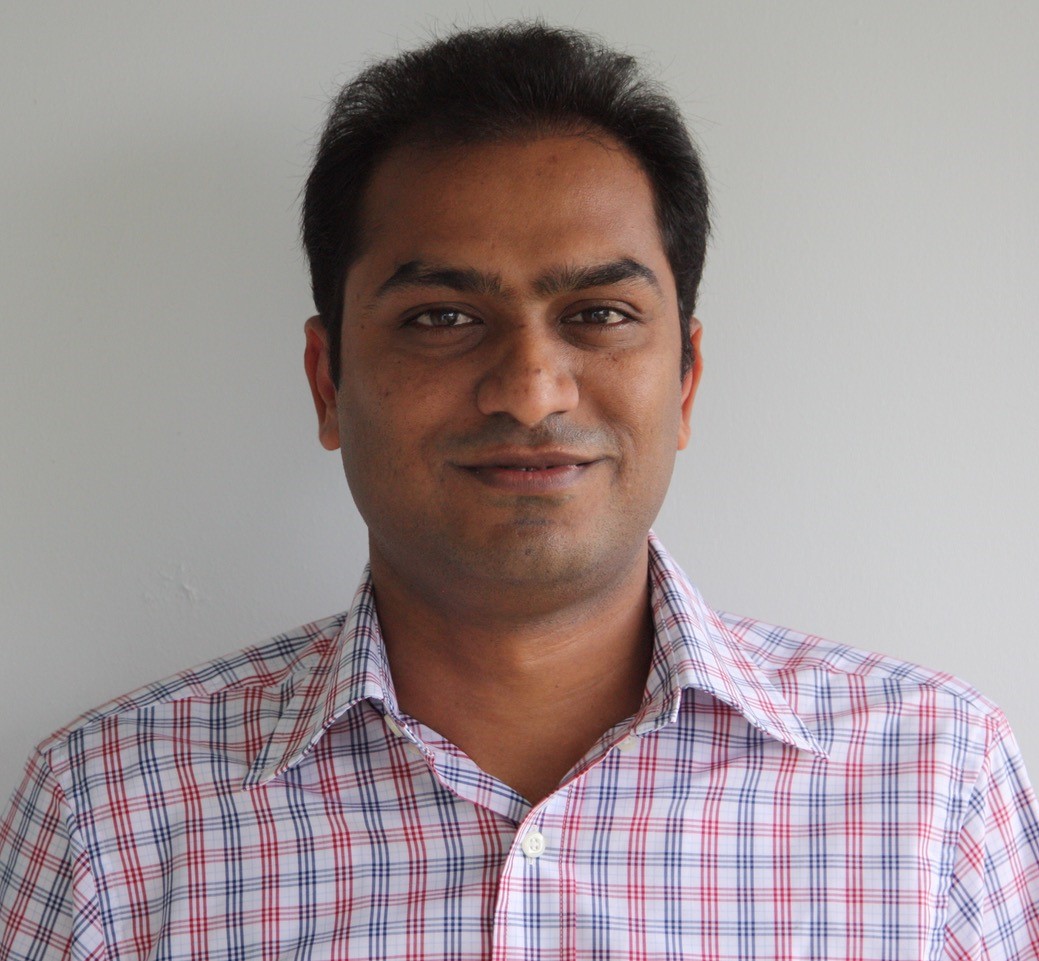
Helen Xu

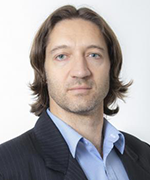
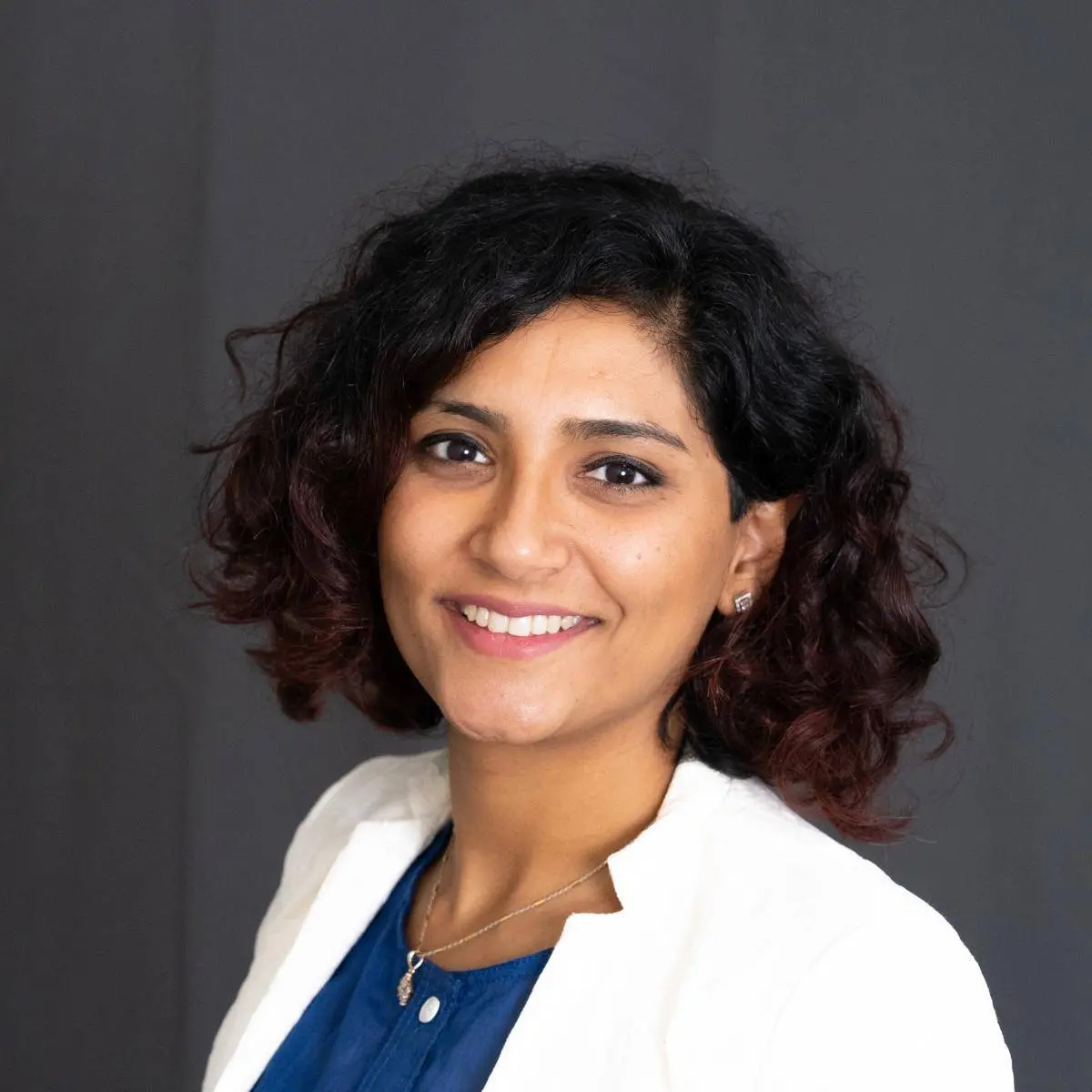
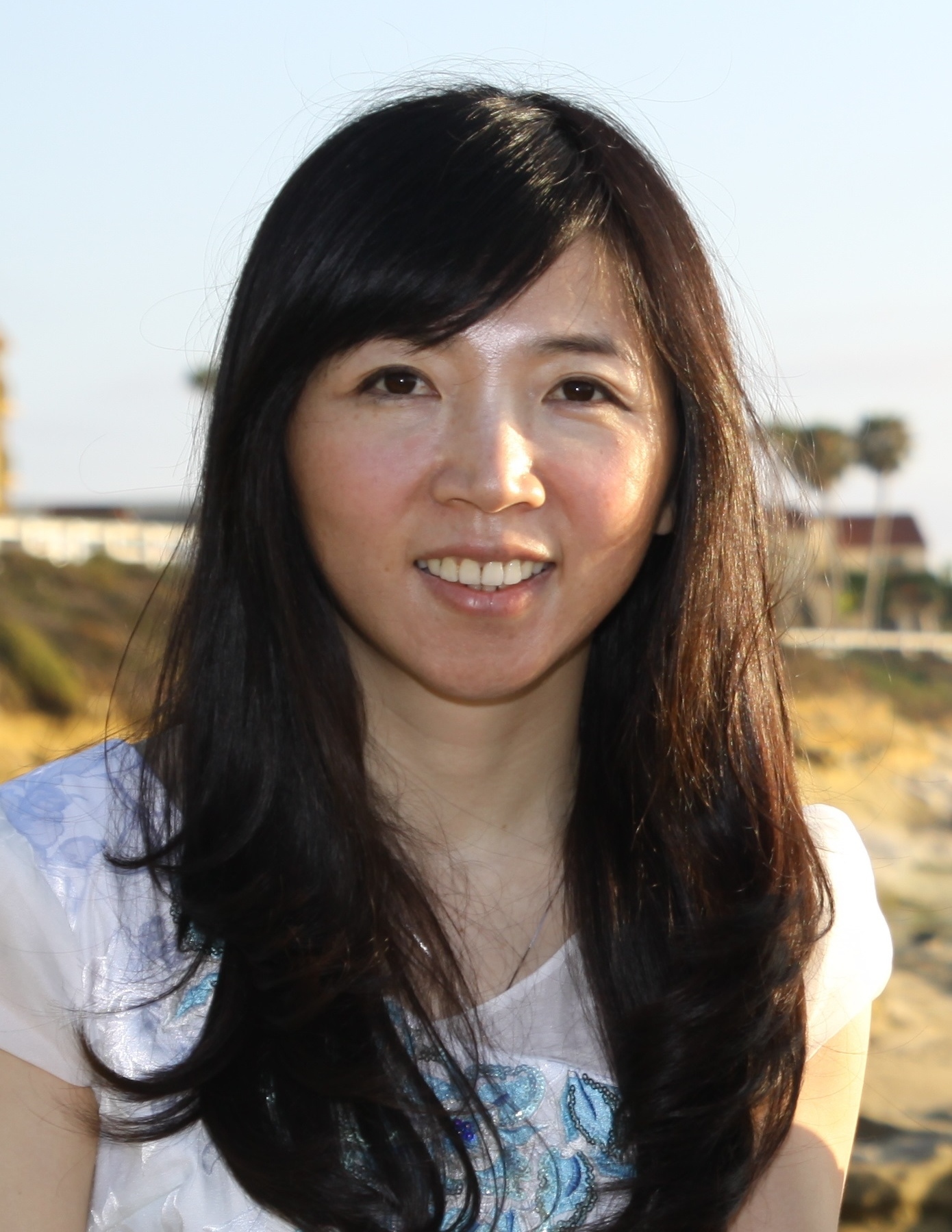
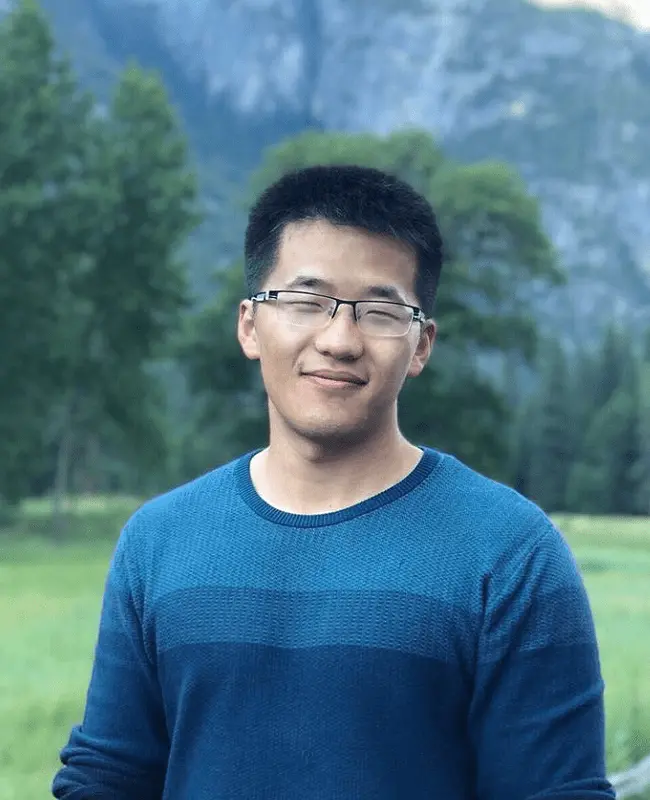
Helen Xu's profile picture
hxu615@gatech.edu

Helen Xu comes to Georgia Tech from Lawrence Berkeley National Laboratory where she was the 2022 Grace Hopper Postdoctoral Scholar. She completed her Ph.D. at MIT in 2022 with Professor Charles E. Leiserson. Her main research interests are in parallel and cache-friendly algorithms and data structures. Her work has previously been supported by a National Physical Sciences Consortium fellowship and a Chateaubriand fellowship. She has interned at Microsoft Research, NVIDIA Research, and Sandia National Laboratories. 

Assistant Professor
Additional Research
  • Parallel Computing
  • Cache-Efficient Algorithms
  • Performance Engineering
Google Scholar
https://scholar.google.com/citations?hl=en&user=ZcguQt4AAAAJ&view_op=list_works&sortby=pubdate

Kai Wang

Kai Wang's profile picture
kwang692@gatech.edu

Kai Wang recently attained his Ph.D. in Computer Science at Harvard University where he was advised by Professor Milind Tambe. His research interests include multi-agent systems, computational game theory, machine learning and optimization, and their applications in public health and conservation. One of Wang's key technical contributions includes decision-focused learning, which integrates machine learning and optimization to strengthen learning performance; with his algorithms currently deployed assisting a non-profit in India focused on improving maternal and child health. He is the recipient of the Siebel Scholars award and the best paper runner-up award at AAAI 2021. 

Assistant Professor
Additional Research
  • AI for Social Impact
  • Data-Driven Decision Making
  • Multi-Agent Systems
  • Optimization
Research Focus Areas
Google Scholar
https://scholar.google.com/citations?hl=en&user=spWVns8AAAAJ

Raphaël Pestourie

Raphaël Pestourie's profile picture
rpestourie3@gatech.edu

Raphaël Pestourie earned his Ph.D. in Applied Mathematics and an AM in Statistics from Harvard University in 2020. Prior to Georgia Tech, he was a postdoctoral associate at MIT Mathematics, where he worked closely with the MIT-IBM Watson AI Lab. Raphaël’s research focuses on scientific machine learning at the intersection of applied mathematics and machine learning and inverse design via scientific machine learning and large-scale electromagnetic design. 

Assistant Professor, School of Computer Science
Additional Research
  • Scientific Machine Learning
  • Inverse Design in Electromagnetism
Research Focus Areas
Google Scholar
https://scholar.google.com/citations?hl=en&user=Lxv3W74AAAAJ&view_op=list_works&sortby=pubdate

Alexey Tumanov

Alexey Tumanov's profile picture
atumanov@gatech.edu

I've started as a tenure-track Assistant Professor in the School of Computer Science at Georgia Tech in August 2019, transitioning from my postdoc at the University of California Berkeley, where I worked with Ion Stoica and collaborated closely with Joseph Gonzalez. I completed my Ph.D. at Carnegie Mellon University, advised by Gregory Ganger. At Carnegie Mellon, I was honored by the prestigious NSERC Alexander Graham Bell Canada Graduate Scholarship (NSERC CGS-D3) and partially funded by the Intel Science and Technology Centre for Cloud Computing and Parallel Data Lab. Prior to Carnegie Mellon, I worked on agile stateful VM replication with para-virtualization at the University of Toronto, where I worked with Eyal de Lara and Michael Brudno. My interest in cloud computing, datacenter operating systems, and programming the cloud brought me to the University of Toronto from industry, where I had been developing cluster middleware for distributed datacenter resource management.

Assistant Professor
Additional Research
  • High Performance Computing
  • Logistics
  • Machine Learning
  • Systems Design
Research Focus Areas
Google Scholar
https://scholar.google.com/citations?hl=en&user=7P-gZioAAAAJ&view_op=list_works&sortby=pubdate

Divya Mahajan

Divya Mahajan 's profile picture
divya.mahajan@gatech.edu

Divya is an Assistant Professor in School of ECE and Computer Science. Divya received her Ph.D. from Georgia Institute of Technology and Master’s from UT Austin. She obtained her Bachelor’s from IIT Ropar where she was conferred the Presidents of India Gold Medal, the highest academic honor in IITs.

Prior to joining Georgia Tech, Divya was a Senior Researcher at Microsoft Azure since September 2019. Her research has been published in top-tier venues such as ISCA, HPCA, MICRO, ASPLOS, NeurIPS, and VLDB. Her dissertation has been recognized with the NCWIT Collegiate Award 2017 and distinguished paper award at High Performance Computer Architecture (HPCA), 2016.

Currently, she leads the Systems Infrastructure and Architecture Research Lab at Georgia Tech. Her research team is devising next-generation sustainable compute platforms targeting end-to-end data pipeline for large scale AI and machine learning. The work draws insights from a broad set of disciplines such as, computer architecture, systems, and databases.

Assistant Professor
Additional Research
  • Artificial Intelligence
  • Machine Learning
  • Sustainable Systems for AI
  • System Design & Optimization
Google Scholar
https://scholar.google.com/citations?hl=en&user=HmBa_6gAAAAJ&view_op=list_works&sortby=pubdate

Yingyan (Celine) Lin

Yingyan (Celine) Lin's profile picture
celine.lin@gatech.edu

Yingyan (Celine) Lin is currently an Associate Professor in the School of Computer Science at the Georgia Institute of Technology. She leads the Efficient and Intelligent Computing (EIC) Lab, which focuses on developing efficient machine learning systems via cross-layer innovations from algorithm to architecture down to chip design, aiming to promote green AI and enable ubiquitous machine learning powered intelligence. She received a Ph.D. degree in Electrical and Computer Engineering from the University of Illinois at Urbana-Champaign in 2017. 

Prof. Lin is a Facebook Research Award (2020), NSF CAREER Award (2021), IBM Faculty Award (2021), and Meta Faculty Research Award (2022) recipient, and received the ACM SIGDA Outstanding Young Faculty Award in 2022. She was selected as a Rising Star in EECS by the 2017 Academic Career Workshop for Women at Stanford University. She received the Best Student Paper Award at the 2016 IEEE International Workshop on Signal Processing Systems (SiPS 2016), and the 2016 Robert T. Chien Memorial Award for Excellence in Research at UIUC. Prof. Lin is currently the lead PI of multiple multi-university projects, such as RTML and 3DML, and her group has been funded by NSF, NIH, DARPA, SRC, ONR, Qualcomm, Intel, HP, IBM, and Meta. Her group’s research won first place in both the University Demonstration at DAC 2022 and the ACM/IEEE TinyML Design Contest at ICCAD 2022, and was selected as an IEEE Micro Top Pick of 2023

Associate Professor
Additional Research
  • AI Systems
  • Energy-efficient AI/ML Algorithms
  • Green AI
  • Machine Learning
  • Trustworthy AI for Physics
Research Focus Areas
University, College, and School/Department
Google Scholar
https://scholar.google.com/citations?hl=en&user=dio8IesAAAAJ&view_op=list_works&sortby=pubdate

Joy Arulraj

Joy Arulraj's profile picture
jarulraj3@gatech.edu

Joy Arulraj is an assistant professor in the School of Computer Science at Georgia Institute of Technology. His research interest is in database management systems, specifically large-scale data analytics, main memory systems,  machine learning, and big code analytics. At Georgia Tech, he is a member of the Database group.

Assistant Professor
Additional Research

Data Systems

Research Focus Areas
University, College, and School/Department
Google Scholar
https://scholar.google.com/citations?hl=en&user=rp8dOfAAAAAJ&view_op=list_works&sortby=pubdate

Giri Krishnan

Placeholder for headshot
giri@gatech.edu

Dr Krishnan is research professor in the Georgia Tech’s Interdisciplinary Research Institute, Institute for Data Engineering and Science, School of Computational Science and Engineering, College of Computing. He is an associate director of the Center for AI in Science and Engineering. His current interest is in developing AI methods for computational science problems across many domains. He is a computational neuroscientist by training, with past work spanning across a wide range of computational modeling and AI methods. His group's current focus is on generative methods for computational workflow, neural approaches for accelerating compute intensive problems and applying interpretable methods to scientific AI for advancing scientific understanding.

Prior to joining Georgia Tech, he was research scientist at UC San Diego and his research involved developing large-scale modeling of the brain to study sleep, memory and learning. In addition, he has contributed towards neuro-inspired AI and neuro-symbolic approaches. He is broadly interested in the emergence of intelligent behavior from neural computations in the brain and AI systems. 

Dr Krishnan has more than 50 publications and his research has been supported by multiple grants from NIH and NSF. He is passionate about open-science and reproducible science and strongly believes that progress in science requires reproducibility.

Associate Director, Center for Artificial Intelligence in Science and Engineering (ARTISAN)
Principal Research Scientist
Phone
404.894.2132
Office
CODA Building
Additional Research
  • AI : Deep learning
  • Neuro-symbolic Approaches
  • Geosciences
  • Molecular Dynamics
  • Neuroscience : Theoretical and computational modeling
Research Focus Areas
Google Scholar
https://scholar.google.com/citations?hl=en&user=IGsdszkAAAAJ&view_op=list_works&sortby=pubdate

Pan Li

Pan Li's profile picture
panli@gatech.edu

Pan Li joined Georgia Tech in 2023 Spring. Before that, Pan Li worked at the Purdue Computer Science Department as an assistant professor from the 2020 fall to the 2023 Spring. Before joining Purdue, Pan worked as a postdoc at Stanford Computer Science Department from 2019 to 2020. Pan did his Ph.D. in Electrical and Computer Engineering at the University of Illinois Urbana-Champaign. Pan Li has got the NSF CAREER award, the Best Paper award from the Learning on Graph Conference, Sony Faculty Innovation Award, JPMorgan Faculty Award.

Assistant Professor
Office
CODA Number S1219
Additional Research
  • Artificial Intelligence
  • Large-Scale Graphs
  • Machine Learning
  • Trustworthy AI for Physics
Research Focus Areas
Google Scholar
https://scholar.google.com/citations?hl=en&user=IroP0EwAAAAJ&view_op=list_works&sortby=pubdate

Bo Dai

Bo Dai's profile picture
bodai@cc.gatech.edu

Bo Dai is a tenure-track assistant professor at Georgia Tech's School of Computational Science and Engineering. Prior to joining academia, he worked as a Staff Research Scientist at Google Brain. Bo Dai completed his Ph.D. in the School of Computational Science and Engineering at Georgia Tech, where he worked from 2013 to 2018 with Professor Le Song. His research focuses on developing principled and practical machine learning techniques for real-world applications. Bo Dai has received numerous awards for his work, including the best paper award at AISTATS 2016. He regularly serves as a (senior) area chair at major AI/ML conferences, such as ICML, NeurIPS, AISTATS, and ICLR.

Assistant Professor
Office
CODA E1342A, 756 W Peachtree St NW, Atlanta, GA 30308
Additional Research

Reinforcement Learning Data-Driven Decision Making Embodied AI

Research Focus Areas
Google Scholar
https://scholar.google.com/citations?hl=en&user=TIKl_foAAAAJ&view_op=list_works&sortby=pubdate