New Study Measures Titanium in Apollo Rock to Uncover Moon’s Early Chemistry

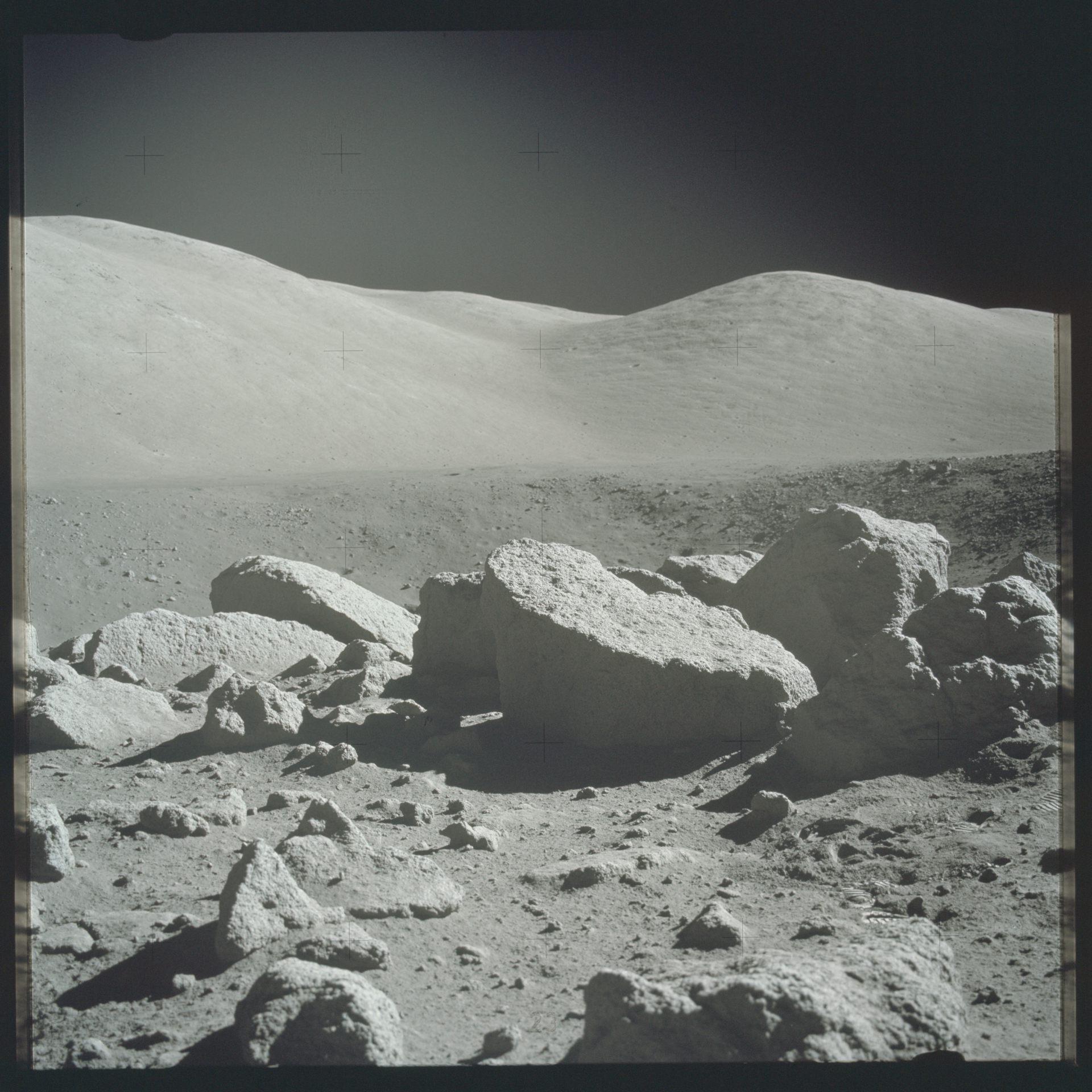
The Camelot crater in the Moon’s Taurus-Littrow Valley is where the sample containing trivalent titanium was found. NASA/Apollo 17: AS17-145-22159

The Camelot crater in the Moon’s Taurus-Littrow Valley is where the sample containing trivalent titanium was found. NASA/Apollo 17: AS17-145-22159

The Earth and the Moon may look very different today, but they formed under similar conditions in space. In fact, a dominant hypothesis says that the early Earth was hit by a Mars-sized object, and it was this giant impact that spun off material to form the Moon. But unlike Earth, the Moon lacks plate tectonics and an atmosphere capable of reshaping its surface and recycling elements such as oxygen over billions of years.

As a result, the Moon preserves a record of the geological conditions that helped shape it and can give scientists insight into the world we live in today. Rocks that were formed during early volcanic activity on the Moon offer a window into events that occurred nearly 4 billion years ago. By uncovering the conditions under which the Moon’s rocks formed, scientists move closer to understanding the origins of our own planet.

In a study published March 2026 in the journal Nature Communications, our team of physicists and geoscientists investigated ilmenite, a mineral composed of iron, titanium and oxygen, in a Moon rock crystallized from an ancient lunar magma. We used cutting-edge electron microscopy to probe the chemical signature of titanium in this ilmenite, finding that about 15% of the titanium carries less of an electrical charge than expected.

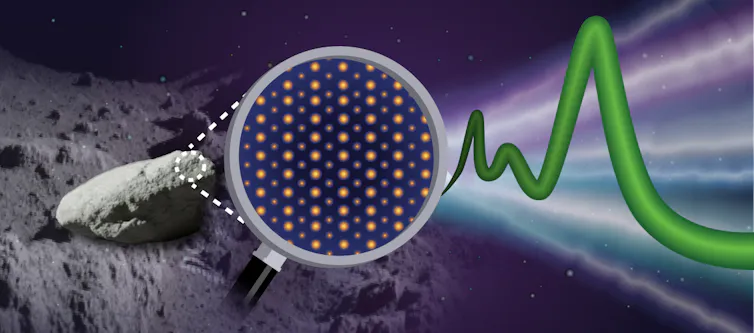
An illustration of the rock on the Moon, an atomic image of the sample, and of trivalent titanium chemical signature.

This illustration shows the rock on the Moon, as well as an atomic image of the sample’s crystal structure and a representation of the chemical signature of trivalent titanium. August Davis


Implications of Trivalent Titanium

In ilmenite, an atom of titanium typically loses four electrons when bonding with oxygen, resulting in a positive charge of 4+, known as the atom’s oxidation number. From the sample we studied, a rock collected during the Apollo 17 mission, we found that some of the titanium in ilmenite actually has a charge of only 3+, referred to as trivalent titanium. Our measurement of trivalent titanium confirms what geologists had long suspected: that some titanium in lunar ilmenite exists in a lower charge state.

Trivalent titanium occurs only when the amount of oxygen available for chemical reactions is low. Thus, the abundance of trivalent titanium in ilmenite could tell us about the relative availability of oxygen in the Moon’s interior when the rock formed, around 3.8 billion years ago.

A Link to the Moon’s Early Chemistry

Our team has closely studied only one Moon rock so far, but from published studies we have identified more than 500 analyses of lunar ilmenite that could contain trivalent titanium. Studying these samples could reveal new details about how the Moon’s chemistry varies across different locations and time periods.

While our work highlights a link based on prior studies, the relationship between trivalent titanium in ilmenite and oxygen availability has not yet been quantified with targeted experimental data.

By conducting experiments that explore that link, ilmenite could reveal more details about the Moon’s interior. We also expect this relationship to apply to other planets and asteroids that don’t contain much chemically available oxygen, relative to Earth.

What’s Next?

These methods can be used to study many Moon rocks collected during the Apollo missions over 50 years ago, as well as future samples from upcoming Artemis missions, or rocks collected from the far side of the Moon, returned in 2024 by China’s Chang’e-6 mission.

One of our team members plans to use their new experimental lab to explore how oxygen availability in magma affects the abundance of trivalent titanium in ilmenite. With experiments like this that build off our findings, we could potentially use ilmenite to reconstruct the history of ancient magmas from the Moon.

We believe future studies of lunar rocks using advanced scientific methods are essential for revealing the chemical conditions present on the ancient Moon. They could offer clues not only to its own history but also to the earliest chapters of Earth’s past – records that have since been erased from Earth.The Conversation


This article is republished from The Conversation under a Creative Commons license. Read the original article.

 
News Contact
Author:

Advik D. Vira, Graduate Student in Physics, Georgia Institute of Technology  
Emily First, Assistant Professor of Geology, Macalester College

Media Contact:

Shelley Wunder-Smith
shelley.wunder-smith@research.gatech.edu

Georgia Tech Pioneers First Space Sustainability Course in the U.S.

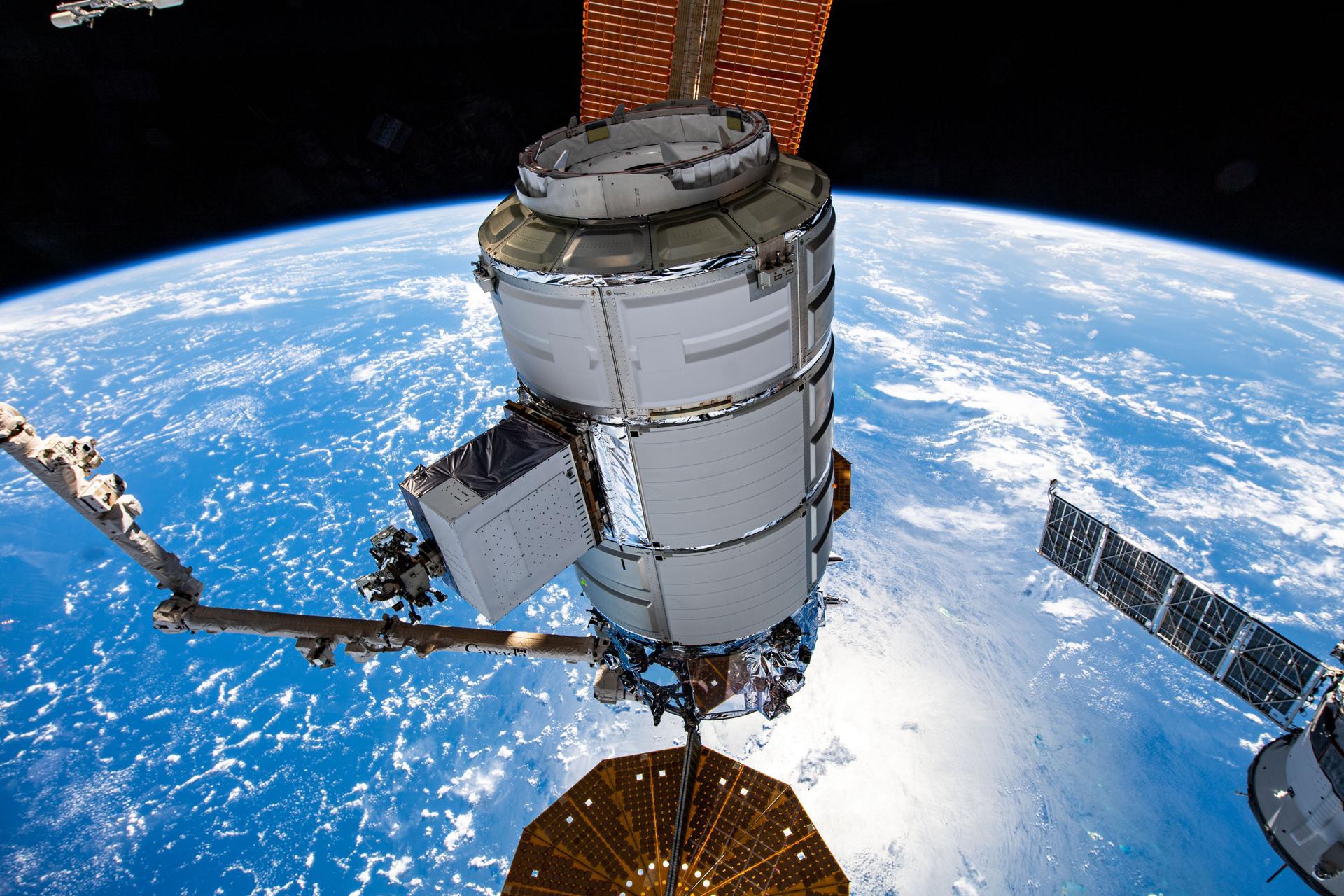
orthrop Grumman's Cygnus space freighter is pictured in the grip of the Canadarm2 robotic arm shortly after it was detached from the Unity module. The orbital complex was soaring 260 miles above the island archipelago of Seychelles in the Indian Ocean at the time of this photograph.

Courtesy of NASA

When Polina Verkhovodova began her aerospace engineering Ph.D. at Georgia Tech in 2022, she never imagined developing an interest in space sustainability policy. But a pair of courses showed her how her technical engineering background could merge with policy.  

Verkhovodova enrolled in courses on space policy and space sustainability taught by Thomas González Roberts, an assistant professor in the Sam Nunn School of International Affairs and the Daniel Guggenheim School of Aerospace Engineering (AE). Although Roberts is new to Georgia Tech, he is deeply connected within the international space community and regularly brings outside experts into his classroom. Guest speakers introduce students to the breadth of careers in the field, from technical analysis to national and multinational policymaking.

One lecture in the policy class, delivered by a representative from the Matthew Isakowitz Commercial Space Scholarship program, opened a door for Verkhovodova. She later won the scholarship while in Roberts’ sustainability course and spent a summer in Washington, D.C., on the government affairs team for Voyager Technologies Inc., the space technology company.

“These courses gave me a new perspective on how we use and consider the space environment,” Verkhovodova said. “They revealed the interdisciplinary nature of the field of space sustainability to me. Now, I see myself working at that intersection of policy and engineering.”

Georgia Tech’s space sustainability course is the first of its kind in the United States, and each year, it focuses on a different theme. In 2025, it was space congestion in low Earth orbit; this year, it’s lunar surface coordination among nation-states.

Building a New Kind of Class

Roberts designed the course around three components: foundations of space sustainability, an introduction to the principal sustainability challenges in the space domain and how space actors try to solve them; a signature guest lecture series he calls “Space Sustainability According To…” to show students how these solutions work in practice; and a project workshop, where students break into small groups to answer research questions under the mentorship of Roberts and an external partner organization.

The guest lecture series brings in professionals from a wide range of organizations — economists, astronomers, diplomats, and industry leaders — to discuss what sustainability means within their part of the space ecosystem. Past speakers have represented institutions including NASA, the United Nations, and Northrop Grumman.

“They all have different perspectives on what it means to be a sustainable steward of the space domain,” Roberts said. “A company needs to be profitable, while NASA’s mission focuses on expanding human knowledge. I want students to see the full spectrum of career paths that will let them work on space sustainability for the rest of their careers, if they choose to.”

These conversations expose students to the tools, ideas, and people shaping the emerging discipline — connections that often extend well beyond the classroom.

Modeling the Future of Space

Some guest speakers are part of the course’s external partnerships with leading space sustainability organizations, like last year’s collaboration with The Aerospace Corporation and this year’s with the Open Lunar Foundation. 

In 2025, The Aerospace Corporation showed students how to use important research tools and also mentored student research teams as they developed their final projects. One of these tools was the MIT Orbital Capacity Assessment Tool (MOCAT), an influential model used to study the effects of space debris on the long-term usability of the most popular portion of the space domain. Space debris and the resulting congestion for satellites and spacecraft navigating around this debris are some of the most pressing challenges in space sustainability.

“One of the most unique experiences was that our professor used his connections to bring the original architects of MOCAT into the class,” said aerospace engineering Ph.D. student Neel Puri.

Among those architects was Miles Lifson. A graduate school colleague of Roberts’ at MIT, Lifson is now a project leader in flight mechanics at The Aerospace Corporation. While Aerospace Corporation already collaborates with Georgia Tech through internships and lab partnerships, Lifson saw the class as a rare chance to work directly with students.

“When I heard about this class, I was really excited,” he said. “Space situational awareness, space debris, spacecraft coordination — these issues are becoming increasingly important as we put more spacecraft into orbit. It’s immensely rewarding to work with students because they’re passionate about solving problems and full of ideas. These are skills the space industry really needs.”

From Classroom to Conference Stage

Lifson also supported students in their final projects, helping them use the MOCAT model to analyze real-world problems and craft policy recommendations. One project, led by Puri, grew into a published conference paper, Space Sustainability Implications of Combining Space Environment Pathways With Shared Socioeconomic Pathways," which he presented at the American Institute of Aeronautics and Astronautics SciTech Conference in January.

Their research builds on recent findings that climate change is thinning the upper atmosphere, reducing drag and causing debris to remain in orbit longer. Their work shows that, depending on future climate scenarios, predicted debris in low Earth orbit could vary by 15% to 100%, underscoring the significance of climate factors in long-term analysis and planning for space traffic management.

Even though sustainability is already part of Puri’s research focus, he credits Roberts and the course with opening another door in the field and providing valuable context to his doctoral dissertation.

A New Model for Tech-Driven Policymaking

Roberts sees the course as part of a larger mission.

“Georgia Tech can be a factory for producing tech‑driven policymakers,” he said. “When I was choosing where to go in my career as a faculty member, I wanted to be part of that factory. I get to help shape it, both in my lab and new course offerings like this one.”

With its blend of policy, engineering, real-world tools, and direct access to leading practitioners, Georgia Tech’s space sustainability course is not just pioneering a new curriculum. It’s preparing the next generation of space leaders to navigate and protect an increasingly crowded frontier.

Thomas Gonzalez Roberts

Thomas González Roberts

Neel Puri

Neel Puri

Miles Lifson

Miles Lifson

Polina Verkhovodova

Polina Verkhovodova

 
News Contact

Tess Malone, Senior Research Writer/Editor

tess.malone@gatech.edu

Researchers Find Training Gaps Impacting Maritime Cybersecurity Readiness

A graphic of a boat sailing across the globe with a cyber shield at its front.

Whether it’s a fire or a flood, a ship’s crew can only rely on itself and its training in emergencies at sea. The same is true for crews facing digital threats on oil tankers, cargo ships, and other commercial vessels.

New cybersecurity research from the Georgia Institute of Technology, however, revealed that crews aboard commercial vessels were often not adequately prepared to manage cyberattacks effectively due to systemic training gaps.

The findings are based on interviews conducted by researchers with more than 20 officer-level mariners to assess the maritime industry’s readiness to handle cybersecurity attacks at sea.

"Historically, cybersecurity research has focused heavily on cyber-physical systems like cars, factories, and industrial plants, but ships have largely been overlooked,” said Anna Raymaker, Ph.D. student and lead researcher.

“That gap is concerning when more than 90% of the world’s goods travel by sea. Recent incidents, from GPS spoofing to ships linked to subsea cable disruptions, show that maritime systems are increasingly part of the global cyber threat landscape.”

The researchers proposed four practical strategies to strengthen maritime cyber defenses and close the training gaps. Their findings were presented recently at the ACM SIGSAC Conference on Computer and Communications Security (CCS).

1. Make Cybersecurity Training Actually Maritime

Many of those interviewed for the study described current cybersecurity training as “boilerplate” — generic modules that don’t reflect real shipboard risks. 

Researchers recommend:

  • Role-specific instruction: Navigation officers should learn to detect and identify GPS spoofing. Engineers should focus on vulnerabilities in remotely monitored systems.
  • Bridging IT and Operational Technology: Crews need to understand how attacks on IT systems can trigger physical consequences in operational technology — including collisions, groundings, or explosions.
  • Hands-on delivery: Replace passive PowerPoints with drills and in-person exercises that build muscle memory.
  • Accessible standards: Training must account for the wide range of educational backgrounds across crews and be standardized across ranks.
2. Move Beyond “Call IT”

At sea, crews can’t simply escalate a cyber incident to a shore-based IT department and wait. Operational resilience requires onboard readiness.

Researchers recommend:

  • Vessel-specific response plans: Ships need clear, actionable protocols for threats such as AIS jamming or radar manipulation.
  • Military-style drills: Adopting MCON (Emission Control) exercises — used by the U.S. Military Sealift Command — can train crews to operate safely without electronic systems.
  • Stronger connectivity controls: High-bandwidth satellite systems like Starlink introduce new risks. Clear policies and network segregation are essential to prevent new entry points for attackers.
Related Article: When GPS lies at sea: How electronic warfare is threatening ships and their crews by Anna Raymaker
3. Create Unified, Ship-Specific Regulations

Maritime cybersecurity regulations are often reactive and fragmented. Researchers argue the industry needs a cohesive, domain-specific framework.

Key recommendations include:

  • A unified global model: Like the energy sector’s NERC CIP standards, a maritime framework could mandate baseline controls such as encryption, network segmentation, and anonymous incident reporting.
  • Rules built for real crews: Regulations designed for large naval operations don’t translate well to smaller merchant or research vessels. Standards must reflect actual shipboard conditions.
  • Future-proofing requirements: Autonomous ships and remotely operated vessels expand the cyber-physical attack surface. Regulations must proactively address these emerging technologies.
4. Invest in Maritime-Specific Cyber Research

Finally, the researchers stress that long-term resilience requires deeper technical research focused on maritime systems.

Priority areas include:

  • Real-time intrusion detection systems tailored to shipboard protocols.
  • Proactive security risk assessments of interconnected onboard systems.
  • Cyber-physical modeling to better understand cascading failures in complex maritime environments.
The Bottom Line

Cyber threats at sea are no longer hypothetical. Mariners report real-world incidents ranging from GPS spoofing to ransomware that disrupts global trade.

“Through our interviews with mariners, I saw firsthand how much dedication and pride they take in their work,” said Raymaker. “Our goal is for this research to serve as a call to action for researchers, policymakers, and industry to invest more attention in maritime cybersecurity and support the people who risk their lives every day to keep global trade, food, and energy moving."

A Sea of Cyber Threats: Maritime Cybersecurity from the Perspective of Mariners was presented at CCS 2025. It was written by Raymaker and her colleagues, Ph.D. students Akshaya Kumar, Miuyin Yong Wong, and Ryan Pickren; Research Scientist Animesh Chhotaray, Associate Professor Frank Li, Associate Professor Saman Zonouz, and Georgia Tech Provost and Executive Vice President for Academic Affairs Raheem Beyah.

 
News Contact

John Popham

Communications Officer II School of Cybersecurity and Privacy 

Tech Swarms into Athens for Clean, Old-Fashioned Computing

2026 Georgia Scientific Computing Symposium

The in-state rivalry between the Yellow Jackets and the Bulldogs usually heats up when Georgia Tech visits the University of Georgia. However, one Saturday last month, the focus shifted from competition to collaboration. 

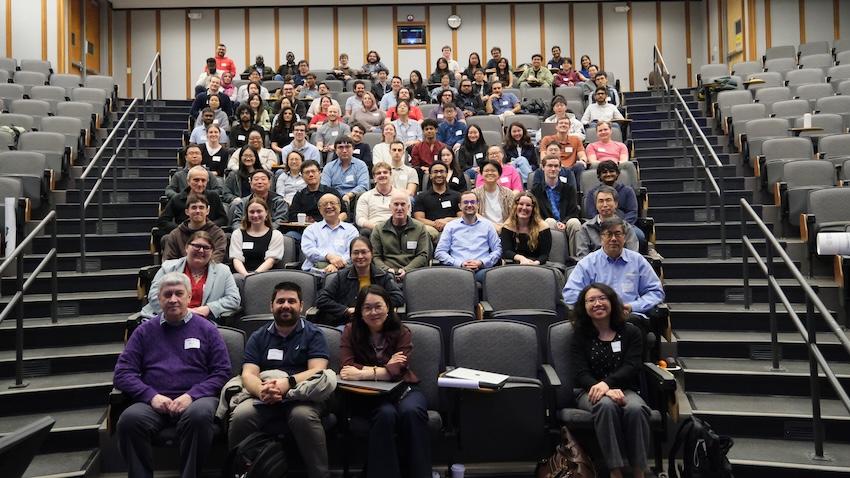
The Georgia Scientific Computing Symposium (GSCS) held its annual meeting on February 21 in Athens. Since 2009, the event has hosted researchers from across the Peach State to showcase homegrown advances in scientific computing.

The symposium highlighted Georgia’s reputation as a computing innovation hub. People from around the world come to Georgia universities to lead computing research. By advancing science, engineering, medicine, and technology, their work improves communities at home and abroad.

Faculty and students from Georgia Tech, UGA, Georgia State University, and Emory University presented at the symposium. Georgia Tech participants came from the colleges of Computing, Engineering, and Sciences.

This year’s organizers agreed to meet in Atlanta for the 2027 symposium. Georgia Tech’s School of Computational Science and Engineering (CSE) will host the 19th GSCS.

“From healthcare to computer chip design, scientific computing underpins many of the technological advances we see in our lives,” said Professor Edmond Chow, associate chair of the School of CSE.

“Scientific computing provides the mathematical models, simulations, and data‑driven tools that make modern innovation possible. It allows people to analyze complex systems, test ideas virtually before building them, and make faster, more accurate decisions across nearly every sector of society.”

Professor Haomin Zhou and Assistant Professor Helen Xu delivered two of the symposium’s five plenary talks. 

Zhou presented a new method for solving the Schrödinger equation, a landmark equation in quantum mechanics. Drawing inspiration from the mathematics used in generative artificial intelligence models, his approach develops an algorithm that more effectively simulates waves, particle motion, and other physical systems.

Xu focused on improving how computers move and organize data during complex calculations. Her work uses “cache-friendly” layouts that help computers access data more efficiently, boosting performance for scientific and engineering applications.

“Speaking at GSCS was a great opportunity,” Xu said. “The symposium fostered connections within the scientific computing community and gave us a chance to share exciting research.”

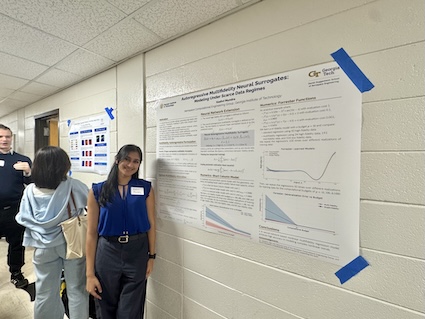
The symposium showcased student work through a poster blitz and a poster session. During the blitz, 36 students each had one minute to introduce their research to the full audience. They then shared more details about their research during the poster session.

The student projects showed the range of fields supported by scientific computing. The session also provided attendees with an opportunity to connect and expand their professional networks, helping grow the field’s future impact.

“As an aerospace engineer by training and aspiring computational scientist, GSCS gave me the platform to network with other researchers in the field while showcasing my own research,” said Ph.D. student Kashvi Mundra

“I was able to connect with scientists across different disciplines whose work intersects with my own in unexpected ways. Those conversations pushed my thinking beyond my own lab's perspective, helping me see my work on physics-informed machine learning for inverse problems in a broader scientific computing context.”

Georgia Tech students who presented posters included:

Abir Haque (CSE), Massively Parallel Random Phase Approximation Correlation Energy via Lanczos Quadrature

Antonio Varagnolo (CSE), Physics-Enhanced Deep Surrogates for the Phonon Boltzmann Transport Equation

Ben Burns (CSE), Infinite-Dimensional Stein Variational Inference with Derivative-Informed Neural Operators

Ben Wilfong (CSE), Shocks without Shock Capturing; Compressible Flow at 1 quadrillion Degrees of Freedom without Loss of Accuracy

Daniel Vickers (CSE), Highly-Parallel Fluid-Solid Interactions for Compressible Flows

Eric Fowler (CSE), High-Performance Tensor Contractions in Computational Chemistry

Haoran Yan (Math), Understanding Denoising Autoencoders through the Manifold Hypothesis: A Geometric Perspective

Kashvi Mundra (CSE), Autoregressive Multifidelity Neural Surrogate Modeling under Scarce Data Regimes

Sebastián Gutiérrez Hernández (Math/CSE), PDPO: Parametric Density Path Optimization

Vivian Zhang (AE), Multifidelity Operator Inference: Non-Intrusive Reduced Order Modeling from Scarce Data

Xian Mae Hadia (CSE), Data Efficiency of Surrogate Models: Learning Physics Data from Full Field Data vs. Inductive Bias from Approximate PDE Solvers

Xiangming Huang (CSE), Neural Operator Accelerated Evolutionary Strategies for PDE-Constraint Optimization

Zhaiming Shen (Math), Understanding In-Context Learning on Structured Manifolds: Bridging Attention to Kernel Methods

Zhongjie Shi (Math), Towards Understanding Generalization in DP-GD: A Case Study in Training Two-Layer CNNs

2026 Georgia Scientific Computing Symposium
 
News Contact

Bryant Wine, Communications Officer
bryant.wine@cc.gatech.edu

Researchers Explore New Remote Sensing Uses for Scheimpflug Principle

Scheimpflug optical ranging technology

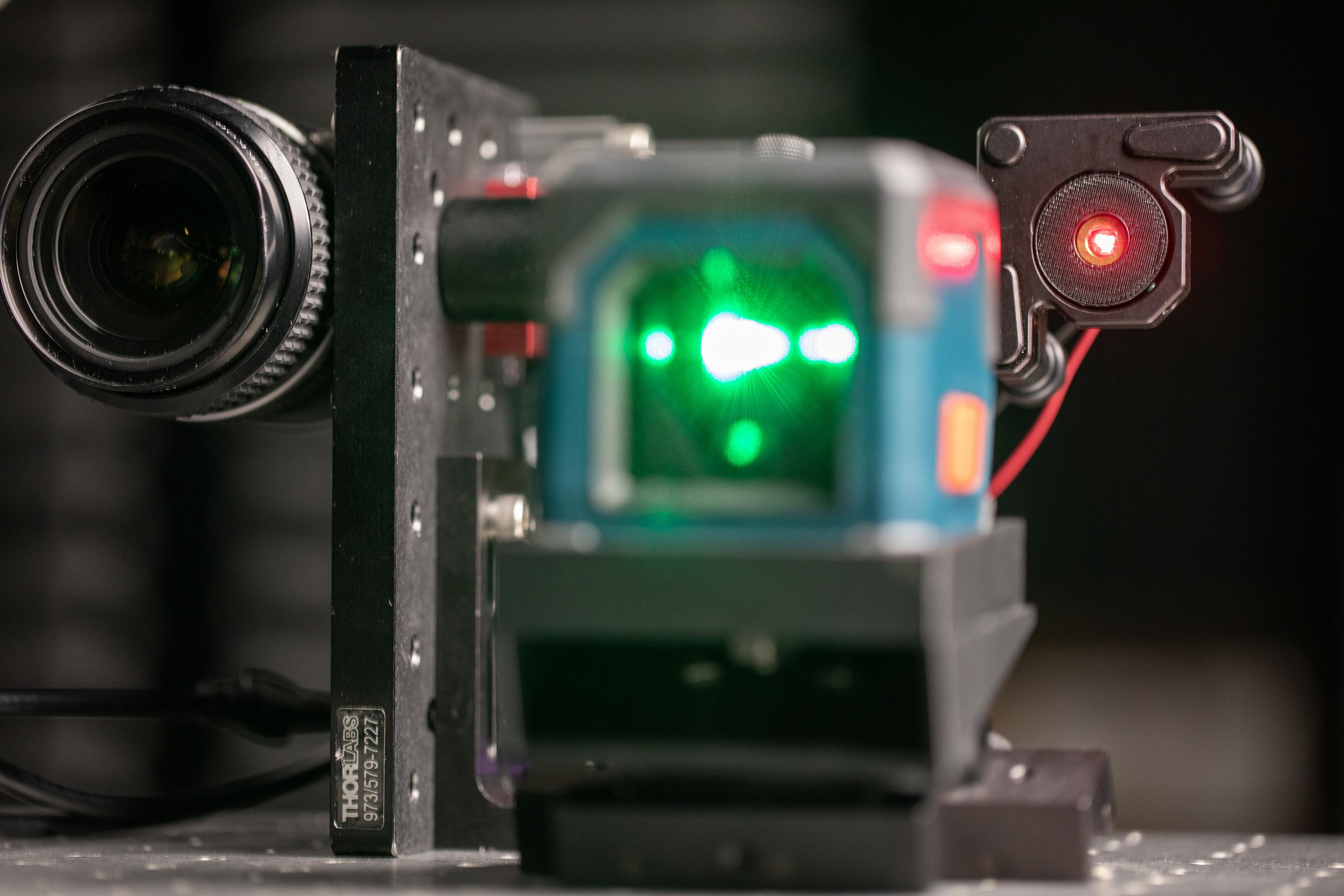
Example of a functional dual-laser prototype using 3D printed materials and off-the-shelf components, highlighting the compact low-cost paradigm exhibited by the Scheimpflug optical ranging technology for wide-domain application. (Credit: Sean McNeil, GTRI)

An optical principle discovered more than a century ago may soon find new applications in such areas as monitoring atmospheric turbulence, tracking airborne objects, and mapping the environment, thanks to researchers at the Georgia Tech Research Institute (GTRI).
 

Applying the Scheimpflug technique, the researchers are developing inexpensive rangefinder camera technology, advanced sensors and computational techniques to both complement and provide an alternative to established light detection and ranging (LiDAR) technology in certain applications. The technique works best in short- and medium-distance metrology, and can be used passively or in collaboration with laser-based techniques.
 

“The Scheimpflug technique is a complete alternative to time-of-flight (ToF) LiDAR, and we’re looking for everything we can do with it,” said Nathan Meraz, a GTRI senior research scientist who has been refining the new applications for several years. “It measures things differently, and since it’s a camera sensor, there’s a lot more information to process compared to a LiDAR signal. And there are also data fusion aspects.”
 

A paper on the technique and its potential remote sensing applications was presented during 2025 at the SPIE Defense + Commercial Systems (DCS) Conference. The research was supported by GTRI’s Independent Research and Development (IRAD) program and also has been advanced by teams of student researchers from the GTRI Research Internship Program (GRIP).

See the complete article on the GTRI news site


Researchers Create First AI for Generative Polymer Design

Rampi Ramprasad and three members of his research team discuss their AI model for generative polymer design in his office.

Researchers have created a chemical language AI model to generate new polymer structures based on the properties those polymers need to exhibit. Led by Rampi Ramprasad, standing, the team included postdoctoral scholar Wei Xiong, Ph.D. student Anagha Savit, and research scientist Harikrishna Sahu, who are seated left to right. (Photo: Candler Hobbs)

The words on this page mean something because they are assembled in a particular order and follow the complex rules of grammar and syntax. Creating new chemical polymers follows a similar kind of structure, with rules about what elements and groups of atoms go together and how to assemble them to make sense.

Thinking about polymers in that way has led Georgia Tech materials scientists to create new generative artificial intelligence tools that are like Claude or ChatGPT for new materials. 

These are the first foundational models for generative polymer design that have also been validated through physical experiments: users specify the properties they need in a polymer and the model will suggest a chemical structure.

Led by Regents’ Entrepreneur Rampi Ramprasad, the researchers described their latest model this month in the Nature journal npj Artificial Intelligence — including a test material they created and validated in the lab to prove the models work.

Read the full story on the College of Engineering website.

 
News Contact

Joshua Stewart
College of Engineering

Four Challenges to the U.S. Energy Transition

Power lines running through open land.

Efficiently transitioning from fossil fuels to renewable energy means looking at so much more than just the technology we use.

Reliable energy is required to keep safe in cold winters and hot summers, making it a matter of national security. There are also vying economic policies to consider, political and financial incentives to navigate, and questions of social and economic inequality.

Experts in Georgia Tech’s Ivan Allen College of Liberal Arts examine the challenges we face with the U.S. energy transition, and work to help make it safe, fair, and effective for all.

  • Challenge No. 1: Managing National Security — with Adam N. Stulberg, professor and chair of the Sam Nunn School of International Affairs.
  • Challenge No. 2: Confronting Inequality — with Bijesh Mishra, a postdoctoral scholar in the Jimmy and Rosalynn Carter School of Public Policy.
  • Challenge No. 3: Choosing the Right Economic Policies — with Bobby Harris, an assistant professor in the School of Economics.
  • Challenge No. 4: Navigating Financial and Political Incentives — with Kate Pride Brown, a sociologist in the School of History and Sociology.

Read the article on the Ivan Allen College website.

 
News Contact

Di Minardi — Ivan Allen College of Liberal Arts

EVs Can Generate Widespread Economic Benefits, New Study Says

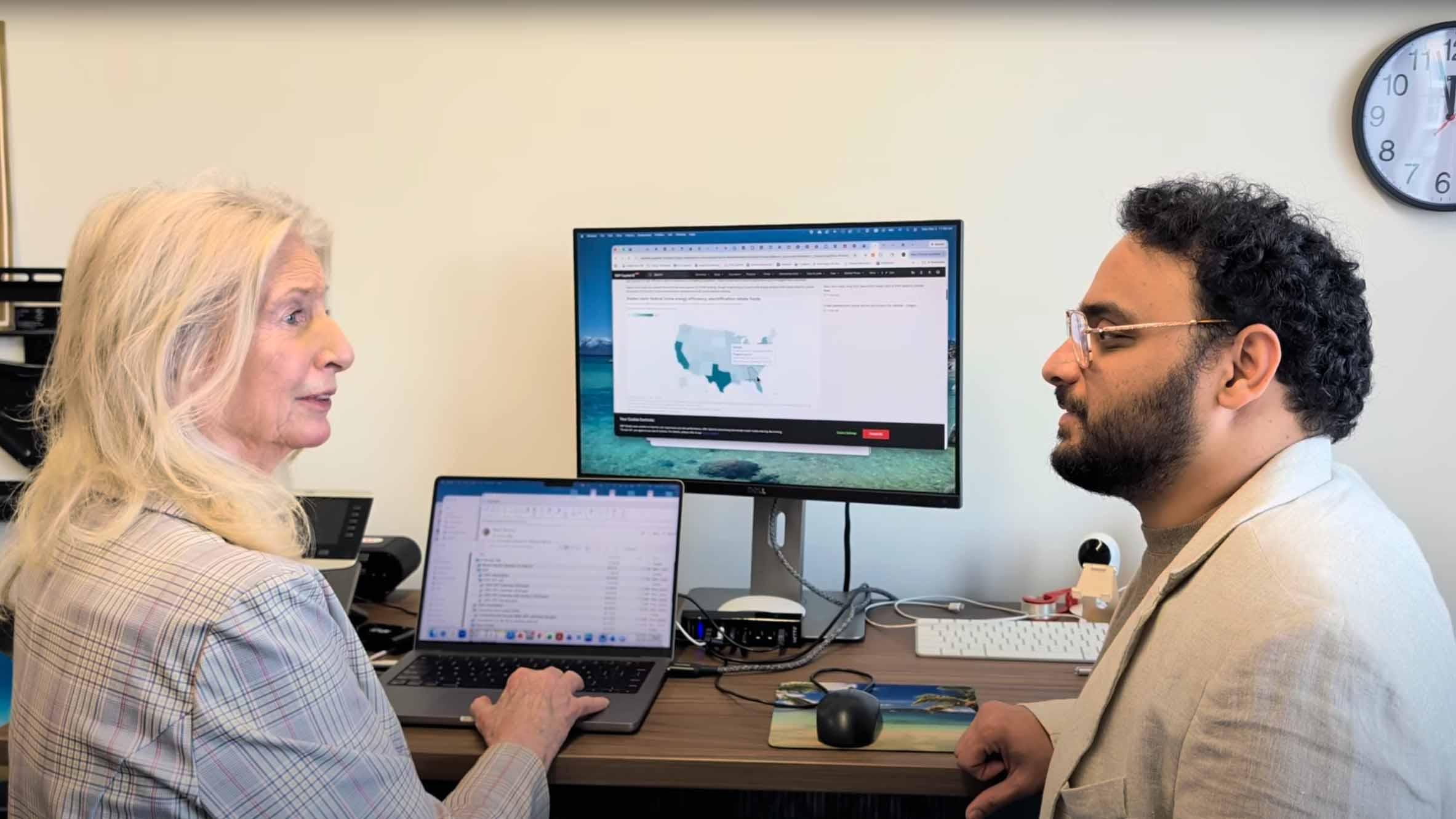
Two people talking at a standing desk with a monitor and laptop.

Regents' Professor Marilyn A. Brown and Ph.D. candidate Niraj Palsule co-authored the study.

Putting more electric cars on the road doesn’t just benefit those with enough money to buy the often-pricey vehicles, it also pushes down prices at the gas pump while strengthening U.S. energy security, according to new research from Georgia Tech’s Jimmy and Rosalynn Carter School of Public Policy.

According to the study, published in Energy Policy, widespread adoption of electric vehicles, or EVs, by 2035 would cut energy bills for U.S. households by more than 6% — including more than 4% at the gas pump. It also would drive oil imports down by 7% and increase exports by nearly 4%, the researchers say.

However, those benefits are imperiled by the repeal of national electric vehicle incentives and the recent decision by the federal government to roll back EV-boosting rules meant to increase vehicle fuel efficiency and reduce pollution, according to the study’s authors, Ph.D. candidate Niraj K. Palsule; Marilyn A. Brown, Regents’ Professor and Brook Byers Professor of Sustainable Systems; and former graduate student Suprita Chakravarthy. Their study was conducted prior to the federal decisions.

“Proponents of eliminating fuel efficiency standards and other EV-boosting policies often frame those regulatory approaches as consumer-unfriendly, but our analysis shows that such policies have many long-term benefits, both for consumers and for the nation’s energy security,” Palsule said.

For more on the study, read the full story.

 
News Contact

Michael Pearson
Ivan Allen College of Liberal Arts

Crystal Hanson: A Pillar of Service, Connection, and Excellence at Georgia Tech

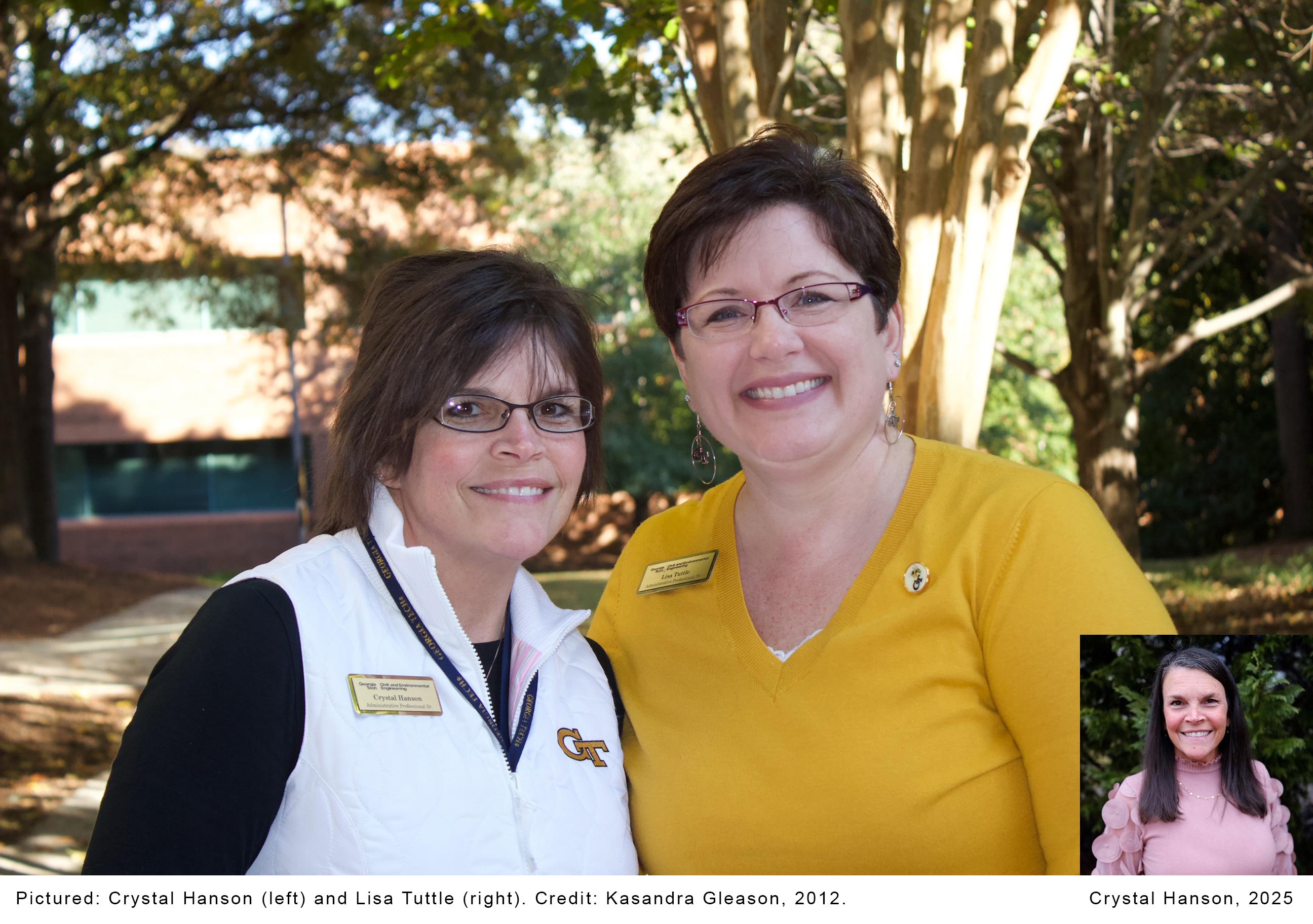
Crystal Hanson with Lisa Tuttle


Crystal Hanson is a quiet but powerful force within the Georgia Institute of Technology — an individual whose influence has shaped programs, strengthened communities, and supported leaders across campus. Her career reflects the profound impact a dedicated staff member can have on an institution, not only through operational excellence but through relationships, mentorship, and an unwavering commitment to service.

A Career Built on Service and Adaptability

Hanson’s journey in higher education began immediately after high school when she joined Purdue University and discovered her passion for supporting students, faculty, and academic communities. She carried that passion across multiple institutions before landing at Tech, building a career grounded in adaptability, resilience, and people-centered service.

Her Georgia Tech chapter began in the School of Civil and Environmental Engineering (CEE), where she supported the Water Resources Engineering group. There, she became a trusted resource for students and faculty alike — a steady presence who celebrated their successes, listened during challenges, and helped build a sense of community. 

Hanson credits Lisa Tuttle in CEE with helping her navigate the Georgia Tech landscape. With Tuttle’s help, she also discovered a talent for event planning and administrative leadership, eventually serving as administration manager and supporting the CEE chair with meetings, alumni engagement, and major departmental initiatives. One of her most memorable experiences was coordinating a trip to NATO headquarters in Belgium, an opportunity that deepened her appreciation for global collaboration and institutional history.

“Crystal was an extraordinary contributor throughout her time in CEE, first in the Water Resources Engineering group and later as the trusted manager of the entire administrative support team,” said Donald Webster, Karen and John Huff School Chair in CEE. “In every role, she brought dedication, professionalism, and genuine care for others. Crystal consistently went above and beyond to support the people of CEE — not only through professional challenges, but also during moments of personal crisis — always with compassion, steadiness, and grace. Her presence made our community stronger, more resilient, and more humane.”

A Trusted Partner in Research Leadership

Hanson later transitioned to the Executive Vice President for Research (EVPR) office, where she worked under leaders including Stephen Cross, Christopher Jones, Giselle Bennett, Raheem Beyah, and Julia Kubanek. Her time in this environment was formative. She absorbed the complexities of research administration, budgeting, and strategic planning, all while contributing to a culture where staff felt valued and included.

“When I joined the EVPR office, and it had only three or four people, it seemed everyone was doing two or three jobs,” said Christopher Jones, who joined the office in 2013 and is now the John F. Brock III School Chair in the School of Chemical and Biomolecular Engineering. “Crystal was an immediate fit, bringing with her organizational and management skills, a sense of humor, and an appreciation of our mission.  She is someone whom I always look forward to seeing, both then and now.”

After Beyah left the EVPR office to become the dean and Southern Company Chair in the College of Engineering, Kubanek became the new vice president for Interdisciplinary Research (VPIR). Together, Kubanek and Hanson built and expanded the VPIR team, helping to shape its operations and identity.

Among her many contributions, Hanson initiated the Interdisciplinary Research Spotlight Awards, recognizing staff and research faculty who go above and beyond in the Interdisciplinary Research Institutes (IRIs). She also shepherded the Research Faculty Teaching Fellows program, ensuring that research faculty across Georgia Tech and the Georgia Tech Research Institute had opportunities to develop teaching skills in partnership with the Center for Teaching and Learning.

The Connector at the Heart of the VPIR Office

Crystal describes herself as someone who prefers to work behind the scenes: cleaning up after events, coordinating logistics, and taking on nearly any task that needs to be done. 

“Crystal is the ultimate behind-the-scenes master organizer and people connector,” said Kubanek. “She develops individual relationships that enable her to organize, in short order, a meeting of numerous campus leaders whose calendars should be impossible to align. She comes bearing snacks and a smile and is the heart of our operation.”

Hanson’s deep institutional knowledge and extensive network positioned her to navigate Georgia Tech’s complex landscape. She serves as a bridge between the VPIR office, the IRIs, GTRI, and campus partners, ensuring that communication flows smoothly and people feel supported, informed, and connected.

“Her deep institutional knowledge and strong networks across campus meant she almost always knew the right person to connect with or the best way to move something forward,” said Punya Mardhanan, a former colleague in VPIR and now assistant director of business operations for the Space Research Institute. “Crystal works incredibly efficiently and often completes things before anyone asks. She never seeks recognition for the many ways she supports her team.”

A Colleague, Advisor, and Steady Source of Wisdom

Hanson’s colleagues consistently describe her as someone who not only gets things done but also makes everyone around her better.

“She’s like a mother hen to the VPIR team,” said Rob Kadel, executive director of research program administration. “I can always go to Crystal and say, ‘Who should I talk to about this?’ and she will know exactly who to talk to. She is never afraid to speak her mind. She’s a trusted advisor.”

Her leadership has also extended beyond formal responsibilities. She played a key role in designing the VPIR workspace during renovations, coordinated team retreats and bonding activities, and infused every gathering with energy and warmth.

“She cares so much about the Georgia Tech community,” said Colly Mitchell, director of events and engagement for the Parker H. Petit Institute for Bioengineering and Bioscience. “Crystal is incredibly responsive, helpful, and friendly. She brings a big burst of energy to every gathering.”

“Words that immediately come to mind when I think of Crystal are collaborative, dependable, responsive, and a true breadth of knowledge,” adds Cynthia Moore, director of operations for the Institute for People and Technology, who worked alongside Hanson for nearly a decade. “Crystal will truly be missed, along with her knowledge of all things Georgia Tech and research.”

A Legacy of Generosity and Excellence

After nearly 14 years at Georgia Tech, Hanson will retire on April 1. She will be remembered as someone who connected people, solved problems, and always went above and beyond. 

According to Raheem Beyah, provost and executive vice president for Academic Affairs, “Crystal was simply exceptional. She was a creative thought partner who provided outstanding support and strategic advice, and she became a dear friend. I am a better leader after working with Crystal, and Georgia Tech is a better place because of her. I can’t think of many people who deserve a wonderful retirement more than she does.”

Hanson looks forward to spending more time with her family, including her two daughters and two granddaughters, whose busy schedules she is eager to be part of. She and her husband have plans for travel, concerts — including those of her son-in-law’s band, Grouplove — and perhaps even a cruise around the world.

Georgia Tech extends its deepest gratitude to Crystal Hanson for her years of exceptional service, leadership, and dedication. Her impact will continue to resonate across the VPIR office, the IRIs, and the broader research community.

We wish her joy, adventure, and well-deserved rest in the next chapter of her life.

 
News Contact

Walter Rich
Research Communications