

GTRI Supports Initiative to Assess Quantum Computing Efforts

Quantum research and potential benefits

Quantum computers may one day enable revolutionary advances in fluid dynamics, drug discovery, development of better agricultural fertilizers, improved materials design and other technical areas. (Credit: Tim Hynes)

Quantum computers may one day enable revolutionary advances in fluid dynamics, drug discovery, development of better agricultural fertilizers, improved materials design and other technical areas that are beyond the capabilities of today’s conventional computers. To reach those goals, companies from around the world are pursuing a variety of approaches aimed at developing large-scale, fault-tolerant quantum computers.
 

The approaches of over a dozen quantum computing companies are now being evaluated through the Quantum Benchmarking Initiative (QBI), a project of the U.S. Defense Advanced Research Projects Agency (DARPA). According to the agency, QBI “aims to rigorously verify and validate whether any quantum computing approach can achieve utility-scale operation – meaning its computational value exceeds its cost – by the year 2033.”
 

Supporting the effort, a 40-person interdisciplinary research team from the Georgia Tech Research Institute (GTRI) has joined the test and evaluation component of QBI, providing unbiased subject-matter experts to work with 13 other research organizations in evaluating the R&D plans of participating quantum computer companies. Through this collaboration, the GTRI team is working with more than 400 other third-party experts on the project.
 

Read the complete article on the GTRI news site


Why the Strait of Hormuz Is More Than an Energy Crisis

Image of a map of Iran, with a magnifying glass over the Strait of Hormuz

Rising oil and gasoline prices have been the center of attention since the closure of the Strait of Hormuz. But that immediate effect tells only part of the story. Because oil and gas underpin production, transportation, and logistics, higher energy costs will gradually move through supply chains — meaning the most significant economic consequences may not appear for months. 

“The effects move slowly and appear in places people do not connect to energy,” said Tibor Besedes, professor in the School of Economics. “Oil and natural gas are part of the cost structure for an enormous range of goods.”

About 20% of global oil and liquefied natural gas flows through the waterway linking the Persian Gulf to world markets. When that flow is constrained, the impact ripples outward across industries most people never associate with an energy crisis.

“In complex supply chains, a disruption in one critical link, even if only briefly, can cascade through the system, well beyond the initial event,” says Pinar Keskinocak, chair and professor in the H. Milton Stewart School of Industrial and Systems Engineering. “As delays persist and compound, interconnected systems often take a long time to recover, rebalance, and return to normal.”

Price Pressures That Arrive Quietly

Early effects are already visible. 

Jet fuel availability is tightening, and diesel prices are rising across Asia. China has ordered refineries to stop exporting fuel, creating shortages that are increasing shipping costs for U.S. imports, from consumer electronics to pharmaceuticals.

The strait is also a key corridor for naphtha, a feedstock used to produce plastics, packaging, solvents, textiles, and pharmaceutical components. Roughly 85% of Middle Eastern polyethylene exports move through the strait. 

“Consumers won't see the effect of this quickly,” Besedes says, “but the longer the strait is closed, the higher the cost will be of all of these products naphtha is used for.”

Aluminum is equally exposed. 

“Smelters require sustained, low-cost energy,” said Chris Gaffney, a professor of the practice in the Stewart School. “The Middle East accounted for roughly 21% of U.S. unwrought aluminum imports in 2025. When energy prices spike or supply is constrained, capacity is reduced or shut down, and those decisions are difficult and slow to reverse.”

Fertilizer is one of the clearest examples of delayed inflation. Natural gas is essential for its production, and Persian Gulf states account for one-third of global urea exports and half of global sulfur exports. Urea prices at the New Orleans import hub have already climbed sharply.

“We won't see the effects quickly, but rather in six to 12 months, depending on the crop and its cycle,” Besedes says. “Without or with less fertilizer, crop yields will decrease, resulting in higher prices.”

Why Hormuz Is Different From Other Chokepoints

On top of all those factors, the strait closure presents a uniquely dangerous vulnerability. 

“Unlike a port strike or canal blockage, there is no meaningful way to reroute volume,” says Gaffney. “If it is disrupted, flow is constrained rather than redirected.” Pipeline alternatives replace only a fraction of the 20 million barrels per day that normally transit the strait.

“Choke point vulnerability arises when a large portion of flow depends on a route that is hard to substitute,” said Mathieu Dahan, associate professor in the Stewart School. “Hormuz has no scalable alternatives with sufficient capacity.” 

Alan Erera, senior associate chair in the Stewart School expanded on Dahan’s point, noting that strait disruptions raise costs across manufacturing and distribution.

“Ships are rerouted onto longer paths, which drives up fuel and labor costs, ties up vessels and containers for longer periods, and ultimately raises inventory costs for shippers because capital is locked up while goods are still in transit,” Erera said.

When Geopolitics Meets Global Supply Chains

Additionally, the strait closure raises the risk of wartime miscalculation. 

“We haven’t seen a disruption on this scale since the tanker wars of the late 1980s,” said Larry Rubin, associate professor in the Sam Nunn School of International Affairs. Gulf states' dependence on the strait constrains both regional actors and U.S. strategy, raising risks around crisis decision-making.

Rubin also points to a dimension most coverage has missed entirely. “One thing that has been overlooked by many commentators is the fact that the Iranian people have probably been hit the hardest economically,” he says. “They were already in a challenging situation. The Iranian economy won't recover quickly after the war.”

Resilience Has a Short Memory

Meanwhile, for the United States, “The Strategic Petroleum Reserve provides a buffer, and domestic energy production has improved resilience,” says Gaffney. “But the gap remains between enabling capacity and sustaining resilience. Policy can support infrastructure, but it cannot ensure private sector participants invest in resilience when cost pressures rise.”

For policymakers and industry leaders, the disruption reinforces a familiar pattern. "The supply chain remains optimized for efficiency rather than resilience, in part due to the high investment costs required to build flexibility," says Dahan. 

Gaffney added that resilience does improve after disruption, but that “it erodes over time if not actively maintained.”

Even if the strait reopens, higher costs and slow restart timelines mean the system will not snap back. Experts suggest that when headlines have moved on from this disruption, it will still be shaping prices across the economy. 

 
News Contact
Georgia Institute of Technology 
Institute Communications

Georgia Tech Researchers Develop First Genetic Passcode Lock to Protect Valuable DNA

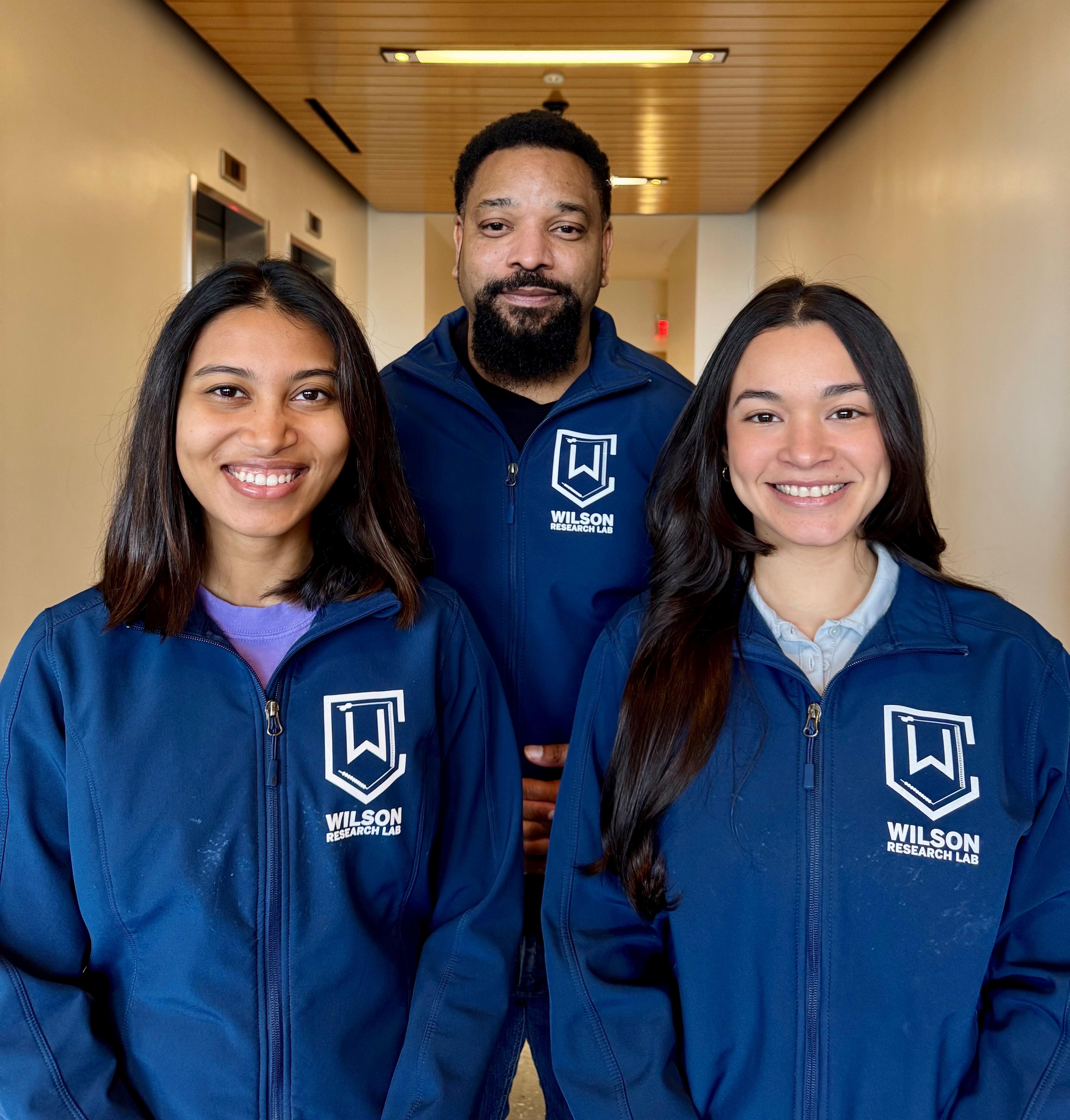
Research team members Ishita Kumar, Corey Wilson, and Luisa F. Barraza-Vergara

Research team members Ishita Kumar, Corey Wilson, and Luisa F. Barraza-Vergara

In recent years, the Centers for Disease Control and Prevention, the Department of Homeland Security, and other authorities have flagged a record number of unauthorized shipments of biological materials. At the same time, global intelligence communities have identified numerous attempts to smuggle sensitive biological samples in efforts of industrial theft or espionage. 

“A small vial of genetically engineered cells can contain multiple millions of dollars’ worth of intellectual property and require several years of work to develop,” said Corey Wilson, a professor in Georgia Tech’s School of Chemical and Biomolecular Engineering (ChBE). “Accordingly, the protection of high-value engineered cell lines has become critically important to the biotechnology industry.”

Wilson and his research team have published their findings in Science Advances demonstrating the effectiveness of their new biological security technology, known as GeneLock™, in protecting high-value engineered cell lines.

GeneLock is a cybersecurity-inspired technology that protects valuable genetic material directly at the DNA level. To demonstrate its strength, Wilson’s team conducted what they describe as a first-of-its-kind biohackathon, detailed in the new paper, to simulate unauthorized access. 

“GeneLock greatly improves our ability to protect high-value engineered cell lines by expanding security from the lab environment to the genetic level,” Wilson said.

Economic Impact

What are the stakes? Estimates place the global market for high-value genetic materials at more than $1.5 trillion, projected to reach $8 trillion by 2035. The use of these materials ranges from advanced medicines and proprietary research enzymes to specialty chemicals and sustainable materials.

Currently, the protection of high-value cell lines depends on physical safeguards such as restricted lab access and secure facilities, Wilson explained.

“The key weakness of physical security measures is once circumvented, there are typically no measures in place to protect valuable cells from theft, abuse, or unauthorized use,” Wilson said. 

“Once a sample leaves the building, the DNA it carries typically remains fully functional. This is akin to placing an unlocked cellphone in a desk drawer. Anyone who gains access to the drawer can view sensitive content on the phone­­­­­­­—or in this case will have full access to the valuable cell line.”

Genetic Passcode Protection

The GeneLock biological security technology developed by Wilson and his team places a passcode on engineered cells, akin to those used on ATM machines and protected cellphones.

Instead of leaving a valuable gene in readable form, the team scrambles the DNA sequence of interest. The scrambled genetic asset remains in a nonfunctional state unless the living cell where it resides receives the correct sequence of chemical inputs. Those inputs act as a molecular passcode.

“Only the right combination, delivered in the right order, rearranges the DNA into a working form,” Wilson said.

Biohackathon Security Test

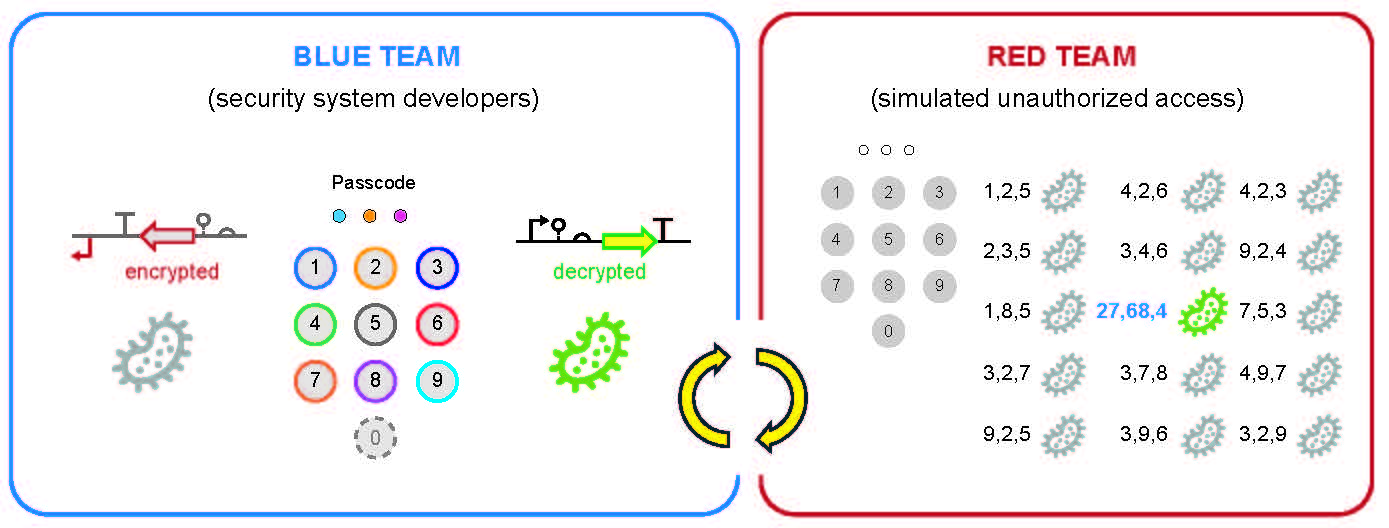
To evaluate the technology, the researchers organized a blue team and a red team in what they describe as an ethical biohackathon. The blue team designed the encrypted DNA sequence, while the red team was challenged to discover the correct chemical passcode through experimentation in a gray box exercise, meaning the red team had partial knowledge of the system but did not have access to the internal designs. 

“This approach for testing security strength is commonly used in cybersecurity,” Wilson explained. 

The blue team engineered the system inside Escherichia coli, or E. coli, a bacterium widely used in biotechnology. The protected asset was a fluorescent protein gene selected as a measurable stand-in for commercially valuable targets. When the correct chemical sequence was applied, the fluorescence turned on. Without the correct passcode, the gene remained scrambled and the cells could not fluoresce green. 

“In practice, most DNA sequences produce valuable proteins or chemicals that are essentially invisible to the human eye, requiring specialized devices or experiments to observe,” Wilson said. “If the biohackathon were conducted with a standard commercially valuable target, the penetration testing would have taken more than 10 times longer to complete, years instead of months.”

The biohackathon results showed a dramatic reduction in risk. GeneLock reduced the probability of unlocking the genetic asset by random search to about 1 in 85,000 (a 0.001% chance), assuming the unauthorized user had access to the required chemical inputs.

Without access to those inputs, “the likelihood of success by chance becomes effectively negligible,” said Dowan Kim (Georgia Tech PhD 2024), co-lead author of the study.

Commercial Uses and What’s Next 

Although the researchers used a non-commercial fluorescent protein as a test case, the implications extend much further. Many biotechnology companies rely on proprietary engineered strains. New England Biolabs, for example, produces more than 265 non-disclosed enzymes in E. coli, each representing a high-value cell line. 

Protein-based drugs are also manufactured in living cells, and proprietary metabolic pathways are used to produce specialty chemicals, bioplastics, and high-value ingredients. 

“In each case, the genetic blueprint inside the cell represents intellectual property that can be protected by our technology,” said Ishita Kumar, a PhD candidate in ChBE and co-lead author of the study.

While the team’s current focus is on protecting intellectual property in the form of high-value cells, future iterations aim to strengthen biological security more broadly. 

“We are currently developing protection measures to mitigate unauthorized use or release of sensitive cell lines that can be potentially hazardous to human health or the environment,” Wilson said.

“As it stands, GeneLock represents an important shift in biological security, enabling, for the first time, protection of valuable cells at the genetic level, even after physical security measures have been bypassed,” he added. 

The work is already moving toward commercialization. The team filed a provisional patent application with the U.S. Patent and Trademark Office in February 2026 and is forming a company to deploy the technology.

CITATION:

Dowan Kim, Ishita Kumar, Mohamed Hassan, Luisa F. Barraza-Vergara, Christopher A. Voigt, and Corey J. Wilson, “Protecting cells at the genetic level and simulating unauthorized access via a biohackathon,” Science Advances, 2026.

To evaluate the GeneLock technology, the researchers organized a blue team and a red team into a biohackathon.

To evaluate the GeneLock technology, the researchers organized a blue team and a red team into a biohackathon.

 
News Contact

Why Iran Targeted Amazon Data Centers and What That Does – and Doesn’t – Change About Warfare

Smoke rises in Abu Dhabi on March 1, 2026, after Iranian drone strikes around the city, including on data centers. Ryan Lim/AFP via Getty Images

Smoke rises in Abu Dhabi on March 1, 2026, after Iranian drone strikes around the city, including on data centers. Ryan Lim/AFP via Getty Images

Before dawn on March 1, 2026, Iranian Shahed drones struck two Amazon Web Services data centers in the United Arab Emirates. A third commercial data center in Bahrain was hit, though it is less clear whether it was deliberately targeted. This is the first time that a country has deliberately targeted commercial data centers during wartime.

Iran state media issued a statement on March 31 that it will target American companies, including Microsoft, Google, Apple, Meta, Oracle, Intel, HP, IBM, Cisco, Dell, Palantir and Nvidia. The Financial Times reported that an additional Iranian drone struck an Amazon data center in Bahrain on April 1. And Iranian state media claimed that Iranian forces attacked an Oracle data center in Dubai on April 2.

Iran has also been on the receiving end of such attacks. A data center in Tehran operated by Iran’s state-run Bank Sepah was struck by a missile – apparently fired by U.S. or Israeli forces – on March 11, according to a report in The Jerusalem Post.

Data centers have been targets of espionage and cyberattacks in the past, notably when Ukrainian hackers destroyed data stored in a Russian military-affiliated data center in 2024. These strikes in the Persian Gulf region, however, were physical attacks. Drones damaged buildings.

Advances in artificial intelligence have increased the importance of data centers. The U.S. military, in particular, has made great use of AI systems for decision support in its attacks on Iran and Venezuela. Given how important data centers are, Iranian forces could be targeting the infrastructure Iran’s leaders believe is supporting strikes on Iran.

It is not altogether clear that these particular data centers were used by the U.S. military. Instead, the attacks may have been part of a broader effort to punish the United Arab Emirates for its ties with the U.S.

In my experience as a Ph.D. candidate at Georgia Tech studying how technology drives changes in international security, I don’t think the attacks signal any significant change in the nature of warfare. But they are forcing nations to recognize that data centers are targets of war – even if they don’t directly support military operations.

Data Centers and the Cloud

The United States military is increasingly incorporating advanced AI capabilities into its decision support systems. From the operation to capture Venezuelan President Nicolás Maduro to supporting military strikes against Iran, the U.S. has been using AI, especially Anthropic’s Claude, for intelligence analysis and operational support.

AI is unlocking faster ways to carry out operations in war, but the AI tools the military often uses are not located on a plane or ship. When a service member uses Claude, the computing infrastructure that powers the model and its analysis usually goes to a secure Amazon Web Services cloud that hosts secret government data and software tools.

The basics of data centers explained.

Commercial data centers are where the cloud lives. The next time you pull up Netflix and watch your favorite shows, you are likely streaming the programming from a data center, possibly AWS. When AWS data centers go down, outages affect all sorts of entertainment, news and government functions.

With AI as a driver of economic growth, data centers are key forms of infrastructure. They ensure that AI can continue to run, as well as much of the underlying internet that governments and industry rely on. When Iran attacked the UAE’s data centers, it caused widespread disruption to the local banking system.

Commercial data centers enable most of the technology that runs the modern world, including AI systems. Disrupting them is key to disrupting a country’s military and society. Given that AWS provides and operates many of the commercial data centers where the cloud lives, it is likely that its data centers will continue to be targeted in conflict.

Going After US Allies

Researchers at Just Security noted on March 12, 2026, that the United States requires cloud-computing service providers to store government and military data within the U.S. or on Department of Defense bases: “Moving such data to Amazon data centers in the Gulf region would require special authorization; we are unaware if that has been granted.”

Nevertheless, Iran’s Islamic Revolutionary Guard Corps claimed the strikes were against data centers supporting “the enemy’s” military and intelligence activities. And 10 days after the initial attack on the data centers, an Iranian news agency claimed that major tech company data centers and other physical assets in the region were considered “enemy technology infrastructure.”

Instead of military reasons, Iran may well have targeted the UAE to rattle the global economy and garner attention. Given the prominence of the Gulf as a major recipient of U.S. technological investment, the attack may also have been a symbolic one aimed at the heart of U.S.-Gulf cooperation. AI infrastructure such as commercial data centers is a growing part of U.S. leadership in the region, and this war could jeopardize the future of AI infrastructure in the Gulf.

men wearingwhite robes and headdresses stand over a model of an industrial park

This model shows a massive data center, part of the Stargate project involving U.S. tech companies, currently under construction in the United Arab Emirates. Giuseppe CACACE/AFP via Getty Images

Growing Importance, Easy Targets

Though data centers are increasingly important for national security, the economy and society at large, it can be tempting to suggest these strikes represent a fundamental shift in the nature of war. While that is a possibility, it is important to remember that Iran launched thousands of missiles and drones at targets in the UAE and Bahrain. Though the vast majority were intercepted, the four that struck data centers are a small portion of the ones that got through to civilian targets in those countries, including strikes on airports and hotels.

The relative vulnerability of commercial data centers – they are large, relatively fragile and lack dedicated air defenses – suggests that the ones in the UAE and Bahrain may have been targets of opportunity or convenience. In other words, they were hit because they could be hit.

Nevertheless, it seems likely that as the use of AI tools and other cloud-based resources continues to grow in importance for countries around the world, commercial data centers will be targets in future conflicts.

This article has been updated to include news of Iran’s statement about targeting U.S. tech companies and subsequent drone strikes on other data centers.The Conversation


This article is republished from The Conversation under a Creative Commons license. Read the original article.
 
News Contact
Author:

Dennis Murphy, Ph.D. student of International Affairs, Georgia Institute of Technology

Media Contact:

Shelley Wunder-Smith
shelley.wunder-smith@research.gatech.edu

The Future of AI‑Powered Manufacturing

The Future of AI-Powered Manufacturing

Manufacturing is undergoing a significant transformation as artificial intelligence reshapes how industrial systems operate, adapt, and scale. The H. Milton Stewart School of Industrial and Systems Engineering (ISyE) has launched its Manufacturing and AI Initiative, which brings together faculty expertise in statistics, optimization, data science, and systems engineering to address emerging challenges and opportunities in modern manufacturing.

ISyE researchers are applying AI to complex manufacturing environments, including multistage production systems, asset management, quality improvement, and human‑centered manufacturing. Faculty leaders emphasize the importance of contextualizing large volumes of manufacturing data so AI can support reliable decision‑making, efficient operations, and sustainable outcomes. At the same time, the initiative acknowledges challenges such as data integration, system complexity, and the need to balance automation with human involvement. Together, these efforts position ISyE at the forefront of shaping AI‑powered manufacturing systems that are innovative, resilient, and socially responsible.

Read the full article in ISyE Magazine 

 
News Contact

Annette Filliat, ISyE Communications Writer 

2026 Frontiers in Science: Advancing Space Exploration

A black banner reading "Frontiers in Science: Advancing Space Exploration." The words are surrounded by dynamic gold sparkles, along with light blue, gold, and white parallelograms.

This Thursday, April 2, the College of Sciences is hosting an inspiring look at the future of space exploration and life beyond Earth. Frontiers in Science: Advancing Space Exploration will convene leading scientists, engineers, policy experts, and thought leaders from across Georgia Tech and beyond to share research that’s guiding discovery and innovation. 

Hosted annually by College of Sciences Dean and Betsy Middleton and John Clark Sutherland Chair Susan Lozier, Frontiers showcases how collaboration across disciplines — from science and engineering to public policy and international affairs — advances strategic research priorities. Recent programs have explored neuroscience and AI, climates in flux — and, this year, our solar system. 

2026 Frontiers will convene more than 25 experts to discuss planetary science, satellites and orbital observation, robotic exploration, public astronomy, and bold visions for human spaceflight. The conference will also highlight the future of space policy, careers and commercialization, space as a laboratory, and will feature an “Astronaut’s Perspective” fireside chat with R. Shane Kimbrough (MS OR ’98) and Jud Ready, who serves as executive director of Georgia Tech’s new Space Research Institute (SRI) and GTRI principal research engineer. 

We are at capacity for day passes!

Members of the community are welcome to drop by sessions of interest, lunchtime and evening telescope viewings, and our afternoon networking reception without RSVP. 

A schedule of events and location info can be found at:
http://cos.gatech.edu/frontiers-space


Transformer Explainer Shows How AI Is More Math than Human

CHI 2026 Transformer Explainer

While people use search engines, chatbots, and generative artificial intelligence tools every day, most don’t know how they work. This sets unrealistic expectations for AI and leads to misuse. It also slows progress toward building new AI applications. 

Georgia Tech researchers are making AI easier to understand through their work on Transformer Explainer. The free, online tool shows non-experts how ChatGPT, Claude, and other large language models (LLMs) process language. 

Transformer Explainer is easy to use and runs on any web browser. It quickly went viral after its debut, reaching 150,000 users in its first three months. More than 563,000 people worldwide have used the tool so far.

Global interest in Transformer Explainer continues when the team presents the tool at the 2026 Conference on Human Factors in Computing Systems (CHI 2026). CHI, the world’s most prestigious conference on human-computer interaction, will take place in Barcelona, April 13-17.

“There are moments when LLMs can seem almost like a person with their own will and personality, and that misperception has real consequences. For example, there have been cases where teenagers have made poor decisions based on conversations with LLMs,” said Ph.D. student Aeree Cho.

“Understanding that an LLM is fundamentally a model that predicts the probability distribution of the next token helps users avoid taking its outputs as absolute. What you put in shapes what comes out, and that understanding helps people engage with AI more carefully and critically.”

A transformer is a neural network architecture that changes data input sequence into an output. Text, audio, and images are forms of processed data, which is why transformers are common in generative AI models. They do this by learning context and tracking mathematical relationships between sequence components.

Transformer Explainer demystifies how transformers work. The platform uses visualization and interaction to show, step by step, how text flows through a model and produces predictions.

Using this approach, Transformer Explainer impacts the AI landscape in four main ways:

  • It counters hype and misconceptions surrounding AI by showing how transformers work.
  • It improves AI literacy among users by removing technical barriers and lowering the entry for learning about AI.
  • It expands AI education by helping instructors teach AI mechanisms without extensive setup or computing resources.
  • It influences future development of AI tools and educational techniques by providing a blueprint for interpretable AI systems.

“When I first learned about transformers, I felt overwhelmed. A transformer model has many parts, each with its own complex math. Existing resources typically present all this information at once, making it difficult to see how everything fits together,” said Grace Kim, a dual B.S./M.S. computer science student. 

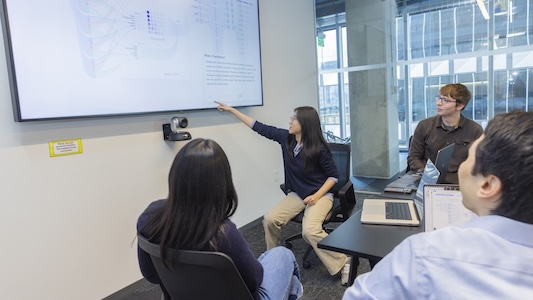
“By leveraging interactive visualization, we use levels of abstraction to first show the big picture of the entire model. Then users click into individual parts to reveal the underlying details and math. This way, Transformer Explainer makes learning far less intimidating.”

Many users don’t know what transformers are or how they work. The Georgia Tech team found that people often misunderstand AI. Some label AI with human-like characteristics, such as creativity. Others even describe it as working like magic.

Furthermore, barriers make it hard for students interested in transformers to start learning. Tutorials tend to be too technical and overwhelm beginners with math and code. While visualization tools exist, these often target more advanced AI experts.

Transformer Explainer overcomes these obstacles through its interactive, user-focused platform. It runs a familiar GPT model directly in any web browser, requiring no installation or special hardware. 

Users can enter their own text and watch the model predict the next word in real time. Sankey-style diagrams show how information moves through embeddings, attention heads, and transformer blocks.

The platform also lets users switch between high-level concepts and detailed math. By adjusting temperature settings, users can see how randomness affects predictions. This reveals how probabilities drive AI outputs, rather than creativity.

“Millions of people around the world interact with transformer-driven AI. We believe that it is crucial to bridge the gap between day-to-day user experience and the models' technical reality, ensuring these tools are not misinterpreted as human-like or seen as sentient,” said Ph.D. student Alex Karpekov

“Explaining the architecture helps users recognize that language generated by models is a product of computation, leading to a more grounded engagement with the technology.” 

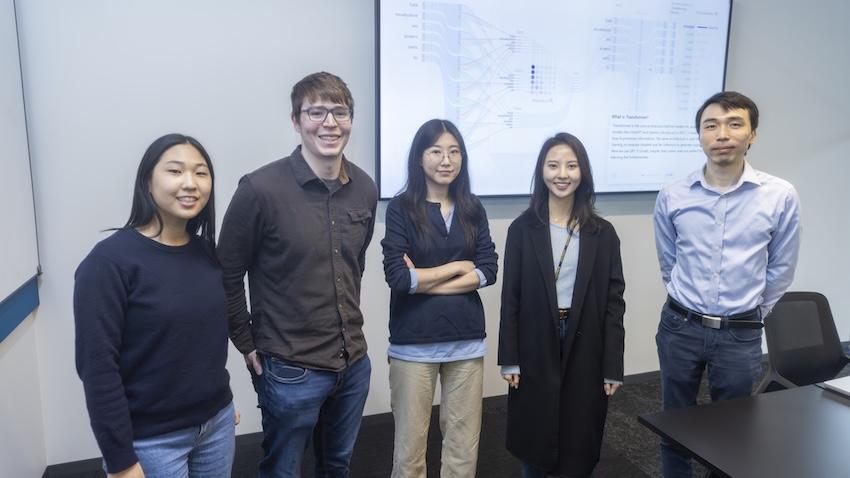
Cho, Karpekov, and Kim led the development of Transformer Explainer. Ph.D. students Alex HelblingSeongmin LeeBen Hoover, and alumnus Zijie (Jay) Wang assisted on the project. 

Professor Polo Chau supervised the group and their work. His lab focuses on data science, human-centered AI, and visualization for social good.

Acceptance at CHI 2026 stems from the team winning the best poster award at the 2024 IEEE Visualization Conference. This recognition from one of the top venues in visualization research highlights Transformer Explainer’s effectiveness in teaching how transformers work.

“Transformer Explainer has reached over half a million learners worldwide,” said Chau, a faculty member in the School of Computational Science and Engineering. 

“I'm thrilled to see it extend Georgia Tech's mission of expanding access to higher education, now to anyone with a web browser.”

CHI 2026 Transformer Explainer
 
News Contact

Bryant Wine, Communications Officer
bryant.wine@cc.gatech.edu

New Study Shows Explainability is a Must for Older Adults to Trust AI

An older couple sitting on a couch as a man helps them use Amazon's Alexa

Voice-activated, conversational artificial intelligence (AI) agents must provide clear explanations for their suggestions, or older adults aren’t likely to trust them.

That’s one of the main findings from a study by AI Caring on what older adults expect from explainable AI (XAI).

AI Caring is one of three AI Institutions led by Georgia Tech and funded by the National Science Foundation (NSF). The institution supports AI research that benefits older adults and their caregivers.

Niharika Mathur, a Ph.D. candidate in the School of Interactive Computing, was the lead author of a paper based on the study. The paper will be presented in April at the 2026 ACM Conference on Human Factors in Computing Systems (CHI) in Barcelona.

Mathur worked with the Cognitive Empowerment Program at Emory University to interview 23 older adults who live alone and use voice-activated AI assistants like Amazon’s Alexa and Google Home.

Many of them told her they feel excluded from the design of these products.

“The assumption is that all people want interactions the same way and across all kinds of situations, but that isn’t true,” Mathur said. “How older people use AI and what they want from it are different from what younger people prefer.”

One example she gave is that young people tend to be informal when talking with AI. Older people, on the other hand, talk to the agent like they would a person.

“If Older adults are talking to their family members about Alexa, they usually refer to Alexa as ‘she’ instead of ‘it,’” Mathur said. “They tend to humanize these systems a lot more than young people.”

Good Explanations

The study evaluated AI explanations that drew information from four sources of data:

  • User history (past conversations with the agent)
  • Environmental data (indoor temperature or the weather forecast)
  • Activity data (how much time a user spends in different areas of the home)
  • Internal reasoning (mathematical probabilities and likely outcomes)

Mathur said older users trust the agent more when it bases its explanations on data from the first three sources. However, internal reasoning creates skepticism.

Internal reasoning means the AI doesn’t have enough data from the other sources to give an explanation. It provides a percentage to reflect its confidence based on what it knows.

“The overwhelming response was negative toward confidence scores,” Mathur said. “If the AI says it’s 92% confident, older adults want to know what that’s based on.”

This is another example that Mathur said points to generational preferences.

“There’s a lot of explainable AI research that shows younger people like to see numbers in explanations, and they also tend to rely too much on explanations that contain numerical confidence. Older adults are the opposite. It makes them trust it less.”

Knowing the Context

Mathur said that AI agents interacting with older adults should serve a dual purpose. They should provide users with companionship and support independence while reducing the caretaking burden often placed on family members. 

Some studies have shown that engineers have tended to favor caretakers in the design of these tools. They prioritize daily tasks and routines, leaving some older adults to feel like they are merely a box to be checked.

She discovered that in urgent situations, older users prefer the AI to be straightforward, while in casual settings, they desire more conversation.

“How people interact with technological systems is grounded in what the stakes of the situation are,” she said. “If it had anything to do with their immediate sense of safety, they did not want conversational elaboration. They want the AI to be very direct and factual.”

Not Just Checking Boxes

Mathur said AI agents that interact with older adults are ideally constructed with a dual purpose. They should provide companionship and autonomy for the users while alleviating the burden of caretaking that is often placed on their family members. 

Some studies have shown that engineers have strayed toward favoring caretakers in the design of these tools. They prioritize daily tasks and routines, leaving some older adults to feel like they are a box to be checked.

“They’re not being thought of as consumers,” Mathur said. “A lot of products are being made for them but not with them.”

She also said psychological well-being is one of the most important outcomes these tools should produce. 

Showing older adults that they are listened to can significantly help in gaining their trust. Some interviewees told Mathur they want agents who are deliberate about understanding their preferences and don’t dismiss their questions.

Meeting these needs reduces the likelihood of protesting and creating conflict with family members.

“It highlights just how important well-designed explanations are,” she said. “We must go beyond a transparency checklist.”


Researchers Look to Bolster Technology Support for Menopause

Umme Ammar sits in a booth with laptop in front of her

Women in need of supportive maternal and menstrual healthcare in patriarchal societies have increasingly found outlets for disclosure in online communities.

That support, however, begins to disappear in these restrictive cultures once women reach menopause, according to new research from Georgia Tech

Naveena Karusala, an assistant professor in Georgia Tech’s School of Interactive Computing, and master’s student Umme Ammara are working toward improving existing technologies and designing new ones for a demographic they believe has been neglected.

Karusala and Ammara co-authored a paper based on a study they conducted with women in urban Pakistan experiencing menopause.

“Women’s health is understudied in general, but menopause is more neglected than other women’s health issues,” Karusala said. “Our choice to focus on menopause is motivated by expanding how we holistically think about women’s well-being across their lifespan.”

Karusala and Ammara will present their paper in April at the 2026 ACM Conference on Human Factors in Computing Systems (CHI) in Barcelona.

Masking Symptoms

Menopause is diagnosed after 12 consecutive months without a period, vaginal bleeding, or spotting. The transition to menopause, called perimenopause, usually happens over two to eight years.

Hormone changes may cause symptoms such as irregular periods, vaginal dryness, hot flashes, night sweats, trouble sleeping, mood swings, and brain fog.

These symptoms can be debilitating in some cases and affect daily life. However, Ammara said women are pressured to remain silent, maintain appearances, and regulate their emotions to meet social expectations.

“Understanding menopause is important because a woman would be experiencing all these symptoms, and people will not understand those as actual symptoms,” Ammara said. “There’s been resistance to the idea of the medicalization of menopause. People don’t view it as an illness, but as a life transition and something that happens naturally.”

Feeling Isolated

The women interviewed by Karusala and Ammara either stayed at home full-time or were part of the workforce.

The researchers discovered that trusted family members might be the only sources women who stay at home and do not work turn to for disclosure. 

“Women at home have the flexibility to take breaks or work at their own pace, so a lot of their experience is shaped by the emotional barriers they face,” Ammara said. 

“That could come from their husbands and family members. Some are supportive and some are not. They might weaponize it and use that term against them, or they might dismiss what they’re going through.”

Ammara said it might be easier for women in the workforce to confide in their coworkers, but explaining to an employer that they need sick leave for menopause symptoms can be intimidating.

Even in online communities that have enabled women to anonymously share their health experiences, menopause is seldom discussed.

Raising Awareness

Karusala and Ammara argue in their paper that a public health approach could be the most effective way to spark conversation about menopause in a patriarchal culture in which technology use varies.

They said the challenge in implementing technologies geared toward menopause support is that the condition isn’t well understood in public. Improving maternal health, for example, is easier to promote within these societies because of the general understanding that motherhood is important.

“There must be an existing infrastructure to build on,” Karusala said. “For example, menstrual and maternal health are taught in schools and regularly discussed in primary care. Cultural and social meaning and importance are placed on motherhood.

“A lot of that doesn’t exist for menopause. Primary care doctors are unprepared to talk about menopause compared to other health issues.”

Design Solutions

Ammara said that the most effective way for technologies to make an impact on women going through menopause is to directly address systemic power structures around women’s health within Pakistani culture.

It can start with the husbands. 

“Framing the issue for husbands to understand menopause should be at the forefront of designing technology solutions,” she said. 

“In Islamic contexts, we suggest using faith-based framings. This has been proposed for maternal health in prior works that draw on Islamic principles to engage expectant fathers in providing care and support. Framing it around religious responsibility to involve men in the journey can also be done for menopause.”

 
News Contact

Nathan Deen
College of Computing
Georgia Tech

Energy Day Brings Leaders Together to Tackle AI Power Demands

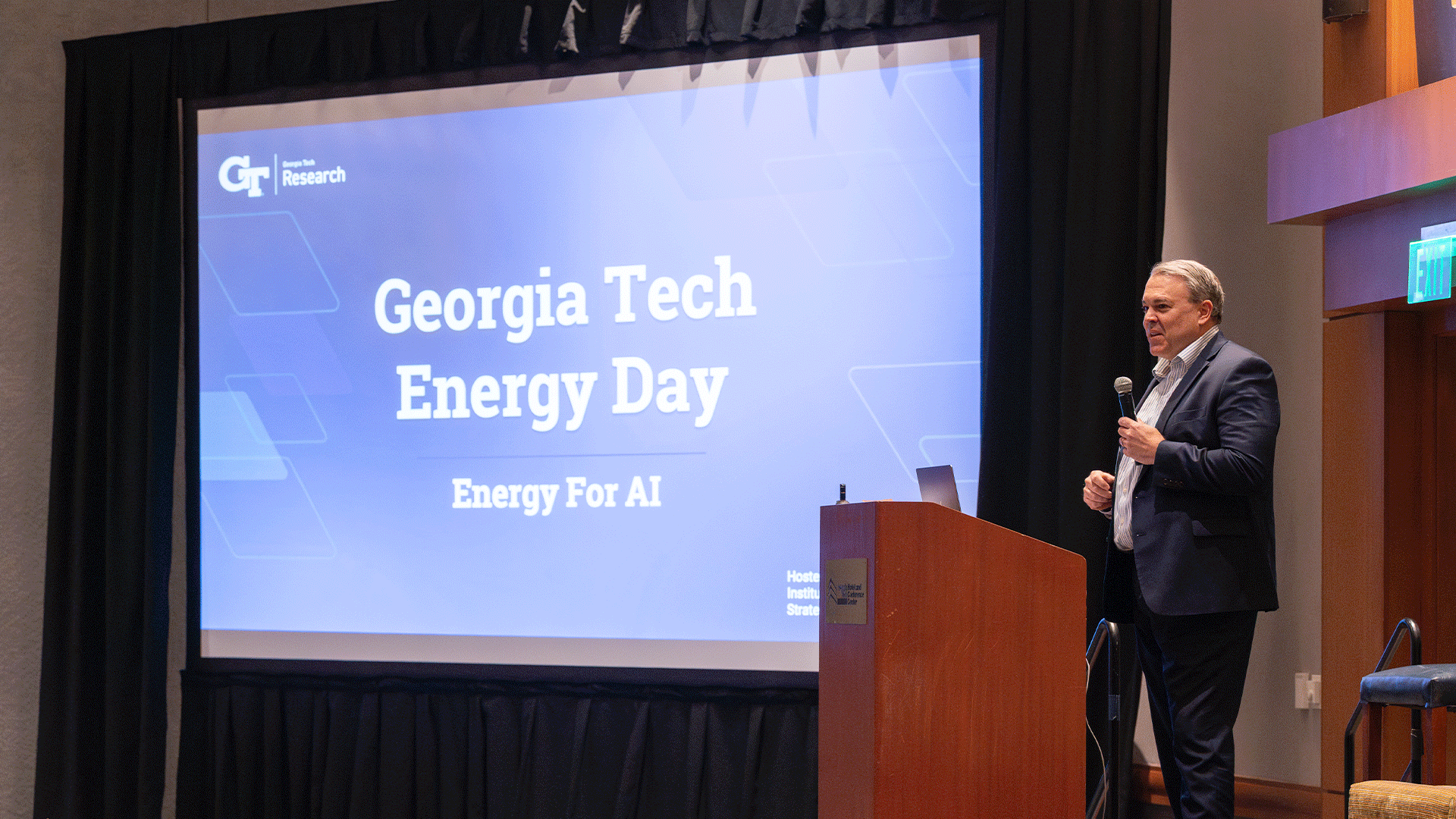
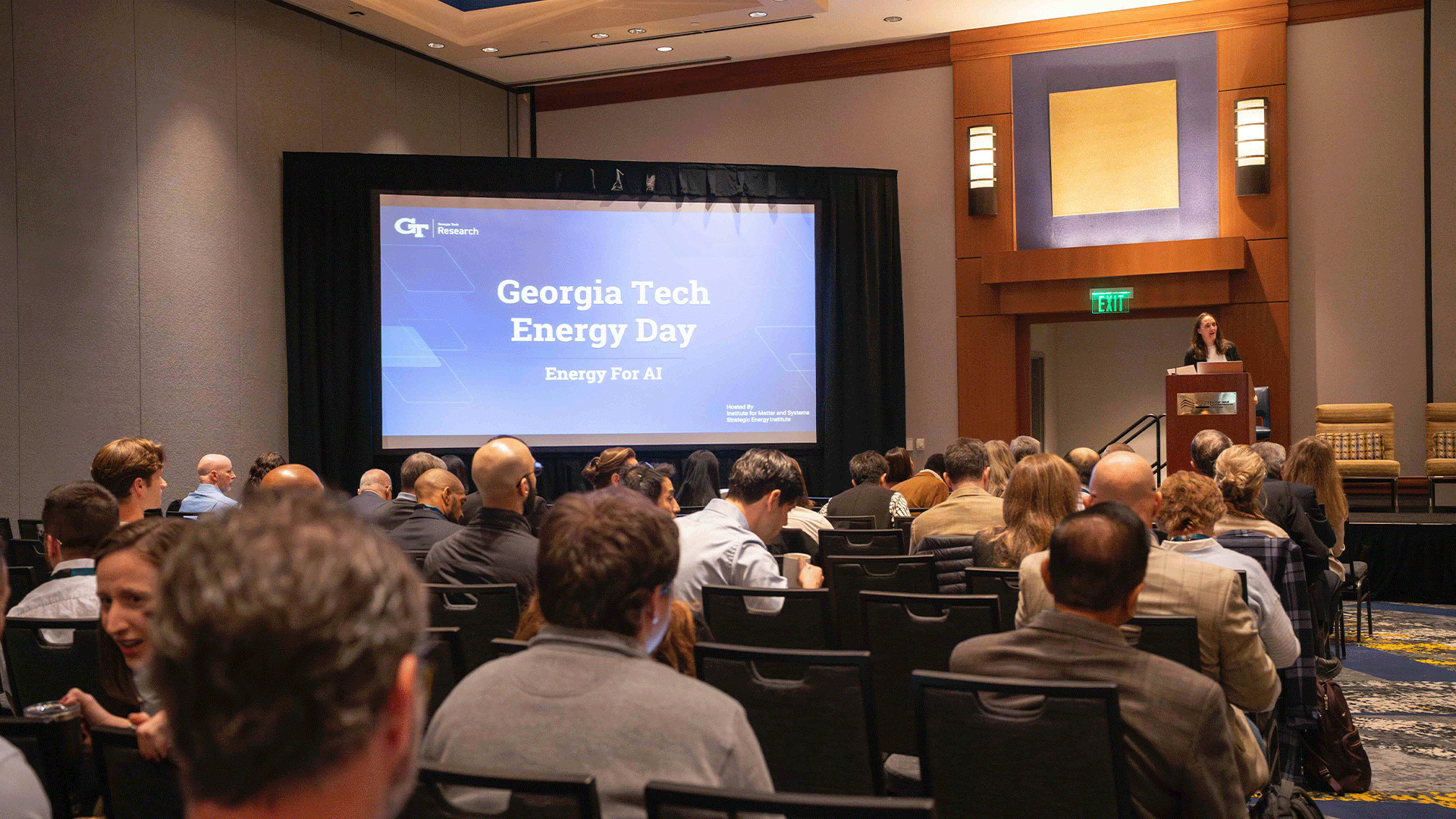
A man stands at a podium speaking in front of a large screen displaying “Georgia Tech Energy Day: Energy for AI.” The setting is a conference room with stage lighting and an audience out of frame.

Eric Vogel welcomed attendees to Energy Day.

More than 300 leaders from industry, government, and academia gathered on Georgia Tech’s campus for Energy Day, a one-day conference focused on one of today’s most urgent challenges: meeting the rapidly growing energy demands of artificial intelligence (AI).  

Held on March 19, the event was co-hosted by Georgia Tech’s Institute for Matter and Systems (IMS) and Strategic Energy Institute (SEI) with plenary support from the Energy Policy and Innovation Center. This year’s theme, Energy for AI, anchored discussions on how energy systems must evolve to support an increasingly digital and computer-intensive world.  

“Energy Day demonstrates how critical it is to align research, industry, and policy to manage rising power demand and modernize our energy systems,” said Yuanzhi Tang, SEI’s executive director. “At Georgia Tech, we are committed to advancing solutions that translate research into impact at the speed innovation demands.” 

This year’s Energy Day continued the momentum of past events, beginning with Battery Day in 2023. As research priorities have expanded, the event has grown to highlight Georgia Tech and the state of Georgia as national hubs for next-generation energy innovation, advanced manufacturing, and data-driven infrastructure.  

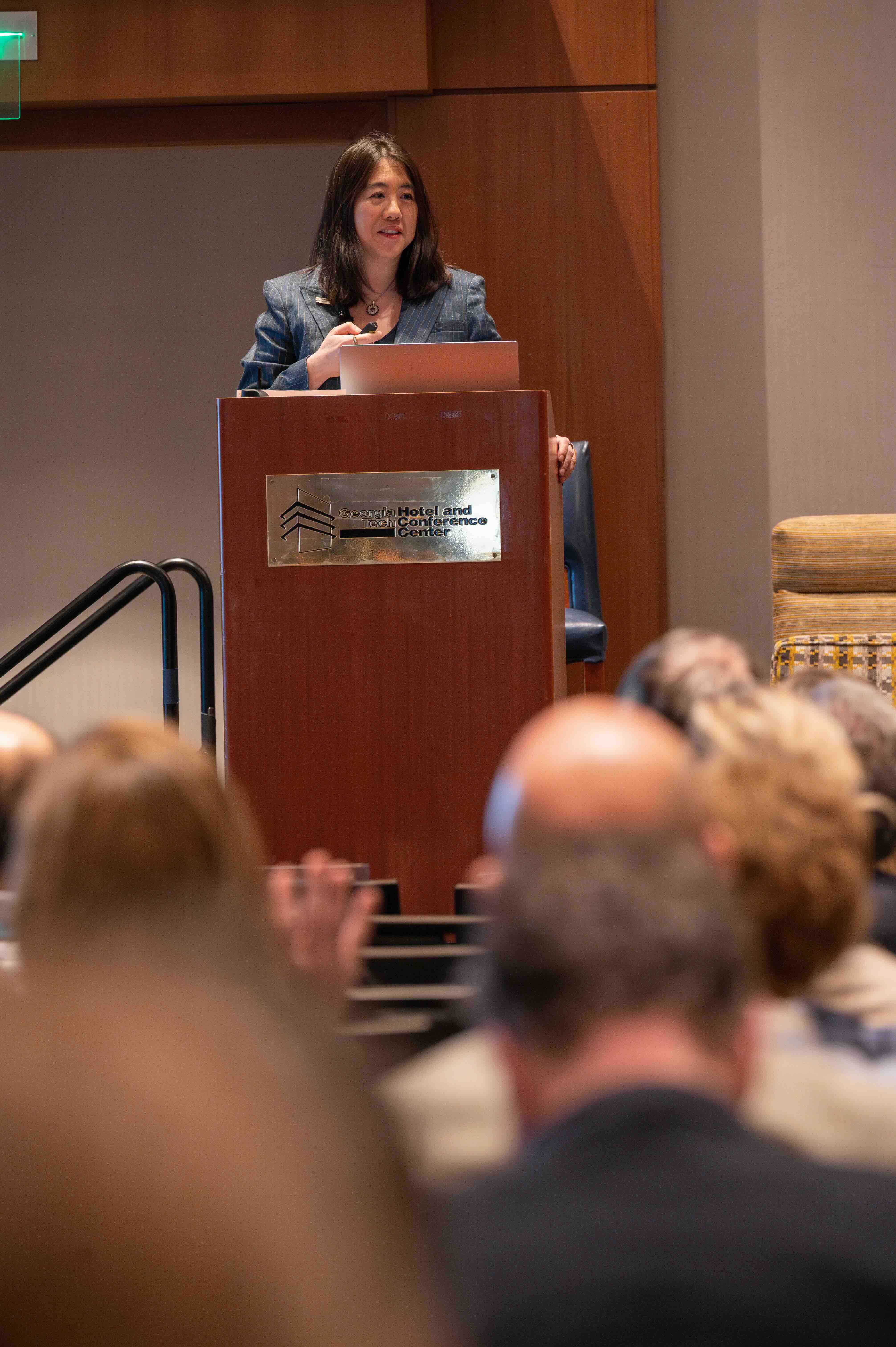
The program was structured to foster high-level dialogue through keynote presentations and panel discussions, as well as deeper, focused tracks on specialized technical topics. The morning session featured a fireside chat between presenting sponsor GE Vernova and Georgia Tech Executive Vice President for Research Tim Lieuwen, followed by a keynote address from Vanessa Chan, former U.S. Department of Energy official and expert in commercialization and innovation, and two panels focused on policy, materials, and the evolving energy ecosystem. 

“Great ideas usually come out when you bring together different perspectives,” said Eric Vogel, executive director of IMS. “That’s why we have this event. It helps scientists think more broadly, connects policymakers to science, and demonstrates the strength of Georgia Tech’s research community.” 

In the afternoon, attendees split into three technical tracks addressing critical challenges at the intersection of energy and AI — from power delivery and storage to materials, infrastructure, and system resilience. 

Designed to bring together researchers, policy makers, industry leaders, and students, Energy Day continues to drive interdisciplinary collaboration. Conversations throughout the day centered on three ideas: the magnitude and certainty of rising global energy demand, the urgency of scaling solutions efficiently, and the necessity of broad collaboration across research, industry, policy, and workforce pathways. 

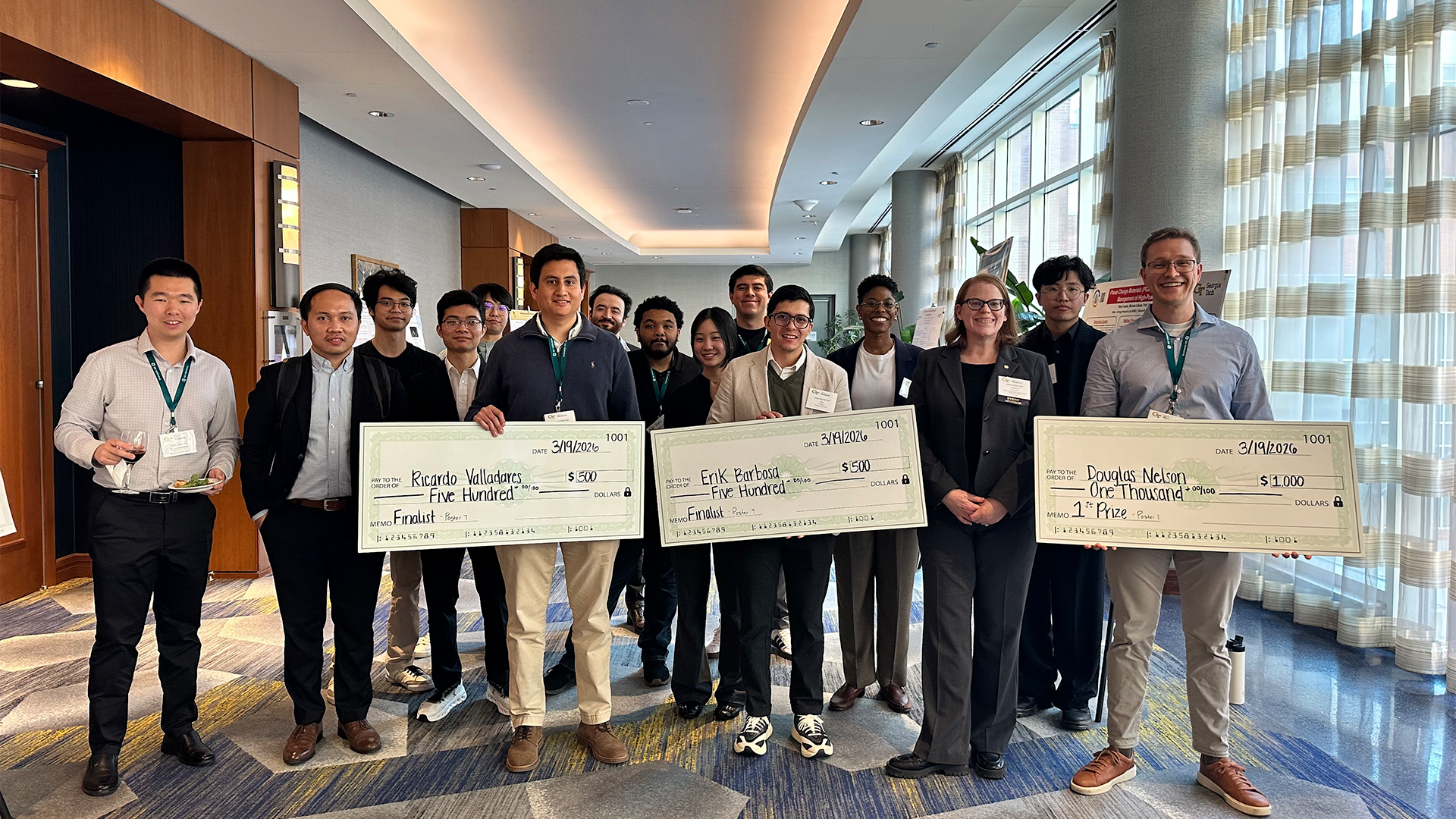
The event concluded with a student poster session featuring more than 20 research presentations, highlighting emerging work from across Georgia Tech. Three were recognized for excellence: 

First place: Douglas Nelson — Improving Energy Efficiency in Fume Hoods and Ultra-Low Temperature Freezers 
Finalist: Erik Barbosa — Multiscale Approach for Thermochemical Energy Storage in Buildings 
Finalist: Ricardo Cruzado Valladares — Energy-Water Nexus for Sustainable AI Data Centers 

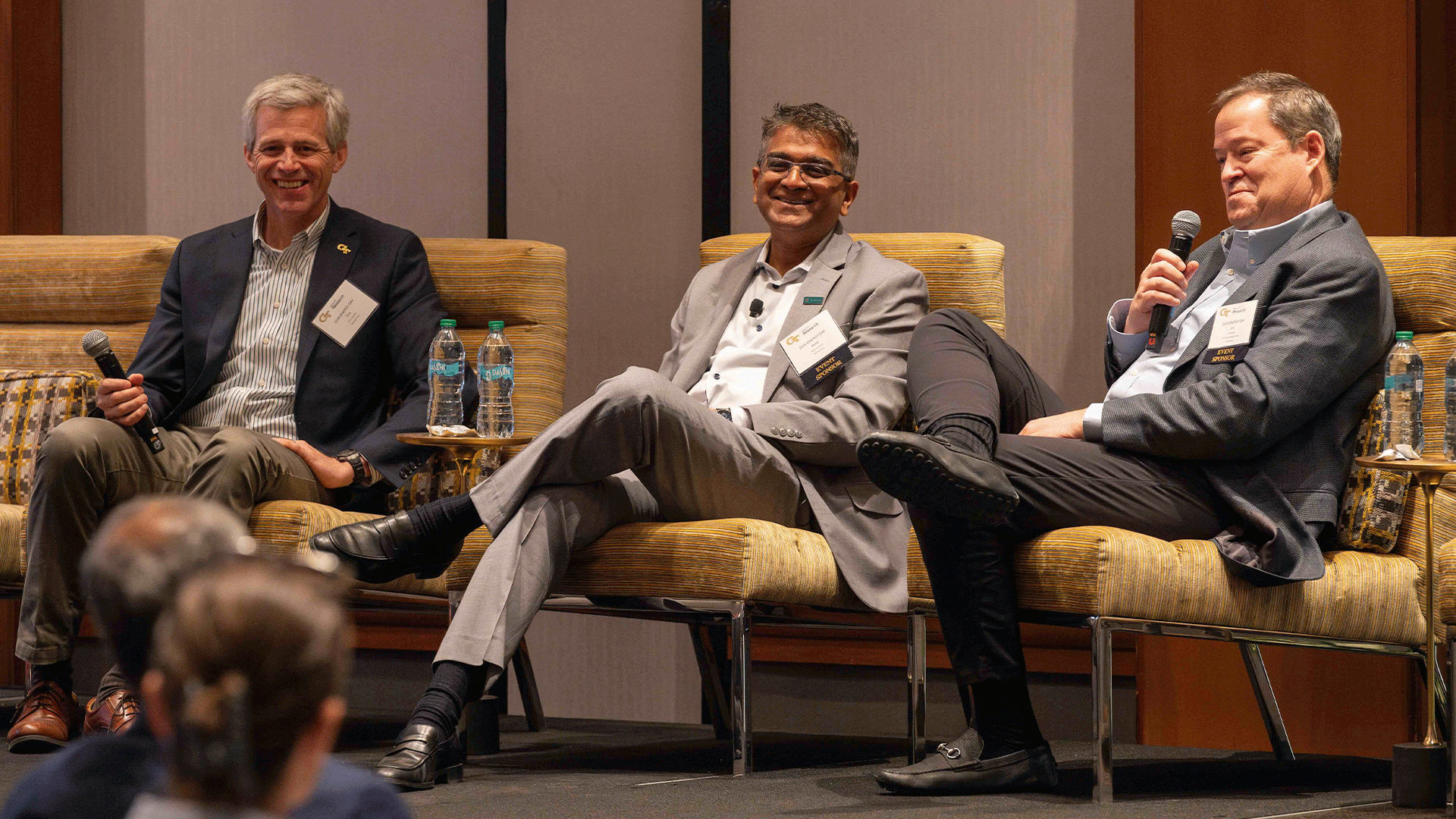
Three men sit on stage in a panel discussion, smiling and holding microphones. Water bottles rest on small tables beside their chairs.

Georgia Tech EVPR Tim Lieuwen (left) with Amit Kulkarni (center) and Jim Walsh (right), both speakers from GE Vernova.

A wide view of a conference room shows attendees seated and facing a stage with a large screen reading “Georgia Tech Energy Day: Energy for AI.” Marta Hatzell stands at a podium to the right of the screen.

Marta Hatzell served as Energy Day emcee.

Vanessa Chan speaks at a podium at the Georgia Tech Hotel and Conference Center, addressing an audience. She holds a clicker and stands behind a laptop during a formal presentation.

Vanessa Chan gave the keynote presentation at Energy Day.

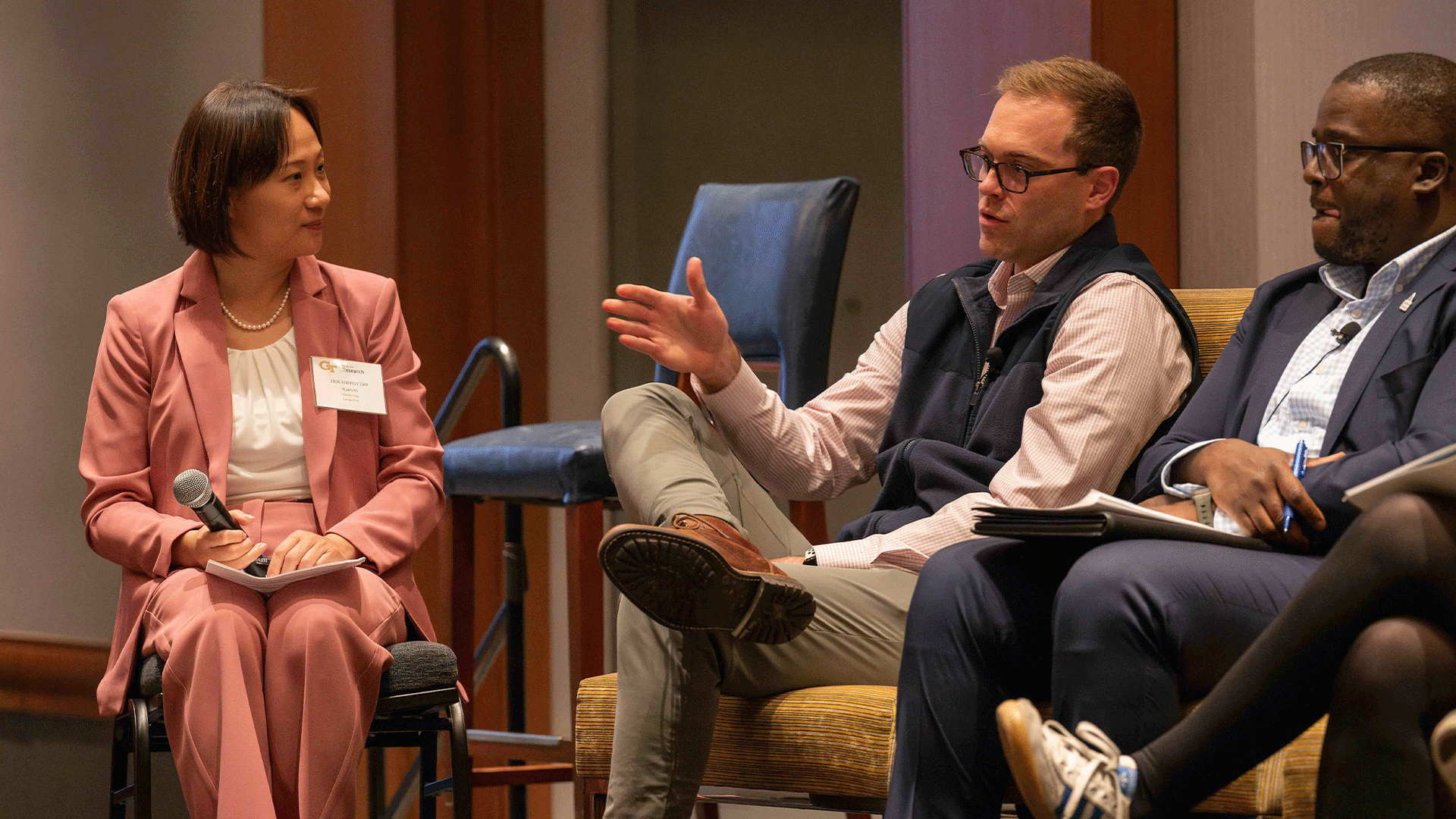
Three panelists sit on stage during a discussion, with one man gesturing as he speaks while the others listen. The moderator holds a microphone and looks toward him.

Yaunzhi Tang (left) moderated the Beyond Scarcity: Building Resilient Critical Materials Supply Chains for Energy Systems panel.

A group of people stand indoors at an event, smiling and posing together while holding large ceremonial checks. Three individuals in front display checks for finalist awards and a first-place prize.

Students participated in the Energy Day poster session.

 
News Contact

Amelia Neumeister | Communications Manager

The Institute for Matter and Systems