
ATDC Startups Secure Rare FDA ‘Breakthrough Device’ Status

Shah and Nguyen headshots

Dr. Nikhil Shah and Dr. Hiep Nguyen, are cofounders of Nephrodite, an ATDC startup.

It’s uncommon for any startup to receive the Food and Drug Administration’s (FDA) Breakthrough Devices designation. For the roughly 40% of applicants who receive the designation, it shows that the technology has real potential to improve patient outcomes and should get priority attention from the agency. 

The Advanced Technology Development Center (ATDC) in Georgia Tech’s Office of Commercialization announced two of its health technology (HealthTech) portfolio companies, Nephrodite and OrthoPreserve, earned the designation. 

Achieving this rare milestone underscores the caliber of founders, science, and support in ATDC’s 30-company HealthTech portfolio, the incubator’s largest focus area. It’s also a win for Georgia because it reflects the strength of the state’s health innovation ecosystem. 

“This designation is one of the strongest signals the FDA gives that a technology could change the standard of care,” said Greg Jungles, HealthTech catalyst at ATDC. “For ATDC to have two in the same year is remarkable.” 

The Breakthrough Device Program doesn’t waive evidence requirements, but it accelerates learning with the FDA, ATDC’s Jungles said. “That means shorter response times, more frequent meetings, and prioritized review. Teams avoid dead ends and align earlier on study designs and endpoints.” 

For the founders of both startups, their technologies come one step closer to moving their innovations to market. Nephrodite’s technology improves the lives of dialysis patients. OrthoPreserve’s device addresses challenges faced by those who suffer from chronic knee pain. 

Nephrodite: Advancing Continuous Artificial Kidney Technology 

Dr. Nikhil Shah and Dr. Hiep Nguyen, cofounders of Nephrodite, aim to improve care for dialysis patients with end-stage kidney disease who need transplants. These patients often spend three to four hours in a dialysis clinic up to three times a week. Being tethered to stationary machines with needles drawing blood via arm grafts complicates everyday activities — from work tasks to the ability to travel. 

Dialysis addresses chronic kidney disease, which means kidneys no longer work properly. The treatments filter out toxins, waste, and other fluids in the blood. Kidney disease costs Medicare $124.5 billion every year, according to the Centers for Disease Control and Prevention. And those costs are expected to rise because of increasing rates of kidney failure and chronic kidney disease. 

“Dialysis, while lifesaving when it was pioneered in 1952, is incredibly burdensome,” Shah said. Besides being a long process that keeps the patient in a fixed location, it’s physically tiring. “Taking out your blood continually many, many times over, and over the course of four hours is the equivalent of running the Boston Marathon, hitting the finish line, and then someone saying, ‘You're not done; go do it again,’ ” he said. 

A surgeon by training, with expertise in transplantation and oncology, Shah is also an adjunct associate professor in Tech’s School of Interactive Computing. He worked with Nguyen to develop a continuously functioning mechanical artificial kidney, leading to Nephrodite’s formation. 

The FDA’s breakthrough designation on its artificial kidney allows the company to pursue approvals to begin tests in human trials. 

The company traces its beginnings to a German aerospace facility outside Munich, where Nguyen and Shah watched engineers demonstrate a pediatric artificial heart — the Berlin Heart

“That’s how we got started,” Shah said. “Seeing an artificial heart that led us to think about doing this for kidneys — because the kidney space has been largely ignored for 70 years.” 

Backed by a German federal grant, Nephrodite grew, moving from Germany to Boston, Massachusetts, then to Austin, Texas, before calling Atlanta home. The company joined ATDC and tapped into other Georgia Tech programs. This included the Center for MedTech Excellence and the Georgia Manufacturing Extension Partnership. Nephrodite also drew on student talent as the researchers quietly worked on their continuous mechanical artificial kidney. 

Nephrodite began interviewing patients to find out what the artificial kidney needed to solve. 

They learned patients want the ability to be mobile. Patients also desire an alternative therapy to large needles being inserted into arm grafts because the injection sites are prone to infection and the grafts can fail. In addition, the process can be painful and disfiguring. Finally, patients want a quality of life independent of machines. 

“Those quality-of-life needs, especially being free and mobile, were absolutely universal,” Shah said.  

Nephrodite began developing the technology to build its device — a filter surgically implanted in the pelvis area. 

“We developed an implant designed to run constantly, connected to larger blood vessels in the pelvis to avoid arm graft failures, and paired with an external interface that lets patients sleep at night while the system removes toxins and excess fluid,” Shah explained. 

The device also has built-in sensors, with data uploaded to the cloud, enabling medical care teams to remotely monitor their patients while freeing patients from frequent in-clinic visits. 

Shah said Nephrodite’s device could restore everyday independence, while potentially lowering infection risk. 

“It's like having an actual kidney, but without all the issues of an unhealthy one,” Shah said.  

OrthoPreserve: Innovating a Minimally Invasive Meniscus Implant 
 
OrthoPreserve’s technology aims to address issues from people have with their meniscus, the C‑shaped piece of cartilage in a knee joint that acts as a shock absorber between the thigh bone and shin bone. 

Though patients undergo a now-routine surgery to address it, incomplete recoveries are also common. An estimated quarter of patients later experience recurring knee pain. No FDA-approved implant currently exists for this population. Now, OrthoPreserveis developing a minimally invasive, artificial meniscus implant to restore cushioning, relieve pain, and delay — or even prevent — knee replacement for some patients. 

“There are a million meniscus surgeries every year, and 25% of those patients still live with recurring pain,” said Jonathan Schwartz, OrthoPreserve’s founder and CEO. 

Patients can face daily pain from ordinary activities, such as prolonged standing or walking a dog. Other activities like jogging and recreational sports can trigger flares that can lead to swelling and prolonged discomfort, Schwartz said. “Those patients have no reliable options today,” he said. “We’re building a minimally invasive implant to restore cushioning and help people get back to the activities they love.” 

OrthoPreserve’s durable implant restores cushioning, and it could help people return to normal activities and delay invasive knee replacement. Along with this comes potential cost and recovery benefits for the healthcare system.   

Schwartz created the implant as his Georgia Tech master’s thesis in the lab of David Ku, the Lawrence P. Huang Endowed Chair for Engineering Entrepreneurship and Regents' Professor in the George W. Woodruff School of Mechanical Engineering. After industry experience, Schwartz returned to further develop the technology, building on Georgia Tech’s translational expertise. 

OrthoPreserve has completed mechanical testing and a successful study. The company is raising a  $2 million seed to complete validations and begin human trials, which Schwartz expects to start in 18 months. 

“The FDA breakthrough designation validates that nothing like this technology exists, and that it has the potential to disrupt the standard of care,” Schwartz said, adding the U.S.’ market opportunity is roughly $1.5 billion. “We finally have a minimally invasive option to bridge the gap between meniscus surgery and knee replacement.” 

What FDA Breakthrough Designation Means for ATDC’s HealthTech Startups 

Having a faster and clearer path is a derisking milestone for investors who are evaluating capital intensive medical device technologies, Jungles said. 

“This breakthrough device designation is a really big deal for medical device companies,” Jungles said, adding that startups often fear navigating the FDA approval process. “But this designation adds to the legitimacy of their technologies and the problems they are solving. The designation will help them get to market faster, assuming their data continues to meet expectations.” 

ATDC launched its HealthTech vertical in 2018, which is now sponsored by Catalyst by Wellstar. ATDC’s HealthTech portfoilo companies include medical devices, biotech, and digital health, among other segments. 

ATDC’s Role in Accelerating HealthTech Innovation 

Nephrodite and OrthoPreserve’s founders noted ATDC’s coaching and programming as critical in navigating fundraising and regulatory milestones. Another factor, they said, was ATDC’s connection to Georgia Tech’s labs and facilities and prototyping support and clinical advisors from across metro Atlanta.  

“We meet with ATDC coaches every two to four weeks to troubleshoot and plan,” Schwartz said. “Having that level of seasoned guidance, all without consultant-level costs, has been huge.” 

Jungles added that two Breakthrough device designations in the same year reflects ATDC’s selection rigor, noting he’s evaluated hundreds of technologies since the HealthTech vertical launched. 

“It reflects the caliber of the companies in ATDC, specifically in the medical device space,” Jungles said. “It’s the strength of their teams, the persistence of the founders, and the collaboration of the ecosystem in Georgia and Atlanta.” 


Headshot of Jonathan Schwartz.

Jonathan Schwartz, OrthoPreserve’s founder and CEO.

 
News Contact

Péralte C. Paul
peralte@gatech.edu
404.316.1210

Smarter, Faster, and More Human: A Leap Toward General-Purpose Robots

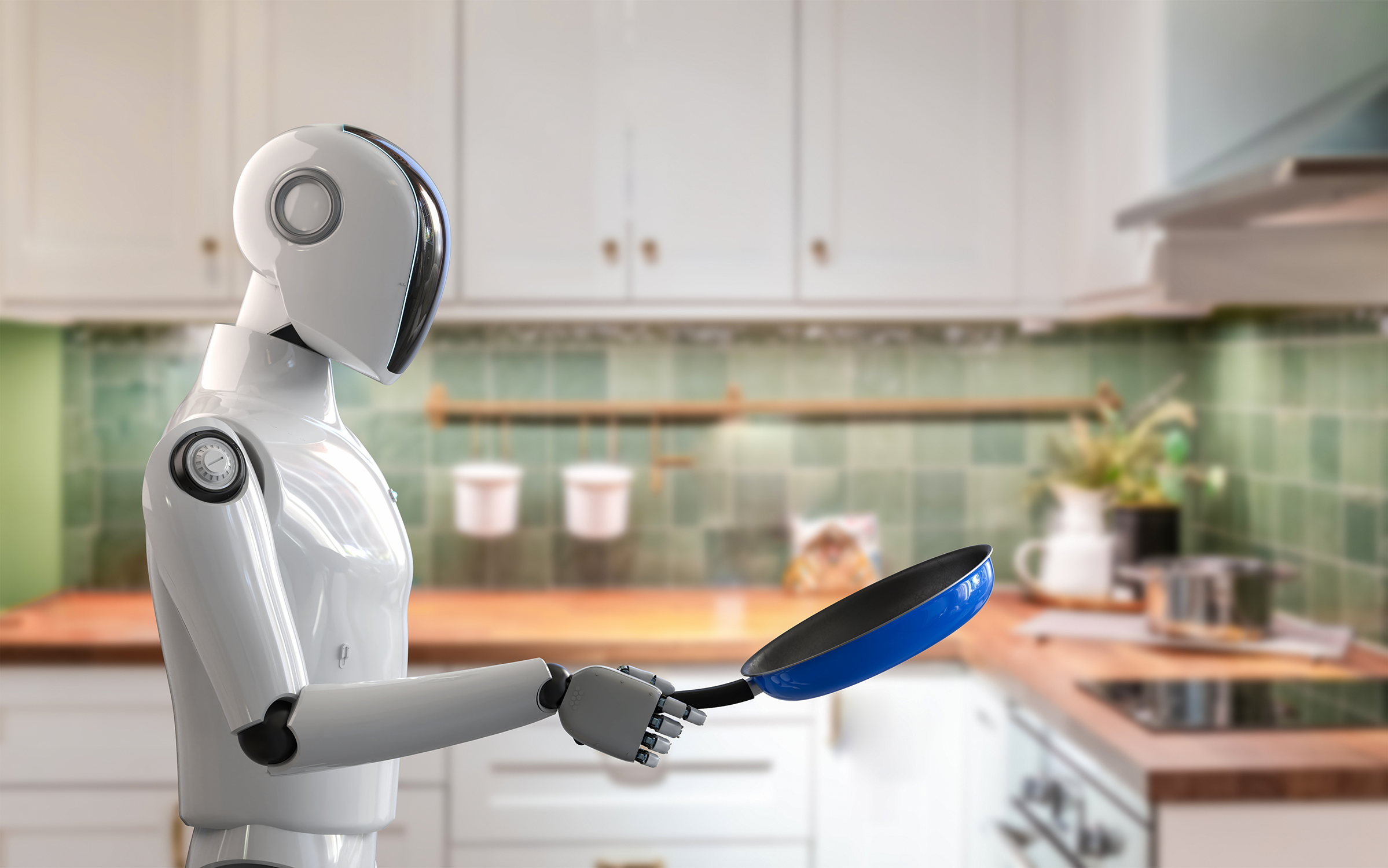
A white humanoid robot holds a blue pan while standing in a kitchen with a green backsplash

Pancake-flipping robots could be just around the corner thanks to a new robot learning system from Georgia Tech. (Credit: Adobe Stock)

Robots are increasingly learning new skills by watching people. From folding laundry to handling food, many real-world, humanlike tasks are too nuanced to be efficiently programmed step by step. 

With imitation learning, humans demonstrate a task and robots learn to copy what they see through cameras and sensors. While at the leading edge of robotics research, this approach is limited by a major constraint: Robots can only work as fast as the people who taught them. 

Now, Georgia Tech researchers have created a tool that smashes that speed barrier. The system allows robots to execute complex tasks significantly faster than human demonstrations while maintaining precision, control, and safety.

The team addresses a central challenge in modern robotics: how to combine the flexibility of learning from humans with the speed and reliability required for real-world deployment. The technology could lead to wider adoption of imitation learning in industrial and household applications and even enable robots to execute humanlike tasks better than ever before. 

“The thing we’re trying to create — and I would argue industry is also trying to create — is a general-purpose robot that can do any task that human hands can do,” said Shreyas Kousik, assistant professor in the George W. Woodruff School of Mechanical Engineering and a co-lead author on the study. “To make that work outside the lab, speed really matters.”

The new tool, SAIL (Speed Adaptation for Imitation Learning), was born out of a cross-campus, interdisciplinary collaboration that brought together expertise in mechanical engineering, robotics systems, and machine learning. The research team includes Kousik; Benjamin Joffe, senior research scientist at the Georgia Tech Research Institute; and Danfei Xu, assistant professor in the School of Interactive Computing, along with graduate students and researchers from multiple labs.

Speed Without Sacrifice

Teaching robots to work faster than the speed of human demonstrations is challenging. Robots can behave differently at higher speeds, and small changes in the environment can cause errors. 

“The challenge is that a robot is limited to the data it was trained on, and any changes in the environment can cause it to fail,” Kousik said.

SAIL addresses this challenge through a modular approach, with separate components working together to accelerate beyond the training data. The system keeps motions smooth at high speed, tracks movements accurately, adjusts speed dynamically based on task complexity, and schedules actions to account for hardware delays. This combination allows robots to move quickly while staying stable, coordinated, and precise.

“One of the gaps we saw was that our academic robotics systems could do impressive things, but they weren’t fast or robust enough for practical use,” Joffe said. “We wanted to study that gap carefully and design a system that addressed it end to end.”

He added, “The goal is not just to make robots faster, but to make them smart enough to know when speed helps and when it could cause mistakes.” 

The team evaluated SAIL’s performance across 12 tasks, both in simulation and on two physical robot platforms. Tasks included stacking cups, folding cloth, plating fruit, packing food items, and wiping a whiteboard. In most cases, SAIL-enabled robots completed tasks three to four times faster than standard imitation-learning systems without losing accuracy.

One exception was the whiteboard-wiping task, where maintaining contact made high-speed execution difficult.

 “Understanding where speed helps and where it hurts is critical,” Kousik said. “Sometimes slowing down is the right decision.”

While SAIL does not make robots universally adaptable on its own, it represents an important step toward robotic systems that can learn from humans without being constrained by human pace.

By showing how learned robotic behaviors can be accelerated safely and systematically, SAIL brings imitation learning closer to real-world use — where speed, precision, and reliability all matter.


Citation: Ranawaka Arachchige, et. al. “SAIL: Faster-than-Demonstration Execution of Imitation Learning Policies,” Conference on Robot Learning (CoRL), 2025. 

DOI: https://doi.org/10.48550/arXiv.2506.11948

Funding: The authors would like to acknowledge the State of Georgia and the Agricultural Technology Research Program at Georgia Tech for supporting the work described in this paper. 

 
News Contact

Catherine Barzler, Senior Research Writer/Editor

catherine.barzler@gatech.edu

Why Mosquitoes Swarm Your Head: They’re Following Signals, Not Each Other

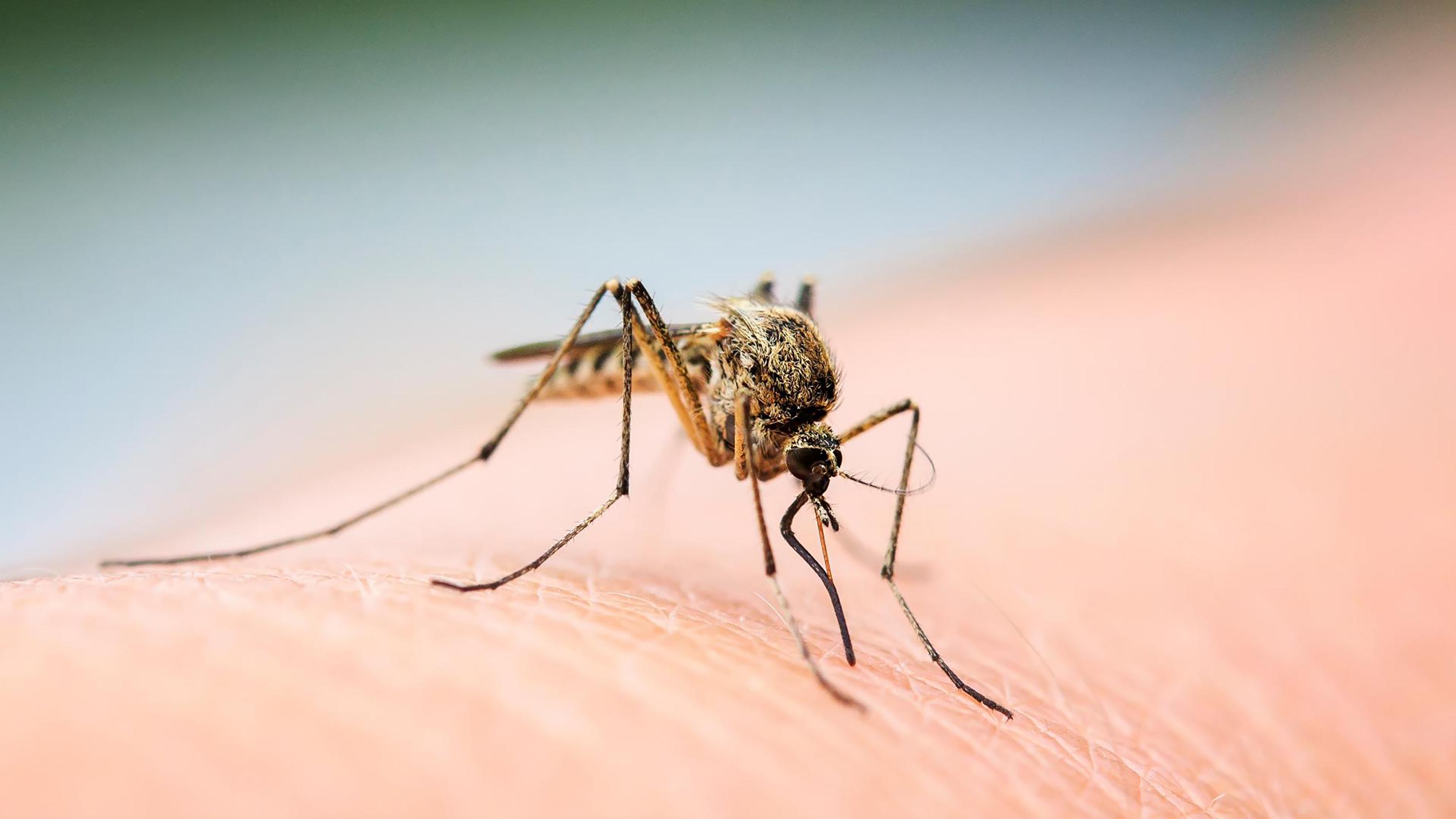
A female mosquito lands on a human.

After watching hundreds of mosquitoes buzzing around one of their colleagues and collecting 20 million data points, Georgia Tech and Massachusetts Institute of Technology researchers have created a mathematical model that predicts how and where female mosquitoes will fly to feast on humans. 

The new study is the first to visualize mosquito flight patterns and provides hard data for improving capture and control strategies. In addition to being a nuisance, mosquitoes transmit diseases such as malaria, yellow fever, and Zika, which cause more than 700,000 deaths every year.

“It’s like a crowded bar,” said David Hu, a professor in Georgia Tech’s George W. Woodruff School of Mechanical Engineering and the School of Biological Sciences, with an adjunct appointment in the School of Physics. “Customers aren’t there because they followed each other into the bar. They’re attracted by the same cues: drinks, music, and the atmosphere. The same is true of mosquitoes. Rather than following the leader, the insect follows the signals and happens to arrive at the same spot as the others. They’re good copies of each other.”

Read more and watch: 
Georgia Tech College of Engineering newsroom and The Conversation

 
News Contact

Jason Maderer (maderer@gatech.edu)

Hundreds of Hungry Mosquitoes, a Student Volunteer and a Mesh Suit

Trajectories of mosquitoes flying around a human target. David L. Hu, Georgia Tech

Trajectories of mosquitoes flying around a human target. David L. Hu, Georgia Tech

“Four minutes is too long.”

Man's arm with multiple pink raised welts

Some of Chris Zuo’s itchy results after his session with the mosquitoes. David L. Hu

That’s the note undergraduate Chris Zuo sent me along with photos of countless mosquito bites on his bare skin. This full-body massacre wasn’t the result of a camping trip gone awry. He’d spent that limited amount of time in a room with 100 hungry mosquitoes while wearing nothing but a mesh suit we thought would have protected him.

Thus began our three-year journey trying to understand the behavior of a deceivingly simple insect, the mosquito. It may sound like a professor’s sadistic plan, but, really, we did everything by the book. Our university’s institutional review board approved our procedures, making sure Chris was safe and not coerced in any way. The mosquitoes were disease-free and native to our home state of Georgia. And this session resulted in the first and last bites anyone received during the study.

Besides my role as torturer of students, I am an author and professor at Georgia Tech with over 20 years of experience studying the movement of animals.

Mosquitoes are the world’s most dangerous animal. The diseases they carry, from malaria to dengue, cause over 700,000 deaths per year. More people have died from mosquitoes than wars.

The world spends US$22 billion per year on billions of liters of insecticides, millions of pounds of larvicides, and millions of insecticide-treated bed nets – all to fight a tiny insect that weighs 10 times less than a grain of rice and has only 200,000 neurons.

Yet, people are losing the war on mosquitoes. These insects are evolving to thrive in cities and spreading disease more rapidly with climate change. How can such simple animals find us so easily?

Scientists know mosquitoes have terrible eyesight and depend on chemical cues to make up for it. Knowing what attracts a mosquito, though, isn’t enough to predict its behavior. You can know a heat-seeking missile is drawn to heat, but you still won’t know how a missile works.

Enter Chris and his self-sacrifice in the mosquito room. By tracking the flight of many mosquitoes around him, we hoped to determine how they made decisions in response to his presence. Understanding how mosquitoes respond to humans is a first step to controlling them.

How Mosquitoes Zero In On Their Meal

Out of 3,500 species of mosquitoes, over 100 species are classified as anthropophilic, meaning they prefer humans for lunch. Certain species of mosquitoes will find the one person among a whole herd of cattle in order to suck human blood.

This is quite a feat considering mosquitoes are weak flyers. They stop flying in a slight 2-3 mph breeze, the same air speed generated by a horse’s swinging tail. In calmer conditions, mosquitoes use their minuscule brains to follow human heat, moisture and odors that are carried downwind.

Carbon dioxide, the byproduct of respiration of all living animals, is particularly attractive. Mosquitoes notice carbon dioxide as well as you notice the stink of a full dumpster, detecting it up to 30 feet (9 meters) away from a host, where concentrations dip to a few parts per million, like a few cups of dye in an Olympic-size pool.

Black outline of a G and T in left panel, in right panel black squiggles showing flight paths of mosquitoes around the letters

Like superfans, mosquitoes are drawn to the dark outline of the Georgia Tech logo. David L. Hu, Georgia Tech

Mosquitoes’ vision isn’t much help as they hunt for their next blood meal. Their two compound eyes have several hundred individual lenses called ommatidia, each about the width of a human hair. They produce a somewhat blurry mosaic or pixelated image. Due to the laws of optics, mosquitoes can discern an adult-size human only at a few meters away. With their vision alone, they cannot distinguish a human from a small tree. They inspect every dark object.

Gathering the Flight-Path Data

The challenge with studying mosquito flight is that, like trash-talking teenagers, most of what they do is meaningless noise. Mosquitoes flying in an empty room are largely making random changes in flight speed and direction. We needed many flight trajectories to cut through the noise.
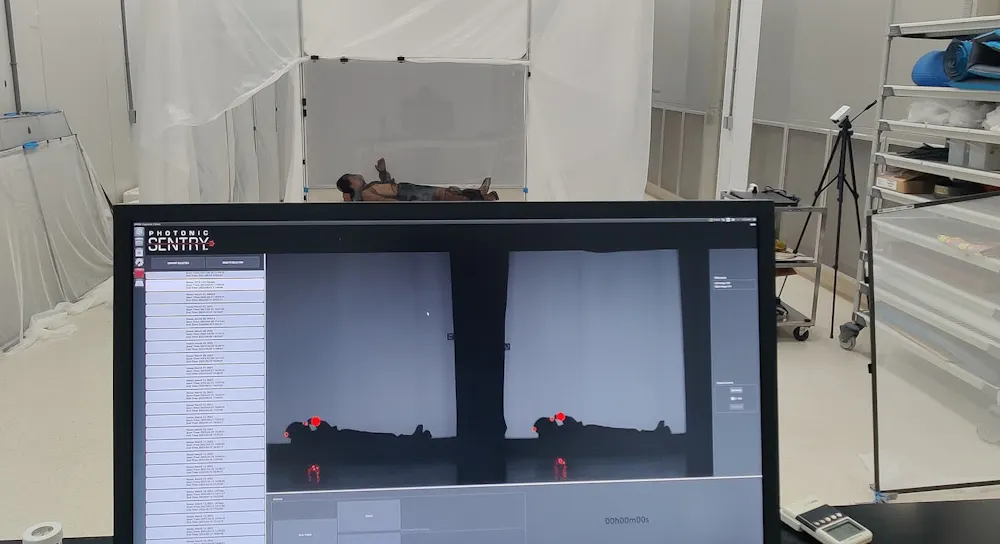
A man lying on the ground, and shown in two images on a laptop screen in the foreground

In a mesh suit, Chris Zuo awaits the mosquitoes while questioning his life choices. David L. Hu, Georgia Tech

One of our collaborators, University of California, Riverside, biologist Ring Cardé, told us that back in the 1980s, scientists conducted “bite studies” by stripping down to their underwear and slapping the mosquitoes that landed on their naked bodies. He said nudity prevented confounding variables, such as the color of a shirt’s fabric.

Chris and I looked at each other. Sit naked and wait to become mosquito prey? Instead, we designed the mesh suit that Chris originally wore into the mosquito room. But after seeing Chris’ bites, we needed a better way.

Instead, Chris washed long-sleeved clothes in unscented detergent and wore gloves and a face mask. Fully protected, Chris only had to stand and wait, while a cloud of mosquitoes swarmed him.

The U.S. Centers for Disease Control and Prevention introduced us to the Photonic Sentry, a camera that simultaneously tracks hundreds of flying insects in a room. It records 100 frames per second at 5 mm resolution for a space like a large studio apartment. In just a few hours, Chris and another graduate student, Soohwan Kim, generated more mosquito flight data than had previously been measured in human history.

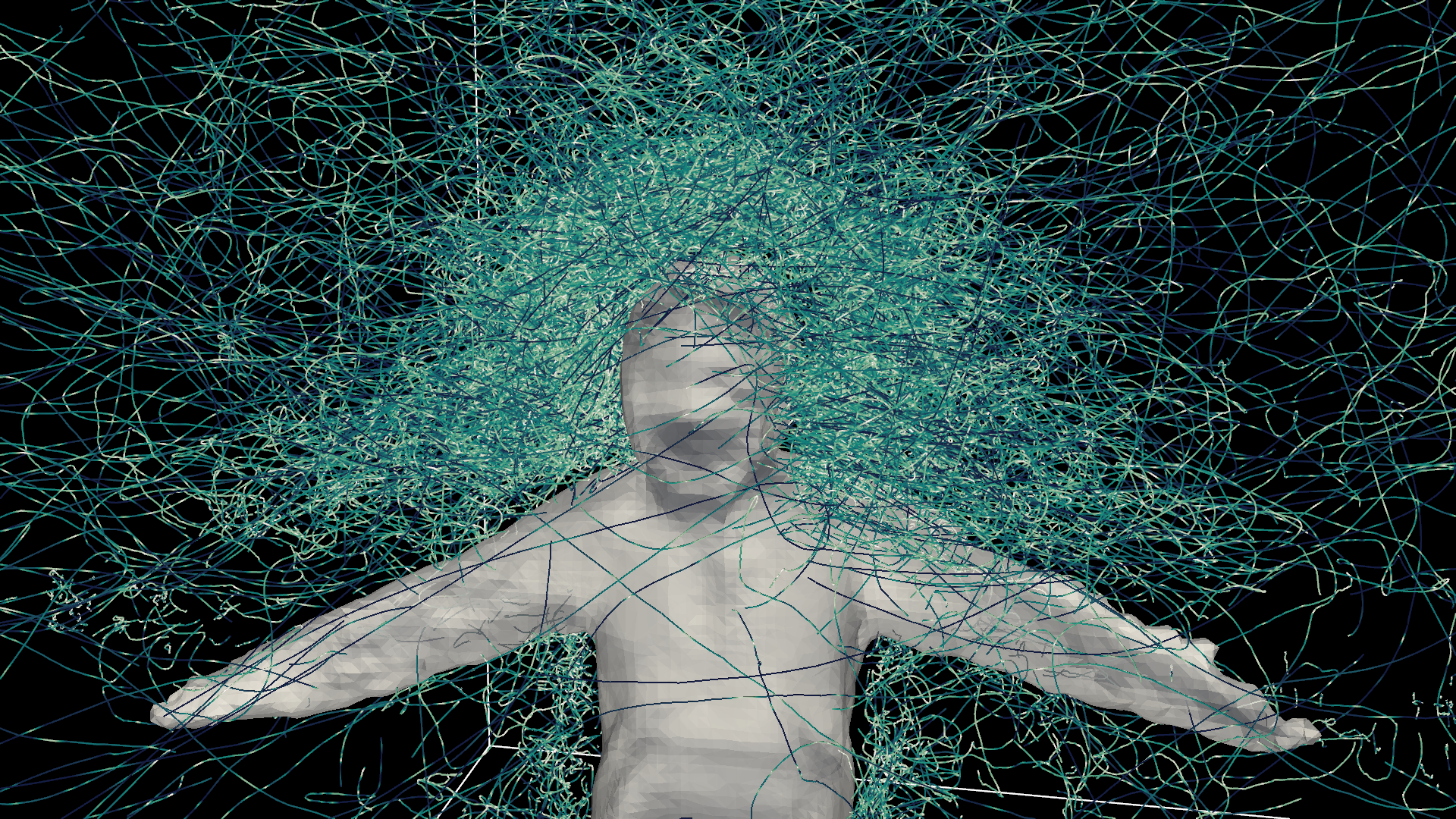
100 mosquitoes flying around Chris Zuo for 10 minutes. Only a fraction of tracks are shown.

Jörn Dunkel, Chenyi Fei and Alex Cohen, our mathematician collaborators at MIT, told us that the geometry of Chris’ body was still too complicated to study the mosquitoes’ reactions. Mathematicians excel at simplifying complex problems to their essence. Chenyi suggested we go easy on Chris – why not replace him with a simple dummy: a black Styrofoam ball on a stick combined with a canister of carbon dioxide.

Over the next two years, Chris filmed the mosquitoes circling the Styrofoam dummies mercilessly. Then he vacuumed up the mosquitoes, trying not to get bitten.

Deciphering the Trajectories

A mosquito flies like you would an airplane: it turns left or right, accelerates or hits the brakes. We determined a mosquito’s flight behavior as a function of its speed, location and direction with respect to the target as the first step in creating our model of their behavior.

Our confidence in our behavioral rules increased as we read more trajectories, ultimately using 20 million mosquito positions and speeds. This idea of incorporating observations to support a mathematical hypothesis is a 200-year-old idea called Bayesian inference. We illustrated the mosquito behavior we’d observed in a web application.

4 panels showing trajectory of a mosquito in the presence of no target, visual target, CO2 target or both.

A mosquito’s flight changes with the kind of target presented. David L. Hu

Using our model, we showed how different targets cause mosquitoes to fly differently. Visual targets cause fly-bys, where mosquitoes fly past the target. Carbon dioxide causes double takes, where mosquitoes slow down near the target. The combination of a visual cue and carbon dioxide creates high-speed orbiting patterns.

Up until now, we had used only experiments with Styrofoam spheres to train our model. The true test was whether it could predict mosquito flights around a human. Chris returned to the chamber, this time wearing all white clothes and a black hat, turning himself into a bull’s-eye. Our model successfully predicted the distribution of mosquitoes around him. We identified zones of danger, where there was a high chance of a mosquito circling around him.

Predicting mosquito behavior is a first step toward outsmarting them. In mosquito-prone areas, people design houses with features to prevent mosquitoes from following human cues and entering. Similarly, mosquito traps suck in mosquitoes when they get too close but still allow between 50% and 90% of mosquitoes to escape. Many of these designs are based on trial and error. We hope that our study provides a more precise tool for designing methods for mosquito capture or deterrence.

When Chris’ mother attended his master’s degree defense, I asked her how she felt about her son using himself as bait for mosquitoes. She said she was very proud. So am I – and not just because I’m relieved Chris didn’t ask me to take his place in the mosquito chamber.The Conversation


This article is republished from The Conversation under a Creative Commons license. Read the original article.
 
News Contact
Author:

David Hu, Professor of Mechanical Engineering and Biology, Adjunct Professor of Physics, Georgia Institute of Technology

Media Contact:

Shelley Wunder-Smith
shelley.wunder-smith@research.gatech.edu

New Mobile App Turns Phones into At-Home Fetal Heart Monitors

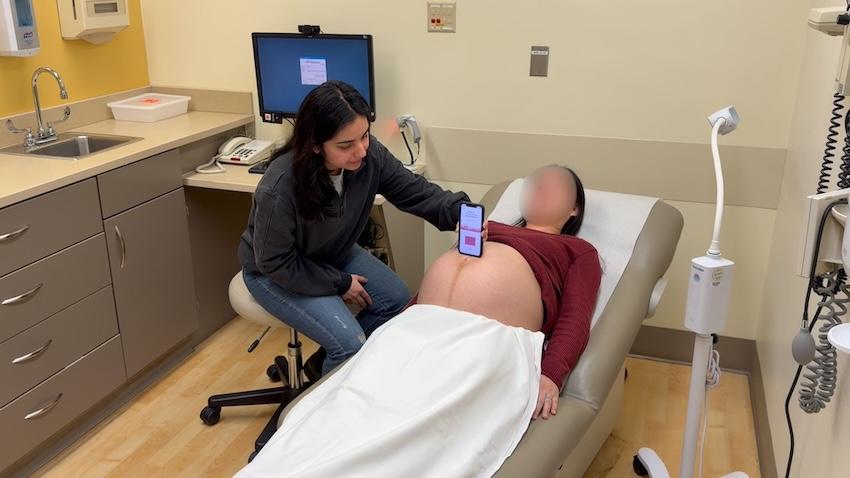
Woman holds mobile phone to the belly of a pregnant woman

Pregnant women often worry about their babies’ health in between doctor’s visits, but a new mobile app can help put them at ease.

Studies show that one in five pregnant women experience perinatal anxiety, which is characterized by intense negative thoughts about their pregnancy.

Those women will soon be able to conduct an ultrasound and receive an accurate fetal heart rate from their mobile phones.

DopFone uses smartphone speakers to emit a low-pitched ultrasound that detects reflected signals of abdominal surface vibrations caused by fetal cardiac activity.

Alex Adams, an assistant professor in Georgia Tech’s School of Interactive Computing and faculty member in the Institute for People and Technology, said he came up with the idea for DopFone as he and his wife, Elise, suffered through two miscarriages. Elise couldn’t reliably measure the fetal heart rate with a commodity fetal Doppler heart rate monitor.

Those experiences exposed some gaps in the maternal healthcare process.

“There are a lot of great devices in hospitals and clinics, but there’s not much outside of those venues, even for high-risk pregnancies,” Adams said. “This is about filling the gaps between checkups.”

Poojita Garg joined Adams to work on DopFone while completing her master’s at Georgia Tech. She is now pursuing her Ph.D. at the University of Washington and is co-advised by Professor Shwetak Patel, who earned his Ph.D. from Georgia Tech in 2008.

Garg is working with the University of Washington School of Medicine to conduct DopFone’s first clinical trials.

Garg tested DopFone on 23 patients and achieved a plus-minus of 4.9 beats per minute, well within the clinical standard for reliable fetal heart rate measurement of plus-minus 8 beats per minute.

Adams said it measured within plus minus 2 beats per minute in most cases with an error rate of less than 1 percent.

About 1 million pregnancies in the U.S. end in miscarriage, according to a study from the Yale School of Medicine, and doctors know little about what causes them. Adams said that number is probably higher because many go unreported.

Adams and Garg said it’s unclear whether the innovation could reduce the number of miscarriages. However, consistent fetal heart rate data collection outside of the doctor’s office could provide a better idea of what happens leading up to a miscarriage.

“From there, we can take preventative action,” Adams said. “If nothing else, we can give a sense of comfort to those who may be worried.”

Expanding Access

While couples can purchase portable fetal heart rate monitors, Adams and Garg see DopFone as a low-cost alternative for those who live in areas with poor or inaccessible healthcare systems. 

“There’s a lot of potential for using it in what doctors like to call maternity deserts,” Garg said. “These are areas where a pregnant person, at the time of delivery, would have to travel long distances to reach a hospital. This technology will be useful globally in underdeveloped areas of the world.”

The researchers also said external add-ons and attachments aren’t included in their design goals. They prefer to use what’s built into the phone to keep the technology accessible.

“The real value is that 96% of America already has the technology in their pocket, along with 60% of the world’s population,” Adams said. “Half of the battle is having the right tools. The more we can get form what’s already in the phone, the more we can guarantee people have access to it.”

Not a Substitute

Some patients may feel a constant need to check the heart rate, and Garg acknowledged a tool like DopFone could increase that anxiety. She and Adams said a future version of the app will tell the parent if the heart rate is within a healthy range.

“There’s a lot of tradeoffs between a tool that could provide reassurance or create anxiety,” she said. “We want the use of this tool to be recommended by a doctor and for doctors and their care teams to be kept in the loop.”

She also said DopFone is not meant to replace anything that is done in a clinic.

“There are devices that make the whole process possible at home, but this is something that should be done in a clinic, so that’s the line we want to draw,” she said.


Researchers Develop Biodegradable, Plant‑Based Packaging From Natural Fibers

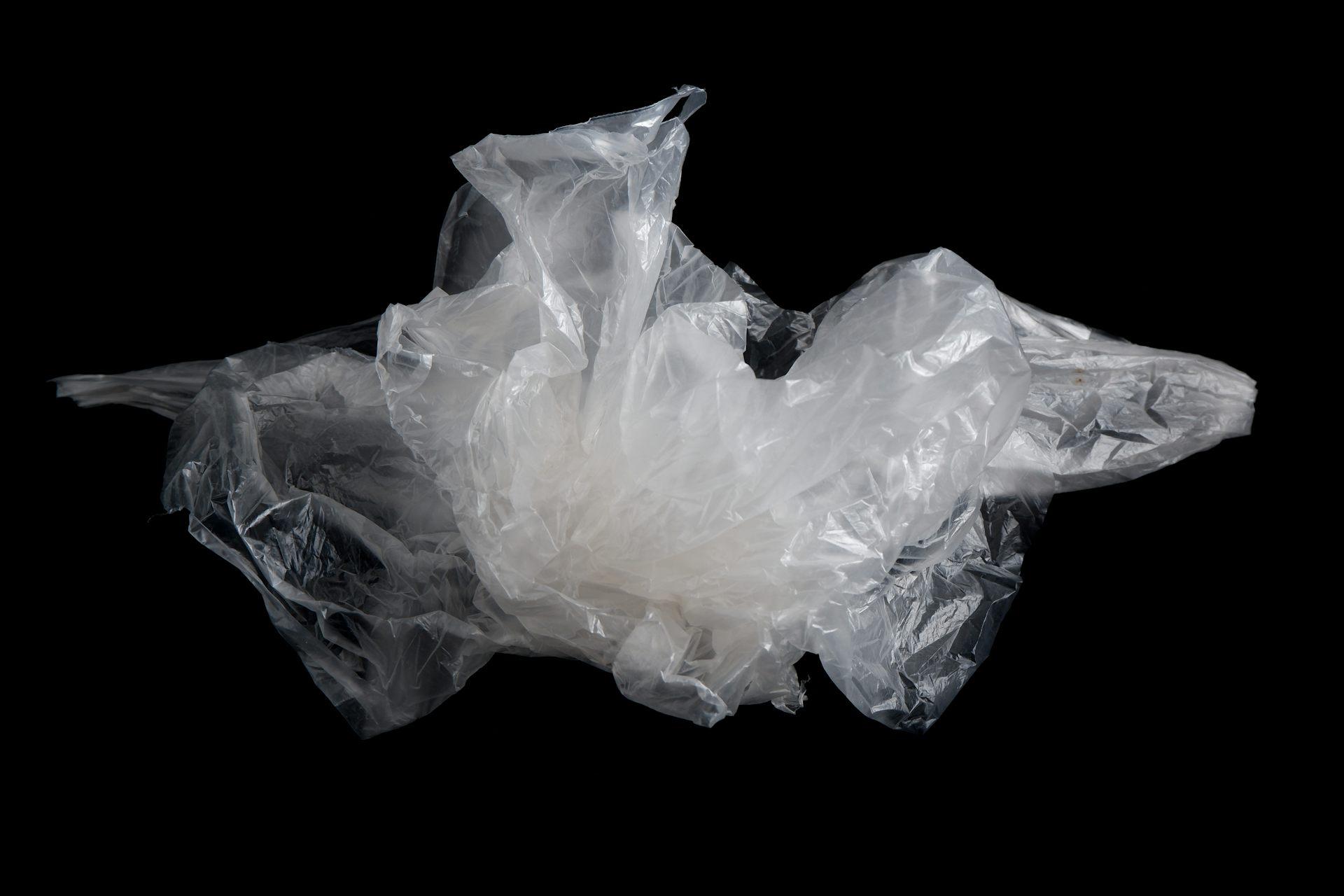
Plastic packaging fills up landfills – engineers are working on a bio-based alternative that could replace the kind shown here. tuk69tuk/iStock via Getty Images

Plastic packaging fills up landfills – engineers are working on a bio-based alternative that could replace the kind shown here. tuk69tuk/iStock via Getty Images

Jie Wu, an engineering graduate student, was studying a type of striking white beetle found in Southeast Asia and attempting to figure out how to mimic its brilliant color when an unexpected discovery upended the experiment.

Jie and I had been hoping to identify naturally occurring whitening pigments that could be used in paper and paints. The beetle’s white exoskeleton is made from a compound called chitin, which is a type of carbohydrate – one that is also commonly found in crab and lobster shells.

First, Jie extracted chitin nanofibers from crab shells obtained from food waste that are chemically the same as those found in the white beetles. But instead of creating a white material as intended, Jie produced dense, transparent films. The nanofibers more readily assembled in tightly packed films than in the porous structures Jie desired.

Two white beetles

An attempt to mimic the striking white color of Cyphochilus beetles led researchers to a unique discovery. Olimpia1lli/Wikimedia Commons, CC BY-NC-ND

On a whim, Jie measured the rate at which oxygen passed through the film. The result was astonishing: The barrier allowed less oxygen through than many existing packaging plastics.

That serendipitous finding in 2014 shifted my team of engineering students’ focus from color to packaging. We asked whether natural materials could rival the performance of common plastics. In the years since, our team has used this discovery to create biodegradable films that offer a more sustainable and effective alternative to plastic packaging.

Challenges of Plastic Packaging

Plastic packaging is commonly used to protect food, pharmaceuticals and personal care products. These plastics keep out moisture and oxygen from the air, so products stay fresh and safe.

Most packaging has several layers that work together to keep air out, but these layers hinder reuse and recycling efforts. As a result, most of this plastic barrier packaging is discarded to landfills as single-use materials.

Many researchers have sought alternatives that are renewable, biodegradable or recyclable, yet just as effective. At Georgia Tech, my team of students and post-docs has spent more than a decade tackling this problem. This journey began with that beetle.

Building a Better Barrier

Chitin is widely available in food waste and mushrooms, and it is used in products such as water filters and wound dressing. However, our early attempts to scale up the film technology based on the beetle-inspired experiment failed.

In 2018, the team made an important leap forward by using spray coating to create layers of chitin and cellulose nanomaterials. Cellulose, like chitin, is a carbohydrate polymer – a chain of repeating carbohydrate units – and it is obtained from plants. These abundant natural materials have opposite electric charges, which led to better barrier performance when we combined them than either material alone.

In this approach, the team sprayed down a layer of chitin, followed by a layer of cellulose. The opposite charges between the chitin and cellulose created a long-range attraction between them that binds the layers to create a dense interface.

Later, in collaboration with Meisha Shofner, a materials scientist, and Tequila Harris, a mechanical engineer, other students showed these coatings could be applied with scalable, roll-to-roll techniques. Roll-to-roll coating methods are preferred in industry because the coatings are applied continuously to large rolls of a substrate material, such as paper or other biodegradable plastics.

Roll-to-roll coating allows manufacturers to easily apply thin layers of coating to a base material, called a substrate.

Still, humidity posed a major challenge, limiting any real-world applications. Moisture swelled the film, allowing more oxygen to sneak through.

Then came another breakthrough. In 2024, another collaborator, Natalie Stingelin, and I discovered that two common food components resisted water vapor when combined: carboxymethylcellulose – which is found in ice cream, for example – and citric acid.

The result was a film that hindered the transmission of moisture. The citric acid reacted with the cellulose to form cross-links, which are chemical junctions that bind the cellulose molecules. Once bound, they reduced the film’s moisture uptake.

We integrated this new discovery with the prior work by combining the citric acid and cellulose, and then casting this mixture as a freestanding film by coating it onto a substrate, such as chitin.

However, that formulation did not have strong oxygen barrier properties because it did not contain the highly crystalline cellulose nanomaterials from our first film. Our team’s most recent achievement, from October 2025, combines the above innovations. As a result, we’ve created a bio-based film that is an excellent barrier to both oxygen and moisture.

A diagram showing a rectangle representing a biodegradable film, with an arrow deflecting off of it showing how it keeps out water vapor and oxygen. On the right is the film.

An oxygen and water vapor barrier film composed of blended cellulose and chitin. J. Carson Meredith

Scaling Up Production

When cast into thin films, these components self-organize into a dense structure that resists swelling with water vapor. Tests showed that even at 80% humidity the film matched or outperformed common packaging plastics.

The materials are renewable, biodegradable and compostable. Our team has filed several patent applications, and we are working with industry partners to develop specific packaging uses.

One challenge that applications face is a limited supply of the bio-based components compared to the high volume of conventional plastics. Like any new material, it would take time for manufacturers to develop supply chains as the films begin to be used.

For example, the market demand for purified chitin is small right now, as it is used in niche applications, such as wound dressings and water filtration. Due to its variety of uses, packaging could increase that market demand.

The next challenge is scaling up from experimental films to industrial production, which would likely take several years. The team is exploring roll-to-roll coating techniques and working with industry partners to integrate these materials into existing packaging lines.

Policy and consumer demand will also play a role. As governments push for bans on single-use plastics and companies set sustainability targets, bio-based films could become part of the solution.

The story of this breakthrough reminds me that science often advances through unexpected results. From a failed attempt to mimic a beetle’s color to a promising alternative to plastic, this research shows how curiosity can lead to solutions for some of our biggest challenges.The Conversation


This article is republished from The Conversation under a Creative Commons license. Read the original article.

 
News Contact
Author:

J. Carson Meredith, Professor of Chemical and Biomolecular Engineering, Georgia Institute of Technology

Media Contact:

Shelley Wunder-Smith
shelley.wunder-smith@research.gatech.edu

Turning Carbon Into Chemistry

Blue and orange spirals against a light blue background.

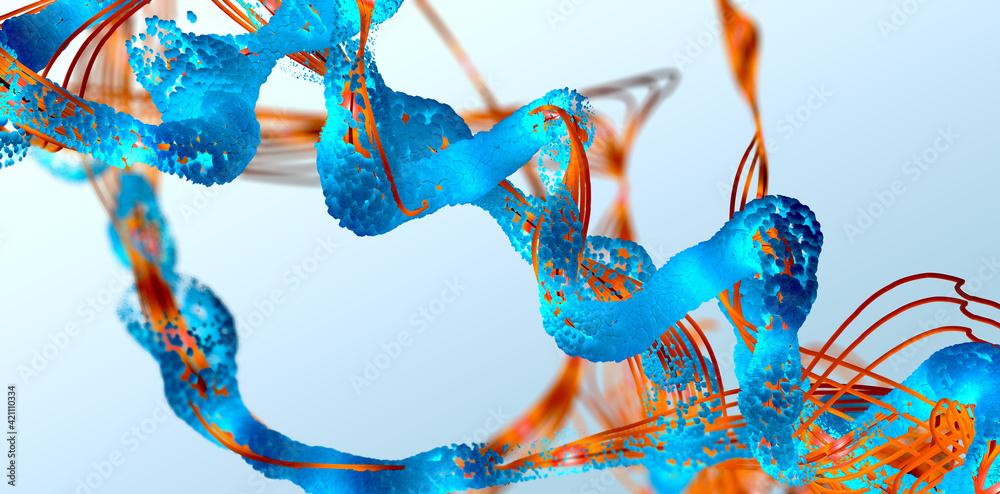
An illustration of a chain of amino acids forming a protein (Credit: Adobe Stock)

The building blocks of proteins, amino acids are essential for all living things. Twenty different amino acids build the thousands of proteins that carry out biological tasks. While some are made naturally in our bodies, others are absorbed through the food we eat. 

Amino acids also play a critical role commercially where they are manufactured and added to pharmaceuticals, dietary supplements, cosmetics, animal feeds, and industrial chemicals — an energy-intensive process leading to greenhouse gas emissions, resource consumption, and pollution.

A landmark new system developed at Georgia Tech could lead to an alternative: a commercially scalable, environmentally sustainable method for amino acid production that is carbon negative, using more carbon than it emits.

The breakthrough builds on a method that the team pioneered in 2024 and solves a key issue – increasing efficiency to an unprecedented 97% and reducing the bioprocess cost by over 40%. It’s the highest reported conversion of CO2 equivalents into amino acids using any synthetic biology system to date.

Published in the journal ACS Synthetic Biology, the study, “Cell-Free-Based Thermophilic Biocatalyst for the Synthesis of Amino Acids From One-Carbon Feedstocks,” was led by Bioengineering Ph.D. student Ray Westenberg and Professor Pamela Peralta-Yahya, who holds joint appointments in the School of Chemistry and Biochemistry and School of Chemical and Biomolecular Engineering. The team also included Shaafique Chowdhury (Ph.D. ChBE 25) and Kimberly Wennerholm (ChBE 23)alongside University of Washington collaborators Ryan Cardiff, then a Ph.D. student and now a Chain Reaction Innovations Fellow at Argonne National Laboratory, and Charles W. H. Matthaei Endowed Professor in Chemical Engineering James M. Carothers; in addition to Pacific Northwest National Laboratory Synthetic Biology Team Leader Alexander S. Beliaev.

"This work shifts the narrative from simply reducing carbon emissions to actually consuming them to create value,” says Peralta-Yahya. “We are taking low-cost carbon sources and building essential ingredients in a truly carbon-negative process that is efficient, effective, and scalable.”

Heat-loving organisms

The work builds on the cell-free technology the team used in their earlier study. “Previously, we discovered that a system that uses the machinery of cells, without using actual living cells, could be used to create amino acids from carbon dioxide,” Peralta-Yahya explains. “But to create a commercially viable system, we needed to increase the system’s efficiency and reduce the cost.”

The team discovered that bits of leftover cells were consuming starting materials, and — like a machine with unnecessary gears or parts — this limited the system’s efficiency. To optimize their “machine,” the team would need to remove the extra background machinery.

"Leftover cell parts were using key resources without helping produce the amino acids we were looking for,” says Peralta-Yahya. “We knew that heating the system could be one way to purify it because heat can denature these components.”

The challenge was in how to protect the essential system components from the high temperatures, she adds. “We wondered if introducing enzymes produced by a heat-loving bacterium, Moorella thermoacetica, might protect our system, while still allowing us to denature and remove that inefficient background machinery.”

The results were astounding: after introducing the enzymes, heating and “cleaning” the system, and letting it cool to room temperature, synthesis of the amino acids serine and glycine leaped to 97% yield — nearly three times that of the team’s previous system.

Scaling for sustainability

To make the system viable for large-scale use, the team also needed to reduce costs. “One of the most costly components in this system is the cofactor tetrahydrofolate (THF),” Peralta-Yahya shares. “Reducing the amount of THF needed to start the process was one way to make the system more inexpensive and ultimately more commercially viable.”

By linking reaction steps so waste from one step fueled the next, the team devised a method to recycle THF within the system that reduces the amount of THF needed by five-fold — lowering bioprocessing costs by 42%.

“This decrease in cost and increase in yield is a critical step forward in creating a method with real potential for use in industry and manufacturing,” Peralta-Yahya says. “This system could pave the way for moving this carbon-negative technology out of the lab and onto the continuous, industrial scale."


Funding: The Advanced Research Project Agency-Energy (ARPA-E); U.S. Department of Energy; and the U.S. Department of Energy, Office of Science, Biological and Environmental Research Program.

DOI: https://doi.org/10.1021/acssynbio.5c00352

 
News Contact

Written by:

Selena Langner
College of Sciences
Georgia Institute of Technology