AI is Reengineering Drug Discovery by Speeding Up Testing and Scanning Petabytes of Data for Connections Between Diseases

 AI and machine learning provide new tools for scientists to think about drug discovery. gorodenkoff/iStock via Getty Images

AI and machine learning provide new tools for scientists to think about drug discovery. gorodenkoff/iStock via Getty Images

In December, The Conversation hosted a webinar on AI’s revolutionary role in drug discovery and development.

Science and technology editor Eric Smalley interviewed Jeffrey Skolnick, eminent scholar in computational systems biology at Georgia Institute of Technology, and Benjamin P. Brown, assistant professor of pharmacology at Vanderbilt University.

Skolnick has developed AI-based approaches to predict protein structure and function that may help with drug discovery and finding off-label uses of existing drugs. Brown’s lab works on creating new computer models that make drug discovery faster and more reliable. Below is a condensed and edited version of the interview.

Let’s start with the big picture. How is AI changing biomedical research and drug discovery, and what is the potential we are talking about?

Skolnick: The upside, potentially, is very large. One of the frustrating things about drug discovery is that, in spite of the fact that the people doing it are extraordinarily intelligent and have done an extraordinarily good job, the success rate is very low. About 1 in 5 drugs will have negative health effects that outweigh its benefits. Of the ones that pass, roughly half don’t work.

In drug development, there are several key issues: Can you predict which target is driving a particular disease? Once this target is identified, how can you guarantee the drug is going to work and isn’t simultaneously going to kill you?

These are outstanding problems in drug discovery in which AI can play an important, though not 100% guaranteed, role. Unlike us, AI can look at basically all available knowledge. On a good day it makes strong and true connections called “insights,” and on a bad day it does what is called “hallucinating” and sees things that are weak and probably false.

Eric Smalley interviews Jeffrey Skolnick and Benjamin P. Brown.

At the end of the day, many diseases do not have a cure. Most diseases are maintained, such as high cholesterol or autoimmune conditions. A treatment for cancer might buy you five years, and now you’re in Stage 4 and you’ve exhausted all the standard care drugs. AI can play a role to suggest alternatives where there are none.

Let’s give some basic definitions here. When we use the word drug, we’re talking about a wide range of therapies. Can you explain the range – we’ve got small molecule drugs, biologics, gene therapies, cell therapies.

Brown: We have fairly large molecules in our bodies called proteins. They are like machines that carry out specific functions and interact with one another. Oftentimes, when we’re trying to treat disease, we’re trying to alter functions of specific proteins. Many drugs, like aspirin and Tylenol, are small molecules that can fit into a protein and change its function. Fundamentally, drugs don’t have to just interact with proteins, but this is a major way in which our current repertoire of medications work.

There are also proteins that act like drugs, such as antibodies. When you receive a vaccine for a virus, your body is basically given instructions on how to develop antibodies. These antibodies will target some part of that virus. Your body is creating these big molecules, much bigger than aspirin, to go and interact with foreign proteins in a different way. Gene therapy is a larger step beyond that.

So these modalities – molecule, protein, antibody or gene – are very different types of molecules. They have different scales and rules, so the way you approach designing and discovering them various widely.

Can you briefly explain artificial neural networks, and what the “deep” in deep learning means?

Skolnick: AlphaFold, developed by DeepMind, involved understanding how neural networks worked. They built a network with a lot of inputs, which are stimuli, and outputs with different weights, similar to how your brain actually works. These simple connections, or neurons, have reinforcement learning.

They also created sophisticated neural networks, such as transformers, which do specific things like a special-purpose tool that can learn, and they added a mechanism called “attention,” which amplifies critical details. Super neural networks with transformers is what we call deep learning. These now have literally billions, if not trillions, of parameters.

Essentially, these machines can learn higher order correlations between events, meaning the patterns of conditional interactions that depend on the properties of multiple things simultaneously. In these higher order correlations, AI has the potential to see previously unknown things that are embedded in petabytes (a unit of data equivalent to half of the contents of all U.S. academic research libraries of biological data.

AlphaFold, which predicts three-dimensional, bioactive forms of a protein, has millions of sequences and a couple of hundred thousand structures. It can tell you, based on a particular pattern, what small molecule to design that sticks to a protein to induce some kind of structural shift.

How is this technology being used in biomedical research to understand molecular dynamics or, essentially, the biological processes involved in health and disease?

Brown: In 2013, there was a Nobel Prize for molecular dynamics simulations, computational tools that help you understand the motions of molecules as they move according to physics. There’s a huge body of scientific research built around those ideas.

AI and deep learning are large right now, but it’s worth mentioning that for the last decade and a half, people have been using much smaller machine learning algorithms to help design drugs. A lot of the ideas, such as [using machine learning for virtual screening], are not new and have been in practice for a while.

With AlphaFold’s technologies to help people design proteins and predict their structure, we’ve changed how we think about a lot of these problems. We have this new repertoire of approaches to build ideas around and to start thinking about drug discovery.

From 20 years ago to now, what has today’s AI technology done in terms of scale of change in this process?

Skolnick: A lot of diseases, like cancers, are caused by a collection of malfunctioning proteins. AI now allows us to start to think conceptually about how these diseases are organized and related to each other.

Diseases tend to co-occur. For example, if you have hyperthyroidism, you’re very likely to develop Alzheimer’s. Kind of weird, right? We can look at pieces, but AI can look at all the information, integrate the collective behavior and then identify common drivers. This allows you to construct disease interrelationships which offer the possibility of broad spectrum treatments that could treat whole collections of diseases rather than narrow-spectrum treatments.

Relatedly, AI also can help us understand disease trajectories. Diseases that tend to co-occur often present themselves consecutively. You have disease 1, it gives you disease 2, then gives you disease 3. This suggests that if you go back to the root with disease 1, you may be able to stop a whole bunch of stuff. You can’t analyze millions of trajectories and millions of data without a tool, so you couldn’t do this before.

This holds a lot of promise, but one also must be careful not to overpromise. It will help, it will accelerate, but it is not a substitute yet for real experiments, real clinical validation and trials.The Conversation


This article is republished from The Conversation under a Creative Commons license. Read the original article.

 
News Contact
Authors:

Jeffrey Skolnick, Regents' Professor; Mary and Maisie Gibson Chair, and GRA Eminent Scholar in Computational Systems Biology, Georgia Institute of Technology  

Benjamin P. Brown, Assistant Professor, Department of Pharmacology, Vanderbilt University

Media Contact:

Shelley Wunder-Smith
shelley.wunder-smith@research.gatech.edu

This New Tool Makes AI’s Role in Student Writing Visible

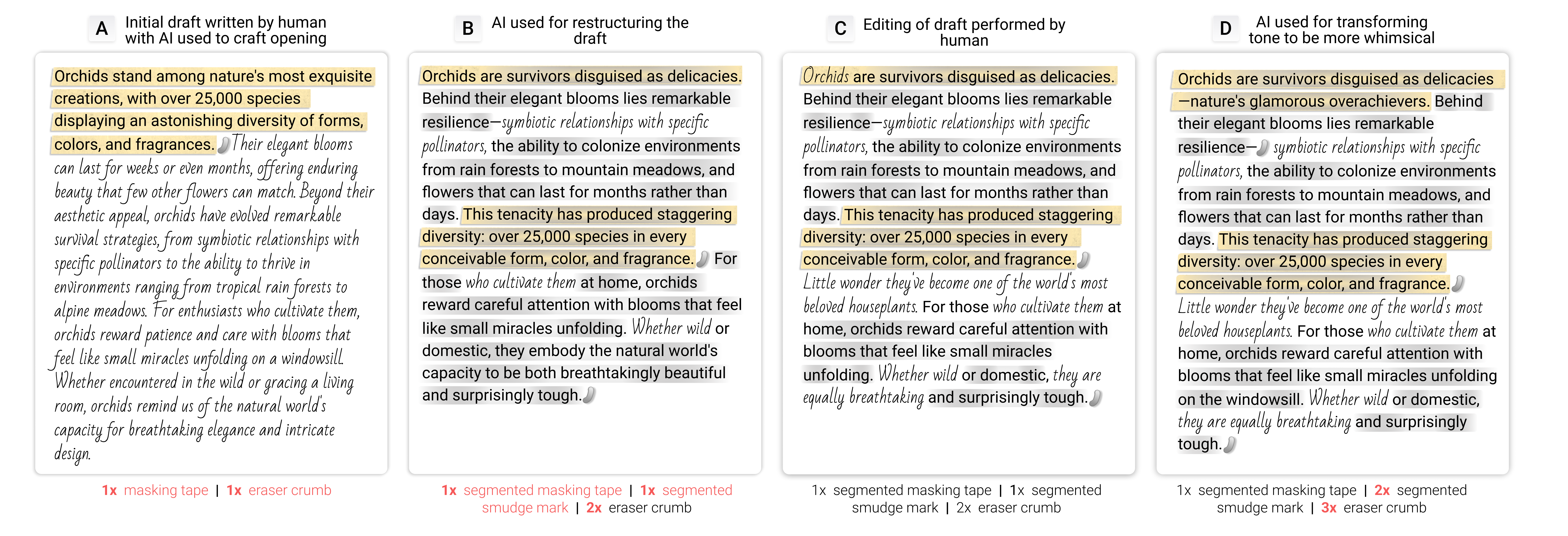
Example of draftmarks

How DraftMarks works

Generative artificial intelligence (AI) has transformed college writing. As paper drafts are increasingly co‑written with AI, professors are left wondering not whether students are using AI, but how.

A 2025 AI in Education trend report found that 90% of college students use AI in their coursework, with nearly half using it during the drafting process. As AI becomes embedded in everyday writing, traditional tools like Grammarly or Turnitin for evaluating student learning fall short. If AI is to be expected in most student writing, then merely detecting its presence isn’t enough. 

DraftMarks, a new open‑source tool developed by Georgia Tech and Stanford researchers, makes the writing process itself visible. Instead of trying to assess how much of a finished document was written by AI, DraftMarks shows where a student iterated with AI prompts, what is fully AI, and how a piece evolved — illuminating the often-invisible collaboration between human writers and AI.

Functioning as an augmented reading tool, DraftMarks layers visual cues directly onto a document to indicate different kinds of AI involvement. Eraser crumbs mark heavily revised passages. Smudges signal AI-generated changes in the strength of the argument rather than content changes. Masking tape highlights passages initially generated by AI. Glue residue shows where AI‑generated text was later removed. Ghost text indicates when a writer prompted AI but chose not to use the output. Different fonts distinguish between human‑written and AI‑generated passages.

Together, the marks don’t just reveal AI’s presence. They tell a story about the writer’s process.

“By making the invisible parts of the process tangible, it forces writers to confront whether they are truly engaging with AI or just passively accepting it,” said Momin Siddiqui, a master’s student in the College of Computing and lead author on the project. “Ultimately, it helps writers make more intentional judgment calls about how they want to collaborate with AI in the future.”

The researchers debuted DraftMarks at the Association for Computing Machinery’s Conference on Human Factors in Computing Systems in Barcelona in April.

Designing for Educators

Rather than starting with detection algorithms, the researchers began with educators. In an initial 21-person study, they observed how instructors reviewed student writing and what cues they looked for when assessing learning, revision, and originality. Those insights informed the design of DraftMarks’ visual language, which deliberately mimics physical artifacts of writing — eraser debris, tape, smudges — to reflect processes instructors already recognize.

“These marks are meant to emulate the writing process in ways we’re already familiar with,” said Adam Coscia, a computing Ph.D. student. “They help students and teachers see the effort behind the writing, and whether students actually met the learning objective.”

Behind the scenes, DraftMarks tracks a document’s draft history and classifies different types of edits and AI interactions as they happen, allowing the visual cues to appear almost in real time. 

Reading DraftMarks

To evaluate how the tool functions beyond the lab, the team conducted a follow‑up study with 70 participants, including students, teachers, journalists, and general readers. Their reactions to reviewing a DraftMarks-annotated document varied in revealing ways.

Instructors were most interested in seeing the writing process unfold: how ideas developed, how heavily AI was used, and where students exercised judgment. General readers, meanwhile, used the marks to assess something less measurable but equally important — trust. For them, DraftMarks offered cues about authorial intent and authenticity, helping readers decide how much confidence to place in a piece of writing. 

A Shift From Detection to Reflection

Unlike AI detectors that merely offer a percentage, DraftMarks is designed to prompt reflection from writers and readers. 

“DraftMarks completely changed how I think about my own writing,” Coscia said. “I was surprised by how much I cared about authorial intent once I could actually see how AI affected my tone. It made me realize small AI choices can subtly reshape what I’m trying to say.”

As AI continues to reshape how writing happens, the research team hopes DraftMarks will help shift the conversation toward transparency. Tools like this could offer educators and students a clearer window into how learning happens when humans and AI write together.


This work is funded through the AI Research Institutes program by the National Science Foundation and the Institute of Education Sciences, U.S. Department of Education.

CITATION: Momin N. Siddiqui, Nikki Nasseri, Adam J. Coscia, Roy Pea, and Hari Subramonyam. 2026. DraftMarks: Enhancing Transparency in Human-AI Co-Writing Through Interactive Skeuomorphic Process Traces. In Proceedings of the 2026 CHI Conference on Human Factors in Computing Systems (CHI '26). Association for Computing Machinery, New York, NY, USA, Article 862, 1–22. 

DOI: https://doi.org/10.1145/3772318.3791109

 
News Contact

Tess Malone, Senior Research Writer/Editor

tess.malone@gatech.edu

Georgia Tech Welcomes a Neuroethics Pioneer

Karen Rommelfanger smiling in a warmly lit room. A window and brick wall are visible behind her.

Karen Rommelfanger recently joined Georgia Tech as a professor of the practice, where she will work with the Institute for Neuroscience, Neurotechnology, and Society to embed neuroethics into Georgia Tech’s research and technology development ecosystem. Photo via the Dana Foundation.

Artificial intelligence has been touted as the most transformative technology of our time. With only a few years of mainstream use, it’s changed how we work and communicate, generated billions of dollars in investments, and sparked global debate. But according to leading neuroethics expert Karen Rommelfanger, the race isn’t over yet. 

“Can you think of a more transformative technology than one that intervenes with the fundamental organ that drives your experience in the world?” 

That fundamental organ is the brain.  

Technologies interfacing directly with the brain have been reserved for treating severe injury or disease for decades. Now, neurotechnology is expanding into brain-responsive wearables meant to enhance, augment, and monitor everyday life. As these technologies accelerate and AI is incorporated, the question is no longer if neurotechnology will transform society, but how — and who will shape the boundaries. 

These are some of the questions on which Karen Rommelfanger has built her career. Trained as a biomedical researcher and neuroscientist, Rommelfanger went on to found the Institute for Neuroethics, the world’s first think and do tank devoted entirely to neuroethics, public engagement, and policy implementation.  

“The brain is special; it’s central to who we are,” says Rommelfanger, who was also an inaugural recipient of the Dana Foundation Neuroscience and Society Award. “And that means when you intervene with the brain, there are unique responsibilities. The field of neuroethics addresses things like: How do you ensure mental privacy? How do you protect free will? How do you ensure that people have the power to be narrators of their own lives and their cognitive experience?” 

Now, Rommelfanger is joining Georgia Tech’s Institute for Neuroscience, Neurotechnology, and Society (INNS) as a professor of the practice, where she will work to further embed neuroethics into Georgia Tech’s research and technology development ecosystem. 

“Georgia Tech is producing the next generation of neurotechnologists, and Karen’s expertise will help ensure we’re preparing them to think about societal impact as deeply as they think about the technical and scientific aspects of their work,” says Christopher Rozell, executive director of INNS. “Her leadership strengthens the Institute in exactly the way this moment in neurotechnology demands.”  

“Georgia Tech has many, many ways that it leads in the technology ecosystem. But one of the powerful, unique ways it can lead is through neurotechnology,” says Rommelfanger. “I hope that the INNS, given its unique mandate for neuroscience, neurotechnology, and society, can be a lighthouse for these types of conversations.” 

Neuroethics by Design 

From institutional review boards to mandatory responsible research conduct training, ethics are a foundational part of scientific research. But designing neurotechnologies raises ethical challenges beyond the scope of typical training. What happens when discoveries leave the lab and enter people’s lives? 

That question sits at the core of Rommelfanger’s work. She argues it’s a neurotechnologist’s responsibility to recognize and proactively address the need for unique safeguards for privacy, autonomy, and long-term responsibility. Her solution is to move neuroethics upstream, embedding it directly into the research, design, and deployment of neurotechnology through an approach she calls “neuroethics by design.” 

“Neuroethics by design considers ethics as a core criterion where principles can drive innovation with more of a lens toward societal outcomes,” she says — an approach informed by years of advising national-level brain research initiatives and her experience at the intersection of clinical practice and ethics scholarship. 

Rather than treating ethics as a compliance checklist or a post hoc review, neuroethics by design integrates ethical thinking throughout the entire innovation lifecycle, from early ideation and research questions to product requirements, governance strategies, and long-term sustainability. She has used the approach for years as an embedded partner for neurotechnology startups in her neuroethics consultancy, Ningen Co-Lab

After decades as a traditional academic professor and then years advising companies and policymakers with this philosophy, Rommelfanger says Georgia Tech is the right place to scale this work. With its strength in neurotechnology and INNS’s rare focus on neuroscience and society, “I could not think of a better place to launch and pilot this neuroethics by design scaling effort.” 

She will work with INNS to help equip researchers, students, and industry partners with practical tools for ethical decision-making. Her vision is not to create neuroethicists as a standalone profession, but to cultivate ethically engaged neurotechnologists and engineers. 

Central to her plans at INNS are hands-on training programs that bring ethics out of the abstract and into practice. “I wanted to be a professor of the practice because, while the field does need more scholars, what it really needs most at this point are practitioners.”  

Rommelfanger is exploring modular content that can be embedded into existing courses across disciplines, as well as immersive training — such as neuroethics boot camps and problem-solving hackathons — that bring together students, faculty, and professionals to tackle real-world challenges collaboratively. 

“No one discipline can solve all the ethical challenges ahead,” says Rommelfanger. She is particularly interested in creating spaces where experts from across science and engineering, policy and law, design and the arts, and philosophy can work side by side with people with lived experience of neurological conditions. “The onus is not on scientists alone, but is a shared responsibility that benefits immensely from dialogue, accountability, and action across diverse communities.” 

By situating neuroethics within Georgia Tech’s broader research ecosystem, Rommelfanger hopes INNS can help shift how the field evolves globally.  

“It's really difficult to get your arms around something once it's out of the gate,” she says, citing the rapid adoption of AI without proper ethical or policy guidelines. “With neurotechnology, we still have a little bit of time, but not that much time. We are at that moment where we could change the course of global history.” 

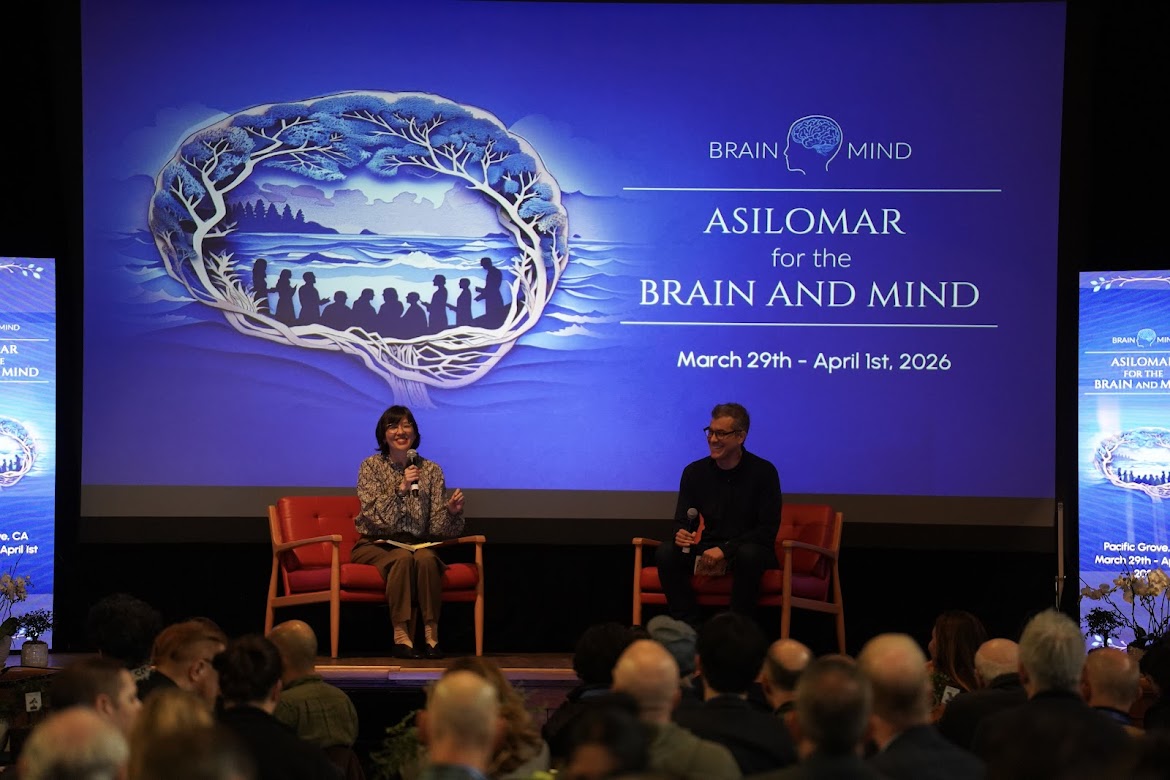
Seated on the left, Karen Rommelfanger speaks on a panel at the 2026 Asilomar for the Brain and Mind conference. Panelists sit on stage in front of a large screen displaying the conference name, dates, and a brain-themed graphic, with an audience visible in the foreground.

Karen Rommelfanger (left) is a leading voice in neuroethics, with years of experience bridging neuroscience, technology development, ethics, and public policy to address the societal impacts of emerging brain technologies.

 
News Contact

Audra Davidson
Research Communications Program Manager
Institute for Neuroscience, Neurotechnology, and Society (INNS)

Bad Vibes: AI-Generated Code is Vulnerable, Researchers Warn

A man typing on a computer. There is a hovering screen hovering over his hands that says "Vibe Coding"

Vibe coding programmers are releasing batches of vulnerable code, according to researchers at the School of Cybersecurity and Privacy (SCP) at Georgia Tech, who have scanned over 43,000 security advisories across the web.

The programming style relies on using generative artificial intelligence (AI) to create software code using tools like Claude, Gemini, and GitHub Copilot. According to graduate research assistant Hanqing Zhao of the Systems Software & Security Lab (SSLab), no one had been tracking these common vulnerabilities and exposures before the launch of their Vibe Security Radar.

“The vulnerabilities we found lead to breaches,” he said. “Everyone is using these tools now. We need a feedback loop to identify which tools, which patterns, and which workflows create the most risk.”

The radar extensively scans public vulnerability databases, finds the error for each vulnerability, and then examines the code’s history to find who introduced the bug. If they discover an AI tool's signature, the radar flags it. 

Of the 74 confirmed cases uncovered so far by the tool, 14 are critical risks, and 25 are high. These vulnerabilities include command injection, authentication bypass, and server-side request forgery. Zhao explained that since AI models tend to repeat the same mistakes, an attacker would need to find these bugs just once. 

“Millions of developers using the same models means the same bugs showing up across different projects,” he said. “Find one pattern in one AI codebase, you can scan for it across thousands of repositories.”

Despite its success, the team has only scratched the surface of the problem. The radar can trace metadata like co-author tags, bot emails, and other known tool signatures, but it can't identify an issue if these markers have been removed. 

The next step is behavioral detection. AI-written code has patterns in how it names variables, structures functions, and handles errors. 

“We're building models that can identify AI code from the code itself, no metadata needed,” said Zhao. “That opens up a lot of cases we currently can't touch.”

The team is also improving its verification pipeline and expanding its sources to include more vulnerability databases. The goal is to get a more complete picture of AI-introduced vulnerabilities across open source, not just the ones that happen to leave signatures behind. 

As more programmers rely on vibe coding, Zhao warns that it still needs to be reviewed as thoroughly as any other project. 

“The whole point of vibe coding is not reading it afterward, I know,” he said. “But if you're shipping AI output to production, review it the way you'd review a junior developer's pull request. Especially anything around input handling and authentication.”

When prompting AI, SSLab also recommends providing more detailed instructions to get it closer to production-ready. There are also tools to check the code for vulnerabilities after  code it has been generated. Not double-checking could lead to a catastrophe. 

“The attack surface keeps growing,” said Zhao. “More people running AI agents locally means the attacker doesn't need to break into the company infrastructure. They just need one vulnerability in a model context protocol server that someone installed and never reviewed.”

One reason the attack surfaces are expanding rapidly is AI’s evolution. In the second half of 2025, the Vibe Security Radar found about 18 cases across seven months. Then, in the first three months of 2026, it identified 56. March 2026 alone had 35, more than all of 2025 combined. 

Many tools, like Claude, are now more autonomous, allowing developers to write entire features, create files, and even make architecture decisions. 

“When an agent builds something without authentication, that's not a typo,” said Zhao. “It's a design flaw baked in from the start. Claude Code and Copilot together account for most of what we detect, but that's partly because they leave the clearest signatures.”

 
News Contact

John Popham

Communications Officer II at the School of Cybersecurity and Privacy

Anna Erickson Wins 2026 Corones Award for Research and Societal Impact

Anna Erickson

Anna Erickson, Woodruff Professor of nuclear and radiological engineering in the George W. Woodruff School of Mechanical Engineering, has been awarded the 2026 James Corones Award in Leadership, Community Building and Communication from the Krell Institute.

The award, named for the Iowa-based nonprofit’s founder, recognizes midcareer scientists and engineers for research impact, mentoring, scientific-community activities, and commitment to communicating science and technology. It will be formally presented to Erickson in May on the Georgia Tech campus.

Read the full story on the George W. Woodruff School of Mechanical Engineering website.

 
News Contact

Ashley Ritchie
George W. Woodruff School of Mechanical Engineering

Georgia Tech-led Research Team to Develop SHIELD Against Deadly Biological Threats

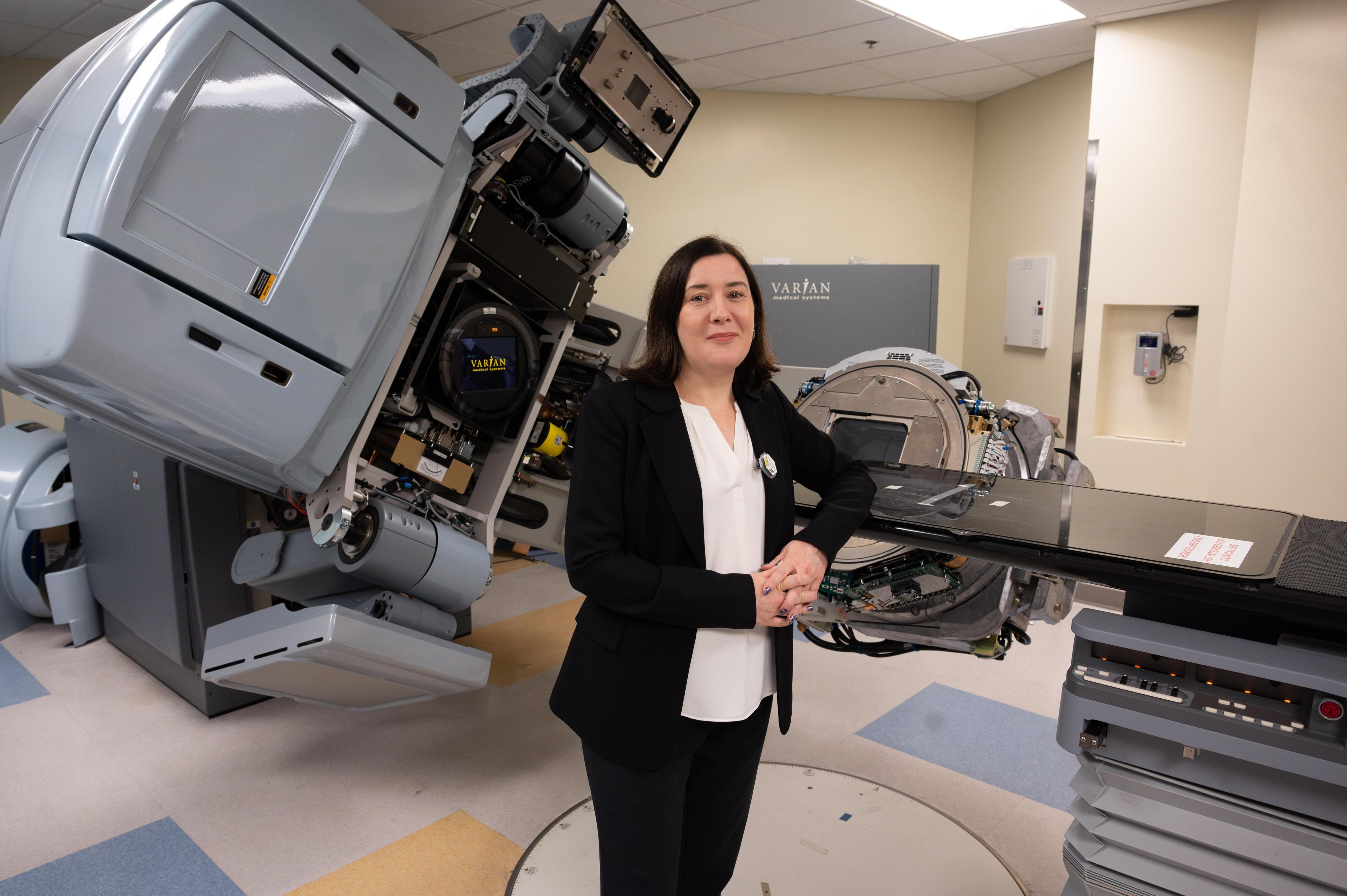
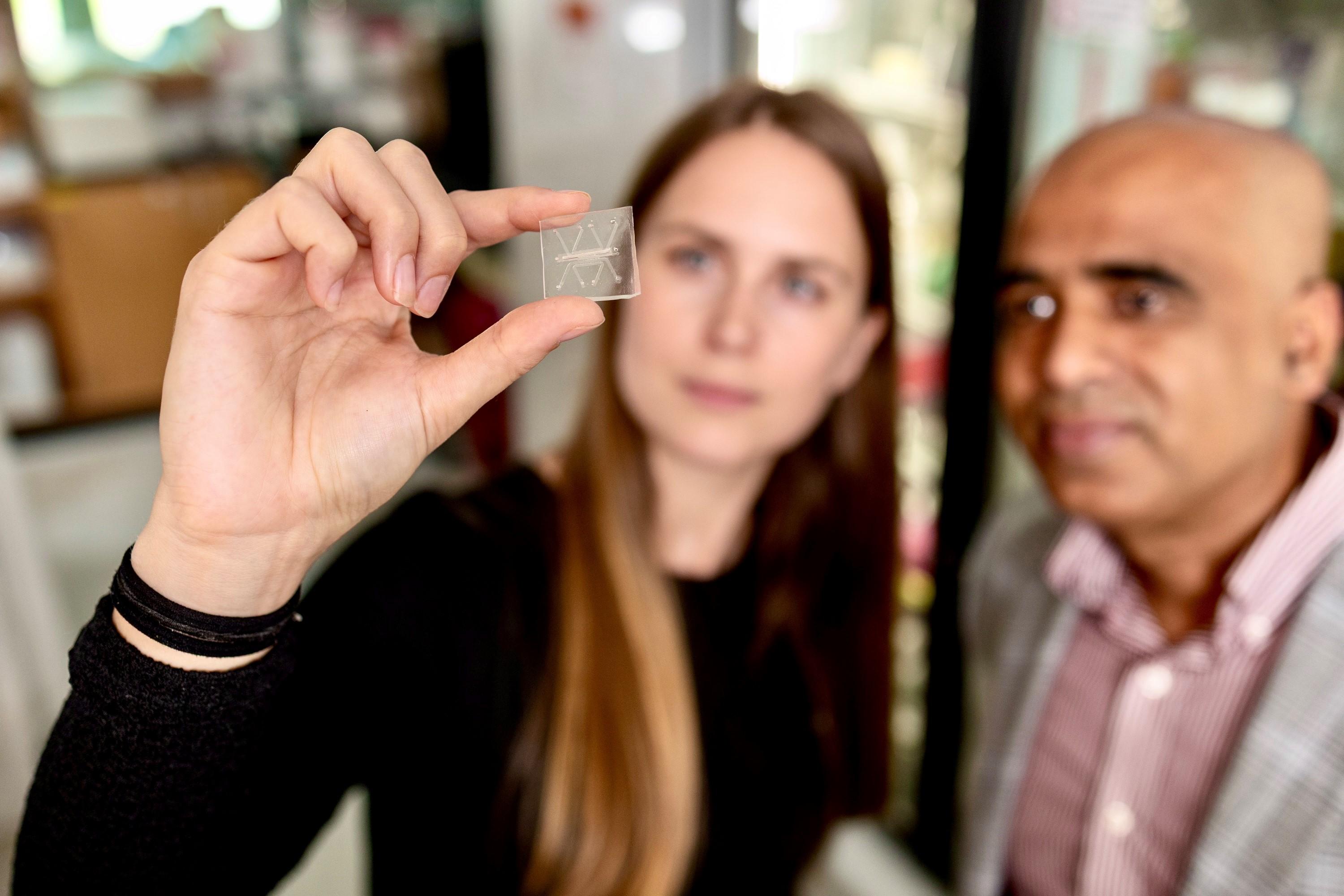
Ankur Singh, the Carl Ring Family Professor in the George W. Woodruff School of Mechanical Engineering, in his lab.

The United States continues to face deadly infectious disease outbreaks, from emerging viruses to antibiotic-resistant bacteria, underscoring the nation’s need for rapid, effective response systems. These threats extend beyond public health, disrupting daily life, straining health care systems, and impacting military readiness.

A team of researchers led by Ankur Singh, the Carl Ring Family Professor in the George W. Woodruff School of Mechanical Engineering and professor in the Wallace H. Coulter Department of Biomedical Engineering at Georgia Tech and Emory University, has been awarded up to $6 million from the Defense Threat Reduction Agency (DTRA) of the U.S. Department of Defense to accelerate the development of medical countermeasures (MCMs) against deadly biological threats that endanger public health, national security, and warfighters.

DTRA’s mission is to provide solutions that enable the Department of Defense, the U.S. government, and international partners to deter strategic threats. A key priority is advancing new or improved MCMs that can be deployed before or after exposure to biological or chemical agents.

Singh’s multi-year project, Systematic Human Immune Engineering for Lethal Disease (SHIELD) Countermeasures, aims to create a threat-agnostic platform that transforms how respiratory pathogens and toxins are studied. The platform is designed to speed up the discovery, development, and production of immune-based countermeasures.

Read the full story on the George W. Woodruff School of Mechanical Engineering website.

 
News Contact

Ashley Ritchie
George W. Woodruff School of Mechanical Engineering

Researchers Use Light to Make Their Microscopic ‘Muscle’ Contract on Command

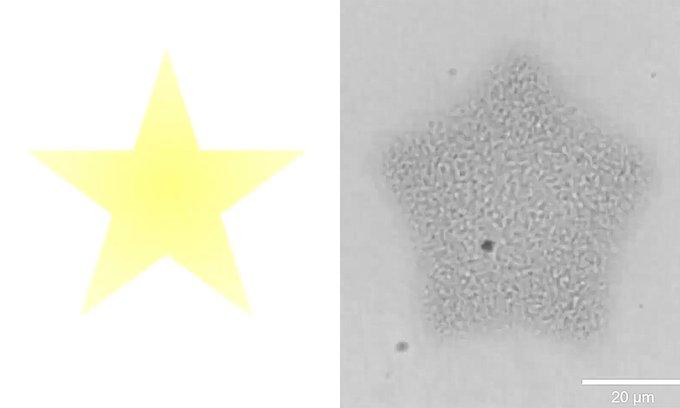
A yellow star shape is shown next to a microscope image of an artificial cell colony that has been directed to form the shape of a star.

Engineers interested in creating artificial cells to deliver drugs to unhealthy parts of the body face a key challenge: for a cell-like system to move, change shape, or divide, it needs a way to generate force on command.

Biological cells rely on adenosine triphosphate (ATP) to move muscles, transport substances across membranes, and perform other functions. Many cellular machines couple ATP hydrolysis (a process where chemical energy stored in ATP is released) directly to motion. 

But some single-celled organisms called ciliates use a different strategy. A pulse of calcium triggers an ultrafast contraction, and ATP is used afterward to pump calcium back into storage and reset the system. 

In a Nature Communications study led by Georgia Tech, researchers learned how to use a similar mechanism to control the movements of artificial protein networks without relying on ATP-powered motor proteins. Instead, they used calcium as a trigger to make the networks contract or relax. 

“If engineers want synthetic cells that can do cell-like things, they need a way to generate force on command,” said Saad Bhamla, a co-author and an associate professor in Georgia Tech’s School of Chemical and Biomolecular Engineering. “Cells have to move, change shape, and divide. We’re trying to build a controllable engine from simple parts.”

In the National Science Foundation-funded study, the team produced and purified Tetrahymena thermophila calcium-binding protein 2 (Tcb2), which is found in ciliates. The protein forms a fibrous network and contracts when exposed to calcium. The researchers reconstituted Tcb2 protein networks in the lab and then used a light-sensitive calcium chelator (a “cage” molecule that holds the calcium until illuminated) to control when and where calcium was released.

They projected light patterns of stars and circles to prompt the network to assemble and contract in matching shapes. Then, to continuously “recharge” the system, the multi-university team pulsed the light on the protein networks, repeatedly releasing calcium and driving cycles of assembly and contraction. 

Read the full story.

 
News Contact

Jason Maderer
Director of Communications | College of Engineering

Georgia Tech Researchers Use Statistics and Math to Understand How The Brain Works

Digital illustration of a human brain split down the middle: the left side is filled with white mathematical equations, diagrams, and formulas, while the right side is surrounded by colorful, flowing lines and abstract wave patterns against a dark blue background.

Researchers at Georgia Tech are using math, science, and artificial intelligence to better understand how people think, move, and perceive the world.

Nothing rivals the human brain’s complexity. Its 86 billion neurons and 85 billion other cells make an estimated 100 trillion connections. If the brain were a computer, it would perform an exaflop (a billion-billion) mathematical calculations every second and use the equivalent of only 20 watts of power. As impressive as the brain is, neurologists can’t fully explain how neurons work together.

To help find answers, researchers at the Institute for Neuroscience, Neurotechnology, and Society (INNS) are using math, data, and AI to unlock the secrets of thought. Together they are helping turn the brain’s raw electrical “noise” into real insights about how people think, move, and perceive the world.

Fair warning: Prepare your neurons for the complexity of this brain research ahead.

Building AI like a Brain

What if artificial neurons in AI programs were arranged as they are in the brain?

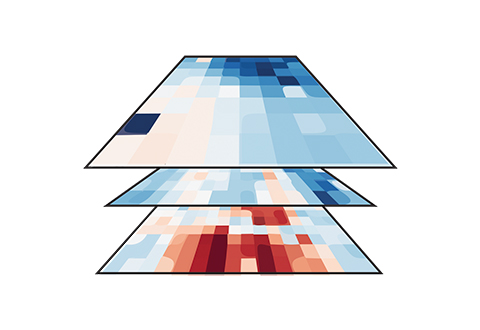
AI programs would then help us understand why the brain is organized the way it is. This neuro-AI synthesis would also work faster, use less energy, and be easier to interpret. Creating such systems is the goal of Apurva Ratan Murty, an assistant professor of Psychology who is creating topographic AI models like the one above of three domains — vision, audition, and language inspired by the brain. In the near future, he predicts doctors might be able to use these patterns to predict the effects of brain lesions and other disorders. “We’re not there yet,” he says. “But our work brings us significantly closer to that future than ever before.”

Computing Thought & Movement

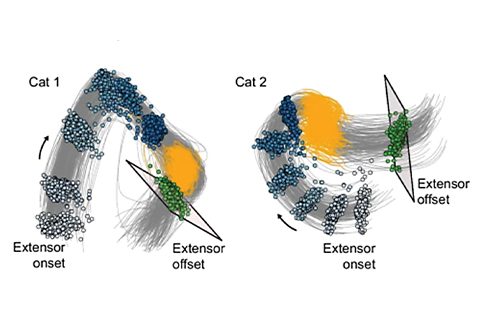
How cats walk keeps Chethan Pandarinath on his toes. This biomedical engineer uses sensors to analyze how two sets of feline leg muscles — flexors and extensors — are controlled by the spinal cord. Understanding how that happens could help patients partially paralyzed from spinal cord injuries, strokes, or progressive neuro-degenerative diseases get back on their feet again. “My lab is using AI tools that allow us to turn complex spinal cord activity data into something we can interpret. It tells us there’s a simple underlying structure behind the complex activity patterns,” says the associate professor.

Revealing the Brain’s Spike Patterns

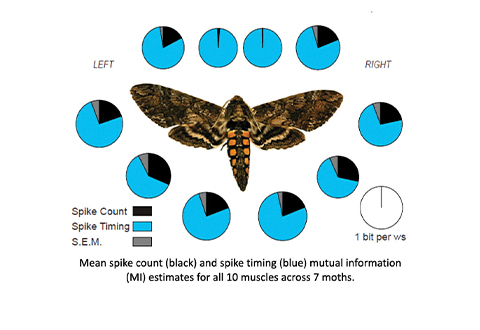
“The brain is like a symphony conductor,” says Simon Sponberg. “Individual instruments have some independent control, but most of the music comes from the brain’s precise coordination of notes among the different players in the body.” This physics professor studies the fantastically fast-beating wings of the hummingbird-sized hawk moth (Manduca sexta). Its agile flight movement comes as a result of spikes in electrical activity in 10 muscles. Sponberg found something that surprised him — the brain focuses less on creating the number of spikes than in orchestrating their precise patterns over time. To Sponberg, every millisecond matters. “We are just beginning to understand how the nervous system first acquires precisely timed spiking patterns during development,” he says.

Predicting Decisions Through Statistics

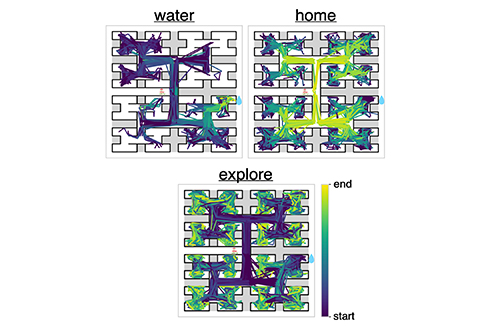
Put a mouse in a maze with food far away, and it will learn to find it. But life for mice — and people — isn’t so simple. Sometimes they want to explore, only want water, or just want to go home. What’s more, animals make decisions based on their history, not just on how they feel at the moment. To dig deeper into the decision-making process, Anqi Wu, an assistant professor in the School of Computational Science and Engineering, is giving mice more options. By using a new computational framework called SWIRL (Switching Inverse Reinforcement Learning), her findings have outperformed models that fail to take historical behavior into account. “We’re seeking to understand not only animal behavior but also human behavior to gain insight into the human decision-making process over a long period of time,” she says.

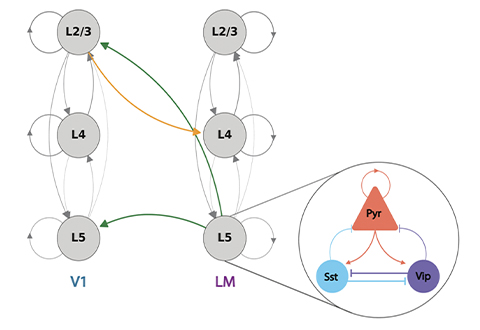
Modeling the Mind’s Wiring with Math

Connectivity shapes cognition in the cerebral cortex, a layered structure in the brain. The visual cortex, in particular, processes visual data from the retina relayed through the Lateral Geniculate Nucleus (LGN) in the thalamus, and directs it to the correct cognitive domain in the brain. How it does this is the mystery that computational neuroscientist Hannah Choi wants to solve. “The big question I’m interested in is how network connectivity patterns in the architecture of the LGN are related to computations,” says this assistant math professor. To find answers, she shows mice repeated image patterns such as flower-cat-dog-house and then disrupts the pattern. The goal? To grasp how the thalamus’s nonlinear dynamical system works. If scientists and doctors better understand how brain regions are wired together, such knowledge could lead to better disease treatment.

This story was originally published through the Georgia Tech Alumni Magazine. Read the original publication here.

Three layered, abstract heat‑map style grids in shades of blue, red, and beige, stacked to resemble data layers or visualization panels.

Caption: This image shows a topographic vision model trained to have a brain-like organization.

Two side‑by‑side scientific diagrams labeled Cat 1 and Cat 2 showing clusters of colored data points and curved gray lines representing muscle‑activity patterns during movement. Each diagram includes blue, green, and yellow point clusters and marked ‘extensor onset’ and ‘extensor offset’ angles.

Caption: This shows how spinal cord activity guides transitions in muscle output for extensor muscles.

Diagram showing a hawk moth in the center surrounded by twelve circular charts. Each chart displays proportional black and blue segments representing spike count and spike timing data for left and right muscle groups. A legend explains the colors, and text below notes that the values show mutual information estimates for 10 muscles across seven moths

Caption: This shows the spike patterns of a hawk moth. Motor systems use spike codes to control motor output.

Three maze-like diagrams labeled ‘water,’ ‘home,’ and ‘explore,’ each showing colored paths representing an animal’s movement through the maze. The paths shift from dark purple at the start to bright yellow at the end, indicating progression over time according to the color scale on the right

Caption: This shows how mice behave differently when they are pursuing different goals.

Diagram showing neural connectivity between cortical layers in regions labeled V1 and LM. Arrows connect circular nodes representing layers L2/3, L4, and L5, with green and orange arrows indicating directional pathways. A magnified inset on the right illustrates a simplified microcircuit with shapes labeled Pyr, Sst, and Vip connected by colored arrows.

Caption: This shows how visual data from the retina is directed to the correct cognitive domain in the brain through a region of the visual cortex.

 
News Contact

Writer: George Spencer

News and Media Contact: Audra Davidson

2026 Suddath Symposium Showcases Biomedical Applications of Synthetic Biology

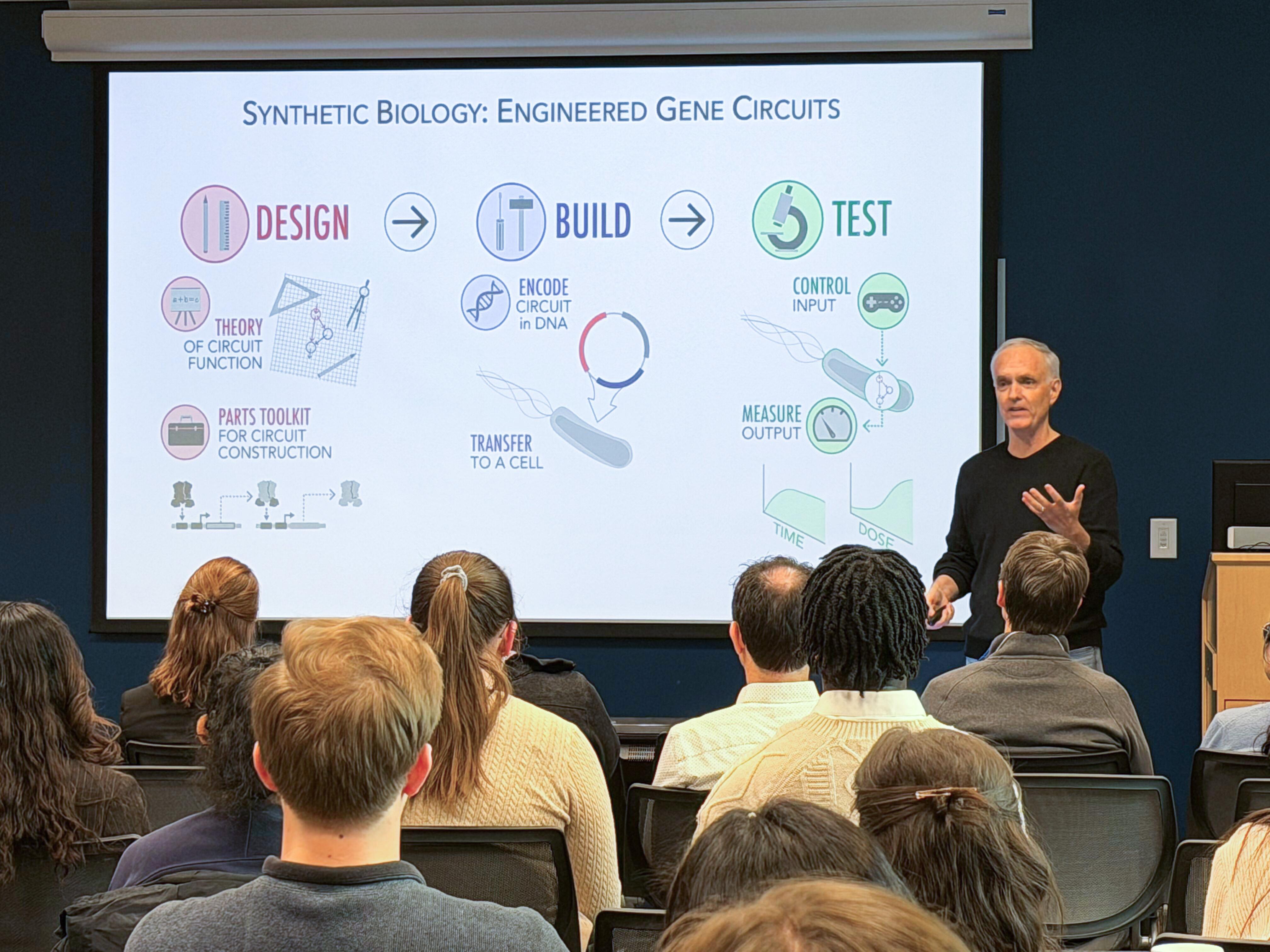
A presenter stands at the front of a lecture room speaking to a seated audience while a projected slide titled “Synthetic Biology: Engineered Gene Circuits” illustrates the design–build–test cycle with diagrams and icons explaining gene circuit construction and testing.

James Collins from the Massachusetts Institute of Technology (MIT) was one of the featured speakers at this year's symposium.

The 34th annual Suddath Symposium, hosted by the Parker H. Petit Institute for Bioengineering and Bioscience (IBB) on March 18-19, brought together researchers, trainees, and invited speakers from across disciplines to discuss cutting-edge efforts to translate synthetic biology advances into human health-relevant technologies, including diagnostics, therapeutics, and clinical tools.

“The topic of the Suddath Symposium changes every year, which allows the Georgia Tech research community to annually learn about recent advances on a specific topic from across the immense fields of bioengineering and bioscience,” said Nicholas Hud, Regents’ Professor in the School of Chemistry and Biochemistry and Associate Director of IBB.

The symposium also included presentation of the 2026 Suddath Award, which recognizes outstanding graduate research. This year’s award was presented to Myeongsoo Kim, a Ph.D. candidate in the Bioengineering Graduate Program, for his work at the intersection of cell engineering, cancer treatment, and biomedical imaging. The award is presented each year by members of the Suddath family, including Vincent Suddath, grandson of Bud and a current freshman at Georgia Tech majoring in mathematics.

The symposium and award honor the legacy of F. L. “Bud” Suddath and his lasting contributions to the Institute and the wider Georgia Tech research community.

“Bud was influential in promoting the growth of bioscience research at Georgia Tech, efforts that helped establish IBB in the 1990s,” Hud said. “Bud’s research interests were at the forefront of structural biology, a field that laid the foundation for much of what we know today about biology at the molecular level. It’s fitting that we honor Bud’s contributions by annually providing the Georgia Tech community with the opportunity to learn about research on a timely topic within the biological sciences.”

Symposium co-chairs Tara Deans and Mark Styczynski said that in addition to upholding the legacy of Bud Suddath, the event also provides a unique setting and opportunity for both established researchers and trainees to interact over the course of the two day event. The intimate format of the symposium, which is limited to approximately 100 attendees, and the annual selection of a different interdisciplinary topic sets it apart from other symposia.

“The Suddath Symposium is an amazing opportunity to bring multiple world-class researchers right to our trainees’ front door, to hear about their work and connect with them in a small setting that you can’t really find at most conferences,” said Styczynski, who is a professor in the School of Chemical and Biomolecular Engineering. “We are really grateful to IBB and the Suddath family for supporting this unique event.”

Deans, who is an associate professor in the Wallace H. Coulter Department of Biomedical Engineering, highlighted how this year’s theme reflects a broader shift in the field.

“This year’s focus on biomedical applications of synthetic biology highlights a major inflection point in the field: the transition from proof-of-concept systems to human health-relevant technologies,” she said. “The theme also reflects increasing convergence across disciplines; synthetic biology is no longer operating in isolation, but it is deeply intertwined with immunology, machine learning, diagnostics, and clinical translation. Addressing real-world biomedical problems requires this kind of integration, and the symposium captured that shift very clearly.”

The Suddath Symposium annually serves as a cornerstone event for Georgia Tech’s bioengineering and bioscience community — connecting researchers, honoring scientific legacy, and spotlighting the next generation of scientific innovation.

 
News Contact

Ashlie Bowman | Communications Manager

Parker H. Petit Institute for Bioengineering and Bioscience

2026 Frontiers in Science: Advancing Space Exploration

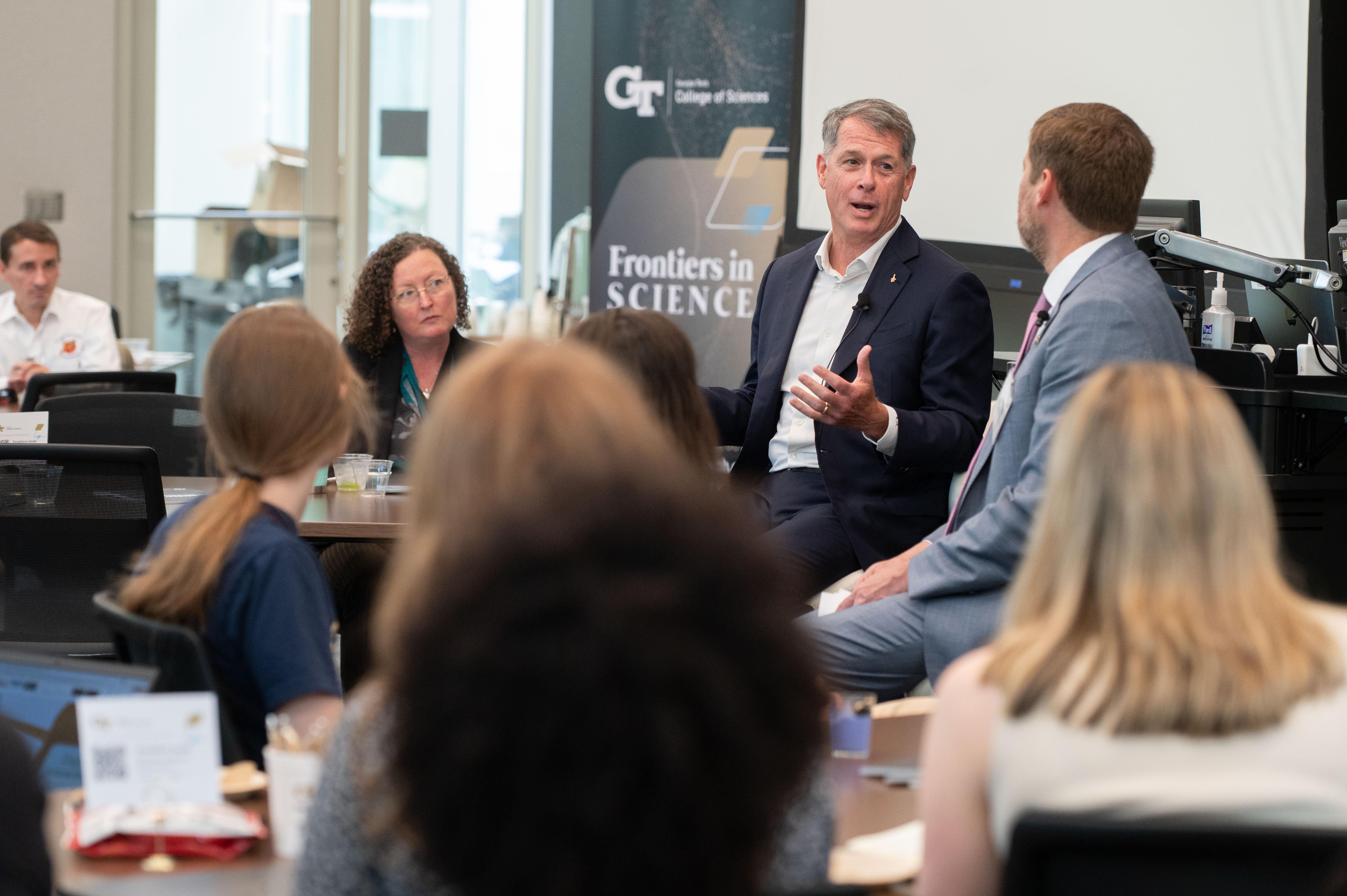
R. Shane Kimbrough speaks in front of room of people during a fireside chat

One day after the historic Artemis II launch, the College of Sciences welcomed more than 150 researchers, students, and community members to its signature Frontiers in Science conference. Held on April 2, the full-day event focused on space research guiding discovery and innovation.

As during previous editions, this year’s conference featured more than two dozen scientists, engineers, policy experts, and thought leaders from Georgia Tech and beyond, illustrating how collaboration across fields – from science and engineering to public policy and international affairs – helps to advance strategic research priorities. 

“Frontiers is about discovery and connections across disciplines and generations,” says Susan Lozier, dean of the College of Sciences and Betsy Middleton and John Clark Sutherland Chair. “This edition provided an inspiring glimpse into the future of space exploration and the many ways Georgia Tech is contributing to research and missions seeking answers to what lies beyond our planet.” 

Commitment to Space

Space research is a key institutional priority at Georgia Tech, which is home to numerous academic and research programs in planetary sciences, robotics, mission design, space policy, and other areas. 

The recently established Space Research Institute (SRI) serves as the central hub connecting the broad range of space-related research across campus. Led by Jud Ready, who also serves as principal research engineer at the Georgia Tech Research Institute, SRI has expanded support for space research and commercialization through initiatives such as the CreationsVC Space Fellows Program and Centers, Programs, and Initiatives seed grant program.

SRI’s efforts are in line with Georgia Tech’s long-standing contribution to space exploration. Hundreds of Yellow Jacket alumni work in the space sector, including several graduates who are playing key roles in the Artemis program. To date, more than a dozen Georgia Tech alumni have traveled to space.

Exploring the Final Frontier

The conference featured a series of panels and discussions led by faculty and researchers from the Colleges of Sciences and Engineering as well as the Ivan Allen College of Liberal Arts. 

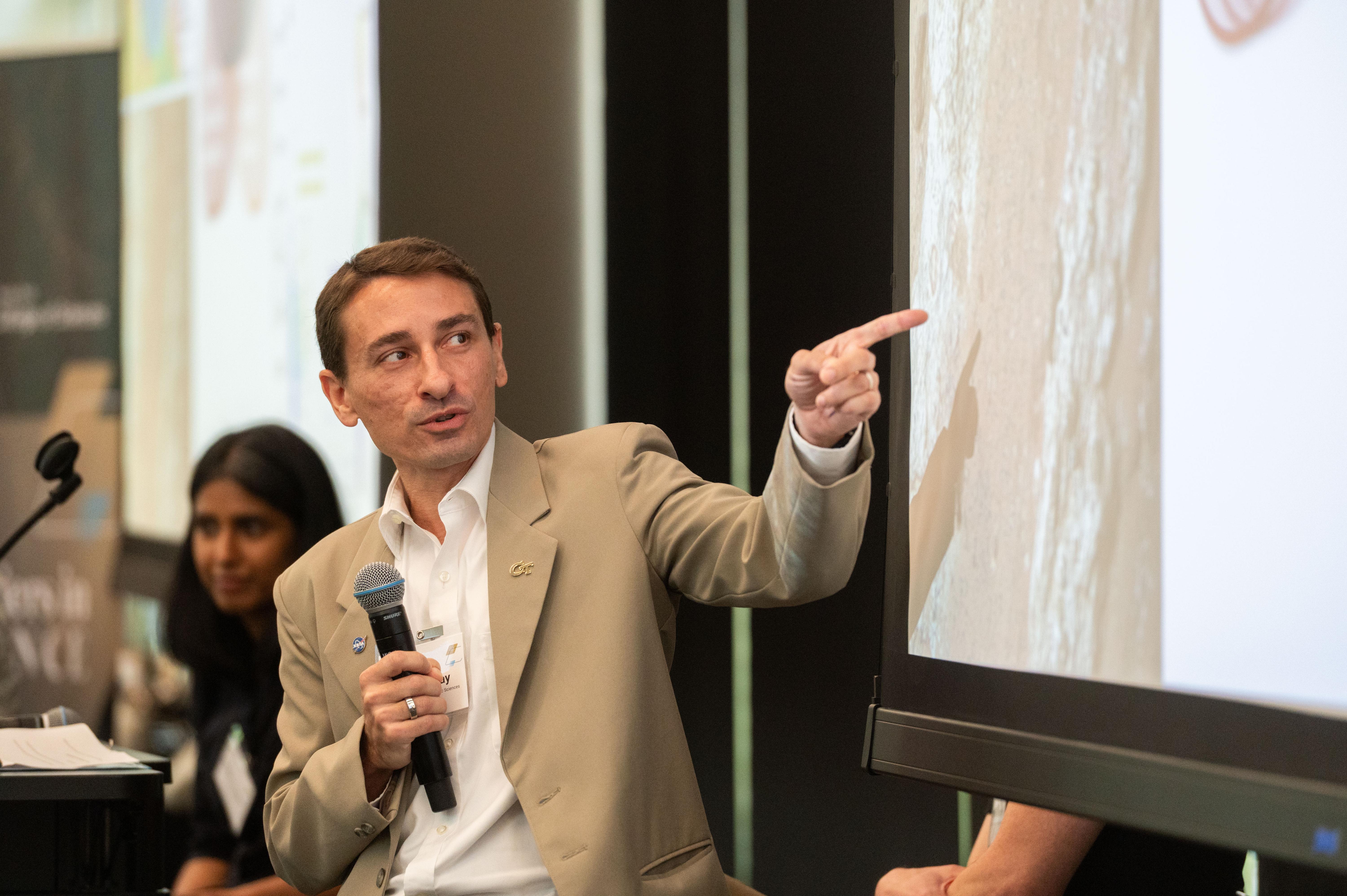
Sessions explored how researchers are studying the processes and conditions that support planetary habitability, seeking to answer one of humanity’s greatest questions: Does life exist beyond Earth? Speakers also examined how analog fieldwork in Earth’s extreme environments can inform space exploration, and how space research, in turn, can deepen our understanding of our own world.

Additional conversations centered on building better space missions through improved understanding of team and individual resilience, data collection, navigation, and the development of advanced technologies like the robots developed through the NASA LASSIE Project

Frontiers also highlighted Georgia Tech’s commitment to preparing the next generation of space scientists, engineers, and leaders. Student training and engagement were recurring themes throughout the day, with speakers emphasizing opportunities for student-led and student-run missions and research. A panel of Georgia Tech alumni shared their own STEM career journeys, challenging the idea of “one right path” to success — and acknowledging the resources and opportunities available at the Institute. 

A highlight of the conference was a fireside chat with Atlanta-native, retired U.S. Army Colonel and NASA Astronaut R. Shane Kimbrough (M.S. Operations Research 1998). Kimbrough, who spent a total of 388 days in space and performed nine spacewalks across three missions, reflected on his career and the evolution of spaceflight. He emphasized the expanding role of public-private and international partnerships in advancing ambitious goals, such as creating a permanent human outpost on the Moon. 

Policy and Public

The conference also explored how policy influences space discovery and innovation, with discussions touching on such issues as space security, access, governance, sustainability — and the influence of technology and science fiction on public perception and policy. 

Panelists described current policy frameworks governing outer space as struggling to keep pace with rapidly advancing technologies and expanding activities. According to these experts, increasing tensions among commercial, research, and recreational uses of space call for greater coordination among private and government entities to balance competing priorities while maximizing opportunities for innovation and exploration. 

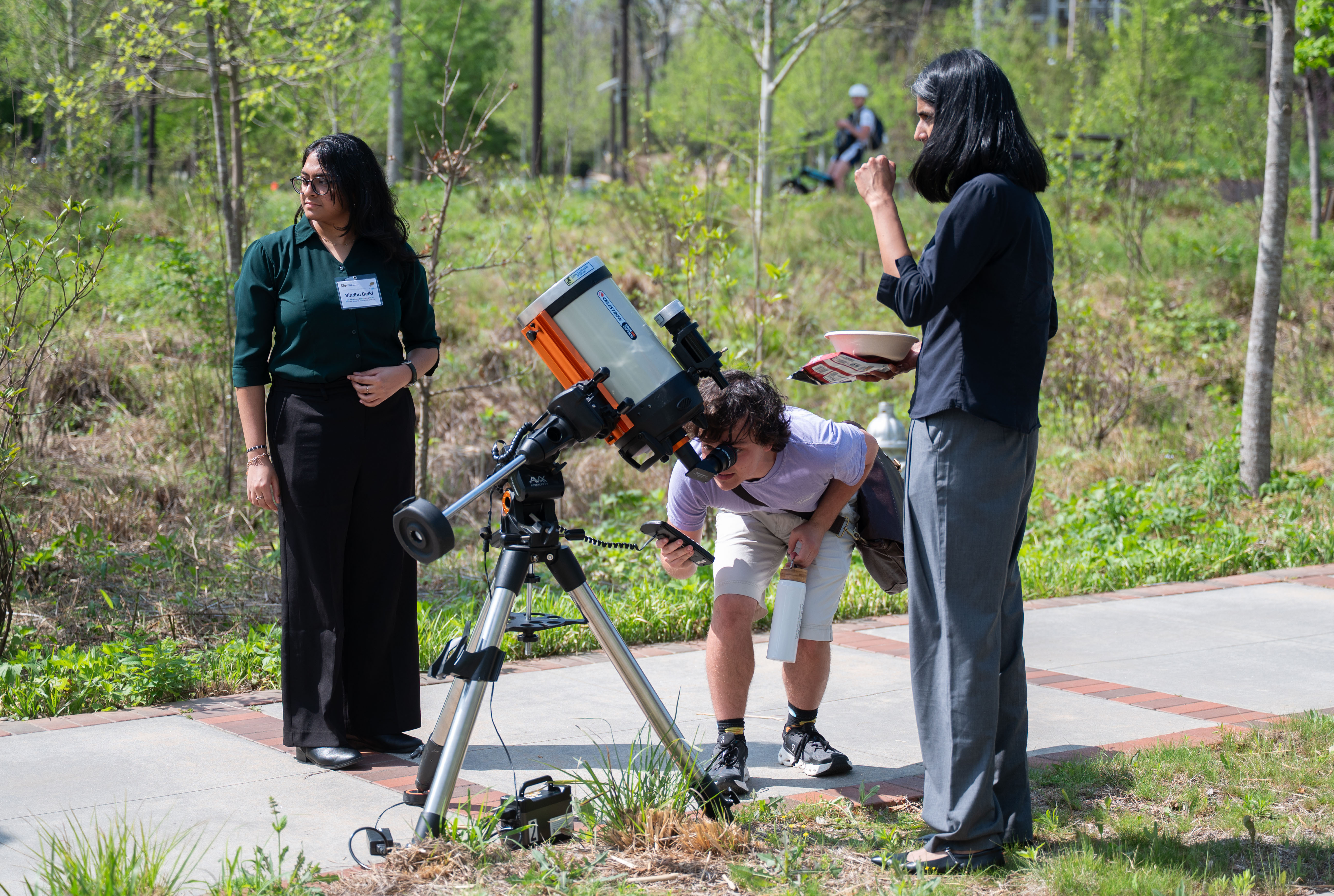
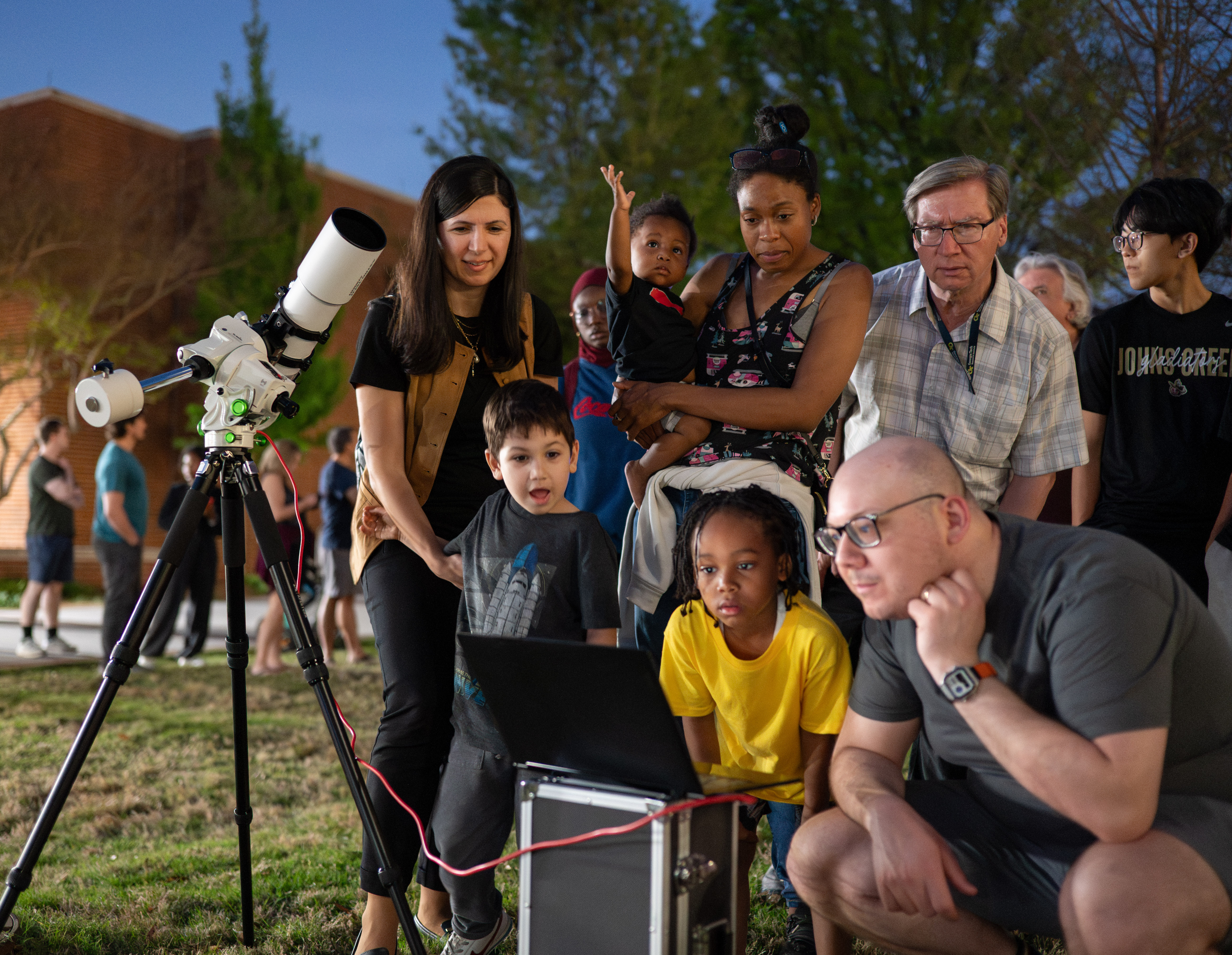
The conference was punctuated by a networking lunch connecting attendees with Atlanta’s public astronomy community – including partners at several universities and the Georgia Tech Astronomy Club, which set up telescopes for attendees to safely observe the sun. Later that evening, the Georgia Tech Observatory hosted its Public Night, welcoming the broader Atlanta community to campus for telescope views of Jupiter, the Orion Nebula, and other celestial bodies. 

The Observatory Night was a fitting conclusion to a full day focused on Georgia Tech’s commitment and contributions to inspiring future generations of space explorers through research, education, and outreach. 

Experience the Frontiers conference in pictures on the College of Sciences’ Flickr account.

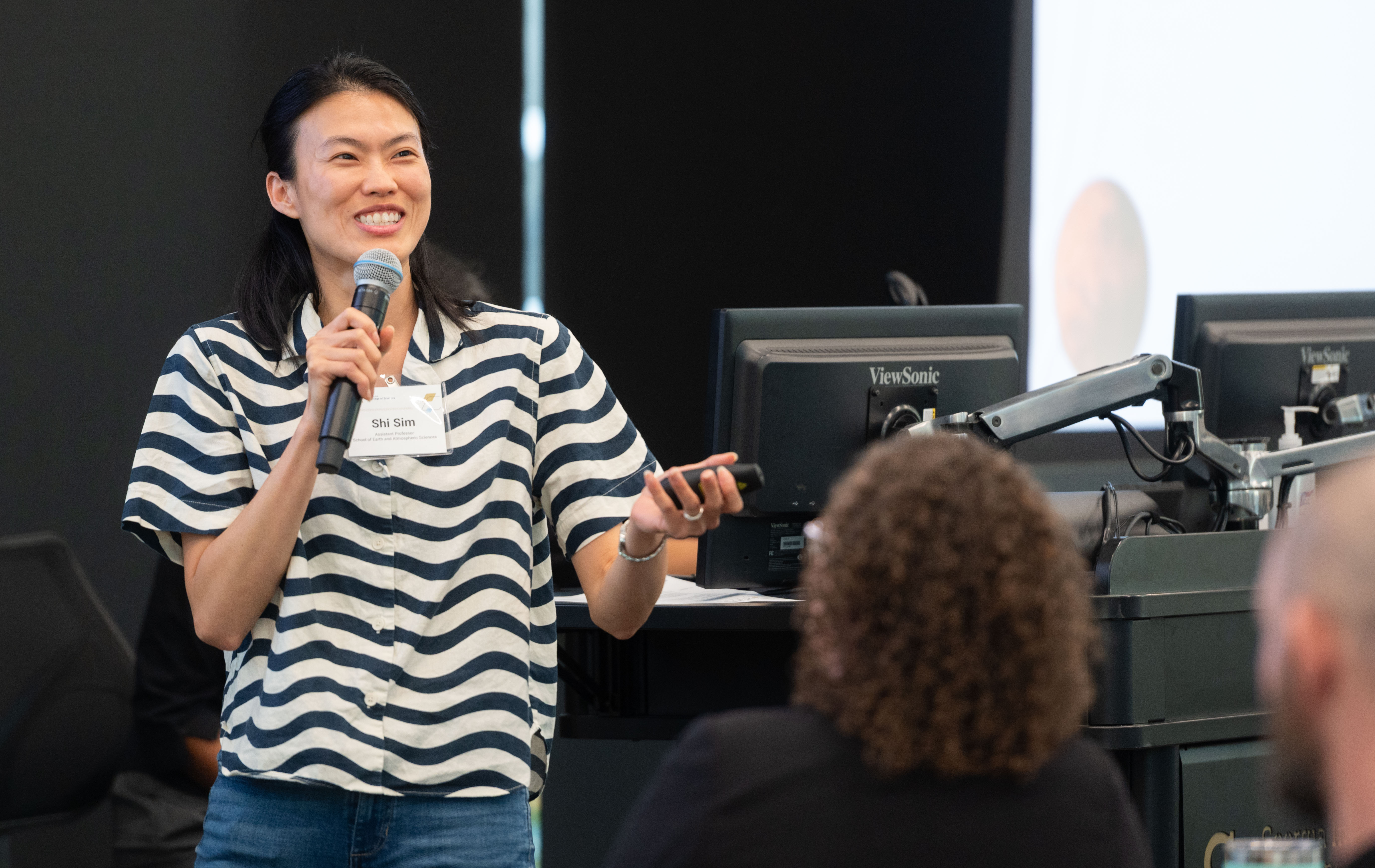
Joyce Shi Sim holds a microphone and laser pointer while presenting to room of people
Professor James Wray holds microphone and points to powerpoint slide during his presentation
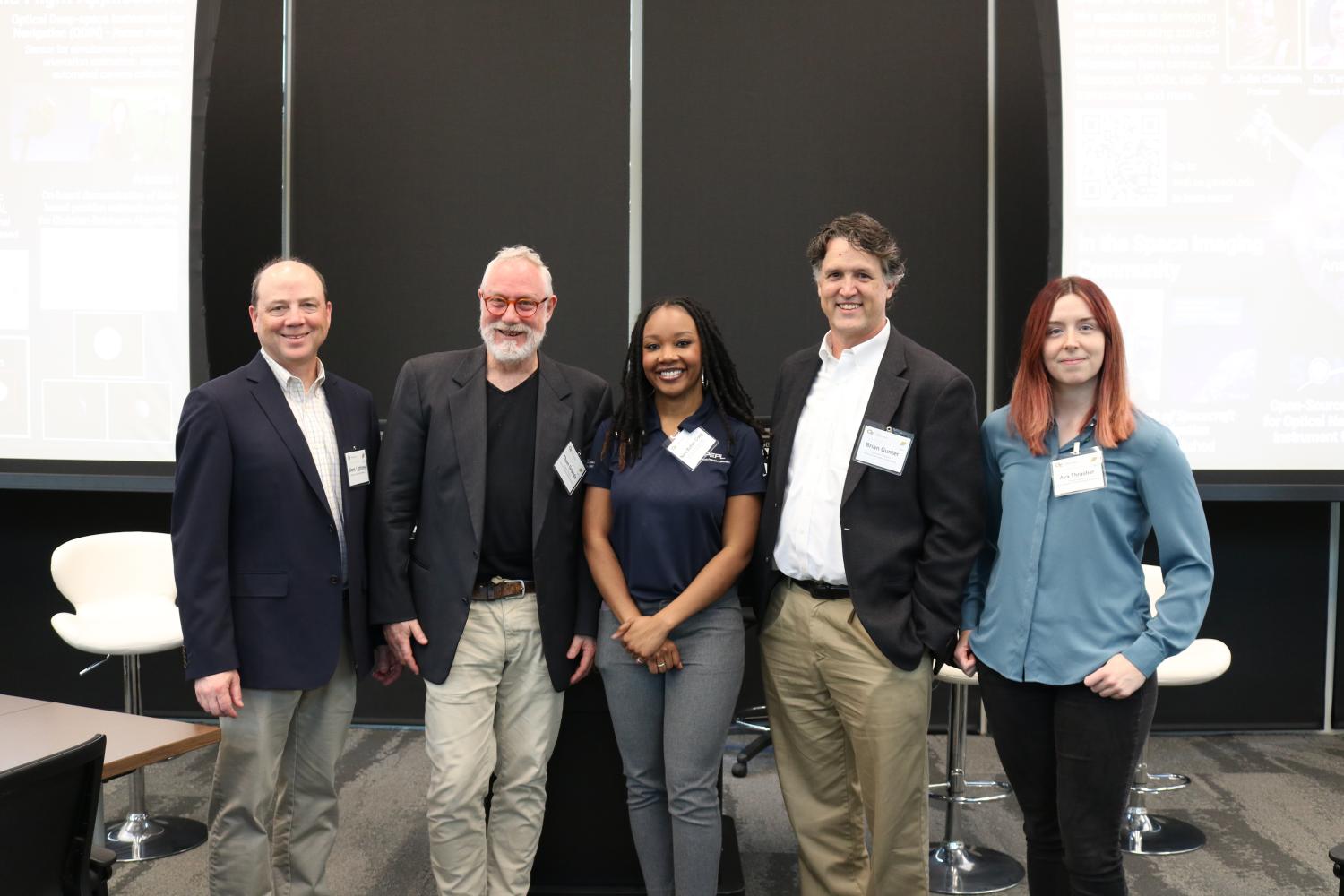
Group photo of five people, including Georgia Tech faculty
Three people stand outdoors with one person looking at the sun through a telescope
Adults and children observing the night sky through a computer that is connected to a telescope
 
News Contact

Writer: Lindsay C. Vidal