This Small Sensor Could Make Huge Impacts on Brain Injury Treatment
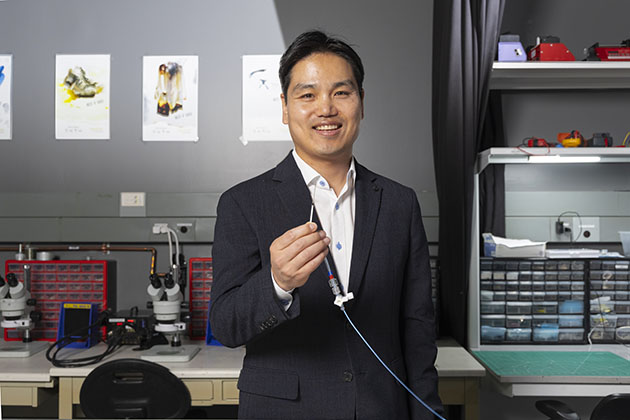
Hong Yeo holds an in-stent nanomembrane sensor that can detect intracranial pressure.

The 14th Annual Southeastern Pediatric Research Conference will showcase the breadth of pediatric research conducted throughout the southeastern United States. This year's conference will feature groundbreaking research from Emory University, Children's Healthcare of Atlanta, Georgia Tech, and Morehouse School of Medicine and will bring together basic scientists, clinical researchers, pediatricians, and healthcare providers to advance the integration of innovative research into clinical practice.
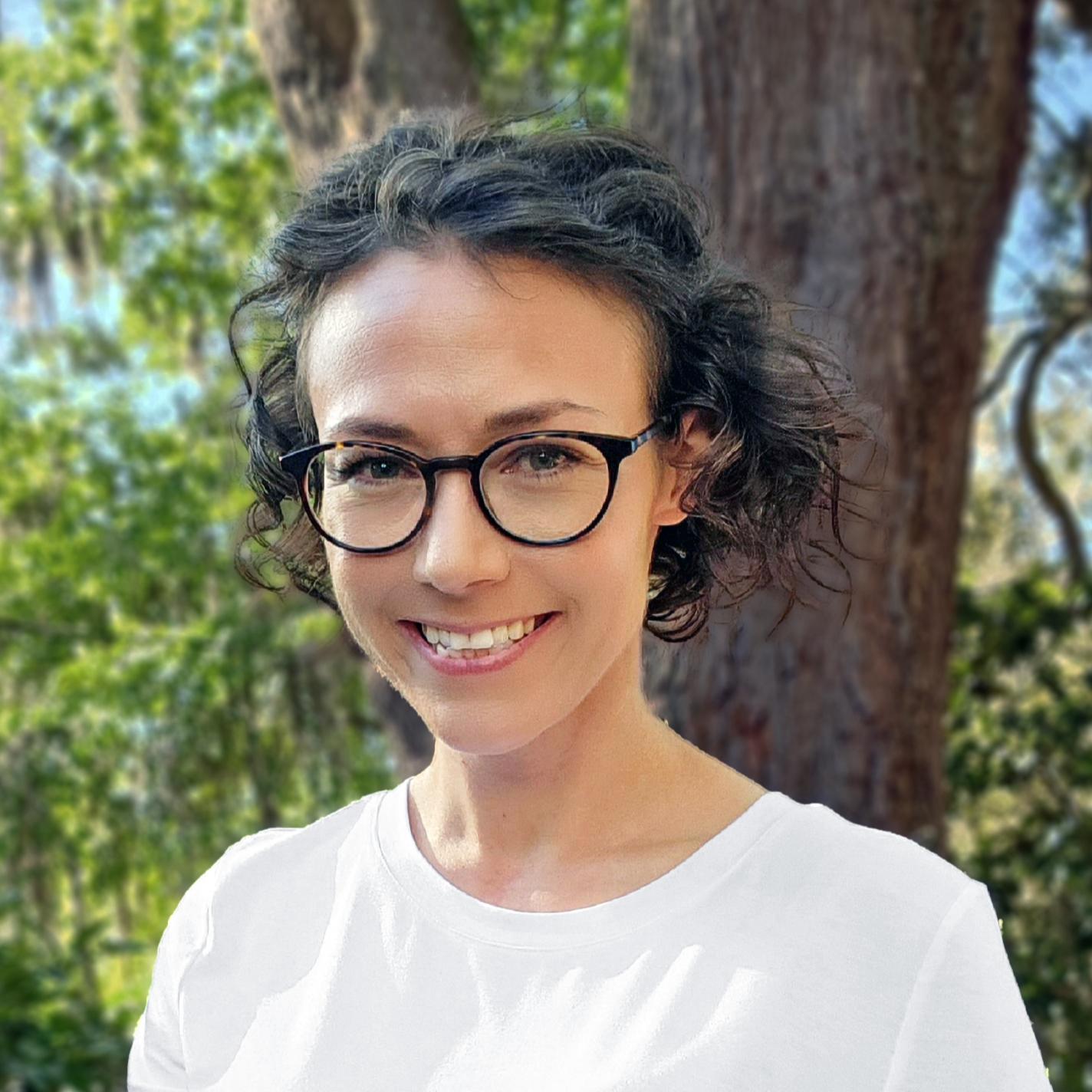
Kait Morano
Kait Morano, a community resilience expert from Georgia Tech, presented critical insights to the Georgia State House of Representatives study committee on disaster mitigation and resilience. Her testimony highlighted the importance of strong partnerships, evidence-based decision-making, and community-driven planning to better prepare for and withstand the impacts from natural disasters. Morano serves as the resilience planning director for CEAR Hub, which works closely with Georgia’s coastal communities. She is also a research scientist with Georga Tech’s Institute for People and Technology.
Morano emphasized strategies to address the unique challenges faced by vulnerable coastal communities, underscoring the need for investments in resilience and capacity-building initiatives before a disaster strikes. Her contributions were reflected in the committee's final report, which includes recommendations for creating a dedicated statewide office of resilience, upgrading 911 systems, and bolstering building codes for certain types of facilities. These efforts aim to mitigate the impacts of increasingly frequent and severe disasters on Georgia's communities.
The committee's findings and Morano's testimony underline the vital role of research, collaboration, and proactive planning in building a safer and more resilient Georgia.
The study committee’s final report is available here: https://www.legis.ga.gov/api/document/docs/default-source/house-study-committee-document-library-page/disaster-mitigation-and-resilience/disaster-mitigation-and-resilience-study-committee-final-report.pdf?sfvrsn=c21b5178_2.
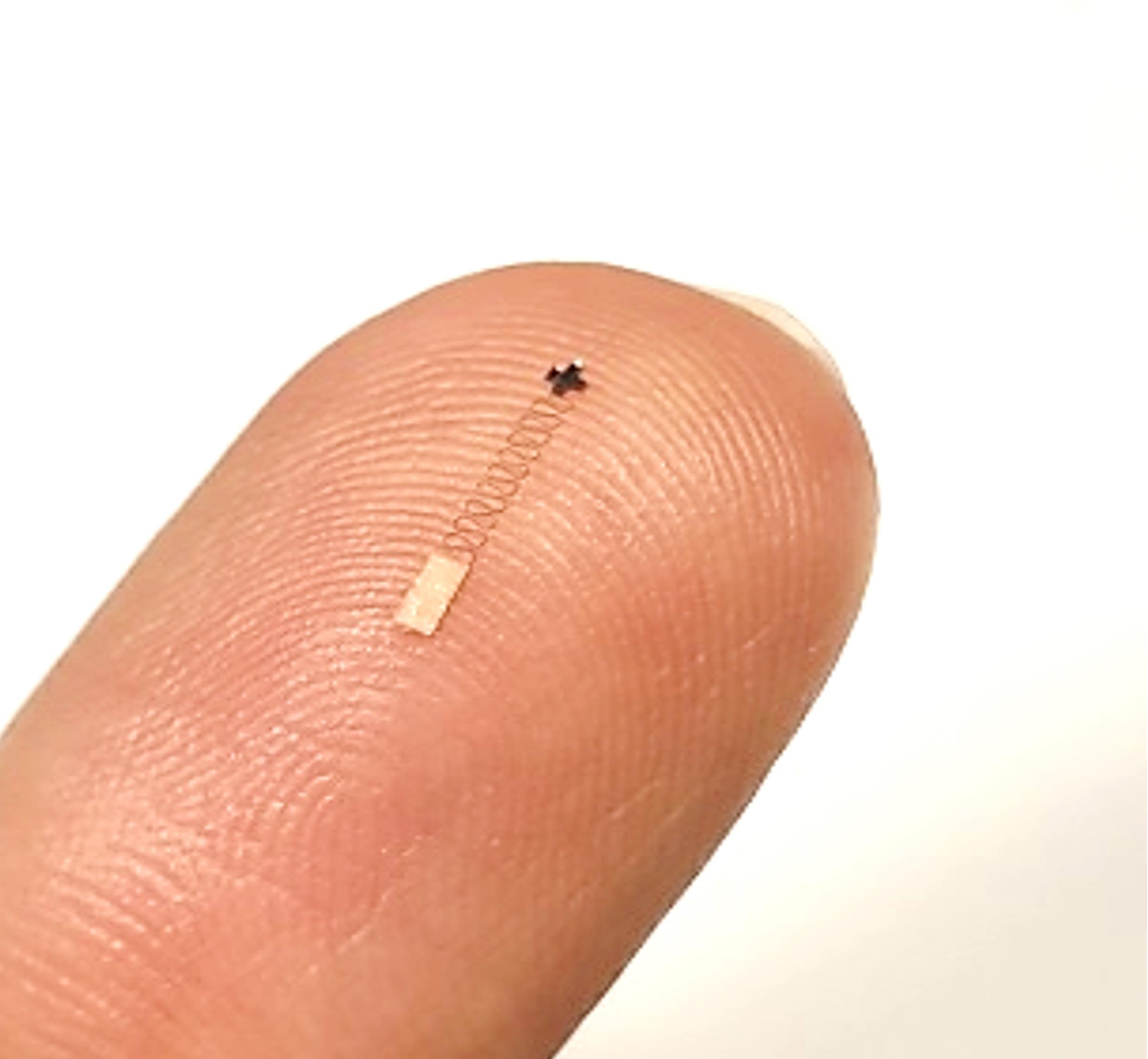
A micro-scale brain sensor on a finger. Credit: W. Hong Yeo.
Micro-brain sensors placed between hair strands overcome traditional brain sensor limitations.
Georgia Tech researchers have developed an almost imperceptible microstructure brain sensor to be inserted into the minuscule spaces between hair follicles and slightly under the skin. The sensor offers high-fidelity signals and makes the continuous use of brain-computer interfaces (BCI) in everyday life possible.
BCIs create a direct communication pathway between the brain's electrical activity and external devices such as electroencephalography devices, computers, robotic limbs, and other brain monitoring devices. Brain signals are commonly captured non-invasively with electrodes mounted on the surface of the human scalp using conductive electrode gel for optimum impedance and data quality. More invasive signal capture methods such as brain implants are possible, but this research seeks to create sensors that are both easily placed and reliably manufactured.
Hong Yeo, the Harris Saunders Jr. Professor in the George W. Woodruff School of Mechanical Engineering, combined the latest microneedle technology with his deep expertise in wearable sensor technology that may allow stable brain signal detection over long periods and easy insertion of a new painless, wearable microneedle BCI wireless sensor that fits between hair follicles. The skin placement and extremely small size of this new wireless brain interface could offer a variety of benefits over traditional gel or dry electrodes.
“I started this research because my main goal is to develop new sensor technology to support healthcare and I had previous experience with brain-computer interfaces and flexible scalp electronics,” said Yeo, who is also a faculty member in Georgia Tech’s Institute for People and Technology. “I knew we needed better BCI sensor technology and discovered that if we can slightly penetrate the skin and avoid hair by miniaturizing the sensor, we can dramatically increase the signal quality by getting closer to the source of the signals and reduce unwanted noise.”
Today’s BCI systems consist of bulky electronics and rigid sensors that prevent the interfaces from being useful while the user is in motion during regular activities. Yeo and colleagues constructed a micro-scale sensor for neural signal capture that can be easily worn during daily activities, unlocking new potential for BCI devices. His technology uses conductive polymer microneedles to capture electrical signals and conveys those signals along flexible polyimide/copper wires — all of which are packaged in a space of less than 1 millimeter.
A study of six people using the device to control an augmented reality (AR) video call found that high-fidelity neural signal capture persisted for up to 12 hours with very low electrical resistance at the contact between skin and sensor. Participants could stand, walk, and run for most of the daytime hours while the brain-computer interface successfully recorded and classified neural signals indicating which visual stimulus the user focused on with 96.4% accuracy. During the testing, participants could look up phone contacts and initiate and accept AR video calls hands-free as this new micro-sized brain sensor was picking up visual stimuli — all the while giving the user complete freedom of movement.
According to Yeo, the results suggest that this wearable BCI system may allow for practical and continuous interface activity, potentially leading to everyday use of machine-human integrative technology.
“I firmly believe in the power of collaboration, as many of today’s challenges are too complex for any one individual to solve,” said Yeo. “Therefore, I would like to express my gratitude to all the researchers in my group and the amazing collaborators who made this work possible. I will continue collaborating with the team to enhance BCI technology for rehabilitation and prosthetics.”
Note: Hodam Kim (postdoctoral research fellow), Ju Hyeon Kim (visiting Ph.D. student from Inha University – South Korea), and Yoon Jae Lee (Ph.D. student) also played a major role in developing this technology.
Funding: National Science Foundation NRT (Research Traineeship program in the Sustainable Development of Smart Medical Devices), WISH Center (Institute for Matter and Systems), and partial research support from several South Korean programs and grants.
PNAS article publication (April 7, 2025, Vol. 122, No. 15): https://www.pnas.org/doi/10.1073/pnas.2419304122
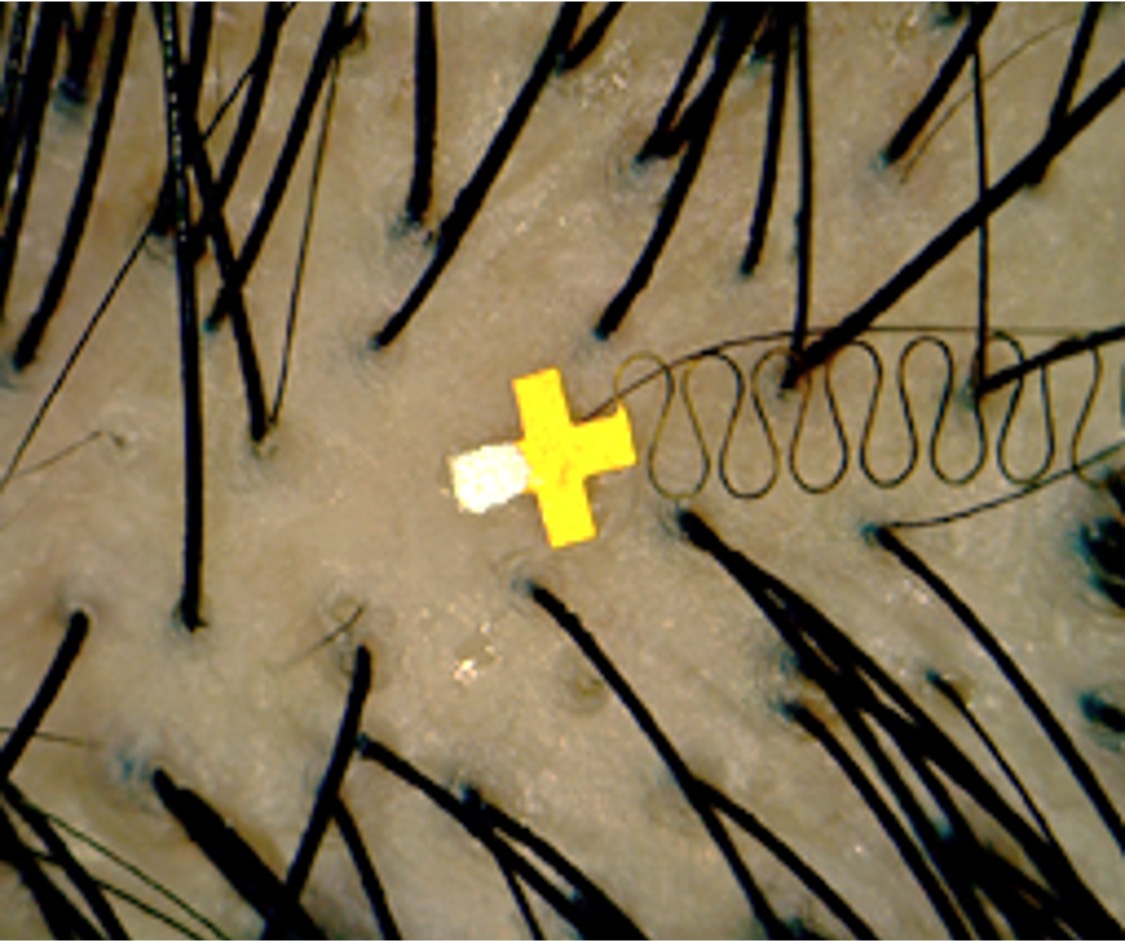
A micro-scale brain sensor placed between hair follicles. Credit: W. Hong Yeo.
Walter Rich, Research Communications
Six School of Interactive Computing PhD students will present 2025 Dissertation Lighting Talks. Presenters will discuss what their dissertation is about, methodology and what they are doing now, and what has been learned so far. The event will include talks by PhD candidates Adam Coscia, Qiao Zhang, Sichen Jin, Yao Dou, Jonathan Zheng, and Jin Yu.
Hong Yeo holds an in-stent nanomembrane sensor that can detect intracranial pressure.
The annual Georgia Tech Robotics Research Showcase gives attendees the opportunity to interact with talented robotics students and faculty from across Colleges and Schools at Georgia Tech. A keynote address will discuss RoboGeorgia and our faculty panel will follow to converse on the Atlanta startup landscape.
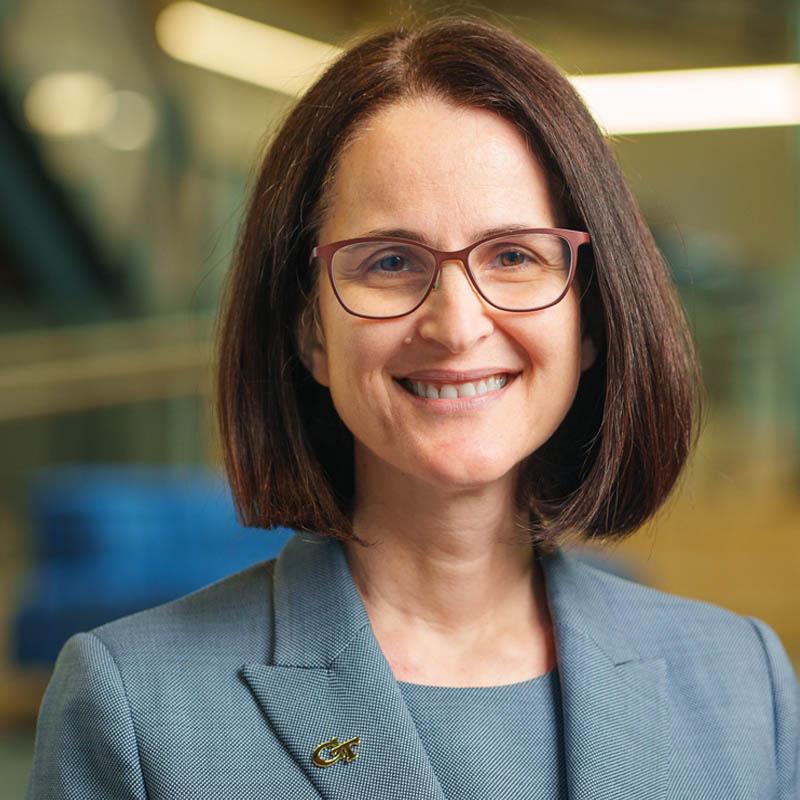
Following a nationwide search, Julia Kubanek, vice president for Interdisciplinary Research at Georgia Tech, has named Beril Toktay as the executive director of the Brook Byers Institute for Sustainable Systems (BBISS). Toktay has served as BBISS interim executive director since September 2022.
“As interim executive director, Beril has built the BBISS community, broadened its scope, and developed new programming to grow cross-disciplinary collaboration, community-engaged research, and entrepreneurship,” Kubanek said. “Faculty and students from the liberal arts, social sciences, design, business, computing, and fundamental science are engaging with BBISS in greater numbers, complementing our engineering community’s involvement. These are areas of strength at Georgia Tech that will help amplify the impact of BBISS.”
Toktay is professor of operations management, the Brady Family Chair, and Regents' Professor at the Scheller College of Business. She is an internationally recognized sustainable operations management scholar whose work has been recognized with multiple best paper awards. She is a Distinguished Fellow of the INFORMS Manufacturing & Service Operations Management (MSOM)Society. Through initiatives such as the Drawdown Georgia Business Compact, she has helped translate research insights into actionable business initiatives while fostering regional economic development.
Her academic leadership includes serving as department co-editor for “Health, Environment, and Society” for MSOM, area editor for “Environment, Energy, and Sustainability” at Operations Research, and special issue co-editor on “Business and Climate Change” for Management Science, as well as “Environment” for MSOM. She serves on the board of the Alliance for Research on Corporate Sustainability and the board of directors of the New York Climate Exchange.
Toktay has been instrumental in advancing sustainability at Georgia Tech, serving as founding faculty director of the Ray C. Anderson Center for Sustainable Business, co-architect of the Serve-Learn-Sustain initiative, and co-chair of the Sustainability Next Institute Strategic Plan Implementation Task Force. Her commitment to Ph.D. student success earned her the 2018 Georgia Tech Outstanding Doctoral Thesis Advisor Award. She also co-developed the Carbon Reduction Challenge, an award-winning interdisciplinary, co-curricular program that engages undergraduate students in climate intrapreneurship.
Toktay holds a Ph.D. in operations research from Massachusetts Institute of Technology, an M.S. in industrial engineering from Purdue University, and a B.S. in industrial engineering and mathematics from Boğaziçi University. She joined Georgia Tech in 2005 after serving as faculty at INSEAD business school in Fontainebleau, France.
Since assuming the interim role, Toktay has significantly strengthened BBISS by expanding the faculty leadership team, securing additional funding, establishing seed grant programs that have benefited over 100 researchers across all Colleges, and transforming the Center for Serve-Learn-Sustain into the Center for Sustainable Communities Research and Education.
"Energy and sustainability continue to be top Georgia Tech research priorities, for which we will need new funding strategies," said Tim Lieuwen, executive vice president for Research. "Philanthropy and business partnerships will grow in importance in the coming years. Beril has considerable experience and vision for maximizing these partnerships, which will serve BBISS and the Institute well into the future."
The Brook Byers Institute for Sustainable Systems is one of Georgia Tech’s interdisciplinary research institutes. The vision of BBISS is to grow and mobilize Georgia Tech’s knowledge assets — people and research — to create a sustainable future for all. BBISS is a key partner in the implementation of Georgia Tech’s Sustainability Next 2023-2030 Strategic Plan, a consensus road map to advance Georgia Tech’s vision to address the biggest local, national, and global challenges of our time. BBISS relentlessly serves the public good, catalyzes high-impact research, develops exceptional leaders, and cultivates partnerships that translate knowledge into practice.
"I'm honored to lead BBISS and build on the momentum we've created to date,” Toktay said. “Our vision is to maximize the collective impact of Georgia Tech's remarkable sustainability research community across all colleges and disciplines. By catalyzing collaborative research and connecting our faculty with key external partners and communities, we are positioning Georgia Tech to be a global thought leader in sustainability and to drive meaningful solutions to some of our most pressing environmental and social challenges."
The campus community is invited to a reception celebrating Toktay's appointment on Thursday, May 1, 2025, at 4:30 p.m. at the Collective Food Hall in the Coda building. Contact Susan Ryan for details.
Brent Verrill, Research Communications Program Manager, BBISS
Co-sponsored by the Institute for People and Technology and the Office of the Associate Vice Provost for the Arts at Georgia Tech.
What is it like to live with a brain implant?