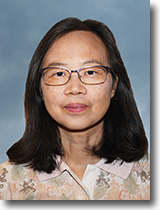
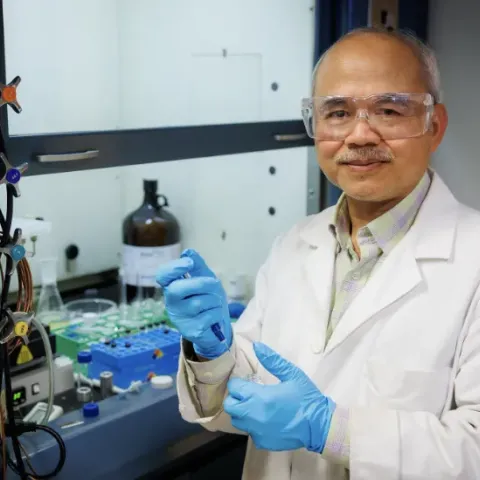
Peter Ludovice

Peter Ludovice's profile picture
pete.ludovice@chbe.gatech.edu
Associate Professor
Phone
(404) 894-1835
Additional Research

Materials and Nanotechnology; Complex Systems; Biotechnology

Google Scholar
https://scholar.google.com/citations?hl=en&user=W3r7XWEAAAAJ&view_op=list_works&sortby=pubdate

Jeffery Hsieh

Jeffery  Hsieh's profile picture
jeffery.hsieh@chbe.gatech.edu
Emeritus Professor
Phone
(404) 894-3556
Additional Research

Pulp & Paper Manufacturing; Papermaking; Environmental Processes; Sustainable Manufacturing; Tissue, Paper, Packaging & Pulp

Anthony J Arduengo

Anthony J Arduengo's profile picture
AJ.Arduengo@Chemistry.GaTech.edu

Awards

Charles M. Knight Lectureship, University of Akron, April 2013

Fellow of the American Association for the Advancement of Science, October 2007

Walter J. Chute Lectureship 1999–2000

Gold Medal for "Excellence in Main Group Chemistry Research" from The International Council on Main Group Chemistry, 1996

Alexander von Humboldt Senior Research Prize, 1996

Education

B.S., Chemistry, Georgia Institute of Technology, 1974; Ph.D., Georgia Institute of Technology, 1976

Bio

After completing his Ph.D. studies in 1976, Professor Arduengo began his professional career at the DuPont company as a member of the research staff. Within a year, he accepted a position on the chemistry faculty at the University of Illinois. Dr. Arduengo returned to DuPont in 1984 to pursue applications for a previously unknown type of phosphorus compound (ADPO) that had been discovered by his research group at Illinois. In 1999 Professor Arduengo resumed his work in academe with research groups in Germany and the United States. He is Professor of the Practice in the School of Chemistry and Biochemistry at the Georgia Institute of Technology and Saxon Professor Emeritus in organic chemistry at the University of Alabama. 

Professor Arduengo's research in the area of main group chemistry has produced many scientific "firsts," including the discovery of the first planar T-shaped bonding arrangement at phosphorus centers. Further work in this area at DuPont uncovered a previously unrecognized "edge inversion process" that operates at main group element centers and explains many apparent anomalies in main group element chemistry. Dr. Arduengo's interest in and study of compounds with unusual valence allowed him to synthesize the first stable crystalline carbene in 1990. 

This carbene research not only represents a milestone in chemistry, but this science also has led to a rapidly increasing variety of commercial applications. "We're looking into uses in direct catalysis, for crosslinking polymers, and for transition metals catalysis in which carbenes can be incorporated as ligands." "We've added a new tool to the chemist's repertoire which we can take off the shelf and use at will to follow imaginative ideas in new directions." 

Recently, the Arduengo Group research has joined the efforts of the Medicines for All Institute and participates in BARDA programs to develop modern, sustainable technology that facilitates repatriation of essential chemical and pharmaceutical manufacturing to U.S. shores. 

His research earned him an Alexander von Humboldt senior research prize and the 1996 Gold Medal for 'Excellence in Main Group Chemistry' from the International Council on Main Group Chemistry. In 2007 Professor was elected Fellow in The American Association for the Advancement of Science. 

Professor Arduengo trained as a traditional synthetic organic chemist, but has continually sought collaborations with experts in inorganic chemistry, polymer and material science, and recently through his carbene chemistry, bioorganic catalysis in order to broaden the scope and impact of his scientific interests. As a result, he is recognized in his own right as an expert such diverse areas. Work from the arduengo group has yielded approximately 150 publications and patents including articles intended to stimulate the interest of the young and lay-public in science. 

He values teaching and quality science education, and even from his industrial positions, Professor Arduengo has actively maintained a strong commitment to the preparation of future generations of scientists by holding lectures and demonstrations for elementary and high school classes and his supervision of a dozen post-doctoral co-workers. 

Professor Arduengo leads research groups in the United States and Germany and provides his co-workers with opportunities to study abroad. This bi-national research program fosters a broad training experience with industrial interactions in both Germany and the United States. Professor Arduengo is a strong advocate of international research and training experiences and regularly hosts U.S. undergraduate and graduate students in laboratories in Germany. During these semesters abroad students experience everyday life and culture in Germany in addition to conducting research in a foreign research environment. Professor Arduengo provides instruction in a variety of subjects in Chemistry as well as German language instruction so that students are able to stay on track toward their degrees with no lost time.

Research

Our group’s research interests span the interfaces of organic, inorganic chemistry, and material science. They focus largely on the chemistry of new or unusual bonding arrangements and seek to take advantage of unusual valency to develop new materials and sustainable synthetic methodology. Applications of chemistry developed in our group can be found in diverse areas ranging from electronic materials, thermochromic materials, industrially important catalytic transformations, high-end environmentally-friendly automotive paints, and most recently advanced pharmaceutical intermediates and pharmaceutical products. In connection with resource sustainability, we have a long-standing collaboration with the Opatz group at the University of Mainz, Germany to develop technology to rebuilt the chemical manufacturing infrastructure on renewable bio-mass, specifically wood – what we refer to as “Xylochemistry.”

Our group also participates with an international team providing advances in pharmaceutical syntheses to allow implementation of sustainable, low-cost, manufacturing strategies to critically important medicines.  The ultimate goal of the research is to provide ready access to important pharmaceuticals that improve global human health and quality of life.  Recently, this latter effort has expanded through our involvement with Biomedical Advanced Research and Development Authority (BARDA) programs directed to the development of new chemical technologies enabling the repatriation critical chemical and pharmaceutical capabilities to U.S. shores.  More details are available on the group’s web pages.

Professor of the Practice
Phone
(404) 385-4986
Office
MoSE 2100N
Additional Research

Interfaces of organic, inorganic chemistry, and material scienceChemical manufacturing infrastructure on renewable bio-mass, specifically wood – what is referred to as “Xylochemistry.”

Will Gutekunst

Will Gutekunst's profile picture
willgute@gatech.edu

The Gutekunst Lab is interested in pushing the limits of complexity in macromolecular systems using innovative concepts from synthetic organic chemistry. 

Specific projects in the lab will explore the design of novel monomers for the construction of functional polyamides, the development of small molecule reagents for the dynamic modulation of branched polymer architectures, and the investigation of new concepts for creating covalent bonds in challenging contexts. Each of these research projects will enable the generation of new functional materials with structures or assemblies that were previously inaccessible for study. 

Prospective students will obtain extensive training in synthetic organic chemistry, as well as polymer synthesis and characterization.

Associate Professor
Phone
404-894-4675
Office
MoSE 1100Q
Google Scholar
https://scholar.google.com/citations?user=aiuo-rYAAAAJ&hl=en

John Reynolds

John Reynolds's profile picture
reynolds@chemistry.gatech.edu

John R. Reynolds is a Professor of Chemistry and Biochemistry, and Materials Science and Engineering at the Georgia Institute of Technology with expertise in polymer chemistry and serves as a member of the Center for Organic Photonics and Electronics (COPE). His research interests have involved electrically conducting and electroactive conjugated polymers for over 30 years with work focused to the development of new polymers by manipulating their fundamental organic structure in order to control their optoelectronic and redox properties. His group has been heavily involved in developing new polyheterocycles, visible and infrared light electrochromism, along with light emission from polymer and composite LEDs (both visible and near-infrared) and light emitting electrochemical cells (LECs). Further work is directed to using organic polymers and oligomers in photovoltaic cells.  Reynolds obtained his M.S. (1982) and Ph.D. (1984) degrees from the University of Massachusetts in Polymer Science and Engineering, he has published over 300 peer-reviewed scientific papers, has 15 patents issued and ~25 patents pending, and served as co-editor of the “Handbook of Conducting Polymers” which was published in 2007.  He was awarded the ACS Award in Applied Polymer Science in 2012.  He serves on the editorial board for the journals ACS Applied Materials and Interfaces, Macromolecular Rapid Communications, Polymers for Advanced Technologies, and the Journal of Macromolecular Science, Chemistry.

Professor, Chemistry and Biochemistry and Materials Science and Engineering
Phone
404.385.4390
Office
MoSE 2120B
Additional Research

Organic and Inorganic Photonics and Electronics; Conducting Polymers; LEDs & OLEDs; Materials Synthesis and Processing; Materials discovery; Chemistry; Polymers; Biomaterials

University, College, and School/Department
Google Scholar
https://scholar.google.com/citations?hl=en&user=QJOkOXUAAAAJ&view_op=list_works&sortby=pubdate

Rallming Yang

Rallming Yang's profile picture
rallming.yang@rbi.gatech.edu

In May 2000, Dr. Yang earned his doctorate degree in environmental and resource engineering from the College of environmental science and forestry, State University of New York. He also held M.S. degree and B.Sc. degree in pulping and paper. He first joined IPST, the former of RBI at Georgia Tech, in 2000 as a post doctor fellow. Soon he was hired as research scientist I. In 2006, he was promoted to be research scientist II. In 2013, he was appointed to be the manager of pulping and bleaching lab. Beginning from 2016, Dr. Yang has been teaching Pulp & Bleaching Lab (ChBE4873). In 2019, he was assigned additional duty in managing chemical analysis lab. With strong educational background in wood chemistry, coupled with the acquired skills and experience in chemical analysis., Dr. Yang’s main area of interest was utilizations of natural resources, especially biomass, in a sustainable way. He also interested in the development of novel online detection and monitoring in chemical process, and providing technical services to the industries and research communities.

Research Scientist II
Phone
(404) 894-7862
Additional Research

Pulp & Paper Manufacturing; Chip Activation; Pulping & Bleaching; Chemical Recovery; Dissolving Pulp & Regenerated Cellulose

Robert Moon

Robert Moon's profile picture
robertmoon@fs.fed.us
Adjunct Professor
Phone
(404) 894-1026
Additional Research

Sustainable Manufacturing; Cellulosic Nanomaterials; Biomaterials; Nanocellulose Applications; Biocomposites; Aerogels & Hydrogels

Jamshad Mahmood

Jamshad Mahmood's profile picture
jamshad.mahmood@rbi.gatech.edu

Jamshad Mahmood has over 23 years of experience in corrosion testing and manufacturing of recovery boilers and pressure vessels. He is a Mechanical/Research Engineer with expertise in the design, manufacturing of industrial equipments and conducting lab corrosion testing e.g., slow strain rate corrosion testing, electrochemical corrosion testing, high-temperature aqueous corrosion testing and molten salts corrosion testing. In addition to laboratory experimentation, Jamshad conducted several field studies evaluating in-situ corrosion of pulp mill equipments e.g., digesters, paper machines, storage tanks and recovery boiler tubes. He manages the corrosion laboratories and chemical inventories for the corrosion group. Prior to joining the Institute of Paper Science and Technology in 1997, he worked as Manager Production for 8 years with Descon Engineering Works – one of the large boiler manufactures.

Mechanical Engineer II
Phone
(404) 894-6647
Additional Research

Corrosion & Reliability; Chemical Recovery; Environmental Processes