Doing the Dirty Work of Sustainability
A Georgia Tech researcher and his students are using experimental composting to reduce campus food waste and support agriculture.

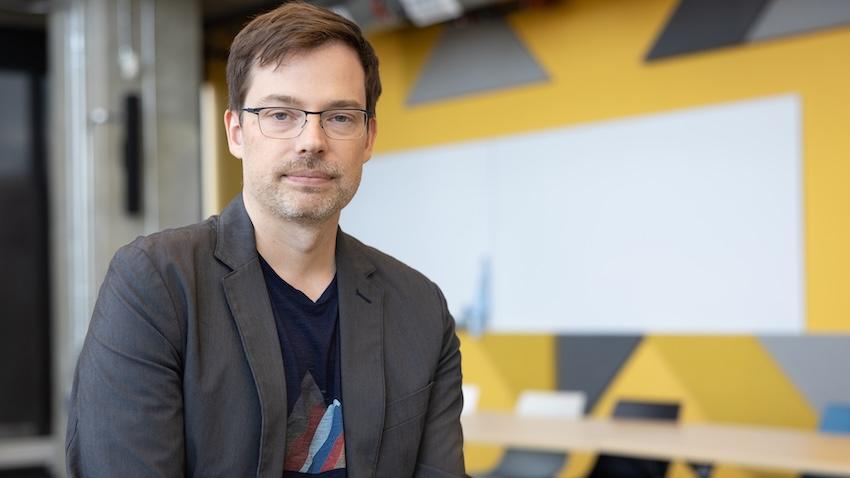
A Georgia Tech School of Interactive Computing professor and his Ph.D. student have been named to the 2026 list of Microsoft Research Fellows and Fellowship Advisors.
Associate Professor Alan Ritter and Ph.D. student Ethan Mendes were awarded fellowships for their work on creating artificial intelligence (AI) agents that function as teammates.
Mendes was named a fellow, while Ritter will serve as his fellowship advisor.
The Microsoft Research Fellowship is open to faculty, students, and postdocs. Ritter said that if Microsoft sees alignment in a project, it gives recipients the opportunity to work even closer with their collaborators by inviting them to join as additional fellows.
That turned out to be the case with Mendes after Ritter listed him as a collaborator in his fellowship proposal.
“I’m delighted to serve as Ethan Mendes’ fellowship advisor,” Ritter said. “He is an exceptionally strong researcher, and I’m excited to see his work recognized through the Microsoft Research Fellowship.”
Through the fellowship, Ritter and Mendes will design AI systems that better support collaboration and decision-making within organizations.
“The goal is to move beyond AI as a tool for a single user and instead study how AI can help groups make more informed, transparent, and coordinated decisions,” Ritter said. “We will focus on methods that bring together information from many different sources, help people reason under uncertainty, and generate analyses that support collective problem-solving in complex work settings.”
The Purple Mai’a Foundation has selected Associate Professor Josiah Hester to join its Eahou Global Immersion Cohort.
The Purple Mai’a Foundation is a technology education nonprofit headquartered in Aiea, Hawaii, that teaches coding and computer science to Native Hawaiian students.
The 29 members of the Eahou Global Immersion Cohort from 15 countries are leaders from indigenous communities recognized for their contributions to sustainability.
Hester is a Native Hawaiian whose research centers on sustainable and battery-free technology.
The cohort will gather on O’ahu May 1-3 for Eahou Fest, where they will share stories and solutions from research around the world.
“I’m honored to be selected for the Eahou Global Immersion Cohort and to learn alongside such an inspiring group of resilience leaders who come from around the globe,” Hester said.
“Participants are selected for their significant leadership over the past decade and their ability to bring what they learn back to their communities and integrate it into ongoing work and partnerships. I’m excited to connect these experiences with my work and bring these lessons back into research and teaching at Georgia Tech.”
Professor Ashok Goel received one of the most distinguished awards from the Association for the Advancement of Artificial Intelligence (AAAI).
Goel was selected as the 20th recipient of the AAAI Robert S. Engel Memorial Lecture Award. Established in 2003, the award is given to those who have demonstrated excellence in AI scholarship, outstanding applications of AI, and extraordinary service to AAAI and the AI community.
Goel received the award in January during the AAAI Conference on Artificial Intelligence in Singapore. According to the awards program, Goel was recognized for contributions to biologically inspired design, case-based reasoning, and application of AI in virtual teaching.
Goel is the inventor of Jill Watson, one of the first AI virtual teaching assistants used in higher education classrooms.
AAAI is also the publisher of AI Magazine, which Goel served as editor-in-chief from 2016 to 2021.
“I am both honored and humbled to receive AAAI's Robert Engelmore Award,” Goel said. “Bob was a long-time editor of AAAI's AI Magazine, and many years after he retired, I became the editor of the magazine. This makes the Engelmore Award special to me.”
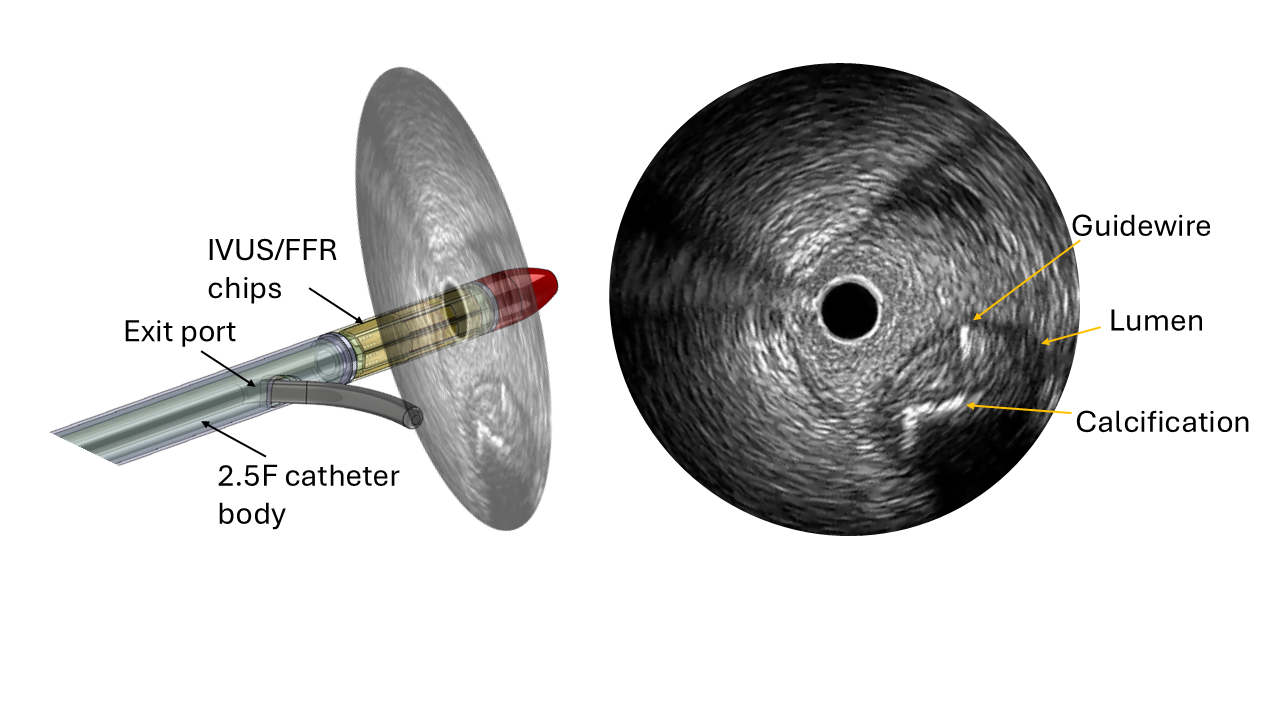
When patients undergo procedures to open blocked heart arteries, precision matters. Even small imperfections in placing a stent can affect blood flow and long-term health. Now, a research team led by F. Levent Degertekin, Regents’ Entrepreneur, George W. Woodruff Chair in Mechanical Systems, and professor in the George W. Woodruff School of Mechanical Engineering, is working to change that with a new kind of catheter designed to give doctors clearer, real-time insight during these life-saving procedures.
Backed by a four-year, $2.2 million National Institutes of Health Research Project (R01) grant, the project aims to develop a microcatheter that combines high-resolution imaging with precise pressure sensing in a single device.
Read the full story on the George W. Woodruff School of Mechanical Engineering website.
Ashley Ritchie
George W. Woodruff School of Mechanical Engineering
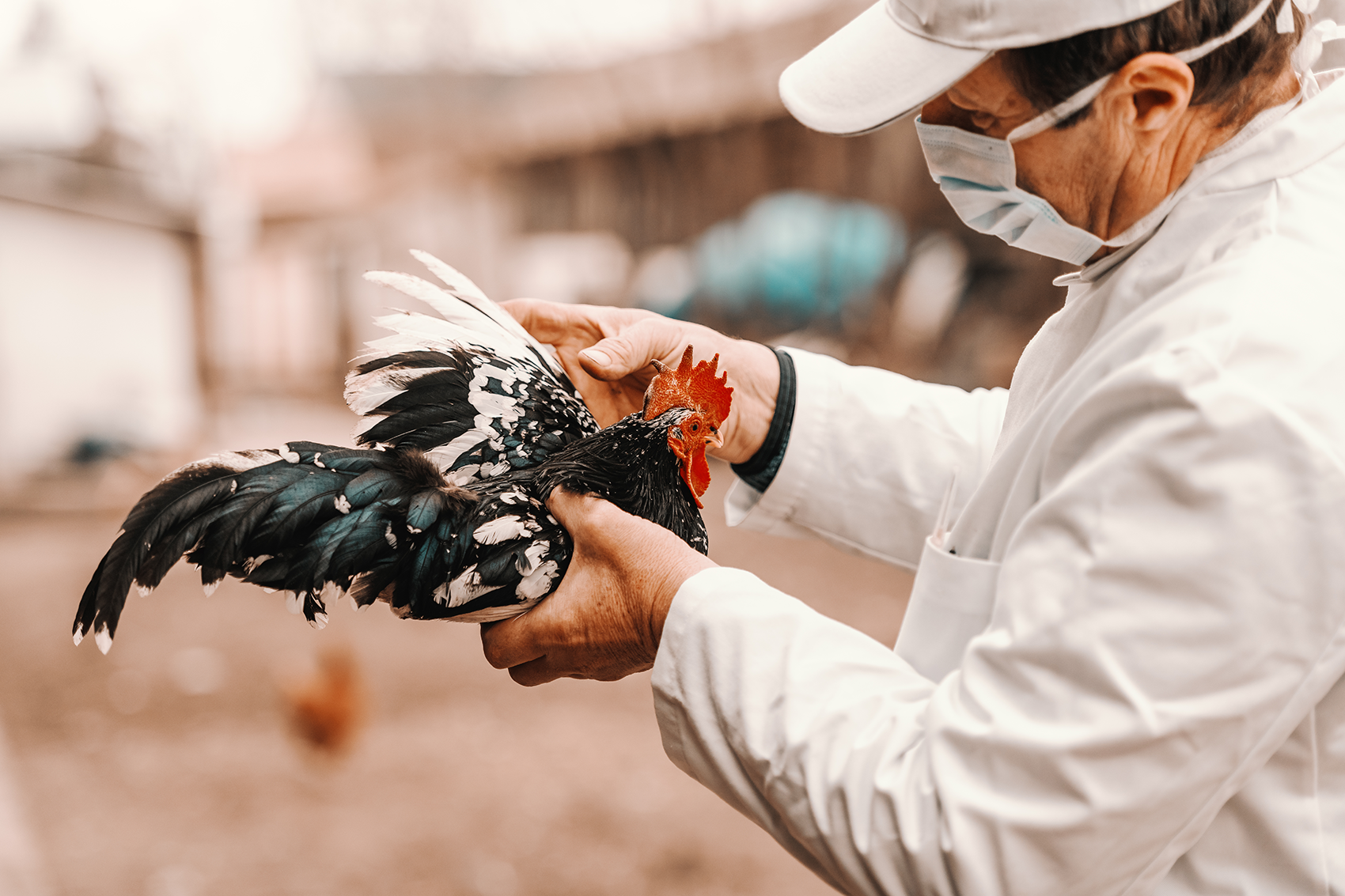
Georgia Tech researchers are working on an oral bird flu vaccine that could transform poultry vaccination. (Credit: Adobe Stock)
The United States Department of Agriculture (USDA) has awarded $2 million to a team of Georgia Tech and Georgia Tech Research Institute (GTRI) researchers to develop a first-of-its-kind vaccine pill for bird flu.
For decades, bird flu was uncommon in the U.S., but that has changed. In the past several years, epidemics have threatened poultry and dairy cattle operations across the country. Higher egg prices, driven largely by bird flu-related supply disruptions, have cost American consumers billions of dollars in losses.
“The H5N1 strain of the bird flu, which has driven recent and current outbreaks, is a highly lethal virus that kills domestic chickens and other bird species in droves,” said David Pattie, GTRI research scientist and branch chief. “It can easily jump from birds to other animal species — and sometimes to humans.”
The research team will leverage artificial intelligence (AI) to design and test a probiotic avian flu vaccine that, if successful, could be served to chickens in their feed. Currently, vaccinating a flock means individually injecting every bird.
“We’re focusing on live bacterial vaccines, which means the vaccine comes from living bacteria you swallow, instead of an injection,” said Mike Farrell, GTRI principal research scientist and the project’s lead investigator.
“These probiotic vaccines would help protect birds and livestock from flu-like infections and lower the risk of those viruses spreading to humans,” he added.
In addition to Farrell and Pattie, the team includes researchers from an array of disciplines across the Institute: Faramarz Fekri, professor and John Pippin Chair in the School of Electrical and Computer Engineering; JC Gumbart, Dunn Family Professor in the School of Physics; Brian Hammer, associate professor in the School of Biological Sciences; and Anton Bryskin, director of the Molecular Evolution Core at the Parker H. Petit Institute for Bioengineering and Bioscience.
Building on Human Influenza Research
The project builds on Farrell’s ongoing research into developing probiotic vaccine adjuvants for human influenza. The goal is to use probiotic bacteria — the “good bacteria” found in foods like yogurt — to help create immunity for the flu vaccine.
If the researchers can get probiotic bacteria to display pieces of the flu virus (called antigens) on their surface, then they could be swallowed like a normal probiotic pill.
“The gut is a great place for building immunity. When these bacteria reach the gut, your body would recognize the virus pieces on the bacteria and start building flu antibodies,” Farrell explained. “That way, when the chickens get exposed to flu, their immune system would already be prepared to fight it.”
Putting AI to the Test
“The idea behind this oral bird flu vaccine is to leverage artificial intelligence and the vast historical database for H5N1 available to us, because it's a very well-studied virus,” Farrell said. “There is a ton of structural data out there.”
Gumbart is an expert in protein modeling and simulation. Part of his role is figuring out the best design for a viral protein piece (antigen) — one that looks and behaves like the real virus protein, so it triggers the right immune response. To do this, he will combine Fekri’s AI-generated predictions with computer modeling.
“That’s where my team adds real value,” Gumbart said. “We use simulations to test how stable and realistic these protein designs are, which allows us to choose the best ones for lab experiments.”
AI has already identified new medicines and antibiotics by studying chemical databases. If the team can use AI to help design virus proteins for vaccines, it could transform how vaccines are made.
Pattie says that any viral infectious disease with a high mortality rate has the potential to become a national security threat. “At that point, developing countermeasures becomes exceedingly important from a national security perspective,” he said.
This is the first time several of the team members are working on poultry research. For Gumbart, the project is a full-circle moment.
“I grew up in rural Illinois, and as a kid, one of my daily chores was to take care of chickens, and I kind of hated it,” he said. “It is some sort of universal irony that I am back to taking care of chickens again.”
Catherine Barzler, Senior Research Writer/Editor
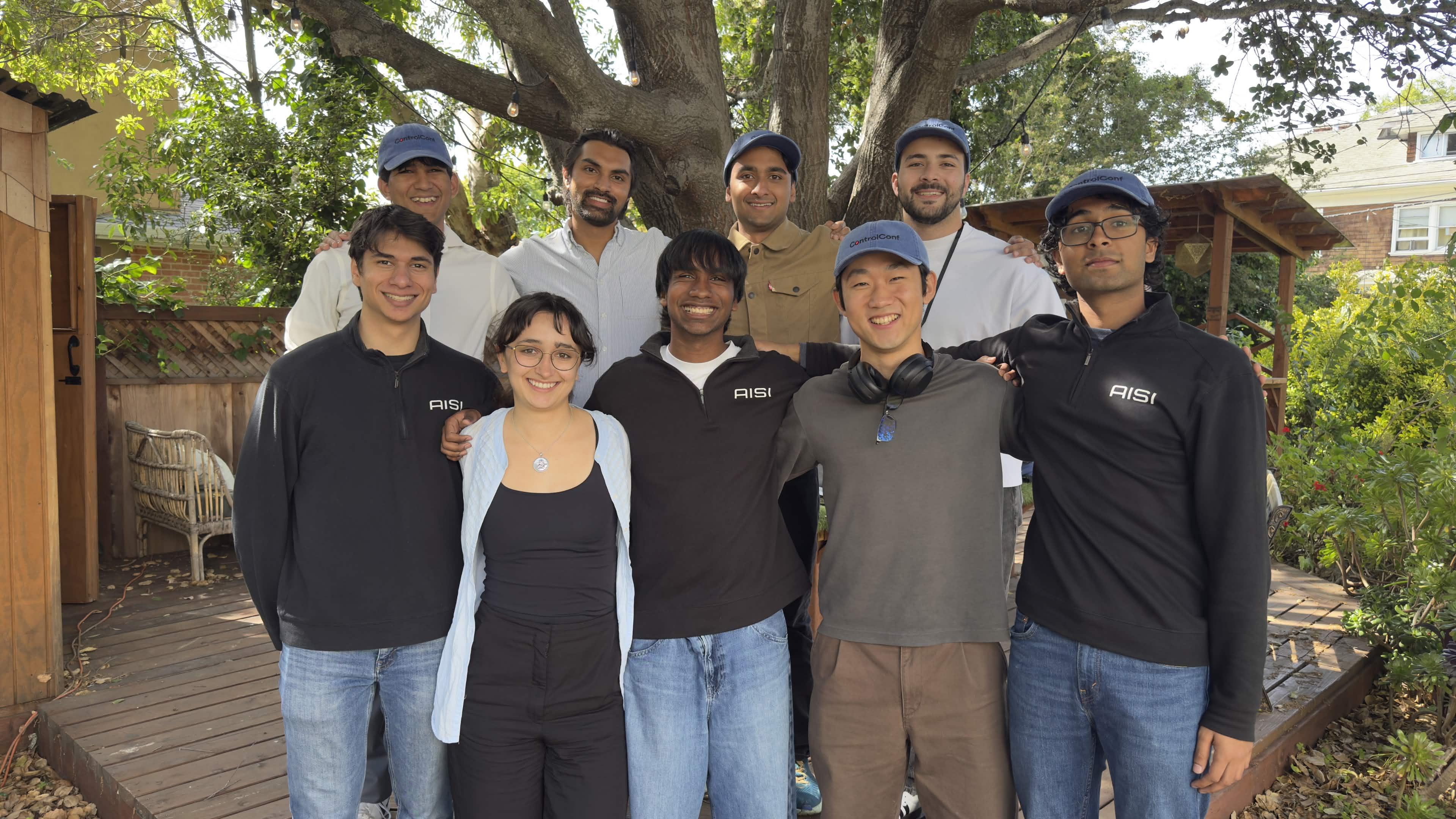
The AISI team at ControlConf in April 2026.
As artificial intelligence (AI) permeates everything we do — from internet searches to writing — questions and concerns about its safe use have emerged. How do large language models actually work? Is AI decision‑making aligned with human values? What if AI is misused for warfare? How should society govern AI?
The questions surrounding AI may be an unprecedented new challenge, but at Georgia Tech, students are already trying to answer them. The AI Safety Initiative (AISI) is a student group aiming to steer AI research and policy for society’s benefit.
“AI introduces new kinds of challenges into our legal and societal frameworks,” said Rocio Perales Valdes, AISI co-director and second-year computer science student. “Its capabilities emerge fast and on a jagged, hard-to-predict edge, which leaves AI governance like chasing a moving target. The work ahead is building the governance and technical tools we need to evaluate these systems, set direction, and enforce them without hindering innovation.”
AISI focuses on developing and deploying AI responsibly, rather than avoiding it. The group offers guest talks from AI researchers, fellowships that immerse students in the latest safety research through reading and discussion groups, and independent projects that contribute directly to the field. Past projects from AISI include demonstrating large language model security risks on Capitol Hill, responding to U.S. Federal Requests for Information, and running a war game for GTRI faculty. Part lab and part learning community, AISI prepares students to become the next generation of AI safety researchers and practitioners. They have placed alumni at leading organizations such as Anthropic, RAND, Model Evaluations and Threat Research, the UK AI Security Institute, and the Horizon Institute for Public Service.
“AI safety is an urgent problem because there is a rapidly growing gap between what AI systems can do and what we understand about them; yet mitigating AI risks is systematically neglected by current market incentives,” said Yixiong Hao, third‑year computer science student and co‑director of AISI. “I think the set of things I can do to directly move the needle is quite limited in the next three to five years, and that’s why I run this group. I have higher leverage in convincing smart people to work on neglected problems in AI safety.”
Founded in 2022 by Gaurav Sett, who is now a Ph.D. student at the RAND School of Public Policy and a fellow at the Institute for Progress, AISI has grown quickly. Its 10‑member executive board supports a broad base of student involvement, with more than 70 students participating in the fellowship program each semester. Over the past two years, members have also published 13 papers at top conferences such as the International Conference on Learning Representations, with projects spanning AI security and algorithmic transparency.
From Discussion to Discovery
As a first‑year computer science student, Ishan Khire joined AISI looking for a deeper way to engage with AI safety and quickly found a pathway into research. After attending one general meeting, Khire enrolled in the group’s six‑week fellowship program, where students meet weekly to discuss current technical and policy challenges shaping the field.
“Finding a community that cares about AI safety was a big part of joining the fellowship,” Khire said. “Because AI safety is a broad subject, it was helpful to have an accountability group to discuss current issues.”
Thanks to the connections he made at AISI, Khire began conducting AI research with computing faculty member Giri Krishnan to predict the 3D structure of proteins.
“AI is going to be really transformative in the next five to 10 years, and we want to make that transformation go well,” Khire said. “AISI tries to upskill people and connect them to technical and policy research that helps them find impactful work.”
Student Advantage
AISI is entirely student‑run, with a small group of faculty advisors. That structure lends itself to uncertain research that can be difficult to fund through traditional academic labs, and faculty support has followed.
“Any cursory look at the news today will show there is significant angst about AI and whether it is being developed responsibly and with sufficient guardrails in place,” said Tom Conte, the College of Computing associate dean for Research. “AISI has Georgia Tech at the forefront of that conversation.”
AISI member and computer science Ph.D. student Glenn Matlin has recruited many undergraduate researchers from the group for his own projects.
“I consider AISI like a third lab,” he said. “I use it as a great place for recruiting students. I’m constantly sharing my own research, and it helps me stay up to date with what other researchers are talking about.”
Matlin also credits AISI with advancing his own work in AI safety. Through the fellowship, he synthesized research that helped him apply for opportunities such as the prestigious AI safety mentorship at the MATS Program, which has connected him to additional research funding.
In a future increasingly shaped by algorithms, AISI’s students are betting that the most important safeguards won’t come from code alone, but from the people guiding how that code is built, deployed, and governed.
“AI safety matters to everyone,” Matlin said. “AI is going to disrupt not just technology, but also politics and business — and its risks are creating urgent opportunities to make it safer.”
Tess Malone, Senior Research Writer/Editor
tess.malone@gatech.edu

Hospitals filled to capacity. Case counts climbing by the hour. Quarantine became routine.
It was the beginning of the Covid-19 pandemic.
The world needed a vaccine that didn’t exist, and there was no clear timeline for one. No one knew how long the vaccine development process would take — or whether it would work at all.
Then, less than a year later, Pfizer and BioNTech set a record for how fast a drug moved from clinical trials to federal authorization — and to people waiting as the virus surged worldwide. That speed depended on more than scientific discovery. It hinged on trials, regulatory approval, and manufacturing at scale.
Startup BioNTech, a small biotech firm, had spent years developing mRNA technology. Pfizer, a huge pharmaceutical company, brought deep experience running large clinical trials, working with regulators, and manufacturing at scale. The two companies had worked together before, which meant they did not have to build trust, decision-making structures, or workflows in the middle of a crisis. Trials moved quickly. They knew what regulators required and how to meet those demands.
According to Georgia Tech research, that kind of business alignment is far from common — and can explain why many promising drugs never reach patients.
Manpreet Hora, senior associate dean for programs and professor of operations management in Georgia Tech’s Scheller College of Business, studies what happens after a drug leaves the lab. In a study published in Production and Operations Management, he and his coauthors analyzed nearly 300 biotech–pharma partnerships to understand why some drugs make it through and others stall.
“If you are a patient, this process is out of your control,” Hora said. “In some cases, it can cost lives.”
Drug development often depends on handoffs. Small biotech firms typically generate early discoveries. Larger pharmaceutical companies step in to run trials, work with regulators, and bring products to market.
But complications can arise when companies that lack similar experience levels try to develop the drug together.
Decision-making slows down. Roles become unclear. The process starts to erode.
"That's why partner choice matters," Hora said, comparing the process to a popular TV show. "It's like going on Shark Tank — just because someone is offering money doesn't mean they're the right partner."
Hora said the Pfizer–BioNTech partnership worked because both companies approached the work the same way, despite the difference in their size. Pfizer is one of the largest pharmaceutical companies in the world. BioNTech was a much smaller firm.
As of September 2025, 5 billion doses of the Pfizer–BioNTech Covid vaccine have been distributed globally.
Pfizer’s chairman and CEO, Albert Bourla, attributes the unprecedented success to a “world class collaboration” with BioNTech. He said, "I think it was because both companies had developed very similar cultures…We were both really very purpose-driven.”
Hora's research comes to the same conclusion: In an industry where drugs can take a decade to reach patients, the wrong partner can mean they never arrive at all.
Michelle Azriel
Senior Writer, Editor — Research Communications
mazriel3@gatech.edu
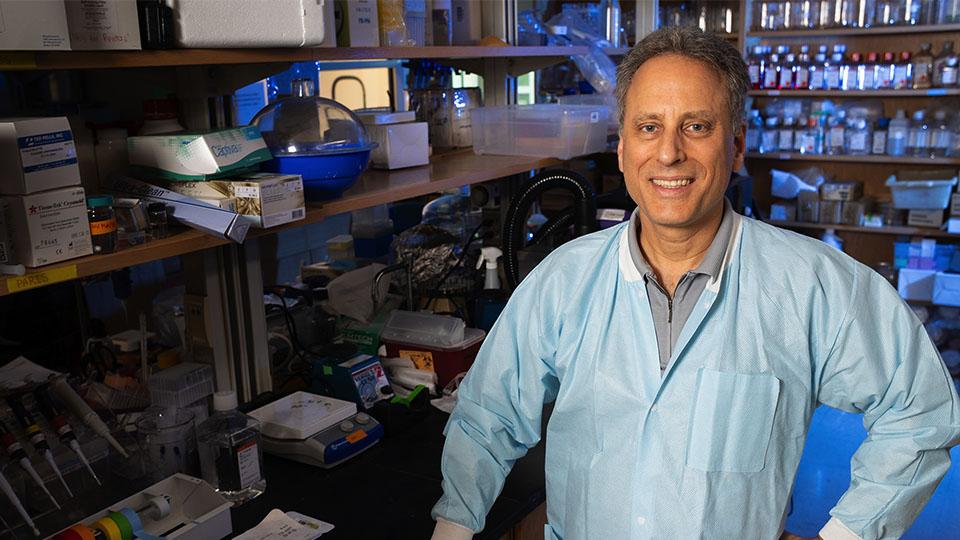
When Mark Prausnitz talks about his work as a professor, researcher, and entrepreneur, one theme comes through clearly: collaboration.
Prausnitz, a Regents’ Professor, Regents’ Entrepreneur, and J. Erskine Love Jr. Chair in the School of Chemical and Biomolecular Engineering, is this year’s recipient of the Class of 1934 Distinguished Professor Award.
“While I may be the focal point, it’s not a recognition of me as an individual. It’s a recognition of everything the team has done,” Prausnitz said. “I know how to do some things, but there are many things I don’t know how to do. That’s why working with others matters. You bring people together, fill in the gaps, and solve the whole problem.”
The “some things” Prausnitz knows how to do have led to revolutionary medical innovation over a 30-year career at Georgia Tech, where he has led transformative work in microneedle drug delivery, launching 10 companies in the process.
During that time, Prausnitz published hundreds of peer-reviewed papers, was granted dozens of patents, and advanced his work from early laboratory studies into more than 20 human clinical trials. His research has produced multiple FDA‑approved or clinically tested technologies.
Understanding Prausnitz’s success starts with his approach to engineering in practice. Science may begin with discovery, but engineering, as he describes it, focuses on taking something uncertain and making it work.
“One of the things that really distinguishes engineering from science is the work of problem-solving to reach an answer,” he said. “You start with something diffuse and figure out how to put all the pieces together. That to me is a hallmark of engineering.”
That way of thinking took shape early in his life.
Julian Hills | Executive Communications Specialist
Institute Communications
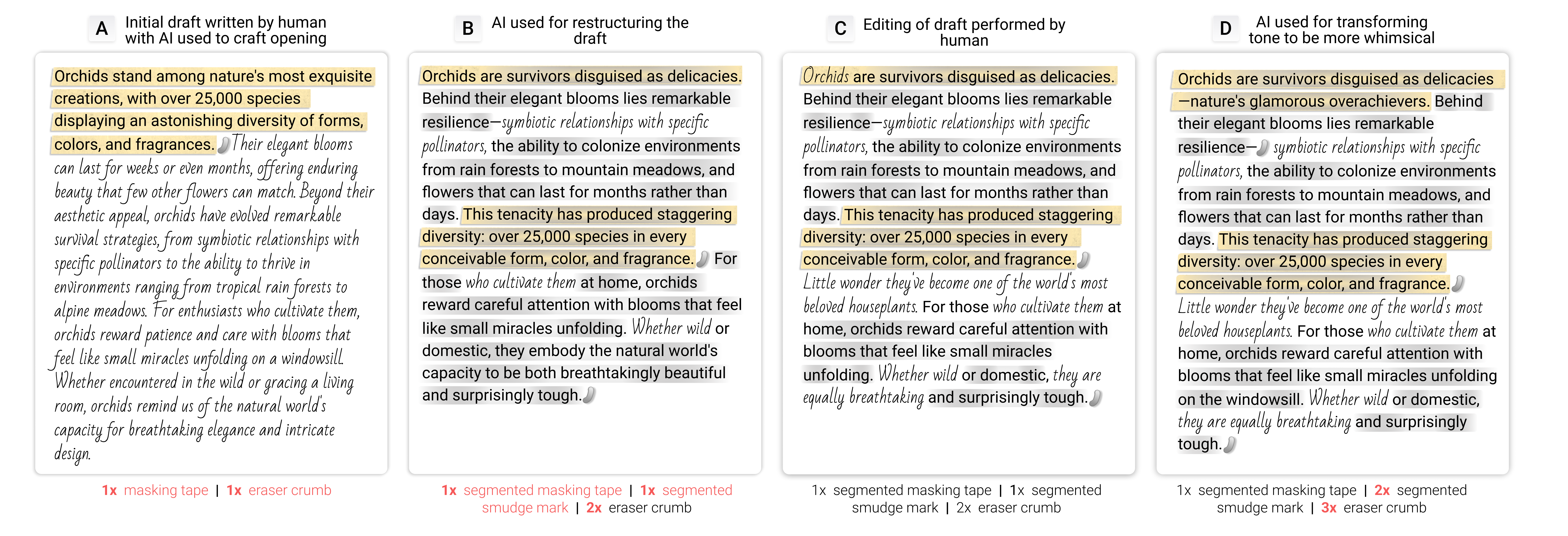
How DraftMarks works
Generative artificial intelligence (AI) has transformed college writing. As paper drafts are increasingly co‑written with AI, professors are left wondering not whether students are using AI, but how.
A 2025 AI in Education trend report found that 90% of college students use AI in their coursework, with nearly half using it during the drafting process. As AI becomes embedded in everyday writing, traditional tools like Grammarly or Turnitin for evaluating student learning fall short. If AI is to be expected in most student writing, then merely detecting its presence isn’t enough.
DraftMarks, a new open‑source tool developed by Georgia Tech and Stanford researchers, makes the writing process itself visible. Instead of trying to assess how much of a finished document was written by AI, DraftMarks shows where a student iterated with AI prompts, what is fully AI, and how a piece evolved — illuminating the often-invisible collaboration between human writers and AI.
Functioning as an augmented reading tool, DraftMarks layers visual cues directly onto a document to indicate different kinds of AI involvement. Eraser crumbs mark heavily revised passages. Smudges signal AI-generated changes in the strength of the argument rather than content changes. Masking tape highlights passages initially generated by AI. Glue residue shows where AI‑generated text was later removed. Ghost text indicates when a writer prompted AI but chose not to use the output. Different fonts distinguish between human‑written and AI‑generated passages.
Together, the marks don’t just reveal AI’s presence. They tell a story about the writer’s process.
“By making the invisible parts of the process tangible, it forces writers to confront whether they are truly engaging with AI or just passively accepting it,” said Momin Siddiqui, a master’s student in the College of Computing and lead author on the project. “Ultimately, it helps writers make more intentional judgment calls about how they want to collaborate with AI in the future.”
The researchers debuted DraftMarks at the Association for Computing Machinery’s Conference on Human Factors in Computing Systems in Barcelona in April.
Designing for Educators
Rather than starting with detection algorithms, the researchers began with educators. In an initial 21-person study, they observed how instructors reviewed student writing and what cues they looked for when assessing learning, revision, and originality. Those insights informed the design of DraftMarks’ visual language, which deliberately mimics physical artifacts of writing — eraser debris, tape, smudges — to reflect processes instructors already recognize.
“These marks are meant to emulate the writing process in ways we’re already familiar with,” said Adam Coscia, a computing Ph.D. student. “They help students and teachers see the effort behind the writing, and whether students actually met the learning objective.”
Behind the scenes, DraftMarks tracks a document’s draft history and classifies different types of edits and AI interactions as they happen, allowing the visual cues to appear almost in real time.
Reading DraftMarks
To evaluate how the tool functions beyond the lab, the team conducted a follow‑up study with 70 participants, including students, teachers, journalists, and general readers. Their reactions to reviewing a DraftMarks-annotated document varied in revealing ways.
Instructors were most interested in seeing the writing process unfold: how ideas developed, how heavily AI was used, and where students exercised judgment. General readers, meanwhile, used the marks to assess something less measurable but equally important — trust. For them, DraftMarks offered cues about authorial intent and authenticity, helping readers decide how much confidence to place in a piece of writing.
A Shift From Detection to Reflection
Unlike AI detectors that merely offer a percentage, DraftMarks is designed to prompt reflection from writers and readers.
“DraftMarks completely changed how I think about my own writing,” Coscia said. “I was surprised by how much I cared about authorial intent once I could actually see how AI affected my tone. It made me realize small AI choices can subtly reshape what I’m trying to say.”
As AI continues to reshape how writing happens, the research team hopes DraftMarks will help shift the conversation toward transparency. Tools like this could offer educators and students a clearer window into how learning happens when humans and AI write together.
This work is funded through the AI Research Institutes program by the National Science Foundation and the Institute of Education Sciences, U.S. Department of Education.
CITATION: Momin N. Siddiqui, Nikki Nasseri, Adam J. Coscia, Roy Pea, and Hari Subramonyam. 2026. DraftMarks: Enhancing Transparency in Human-AI Co-Writing Through Interactive Skeuomorphic Process Traces. In Proceedings of the 2026 CHI Conference on Human Factors in Computing Systems (CHI '26). Association for Computing Machinery, New York, NY, USA, Article 862, 1–22.
Tess Malone, Senior Research Writer/Editor
tess.malone@gatech.edu
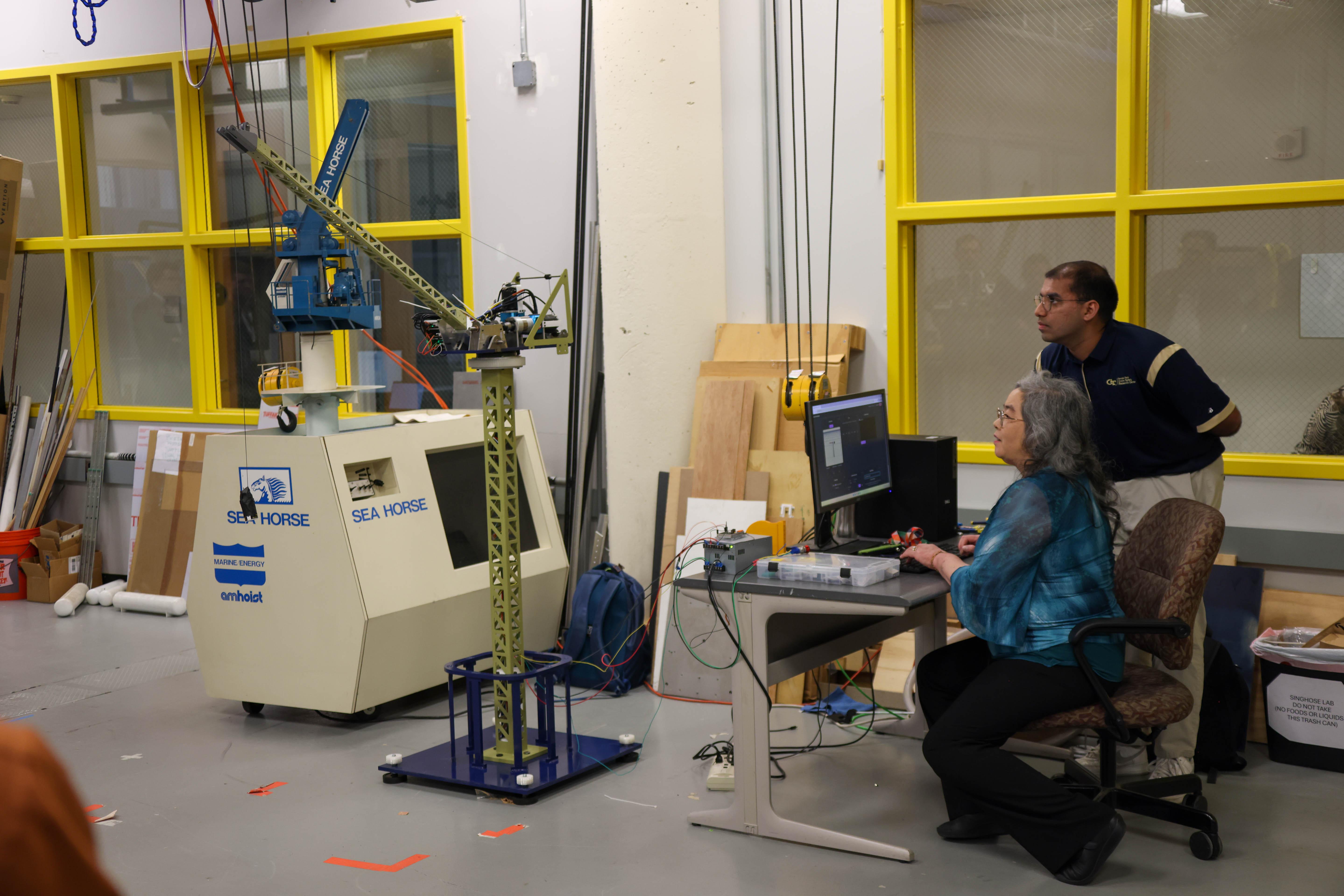
Georgia Tech hosted the third annual Crane Safety Research Center meeting April 9–10, uniting students, faculty, safety advocates, and crane industry representatives for two days focused on innovation, research, and safety.
Presentations and lab demonstrations from nearly 50 faculty, graduate, and undergraduate students at Georgia Tech’s George W. Woodruff School of Mechanical Engineering, as well as partners from the University of Washington and the University of Texas at Austin, spotlighted new research and technologies to improve tower crane safety.
Read the full story on the George W. Woodruff School of Mechanical Engineering website.
Ashley Ritchie
George W. Woodruff School of Mechanical Engineering

Vibrant 'Spartina alterniflora' salt marsh grass wraps the oxbow of a tidal waterway. (Credit: Bald Head Island Conservancy)
North Carolina's Bald Head Island Conservancy (BHIC) and Georgia Tech for Georgia’s Tomorrow (GT²) are pleased to announce a formal research fund and partnership between BHIC’s Johnston Center for Coastal Sustainability and GT².
GT² is a newly established research initiative at Georgia Tech that focuses on discovery science, engineering innovation, and AI-enabled decision tools to address urgent challenges at the intersection of environmental and community resilience in the Southeast. The initiative fosters research in direct service to regional communities through public-private partnerships, and it provides opportunities for graduate student engagement.
The BHIC-GT² research fund and partnership will pursue shared initiatives in the fields of coastal sustainability, ecosystem health, and environmental resilience. By combining BHIC’s applied, field-based conservation work with Georgia Tech’s expertise in technological innovation and data analysis, new opportunities for impactful research will be created through graduate student projects and community engagement.
About the Partnership
Like the GT² initiative, BHIC’s Johnston Center for Coastal Sustainability was created to translate research into real-world impact. BHIC established the Johnston Center as a research partnership and education hub for sustainability initiatives on Bald Head Island, with the broader goal of advancing coastal sustainability across the Southeast. Seed funding for the Center was provided in 2021 by Dick and Pat Johnston, longtime supporters of BHIC.
Dick, a Georgia Tech IM 1962 alumnus, and Pat Johnston shared their enthusiasm for the BHIC and Georgia Tech collaboration, noting:
“We are delighted to see our two favorite institutions come together through this partnership. It brings additional resources, expertise, and leadership to our shared focus on keeping the historic tagline ‘Living in Harmony with Nature’ in the hearts of future generations.”
Joel Kostka, Faculty Director of GT² who also serves as Tom and Marie Patton Distinguished Professor and associate chair for Research in the School of Biological Sciences with a joint appointment in the School of Earth and Atmospheric Sciences at Georgia Tech added:
“The Bald Head Island Conservancy and its Johnston Center for Coastal Sustainability exemplify how place‑based conservation and rigorous science can work together to create real impact. The Bald Head Island Conservancy’s long‑term stewardship, research infrastructure, and commitment to translating science into action make it an ideal partner for Georgia Tech for Georgia’s Tomorrow as we advance collaborative research that strengthens coastal resilience across the Southeast.”
This partnership will focus on Georgia Tech graduate student research projects that use innovative technology and data analyses to directly support the conservation work of BHIC.
Graduate student research already plays an important role in BHIC’s conservation efforts. Gabie Krueger, a Georgia Tech Ph.D. student in Ocean Sciences and Engineering and BHIC’s 2025-26 Johnston Graduate Fellow in Coastal Sustainability, has been working with BHIC scientists on a salt marsh ecology project that examined how ribbed mussels and fiddler crabs influence the health of Bald Head Island’s dominant salt marsh grass Spartina alterniflora. These flora-fauna interactions serve as primary indicators of marsh health, so her research is important for understanding the resilience of Bald Head Island’s salt marsh to environmental concerns such as sea-level rise and development.
Through the BHIC-GT² partnership, Georgia Tech student researchers who work with the Conservancy will also gain invaluable experience with local conservation efforts and community engagement.
G. Christopher Shank, Ph.D., Executive Director of BHIC, commented:
“The Bald Head Island Conservancy is thrilled about this opportunity to create a formal research partnership with Georgia Tech, one of the nation’s most esteemed research universities. It is recognition of the quality of conservation studies we are currently pursuing at the Conservancy and it also augments the impact of our work for BHI and beyond because of the technological and data analysis talent that Georgia Tech for Georgia’s Tomorrow will bring to this partnership.”
Why This Matters
This research fund and partnership represents an important step forward in strengthening connections between academic research and applied conservation institutions. Together, BHIC and GT² aim to inform coastal management decisions, support resilience planning, engage students, and advance research that benefits coastal ecosystems and communities across the southeastern U.S.
Looking Ahead
Additional details about joint initiatives, research priorities, and collaborative opportunities will be shared in the coming months.
Jess Hunt-Ralston
Director of Communications
College of Sciences at Georgia Institute of Technology
jess.hunt@cos.gatech.edu
Chris Shank
Executive Director
Bald Head Island Conservancy
shank@bhic.org