
Leaner and Meaner: Materials Tested in Space Could Help Build More Space-Resilient Satellites
May 15, 2026 —
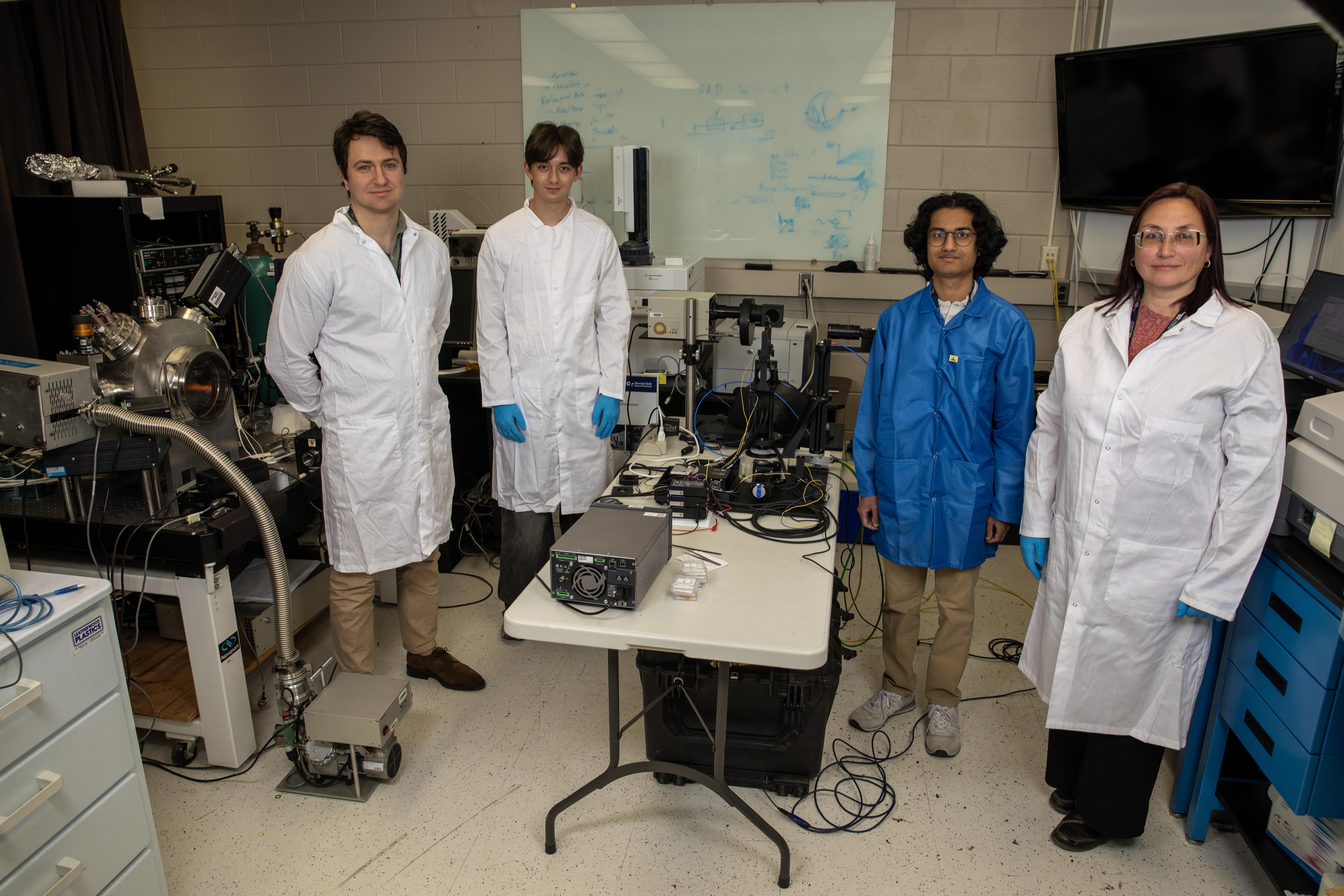
Members of the GTRI research team who helped develop and qualify materials that will be tested on the ISS during the MISSE-22 mission (Photo Credit: Sean McNeil, GTRI).
Researchers have come close to simulating space environments in Earth labs, but the combination of extreme thermal swings, complex cosmic radiation, and sustained microgravity that spacecraft experience make it impossible to capture the real thing perfectly.
Now, in a project led by the Georgia Tech Research Institute (GTRI) in collaboration with the Georgia Institute of Technology (Georgia Tech) researchers are closing the gap between Earth-based simulations and the true space environment by sending experimental materials to the International Space Station (ISS) for several months of in-orbit exposure. In a rare chance for space research, where most hardware is either left in orbit or burns up on reentry, they are getting those samples back for detailed analysis on Earth.
The materials are set to launch to the ISS in the near future as part of the Materials International Space Station Experiment 22 (MISSE-22), a testbed attached to the outside of the station. Mounted on the forward-facing side of the ISS to ensure predominant exposure to highly corrosive atomic oxygen, the test samples will spend several months enduring the extreme temperatures, radiation, and reactive environment of low Earth orbit. The team is testing a selection of lightweight, research-grade polymers designed to survive these harsh conditions. Once the samples return to Earth, engineers will examine how they held up and use that data to enhance the strategic of future satellite constellations.
This project represents a collaboration across government, academia, and industry, bringing together GTRI, Georgia Tech, the Air Force Research Laboratory (AFRL), the University of Texas at El Paso (UTEP), a California-based R&D firm Hedgefog Research Inc., and DuPont de Nemours, Inc. The research is also supported by Aegis Aerospace, which owns and operates the MISSE Flight Facility platform aboard the ISS.
Why Space is So Hard on Satellites
Harsh conditions in low Earth orbit — the region of space extending from approximately 100 miles to over 1,000 miles above Earth, where many satellites and the ISS travel — can darken, roughen, and weaken spacecraft surfaces over time. That damage shortens satellite lifetimes and requires engineers to add extra layers of protection, increasing overall logistical burden and mission costs.
Optimizing material durability is a strategic necessity, explained Elena Plis, a GTRI senior research engineer and principal investigator for the project, because every additional unit of shielding increases the cost of getting to orbit. To design lighter, more resilient materials, researchers need to examine how they degrade in a true space environment. However, most hardware is built for a one-way trip — designed to operate in orbit and then burn up on reentry, taking that valuable material data with it.
“The beauty of this type of experiment is that the materials return to Earth,” said Plis. “For many missions, stuff is sent up and never seen again. Being able to test returned samples from real space conditions is unique, and I can’t stress enough how exciting that is for us.”
A New Generation of Polymers Head for Space
Instead of relying on familiar spacecraft materials like DuPont’s Kapton — a tough, heat-resistant polyimide plastic film that has coated spacecraft exteriors since the Apollo era — the team is sending up a set of new, lightweight, research-grade polymers. These materials are designed to improve the survivability of assets against space’s unforgiving elements.
Plis and her collaborators started with dozens of candidate materials they developed. To earn a spot on the MISSE-22, a sample has to be transparent or translucent, so light can pass through it, and researchers can examine how its optical properties change in orbit. The materials also have to be tough enough to withstand intense atomic oxygen exposure without fragmenting, which would create debris near the ISS. In the end, only a select number of the team’s materials made the cut.
The MISSE-22 testbed holds multiple experimental polymers. Instead of standard illumination, the team constructed a custom on-orbit polariscope: LEDs beneath each sample shine polarized light up through the material. A small camera system then slides over the top to capture these highly specific optical changes on a set schedule over the course of several months in space.
Using Light to Reveal Space Strain
Using polarized light and machine learning to rapidly analyze color patterns in the images they receive from orbit, the researchers can track how stress inside each sample changes over time. Periodically, the system will cycle through the materials, and the images will be downlinked to Earth.
When the extended mission ends and the samples return, the team will compare those in-orbit measurements with detailed lab tests on the actual pieces that flew. Without returned materials, they would only have images and sensor data to work from. By testing the same samples in the lab, they can check how accurate the remote measurements really are and refine their methods.
If the materials perform as expected, the results could help engineers design satellites that last longer in orbit without carrying so much protective weight —providing a significant technological advantage in space domain awareness and asset longevity.
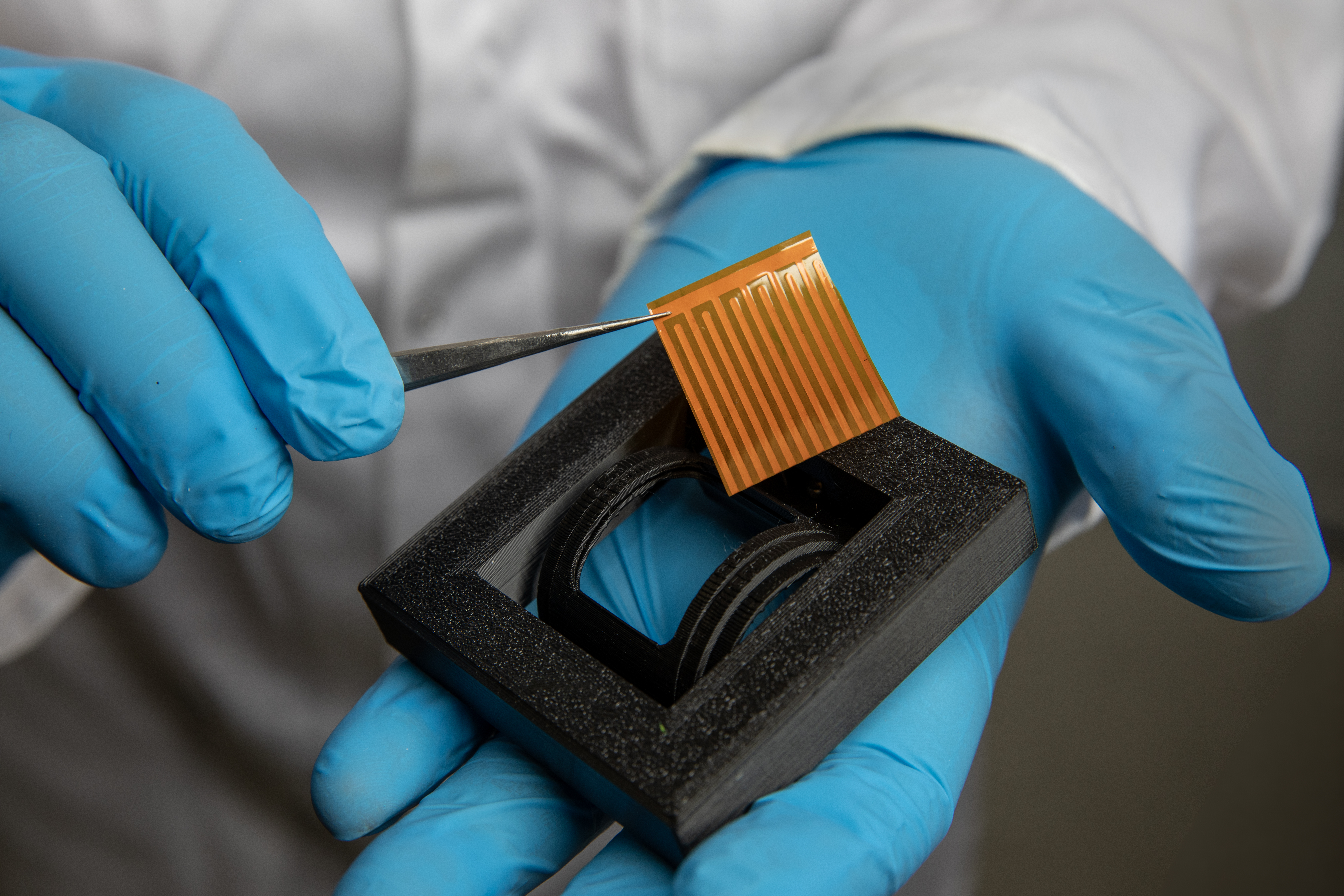
Close-up of a sample similar to those that will be sent to the ISS to study their durability in harsh space conditions (Photo Credit: Sean McNeil, GTRI).
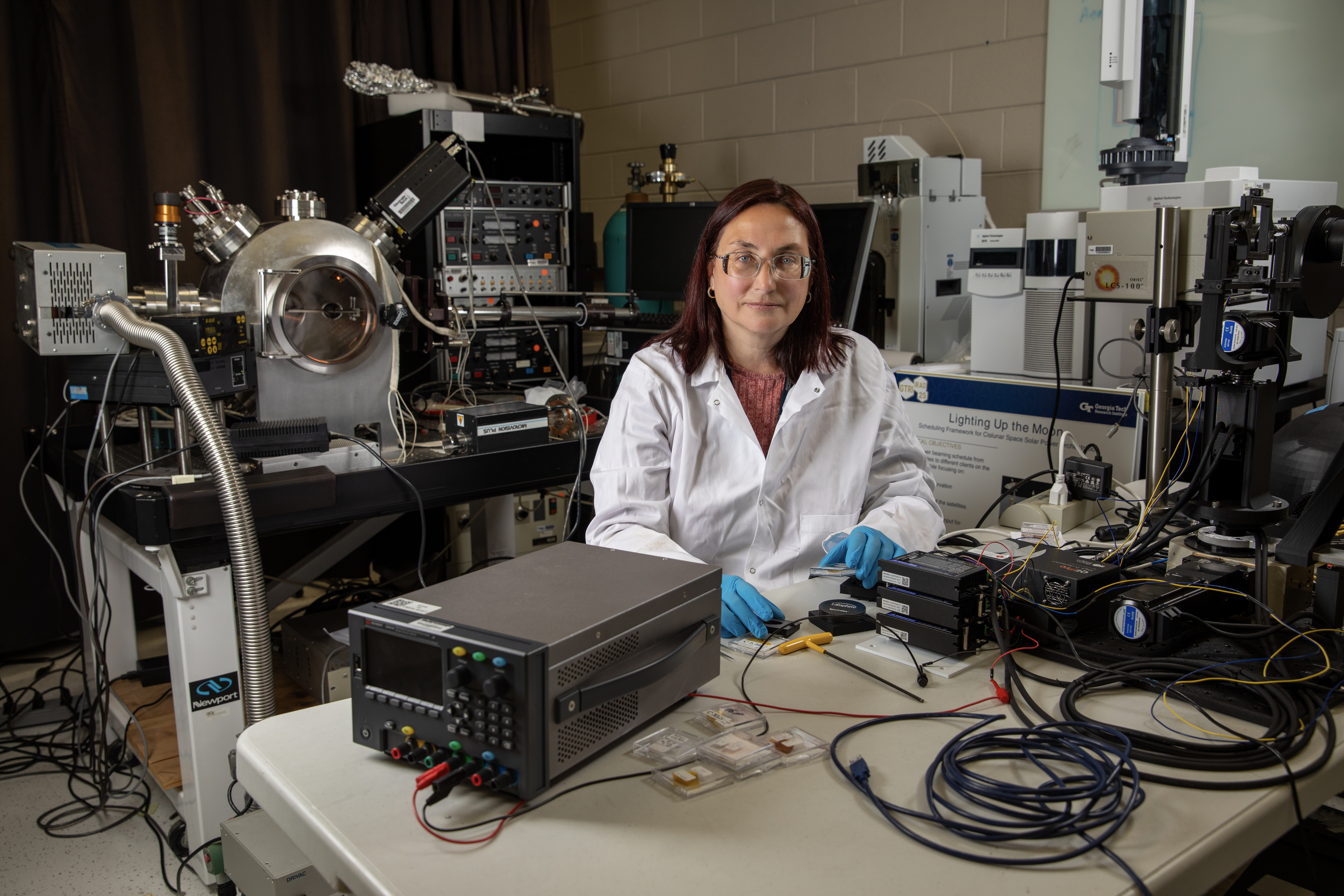
Plis and her team are sending new lightweight, research-grade polymers to the ISS for months of in-orbit exposure and later testing on Earth. Here, she is pictured in a laboratory at a GTRI facility in Atlanta, GA (Photo Credit: Sean McNeil, GTRI).
Author:
Communications Officer II
Georgia Tech Research Institute
Media Contact:
Ding Appointed as Regents’ Researcher
May 15, 2026 —

The University System of Georgia Board of Regents (BOR) honored 19 Georgia Tech faculty and researchers across campus with Regents’ appointments at its April meeting.
Among those recognized is Yong Ding, principal research engineer and electron microscopy core lead at the Materials Characterization Facility (MCF) within the Institute for Matter and Systems (IMS), who was named a Regents’ Researcher.
Ding received his Ph.D. in Physics from Nanjing University. Since joining Georgia Tech in 2003, he has made widespread contributions to interdisciplinary materials research through collaborations with faculty, national laboratories, and industry partners, enabling advanced materials characterization and scientific discovery. His current work focuses on the development and application of advanced transmission electron microscopy (TEM) techniques, including in-situ TEM, electron tomography, and quantitative spectroscopic analysis. He also leads major instrumentation initiatives, including the acquisition and deployment of the Thermo Fisher Scientific Spectra Ultra TEM.
Ding’s work has had a significant impact on nanoscience, catalysis, and energy materials. In addition to his research, he is a dedicated educator and mentor, providing training to dozens of microscopy users annually and teaching courses in electron microscopy and nanomaterials.
The Regents’ Awards are among the University System of Georgia’s highest honors, recognizing sustained excellence, national distinction, and long-term impact by faculty and researchers across the state’s public institutions.
Regents’ distinctions may be granted to outstanding faculty members for a period of three years by the BOR and are awarded only after unanimous recommendation from the president of the recipient’s university, their chief academic officer and dean, and three additional members of the faculty who are named by the university president. Approval by the chancellor and the BOR Committee on Academic Affairs is also required. These distinctions are given to those who make outstanding contributions to their respective institutions.
Amelia Neumeister | Communications Manager
The Institute for Matter and Systems
Emily Sanders Awarded NSF CAREER Award for Research on Shape-Shifting Materials
May 15, 2026 —
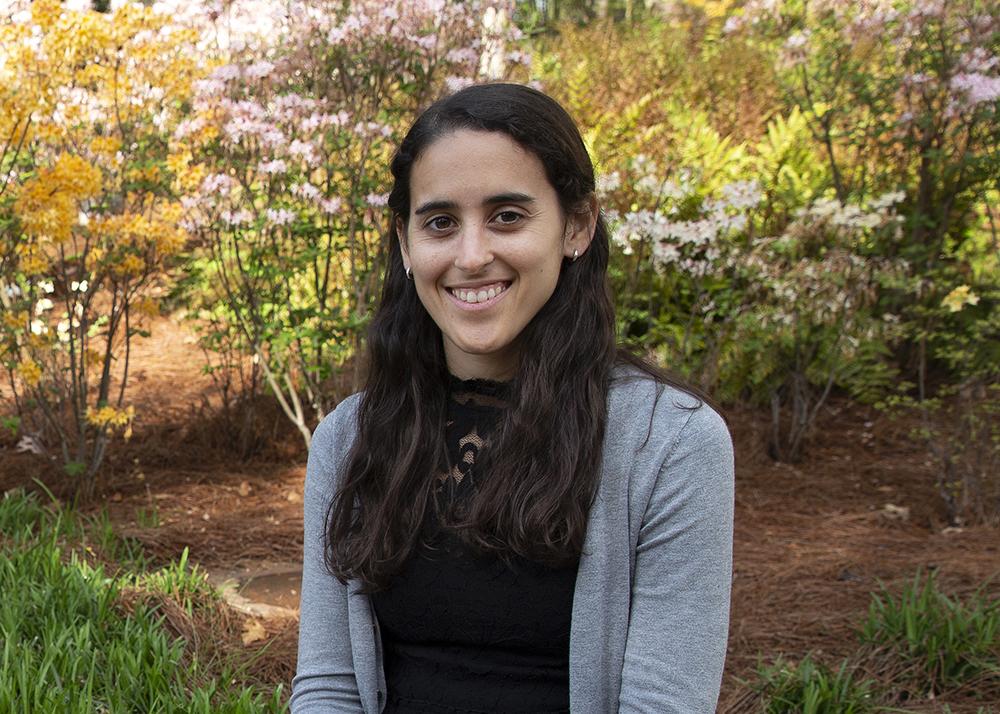
Emily Sanders, assistant professor in the George W. Woodruff School of Mechanical Engineering, has received the prestigious Faculty Early Career Development (CAREER) Award from the National Science Foundation’s (NSF) Division of Civil, Mechanical, and Manufacturing Innovation.
The NSF CAREER Award supports early-career faculty who have the potential to serve as academic role models in research and education and to lead advances in the mission of their department or organization. The award provides $662,045 over five years to support Sanders’ project, Patterning Hard Interlocking Particles to Achieve Soft Materials and Structures.
Read the full story on the George W. Woodruff School of Mechanical Engineering website.
Ashley Ritchie
George W. Woodruff School of Mechanical Engineering
Soft, Skin-Like Nasal Patch Could Transform Sleep Monitoring
May 14, 2026 —
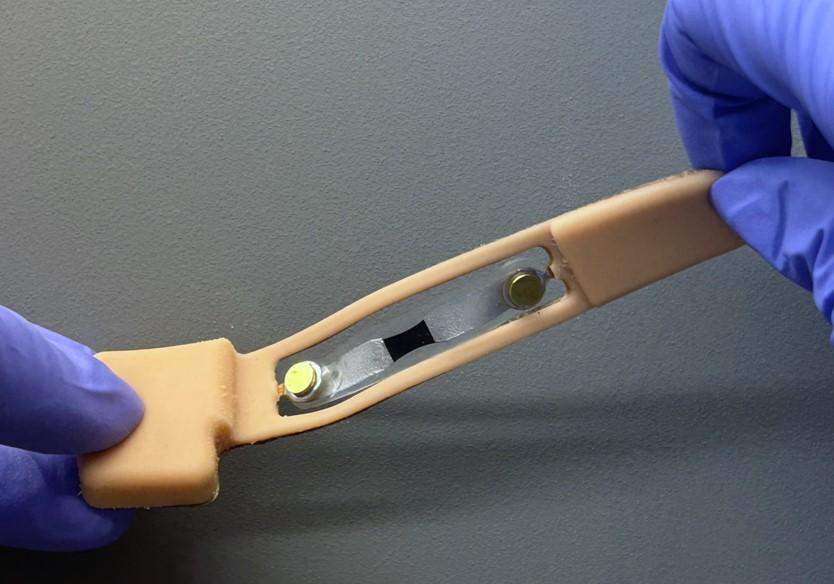
Sleep-related breathing disorders, including sleep apnea, affect millions of people worldwide but frequently go undiagnosed. One major barrier to diagnosis is the test itself.
Traditional sleep monitoring systems often rely on bulky equipment and nasal cannulas — small tubes inserted into the nostrils to measure airflow. While effective, these systems can be uncomfortable, intrusive, and difficult to tolerate overnight, limiting their use for long-term monitoring at home.
Now, researchers led by W. Hong Yeo, Peterson Professor in Pediatric Research at the George W. Woodruff School of Mechanical Engineering, have developed a soft, wireless nasal patch that could offer a more comfortable alternative for monitoring breathing during sleep.
The technology, described in a recent study published in Proceedings of the National Academy of Sciences (PNAS), uses ultrathin, skin-like wearable electronics to detect subtle movements of the nose caused by breathing without tubes, wires, or direct airflow measurements.
Read the full story on the George W. Woodruff School of Mechanical Engineering website.
Ashley Ritchie
George W. Woodruff School of Mechanical Engineering
Full Circle: Summer Research Program Helps Student Become Scientist
May 11, 2026 —
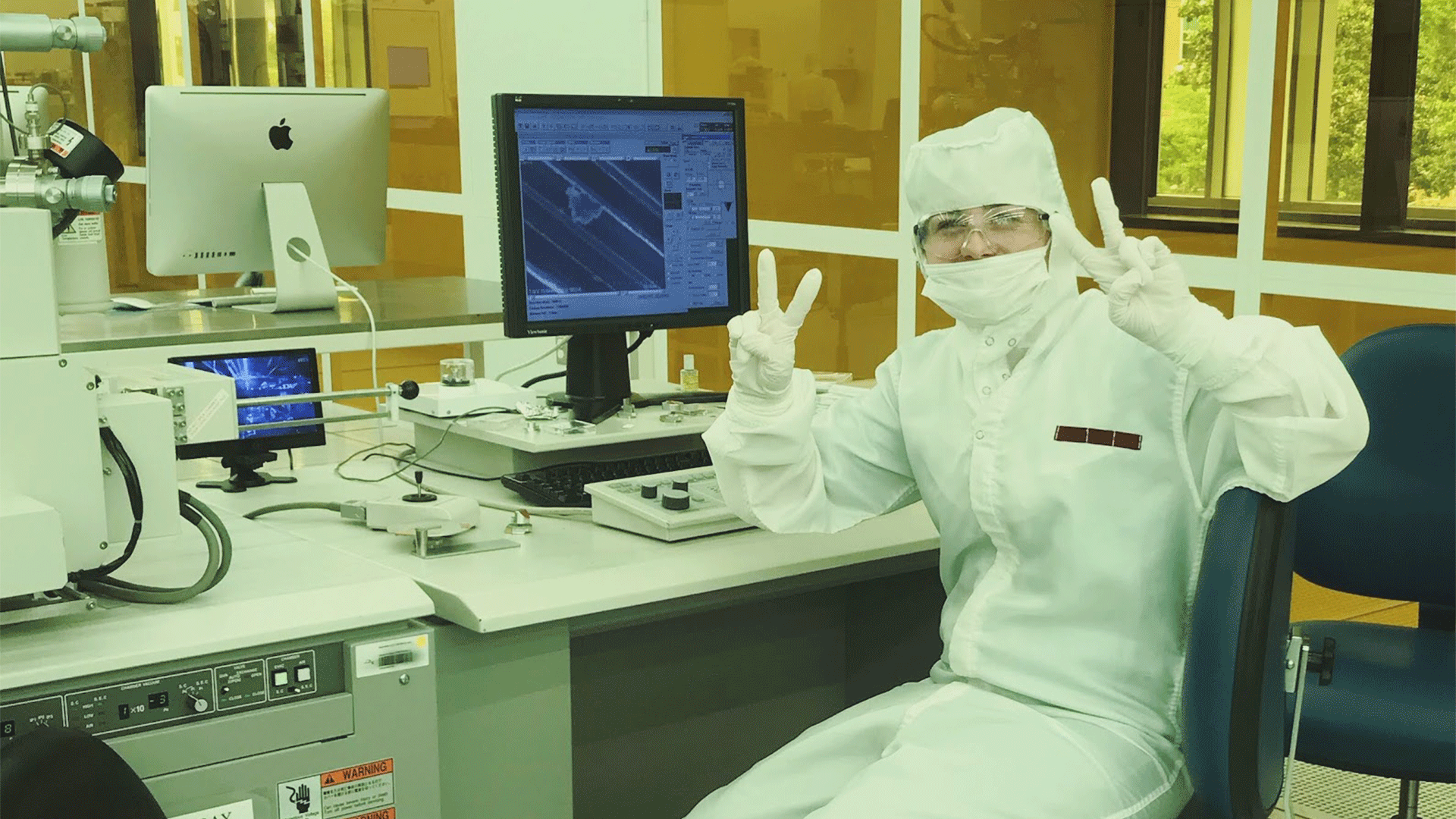
In the summer of 2019, Caroline Howell came to Georgia Tech for the first time to participate in the NNCI Research Experience for Undergraduates (REU). As a student at Troy University in Alabama, Howell was looking to broaden her research horizons.
“I went to a smaller university because I came from a very, very small town,” she said. “I did some research there, but we didn’t have a lot of equipment or resources.”
During the 10-week program, undergraduate students live on campus and conduct research in faculty labs with mentorship and access to advanced facilities. The program also prepares students for graduate studies and STEM careers through professional development, research communication training, and opportunities to present their work.
“I applied to the REU at Georgia Tech. And when I got in, I was super excited because Georgia Tech is a big deal,” she said.
That summer didn’t just expand her lab experience; it reshaped her career trajectory.
As a physics major, Howell had never been exposed to materials science, nanotechnology, or cleanroom environments before arriving in Atlanta. That summer marked her first time using advanced equipment, including scanning electron microscopes (SEMs), and working hands-on in Georgia Tech’s cleanroom facilities.
Her project focused on aluminum alloys, testing their strength and fracture behavior under simulated harsh conditions such as saltwater and heat. The research explored how lightweight, affordable materials like aluminum could be made stronger for applications such as shipbuilding.
The experience opened a door for Howell.
“It inspired me to go to grad school for materials science,” she said.
After completing her undergraduate degree at Troy University, Howell pursued graduate studies in materials science at the University of Colorado Boulder, where she earned her master’s degree.
Her REU experience gave her a technical advantage early in her career.
“In my first job, I worked with the same machines I used at Tech because I already had experience with them,” she said.
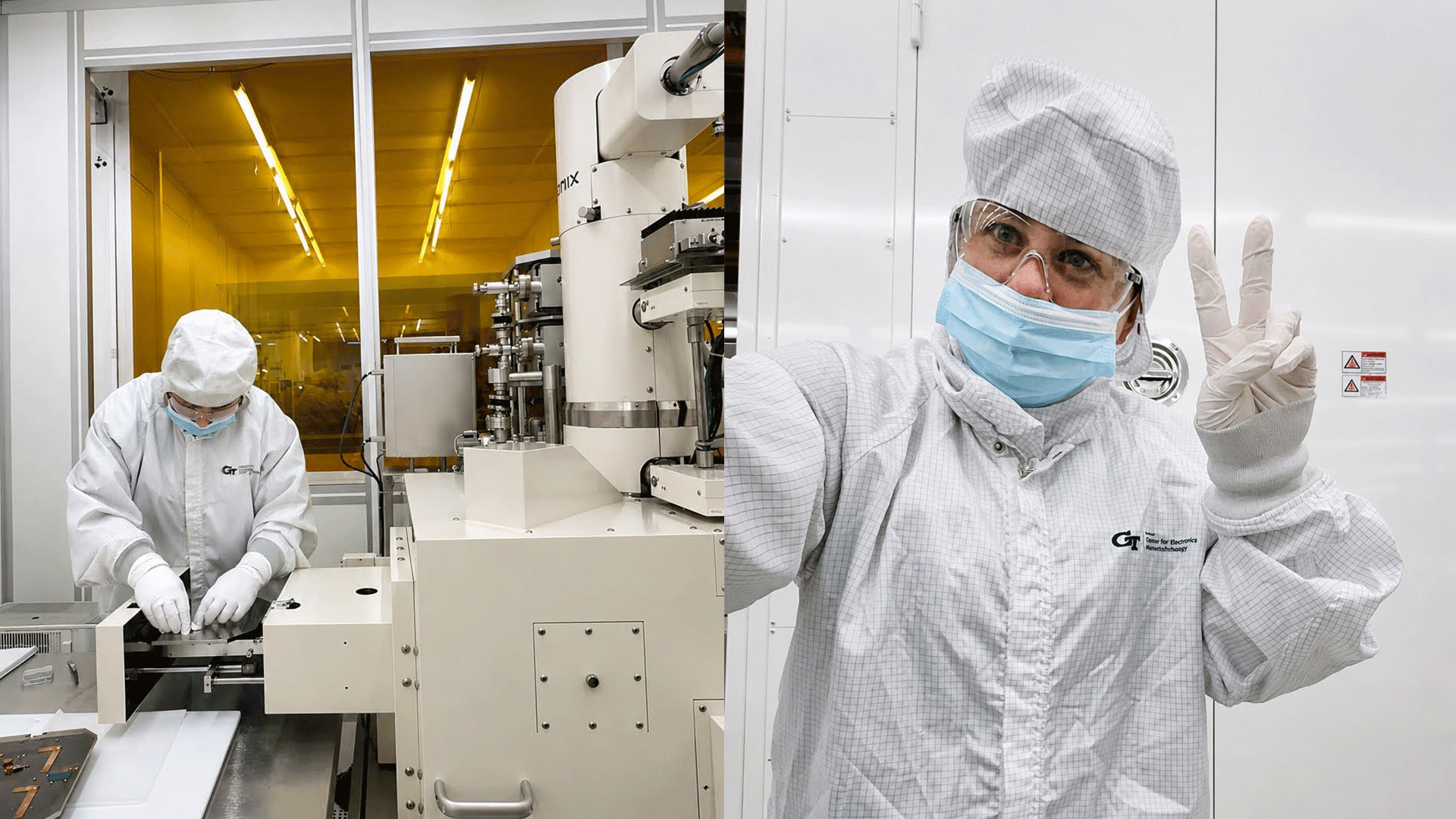
Today, Howell is back at Georgia Tech. This time not as a student, but as an industry researcher using the Institute’s cleanroom facilities as part of her full-time job.
She conducts advanced lithography and SEM analysis in the same facilities, expanding far beyond what she was able to do as an undergraduate. Still, she credits the REU with giving her a strong foundation.
“I came in already knowing how to do some things, and it’s just kind of cool to be back in the same space I was in years ago,” Howell said.
In a full-circle moment, the place that first introduced her to materials science is now part of her professional experience.
For Howell, the impact of the REU extended well beyond lab work. The REU provided her technical training, exposure to a new discipline, and the confidence to pursue graduate education. It connected her with mentors who supported her next steps and introduced her to equipment she would later use professionally.
For students considering an REU, her advice is simple:
“Do it.”
Sometimes, a single summer can shape an entire career — and even bring you right back to where it all began.
Amelia Neumeister | Communications Manager
The Institute for Matter and Systems
Chris Luettgen Named Interim Director of Georgia Tech’s Renewable Bioproducts Institute
May 11, 2026 —

Chris Luettgen, incoming interim director of the Renewable Bioproducts Institute.
After more than 25 years at Georgia Tech, including six years leading the Renewable Bioproducts Institute (RBI), Executive Director Carson Meredith will depart the Institute this summer to begin a new role at the University of Tennessee, Knoxville.
Effective August 1, Chris Luettgen will assume the role of interim director of RBI.
“Carson has made lasting contributions to Georgia Tech and to RBI during his time as executive director,” said Julia Kubanek, vice president for Interdisciplinary Research. “We are grateful for his leadership and wish him continued success in this next chapter.”
During his tenure, Meredith helped expand RBI’s research footprint, strengthen partnerships across academia and industry, and advance the Institute’s leadership in sustainable bioproducts and bio-based innovation. His work helped position RBI as a key driver of collaboration and research in the forest products and renewable materials sectors.
Luettgen brings extensive experience in forest-based and bio-based research, industry collaboration, and technical leadership. He has held leadership roles at Georgia Tech and has longstanding ties to the Institute of Paper Science and Technology (IPST), working extensively at the intersection of academic research and industry collaboration. He currently serves as Professor of the Practice in the School of Chemical and Biomolecular Engineering, where he teaches in Georgia Tech’s pulp and paper program and serves as RBI’s strategic lead for Pulp and Paper.
Before joining Georgia Tech, Luettgen spent many years at Kimberly-Clark and Scott Paper Company, where he held senior technical and research leadership positions focused on translating research into commercial impact. He is also widely recognized for his longstanding involvement with the Technical Association of the Pulp and Paper Industry (TAPPI), reflecting his commitment to advancing innovation, workforce development, and collaboration across the forest products and bioproducts industries.
“Chris brings deep expertise, strong industry connections, and a clear understanding of RBI’s mission and community,” Meredith said. “I’m confident he will provide steady leadership and continuity for the Institute during this transition.”
RBI will share additional details regarding the transition in the coming months.
Yanet Chernet
Communications Officer I
IBB Launches New Spatial Omics and Data Analytics Center
May 08, 2026 —

The Parker H. Petit Institute for Bioengineering and Bioscience (IBB) at Georgia Tech has launched the Spatial Omics and Data Analytics (SODA) Center, a new interdisciplinary research hub advancing the next frontier of biomedical discovery.
The center is co-directed by Ahmet Coskun, Bernie-Marcus Early-Career Professor and Associate Professor in the Wallace H. Coulter Department of Biomedical Engineering, and Xiuwei Zhang, J.Z. Liang Early Career Associate Professor in the School of Computational Science and Engineering.
The rapidly growing field of spatial omics is a way to study lipids, genes, proteins, and other biological molecules while keeping track of where they are in tissue. This can allow researchers to determine how cells interact with their native environment, providing potentially critical information for the treatment of cancer and other diseases.
The SODA Center envisions a future where spatial omics is used to help researchers understand biological function through their precise spatial and temporal relationships within tissues and organs, rather than solely through molecular components. By integrating expertise in biomedical engineering and computational science, the center seeks to transform raw spatial omics data into predictive models of health and disease.
Through the development of next-generation analytical methods, computational tools, and open-source resources, SODA aims to empower researchers to map the cellular and molecular architecture of life with unprecedented resolution and translational impact. The center’s broader goal is to establish Georgia Tech as a global leader in spatial omics research.
To build community and foster collaboration, the center is launching the SODA Synergy Seminar Series, beginning May 15 from 12–1 p.m. in the Krone Engineered Biosystems Building, CHOA Seminar Room. This series will bring together researchers across disciplines to share emerging discoveries and accelerate innovation in spatial omics and data analytics.
The SODA Center represents a major step forward in uniting data science and bioengineering to unlock new insights into complex biological systems.
Ashlie Bowman | Communications Manager
Parker H. Petit Institute for Bioengineering and Bioscience
When oil prices spike, where does the money go?
Apr 20, 2026 —
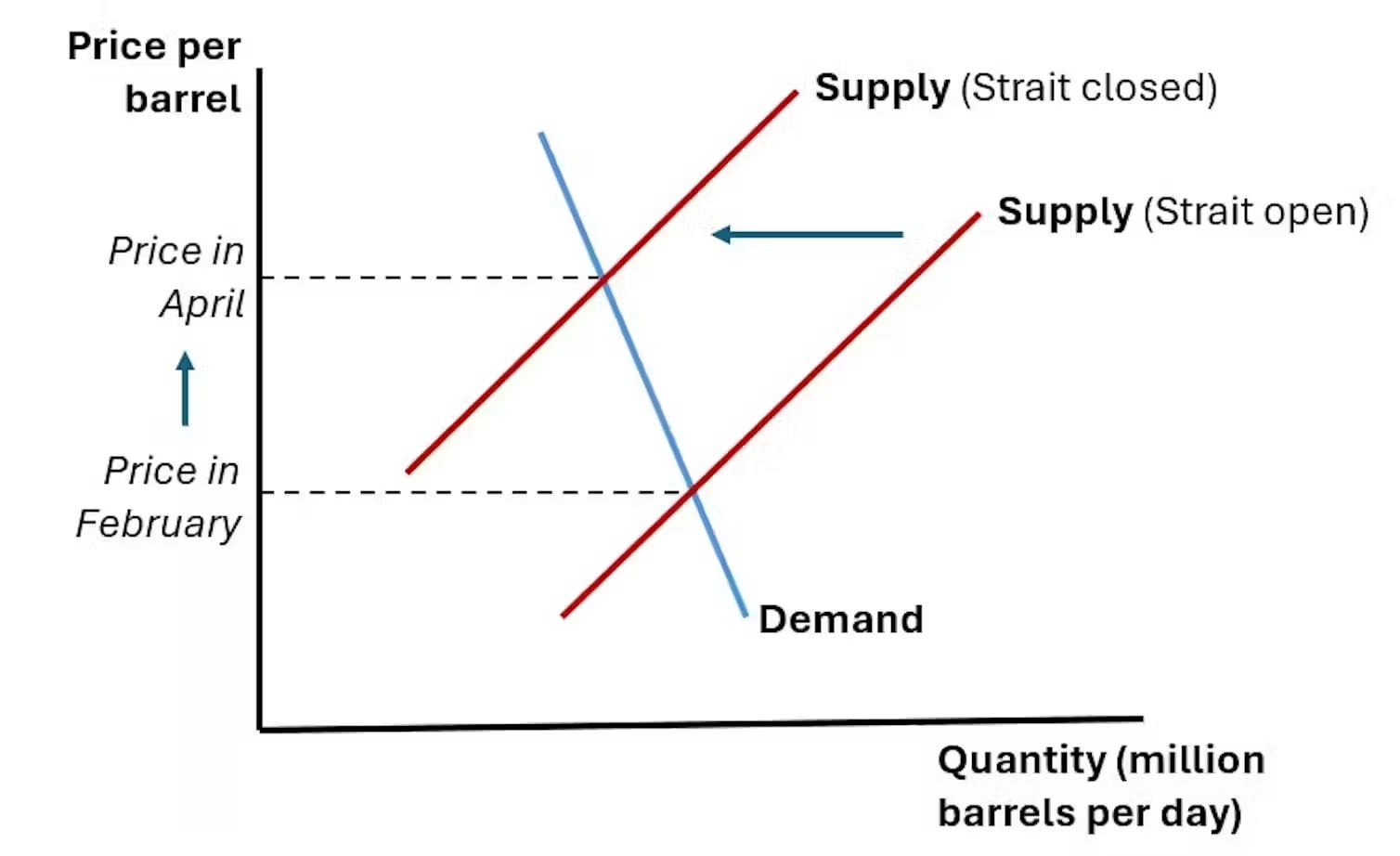
In general, when supply of a product is reduced, prices rise. As a result, even when demand remains stable, the quantity consumers buy decreases because of higher prices. Matthew E. Oliver and Tibor Besedeš, CC BY-NC-ND
The market for oil is global, which is why events like the war in Iran affect oil prices – and prices of the wide range of products made from oil – literally everywhere. Federal data shows that the price at the primary crude oil hub in the U.S. was US$66 a barrel in late February 2026 – before the U.S. and Israel attacked Iran – and $101 a barrel on April 13. Similar price increases have reverberated around the globe.
As an energy economist and an international trade economist, we field a lot of questions during such episodes, because when oil prices go up, manufacturers, businesses and ultimately consumers pay more.
Some basic economics
Crude oil may be the most important commodity in the global economic system.
It’s a literal fuel for the industrial economy. It powers the engines that drive transportation and paves the roads vehicles drive on. It’s a source for plastics from which the world’s products get made and packaged, and a key ingredient at some point in almost every supply chain. Even fertilizers that boost the food supply are made from it. In short, it is difficult to imagine modern life without oil and its derivatives.
And when its supply changes, its price changes. Economists explain this using a fundamental model of our field: the supply-demand diagram. When there’s less of something to go around, competition among consumers who want it and companies that need it can drive the price up.
Sometimes this process can play out over time, allowing people to adjust their purchasing or activities to dampen price shocks. But when a significant source of the world’s oil is effectively blocked without much advance notice, such as when the the U.S. and Israeli attacks on Iran closed the Strait of Hormuz, prices can rise sharply in a short period of time.
A natural question many people ask when oil prices spike is: Where does all that additional money go, and who benefits from it?
Some people have written entire books dissecting all the places that money goes when it leaves consumers’ pockets. But ultimately, the bulk of the money heads in the direction of the source of the oil itself – the oil companies.
What they do with the money varies widely, depending on where in the world an oil company is operating and who owns it. What also matters is the business environment – the set of laws and regulations – in which the company operates.
Middle East faces danger
Oil producers in the Middle East face significant new risk because of the war in Iran, including threats to production, processing locations and shipping routes. These risks raise their costs for insurance, security and transportation.
But production costs in the region are relatively low, so higher global oil prices typically still translate into strong profits.
For a major exporter such as Saudi Arabia, the government owns and controls nearly all oil production, so high prices generally benefit the government’s finances and investments, even during a war. In Saudi Arabia, oil revenue has historically been used to fund public spending.
West Texas gets a windfall
The Permian Basin, the largest oil field in the U.S., is a long way from the Persian Gulf. When global oil prices rise because of the war in Iran, oil companies operating in West Texas effectively get a windfall gain: Prices rise more quickly than costs, at least in the short run.
The immediate effect is more income from higher prices. The money largely goes to company owners – meaning shareholders – through dividends, debt reduction, company-backed purchases of its own stock, and reinvestment in drilling and production. Over time, companies may decide to spend some of that windfall on building more production capacity or pipelines to get more oil and gas to market.
North Sea boosts government revenue
In the North Sea, between the island of Great Britain and Scandinavia, a mix of multinational and government-owned companies produce most of the oil.
In the U.K., private shareholders are the primary beneficiaries of higher profits from increased oil prices, though an additional tax on oil and gas companies’ profits means the government also collects a significant share of the money, which it uses to help pay public expenses.
In Norway, oil revenues flow into the Government Pension Fund Global, the world’s largest sovereign wealth fund, valued at over $2 trillion. Laws govern how much, and for what purposes, money can be withdrawn from the fund, supporting public spending and preserving wealth for future generations. This is a similar model to Alaska’s state-owned program, funded by oil revenue, that pays for government services and sends an annual dividend to every permanent resident.
Russian oligarchs get rich
Russian oil is subject to stringent economic sanctions imposed by major industrial countries as a response to the Russian invasion and occupation of parts of Ukraine. While the U.S. cannot control how much Russia charges for its oil, it can control services needed to move Russian oil around the world. Under current price sanctions, Western shipping, insurance and financing can be used to ship and sell Russian crude oil only if the price is below $60 per barrel.
Russia’s oil industry is dominated by government-controlled companies whose leaders maintain close ties to President Vladimir Putin. The dealings of those shadowy figures are often shrouded in secrecy, but it is likely that they and Putin’s military-industrial complex – not the Russian people – are the main beneficiaries of high oil prices.
What this means for you
Everyday U.S. consumers may not like the idea of their hard-earned cash going into the already deep pockets of any of these groups. But in the short run, there’s not much to do but pay the price. For the long run, however, people around the world are already thinking and talking about, and opting for, sources of energy that don’t depend on fossil fuels.
This article is republished from The Conversation under a Creative Commons license. Read the original article.
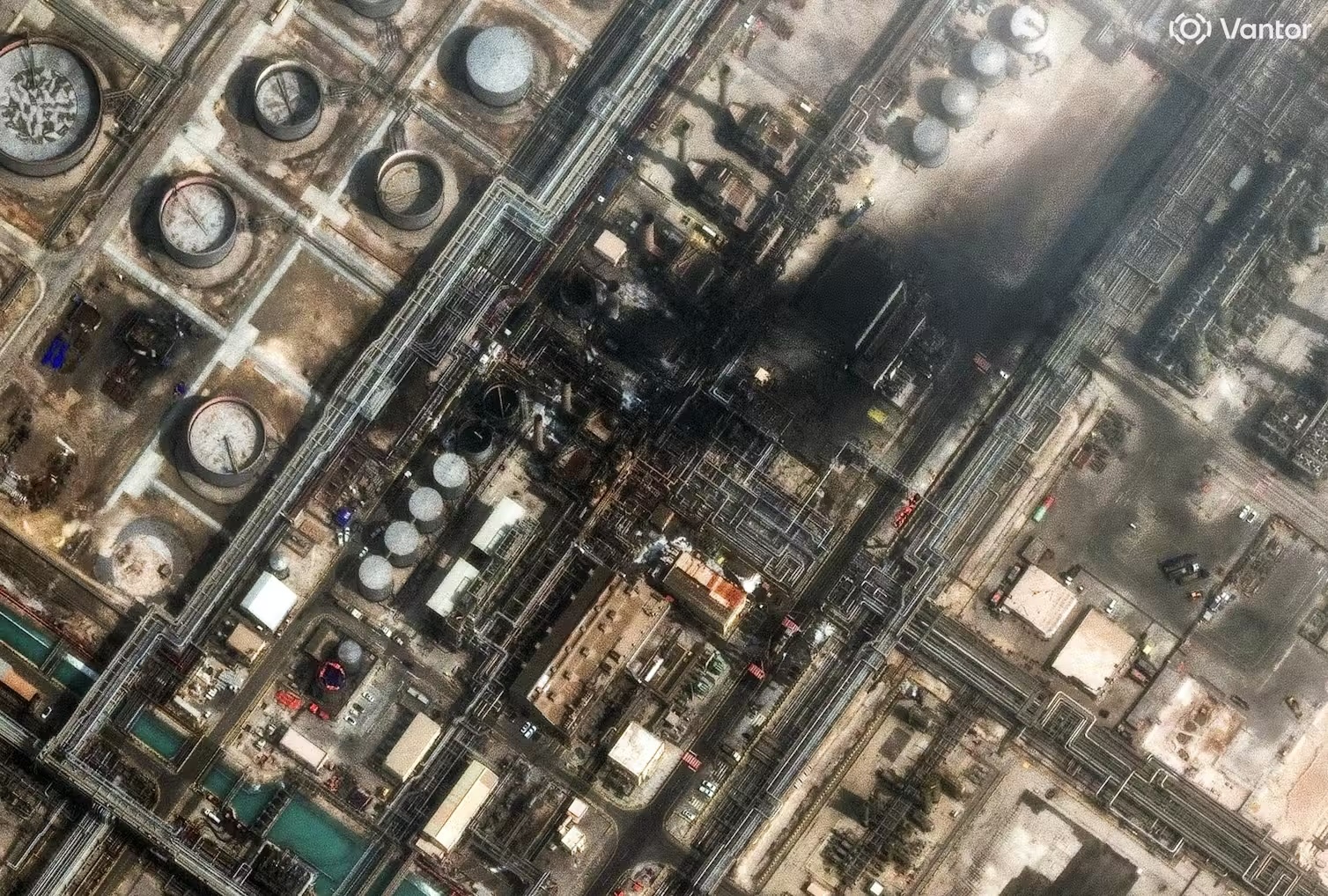
A satellite photo shows damage from the war at Saudi Arabia’s Ras Tanura oil refinery, which must be repaired before full operations can resume. Satellite image (c) 2026 Vantor via Getty Images

Drilling rigs in the North Sea are still operating and shipping oil. AP Photo/James Brooks
Authors
Matthew E. Oliver
Associate Professor of Economics, Georgia Institute of Technology
Tibor Besedeš
Professor of Economics, Georgia Institute of Technology
Media Contact
Shelley Wunder-Smith
shelley.wunder-smith@research.gatech.edu
What’s in the price of a gallon of gas?
May 01, 2026 —
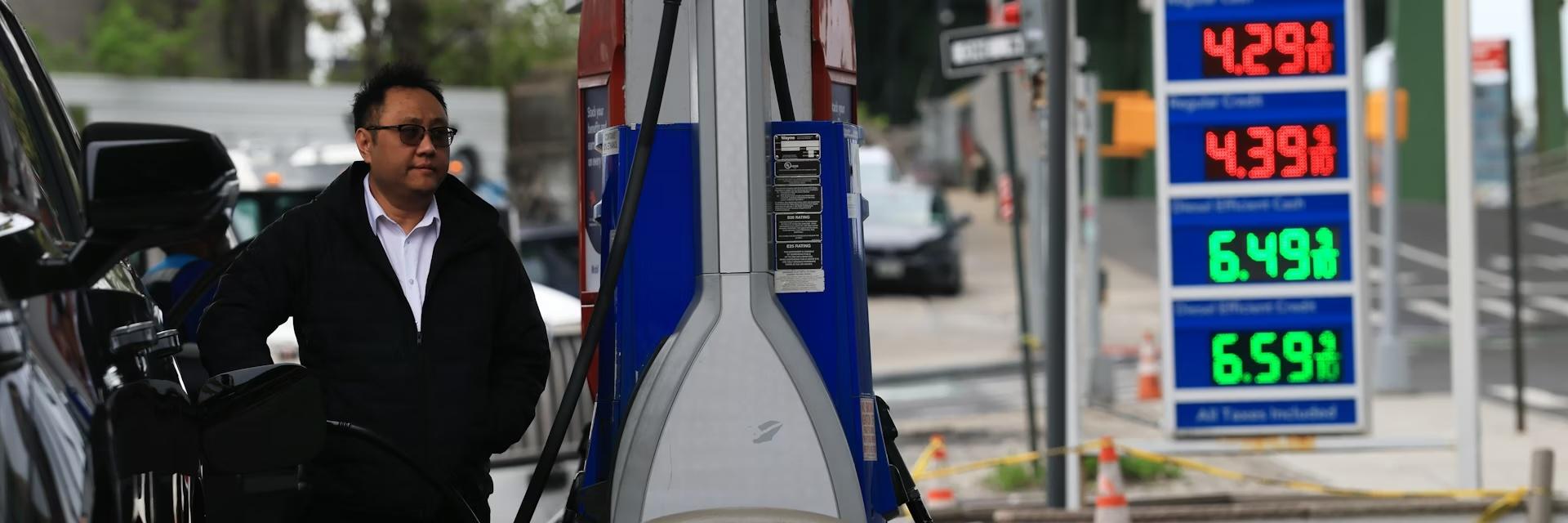
Gas prices were well over $4 a gallon on April 28, 2026, in Brooklyn, N.Y. Spencer Platt/Getty Images
The U.S. Energy Information Administration expects nationwide retail gasoline prices to average near US$4.30 a gallon for April 2026 – the highest monthly average of the year. The political response has been familiar. Georgia has suspended its state gas tax, other states are weighing their own tax holidays, and the White House has issued a temporary waiver of a law known as the Jones Act in hopes of moving more domestic fuel to East Coast ports.
As an energy economist, I am often asked about what contributes to gas prices and what different policies can do to affect them.
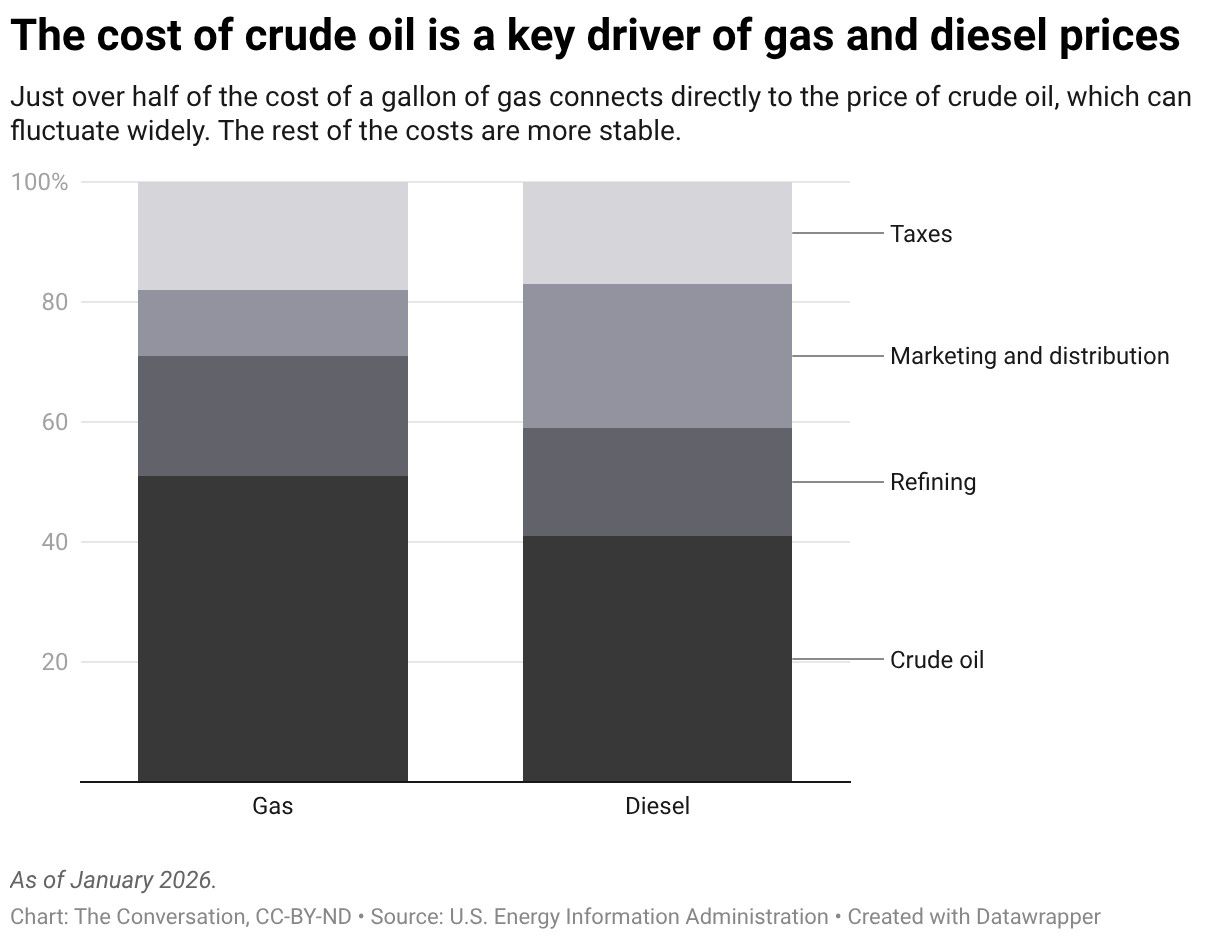
The price of a retail gallon of gas is the sum of four things: the cost of crude oil, refining, distribution and marketing, and taxes.
In nationwide figures from January 2026, crude oil accounted for about 51% of the pump price, refining roughly 20%, distribution and marketing about 11% and taxes about 18%. That mix shifts with conditions: When crude oil prices spike, that can drive more than 60% of the price; when the price drops, taxes and logistics are larger shares of the cost.
Crude oil is the biggest ingredient
Because the price of crude oil is the largest element, most of the price at the pump is derived from the global oil market.
Usually, big swings in crude prices come mainly from shifts in global demand and expectations – not from supply disruptions, according to widely cited research in 2009 by the economist Lutz Kilian.
But what is happening in early 2026 with the war in Iran is one of the exceptions: a classic supply shock. Severe disruptions to shipping through the Strait of Hormuz and attacks on Middle East oil infrastructure have taken millions of barrels a day off the global market.
Most drivers generally can’t quickly reduce how much they drive or how much gas they use when prices rise, so gasoline demand doesn’t change much in the short run. That means a jump in crude costs tends to result in people paying more rather than driving less.
Refining, regulations and the California puzzle
Refining turns crude into gasoline at industrial scale. The U.S. doesn’t have a single gasoline market, though. Roughly a quarter of U.S. gasoline is a cleaner-burning blend of petroleum-derived chemicals called “reformulated gasoline,” which is required in urban areas across 17 states and the District of Columbia to reduce smog.
California uses an even stricter formulation that few out-of-state refineries make. California is also geographically isolated: No pipelines bring gasoline in from other U.S. refining regions.
California’s gasoline prices have long run above the national average, explained in part by higher state taxes and stricter environmental rules. But since a refinery fire in Torrance, California, in 2015 reduced production capacity, the state’s prices have been about 20 to 30 cents a gallon higher than what those factors would indicate.
Energy economist and University of California, Berkeley, professor Severin Borenstein has called this the “mystery gasoline surcharge” and attributes it to the fact that there isn’t as much competition between refineries or gas stations in California as in other states. California’s own Division of Petroleum Market Oversight says the surcharge cost the state’s drivers about $59 billion from 2015 to 2024. It’s not exactly clear who is getting that money, but it could be gas stations themselves or refineries, through complex contracts with gas stations.
Getting the gas into your car
The distribution and marketing category covers the costs of everything involved in getting the gasoline from the refinery gate to your tank.
Gasoline moves by pipeline, ship, rail and truck to wholesale terminals, and then by local delivery truck to service stations.
At the retailer’s end, the key factors are station rent and labor, the cost to buy gasoline in bulk to be able to sell it, credit card fees of as much as 6 to 10 cents a gallon at current prices, and franchise fees paid to the national brand, such as Sunoco or ExxonMobil, for permission to put their branding on the gas station.
Most gas station operators net only a few cents per gallon on fuel itself – which is why many gas stations are really convenience stores with pumps out front. Borenstein and some of his collaborators have also documented that retail gas prices rise quickly when wholesale costs climb but fall slowly when wholesale costs drop.
The question of gas tax holidays
The federal government charges a tax on fuel, of 18.4 cents a gallon for gasoline and 24.3 cents a gallon for diesel. States charge their own taxes, ranging from 70.9 cents a gallon for gas in California to 8.95 cents in Alaska.
When gas prices rise, many politicians start talking about temporarily suspending their state’s gas tax. That does reduce prices, but not as much as politicians – or consumers – might hope. Research on past gas tax holidays has found that consumers get about 79% of the reduction in gas taxes. That means oil companies and fuel retailers keep about one-fifth of the tax cut for themselves rather than passing that savings to the public.
Gas tax holidays also reduce funding for what the taxes are designed to pay for, typically roads and bridges. That pushes road and bridge upkeep costs onto future drivers and general taxpayers.
There is an additional problem, too: Taxes on gasoline are supposed to charge drivers for some of the costs their driving imposes on everyone else – carbon emissions, local air pollution, congestion and crashes. But Borenstein has found that U.S. fuel tax levels are already far below the true cost to society. Removing the tax on drivers effectively raises the costs for everyone else.
The Jones Act: A small number that adds up
The 1920 Jones Act is a federal law that requires cargo moving between U.S. ports to travel on vessels built and registered in the U.S., owned by U.S. citizens, and crewed primarily by U.S. citizens and permanent residents. Of the world’s 7,500 oil tankers, only 54 meet this requirement. Only 43 of these can transport refined fuels such as gasoline.
So, despite significant refining capacity on the Gulf Coast, some U.S. gasoline is exported overseas even as the Northeast imports fuel, in part reflecting the relatively high cost of moving fuel between U.S. ports.
Economists Ryan Kellogg and Rich Sweeney estimate that the law raises East Coast gasoline prices by about a penny and a half per gallon on average, costing drivers roughly $770 million a year. In light of the war’s effect on gas prices, the Trump administration has temporarily suspended the Jones Act requirements – an action more commonly taken when hurricanes knock out Gulf Coast refineries and pipeline networks.
What moves the number
The result of all these factors is that the price that drivers see at the pump mostly reflects the global price of crude, plus a stack of domestic costs, only some of which are inefficient.
Tax holidays give a partial, short-lived rebate. Jones Act waivers trim pennies, though permanent repeal may cause more fundamental changes, such as reduced rail and truck transport of all goods, which could lower costs, emissions and infrastructure damage associated with cargo transportation. Harmonizing fuel blends across states and seasons may lower prices somewhat, but likely at the expense of increased emissions.
Ultimately, the best protection against oil price shocks is a more efficient gas-burning vehicle, or one that doesn’t burn gasoline at all. In the meantime, the best I can offer as an economist is clarity about what that $4.30 actually buys.
This article is republished from The Conversation under a Creative Commons license. Read the original article.
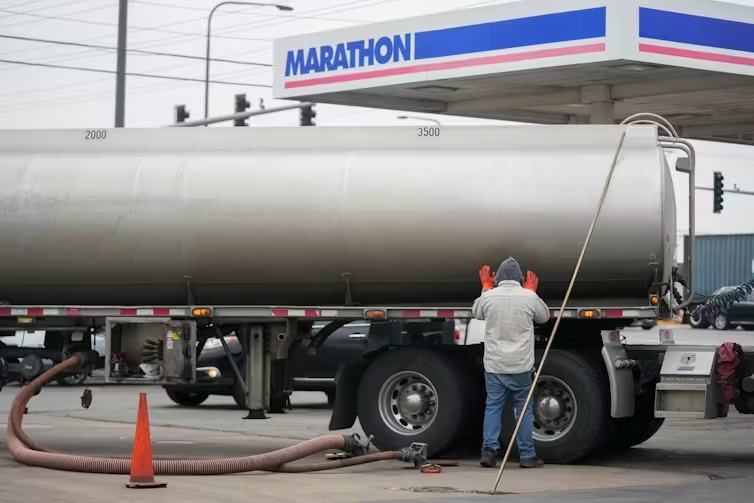
A tanker truck delivers fuel to a gas station. AP Photo/Erin Hooley

Suspending the Jones Act allows foreign-based oil tankers to sail between U.S. ports. AP Photo/Eric Gay
Author:
Assistant Professor of Economics, Georgia Institute of Technology
Media Contact:
HBCU CHIPS Conference Expands Opportunities with Inaugural Career Fair
May 06, 2026 —
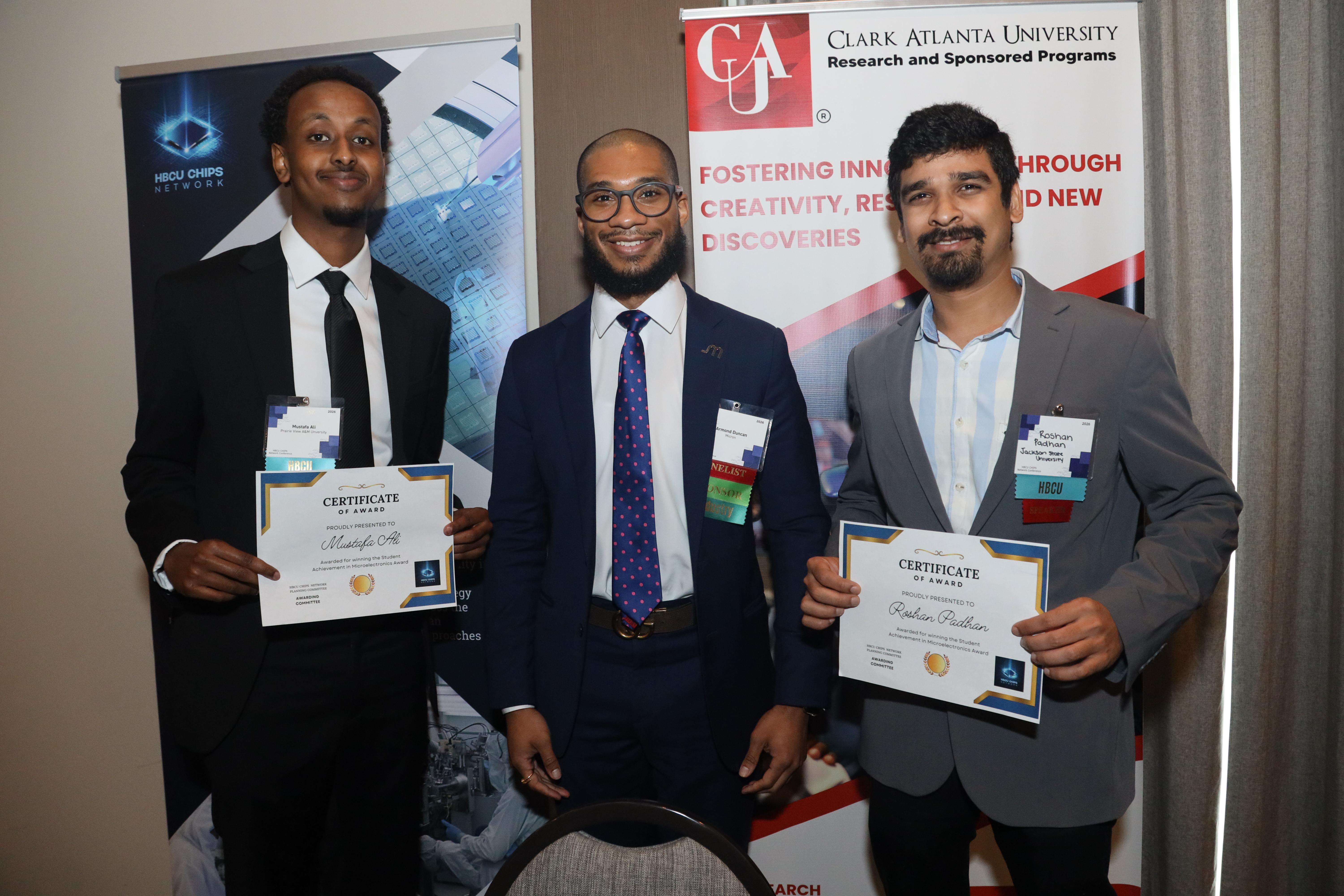
The 2026 HBCU CHIPS Network Conference, held April 1-2 at the Renaissance Atlanta Midtown Hotel, brought together students, faculty, researchers, industry leaders, and federal partners to advance innovation and workforce development in the U.S. semiconductor ecosystem. By pairing technical programming with a dedicated career fair, the event emphasized both learning and direct access to opportunities.
Now in its second year, the conference continues to grow as a national platform for collaboration across more than 30 Historically Black Colleges and Universities (HBCUs), all working to strengthen diversity and talent pipelines in microelectronics and semiconductor industries. Centered on the theme of Championing New Approaches to Reestablishing U.S. Dominance in Semiconductors and Microelectronics, the event featured technical sessions, panel discussions, poster presentations, and networking opportunities.
“This conference provides a national platform to showcase the depth of talent within the HBCU community, including leading edge research and innovation,” said George White, executive director of strategic partnerships and chief CHIPS strategy officer at Georgia Tech. “It also raises awareness of public and private funding opportunities and promotes collaboration across academia, industry, and government.”
Attendance reflected strong interest across the network. The conference drew approximately 180 participants, including representatives from 26 HBCUs, 17 industry and nonprofit organizations, five government agencies, and the Technical College System of Georgia. The career fair attracted 231 students from the same 26 institutions.
The addition of the career fair this year, which created space for more focused interaction between students and employers, gave students opportunities to speak one-on-one with recruiters and industry professionals. These conversations gave them a clearer understanding of career pathways, available roles, and how to enter the field.
“This experience strengthened my interest in pursuing a career in the semiconductor industry, particularly in fabrication, validation, and reliability,” said Mustafa Ali, a student at Prairie View A&M University and a Student Achievement in Microelectronics Award recipient. “Engaging with both industry professionals and the academic community showed me the importance of connecting research with real-world applications.”
The addition of the career fair also reflects the broader mission of the HBCU CHIPS Network: not only to advance research, but also to build a robust, diverse talent pipeline ready to meet the nation’s growing demand for semiconductor professionals. With the U.S. projected to need tens of thousands of new workers in this sector in the coming years, integrating a career fair directly into the conference experience ensures that students are not just participants in conversations, but active candidates in the future workforce.
Six employers participated in the career fair: Savannah River National Laboratory, Sandia National Laboratories, Teradyne, GlobalFoundries, Synopsys, and Micron. They offered internships and full-time positions, while also connecting with students interested in long-term career development. Graduate programs from Clark Atlanta University, Norfolk State University, Georgia Tech, and North Carolina A&T State University were also represented, highlighting academic pathways alongside industry roles.
“At Teradyne, we believe that innovation thrives when our teams reflect the full spectrum of talent and perspectives that exist across the engineering landscape,” said Danielle S. Ferguson-Macklin, talent communities program manager at Teradyne. “HBCUs have a proven legacy of cultivating exceptional STEM talent, and partnering with these institutions allows us to connect with students who bring both technical rigor and a deep sense of purpose to their work. Strengthening our HBCU recruiting pipeline is not a diversity initiative; it is a strategic investment in the future of our workforce and the semiconductor industry.”
“We look for students with strong technical foundations, intellectual curiosity, and the adaptability to thrive in fast-moving, complex environments,” added Armond Duncan, staff program manager, MSI network collaboration, at Micron. “Collaboration, communication, and a willingness to continuously learn are just as critical as technical acumen. Students who demonstrate hands-on experience and a clear sense of purpose are best positioned to make an immediate and lasting impact.”
Beyond recruitment, the event placed a strong emphasis on mentorship and networking. Many students sought guidance in addition to job opportunities, and the format of the career fair, supported by shared meals and informal spaces, encouraged natural conversations and relationship-building. For some students, the experience highlighted the value of connecting research to industry trends.
“Attending the conference was an extremely enriching experience,” said Roshan Padhan, a student at Jackson State University and another Student Achievement in Microelectronics Award recipient. “It further motivated me toward the advancement of next-generation semiconductor devices and provided a broader understanding of how academic research translates into real-world technological innovations.”
Sustained engagement throughout the event highlighted the demand for career-focused programming within the HBCU CHIPS Network. Organizers expect that demand to continue growing. “In the coming years, we expect the conference to expand in scope and impact,” White said. “Ultimately, our goal is for many — if not all — HBCUs to have awareness of, representation at, and meaningful participation in the conference.”