
Georgia Tech Researchers Commercialize New Technology for Faster Water and Environmental Monitoring- Skopii
Feb 02, 2026 —

Microbial monitoring includes tracking bacteria and other microorganisms that affect water quality, food production, and environmental systems. It’s traditionally been slow, expensive, and often restricted to specialized laboratories. Water samples often need to be shipped off-site, where testing could take days or even weeks. During that time, contamination risks grow, and critical decisions about water safety, food production, or environmental health are delayed.
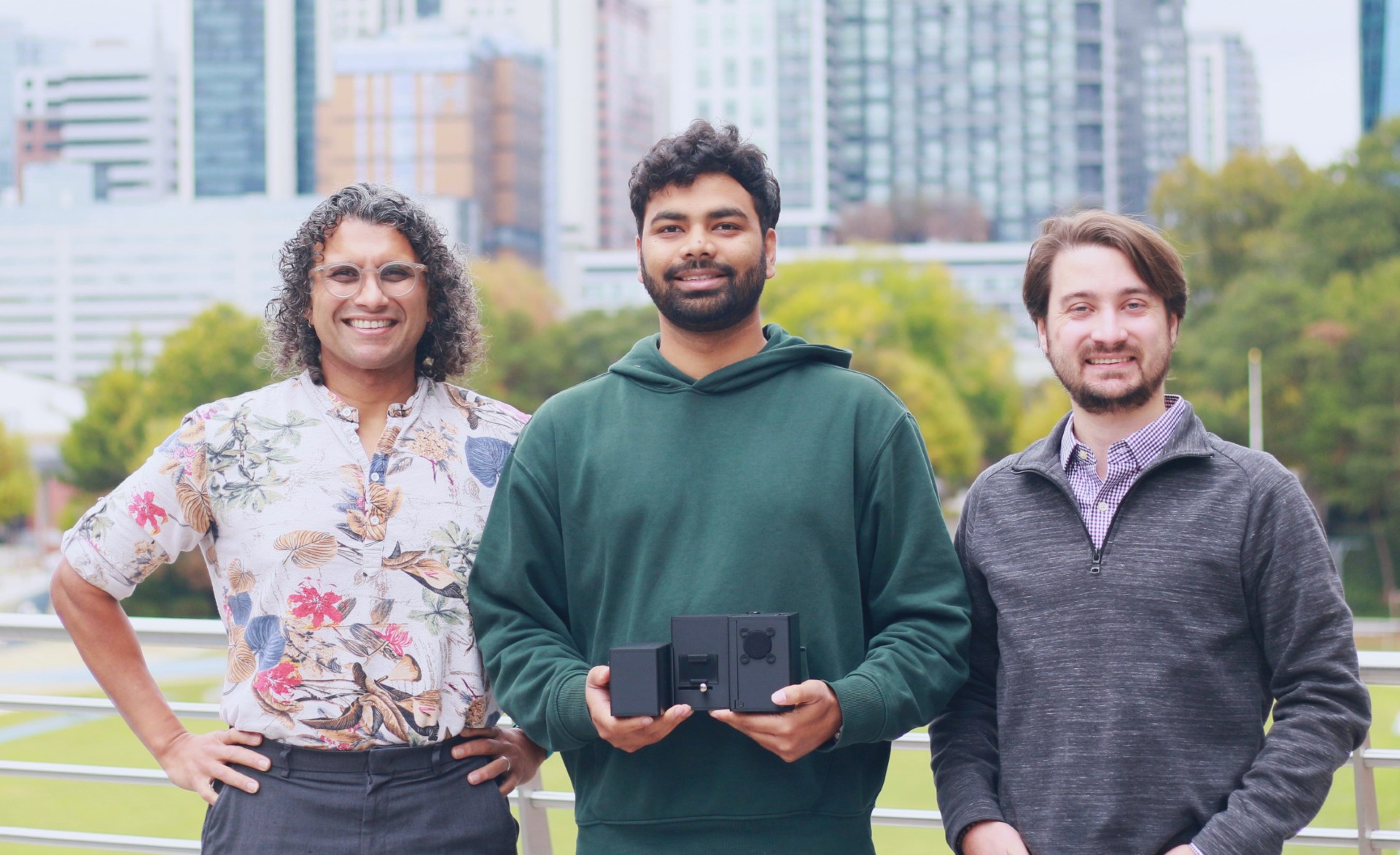
In response, researchers in the Pinto Lab at Georgia Tech set out to reimagine the monitoring process. They began developing a portable technology that allows teams to see and understand what microorganisms are present in a sample almost immediately. That work has now moved beyond the lab and into the marketplace through a newly launched startup called Skopii.
Research Driven by Real-World Needs
Skopii was launched by the research group of Ameet J. Pinto, the Carlton S. Wilder Associate Professor in the School of Civil and Environmental Engineering. Pinto also serves as the faculty director for Interdisciplinary Research and Collaboration at the Brook Byers Institute for Sustainable Systems.
The idea for Skopii grew directly from challenges Pinto encountered in his environmental microbiology research. Traditional tools used to study microorganisms often cost tens of thousands of dollars and require specialized facilities, putting them out of reach for many professionals responsible for water safety and environmental monitoring.
“We needed a way to quickly understand what was in a sample without investing days of lab work,” said Pinto, co-founder of Skopii. “The existing tools were too expensive and too stationary. We wanted something small, affordable, and smart enough to provide real-time insight wherever the sample is collected.”
What Skopii Does
Skopii helps water utilities, environmental teams, and industry partners quickly understand what is happening with microbiology in the environment and engineered systems without waiting for complex lab tests. The platform combines a compact imaging device with built-in artificial intelligence that analyzes samples on the spot.
Instead of sending samples away for sequencing or advanced lab work, operators can place a sample directly into the device and receive fast, visual information about the microorganisms present. This early insight helps communities, utilities, and industry partners make informed decisions sooner, whether they are monitoring drinking water, wastewater systems, algae growth, or biological processes used in manufacturing.
How the Technology Works
Skopii’s technology pairs a small, modular, portable imaging device with built-in artificial intelligence. The imaging tool, called ARTiMiS, captures detailed pictures of microorganisms in a sample, much like a microscope that can be taken into the field.
Those images are analyzed immediately by Skopii’s AI software, PhycoSight, which identifies and counts microorganisms without the need for lab testing or long processing times.
Together, these tools, licensed through Georgia Tech’s Office of Technology Licensing, allow operators and researchers to see microorganisms, measure changes, and identify potential issues within minutes rather than days or weeks. The goal is not to replace advanced laboratory testing, but to provide fast, early information that helps guide decisions before more time-consuming analysis is needed.
For example, a water utility operator could use Skopii’s technology to quickly assess phytoplankton in their drinking water sources to determine the presence and quantities of harmful algae, or engineers could monitor large-scale biological processes to evaluate the health and productivity of microalgal cultures for biofuel production or wastewater treatment instead of waiting for days for results.
Advancing From Lab to Market
Skopii’s development has been supported by funding from the National Science Foundation, the U.S. Department of Energy, and the Water Research Foundation. This support allowed the team to refine the imaging system, train its artificial intelligence models, and test the platform with real-world partners.
The work also gained national recognition in 2023 when two of Pinto’s students, Benjamin Gincley (co-founder and CEO of Skopii) and Farhan Khan (co-founder and CTO of Skopii), were named national champions in the Department of Energy’s Algae Prize competition, helping accelerate early development and visibility for the venture. They also received the School of Civil and Environmental Engineering’s Higginbotham Entrepreneurship Award in 2022.
Students played a key role in moving Skopii from research toward commercialization. Two team members advanced the startup through CREATE-X and VentureLab, applying customer discovery, market validation, and early business modeling to help prepare the technology for market use.
Supported by Georgia Tech’s Commercialization Ecosystem
Skopii’s progress reflects the strength of Georgia Tech’s commercialization ecosystem and the coordinated support researchers receive as they move innovations from the lab to the market.
After refining the technology through research and field testing, the team worked with the Office of Technology Licensing, part of Georgia Tech’s Office of Commercialization, to protect intellectual property and outline a clear path forward. Licensing associate Ali Asgar Yunus supported the team through the patent process and the early commercialization steps.
“Our role is to help researchers protect their work and create the right pathway for real-world use,” said Mary Albertson, director of the Office of Technology Licensing. “Skopii is a strong example of Georgia Tech innovation moving toward meaningful market impact.”
Looking Ahead
The team is already in early discussions with bioprocessing and algae reactor manufacturers interested in integrating Skopii’s technology into commercial equipment. They are also supported by the Georgia Research Alliance and Georgia Artificial Intelligence in Manufacturing to advance their technology and its commercialization. They are seeking support from the National Science Foundation’s Small Business Innovation Research program as they continue expanding the platform’s reach.
For Pinto, long-term success is measured by adoption and sustained use.
“When people are using Skopii’s technology in the field and relying on its insights as part of their daily work, that’s when we know we’ve made an impact,” he said. “Our goal is to help people make better decisions about water systems and biological processes in ways that were not possible at this cost or speed before.”
News Contact
Office of Commercialization
Yuanzhi Tang Named Executive Director of the Strategic Energy Institute
Feb 02, 2026 —

Yuanzhi Tang
Georgia Tech has appointed Yuanzhi Tang as executive director of the Strategic Energy Institute (SEI), effective Feb. 1.
Tang will lead the strategic vision, interdisciplinary research efforts, and internal and external partnerships at SEI, strengthening connections across Georgia Tech’s Colleges, Interdisciplinary Research Institutes (IRI), the Georgia Tech Research Institute (GTRI), and external partners to advance energy-related initiatives.
Founded in 2004, SEI is one of Georgia Tech’s IRIs and serves as a campuswide hub for energy research, education, and engagement.
Tang is the Georgia Power Professor in the School of Earth and Atmospheric Sciences. Her research and leadership focus on advancing secure, circular, and sustainable energy systems by integrating Earth, environmental, biological, materials, and sustainability sciences and innovations. She previously served as an initiative lead on sustainable resources at SEI as well as the associate director for interdisciplinary research at the Brook Byers Institute for Sustainable Systems.
“Professor Tang brings a strong record of research impact, leadership of complex initiatives, and a collaborative approach that will help elevate Georgia Tech’s energy research enterprise,” said Julia Kubanek, vice president for Interdisciplinary Research at Georgia Tech. “She brings deep expertise in fundamental Earth and environmental science, including water, soil, and energy research, while also leading state and regional partnerships in emerging, applied areas such as critical minerals. Most importantly, she is community-minded with excellent listening and consensus-building skills.”
As executive director, Tang will develop and communicate a unifying vision to advance interdisciplinary energy research and strategic thought leadership at Georgia Tech, integrating expertise across engineering, sciences, computing, business, design, economics, policy, and the humanities.
Tang is also the founding director of the Center for Critical Mineral Solutions and leads a multidisciplinary coalition spanning three University System of Georgia institutions. The coalition connects research, industry, and policy to build Georgia’s critical minerals innovation ecosystem, while driving resource advancement, workforce development, and economic impact.
“I'm honored to serve as the executive director of SEI. Georgia Tech’s energy research and the people behind it have always inspired me. I’m eager to listen, learn, and work alongside our community,” said Tang. “SEI connects research excellence with real-world impact, and I look forward to partnering across campus, industry, government, and communities to translate breakthrough ideas into solutions that strengthen energy security, reliability, and affordability.”
About the Strategic Energy Institute
The Strategic Energy Institute (SEI) serves as a system integrator for more than 1,000 Georgia Tech researchers working across the entire energy value chain. SEI brings together expertise to address complex energy challenges, from commercializing scalable technologies to informing long-term energy strategy and policy. Through research, education, community building, resource development, and thought leadership, SEI mobilizes Georgia Tech’s collective strengths to advance reliable, affordable, and lower-carbon energy solutions for a growing global demand.
News Contact
Priya Devarajan || Communications Program Manager
Strategic Energy Institute
Georgia Tech Computing Hosts Venture Capital Summit to Push Research Beyond the Lab
Feb 02, 2026 —
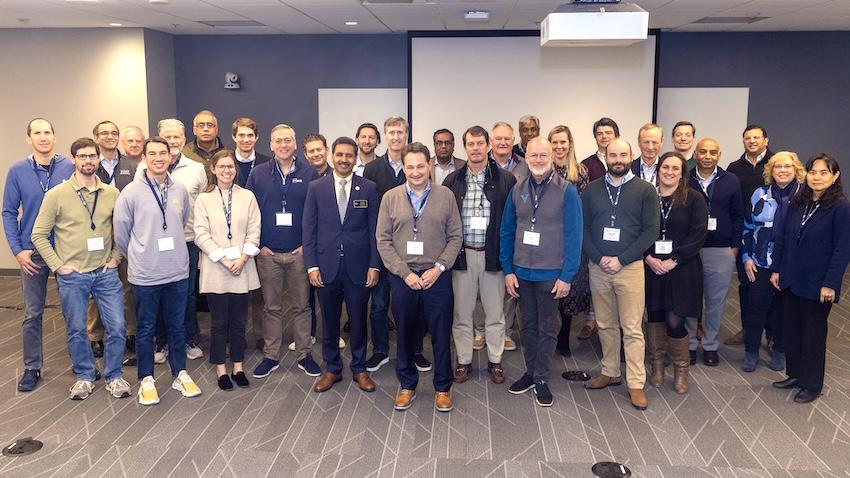
Top executives from Atlanta's venture capital community participated in the College of Computing's first VC summit, held on Jan. 21. Photo by Terence Rushin/GT Computing
The College of Computing is forging new relationships with Atlanta’s venture capital community to advance entrepreneurial opportunities for students.
Nearly two dozen venture capital (VC) leaders based in Atlanta and the Southeast participated in a half-day summit at the College on Jan. 21.
Co-hosts Dean of Computing Vivek Sarkar and Noro-Moseley Partners General Partner Alan Taetle organized the invitation-only summit. Their goals were to:
- Showcase the College’s research strengths and entrepreneurial culture
- Deepen connections between academic innovation and startups
- Explore opportunities for collaboration, commercialization, and startup growth
The summit’s guest list included founders, partners, and leaders from VC firms. Many of these firms focus on early-stage startups in SaaS, fintech, cybersecurity, and other emerging technology markets.
Research with Commercial Impact
Sarkar outlined the College of Computing’s academic mission and research priorities during his opening remarks. He emphasized the College’s role in advancing innovation in cybersecurity, artificial intelligence (AI), and other emerging research areas.
“One of the College’s strategic pillars is what I call ‘X to the power of Computing’,” Sarkar said. “Look at any discipline or industry X to see where they're innovating and where their advances are being made, and that’s where Computing meets that discipline.”
Along with remarks from the dean, the summit featured presentations highlighting Georgia Tech’s entrepreneurial ecosystem and College-led research initiatives with strong commercialization potential.
Expanding Support for Student Founders
Jen Whitlow leads Community Partnerships at Fusen, a global platform for student founders created by Atlanta philanthropist Christopher W. Klaus. She described Klaus’s support for student entrepreneurship, including GT Computing’s annual Klaus Startup Challenge. In 2025, Klaus awarded five winning teams $150,000 each to cover startup costs.
Whitlow also updated guests on Klaus’s commitment to covering the incorporation costs for any graduating student who aspires to launch a startup, a commitment announced in May 2025.
“More than 600 graduates from last year’s Spring and Fall Commencements have accepted the gift, and more than 225 recent graduates have completed their incorporation to date,” Whitlow said. She added that a second cohort of Fall 2025 graduates is being processed over the next few weeks.
Offering an enterprise-level view, CREATE-X Rahul Saxena presented recent updates to commercialization at Georgia Tech and efforts to streamline entrepreneurial processes.
Saxena emphasized the launch of Velocity Startups, an accelerator that provides the resources and infrastructure student startups need to bring their innovations to market.
Building the Pipeline from Research to Startup
Following these updates, GT Computing faculty delivered lightning-round presentations highlighting the College’s research strengths in AI, cybersecurity, and high-performance computing.
“The tighter the local investing community is with Georgia Tech, the better off both are,” said Taetle, who has been a member of the College’s Advisory Board for more than 20 years.
“It’s critical in this super-competitive world that we do everything that we can to support this fantastic university.”
Taetle added that the summit was part of a broader effort to strengthen the College’s entrepreneurial pipeline.
“There are some really big ideas here, which could turn into really big companies,” he said. “We’ve made some great strides on the commercialization front, but we still have that opportunity and challenge in front of us.”
The afternoon concluded with a discussion of next steps and engagement opportunities, led by Sarkar and Jason Zwang, GT Computing’s senior director of development. The discussion focused on research partnership opportunities, startup formation, and student involvement.
Zwang emphasized the importance of investing in Atlanta’s innovation ecosystem, citing the city’s strong fundamentals and pro-growth climate for entrepreneurship.
“This gives us a unique opportunity to start working more closely with the local VC community, and it’s also great for our students,” Zwang said.
Sarkar agreed, saying, “There’s no downside for students to get involved in a startup. It might take off and be a bonanza. If not, the experience makes you a more competitive hire because of the breadth of experience you gain at a startup.”
To foster these opportunities for students, Zwang said that a key priority is to establish earlier, more intentional connections among students, startups, and investors.
“This is a pivotal moment,” he said. “We can determine how to connect students with the VC and startup community earlier and ensure these investors remain involved with the College.”
College leaders said the summit underscored Computing’s commitment to fostering an entrepreneurial culture and to building lasting relationships that can help accelerate the real-world impact of its research beyond the Institute.
“Georgia Tech is a force multiplier for entrepreneurship,” said Sarkar. “We’re here to change the world. We want to inspire a culture of bold, big entrepreneurial thinking, and look forward to the next steps that will follow this VC summit.”
News Contact
Ben Snedeker, Senior Communications Manager
Georgia Tech College of Computing
albert.snedeker@cc.gatech.edu