Humanoid Robots Make Confident Strides Toward Walking Stability
Georgia Tech researchers have developed a new “thinking” technology for two-legged robots, increasing their balance and agility.


The city of Augusta is a major hub for health and life sciences, boasting five hospitals and the Medical College of Georgia.
The Georgia Institute of Technology and Augusta University have launched a collaborative effort to boost the city’s medical device innovation ecosystem.
The Augusta region is already a major hub for health and life sciences, boasting five hospitals and the Medical College of Georgia, the nation’s 13th oldest medical school and one of its largest.
Additionally, the advocacy nonprofit Georgia Life Sciences designated the region a BioReady Gold community. This ratings system recognizes its existing bioscience assets and its commitment to expanding infrastructure and commercialization, marking Augusta as a desired choice for biotech companies looking for suitable sites to expand.
Leading the work at Georgia Tech are the Georgia Manufacturing Extension Partnership (GaMEP) and Advanced Technology Development Center (ATDC).
GaMEP is a program of the Enterprise Innovation Institute, Tech’s chief economic development arm. It brings a dedicated team with the unique skills required to help innovators clearly understand the requirements needed to bring medical devices to market.
“When entrepreneurs gain insight into the regulatory and quality requirements early in development, they can make informed, strategic decisions that can significantly reduce both time and cost,” said Sarah Jo Tucker, industry manager for GaMEP’s medical device group. “We partner closely with innovators throughout the process and bring deep expertise in the regulatory requirements while they bring expertise in their technology. Together, we can move products efficiently and confidently from concept to commercialization.”
ADTC, part of Georgia Tech’s Office of Commercialization, is the state’s premier technology incubator and the oldest university-based incubator in the country. ATDC provides guidance and resources for entrepreneurs and founders to successfully launch and scale their technology companies.
Since its founding in 1980, ATDC’s startup graduates have attracted more than $6.2 billion in investment and generated over $14 billion in revenue in Georgia. Through the partnership with Augusta University, ATDC uses its expertise to serve entrepreneurs in the medical device field.
"Medical innovation across the state of Georgia is critical for our health tech industries to thrive,” said Chris Dickson, ATDC’s startup catalyst in the Augusta region. “We identify investment-ready medical technology startups and provide the support needed while they are scaling their businesses.”
A major hub for the life sciences, Augusta University is home to a wealth of researchers in the biomedical and related fields. This makes the institution ideally situated to help facilitate medical device commercialization.
Guido Verbeck understands this dynamic firsthand. A professor of chemistry and biochemistry at Augusta University, he is also an entrepreneur and medical device innovator.
“Academia is a fantastic platform for launching ideas, but there must be an understanding of how to bring a device to market,” said Verbeck. “Physicians and practitioners who are also academics are solving problems in real time, but they often lack the resources and support to get their ideas to production and commercialization.”
Lynsey Steinberg, director of innovation for Augusta University’s strategic partnerships and economic development team, summed up collaboration’s goal.
“When we tap our depth of talent, innovation, and community collaboration, this region has what it takes to become a launchpad for medical device startups — a place where bold ideas find the purpose they need to succeed to solve real-world problems,” she said.
Eve Tolpa
eve.tolpa@innovate.gatech.edu
Meta CEO Mark Zuckerberg took the witness stand last week in Los Angeles County Superior Court to defend his company from accusations that social media harms children.
A lawsuit filed by a 20-year-old plaintiff alleges Instagram and other social media apps are designed to make young users addicted to their platforms.
Meanwhile, social media experts believe the algorithms that drive content on these platforms play a role in hooking users and keeping them scrolling for extensive periods of time.
A new study led by Georgia Tech might confirm this suspicion.
Using recently acquired data from more than 10,000 adolescent users, Munmun De Choudhury will audit TikTok’s recommendation algorithm and study its impact on young people’s behavior and mental health.
De Choudhury is leading a multi-institutional research team on a four-year, $1.7 million grant from the Huo Family Foundation.
“We hope to learn the different types of negative exposures that young people experience when using TikTok,” De Choudhury said. “This can help us characterize what they’re watching and build computational methods to understand the consumption behaviors of these participants and how they’re affected by the algorithm.”
De Choudhury, a professor in Georgia Tech’s School of Interactive Computing, is collaborating with Amy Orben, a professor at the University of Cambridge, and Homa Hosseinmardi, an assistant professor at UCLA, on the project.
Social media platforms have become increasingly reluctant to share their data in recent years, posing a challenge for researchers like De Choudhury.
“We can’t do the type of studies we did 10 years ago with X (formerly Twitter) because the API is much more restrictive,” she said. “There are limited ways to programmatically access people’s data now.
“We must go through a tedious, manual process to get around declining access to social media data. This data-gathering process is essential given the sensitive nature of mental health research. You want data that is shared with consent.”
Orben collected TikTok data from more than 10,000 young people in the UK who consented to provide their personal data archives in accordance with the European Union’s General Data Protection Regulation (GDPR).
The collected data includes watch histories, which De Choudhury said distinguishes this research from other social media studies that focus on what users post.
“We don’t understand passive social media consumption very well, so we hope to close that gap and learn what that looks like,” she said. “That could complement or contrast what we know about people’s active engagement on these platforms. Is what they’re consuming directly related to what they’re posting? How does passive consumption affect young people’s mental health?”
A clearer picture of how algorithm-based content affects young people could result in design interventions to minimize negative effects. De Choudhury said studying data from young people is critical because it’s not too late to steer them away from unhealthy behavioral patterns.
“Some of the earliest signs or symptoms of mental health conditions appear in adolescence,” she said. “If appropriate care and support are provided, maybe it’s possible to prevent these symptoms from becoming full-blown in the future.”
What the research team learns about TikTok could also provide broader insight into other social media platforms.
TikTok has been influential in how social media platforms display video content. Competitors like Instagram and X modeled their video presentation after TikTok’s, which can easily lead to doomscrolling.
“Our hope is that our findings can be generalized, with the caveat the data we have is exclusively from TikTok,” De Choudhury said. “Other platforms have similar video-sharing and consumption features where the video automatically plays from one to the next. We hope what we learn from TikTok will be applicable to people’s activities elsewhere, though it will require future work beyond this project to draw concrete conclusions.”
De Choudhury said an additional part of the study will be using artificial intelligence (AI) to simulate video feeds.
In 2024, Hosseinmardi led a study at the University of Pennsylvania on YouTube’s recommendation algorithm and used bots that either followed or ignored the recommendations.
De Choudhury said they will use a similar method for TikTok.
“The feeds will be realistic but generated by AI to see the potential pathways to consumption rabbit holes,” she said. “This should give us some insight into how algorithms influence the negative and positive exposures people might be having on TikTok.”
Based in the UK and established in 2009, the Huo Family Foundation supports community education initiatives in the UK, the U.S., and China.
The organization announced in January its launch of the Huo Family Foundation Science Programme. The new program is committing $17.6 million to fund 20 new multi-year research grants that explore the impact of digital technology on the brain development, social behavior, and mental health of young people.
“Digital technology is profoundly shaping childhood and young adulthood, yet there is limited causal evidence of its effects,” said Yan Huo, founder of the Huo Family Foundation, in a press release. “We are proud to support exceptional researchers advancing vital scientific understanding.”
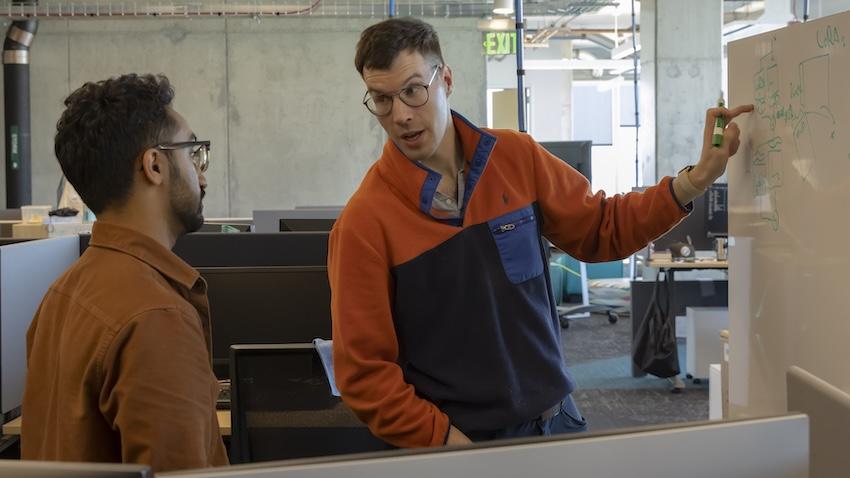
A Georgia Tech Ph.D. candidate is getting a boost to his research into developing more efficient multi-tasking artificial intelligence (AI) models without fine-tuning.
Georgia Stoica is one of 38 Ph.D. students worldwide researching machine learning who were named a 2025 Google Ph.D. Fellow.
Stoica is designing AI training methods that bypass fine-tuning, which is the process of adapting a large pre-trained model to perform new tasks. Fine-tuning is one of the most common ways engineers update large-language models like ChatGPT, Gemini, and Claude to add new capabilities.
If an AI company wants to give a model a new capability, it could create a new model from scratch for that specific purpose. However, if the model already has relevant training and knowledge of the new task, fine-tuning is cheaper.
Stoica argues that fine-tuning still uses large amounts of data, and that other methods can help models learn more effectively and efficiently.
“Full fine-tuning yields strong performance, but it can be costly, and it risks catastrophic forgetting,” Stoica said. “My research asks if we can extend a model’s capabilities by imbuing it with the expertise of others, without fine-tuning?
“Reducing cost and improving efficiency is more important than ever. We have so many publicly available models that have been trained to solve a variety of tasks. It’s redundant to train a new model from scratch. It’s much more efficient to leverage the information that already exists to get a model up to speed.”
Stoica said the solution is a cost-effective method called model merging. This method combines two or more AI models into a single model, improving performance without fine-tuning.
On a basic level, Stoica said an example would be combining a model that is efficient at classifying cats with one that works well at dogs.
“Merging is cheap because you just take the parameters, the weights of your existing models, and combine them,” he said. “You could take the average of the weights to create a new model, but that sometimes doesn’t work. My work has aimed to rearrange the weights so they can communicate easily with each other.”
Through his Google fellowship, Stoica seeks to apply model merging to create a cutting-edge vision encoder. A vision encoder converts image or video data into numerical representations that computers can understand. This enables tasks such as image or facial recognition and generative image captioning.
“I want to be at the frontier of the field, and Google is clearly part of that,” Stoica said. “The vision encoder is very large-scale, and Google has the infrastructure to accommodate it.”
A new robot could solve one of the biggest challenges facing indoor farmers: manual pollination.
Indoor farms, also known as vertical farms, are popular among agricultural researchers and are expanding across the agricultural industry. Some benefits they have over outdoor farms include:
Additionally, some studies indicate that indoor farms produce more nutritious food for urban communities.
However, these farms are often inaccessible to birds, bees, and other natural pollinators, leaving the pollination process to humans. The tedious process must be completed by hand for each flower to ensure the indoor crop flourishes.
Ai-Ping Hu, a principal research engineer at the Georgia Tech Research Institute (GTRI), has spent years exploring methods to efficiently pollinate flowering plants and food crops in indoor farms to find a way to efficiently pollinate flower plants and food crops in indoor farms.
Hu, Assistant Professor Shreyas Kousik of the George W. Woodruff School of Mechanical Engineering, and a rotating group of student interns have developed a robot prototype that may be up to the task.
The robot can efficiently pollinate plants that have both male and female reproductive parts. These plants only require pollen to be transferred from one part to the other rather than externally from another flower.
Natural pollinators perform this task outdoors, but Hu said indoor farmers often use a paintbrush or electric tootbrush to ensure these flowers are pollinated.
An early challenge the research team addressed was teaching the robot to identify the “pose” of each flower. Pose refers to a flower’s orientation, shape, and symmetry. Knowing these details ensures precise delivery of the pollen to maximize reproductive success.
“It’s crucial to know exactly which way the flowers are facing,” Hu said.
“You want to approach the flower from the front because that’s where all the biological structures are. Knowing the pose tells you where the stem is. Our device grasps the stem and shakes it to dislodge the pollen.
“Every flower is going to have its own pose, and you need to know what that is within at least 10 degrees.”
Harsh Muriki is a robotics master’s student at Georgia Tech’s School of Interactive Computing, who used computer vision to solve the pose problem while interning for Hu and GTRI.
Muriki attached a camera to a FarmBot to capture images of strawberry plants from dozens of angles in a small garden in front of Georgia Tech’s Food Processing Technology Building. The FarmBot is an XYZ-axis robot that waters and sprays pesticides on outdoor gardens, though it is not capable of pollination.
“We reconstruct the images of the flower into a 3D model and use a technique that converts the 3D model into multiple 2D images with depth information,” Muriki said. “This enables us to send them to object detectors.”
Muriki said he used a real-time object detection system called YOLO (You Only Look Once) to classify objects. YOLO is known for identifying and classifying objects in a single pass.
Ved Sengupta, a computer engineering major who interned with Muriki, fine-tuned the algorithms that converted 3D images into 2D.
“This was a crucial part of making robot pollination possible,” Sengupta said. “There is a big gap between 3D and 2D image processing.
“There’s not a lot of data on the internet for 3D object detection, but there’s a ton for 2D. We were able to get great results from the converted images, and I think any sector of technology can take advantage of that.”
Sengupta, Muriki, and Hu co-authored a paper about their work that was accepted to the 2025 International Conference on Robotics and Automation (ICRA) in Atlanta.
The pollination robot, built in Kousik’s Safe Robotics Lab, is now in the prototype phase.
Hu said the robot can do more than pollinate. It can also analyze each flower to determine how well it was pollinated and whether the chances for reproduction are high.
“It has an additional capability of microscopic inspection,” Hu said. “It’s the first device we know of that provides visual feedback on how well a flower was pollinated.”
For more information about the robot, visit the Safe Robotics Lab project page.

A production of the Perry Players, in Perry, Ga.
Beginning this March in Perry, Georgia, the Georgia Arts Innovation Network (GAIN) will support arts‑related nonprofits and small businesses in Perry, Houston County, and surrounding counties in Middle Georgia. The six‑month pilot is funded by a National Endowment for the Arts (NEA) Our Town grant and is the first EI² program dedicated specifically to the arts.
“Arts organizations contribute so much to the vibrancy of a community,” said Caley Landau, program manager for GAIN and marketing strategist at EI². “They help create a sense of place and provide the ‘something to do’ that small cities and towns want to offer residents, new workers, and prospective businesses. Our hope is to enhance the arts and cultural ecosystem in Middle Georgia by providing training and technical assistance to the organizations that produce art in the region.”
A Rural Community Already Investing in Placemaking
Perry was selected as the pilot location in part for its active downtown revitalization work and commitment to placemaking. Through the Georgia Economic Placemaking Collaborative, Perry city staff partnered with EI²’s Center for Economic Development Research to develop strategies for arts‑based community development.
“Working alongside the Georgia Tech team has been a wonderful experience,” said Alicia Hartley, downtown manager for the City of Perry. “We hope that participants walk away from the cohort inspired and empowered to activate their organizations in creative and meaningful ways.”
Listening First, Then Providing Targeted Support
The program will begin with a listening session to understand participating organizations’ needs. EI² will then design tailored workshops drawing from experts at Georgia Tech and beyond. Every other month, cohort members will meet for sessions on business practices, digital tools, operational efficiency, marketing, placemaking partnerships, and other areas that support long‑term sustainability.
“They sound like great ideas — murals, pop‑up exhibits, outdoor performances — but how do you really get down to the nuts and bolts of making them happen?” Landau said. “And how do you bring the right partners to the table? That’s what we’ll explore together.”
A Statewide Mission, Strengthened Through the Arts
As Georgia Tech’s economic development arm, EI² administers programs that support entrepreneurs, manufacturers, communities, and municipalities across the state and around the world.
“GAIN represents an important part of EI²’s comprehensive approach to economic development,” said David Bridges, vice president of EI². “It gives us another way to create impact in Georgia by applying our expertise to serve arts organizations that are vital to Georgia communities.”
Jason Freeman, associate vice provost for Georgia Tech Arts, noted that the pilot aligns with the Institute’s broader commitment to supporting arts, culture, and creativity statewide.
“Through GAIN, I’m excited to learn more about the arts ecosystem in Middle Georgia,” Freeman said. “The lessons we learn will inform both statewide collaborations and new initiatives emerging through our Creative Quarter innovation district on campus.”
Program Funding and Support
The pilot is funded through the NEA’s Our Town program, which supports projects integrating arts, culture, and design into community development. The Georgia Council for the Arts is partnering with EI² on cohort recruitment, curriculum development, and arts‑based placemaking strategies.
Recruitment has begun. Arts nonprofits and arts‑based businesses in Middle Georgia may apply at innovate.gatech.edu/gain/.
MEDIA CONTACT
Péralte Paul
peralte@gatech.edu
GAIN PROGRAM CONTACT
Caley Landau
caley.landau@innovate.gatech.edu
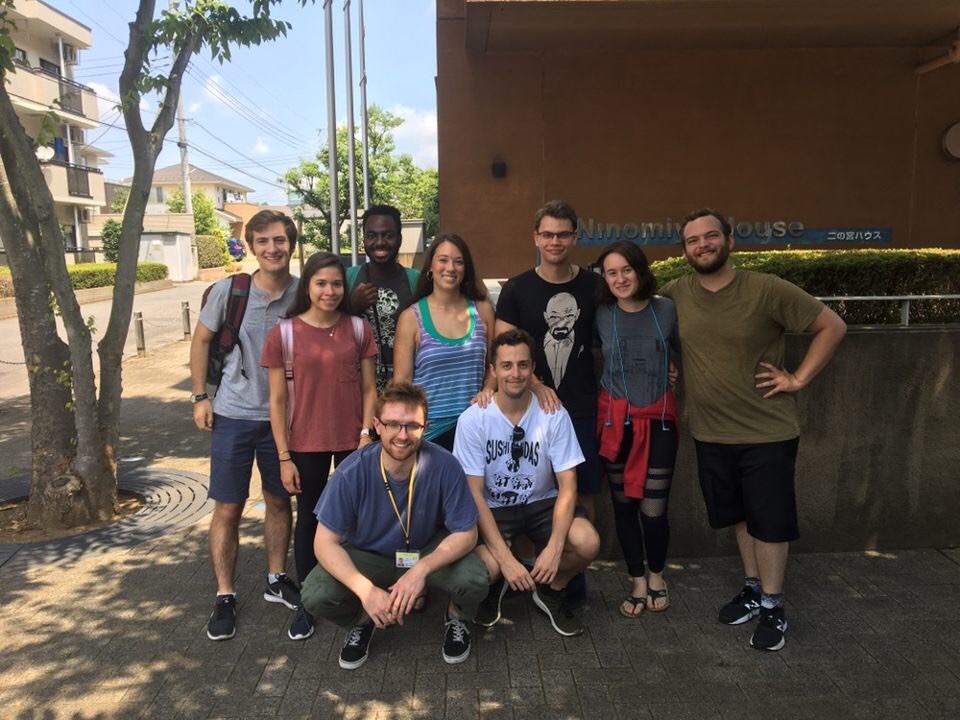
Sam Lucas (back row, far left) during the iREU experience in Japan.
When Sam Lucas arrived at Georgia Tech in the summer of 2018 for the NNCI Research Experience for Undergraduates (REU), he didn’t know that it would set the course for the next seven years of his academic and personal life.
At the time, he was an undergraduate at Mississippi State University (MSU) studying chemical engineering. He was fresh off a series of research opportunities, but was still unsure of what doing research full-time would look like or what he wanted to do post-undergraduate.
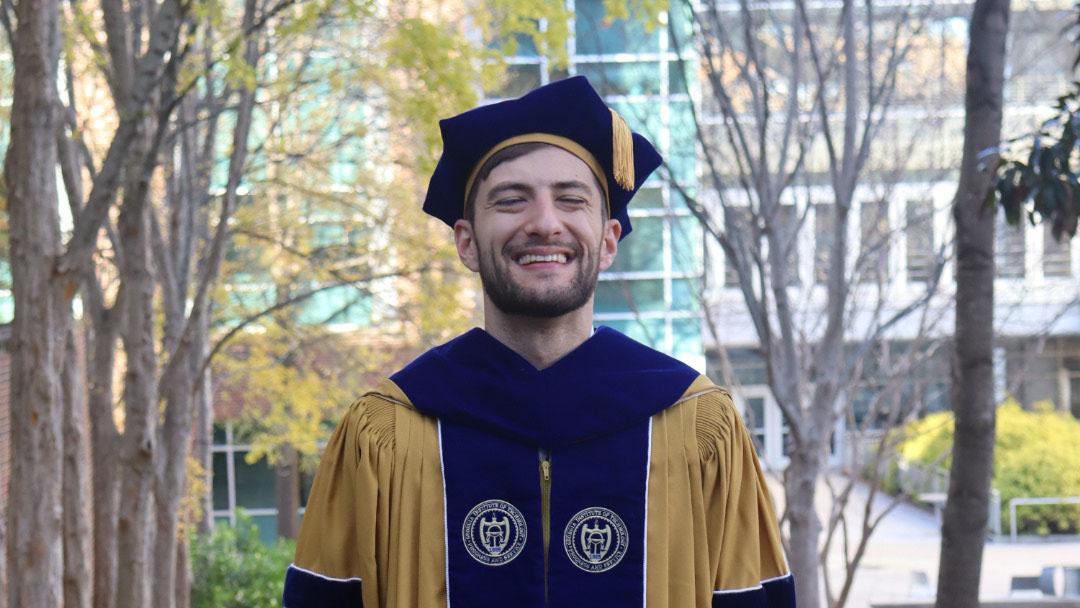
Now, Lucas has earned a Ph.D. in biomedical engineering from Georgia Tech with a focus on nanomaterial drug delivery for cancer immunotherapy. And according to him, the path from undergraduate to Ph.D. can be traced directly back to his REU.
Previously, Lucas had worked in labs in high school and his early college career, but those roles were mostly task-based.
“I'd started working in a lab at the University of Southern Mississippi my senior year of high school,” he said. “I was doing polymer coatings for corrosion resistance. Then I did some miscellaneous stuff at MSU. But the REU was interesting because it was in some ways the most structured research experience that I'd had to that point.”
During that summer, Lucas worked with Kim Curtis’ group in the Georgia Tech School of Civil and Environmental Engineering. He worked to understand how incorporating titanium oxide particles into cement can absorb pollutants when exposed to sunlight. It was his first hands-on, interdisciplinary research experience.
“That summer was significant both in starting to make sense what research could actually look like on a full-time day-to-day basis and also what being at Tech might be like.”
Beyond the research, Lucas discovered that being on Georgia Tech’s campus was just as formative. Surrounded by peers who were similarly driven, and often similarly unsure about their paths, he began to see himself as a “real” researcher. Meetups with fellow REU students, sessions on research communication, and structured mentorship all gave him confidence.
The impact of Lucas’ REU experience didn’t end there. It helped him earn a spot in Cornell’s international research experience program (iREU) the following year. There, he worked on nanomaterials for cancer vaccine applications. The transition from cement technologies to vaccine applications became the bridge to his eventual Ph.D. focus.
“The REU truly became a launchpad for Sam's career, as it has for others who have come through our program,” said Leslie O’Neill, education outreach manager. “Several of our former participants have returned to Georgia Tech for their Ph.D., and it’s because the experience gives them clarity about research and opens doors they didn’t even realize existed."
In 2020, Lucas arrived back on campus, where he enrolled in the Wallace H. Coulter Department of Biomedical Engineering’s Joint Ph.D. in Biomedical Engineering program. As part of Susan Thomas’ lab, his research focused on nanomaterial drug delivery for cancer immunotherapy. He spent the next five and a half years working on immune system engineering and drug delivery systems.
Although he had once imagined a career in oil and gas — a common trajectory for Mississippi State engineers — his REU experience pointed him in a new direction.
After defending his dissertation in 2025, Lucas is now continuing as a postdoctoral researcher in the Thomas Lab, contributing to nanomedicine projects while preparing for a future career in biotech or pharmaceuticals.
He credits the REU with giving him the clarity and confidence to pursue research at the highest level. His advice to undergraduates considering the program is simple: Go for it.
“If you apply for it and get an offer, just go ahead and do it,” said Lucas. “There’s not really a downside.”
Sam Lucas (far right) with members oif Kim Kurtis' research group during his summer 2018 REU.
Amelia Neumeister | Communications Program Manager
The Institute for Matter and Systems
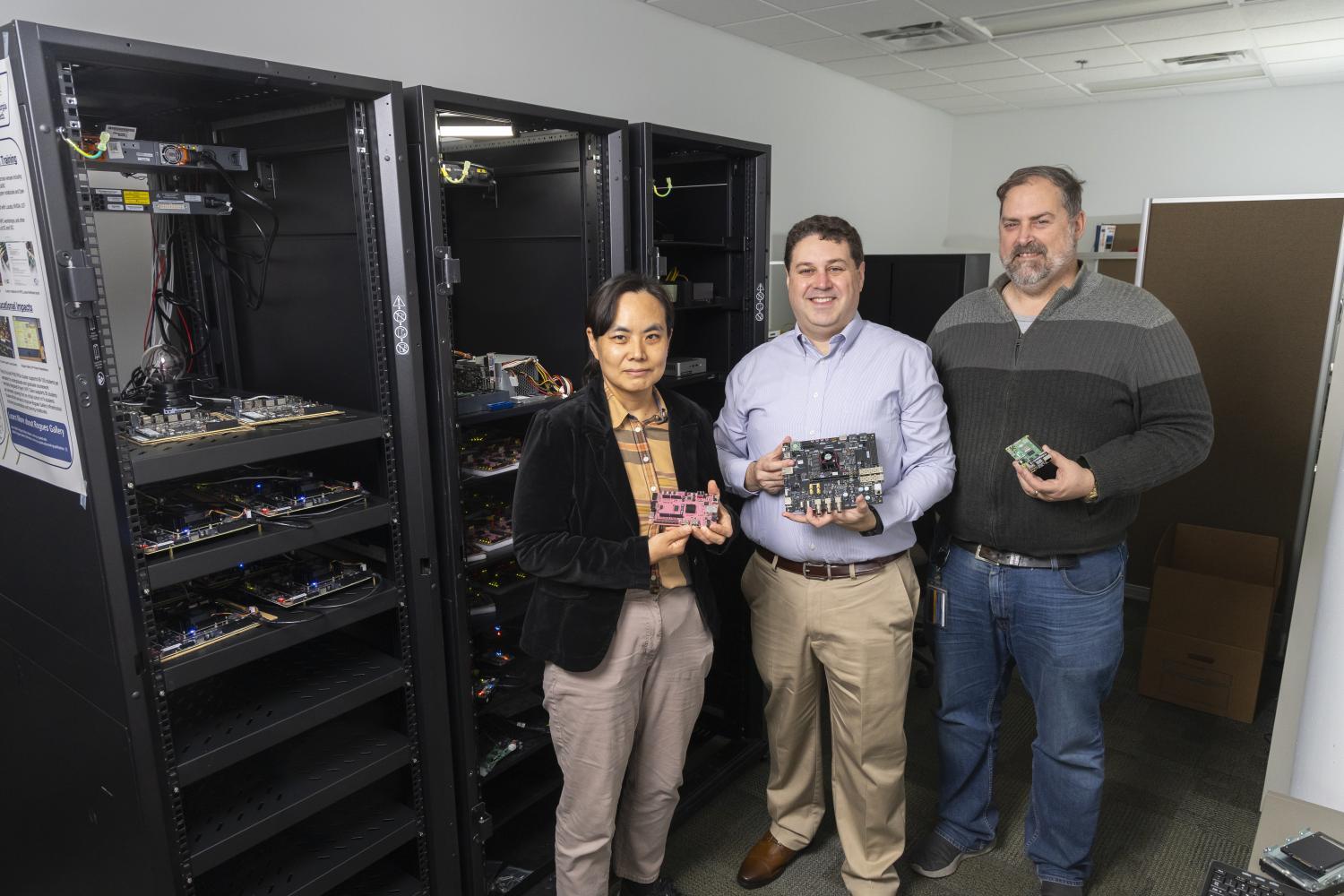
CRNCH Co-Director Hyesoon Kim, Rogues Gallery Director Jeff Young, and research technologist Will Powell in the Rogues Gallery. Photo by Chris McKenney
Hidden deep within Georgia Tech is a laboratory filled with some of the most advanced and experimental computers in the world. Known as the Rogues Gallery, this collection of early-stage, novel, and prototype computing systems allows students, faculty, and industry partners to explore and shape the future of computing — from large-scale artificial intelligence (AI) to emerging quantum technologies.
Launched in 2017 by the Center for Novel Computing Hierarchies (CRNCH), the Rogues Gallery serves as a test bed for companies seeking first users of new hardware and researchers looking to experiment at the leading edge of computing innovation. The gallery has hosted groundbreaking systems, including next-generation NVIDIA hardware and the first-of-its-kind Lucata Emu architecture.
“The Rogues Gallery gives Georgia Tech a strategic advantage,” said Jeff Young, gallery director and principal research scientist in the Partnership for Advanced Computing Environments (PACE). “Georgia Tech has this opportunity to engage a larger audience with access to these test beds.”
Growing a Global Research Resource
Now approaching its 10th year, the Rogues Gallery has supported hundreds of users across Georgia Tech and around the world. With its remote-first design, the test bed has served more than 400 unique internal and external users, including over 80 partner researchers from more than 30 academic institutions, national laboratories, and industry organizations across four continents.
The gallery has attracted significant public and private investment, including National Science Foundation grants and Department of Energy funding. A key feature is ongoing partnerships with industry leaders such as NVIDIA, Intel, HPE, and AMD. Current systems include Intel’s Gaudi 3 hardware for large language model AI and the Sapphire Rapids Max Series for data center processing. Researchers also have access to NVIDIA’s Grace Hopper superchip platform, enabling high-performance computing and large-scale AI experimentation.
Even local partners like thermal interface solutions provider Carbice have been able to research their product deployed at scale in a real data center environment, thanks to collaborating with the Rogues Gallery. The company knew it needed greater access to live IT hardware in a real production environment, but had limited opportunity to test at scale before the partnership.
“Deploying our material in a live data center environment was a milestone, but the real power was in the data: Observing existing thermal variance across the CRNCH Rogues Gallery validated our internal findings,” said Craig Green, Carbice’s chief technology officer. “We’re grateful to the Georgia Tech team for helping us see how aging thermal materials can cause temperature differences from server to server in real data centers — and how Carbice can eliminate that variation at scale. This level of collaboration is truly unique to the Georgia Tech community.”
The research has been nationally recognized. The Rogues Gallery has supported the publication of more than 30 research papers, and the hosting center for the test bed, CRNCH, also organizes an annual summit. The center and test bed have conducted 30 seminars, tutorials, and workshops since 2020 to showcase research and expand community engagement.
Expanding Student Research Opportunities
One of the gallery’s most significant impacts is on student learning and professional development. The gallery serves as a hub for Georgia Tech’s Vertically Integrated Projects (VIP) program, which allows students to participate in multi-semester, faculty-led research.
Fourth-year computer science major Jeremy Wang joined the Rogues Gallery VIP team during his first year at Georgia Tech. Although he was initially only vaguely familiar with hardware, he discovered an interest in computer architecture through hands-on experience with the test beds.
“VIP exposed me to the world of research earlier than I would have in the classroom,” Wang said. “When I finally reached my foundational classes, they brought me up to speed on advanced concepts I had already encountered in the Rogues Gallery. That was a huge moment where I felt like everything was clicking.”
Wang has now spent five semesters in the program and plans to pursue a master’s degree in computer science with a focus on computer architecture. His experience reflects a broader trend: Rogues Gallery projects have introduced students to fields where they can build a career.
“We have this opportunity that if we build a specific test bed — like software tools for quantum computing — we can expose that area to a larger audience and really impact students,” Young said.
Early on, several students took advantage of the gallery’s quantum computing software simulation and testing capabilities and encouraged Young to include it as a topic in the VIP class. This opportunity has led to the creation of a GT quantum computing student club, which collaborates with Department of Energy researchers. VIP students can now pursue quantum computing Ph.D. programs or positions in quantum-focused companies.
Strengthening Campuswide Computing Infrastructure
Once novel computing technologies are tested and evaluated through the Rogues Gallery, emerging technologies may transition into PACE’s Institute-wide system to support research across Georgia Tech. This focus on evaluating and deploying novel technologies as part of CRNCH provides a key complement to existing, large-scale collaborative efforts hosted by PACE, such as the AI Makerspace and the upcoming Nexus supercomputer.
“I get excited about what hardware can do and how it can improve computing,” said Aaron Jezghani, PACE’s architecture and platform lead and a longtime collaborator with the gallery. “These machines can help solve computing challenges we experience at PACE, or they can provide new capabilities to enable other research around campus.”
Even as the Rogues Gallery continues to grow, its mission remains the same: to enable discovery, accelerate innovation, and prepare the next generation of computing leaders.
“The Rogues Gallery is an exceptional resource, not just at Georgia Tech but around the world,” Jezghani said. “I don't think there's anywhere else that has this much variety in hardware for research and instruction in one system.”
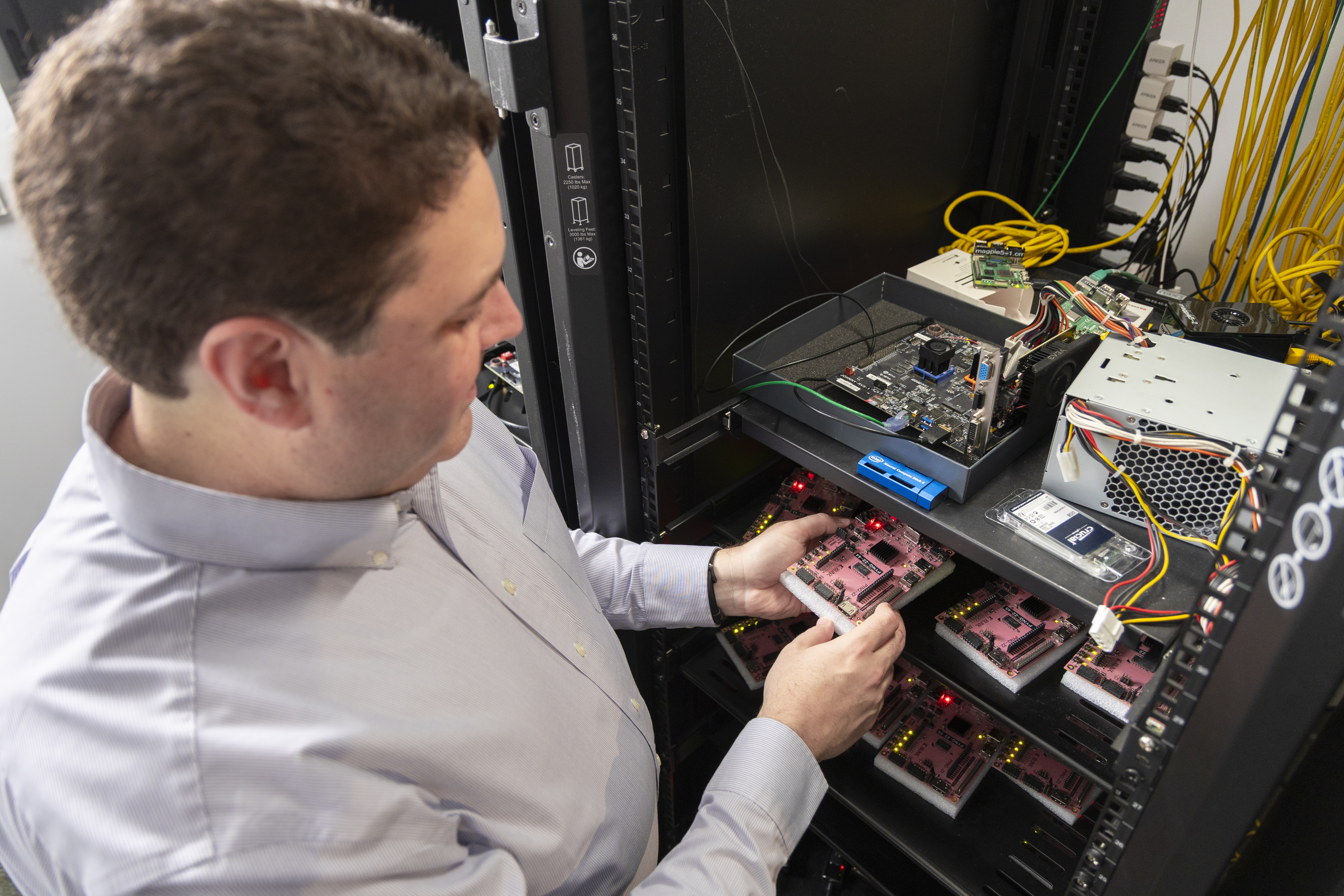
Jeff Young holds a PYNQ-Z2 development boards used for Field-Programmable Gate Array development.
Tess Malone, Senior Research Writer/Editor
tess.malone@gatech.edu
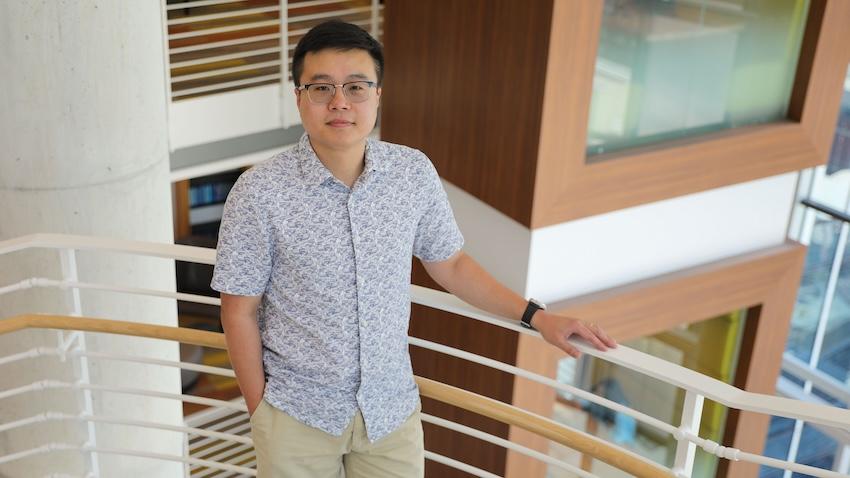
The future of clean energy depends on algorithms as much as it does atoms.
Georgia Tech’s Qi Tang is building machine learning (ML) models to accelerate nuclear fusion research, making it more affordable and more accurate. Backed by a grant from the U.S. Department of Energy (DOE), Tang’s work brings clean, sustainable energy closer to reality.
Tang has received an Early Career Research Program (ECRP) award from the DOE Office of Science. The grant supports Tang with $875,000 dispersed over five years to craft ML and data processing tools that help scientists analyze massive datasets from nuclear experiments and simulations.
Tang is the first faculty member from Georgia Tech’s College of Computing and School of Computational Science and Engineering (CSE) to receive the ECRP. He is the seventh Georgia Tech researcher to earn the award and the only GT awardee among this year’s 99 recipients.
More than a milestone, the award reflects a shift in how nuclear research is done. Today, progress depends on computing and data science as much as on physics and engineering.
“I am honored and excited to receive the ECRP award through DOE’s Advanced Scientific Computing Research program, an organization I care about deeply,” said Tang, an assistant professor in the School of CSE.
“I am also thankful for my Ph.D. students at Georgia Tech, whose dedication and creativity make this award possible.
A problem in nuclear research is that fusion simulations are challenging to understand and use. These simulations generate enormous datasets that are too large to store, move, and analyze efficiently.
In his ECRP proposal to DOE, Tang introduced new ML methods to improve the analysis and storage of particle data.
Tang’s approach balances shrinking data so it is easier to store and transfer while preserving the most important scientific features. His multiscale ML models are informed by physics, so the reduced data still reflects how fusion systems really behave.
With Tang’s research, scientists can run larger, more realistic fusion models and analyze results more quickly. This accelerates progress toward practical fusion energy.
“In contrast to generic black-box-type compression tools, we aim at preserving the intrinsic structures of the particle dataset during the data reduction processes,” Tang said.
“Taking this approach, we can meet our goal of achieving high-fidelity preservation of critical physics with minimum loss of information.”
Computing is essential in modern research because of the amount of data produced and captured from experiments and simulations. In the era of exascale supercomputers, data movement is a greater bottleneck than actual computation.
DOE operates three of the world’s four exascale supercomputers. These machines can calculate one quintillion (a billion billion) operations per second.
The exascale era began in 2022 with the launch of Frontier at Oak Ridge National Laboratory. Aurora followed in 2023 at Argonne National Laboratory. El Capitan arrived in 2024 at Lawrence Livermore National Laboratory.
With Tang’s data reduction approaches, all of DOE’s supercomputers spend more time on science and less time waiting for data transfers.
“This award reflects a team effort that wouldn’t be possible without partnership and support,” Tang said.
“I am grateful to my former colleagues at Los Alamos National Laboratory and collaborators at other national laboratories, including Lawrence Livermore, Sandia, and Argonne.”
Itamar Kimchi, assistant professor, School of Physics
Sourabh Saha, assistant professor, George W. Woodruff School of Mechanical Engineering
Wenjing Lao, associate professor, School of Mathematics
Ryan Lively, Thomas C. DeLoach Professor, School of Chemical & Biomolecular Engineering
Josh Kacher, assistant professor, School of Materials Science and Engineering
Devesh Ranjan, Eugene C. Gwaltney Jr. School Chair and professor, Woodruff School of Mechanical Engineering
Bryant Wine, Communications Officer
bryant.wine@cc.gatech.edu
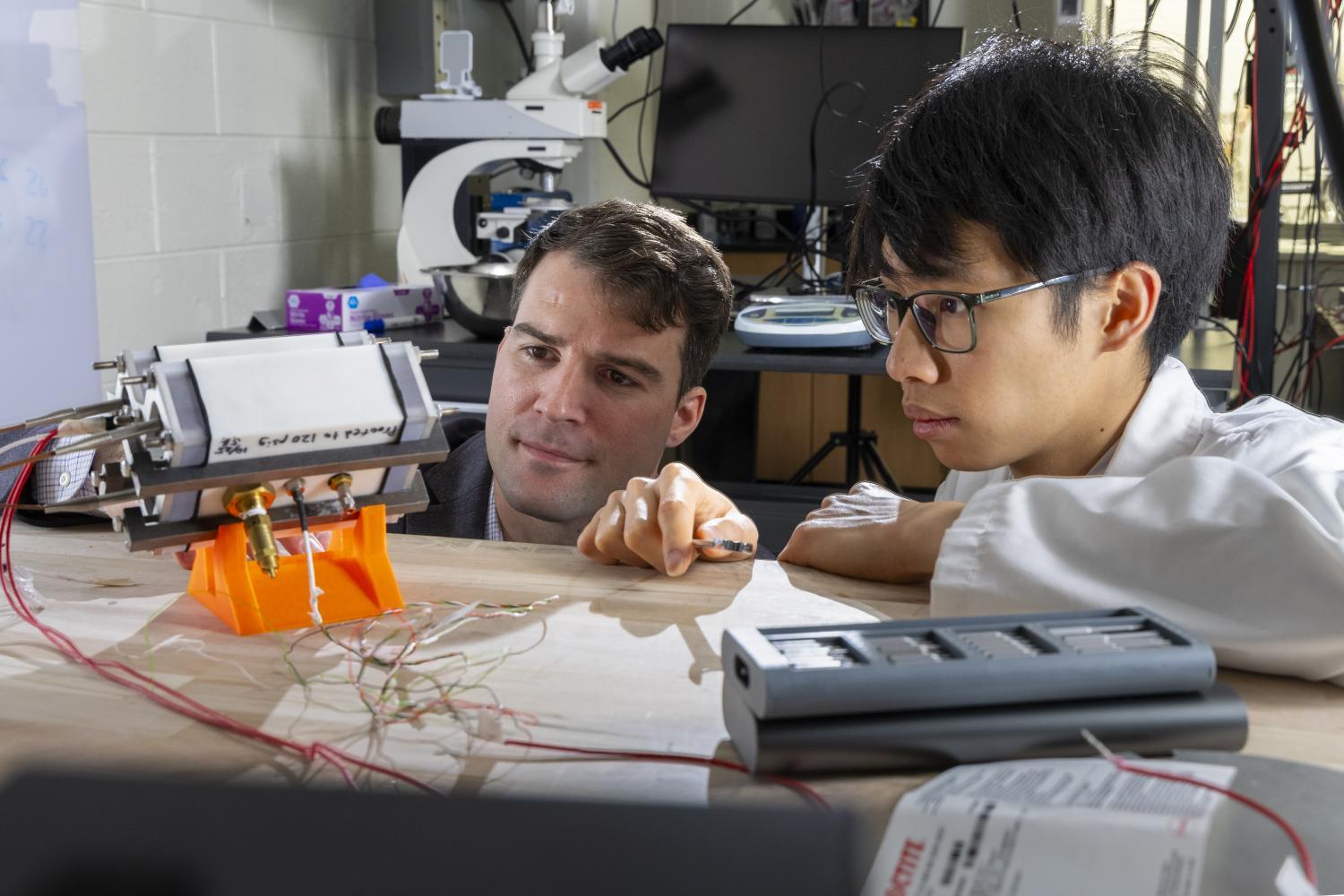
ATLANTA (Feb. 12, 2026) -- The National Academy of Inventors (NAI) has ranked Georgia Tech among the top 20 universities worldwide for U.S. utility patents granted in 2025. The Institute climbed to number 13 nationally as a result of its technology licensing office generating 128 patents. The recognition underscores the Institute’s success in moving research breakthroughs from the laboratory into the commercial marketplace, reflecting a coordinated intellectual property (IP) strategy that supports faculty, staff, and student inventors.
“Our global ranking is a testament to the culture of research innovation we are fostering at Georgia Tech,” said Raghupathy “Siva” Sivakumar, Georgia Tech’s vice president of Commercialization and chief commercialization officer. “Our goal is to ensure that every breakthrough in the lab has a clear, protected pathway to become a startup or product that changes lives. Breaking into the top 20 for the first time demonstrates the impact of our commercialization ecosystem in taking IP to market.”
Over the past five years, Georgia Tech has shown steady growth in its patent output, issuing more than double the number of patents as in 2020. With utility patents as a key indicator of bench-to-market success, they serve as the legal foundation for licensing agreements, industry partnerships, and the launch of new ventures. Through Technology Licensing at Georgia Tech, researchers receive guidance on disclosure, patent strategy, and protection pathways that help translate research outcomes into real-world applications.
“Our team’s mission is to serve as the gateway to smoothly transfer technologies from the lab to the real world,” said Mary Albertson, director of Technology Licensing at Georgia Tech. “By partnering with researchers early in the discovery process and navigating the complexities of patent protection, we help ensure Georgia Tech innovations are positioned for meaningful economic and societal impact.”
Released annually since 2013, the Top 100 Worldwide Universities Granted U.S. Utility Patents ranking highlights the critical role academic institutions play in the global innovation ecosystem. Through the translation of research into protected technologies, these institutions advance societal progress, while strengthening national and global economies.