
New Framework Enhances AR Experience by Predicting Where Users Will Look
May 27, 2026 —

Augmented reality (AR) devices like smart glasses may soon be able to predict where a user will look and provide an enhanced interactive experience.
Fiona Ryan, a Ph.D. student in Georgia Tech’s School of Interactive Computing, is pioneering research that tracks and predicts user gaze from a first-person perspective in 3D environments.
Currently, most AR devices react to where users look, playing catch-up. Ryan’s method could give these devices a heads-up and make the user experience more seamless.
“It allows an AR system to anticipate what the person will interact with next and where they’re going to look next so it can proactively render the experience,” she said.
Ryan is the lead author of the paper Forecasting 3D Scanpaths in Egocentric Video, which she will present next week at the IEEE Conference on Computer Vision and Pattern Recognition (CVPR) in Denver.
While there is existing research on predicting user gaze from 2D still images, her work is the first to address the issue through a 3D framework.
“Because we live in a 3D world and people are dynamically moving around from multiple points of view, we need to predict gaze in 3D rather than 2D,” she said. “What we’re seeing is a path of the person’s attention in 3D through space. Our paper is the first to attempt to model this.”
Ryan conducted most of the research while interning at Meta, where she used data from Meta’s Aria Digital Twin dataset. The dataset contains first-person video footage of users interacting with objects in an apartment.
“We chose that dataset because it has a high-fidelity 3D reconstruction of a full environment, which helps us get a ground-truth 3D gaze,” she said. “We can trace eye movement and see how it intersects with the environment.”
A video demonstration of Ryan’s work shows her software tracking a user’s path toward a table with a cup on it. Once the user picks up the cup, the software correctly predicts the direction the user will turn next.
“When we look at a scene, we don’t take in everything in full detail all at once,” she said. “We fixate on certain areas, and our gaze is a sequence of fixations, which might depend on what we’re trying to do. If we want to pick up a cup, we might look toward that and then the next step would be looking at where we’re going to put it down.”
Ryan said the software can predict, on average, up to three seconds into the future — and as far as 10 seconds in some cases. That’s enough time for the AR system to proactively render a more enhanced environment.
“We’re not looking that far into the future right now, but it would be interesting to explore longer forecasting windows,” she said. “I think potential futures would diverge pretty quickly, so we’re trying to explore what can reasonably be predicted from a short segment of a person looking and moving through space.”
Ryan said her paper served as a proof-of-concept, and that there is still much future work to be done. She already has some ideas.
“I think future models can include different scenarios to help narrow down possibilities. Sometimes a person’s gaze stays on one thing for a long time. If we know what someone is trying to do, we’ll have a better idea of the likely path their attention might go.”
There could also be future implications for her work in robotics research.
“It could potentially be used for training algorithms for robots to emulate active human perception. If we can understand what a person looks at as they perform a task, we could use that to facilitate a robot learning to do that same task.”
New Framework Enhances AR Experience by Predicting Where Users Will Look
May 27, 2026 —
Augmented reality (AR) devices like smart glasses may soon be able to predict where a user will look and provide an enhanced interactive experience.
Fiona Ryan, a Ph.D. student in Georgia Tech’s School of Interactive Computing, is pioneering research that tracks and predicts user gaze from a first-person perspective in 3D environments.
Currently, most AR devices react to where users look, playing catch-up. Ryan’s method could give these devices a heads-up and make the user experience more seamless.
“It allows an AR system to anticipate what the person will interact with next and where they’re going to look next so it can proactively render the experience,” she said.
Ryan is the lead author of the paper Forecasting 3D Scanpaths in Egocentric Video, which she will present next week at the IEEE Conference on Computer Vision and Pattern Recognition (CVPR) in Denver.
While there is existing research on predicting user gaze from 2D still images, her work is the first to address the issue through a 3D framework.
“Because we live in a 3D world and people are dynamically moving around from multiple points of view, we need to predict gaze in 3D rather than 2D,” she said. “What we’re seeing is a path of the person’s attention in 3D through space. Our paper is the first to attempt to model this.”
Ryan conducted most of the research while interning at Meta, where she used data from Meta’s Aria Digital Twin dataset. The dataset contains first-person video footage of users interacting with objects in an apartment.
“We chose that dataset because it has a high-fidelity 3D reconstruction of a full environment, which helps us get a ground-truth 3D gaze,” she said. “We can trace eye movement and see how it intersects with the environment.”
A video demonstration of Ryan’s work shows her software tracking a user’s path toward a table with a cup on it. Once the user picks up the cup, the software correctly predicts the direction the user will turn next.
“When we look at a scene, we don’t take in everything in full detail all at once,” she said. “We fixate on certain areas, and our gaze is a sequence of fixations, which might depend on what we’re trying to do. If we want to pick up a cup, we might look toward that and then the next step would be looking at where we’re going to put it down.”
Ryan said the software can predict, on average, up to three seconds into the future — and as far as 10 seconds in some cases. That’s enough time for the AR system to proactively render a more enhanced environment.
“We’re not looking that far into the future right now, but it would be interesting to explore longer forecasting windows,” she said. “I think potential futures would diverge pretty quickly, so we’re trying to explore what can reasonably be predicted from a short segment of a person looking and moving through space.”
Ryan said her paper served as a proof-of-concept, and that there is still much future work to be done. She already has some ideas.
“I think future models can include different scenarios to help narrow down possibilities. Sometimes a person’s gaze stays on one thing for a long time. If we know what someone is trying to do, we’ll have a better idea of the likely path their attention might go.”
There could also be future implications for her work in robotics research.
“It could potentially be used for training algorithms for robots to emulate active human perception. If we can understand what a person looks at as they perform a task, we could use that to facilitate a robot learning to do that same task.”
Georgia Program Backs Pioneering Antibody Research with Global Reach
May 27, 2026 —
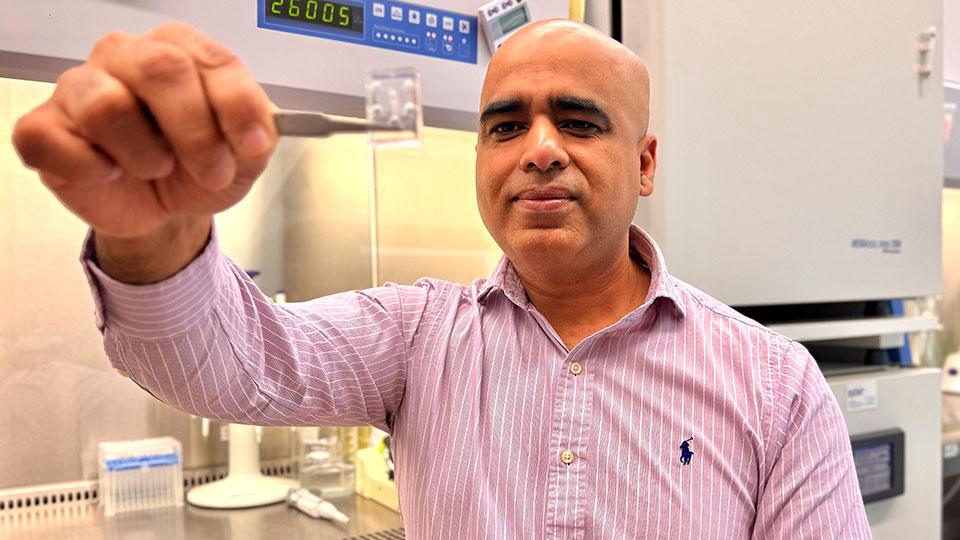
A new grant from the Georgia Research Alliance (GRA) is backing an ambitious effort by Georgia Tech scientists to accelerate the development of human antibody therapies — a class of medicines that has transformed treatment across cancer, autoimmune disease, and infectious illness, yet it cannot be generated against many disease targets.
The $250,000 funding award, made through GRA’s Innovation and Entrepreneurship (I&E) program, supports the translational work of Ankur Singh, Professor in the George W. Woodruff School of Mechanical Engineering and the Wallace H. Coulter Department of Biomedical Engineering, and Andrés García, Regents’ Professor in Mechanical Engineering and the Executive Director of the Parker H. Petit Institute for Bioengineering and Bioscience. Singh and García are collaborating to develop functional human antibodies against some of the most difficult-to-treat diseases. While antibody therapies already benefit an estimated 20 million patients worldwide, fewer than 10 percent of discovery efforts ultimately yield candidates suitable for clinical use.
This shortfall spans major disease areas — from oncology and autoimmune disorders to heart and metabolism-related conditions and neurological and infectious diseases — limiting therapeutic options for patients. The challenge lies not only in identifying candidate antibodies, but in engineering them to function reliably in the human body.
“The I&E program exists to bridge the gap between a discovery that works in the lab and one that can anchor a company,” said Justin Burns, Chief Innovation Officer and Vice President for Innovation and Entrepreneurship at GRA. “Singh and García are tackling a problem the field has faced for decades: A significant fraction of drug targets remains inaccessible to antibody-based therapies. Our goal is to help move bold, high-potential science toward real-world impact.”
GRA’s model targets a well-known bottleneck in translation. While university labs generate promising technologies, many stall before reaching the marketplace due to a lack of validation and early-stage development.
Singh and García aim to overcome this barrier by using a proprietary antibody-engineering framework developed in Singh’s laboratory, and supported by an earlier GRA grant. The objective is straightforward: Increase the success rate of discovery efforts so more antibody candidates can advance toward clinical use.
“The implications extend well beyond our laboratory,” said Singh. “By expanding the pipeline of functional human antibodies, we can begin to address diseases that currently lack durable treatment options. GRA’s support is transformative — not only for advancing the science, but for positioning Georgia as a leader in biotechnology innovation.”
The project is built with real-world use in mind, aiming to turn the research into a new company and eventually a clinical product. By testing the idea early and lowering risk, the team hopes to attract investment and move the technology quickly beyond the Institute.
García emphasized the translational vision of the work.
“This is a transformative platform technology that overcomes major bottlenecks in antibody discovery and will accelerate and increase the efficiency of this powerful class of therapeutics,” he said.
“This effort is about rethinking how we design antibodies from the ground up — integrating biological insight with engineering principles to produce molecules that are not just viable, but clinically meaningful,” he said. “With GRA’s support, we can de-risk early discovery and create a clearer path from promising concepts to therapies that reach patients.”
Tracey Mullen, a seasoned biopharma executive, entrepreneur, and antibody discovery and engineering leader currently serving as Chief Strategy Officer at Mosaic Biosciences, is advising the team on translational strategy, commercial development, and company formation.
“The ability to rapidly generate functional human antibodies in physiologically relevant systems could meaningfully change how therapeutic discovery is approached,” Mullen said. “By moving beyond largely empirical, animal- or screening-heavy workflows and incorporating human-specific, mechanism-informed evaluation earlier in the process, this platform has the potential to generate more relevant antibody candidates and create a stronger path from discovery concept to translational development.”
As global demand for advanced therapeutics grows, efforts like this reflect a broader shift in how innovation moves from bench to bedside — one driven not only by scientific ingenuity, but by targeted investment at critical early stages.
Ashlie Bowman | Communications Manager
Parker H. Petit Institute for Bioengineering and Bioscience
Associate Professor John Blazeck Receives NSF’s CAREER Award
May 22, 2026 —

John Blazeck, associate professor in Georgia Tech's School of Chemical and Biomolecular Engineering (ChBE), has won a 2026 Faculty Early Career Development (CAREER) Award from the National Science Foundation (NSF).
The CAREER Award is the NSF’s most prestigious award in support of junior faculty who exemplify the role of teacher-scholars through outstanding research, excellent education, and the integration of education and research within the context of the mission of their organizations.
Blazeck will receive $647,941 over five years for “Creating and evolving antibodies from scratch in yeast.”
Antibodies are key proteins of the immune system that help fight disease. In people, immune cells called B cells create antibodies and then evolve them. B cells take months to do this, which makes it difficult to study antibody creation and evolution, Blazeck explained.
His CAREER project will design a method to evolve antibodies “from scratch” in yeast, which will open new avenues for exploring antibody creation, evolution, and function.
Read the full story on the School of Chemistry and Biomolecular Engineering's website.
Brad Dixon, Communications Manager
School of Chemical and Biomolecular Engineering
Shake It Up: At Work With Zhigang Peng
May 21, 2026 —
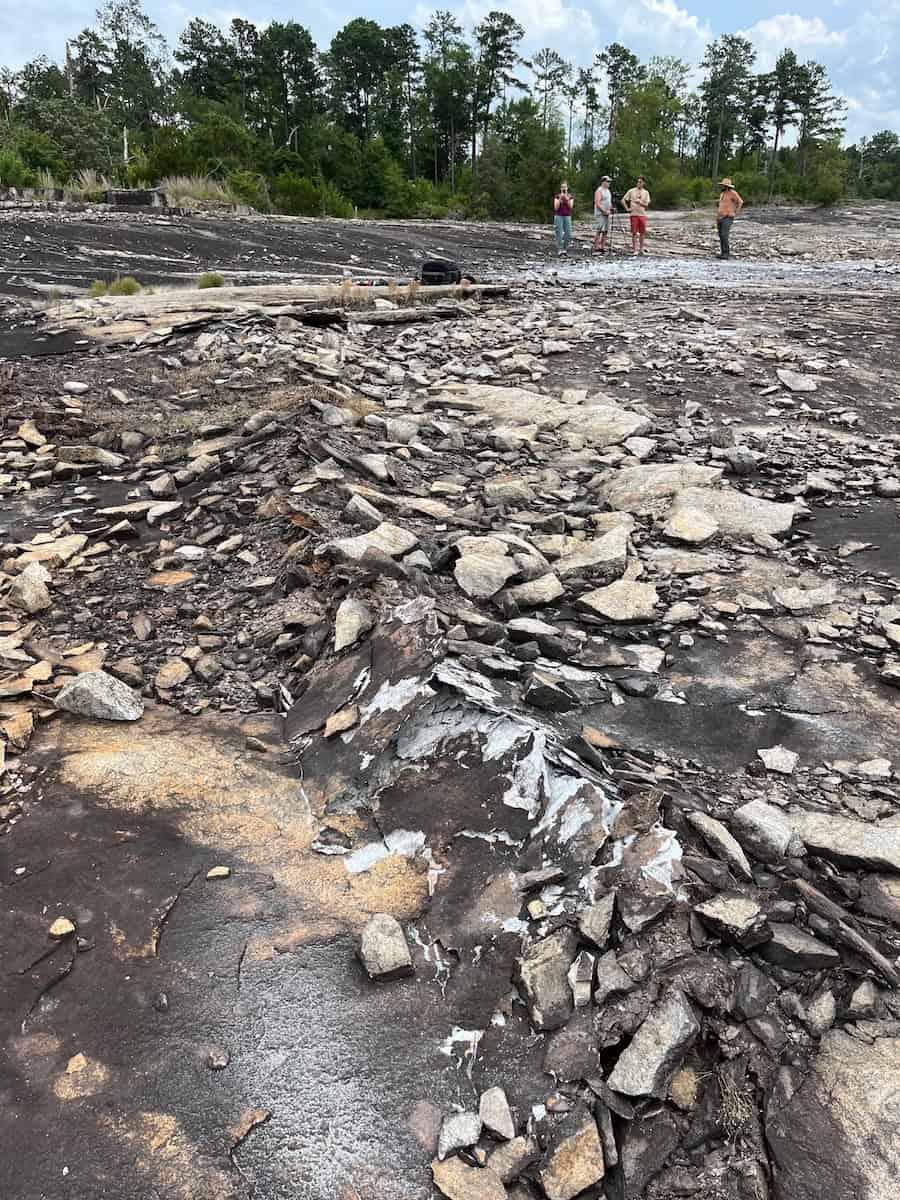
July 2023: A long line of scattered rocks indicate a fresh fault in the outcrop within the Davidson-Arabia Mountain Nature Preserve. (Photo: Arabia Mountain National Heritage Area)
Zhigang Peng studies the physics of faulting, earthquake triggering, fault zone structures, earthquakes swarms, slow earthquakes, but lately he’s added a few other topics that veer away from the usual. Vibrations in a sewer pipe. Exploding rock outcrops.
“In particular, what I have been working on the past 20 years is primarily understanding how earthquakes interact with each other, and in some cases, how other processes interact with earthquakes,” explains the professor in the School of Earth and Atmospheric Sciences, who also serves as associate chair for Research and Faculty Development for the School and is incoming president of the Seismological Society of America.
Peng's recent work deploying nodal seismometers in and around Georgia has led him “almost by accident” into the field of environmental seismology.
The rise of nodal seismometers, fiber Distributed Acoustic Sensing (DAS) and machine learning have combined to produce a wealth of seismic data, and “pretty quickly you realize that there are actually quite a lot of non-earthquake events that are also there in the data,” he says.
“If you really wanted to study earthquake events, you better learn to distinguish or throw out those non-earthquake events first. But it turns out that some of those events are also equally interesting or sometimes more interesting, depending on where you are studying,” Peng adds.
Environmental seismologists are turning noise into signal to study a variety of phenomena, from urban traffic to groundwater levels. Peng and his colleagues used seismic sensors to analyze periodic vibrations from shaking homes nearly every six minutes in a neighborhood outside of Atlanta, for instance, discovering that a faulty check valve in a sewer pipe was producing a water hammer effect.
And then there are the exploding rocks. In July 2023, there was a violent spalling of rock off the face of Arabia Mountain in Georgia that scattered large chunks of gneiss. “Normally on these outcrops the outer layer of bare rock can peel off slowly, but in some cases they kind of blast off violently and generate some ground shaking,” Peng says.
Online Age Checks Create a Pointless Privacy Risk
May 19, 2026 —

New cybersecurity research indicates that one of the world’s leading age verification providers collects and shares highly sensitive personal data—including facial photos and device fingerprints—with third parties.
The research also reveals that most websites that require age verification don’t enforce the policy.
The findings come from a new paper that researchers from the Georgia Institute of Technology and the University of California, Irvine (UC Irvine) will present at this week’s IEEE Symposium on Security and Privacy conference in San Francisco.
The research team examined Yoti, a London-based company that provides age-verification services for an estimated 60% of websites that require it. Its client list includes Meta, OnlyFans, Sony PlayStation, and TikTok.
The research team determined that the process Yoti uses to verify a person’s age broadcasts the person’s personal information to third- and fourth-party companies.
When a bartender checks an ID, they quickly verify a customer’s date of birth and identity before serving them. Companies like Yoti that employ digital age verification claim their products function the same way, but in a completely private manner.
That analogy has justified laws passed in 25 U.S. states — comprising more than 40% of Americans — mandating the use of digital age verification to gate access to social media and adult online content.
However, by measuring online age verification, researchers reveal that the reality of these systems is far from ideal. The study found that most sites covered by these laws do not appear to enforce age verification.
When sites comply, they force users to use third-party age-verification services like Yoti, which collect and share highly sensitive data with other third parties.
“There have been laws passed and court cases settled on the promise that these companies are incentivized to keep users’ data private” said Assistant Professor Michael A. Specter at the School of Cybersecurity and Privacy. “We found that reality is starkly different.”
Digital age verification laws are being considered by other legislative bodies to bar minors from social media sites. The problem, Specter and his colleagues argue, is that current methods of age verification are ineffective and create new privacy risks.
“In legal arguments, there have been comparisons to these services acting like a bartender checking IDs,” said Specter. “However, what is really happening is the bartender is making photocopies of the patron’s license and sending it to their food vendors.”
According to the researchers, the data is then sent to credit card companies, IP geolocation services, and data brokers. The researchers found that the information being shared can be used to identify and track devices. For example, a single verification attempt may transmit a user’s facial image, IP address, and device fingerprint to credit card companies.
Aside from privacy concerns, researchers note that differing state policies could lead to what they call the Balkanization of the U.S. web. In other words, users may have access to different parts of the internet depending on the state they are in. This will potentially limit the free exchange of ideas and information.
According to Assistant Professor Harry Oppenheimer of the Jimmy and Rosalynn Carter School of Public Policy, users are already accustomed to experiencing the internet differently across countries. However, this may signal the beginning of similar fragmentation within the United States.
“We are going to start seeing comparable differences between U.S. states,” said Oppenheimer. “Users in some states will now have to go through additional steps to access information. Close your laptop in New York before a flight to Dallas and try to load the same web page—now you see two different results.”
“We also observed age verification deployed on websites accessed from New York, which has no law requiring verification,” said Associate Professor Paul Pearce of UC Irvine’s Department of Computer Science.
“We don’t know why these sites are deploying such verification—it could be a move to limit liability or simplify operations. Regardless, it points to an emerging threat for the open Internet where restrictive laws from some states could impact the entire country and beyond.”
“This is why we can’t have nice things,” Specter added.
The study, Papers Please: A First Look at Age Verification on the Web, was led by Georgia Tech Ph.D. student Shreyas Minocha, undergraduate Isaac Sheridan, and Oppenheimer, Pearce, and Specter. It is part of the proceedings of the 47th IEEE Symposium on Security and Privacy and will be presented in San Francisco on May 20.
John Popham
Communications Officer II at the School of Cybersecurity and Privacy
Georgia Tech Researchers Discover New Form of NAND Flash Data Storage for Deep Space Missions
May 18, 2026 —
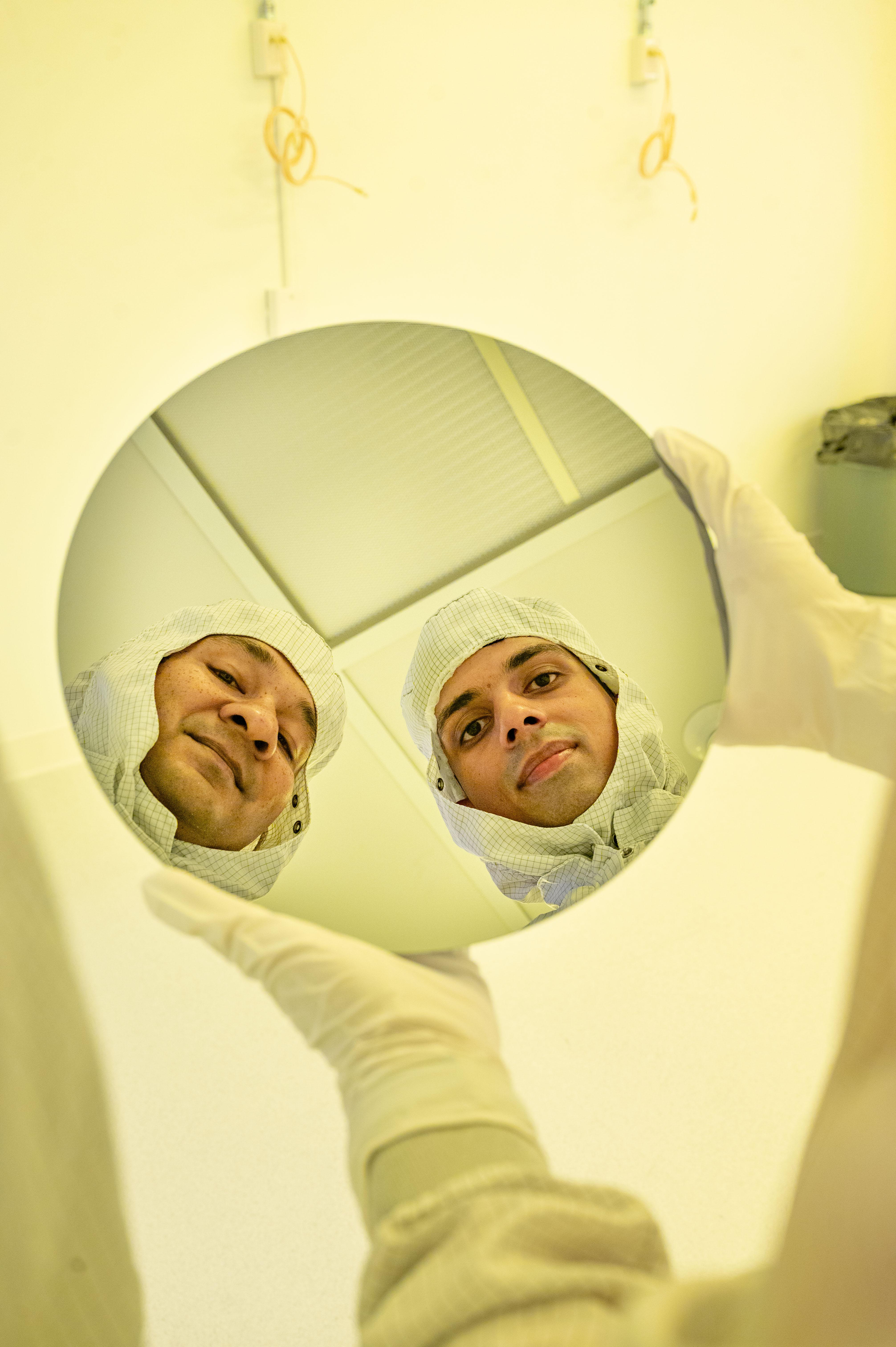
Asif Khan and Lance Fernandes built the ferroelectric NAND memory chips in Georgia Tech’s cleanroom, then sent the chips for radiation testing to collaborators at Pennsylvania State University. Those tests revealed just how extreme the technology’s tolerance could be.
As space missions travel farther from Earth, spacecraft must increasingly be able to process and store their own data. Soon, artificial intelligence (AI) could be the primary tool for handling this growing volume of information. NAND flash memory is the current state-of-the-art technology used to store these massive amounts of data, offering storage capacities in the terabit range. It’s the same technology used in laptops, smartphones, and data centers. Ensuring NAND’s reliability in space is critical as these systems increasingly rely on high-density, low-power storage.
But the radiation in harsh space environments can significantly degrade data stored in NAND flash memory. To counteract this, Georgia Tech researchers have developed a new form of NAND flash memory that can both handle AI and withstand extreme radiation.
This technology uses ferroelectricity, which is when certain materials can hold a permanent, spontaneous electric charge, called polarization. In a recent Nano Letters paper, the researchers show that NAND flash memory made with ferroelectric materials can withstand radiation levels up to 30 times higher than more conventional NAND flash memory.
“If you send traditional flash memory to space, the radiation interacting with flash memory’s trapped electric charge can easily corrupt the data,” said Asif Khan, an associate professor in the School of Electrical and Computer Engineering (ECE). “In contrast, ferroelectric NAND flash storage does not store data as trapped electrical charge, but rather stores it as polarization in the material. And polarization is very resilient to radiation effects.”
Radiation Revelation
The insight that NAND flash-compatible ferroelectric memory could withstand high amounts of radiation surprised the researchers. Ferroelectricity in hafnium oxide — the silicon-compatible material that makes this memory possible — was discovered just 15 years ago, and Khan’s lab has been determining its capabilities for the past decade. The team knew ferroelectricity was radiation-tolerant, but not exactly how tolerant when implemented in NAND flash architectures.
Lance Fernandes, an ECE Ph.D. student and the paper’s first author, built the ferroelectric NAND memory chips in Georgia Tech’s cleanroom, then sent the chips for radiation testing to collaborators at Pennsylvania State University. Those tests revealed just how extreme the technology’s tolerance could be.
The Penn State researchers’ testing showed that ferroelectric flash technology can sustain radiation as high as 1 million rads (radiation absorbed doses) — the equivalent of 100 million X-rays — making it 30 times more durable than traditional memory. This is well within the radiation-tolerance threshold for most spacecraft: Low-Earth orbit satellites require a tolerance of 5 – 30 kilorads, geostationary orbits need 100 – 300 kilorads, and deep space missions top out at 1 million rads.
“For data storage in space, it’s not enough for memory to work. It has to remain reliable under extreme radiation,” said Fernandes.
“And what makes our storage especially exciting," added Khan, “is that ferroelectric NAND flash isn't just radiation-tolerant; it also stays reliable even in extremely harsh radiation environments. That's exactly what we need for space.”
From orbiting satellites to future missions surveying Jupiter’s moons, successful space exploration requires electronics that can process abundant AI data and will not fail when communication is delayed. Ferroelectric memory offers a way to keep critical data intact, no matter how harsh the environment.
The work was supported in part by SUPREME, one of seven centers in JUMP 2.0, a Semiconductor Research Corporation (SRC) program sponsored by DARPA. The work was performed as part of the Interaction of Ionizing Radiation With Matter University Research Alliance, sponsored by the Department of Defense, Defense Threat Reduction Agency, under grant HDTRA1-20-2-0002.
Enabling Radiation Hardness in Solid-State NAND Storage Utilizing a Laminated Ferroelectric Stack Lance Fernandes, Stuart Wodzro, Prasanna Venkatesan, Priyankka Ravikumar, Ming-Yen Lee, Minji Shon, Dyutimoy Chakraborty, Taeyoung Song, Sanghyun Kang, Salma Soliman, Mengkun Tian, Jason Yeager, Jackson Adler, Jiayi Chen, Zekai Wang, Douglas Wolfe, Shimeng Yu, Andrea Padovani, Suman Datta, Biswajit Ray, and Asif Khan. Nano Letters 2026 26 (10), 3390-3397
DOI: 10.1021/acs.nanolett.5c05947
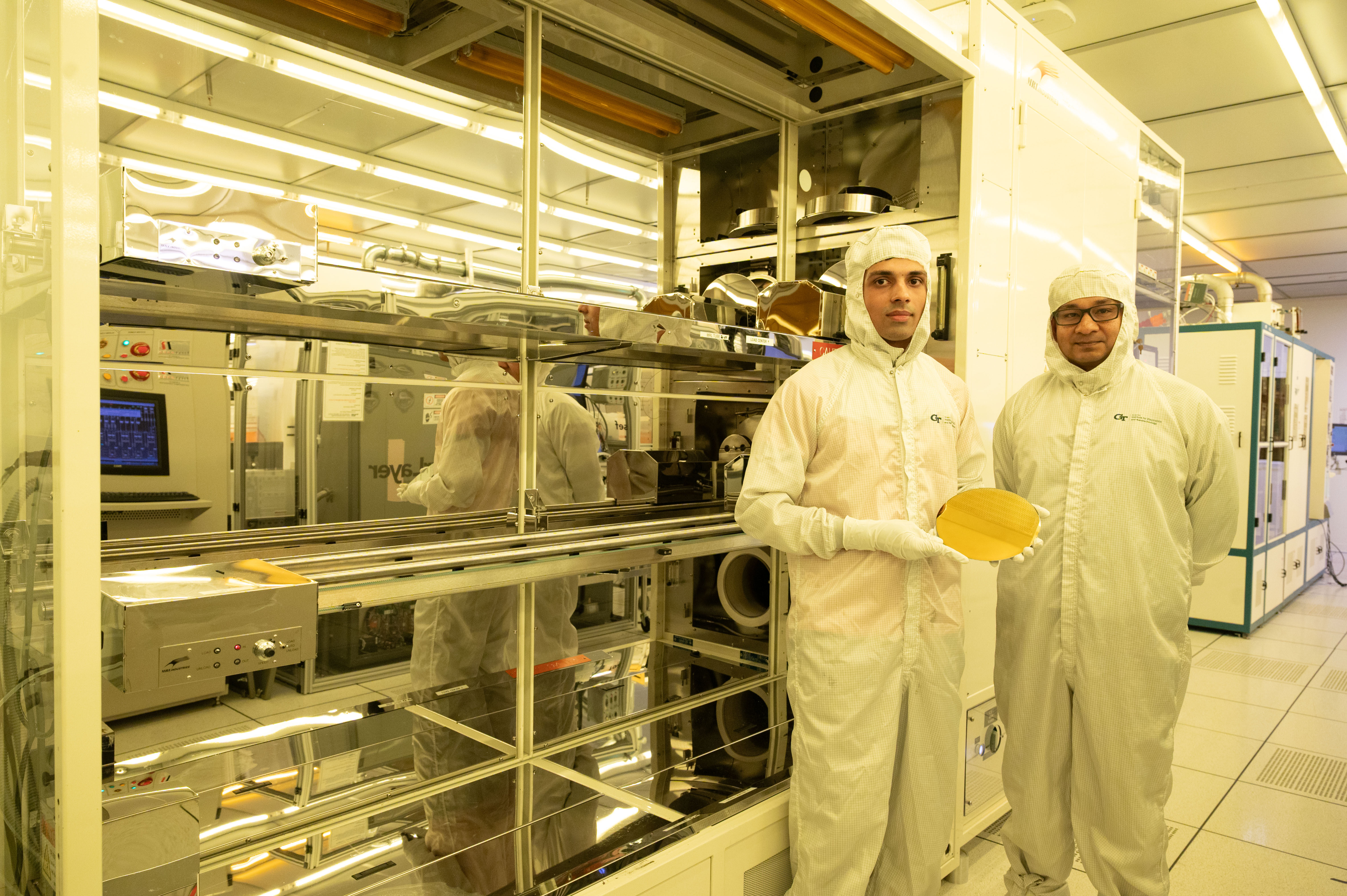
Lance Fernandes and Asif Khan in the cleanroom.
Tess Malone, Senior Research Writer/Editor
tess.malone@gatech.edu
How the Global Energy Crisis Is Affecting Americans
May 18, 2026 —
Escalating Middle East tensions are rattling global oil markets, and the effects are already showing up in American wallets, affecting everything from travel to food prices. Georgia Tech economists and public policy experts break down what Americans need to know right now.
1. You’re paying more at the pump, and it’s not going away anytime soon.
Gas prices are the most visible sign of the crisis, and the increases are already significant. National average retail gasoline prices are more than $1.20 higher than they were in February, before the conflict escalated.
“Even though U.S. petroleum production often exceeds our consumption, we are not insulated from disruptions in global oil supply because oil is a globally traded commodity,” says director of the Energy Policy and Innovation Center, Laura Taylor. “If supply is restricted anywhere in the world, prices will rise everywhere, including in the U.S.”
Markets expect some relief by fall, with future prices pointing lower than today’s levels. But Tony Harding, assistant professor in the Jimmy and Rosalynn Carter School of Public Policy, cautions, “Prices are likely to remain above pre-conflict levels for the foreseeable future, and temporary relief measures, such as Georgia’s motor fuel tax suspension, will not last forever.”
Taylor puts it plainly: “Wages are not rising faster than prices, so people are feeling the pinch and will continue to do so.”
2. Your summer plans just got more expensive.
The impact does not stop at the gas station. For Americans planning summer travel, the timing of this conflict could not be worse. Matthew Oliver, associate professor in the School of Economics, points to commercial air travel as one of the most exposed sectors.
“Jet fuel prices have roughly doubled in the wake of the current oil price spike, putting immediate upward pressure on airfares,” says Oliver.
The ripple effects extend far beyond travel.
“Oil is an input into the supply chain of nearly every good at some point,” says Bobby Harris, assistant professor in the School of Economics. “When input costs go up, prices go up.”
3. Expect to pay more at the grocery store.
The connection between Middle East tensions and the American dinner table is more direct than many realize, because petrochemicals are a key feedstock for fertilizer production.
“Higher oil prices lead to higher fertilizer prices, which lead to higher food prices,” says Oliver.
Combined with existing tariff pressures and tight supply chains, the strain on household budgets is coming from multiple directions at once.
“If the crisis persists, there will be upward pressure on the prices of nearly every physical good,” Oliver adds.
4. The government’s options are limited, and the clock is ticking.
Washington has tools to respond, but none are silver bullets. The Strategic Petroleum Reserve currently holds around 400 million barrels and can release about 4 million barrels per day, roughly 20% of U.S. daily demand.
“I see the Strategic Petroleum Reserve as a tool to buy time during a crisis,” says public policy professor Dan Matisoff. “But if the conflict drags on, we will ultimately be in a more vulnerable position.”
Quick fixes like price caps or demand subsidies carry trade-offs.
“Subsidies can mitigate the impact of price shocks, but they can also mask important market signals that help balance supply and demand,” says Harding, using Europe’s 2022 energy crisis as a cautionary example.
5. The smartest thing Americans can do right now is think about efficiency.
“People in general tend to undervalue energy efficiency,” says Matisoff. “Think of energy efficiency investments as a sort of hedge or insurance against volatile energy prices.”
That means considering fuel efficiency when buying a car, and looking at heat pumps, electric vehicles, and home energy upgrades when the time is right.
“Higher energy prices increase the value of investing in energy efficiency upgrades to your home and adopting technologies that are less dependent on fossil fuels,” says Harding.
For families navigating uncertainty, both economists and policy experts point to the same practical advice: Reduce your exposure to fossil fuel price swings before the next crisis hits.
Ayana Isles
Georgia Institute of Technology
Institute Communications
Georgia’s Tomorrow Awarded National Climate Resilience Grant
May 18, 2026 —

Spartina alterniflora lines a marsh environment on Sapelo Island. (Credit: Jess Hunt-Ralston)
A Georgia Tech-led project advancing coastal resilience and ecosystem restoration has been selected for the inaugural Climate Resilience Fund cohort, awarded by Revive & Restore. The award is one of ten in a new $3.4 million fund to leverage genetic rescue for marine and coastal ecosystems under threat from climate shifts.
Led by Joel E. Kostka, Tom and Marie Patton Distinguished Professor and director of Georgia Tech for Georgia’s Tomorrow (GT²), the research effort will help restore coastal salt marshes through AI-enabled micropropagation and developing probiotics for plants. It is the only salt marsh-focused effort funded nationally in the cohort.
The award supports both the development of more climate-resilient salt marsh plants, as well as new capacity for coastal restoration in Georgia — an effort that aligns closely with GT²’s mission to connect research, innovation, and community needs to address critical environmental and community challenges.
Healthy Coasts
Salt marshes are among Georgia’s most important natural resources, helping buffer communities from storms, support fisheries, and sustain coastal economies. Yet the state currently lacks a reliable source of salt marsh seedlings needed for large-scale restoration.
The funded project addresses that gap by advancing the production of hardier marsh plants and laying the groundwork for a broader restoration economy.
“The opportunity here is to build something that doesn’t currently exist in Georgia — a scalable, science-driven supply of salt marsh plants for safer, healthier coastal communities and ecosystems,” Kostka says. “By combining biotechnology, ecology, and partnerships across the region, we are accelerating coastal resilience while supporting long-term environmental and economic benefits.”
Kostka will work with project co-researchers Else-Marie Ulrika Egertsdotter (Georgia Tech Renewable Bioproducts Institute) and Caitlin Petro (Georgia Tech Biological Sciences), Heather Joesting (Georgia Southern University), Emily Coffey and Lauren Eserman-Campbell (Atlanta Botanical Garden), and Sydney Williams (University of Georgia and Georgia Sea Grant) — along with several anticipated regional partners, including University of Georgia Marine Institute, GA/SC/NC Departments of Natural Resources, Southeastern Plant Conservation Alliance, and Bald Head Island Conservancy.
The team will create a “Climate-Ready Spartina Toolkit” with automated plant tissue culture, AI-based screening tools, a culture collection that serves as probiotics for plants, a seed bank and library of preserved plant materials, step-by-step instructions for successful growing, and ready for regional deployment.
The project also continues the evolution of Kostka’s collaborative research Egertsdotter and the Georgia Tech Renewable Bioproducts Institute. “RBI shares the goal of using biotechnology to produce climate-resilient plants that benefit society,” Kostka says. “Their expertise in plant tissue culture and automation make this work possible. It also is a great example of collaboration between GT Sciences and Engineering — the automation of plant tissue culture was developed by mechanical engineers in RBI.”
Regional Resilience
The new award builds on growing momentum for Georgia Tech for Georgia’s Tomorrow and its expanding network of collaborators focused on coastal resilience. Based in the College of Sciences, GT² is designed to align discovery science with technological innovation and data-driven tools to deliver practical solutions for communities across the state.
In April, GT² launched a formal research fund and partnership with the Bald Head Island Conservancy (BHIC), connecting Georgia Tech researchers with BHIC’s Johnston Center for Coastal Sustainability in North Carolina to advance shared work in coastal sustainability, ecosystem health, and environmental resilience.
The partnership combines BHIC’s applied, field-based conservation work with Georgia Tech’s strengths in technological innovation and data analysis, creating new opportunities for graduate research, community engagement, and real-world implementation.
Better Together
These “all hands on deck” approaches reflect a broader strategy to scale tangible solutions across regional ecosystems by connecting researchers and partners with community stakeholders.
“Together, we hope these projects will demonstrate that genetic rescue is a powerful lever for the blue carbon ecosystems that underpin both ecological and human communities in the face of climate change,” said Liv Liberman, Director of Ocean and Climate at Revive & Restore and program manager for the Climate Resilience Fund.
The efforts reflect GT²’s goal of creating pathways from research to implementation, working across sectors to deliver measurable outcomes for the southeastern environment and its communities.
“This award recognizes the kind of integrated, real-world research that GT² is built to deliver,” says Kostka. “We’re bringing together researchers, agencies, and community partners to move from science to scalable solutions — especially along southeastern coasts, where the need is urgent and the opportunities are significant.”
###
About Georgia Tech for Georgia’s Tomorrow
Georgia Tech for Georgia’s Tomorrow (GT²) is a College of Sciences–based initiative that connects discovery science, innovation, and partnerships to address pressing challenges in environmental and community resilience across Georgia. The initiative works with state agencies, industry, non-profits, and local communities to develop solutions that improve quality of life and strengthen the state’s future.
About Revive & Restore
Revive & Restore is a nonprofit conservation organization that develops and promotes genetic rescue technologies to protect and restore endangered and extinct species. Founded in 2012 by Stewart Brand and Ryan Phelan, the organization works across birds, mammals, coral, and marine ecosystems to demonstrate that biotechnology is an essential tool in the conservation toolkit.
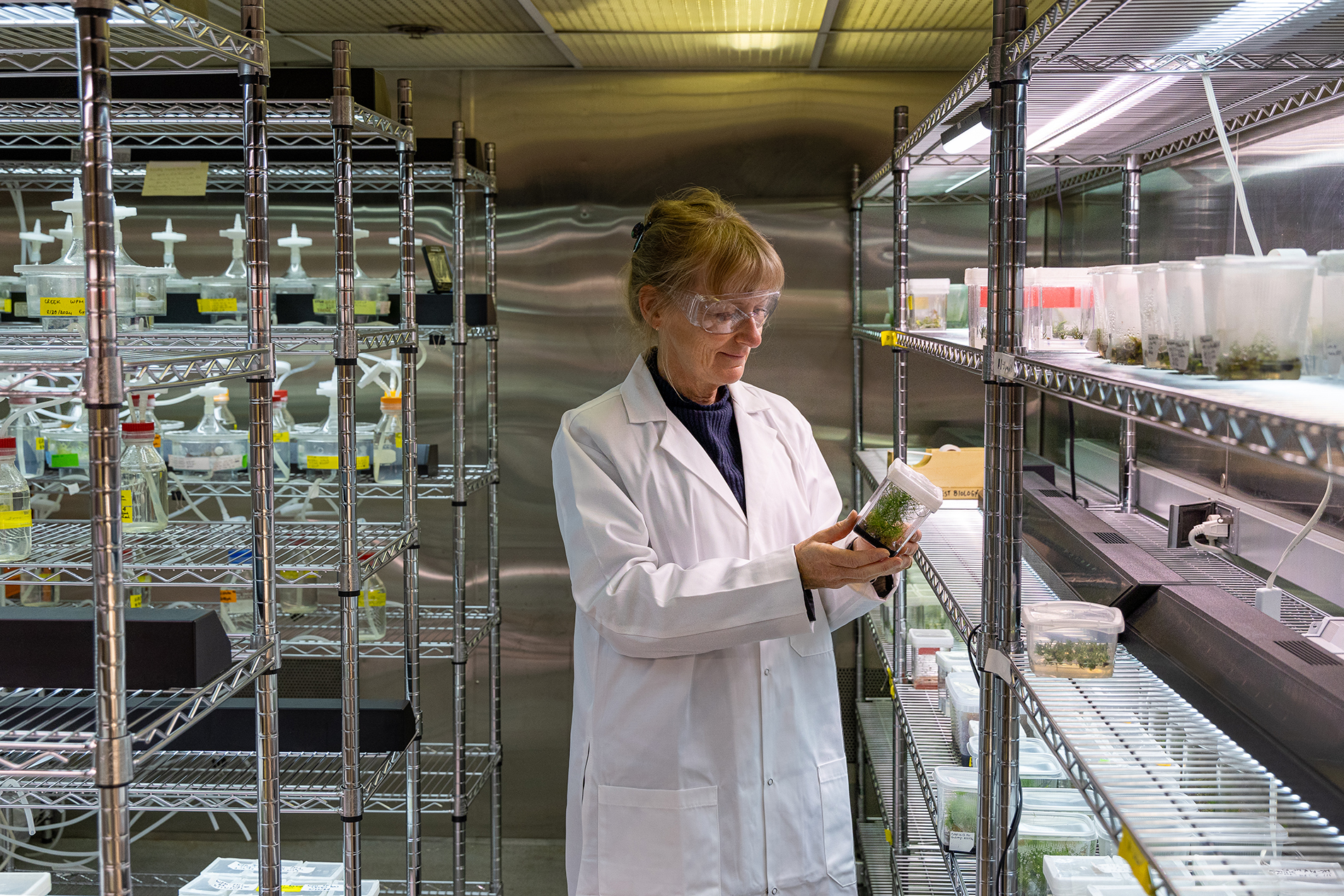
Ulrika Egertsdotter is a principal research scientist in the Renewable Bioproducts Institute and a renowned expert in seed cloning. She designs and develops automated technologies that produce valuable plants for the state’s forestry, agriculture, and horticulture industries. (Credit: Christopher McKenney)
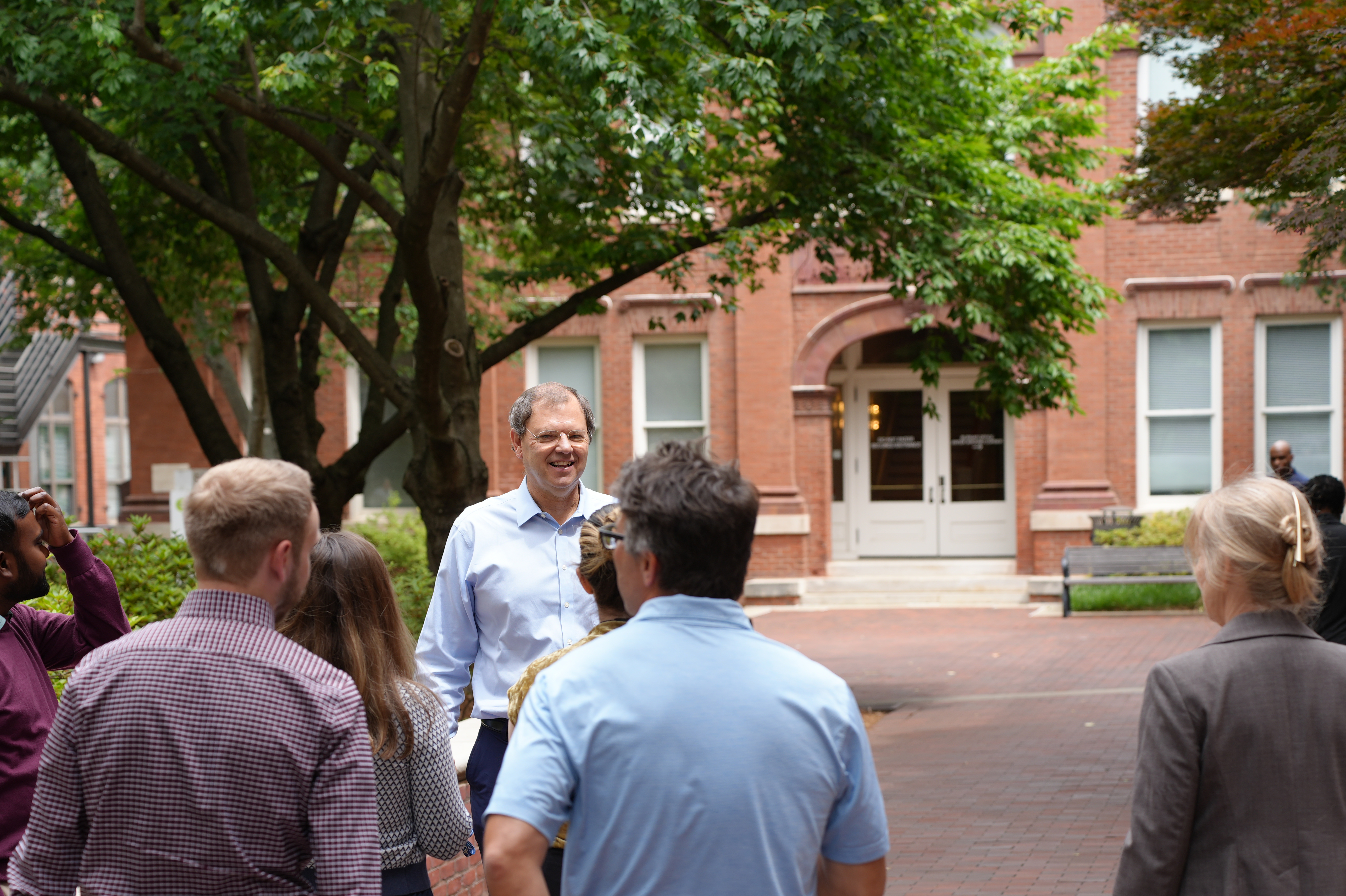
Joel Kostka and co-presenters at the RBI 2026 Spring Workshop. An international leader in ecosystem biogeoscience, Kostka is the inaugural faculty director of Georgia Tech for Georgia's Tomorrow, as well as Tom and Marie Patton Distinguished Professor and associate chair for Research in the School of Biological Sciences. He holds a joint appointment in the School of Earth and Atmospheric Sciences. (Credit: Jess Hunt-Ralston)
Jess Hunt-Ralston
Director of Communications
College of Sciences at Georgia Tech
Elizabeth Bennett
Communications Director
Revive & Restore
Accelerating Discovery With AI
May 18, 2026 —
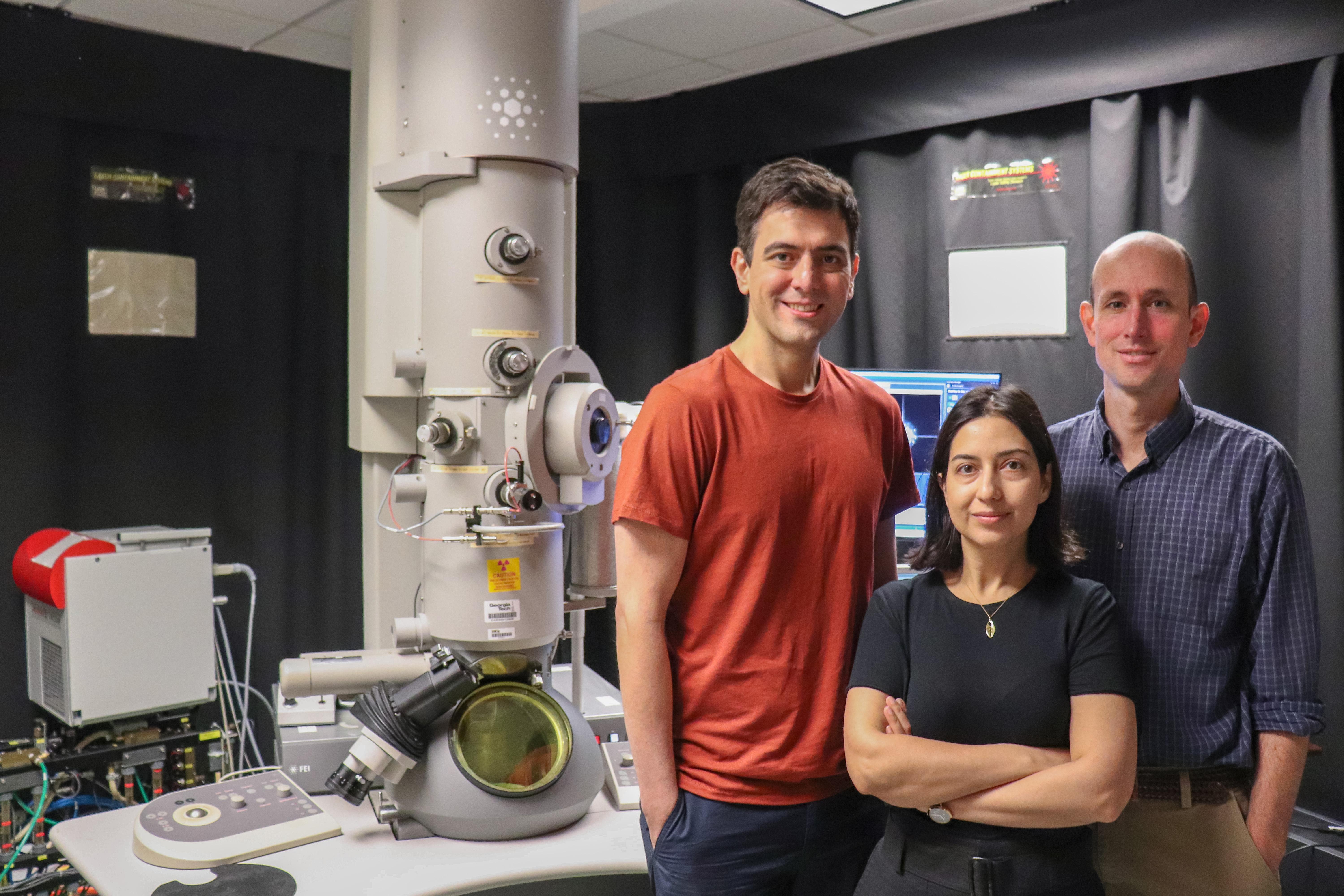
A photo of Vida Jamali, assistant professor the School of Chemical and Biomolecular Engineering; Amirali Aghazadeh, assistant professor in the School of Electrical and Computer Engineering; and Josh Kacher, associate professor in the School of Materials Science and Engineering standing in front of a TEM at Georgia Tech.
Scientific discovery is often portrayed as the result of long hours alone in a lab, but true science is inherently collaborative. The most robust experimental processes are developed through partnerships across multiple areas of research. The need for specialized, multidisciplinary teams slows experiment design, execution, data analysis, and process updates, delaying technological validation and deployment. But if the increasingly automated tools scientists already use in the lab could contribute to this team process of experimental design, the timeline for these goals could be greatly accelerated.
This concept of “lab tool as lab assistant” is the premise of a recent paper in npj | Computational Materials titled “Thinking Microscopes: Agentic AI and the Future of Electron Microscopy,” by Vida Jamali, assistant professor the School of Chemical and Biomolecular Engineering; Amirali Aghazadeh, assistant professor in the School of Electrical and Computer Engineering; and Josh Kacher, associate professor in the School of Materials Science and Engineering.
In the paper, the team introduces the concept of “thinking electron microscopes,” in which agentic AI systems are directly integrated with the instrument. This allows microscopes to move beyond their conventional role as characterization tools and toward functioning as co-scientists for human users.
Drawing on advances in specialized large language models, or LLMs, that demonstrate their ability to collaborate, reason over data, and integrate prior knowledge, the team envisions specialized LLM-based agents assigned to specific roles and areas of knowledge expertise. By explicitly incorporating domain knowledge into specialized agents and distributing information across multiple agents with focused expertise, the approach enables parallel evaluation of competing hypotheses, clearer separation of roles — such as planning, simulation, and critique — and more transparent and robust reasoning.
Within the experimental pipeline, these agents can analyze materials’ properties, physical data, chemical processes, and other relevant parameters. They could also collaborate with an agent that specializes in experimental design, refining iterative closed-loop experimentation, and real-time scientific discovery.
Although the research focuses on AI collaboration, the team notes that human researchers must retain accountability for the accuracy and integrity of both the experimental process and the results reported. This oversight begins with advocating for greater open access to research materials in all formats, building community-driven data repositories, and adopting standardization in how experimental parameters and metadata are reported. Equally important, researchers should be willing to report data from failed experiments as well as successful outcomes. Finally, organizations should work together to standardize secure APIs that enable shared, remote access to infrastructure across distances.
We see this as a step toward scientific instruments that do more than acquire data; systems that can reason over experiments, adapt measurements, and participate in the scientific discovery process alongside researchers. - Vida Jamali, assistant professor the School of Chemical and Biomolecular Engineering
The team is already developing these systems by connecting cloud-based, agentic infrastructures to microscopes at the Institute for Matter and Systems at Georgia Tech. With the addition of agentic AI, the goal is to accelerate discovery and engineering of new nanoscale materials for energy and quantum applications, as well as advance capabilities in cryo-electron microscopy and structural biology. These tools can optimize data collection, link real-time microscope observations with structural models of proteins, and dynamically adjust and prioritize experiments. The team sees this work as the first step toward the next generation of “thinking” electron microscopes, as well as an advancement in scientific discovery across domains.
- Christa M. Ernst
This research is supported by the Institute for Data Engineering and Science and the Institute for Matter and Systems
Original Publication
Jamali, V., Aghazadeh, A. & Kacher, J. Thinking microscopes: agentic AI and the future of electron microscopy. npj Computational Materials 12, 149 (2026). https://doi.org/10.1038/s41524-026-02077-y