
Ideas to Serve Poster Showcase
The Institute for Leadership and Social Impact invites you for the culmination of the 2025 Social Impact course, the Ideas to Serve Poster Showcase. Students will present the results of their problem discovery journey around various societal issue areas prevalent in Atlanta. The 2025 topics are housing affordability, food access, mental health, independent journalism, and sustainability as post-growth.
Georgia Tech 2025 Sustainability Showcase - Day 2
The theme for this year’s showcase is ecosystem, community, and infrastructure resilience, as well as resilience in the curriculum. This is an exciting opportunity to learn about this critical work happening all across campus, and the SE region. Visit the Showcase web page to learn about the schedule of events as it develops.
Georgia Tech 2025 Sustainability Showcase - Day 1
Sponsored by Brook Byers Institute for Sustainable Systems, this event will be an opportunity for Georgia Tech academics, researchers, students, and Institute programs to share their work in sustainability.
Georgia Tech’s Executive Vice President for Research Search: Finalist 1 Seminar
Each candidate’s bio and curriculum vitae, along with further details, will be accessible through the EVPR search site two business days ahead of each visit. Georgia Tech credentials are required to access all materials. Information is being made available in this manner to protect the confidentiality of the finalists.
Finalists Chosen in Georgia Tech’s Executive Vice President for Research Search
Jan 07, 2025 —
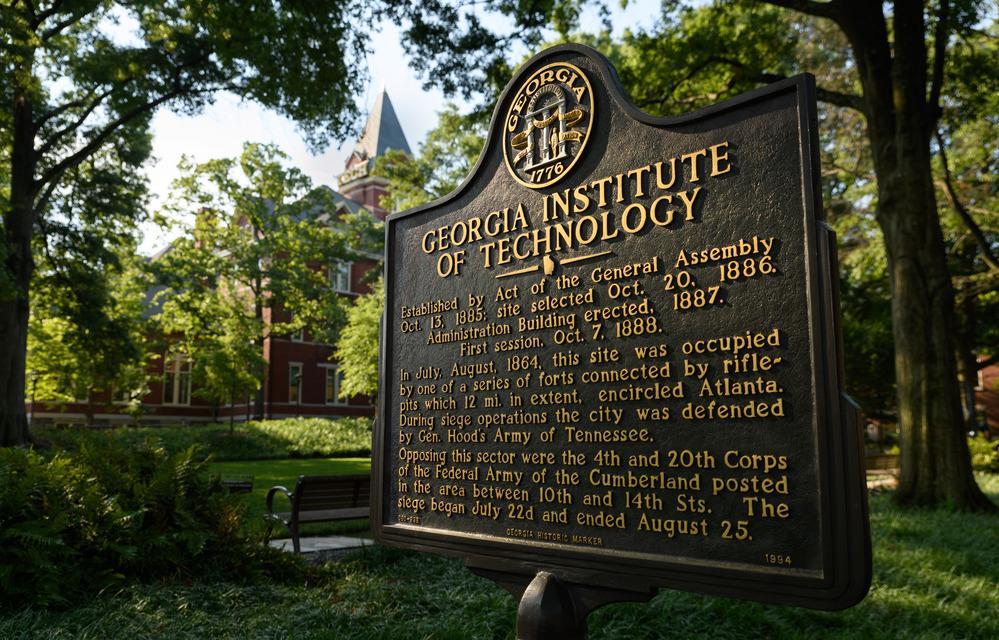
Georgia Tech’s Executive Vice President for Research (EVPR) search committee has selected three finalists. Each candidate will visit campus and present a seminar sharing their broad vision for the Institute's research enterprise.
The seminars are open to all faculty, students, and staff across the campus community. Interested individuals can attend in person or register to participate via Zoom (pre-registration is required).
All seminars will take place at 11 a.m. on the following dates:
- Candidate 1: Monday, January 13, Scholars Event Theater, Price Gilbert 1280 (register for webinar)
- Candidate 2: RESCHEDULED to Wednesday, January 29, Scholars Event Theater, Price Gilbert 1280 (register for webinar)
- Candidate 3: Monday, January 27, Scholars Event Theater, Price Gilbert 1280 (register for webinar)
Each candidate’s bio and curriculum vitae, along with further details, will be accessible through the EVPR search site 48 hours prior to each visit. Georgia Tech credentials are required to access all materials. Information is being made available in this manner to protect the confidentiality of the finalists. Following each candidate’s visit, the campus community is invited to share their comments via a survey that will be posted on the candidate’s webpage.
The search committee is chaired by Susan Lozier, dean of the College of Sciences. Search committee members include a mix of faculty and staff representing colleges and units across campus. Georgia Tech has retained the services of the executive search firm WittKieffer for the search.
Shelley Wunder-Smith | shelley.wunder-smith@research.gatech.edu
Director of Research Communications
Georgia Tech Energy Day 2025
Georgia Tech Energy Day provides an opportunity for key stakeholders to interact with Georgia Tech researchers who are pioneering work in this critical field. The focus areas of the event are Energy Storage, Solar Energy Conversion, and E-Fuels and Chemicals.
Georgia Tech Permaculture Interest Group – First Meeting
Monday, January 13, 2025 – 5:30 to 7 PM
BBISS Conference Room, 760 Spring Street NW, Suite 118
Start your semester with a healthy dose of optimism and empowerment by beginning your permaculture journey with the very first Georgia Tech Permaculture Interest Group meeting. It is open to everyone in the Georgia Tech community – students, staff, faculty, alumni, and administration.
SUSTAIN-X Hangout Featuring Sangita Sharma, Delta Airlines
Learn how to become a social and environmental entrepreneur and get resources for your project. The hangout provides a great place to network with other like-minded individuals and get to know the SUSTAIN-X leadership team.
At the first Hangout of the semester, come hear Sangita Sharma talk about her experience in Delta Airlines Sustainiable Skies Lab.
Format:
Sustainable Development, Urban Ecologies, and Livelihood Vulnerabilities in Bangkok, Thailand
The Atlanta Global Studies Center invites you to the second session of the Spring 2025 Sustainable Development Research Seminar. Gregory Gullette, Professor of Anthropology at Georgia Gwinnett College, will present his research on "Sustainable development, urban ecologies, and livelihood vulnerabilities in Bangkok, Thailand," exploring the intersection of ecological change, urbanization, and social resilience.
Sustainable Tourism Through Technology: Georgia Tech's Digital Solution to Historic Preservation
Dec 12, 2024 —
- by Benjamin Wright -
Destination tourism has now matched or surpassed pre-Covid levels in many parts of the world. It’s leading to challenges as operators and local governments try to walk the line between inviting visitors and preserving the places tourists want to visit so they can be enjoyed and studied for years to come. The more people who visit a site, the greater the risk of damage from foot traffic and contact with walls and artifacts. Even human breath in enclosed spaces can inflict as much damage as pollution from vehicles.
Enter Associate Professor Danielle Willkens from Georgia Tech’s School of Architecture in the College of Design. Willkens, who is the Sustainable Tourism co-lead for the Brook Byers Institute for Sustainable Systems (BBISS), is using technology to assess historic sites and develop strategies to mitigate damage caused by visitors and the development that frequently occurs when a site becomes popular.
“At a foundational level, a lot of what we do is related to survey work,” explains Willkens. “We are using LiDAR (Light Detection and Ranging), or lasers, to get very high-resolution, three-dimensional images. We end up with a digital record that serves as a snapshot of a building or space at one moment in time, and it becomes invaluable for preservation and rehabilitation planning.”
The advantage of using LiDAR is that it is what Willkens calls a “non-contact invasive” method. It doesn’t damage the structure but can reveal existing weaknesses and flaws that need attention. In a matter of a few days, their process can reveal what could take weeks or months of visual inspection to uncover.
In addition to traveling abroad to examine sites in the Dominican Republic and the famous site of Petra in Jordan, Willkens uses her tools to help protect and preserve places that have played an important role in American civil rights history: W.E.B. Du Bois’ office in Fountain Hall at Morris Brown College, the Penn Center on Saint Helena Island in South Carolina, and the Edmund Pettus Bridge in Selma, Alabama. She is also working with the National Park Service to evaluate the MLK corridor in Atlanta and has projects in historic neighborhoods like Mechanicsville and Pittsburgh.
Where does Willkens’ passion for protecting these places come from?
“I'm the daughter of an educator and two generations of educators beyond that,” she says. “I come from a line of people who are invested in teaching and advocacy — people who love travel and museums and appreciate the power of place.”
One successful project that Willkens is particularly proud of is a scan of the USS Drum, a World War II submarine on display at the USS Alabama Battleship Memorial Park in Mobile, Alabama. By recreating the interior of the submarine digitally, access has been granted to people who cannot visit the ship in person due to mobility limitations, claustrophobia, or distance. The project was launched on Veterans Day of 2024. Since then, 97-year-old Bill Lister, who is the last surviving member of the Drum’s crew, has visited the ship many times from the comfort of his home in Indiana.
A similar project is part of a partnership with Auburn University in which Willkens and her colleagues are developing a digital conflict map of the March 7, 1965, “Bloody Sunday” march in Selma, Alabama.
She sees tremendous value in people being able to visit these historic locations remotely.
“Significant anniversaries are coming up, like the 60th anniversary of the Selma march, and unfortunately, we still have regular reminders that voting access is an ongoing concern. Being able to visit these sites remotely can be very powerful.”
Through grants and her seminar class, Race, Space, and Architecture in the United States, Willkens is training the next generation of architects and preservationists to get involved with their local communities and protect valuable places through technology.
“We’ve been able to take three groups of students down to the Penn Center in South Carolina. We stay in the historic buildings, we do survey and research work on site, and we work with community members. St. Helena Island is at this somewhat precarious intersection of climate change and surrounding development in the Gullah Geechee corridor, and it’s a microcosm of what a lot of historical sites are facing. The community has been very welcoming to us, and we’re excited about the work we’re doing there.”
That work has been funded by a Sustainability Next Seed Grant. She strongly encourages other faculty and students to get involved with the BBISS and the Sustainability Next strategic plan initiative.
“BBISS is a great place to get to know people from across disciplines, and I'm grateful for that,” she explains. “In any discipline, it's easy within a university to stay in your silo. Being part of BBISS has been a great opportunity to meet people from different programs and different parts of Georgia Tech. I love the emphasis on community-engaged work that moves sustainability from an abstract systems level to something tangible that is making a difference locally.”
Brent Verrill, Research Communications Program Manager, BBISS