Atlanta Science Festival Launches With Celebrate STEAM at Georgia Tech
Over 5,000 people attended Georgia Tech's Celebrate STEAM event on March 8, which showcased more than 60 demonstrations in science, technology, engineering, art, and mathematics.

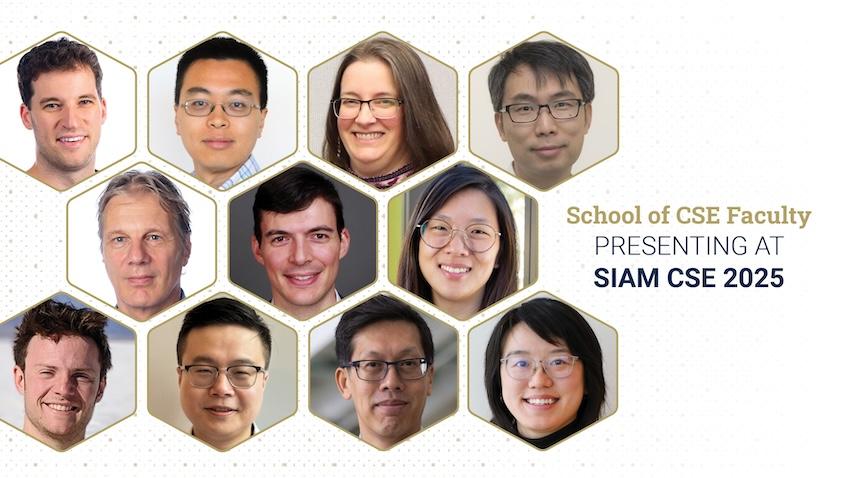
Many communities rely on insights from computer-based models and simulations. This week, a nest of Georgia Tech experts are swarming an international conference to present their latest advancements in these tools, which offer solutions to pressing challenges in science and engineering.
Students and faculty from the School of Computational Science and Engineering (CSE) are leading the Georgia Tech contingent at the SIAM Conference on Computational Science and Engineering (CSE25). The Society of Industrial and Applied Mathematics (SIAM) organizes CSE25, occurring March 3-7 in Fort Worth, Texas.
At CSE25, the School of CSE researchers are presenting papers that apply computing approaches to varying fields, including:
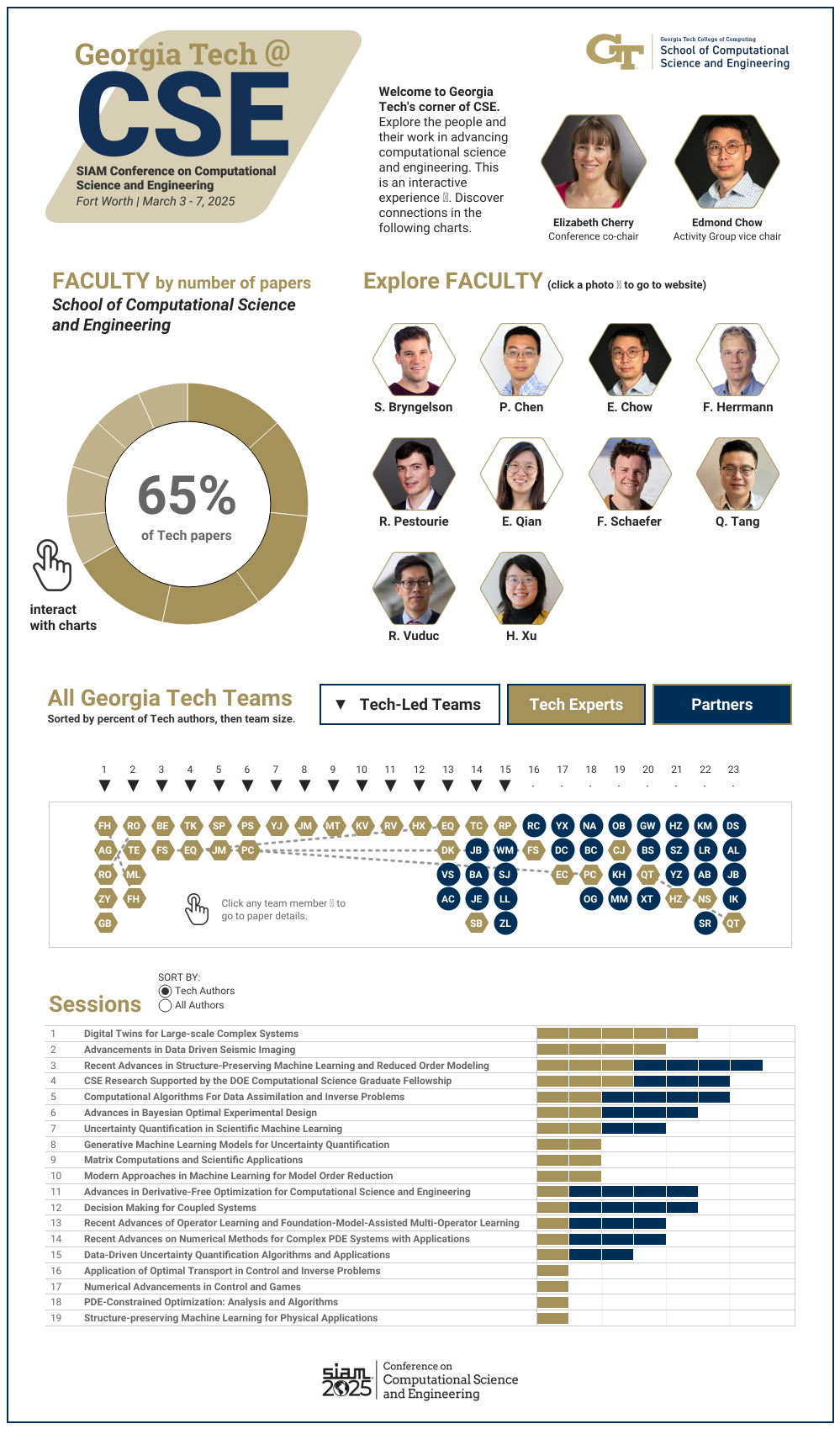
[Related: GT CSE at SIAM CSE25 Interactive Graphic]
“In CSE, researchers from different disciplines work together to develop new computational methods that we could not have developed alone,” said School of CSE Professor Edmond Chow.
“These methods enable new science and engineering to be performed using computation.”
CSE is a discipline dedicated to advancing computational techniques to study and analyze scientific and engineering systems. CSE complements theory and experimentation as modes of scientific discovery.
Held every other year, CSE25 is the primary conference for the SIAM Activity Group on Computational Science and Engineering (SIAG CSE). School of CSE faculty serve in key roles in leading the group and preparing for the conference.
In December, SIAG CSE members elected Chow to a two-year term as the group’s vice chair. This election comes after Chow completed a term as the SIAG CSE program director.
School of CSE Associate Professor Elizabeth Cherry has co-chaired the CSE25 organizing committee since the last conference in 2023. Later that year, SIAM members reelected Cherry to a second, three-year term as a council member at large.
At Georgia Tech, Chow serves as the associate chair of the School of CSE. Cherry, who recently became the associate dean for graduate education of the College of Computing, continues as the director of CSE programs.
“With our strong emphasis on developing and applying computational tools and techniques to solve real-world problems, researchers in the School of CSE are well positioned to serve as leaders in computational science and engineering both within Georgia Tech and in the broader professional community,” Cherry said.
Georgia Tech’s School of CSE was first organized as a division in 2005, becoming one of the world’s first academic departments devoted to the discipline. The division reorganized as a school in 2010 after establishing the flagship CSE Ph.D. and M.S. programs, hiring nine faculty members, and attaining substantial research funding.
Ten School of CSE faculty members are presenting research at CSE25, representing one-third of the School’s faculty body. Of the 23 accepted papers written by Georgia Tech researchers, 15 originate from School of CSE authors.
The list of School of CSE researchers, paper titles, and abstracts includes:
Bayesian Optimal Design Accelerates Discovery of Material Properties from Bubble Dynamics
Postdoctoral Fellow Tianyi Chu, Joseph Beckett, Bachir Abeid, and Jonathan Estrada (University of Michigan), Assistant Professor Spencer Bryngelson
[Abstract]
Latent-EnSF: A Latent Ensemble Score Filter for High-Dimensional Data Assimilation with Sparse Observation Data
Ph.D. student Phillip Si, Assistant Professor Peng Chen
[Abstract]
A Goal-Oriented Quadratic Latent Dynamic Network Surrogate Model for Parameterized Systems
Yuhang Li, Stefan Henneking, Omar Ghattas (University of Texas at Austin), Assistant Professor Peng Chen
[Abstract]
Posterior Covariance Structures in Gaussian Processes
Yuanzhe Xi (Emory University), Difeng Cai (Southern Methodist University), Professor Edmond Chow
[Abstract]
Robust Digital Twin for Geological Carbon Storage
Professor Felix Herrmann, Ph.D. student Abhinav Gahlot, alumnus Rafael Orozco (Ph.D. CSE-CSE 2024), alumnus Ziyi (Francis) Yin (Ph.D. CSE-CSE 2024), and Ph.D. candidate Grant Bruer
[Abstract]
Industry-Scale Uncertainty-Aware Full Waveform Inference with Generative Models
Rafael Orozco, Ph.D. student Tuna Erdinc, alumnus Mathias Louboutin (Ph.D. CS-CSE 2020), and Professor Felix Herrmann
[Abstract]
Optimizing Coupled Systems: Insights from Co-Design Imaging and Optical Chemistry
Assistant Professor Raphaël Pestourie, Wenchao Ma and Steven Johnson (MIT), Lu Lu (Yale University), Zin Lin (Virginia Tech)
[Abstract]
Multifidelity Linear Regression for Scientific Machine Learning from Scarce Data
Assistant Professor Elizabeth Qian, Ph.D. student Dayoung Kang, Vignesh Sella, Anirban Chaudhuri and Anirban Chaudhuri (University of Texas at Austin)
[Abstract]
LyapInf: Data-Driven Estimation of Stability Guarantees for Nonlinear Dynamical Systems
Ph.D. candidate Tomoki Koike and Assistant Professor Elizabeth Qian
[Abstract]
The Information Geometric Regularization of the Euler Equation
Alumnus Ruijia Cao (B.S. CS 2024), Assistant Professor Florian Schäfer
[Abstract]
Maximum Likelihood Discretization of the Transport Equation
Ph.D. student Brook Eyob, Assistant Professor Florian Schäfer
[Abstract]
Intelligent Attractors for Singularly Perturbed Dynamical Systems
Daniel A. Serino (Los Alamos National Laboratory), Allen Alvarez Loya (University of Colorado Boulder), Joshua W. Burby, Ioannis G. Kevrekidis (Johns Hopkins University), Assistant Professor Qi Tang (Session Co-Organizer)
[Abstract]
Accurate Discretizations and Efficient AMG Solvers for Extremely Anisotropic Diffusion Via Hyperbolic Operators
Golo Wimmer, Ben Southworth, Xianzhu Tang (LANL), Assistant Professor Qi Tang
[Abstract]
Randomized Linear Algebra for Problems in Graph Analytics
Professor Rich Vuduc
[Abstract]
Improving Spgemm Performance Through Reordering and Cluster-Wise Computation
Assistant Professor Helen Xu
[Abstract]
Bryant Wine, Communications Officer
bryant.wine@cc.gatech.edu
A Celebration of Automotive Design and Engineering! As part of Georgia Tech's century-old tradition of car enthusiasm, the Georgia Tech Auto Show was started by faculty, students, and alumni from industrial design and mechanical engineering backgrounds. This group of like-minded gearheads have long valued car design, engineering, and the significant contributions of Tech graduates in the automotive industry.
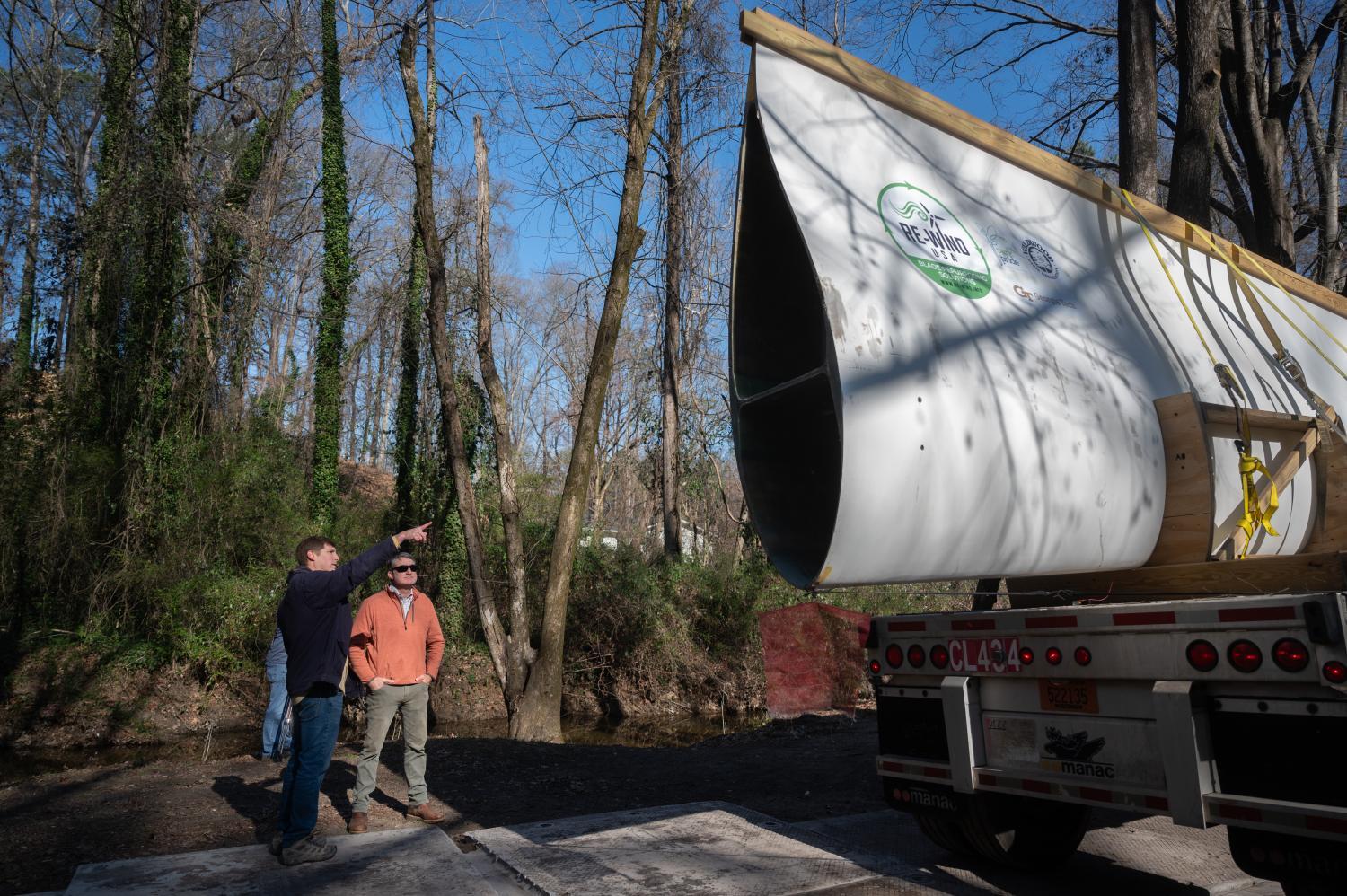
Photo by Allison Carter
Jud Ready first visited Beaverbrook Park for an adopt-a-stream event as a graduate student. When he moved to the northwest Atlanta neighborhood, he got involved with improvement efforts at the park.
“It was a muddy mess back then. Over time, we added an exercise trail, playgrounds, a gazebo, and ball fields, but we didn't have a place where you could just walk through the woods,” Ready said. The problem? A creek prevented easy passage, and the park lacked a bridge to cross it.
Despite receiving a grant from Park Pride, a nonprofit that helps residents improve their parks, Ready realized it wasn’t nearly enough money to build a bridge over the rushing waters. Then Ready, a principal research engineer at the Georgia Tech Research Institute with a joint appointment in the School of Materials Science and Engineering, learned that one of his colleagues was using decommissioned wind turbine blades for bridges.
For eight years, Russell Gentry, a professor in the School of Architecture and a member of the Re-Wind Network, has explored how to upcycle wind turbine blades into functional infrastructure. Re-Wind, an international organization, has constructed two bridges in Ireland, where wind energy is more prevalent. The Beaverbrook bridge is the first in the U.S., but building it hasn’t been a simple copy-and-paste process from across the Atlantic Ocean.
“It's not recycling because we're not taking the material back to its original state; it's really adaptive reuse,” explained Gentry. “Think of it as the difference between wood and paper. You can take a tree and grind it up finely for paper, but if you leave it in its original form, you have wood. It’s a much more capable material from a structural perspective.”
Like almost everything in America, the blades are bigger than their European counterparts. The 15-meter blade weighs around 7,000 pounds, so moving it from its first home in a Colorado wind farm to a Georgia public park was no easy feat. With funding from the National Science Foundation, the Department of Energy, and wind turbine manufacturer Siemens Gamesa, Ready and Gentry established a team of a dozen Georgia Tech students, researchers, and alumni to bring the blade to Beaverbrook Park.
Cayleigh Nicholson (architecture), Sakshi Kakkad (computing and architecture), who both graduated in 2024, and fourth-year civil engineering student Gabriel Ackall made sure the bridge was engineered well and that it complied with city regulations. Nicholson spent a semester surveying Beaverbrook to determine the best path and placement of the bridge. Kakkad developed software to better understand the geometry of the blade and position it in the bridge. Ackall was involved in the design process, working with the foundation contractor, Cantsink, to calculate stresses and deflections in the BladeBridges.
“We’ve essentially had to design the entire structural system of the bridge from scratch, as existing building and bridge codes do not have much information about either the composite materials used in wind turbine blades or in adaptive reuse for new construction,” Ackall noted. “We used advanced modeling software combined with the knowledge we’ve gained from over a half dozen years of wind turbine blade testing and prototyping to make the bridge a reality and ensure their safety.”
Even alumnus Tierson Boutte, CE 2002, who owns the tree company Boutte Tree, helped make the installation possible. “We’re grateful to be able to give back to the community by pruning the trees for the crane to be able to lift the turbine blades,” he said.
On a sunny day in mid-March, the bridge was installed with a combined crew of 16 from Chappell Construction, led by alumnus Wade Chappell, IE 2000; Williams Erection Company, owned by alumnus Art Williams, CE 1983; and ironworkers from Local 387. Finally, with a little help from an unusual source, a neighborhood can fully enjoy its park.
Video by Maxwell Guberman
Photos by Allison Carter

Photo by Allison Carter

Photo by Allison Carter
Tess Malone, Senior Research Writer/Editor
tess.malone@gatech.edu

Sustainability Showcase panel discussion, L to R - Iris Tien, Donn Digamon, Ria Aiken, Tejas Kotak, and Jason Stott (not pictured).
In late February, the Brook Byers Institute for Sustainable Systems (BBISS) hosted the Sustainability Showcase in the Scholars Event Theater in Georgia Tech’s Price Gilbert Library. The two days of panel discussions, keynote speeches, and lightning talks were themed around community, ecosystem, and infrastructure resilience. Researchers, faculty, students, staff, and partners demonstrated how they are innovating and collaborating to build a more resilient future as the world rapidly changes.
The first day's morning session framed the discussion with three panels. The first focused on Georgia Tech’s resilience plan, discussing institutional strategies to ensure campus operations and support for the Georgia Tech community in the face of external disruptions. The second panel broadened the discussion to explore resilience strategies for the city of Atlanta. The third panel further expanded the scope to consider the resilience of the southeastern United States.
One of the highlights of the showcase was the alumni keynote address by Laura Solomon, ISyE 2000, co-founder of Tybee
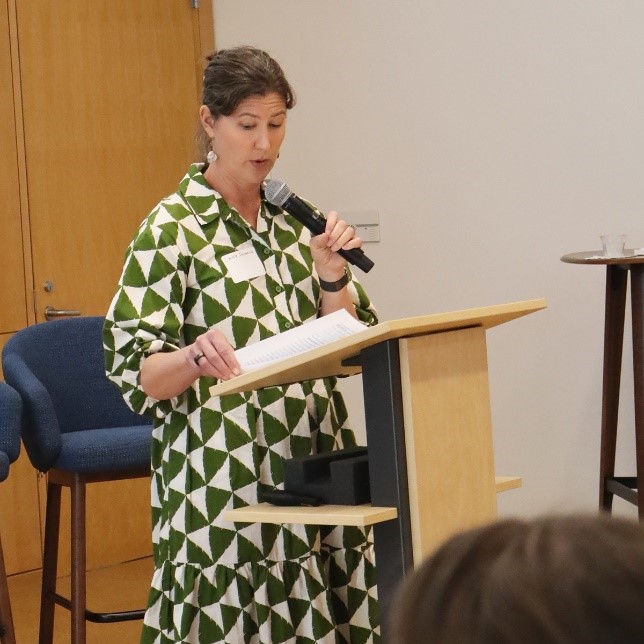
Oyster Company. Solomon told her inspiring story about the recent origins of the ocean aquaculture industry in Georgia and the connection between oyster aquaculture, local community engagement, education, and bolstering a thriving and resilient coastal ecosystem. She emphasized the importance of her company’s sustainable practices and shared her experiences in pioneering Georgia's first floating oyster farm. Solomon also underscored the importance of oysters in helping Georgia’s coasts become more resilient against storms, sea level rise, erosion, and poor water quality.
A mainstay of the Sustainability Showcase are the lightning talks, where students, campus organizations, and researchers can bring attention to their sustainability initiatives and research. Lightning talk sessions were interspersed throughout both days of the event and helped to bring a broader contingent of the sustainability community together to learn about each other’s work and make valuable connections.
The last panel discussion of the day, on ecosystem resilience, was moderated by Jenny McGuire, associate professor in the School of Biological Sciences. “A better understanding of ecosystem resilience not only helps us to preserve species for future generations,” she said, “but gives us perspective on how we can better inhabit the ecosystems we rely on for our own well-being.” The day concluded with a networking reception.
The second day began with a panel on infrastructure resilience, which explored the links between infrastructure elements in the built environment, how they interact with each other, and how our communities can recover from disruptions to infrastructure functions.
The event wrapped up with a visioning “unconference” session, where members of the Georgia Tech sustainability community gathered to share their thoughts on how the concept of resilience blends with sustainability, and how Georgia Tech can advance research and education to prepare our communities for the upcoming challenges facing us. It is anticipated that the participants in the unconference will collaborate on a white paper to document what was learned and shared at this final session.
"The Sustainability Showcase exemplified Georgia Tech's commitment to resilience at every level,” said BBISS Interim Director Beril Toktay. “By bringing together diverse perspectives from our campus, city, and region, we created a space for both innovative thinking and practical collaboration. As we navigate increasingly complex sustainability challenges, this collective approach will be essential in building the resilient communities and systems our future requires."
Brent Verrill, Research Communications Program Manager, BBISS
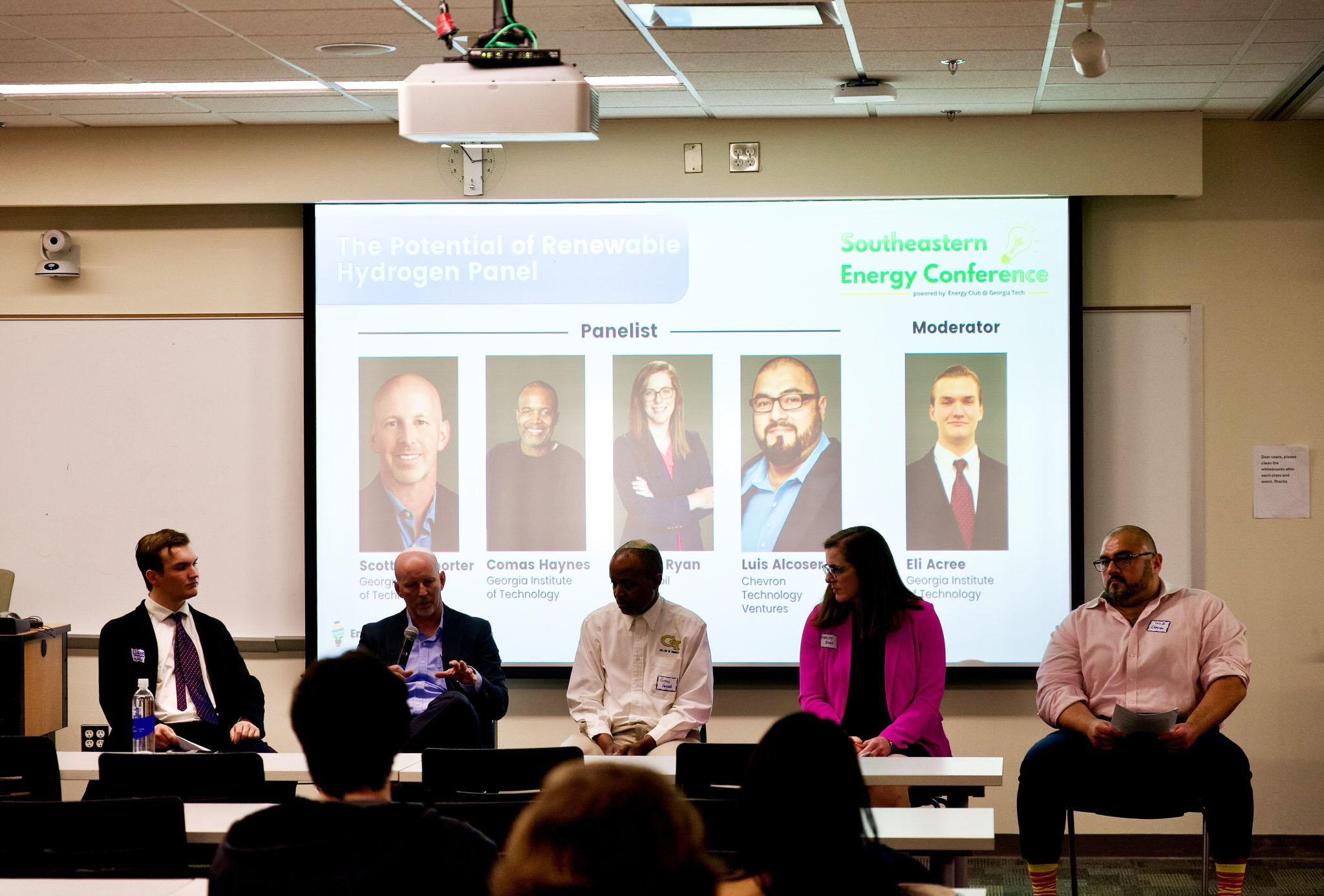
Energy Club's 11th Southeastern Energy Conference Panel on The Potential of Renewable Hydrogen featured Eli Acree, Chemical & Biomolecular Engineering Undergraduate, Georgia Tech (Moderator), Panelists Scott McWhorter, Federal Opportunities and Strategy, Georgia Tech Strategic Energy Institute, and Board Chairman, Southeast Hydrogen Energy Alliance, Comas Haynes, Hydrogen Initiative Lead, Georgia Tech Strategic Energy Institute, Hayley Ryan, Field Engineering Manager, ExxonMobil, Luis Alcoser, GM Future Energy, Chevron Technology Ventures
The 2025 Southeastern Energy Conference, Georgia Tech’s annual student-led energy and sustainability conference, took place from Feb. 28 to March 1, 2025. Organized by the Energy Club at Georgia Tech, the conference welcomed over 100 attendees, including industry leaders, policymakers, researchers, and students, fostering dynamic discussions on the future of energy. The theme for this year’s conference, "Going Global: Energy’s Place on the World Stage," highlighted the international nature of energy challenges and solutions, emphasizing collaboration across borders.
The event kicked off with a keynote address from Hon. John Tien, who provided thought-provoking insights into the evolving energy landscape. Following the keynote, the first panel of the day, "The Ukraine Energy War: Lessons in Energy Security," featured expert analysis from Anna Mikulsa of the IDA Science and Technology Policy Institute and Gabriel Collins of Rice University’s Baker Institute. The session was moderated by Georgia Tech student Grant Espy. This was followed by a discussion on the role of nuclear energy globally, where Seth Grae, president and CEO of Lightbridge Corporation, and CJ Fong, vice president of Regulatory Affairs at Blue Energy, shared their perspectives, moderated by Anna Schafer, a student at Georgia Tech.
Throughout the day, attendees had the opportunity to engage with representatives from 10 local and regional energy companies through the Industry Showcase. Companies such as GE Vernova, Georgia Power, Kimley-Horn, and the Georgia Cleantech Innovation Hub were present, providing valuable networking and career development opportunities for students and professionals alike. The day concluded with an engaging panel on "The Potential of Clean Hydrogen," featuring insights from industry leaders including Comas Haynes of Georgia Tech's Strategic Energy Institute, Hayley Ryan of ExxonMobil, Luis Alcoser of Chevron Technology Ventures, and Scott McWhorter of the Southeast Hydrogen Energy Alliance, moderated by Eli Acree, a student at Georgia Tech.
The second day of the conference opened with a keynote speech from Tim Lieuwen, executive vice president for Research at Georgia Tech, who laid out what a carbon-neutral future could truly look like in energy. The "Cybersecurity for Energy Systems" panel brought together Seymour E. Goodman of Georgia Tech, Jake Braun of the University of Chicago, Juan Villarreal of Villarreal Energy, and Forrest Shriver of Sentinel Devices to discuss the challenges and solutions in securing energy infrastructure. Following that, the "Applications of Solar Microgrids" panel moderated by John Blankenhorn, a Ph.D. candidate at Georgia Tech, featured expert perspectives from Letian Dou of Purdue University, Ben Ollis of Oak Ridge National Laboratory, and Raymond Hill of Emory University’s Goizueta Business School.
One of the standout moments of the conference was the Student Symposium, where seven student researchers had the opportunity to present their work, competing for $500 in prize money. Projects explored topics ranging from photocatalysts to heat-driven desalination to thermal batteries for buildings.
The final panel of the event, "Scaled Sustainable Development," moderated by Conference Chair Sam Woolsey, a student at Georgia Tech, featured Jonathan Elkind of Columbia University’s Center on Global Energy Policy, Miguel Granier of the Cox Cleantech Accelerator, and Hon. Jobeth Lillian Coleby-Davis, Minister of Energy & Transport for the Government of the Bahamas.
Faculty Advisor Dan Molzahn also praised the conference, stating, "I've been incredibly impressed by the student organizers in pulling together such a remarkable and well-executed event. Given all the change occurring in the world today around energy, the students' foresight to focus on this topic by bringing in a broad range of experts was a huge benefit to the Georgia Tech community."
Reflecting on the success of the event, Sam Woolsey shared, "I was honored to serve as Energy Club's 2025 Conference Chair and to see the conference so positively received. It was a pleasure to see the ways this year's conference encouraged Georgia Tech engineers to get out of their comfort zone and discuss the policy and international affairs of energy."
The 11th annual Southeastern Energy Conference set a high standard for future student-led initiatives in energy and sustainability at Georgia Tech, fostering meaningful discussions and connections that will continue shaping the field. With a diverse lineup of experts, engaging panels, and invaluable networking opportunities, this event demonstrated Georgia Tech’s leadership in fostering innovative discussions on global energy challenges. The Energy Club extends its heartfelt thanks to all speakers, panelists, industry representatives, and attendees for making this conference a success. Stay tuned for future events and continued conversations on the evolving energy landscape!
Written by: 2025 Southeastern Energy Conference Committee Members: Braden Queen, Eli Acree, Sam Woolsey, Anna Schafer, Grant Espy, John Blankenhorn

Industry Showcase at the 2025 Southeastern Energy Conference, organized by the student-led Energy Club at Georgia Tech

Georgia Tech Student with Hon. Jobeth Lillian Coleby-Davis, Minister of Energy and Transport, Government of The Bahamas during the Student Poster Competition at the 2025 Southeastern Energy Conference.
Priya Devarajan || SEI Communications Program Manager
Written by: 2025 Southeastern Energy Conference Committee Members: Braden Queen, Eli Acree, Sam Woolsey, Anna Schafer, Grant Espy, John Blankenhorn
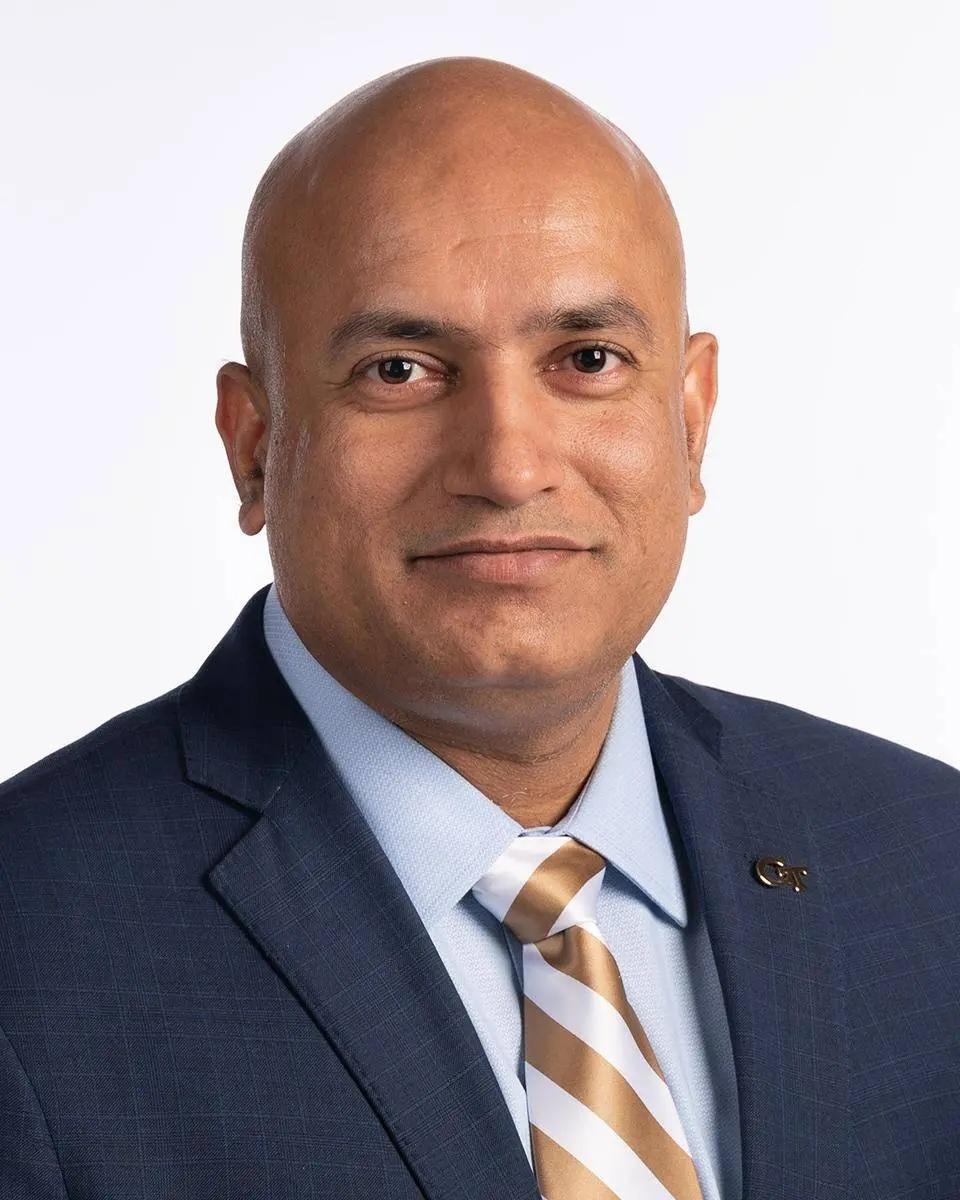
Devesh Ranjan
Devesh Ranjan, the Eugene C. Gwaltney, Jr. School Chair of the George W. Woodruff School of Mechanical Engineering, has been named dean of the College of Engineering at the University of Wisconsin-Madison (UW).
Ranjan graduated from UW and has been at Georgia Tech since 2014. He was selected as dean by UW Provost Charles Isbell, a Georgia Tech graduate and former dean of the College of Computing.
Ranjan will lead the Woodruff School through the spring semester. He will join UW in June.
“Devesh is a visionary leader who has created numerous programs to strengthen the Woodruff School community,” said Raheem Beyah, dean of the College of Engineering and Southern Company Chair. “Georgia Tech is my alma mater, and I know there’s nothing like going home. Devesh’s deep commitment and determination will undoubtedly lead to his continued success as he returns to UW to innovate and lead the university’s college of engineering. I’m grateful for his commitment to Tech and the Woodruff School, as well as his valuable guidance and partnership.”
Jason Maderer (maderer@gatech.edu)
Matthew Oliver, Associate Professor, School of Economics, Georgia Tech, EPIcenter Faculty Affiliate
Students in Matthew Oliver’s economics of environment and international energy markets classes likely don’t have a clue about his unusual journey to the lectern: “I was bent on being a rock and roll musician from the time I was 16, and so I ended up dropping out of the University of Memphis after just three semesters,” says Oliver, an associate professor in the School of Economics at the Georgia Institute of Technology. “I was on tour for eight years — and I was starting to feel burned out.”
At a crossroads, Oliver decided to end his musical career — a choice he credits with launching him into academia. “I was 28 and wondering what to do with my life, so I reenrolled in college and discovered economics.” With a longtime love of the environment and growing concern for the climate, says Oliver, “I grew fascinated with solar power and other renewables and the new markets emerging around them.”
Today, his work in energy and environmental economics has implications for policies shaping the energy transition, from subsidies for rooftop solar to the expansion of battery storage.
“The current frontier of energy economics is electricity and renewables, and these are areas I am passionate about,” he says.
PVs and amped up electric use
One of Oliver’s core research thrusts is the solar rebound effect (SRE). This phenomenon involves a quirk of human behavior: When people install solar photovoltaic (PV) panels on the roofs of their homes, they often consume more electricity. “The introduction of solar energy does not perfectly displace grid-supplied energy, but instead reduces demand for grid-supplied energy on a less than one-for-one basis, because the household increases its total electricity consumption,” says Oliver. The bottom line: Solar PV systems may not lead to as much carbon emission reduction as anticipated.
Written by: Leda Zimmerman
Contact: Priya Devarajan, SEI Communications Program Manager

The team's modular cell-free protein biosensor platform produces a simple color output based on the amount of protein detected in a sample. That makes it easy for any user, without specialized training, to read the results of a test at home or in areas with limited access to medical resources. (Photo: Candler Hobbs)
Chemical and biomolecular engineers at Georgia Tech have developed a plug-and-play platform for detecting protein biomarkers of disease that’s simple, flexible, and easy to use without costly lab equipment.
Their work could unlock a new wave of at-home testing options and provide new diagnostic capabilities in parts of the world where medical resources are scarce.
The testing platform fills a gap in using cell-free synthetic biology for disease detection. Existing cell-free tools have proven effective at measuring DNA, RNA, and other small molecules, but not proteins. That’s an important advance because proteins in viruses or bacteria tend to change less than the DNA or RNA sequences that encode those proteins. They’re also easier to detect since they can be found on the outside of cell walls or free-floating in biofluids.
“Diagnosing disease and democratizing medical care by putting it into the public's hands has great potential. You can have a big impact on a lot of people,” said Mark Styczynski, William R. McLain Endowed Professor in the School of Chemical and Biomolecular Engineering.
“I think about that a lot in terms of the developing world, but also there's a lot of healthcare inequality even in the United States. Studies have shown your ZIP code can determine your life expectancy. You can think about people in sub-Saharan Africa or people in rural Appalachia all benefiting. They’re among those who need more access to low-cost tools.”
Styczynski and a group of researchers led by former Ph.D. student Megan McSweeney presented their test in late February in the journal Science Advances.
Joshua Stewart
College of Engineering

Adam Steinberg, the Pratt & Whitney Chair in the Daniel Guggenheim School of Aerospace Engineering, has been appointed as the new secretary of the faculty for Georgia Tech, effective February 26, 2025.
In his new role, Steinberg will serve as the permanent secretary for all faculty governance bodies, facilitating communication and governance across the Institute. The secretary of the faculty is appointed through a multi-phase process in which the faculty vote to recommend the new secretary to the president, who then affirms the appointment.
"Professor Steinberg's years of contributions as a chair, faculty member, and lab director make him an excellent choice for the secretary of the faculty role,” said President Ángel Cabrera. “He is a highly respected member of our faculty community, and I have no doubt that he will make a significant contribution to strengthening faculty governance at Georgia Tech.”
The secretary of the faculty plays an essential role in faculty governance at Georgia Tech, serving as the secretary for the Faculty Executive Board, Academic Faculty, Research Faculty, Academic Faculty Senate, and Research Faculty Senate. This position involves maintaining records, conducting governance elections, serving on the Insitute Policy Committee, liaising between campus administration and the faculty, and ensuring effective campus engagement with faculty initiatives. To take on this role full-time, Steinberg will step down from his position as associate chair for graduate programs in the Daniel Guggenheim School of Aerospace Engineering.
Reflecting on his appointment, Steinberg said, "I am deeply honored to take on this role and look forward to collaborating with faculty and administration to further strengthen these relationships. It is an exciting opportunity to contribute to the Institute's value of shared governance and to support the outstanding work of my colleagues."
Steinberg brings a wealth of experience to this role. He is the director of the Ben T. Zinn Combustion Laboratory, one of the largest academic combustion research facilities globally. Before joining Georgia Tech, he was a faculty member at the University of Toronto Institute for Aerospace Studies and served as a research scientist at the German Aerospace Center.
His research focuses on addressing scientific and technical challenges in aerospace propulsion and energy conversion devices. Collaborating closely with government and industry, his group develops advanced laser-based measurement techniques to explore complex thermal, fluid, and chemical processes in these systems.
Steinberg holds a B.A.Sc. in Engineering Science from the University of Toronto, an M.S.E. in Aerospace Engineering from the University of Michigan, and a Ph.D. in Aerospace Engineering from the University of Michigan. He is a Fellow of the Combustion Institute, an Associate Fellow of the American Institute for Aeronautics and Astronautics, and he serves as an Associate Editor for Combustion and Flame.
Steinberg succeeds J. Rhett Mayor, who has served as Secretary of the Faculty since 2018. During his tenure, Mayor worked to amplify faculty voices across campus and served throughout the COVID-19 pandemic as a dedicated liaison between the administration and faculty. His years of service have left a lasting impact on the Georgia Tech community. Mayor assumed the role of interim associate dean for faculty and graduate student affairs in the College of Lifetime Learning on January 1, 2025.
“Adam’s exceptional leadership skills, deep commitment to faculty governance, and extensive experience make him an outstanding choice for this vital role,” said Dima Nazzal, chair of the Faculty Executive Board. “We are thrilled to welcome him as secretary of the faculty. At the same time, we are immensely grateful to Rhett for his remarkable service and unwavering dedication to the faculty during his tenure. His impact has been invaluable, and we wish him the very best in his new role.”
Writer: Brittany Aiello, Faculty Communications Program Manager, Executive Communications, Institute Communications
Office of the Provost