
Georgia Tech and Pacific Northwest National Laboratory Sign Agreement to Expand Strategic Research Partnership
Sep 18, 2026 —
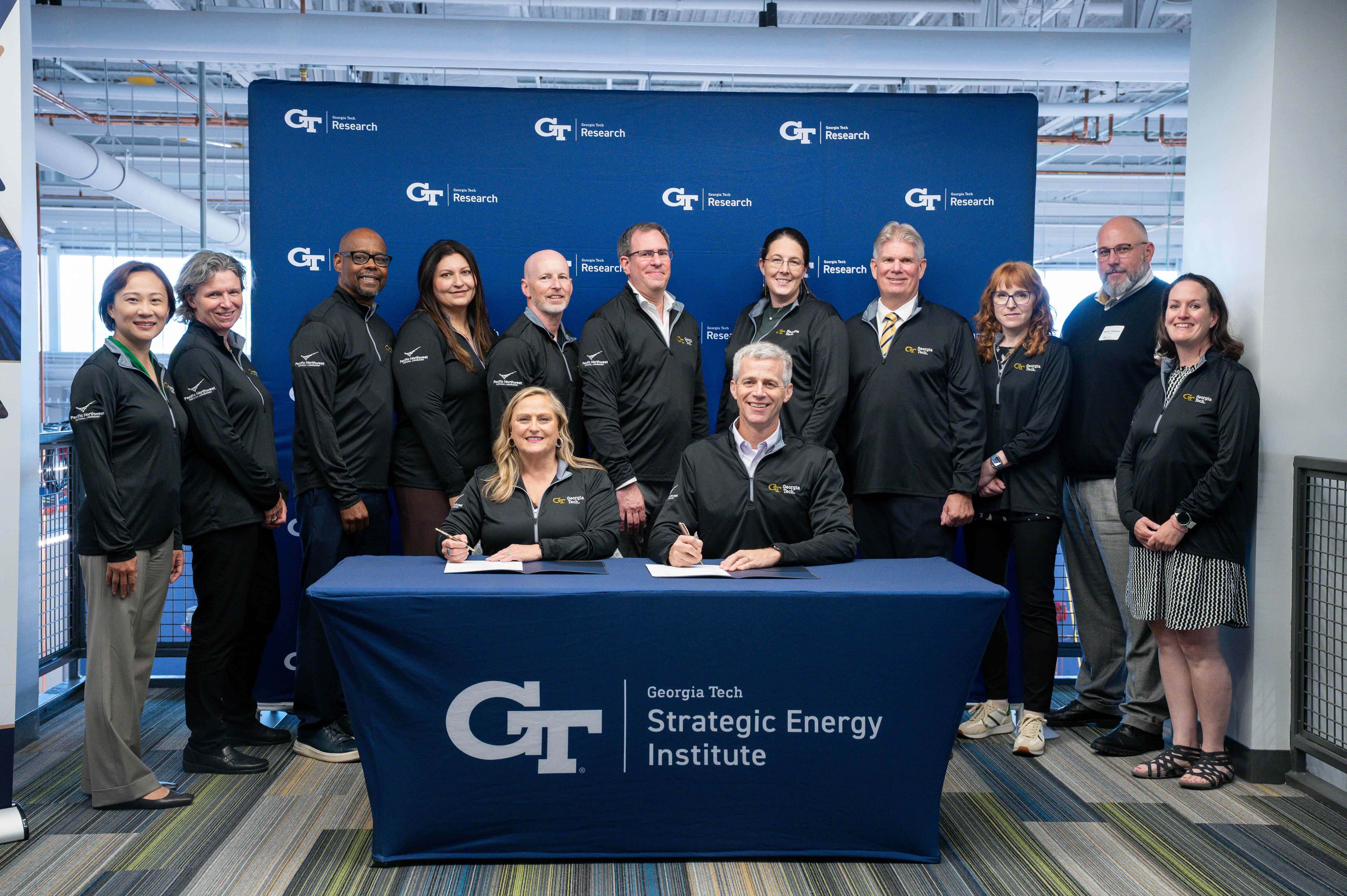
Seated, from left: Deb Gracio, PNNL Laboratory Director; Tim Lieuwen, Georgia Tech Executive Vice President for Research. Standing, from left: Yuanzhi Tang, SEI Executive Director; Alexa Harter, Director, GTRI CIPHER Lab; George White, Executive Director, GT Strategic Partnerships; Asha Menon, SEI Program Manager; Scott McWhorter, SEI Director for National Lab Partnerships; Bill Pike, PNNL Deputy Director for Science and Technology; Jess Smith, PNNL Senior Cybersecurity Researcher; Steve Biegalski, Georgia Tech Faculty Liaison for PNNL; Erin Searcy, PNNL Director of Institutional Investments and Research Partnerships; Aaron Stebner, Associate Director of Georgia Tech Manufacturing Institute; Christine Conwell, SEI Director for Strategic Planning and Operations.
The Georgia Institute of Technology and Pacific Northwest National Laboratory (PNNL) have signed a memorandum of understanding (MOU) to strengthen their longstanding partnership and expand collaboration in scientific discovery, national security research, and workforce development.
The agreement was signed during a Sept. 14 visit by PNNL leadership to Georgia Tech’s Advanced Manufacturing Pilot Facility. It builds on years of successful collaboration between researchers at the two institutions.
The enhanced collaboration has three primary goals: solving big problems through multidisciplinary, multi-institutional research; sustaining and engaging human capital by creating opportunities for students, faculty, researchers, and interns to work on complex real-world challenges; and accelerating technology adoption by taking scientific discoveries and innovations into industry and the federal marketplace.
"Strengthening our partnerships with national laboratories is a strategic priority for Georgia Tech,” said Tim Lieuwen, executive vice president for Research at Georgia Tech. "PNNL is an outstanding partner, and we look forward to deepening connections among our researchers and students, expanding opportunities and access to world-class capabilities and facilities, and advancing discovery, innovation, and national impact together."
PNNL is a U.S. Department of Energy national laboratory that advances scientific discovery and innovations that support reliable energy, national security, and economic competitiveness. Georgia Tech is one of the nation's leading research universities, conducting more than $1.5 billion in research annually and pursuing a mission to develop leaders who advance technology and improve the human condition.
"PNNL and Georgia Tech have a long history of working together," said Deb Gracio, laboratory director of Pacific Northwest National Laboratory. “This agreement provides the foundation to take on difficult research challenges and to leverage our complementary expertise and investments in the years ahead.”
The Strategic Energy Institute (SEI) has played a central role in advancing Georgia Tech's engagement with the national laboratory system and connecting researchers with partnership opportunities.
"As SEI takes on a greater role in coordinating Georgia Tech's national laboratory partnerships, this agreement with PNNL demonstrates how we are building stronger pathways for faculty, researchers, and students to engage with world-class national lab capabilities," said Yuanzhi Tang, SEI executive director.
The National Laboratory Partnership Program supports engagement between Georgia Tech and the U.S. national laboratories. SEI now leads the program, with ongoing support from Georgia Tech’s Office of the Vice President for Interdisciplinary Research. The agreement with PNNL is the first formal agreement established through the program since its transition to SEI.
"This MOU formalizes and strengthens relationships that have been growing for many years," said Scott McWhorter, SEI director of national laboratory partnerships. “It leverages the unique strengths of Georgia Tech and PNNL and provides a framework for expanding engagement across areas of mutual interest.”
Georgia Tech and PNNL bring complementary strengths in energy and environmental systems, electric grid resilience, cybersecurity of critical infrastructure, alternative fuels and advanced materials, biofuels, radiation detection, data science and visual analytics, nuclear nonproliferation, and national security. These capabilities will be brough together through two upcoming Genesis Mission projects.
Bill Pike, PNNL's deputy director for Science and Technology, who joined the laboratory’s leadership delegation for the MOU signing, said the projects reflect the growing partnership and expanding collaboration between the two institutions.
About Georgia Tech
The Georgia Institute of Technology is one of the nation's leading research universities, with strengths spanning engineering, computing, science, business, design, and the liberal arts. With more than $1.5 billion annually in research awards across its Colleges and the Georgia Tech Research Institute, Georgia Tech is among the nation's most research-intensive universities. The Institute's mission is to develop leaders who advance technology and improve the human condition.
About Pacific Northwest National Laboratory
Pacific Northwest National Laboratory draws on its distinguishing strengths in chemistry, Earth sciences, biology and data science to advance scientific knowledge and address challenges in energy resiliency and national security. Founded in 1965, PNNL is operated by Battelle and supported by the Office of Science of the U.S. Department of Energy. The Office of Science is the single largest supporter of basic research in the physical sciences in the United States and is working to address some of the most pressing challenges of our time.
Priya Devarajan | SEI Communications Manager
The Hidden Cost of Segregation
Sep 15, 2026 —

A new study by EPIcenter affiliate Marilyn A. Brown and coauthor Majid Ahmadi examines how racial segregation affects what households pay for basic utilities. Using detailed data from Atlanta, Georgia, the authors investigate whether predominantly Black neighborhoods face higher energy burdens only because of income and housing differences, or whether segregation itself plays a direct role. Their analysis combines mortgage denial data, housing information, utility costs, and household income to show how long-standing discriminatory housing and lending practices continue to shape energy affordability today.
Ahmadi and Brown find that neighborhoods with higher shares of Black residents experience higher energy burdens, even after accounting for factors such as income, renter status, and housing characteristics. In this study, energy burden refers mainly to the share of household income spent on electricity, gas, and water. The authors estimate that an approximately 11 percentage-point increase in a neighborhood’s Black population share is associated with about a 1 percentage-point increase in household energy burden, equal to an average annual increase of about $785 in utility costs. These findings suggest that unequal energy burdens are tied not only to household finances, but also to the lasting effects of segregation and discrimination.
Gil Gonzalez, Program Coordinator,
Energy Policy and Innovation Center
As Oil Profits Skyrocket, Calls for Windfall Taxes Rise
Aug 12, 2026 —
By Tibor Besedeš, Professor of Economics, Georgia Institute of Technology
When Chevron reported its highest quarterly profit in six years on July 31, 2026, it was just one detail in a larger picture: Analyst firm Wood Mackenzie estimates the global oil and gas industry is on course for a cash windfall of US$495 billion in 2026. That’s profit above and beyond what the industry expected before the U.S.-Israel war with Iran began.
Three separate bills seeking to tax those profits are now in Congress, and President Donald Trump has even said the oil companies are “making too much money.”
As an applied microeconomist, I am often asked how taxes affect economic activity. Economists have long held a more nuanced view of windfall taxes than either side of the current debate suggests. Advocates often make overly optimistic revenue projections, and opponents often overstate how much such a tax might discourage investment. A 1980s U.S. windfall-tax experiment is instructive on both counts.
Supporting Community-Led Flood Resilience
Sep 09, 2026 —
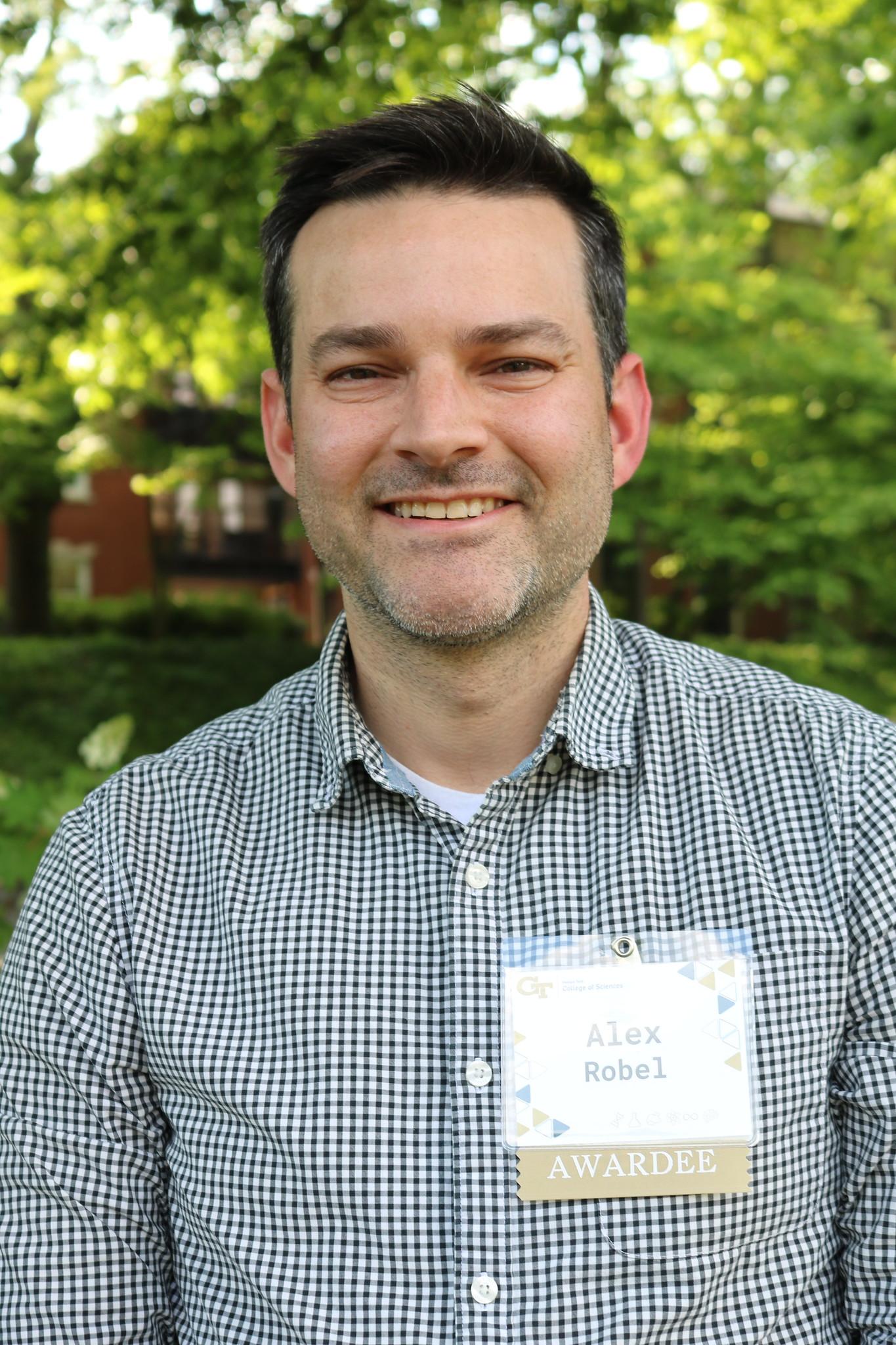
Alex Robel
A new research project aims to empower coastal communities. Using advanced AI-based flood modeling, residents will be able to compare flood mitigation strategies and identify the potential solutions that best meet their needs.
The CHORUS (Community Hubs for Optimizing Resilience) project will collaborate with coastal communities in Georgia and New York and will be split into two pieces: technology development and community engagement.
“We’re not just building a simulator and hoping it fits the needs of coastal residents,” explains Alex Robel, project leader and Jean “Chris” Purvis Associate Professor in the School of Earth and Atmospheric Sciences. "By collaborating with community partners from the very beginning, we can ensure that what we ultimately develop will be effective because the people who will be using it are helping design it.”
Putting Flood Modeling in Residents' Hands
The technology development component will include faculty from the College of Sciences and the College of Computing. The College of Sciences team will develop an AI-based flood simulator and the College of Computing team led by Josiah Hester, associate professor and Catherine M. and James E. Allchin Early Career Professor, will create a web platform that allows users to visualize potential flood impacts.
Traditional flood models can take hours or days to generate results and often require specialized expertise and expensive computing resources. The CHORUS platform will be designed to provide easy-to-understand results in seconds, producing building-scale flood maps that show how water moves through streets, yards, and structures during a range of flooding scenarios. Researchers will use the model to test how specific interventions, such as seawalls, restored marshes, or improved stormwater infrastructure, could affect flooding.
Eventually, users will be able to test their own scenarios through the browser-based tool, enabling them to explore how different decisions could change flood impacts in their communities:
“Users will be able to go into a web browser and indicate where a sea wall could go or change a parking lot into a porous vegetated landscape, then click simulate. Within a few seconds, they’ll have a new flood map showing the impacts of these interventions,” says Robel.
A Community-Driven Approach
A collaborative effort with the New York Climate Exchange, the project will be funded by Georgia Sea Grant and IBM, with support from Georgia Tech for Georgia’s Tomorrow (GT2), Georgia Tech’s Coastal Equity and Resilience (CEAR) Hub, and the National Sea Grant College Program. The CHORUS project is an initiative of the New York Climate Exchange, where Georgia Tech is a core partner institution.
Community engagement in Georgia is being led by CEAR and the Pin Point Betterment Association, which represents descendants of the historic Gullah Geechee community near Savannah. In New York, the project team is partnering with the New York Climate Exchange and the Waterfront Alliance to work with communities surrounding Jamaica Bay.
“What makes this partnership meaningful is that it puts community voices at the center,” says Jasmine Smith, president of the Pin Point Betterment Association. “Too often, decisions are made to ‘better’ communities without actually involving the people who live there. We hope this partnership can serve as a blueprint for how communities are included in future sustainability projects from the very beginning.”
The project includes community advisory boards and technical advisory boards in both locations. Community members will help identify priority assets, select flood scenarios for analysis, and shape the design of the web-based tool. They’ll also test and offer feedback. Technical advisory boards made up of local officials, planners, and other experts will help evaluate the feasibility of proposed solutions.
“The aim is to blend information from both groups without allowing the technical perspective to override community priorities,” says Robel.
According to Robel, giving communities direct access to flood modeling tools can help close the gap between public input and infrastructure planning.
“We are putting decision making in the hands of the community. With a tool like this, the community can say: ‘We want to prevent flooding at this community center, this school, or this road,’” says Robel. “They can run the model, produce data, and present it to local governments or the Army Corps of Engineers — advocating for potential solutions themselves rather than relying on outside experts.”
Robel sees this project as just the beginning:
“Funded by two-year grants, CHORUS is meant to be a pilot for how this kind of community-centered project can be done. Once we understand some of the challenges and opportunities involved, it will hopefully make it easier for us to scale this work to additional community partners.”
About Community-Engaged Research at Georgia Tech
Georgia Tech is actively working to foster more projects that foster community engagement. Collaborative groups at Georgia Tech involved in the CHORUS project include:
- The CEAR Hub, part of the Institute for People and Technology (IPaT), and housed at the Georgia Tech Savannah campus, advances community-engaged research and planning throughout coastal Georgia, helping communities build resilience to environmental and climate challenges.
- The Center for Sustainable Communities Research and Education (SCoRE) trains faculty, students, and staff in best practices for conducting community-engaged research as well as facilitating connections directly with communities.
- The Brook Byers Institute for Sustainable Systems (BBISS) houses SCoRE and is Georgia Tech’s point of contact to the New York Climate Exchange. BBISS forms partnerships like these to fulfill its mission to expand the reach and impact of Georgia Tech’s sustainability research.
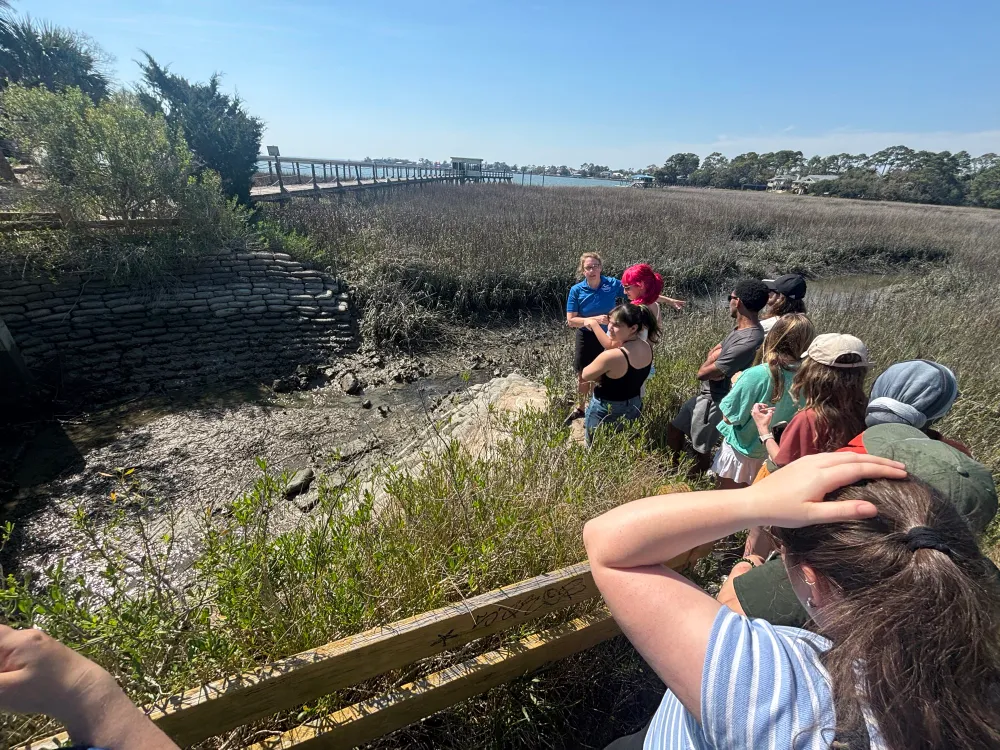
Jill Gambill, executive director and senior research associate of the CEAR Hub, demonstrates a tide gate engineered to maintain storm sewer outflow capacity amidst rising sea levels to Georgia Tech students.
Laura S. Smith, writer
Warming Climate Could Actually Increase Physical Activity, Georgia Tech Economist Finds
Sep 01, 2026 —

Hardly anyone loves exercising in the festering crucible of a brutal summer heatwave. So it stands to reason that as global temperatures rise, the kind of physical activity that’s so crucial for our health and economic productivity could fall.
But recent research from Georgia Tech’s School of Economics in the Ivan Allen College of Liberal Arts suggests adding an asterisk to earlier research that makes that conclusion, saying previous studies failed to account for one simple fact: people adapt.
Georgia Tech economist Bobby Harris used a massive database of Fitbit step count data to measure how temperature shapes physical activity and found that extreme heat cuts step counts by 6% when compared to ideal weather. And while residents of the warmest regions cut their activity by an average of only 354 steps on days over 100 degrees, those living in the coldest regions cut theirs by 1,081, according to Harris’ analysis.
To be fair, cold bites, too. On days that stay below freezing, people take roughly 1,000 fewer steps. That’s a 12% drop, enough to pack on a pound over the course of a typical Madison, Wisconsin winter, Harris found.
But as the climate grows warmer, how humanity will respond to warmer temperatures remains a significant concern. In fact, earlier research projected that, by 2050, temperature-driven declines in physical activity could contribute to 500,000 premature deaths a year worldwide and annual productivity losses topping $2.4 billion.
Projections like those typically assume everyone responds to heat the same way, with no capacity to adapt, Harris said.
Matthew McDowell Named to National Academies Committee on Future Battery Technologies
Aug 25, 2026 —

Matthew McDowell, Professor in the School of Materials Science and Engineering and George W. Woodruff School of Mechanical Engineering and Co-director of Georgia Tech Advanced Battery Center
School of Materials Science and Engineering (MSE) professor Matthew McDowell has been appointed to a National Academies of Sciences, Engineering, and Medicine committee. The appointed committee will explore current and next-generation battery energy storage technologies for defense applications.
The committee, convened through the National Academies' project Future of Battery Technology Options for Defense Applications, will identify the strengths and weaknesses of future battery technologies, including an examination of performance, safety, and manufacturability across technology and manufacturing readiness levels. The committee will also identify gaps where research investments could potentially improve battery capabilities across technology and manufacturing readiness levels, creating opportunities to leverage commercially available technologies.
With a joint appointment in MSE and the George W. Woodruff School of Mechanical Engineering, McDowell is internationally recognized for his research on batteries and energy storage materials. His work focuses on understanding how materials change during battery operation and using that knowledge to develop safer, more efficient, and more sustainable energy storage systems. McDowell is also co-director of the Georgia Tech Advanced Battery Center. He leads research spanning solid-state batteries, lithium-ion and sodium-ion technologies, and next-generation energy storage materials. “I am very thankful to be selected, and I look forward to working with colleagues on developing recommendations to advance battery technologies in support of our country," said McDowell.
Ellen Mazumdar Earns NASA Early Career Faculty Award for Spacecraft Heat Shield Research
Aug 25, 2026 —
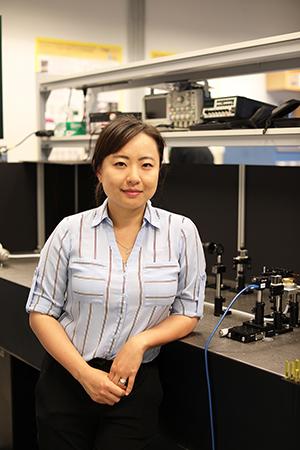
Ellen Yi Chen Mazumdar, assistant professor and Woodruff Faculty Fellow in the George W. Woodruff School of Mechanical Engineering
Ellen Yi Chen Mazumdar, assistant professor and Woodruff Faculty Fellow in the George W. Woodruff School of Mechanical Engineering, has received a NASA Early Career Faculty (ECF) Award to develop new methods for studying the extreme conditions spacecraft experience during atmospheric entry.
This award is part of NASA’s Space Technology Research Grants Program, which supports groundbreaking projects with the potential to transform space science and technology.
Through the three-year, $750,000 award, Mazumdar and her research team will develop laser-based methods to simultaneously measure temperature, chemical species, gas velocity, and other properties in the gases surrounding heat shield materials.
“We aim to implement our measurement techniques in arc jet or plasma jet facilities, like the ones at NASA, to assist with the evaluation of thermal protection systems for next-generation spacecraft,” Mazumdar said.
The project uses ultrafast lasers, which produce extremely short, high-intensity pulses. These pulses allow researchers to study the behavior of molecules on extremely short timescales and measure properties that can improve understanding of the gases surrounding a spacecraft during atmospheric entry.
Mazumdar said she and her students are excited about this project and hope it will help NASA develop new heat shields for spacecraft traveling to destinations such as Mars, Venus, and Titan.
Tracie Troha, ME Communications
EPIcenter Summer Research Program Helps Doctoral Students Advance Energy Research
Aug 18, 2026 —
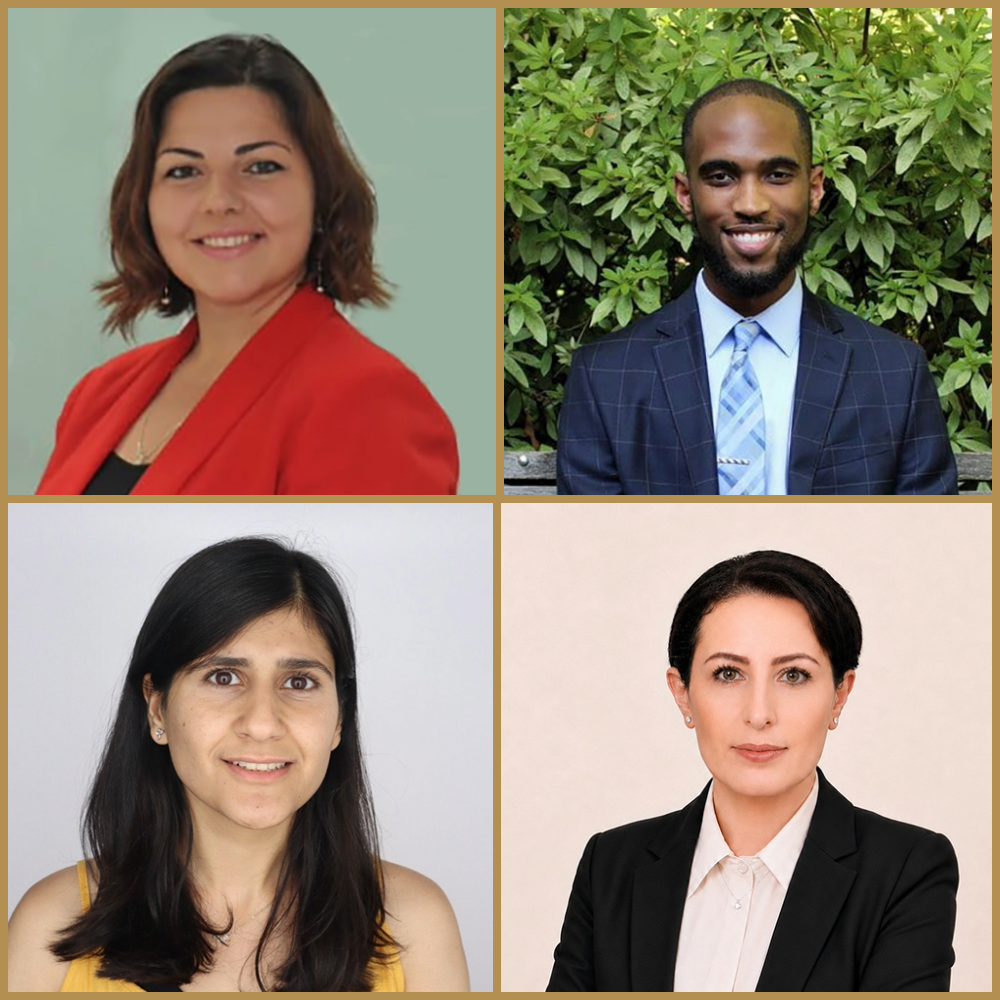
From Top Left (Clockwise): Ana Mazmishvili, Ryan Anthony, Samin Alipour, Faeze Fahimi Aghda
Four Georgia Tech doctoral students spent the summer working on their dissertation research through the Energy Policy and Innovation Center's (EPIcenter) Summer Research Program. The competitive program provides a full summer-semester stipend, along with mentorship and professional development opportunities, to support emerging energy scholars.
"One of the goals of the program is to give students the time and support needed to make meaningful progress on their dissertation research while helping them understand the broader policy, economic, and societal implications of their work," said Laura Taylor, director of EPIcenter.
The stipends enable participants to focus exclusively on clearly defined research goals. The program also supports peer discussions, communication training, and interdisciplinary learning opportunities designed to strengthen both their research and professional development.
This year's cohort explored topics ranging from electricity markets and air pollution to critical mineral supply chains and grid modernization, highlighting the breadth of energy-related research taking place across Georgia Tech.
Exploring Complex Energy Challenges
Ana Mazmishvili, who studies environmental and energy economics, used the summer to examine how climate policies affect communities across state lines.
"My research measures who is actually exposed to pollution from power plants when some states adopt climate regulations to cut emissions while neighboring regions do not," Mazmishvili said. "Because air doesn't stop at state borders, the key question is what happens once the pollution is emitted, and who ends up breathing it."
Her work focuses on the Regional Greenhouse Gas Initiative (RGGI), a cap-and-trade program in the Northeast, and investigates whether the benefits and burdens of emissions reductions are distributed equitably between regulated and neighboring states.
Mazmishvili said the program provided valuable time to focus on her job-market paper, a central component of her dissertation.
"The regular meetings with the program director and other fellows create useful accountability checkpoints and let me hear perspectives from people in very different fields," she said. "We're also learning how to make academic research understandable to a general audience, a skill I expect to use well past this summer."
Industrial and systems engineering doctoral student Faeze Fahimi Aghda spent the summer developing an optimization model for the U.S. gallium supply chain, a critical component of many advanced technologies.
Her research uses mathematical modeling to examine where and when domestic gallium processing facilities should be established under the threat of supply disruptions.
"Working on my research through EPIcenter has taught me to look at my problem from a policy point of view rather than focusing only on the math," Fahimi Aghda said. "The feedback within the meetings helped me improve my model."
Ryan Anthony, in the Jimmy and Rosalynn Carter School of Public Policy, explored how one of the largest oil shocks in U.S. history affected electricity customers and whether utility ownership influenced the impact on consumers.
"So far, my research suggests that it mattered a lot,” Anthony said. “Municipal utilities held rates down and absorbed many of the costs, while private, investor-owned utilities passed more costs through to their customers."
Anthony said the program provided critical support for the archival research required for the project.
"My project depends on data that only exists in old government reports, and that kind of archival work is difficult to fund," he said. "EPIcenter gave me the time and space to do it properly."
Connecting Research to Real-World Impact
For Samin Alipour, the summer provided an opportunity to explore how electric grids can adapt to growing numbers of distributed energy resources.
"Most electric distribution systems were built like one-way roads, carrying power from a substation to homes and businesses," Alipour said. "Rooftop solar, batteries, and electric vehicles are turning those roads into two-way systems."
Her research examines how these emerging technologies can be coordinated to increase grid flexibility and clean energy adoption while maintaining safety and reliability and ensuring that costs and benefits are distributed fairly.
With support from EPIcenter, Alipour focused on the economic and policy dimensions of those challenges. "I did not want my research to remain only a technical model," she said. "The program has helped me connect the technical results of my dissertation to economic value, reliability, equity and compensation policy."
One study developed during the summer was accepted for presentation at a specialized power systems conference, an achievement Alipour credits in part to the opportunity to focus on the broader implications of her work.
Building the Next Generation of Energy Scholars
Beyond advancing individual research projects, the Summer Research Program encourages students to engage with colleagues from different disciplines and develop skills for communicating complex ideas to broader audiences.
“Through regular cohort meetings, participants build a community of accountability, discuss research challenges, explore interdisciplinary energy topics, and develop communication skills,” said Gil Gonzalez, program support coordinator for EPIcenter. “Students also write a research-focused blog post for EPIcenter and present their work at the program's fall workshop, which allows them to share their research with the broader Georgia Tech energy community.”
As EPIcenter continues to support interdisciplinary energy scholarship at Georgia Tech, the Summer Research Program equips future leaders with the tools to address complex energy challenges through technological innovation, informed policy, and economic analysis.
Priya Devarajan | SEI Communications Manager
Engineered at Tech: Pinpointing River Pollution
Jul 15, 2026 —
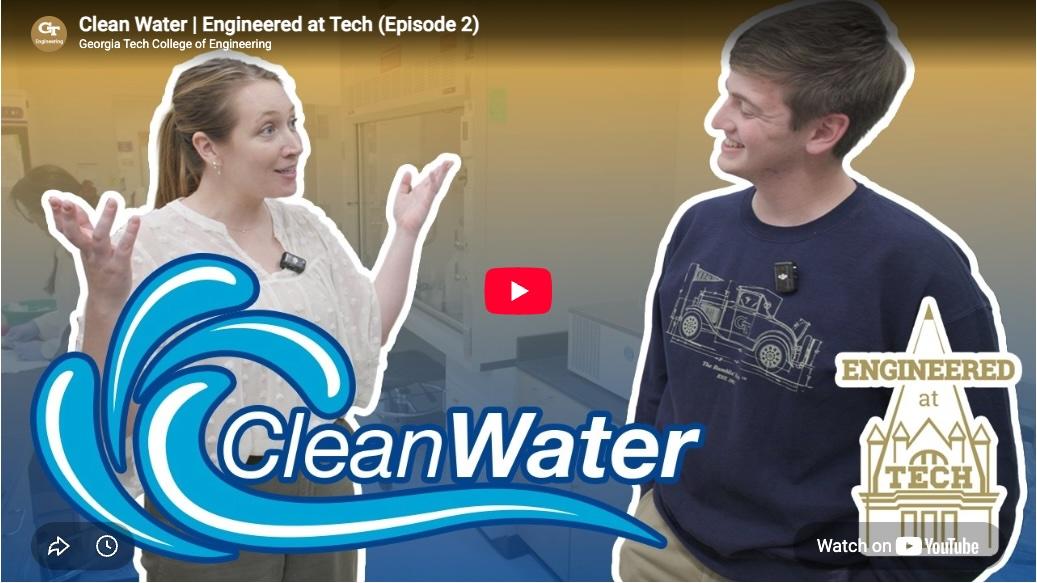
Katherine Graham is an assistant professor in the Georgia Tech School of Civil and Environmental Engineering who studies the fate and transport of pathogens and their indicators in water, including E. coli. Her research focuses on what happens when pathogens get into water, where they go, and how it affects public policy decisions related to health. This includes looking at bacteria and conditions in Atlanta’s Chattahoochee River.
Join Georgia Tech undergraduate Harrison Burnside on this latest episode of Engineered at Tech as he tours Katherine Graham's lab and discovers how to track pathogens in the Chattahoochee River. The goal is to help local agencies pinpoint sources of pollution in rivers and reservoirs to protect public health.
Candler Hobbs, College of Engineering
How Does Wildfire Smoke Affect the Economy?
Aug 12, 2026 —

Casey Wichman, Associate Professor, Georgia Tech School of Economics.
Wildfires in the United States are getting bigger and the season is getting longer, fueled by hotter and drier weather from climate change. Even when fires are hundreds of miles away, the wildfire smoke can still harm people's health and create economic costs through air pollution, said Casey Wichman, an associate professor in Georgia Tech’s School of Economics.
The Air Quality Index (AQI) measures how clean or polluted the air is. A healthy AQI is between zero and 50, but when wildfire smoke blows in and settles over cities, the AQI can reach levels of 500 or more. Poor air quality changes where and how people spend their time and money, reduces productivity (even for those working indoors), and increases healthcare costs.
“Environmental regulations like the Clean Air Act dramatically improved our air quality over the past 40 years, but as wildfire season becomes the new normal, wildfire smoke is eroding those gains,” Wichman said. According to recent research, wildfire smoke has erased about a quarter of the progress made over previous decades, and more than half in many western states.