
Coffee & Commercialization: Patent 101
Coffee & Commercialization: Patent 101
Date: Wednesday, March 18
Time: 9 – 10 a.m.
Place: Klaus 1116 East and West Seminar Room | 266 Ferst Drive, NW
RSVP to asmith872@gatech.edu by 3/13.
Virtual Teams option below
Learn to Protect Your Research
IPaT Research Scientists Supporting Pediatric Research
Feb 27, 2026 — Atlanta, Ga.
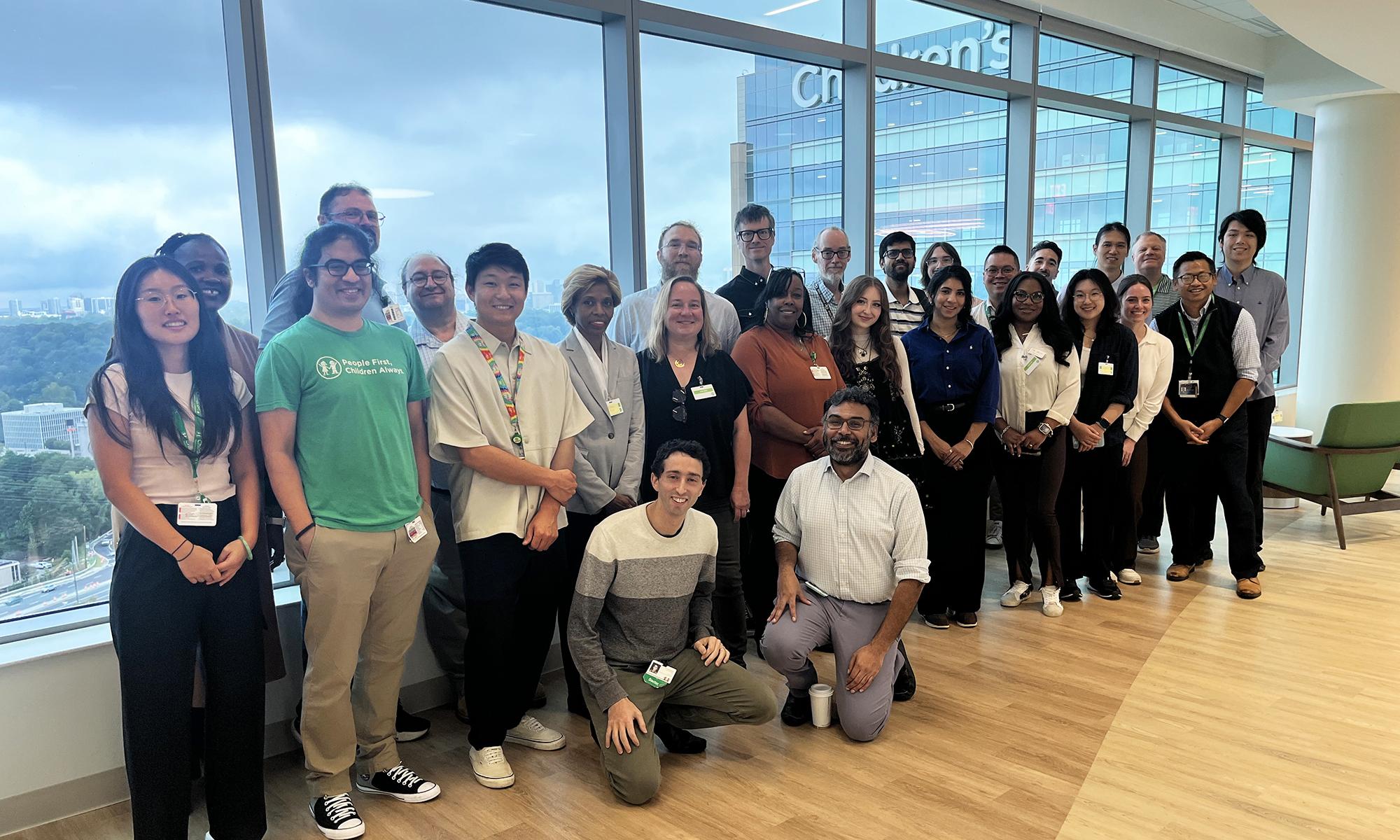
A photo of the joint Children's and Georgia Tech Pillar 1 research team taken September 2025. Six research faculty members from IPaT are in the picture: Peter Presti, Maribeth Gandy Coleman, Clint Zeagler, Jeremy Johnson, Richard Starr, Kala Jordan and Christine Taylor, a graduate research assistant in IPaT.
The Institute for People and Technology (IPaT) is deeply engaged in advancing pediatric research and clinical innovation through a partnership with the Children’s Healthcare of Atlanta Pediatric Technology Center at Georgia Tech (PTC). The center brings clinical experts from Children’s together with Georgia Tech scientists and engineers to develop technological solutions to problems in the health and care of children. The PTC provides opportunities for interdisciplinary collaboration to create breakthrough discoveries that enhance the lives of children and young adults in Georgia and beyond.
IPaT is supporting research within two of PTC’s three core research pillars: data science, machine learning, and artificial intelligence; and patient‑centered care delivery. PTC’s third research pillar is focused on technologies and devices. With the expertise of IPaT’s research scientists, these joint efforts combine scientific expertise, clinical insight, and shared funding that are helping to transform research innovations into operational tools that directly support pediatric patient care at Children’s.
“IPaT is bringing two core competencies to both of these research pillars,” said Maribeth Gandy Coleman, IPaT’s director of research. “First, we’re advocating for and supporting the use of people-centered techniques to inform the research and co-designing the resulting system with all the stakeholders. Second, we’re also making sure we can translate this research into a real return on investment for Children’s. We are ensuring that what we design can be deployed in the hospital, and that it can be integrated with their existing systems and merge as seamlessly as possible with their existing workflows.”
Supporting Data Science, Machine Learning, and Artificial Intelligence (Pillar 1)
Pillar 1 focuses on harnessing artificial intelligence to enable more personalized and predictive pediatric care. The work aims to improve data collection infrastructure, support equitable AI practices, and build a Children’s-Georgia Tech pediatric AI collaboration that integrates advanced AI tools into clinical workflows.
Clinical Deterioration Prediction
One of the flagship projects within Pillar 1 involves developing machine learning models that can detect clinical deterioration in hospitalized children. The goal is to identify when a patient needs urgent escalation to the intensive care unit — faster and more accurately than traditional monitoring.
To achieve this, IPaT research scientists are:
- Extracting and securely transferring electronic health record (EHR) data from Children’s clinical systems.
- Training predictive models using that real‑world data.
- Building the software infrastructure required to deploy these models inside Children’s.
- Integrating model outputs directly into the EHR using Fast Healthcare Interoperability Resources communication protocols. (FHIR is an international standard for the electronic exchange of healthcare information.)
This infrastructure is intentionally designed not just for this single project but as a repeatable, scalable framework for future AI‑enabled clinical tools developed through the Children’s-Georgia Tech partnership.
AI-Enhanced Decision-Making for Hospital Operations
A second emerging project under Pillar 1 aims to address one of healthcare’s most persistent operational challenges: ICU capacity management. Seasonal fluctuations, such as surges in flu or Covid‑19 cases, can create sudden ICU demand surges and staff illnesses, which can make scheduling and staffing decisions challenging.
IPaT is building models that incorporate historical hospital activity, seasonal variation, and real‑time census and staffing levels to predict scheduling needs and help Children’s optimize resource allocation. This research is just beginning, but holds the potential for improving both care delivery and staff well‑being. More importantly, IPaT is applying user-centered design and research techniques along with the engineering work to engage with Children’s people and processes to ensure that these prediction and resource allocation models actually work, and that they will actually be used and useful in the Children’s clinical environment.
Supporting Patient‑Centered Care Delivery (Pillar 2)
Pillar 2 seeks to improve pediatric outcomes by focusing on the “whole child” — physical, psychological, social, and emotional well‑being — while accounting for the needs of families, caregivers, and community environments. Particular emphasis is placed on behavioral health, rural healthcare access, and chronic illness in underserved populations.
IPaT contributes to this work on two fronts:
User Experience and Workflow Research
IPaT’s user experience (UX) researchers conduct interviews, workflow studies, and design evaluations with Children’s clinicians and staff. This human‑centered research helps shape the interfaces, processes, and technologies needed to deliver patient‑centered care in practical, usable ways. These contributions ensure that tools created through the partnership align with the realities of clinical practice.
Data Integration for Behavioral and Social Insights
For Pillar 2 research, IPaT’s secure data enclave enables Children’s EHR data to be transferred, stored, and analyzed in a HIPAA‑compliant environment. Researchers are using this infrastructure to combine clinical data with voluntarily contributed social media information from consenting participants. The aim is to explore indicators of psychological well‑being, behavioral health trends, and early warnings related to self‑harm.
A Secure, Scalable Data Infrastructure to Support Both Pillars
The IPaT secure data enclave provides a protected, secure environment for storing and analyzing sensitive patient information. It serves as the backbone connecting Georgia Tech researchers with Children’s clinical systems. Both Pillar 1 and Pillar 2 research initiatives rely on this Georgia Tech IPaT-managed secure infrastructure to safely enable:
- EHR data transfer and storage.
- Machine learning model development.
- Testing and validation workflows.
- Eventual operational deployment back into Children’s systems.
This secure, scalable architecture is central to the shared goal of translating research into actionable clinical tools.
Accelerating Pediatric Discovery
Georgia Tech’s partnership with Children’s represents a powerful model for cross‑institutional innovation. By aligning IPaT’s strengths in human‑centered design, machine learning, and secure data systems with Children’s clinical expertise, IPaT is helping to build solutions that move quickly from concept to bedside.
As these projects grow, especially with the ongoing expansion of the clinical deterioration system and the launch of the AI-enhanced operations initiative, IPaT research scientists anticipate even greater opportunities to support Children’s mission and improve pediatric health outcomes.
Thank you to Richard Starr for providing insight about these research projects.
Walter Rich
David Sherrill Named Executive Director of the Institute for Data Engineering and Science
Feb 26, 2026 —

Georgia Tech has appointed David Sherrill as executive director of the Institute for Data Engineering and Science (IDEaS), effective March 1. Sherrill is a Regents' Professor in the School of Chemistry and Biochemistry with a joint appointment in the School of Computational Science & Engineering. Sherrill has served as associate director for IDEaS since its founding in 2016 and as interim director since January 1, 2025.
“I’m thrilled to see Professor Sherrill tackle this role for the coming 5 years. He understands the rapidly evolving opportunities to apply AI and data science approaches to the diversity of research conducted by Georgia Tech faculty and students, and has a strong agenda to help our researchers make the most of this explosive change in the research landscape.” Said V.P. of Interdisciplinary Research, Julia Kubanek. “He also has deep experience with team building and management which will position IDEaS favorably.”
As executive director, Sherrill will guide IDEaS’ current initiatives, which include the Microsoft CloudHub program that supports innovative applications in Generative Artificial Intelligence, and provide oversight and support for the joint College of Computing / IDEaS Center for Artificial Intelligence in Science and Engineering (ARTISAN), which provides Georgia Tech faculty and research engineers expert support staff, needed cyberinfrastructure, software resources, and advice to assist faculty with projects using large data sets or using AI and machine learning to drive discovery.
Sherrill will also the lead the launch of a new strategic vision, emphasizing the Georgia Tech research community’s expertise in the development of AI and ML techniques and their application to problems in science and engineering, high performance computing, and academic software. Sherrill will focus on internal and external partnerships at IDEaS, creating new collaborative efforts in areas such as economics, policy, and the arts and humanities. He will also work to strengthen current connections across Georgia Tech’s Colleges, Interdisciplinary Research Institutes (IRIs), and the Georgia Tech Research Institute (GTRI).
“It’s a great honor to be named the next executive director of IDEaS,” said Sherrill. “Georgia Tech has world-class faculty and students, and an unparalleled spirit of collaboration. By bringing together faculty from across campus and working together with some of the amazing student groups, we can leverage the power of AI to accelerate our research and maximize our impact. IDEaS will continue to run upskilling workshops to help our campus keep pace with the rapid changes in AI.”
Sherrill is an active promoter of education in computational quantum chemistry, as well as a strong voice for the benefits of open-source software for research acceleration. He was named Outreach Volunteer of the Year by the Georgia Section of the American Chemical Society in 2017, and he is the lead principal investigator of the Psi open-source quantum chemistry program.
Sherrill earned a B.S. in chemistry from MIT in 1992 and a Ph.D. in chemistry from the University of Georgia in 1996. From 1996-1999 Sherril was an NSF Postdoctoral Fellow at the University of California, Berkeley.
Sherrill is Fellow of the American Association for the Advancement of Science (AAAS), the American Chemical Society, and the American Physical Society, and he has been Associate Editor of the Journal of Chemical Physics since 2009. Sherrill has received a Camille and Henry Dreyfus New Faculty Award, the International Journal of Quantum Chemistry Young Investigator Award, an NSF CAREER Award, and Georgia Tech's W. Howard Ector Outstanding Teacher Award. In 2023, he received the Herty Medal from the Georgia Section of the American Chemical Society, and in 2024, he was elected to the International Academy of Quantum Molecular Science.
- Christa M. Ernst
Partnership in Practice: Co‑Creating Sociotechnical Futures with Underserved Communities
SPEAKER: Katie A Siek, Professor in School of informatics, Computing and Engineering at Indiana University
Translating AI for Healthcare and Biomedicine: Grand Challenges and STAR Opportunities
SPEAKER: May Dongmei Wang, Professor in Wallace H. Coulter Department of Biomedical Engineering at Georgia Tech
New Study Could Show How TikTok’s Algorithm Affects Youth Mental Health
Feb 24, 2026 —
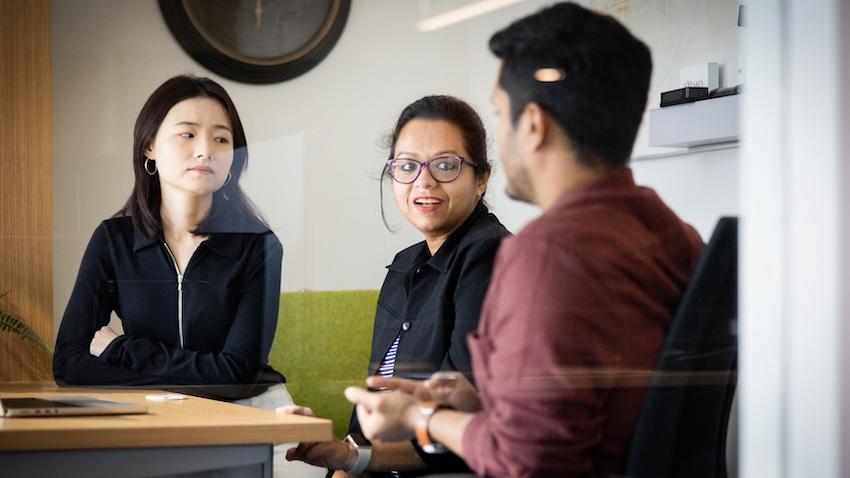
Meta CEO Mark Zuckerberg took the witness stand last week in Los Angeles County Superior Court to defend his company from accusations that social media harms children.
A lawsuit filed by a 20-year-old plaintiff alleges Instagram and other social media apps are designed to make young users addicted to their platforms.
Meanwhile, social media experts believe the algorithms that drive content on these platforms play a role in hooking users and keeping them scrolling for extensive periods of time.
A new study led by Georgia Tech might confirm this suspicion.
Using recently acquired data from more than 10,000 adolescent users, Munmun De Choudhury will audit TikTok’s recommendation algorithm and study its impact on young people’s behavior and mental health.
De Choudhury is leading a multi-institutional research team on a four-year, $1.7 million grant from the Huo Family Foundation.
“We hope to learn the different types of negative exposures that young people experience when using TikTok,” De Choudhury said. “This can help us characterize what they’re watching and build computational methods to understand the consumption behaviors of these participants and how they’re affected by the algorithm.”
De Choudhury, a professor in Georgia Tech’s School of Interactive Computing, is collaborating with Amy Orben, a professor at the University of Cambridge, and Homa Hosseinmardi, an assistant professor at UCLA, on the project.
Social media platforms have become increasingly reluctant to share their data in recent years, posing a challenge for researchers like De Choudhury.
“We can’t do the type of studies we did 10 years ago with X (formerly Twitter) because the API is much more restrictive,” she said. “There are limited ways to programmatically access people’s data now.
“We must go through a tedious, manual process to get around declining access to social media data. This data-gathering process is essential given the sensitive nature of mental health research. You want data that is shared with consent.”
Orben collected TikTok data from more than 10,000 young people in the UK who consented to provide their personal data archives in accordance with the European Union’s General Data Protection Regulation (GDPR).
The collected data includes watch histories, which De Choudhury said distinguishes this research from other social media studies that focus on what users post.
“We don’t understand passive social media consumption very well, so we hope to close that gap and learn what that looks like,” she said. “That could complement or contrast what we know about people’s active engagement on these platforms. Is what they’re consuming directly related to what they’re posting? How does passive consumption affect young people’s mental health?”
A clearer picture of how algorithm-based content affects young people could result in design interventions to minimize negative effects. De Choudhury said studying data from young people is critical because it’s not too late to steer them away from unhealthy behavioral patterns.
“Some of the earliest signs or symptoms of mental health conditions appear in adolescence,” she said. “If appropriate care and support are provided, maybe it’s possible to prevent these symptoms from becoming full-blown in the future.”
Beyond TikTok
What the research team learns about TikTok could also provide broader insight into other social media platforms.
TikTok has been influential in how social media platforms display video content. Competitors like Instagram and X modeled their video presentation after TikTok’s, which can easily lead to doomscrolling.
“Our hope is that our findings can be generalized, with the caveat the data we have is exclusively from TikTok,” De Choudhury said. “Other platforms have similar video-sharing and consumption features where the video automatically plays from one to the next. We hope what we learn from TikTok will be applicable to people’s activities elsewhere, though it will require future work beyond this project to draw concrete conclusions.”
Simulating Feeds with AI
De Choudhury said an additional part of the study will be using artificial intelligence (AI) to simulate video feeds.
In 2024, Hosseinmardi led a study at the University of Pennsylvania on YouTube’s recommendation algorithm and used bots that either followed or ignored the recommendations.
De Choudhury said they will use a similar method for TikTok.
“The feeds will be realistic but generated by AI to see the potential pathways to consumption rabbit holes,” she said. “This should give us some insight into how algorithms influence the negative and positive exposures people might be having on TikTok.”
Foundation Expands Reach
Based in the UK and established in 2009, the Huo Family Foundation supports community education initiatives in the UK, the U.S., and China.
The organization announced in January its launch of the Huo Family Foundation Science Programme. The new program is committing $17.6 million to fund 20 new multi-year research grants that explore the impact of digital technology on the brain development, social behavior, and mental health of young people.
“Digital technology is profoundly shaping childhood and young adulthood, yet there is limited causal evidence of its effects,” said Yan Huo, founder of the Huo Family Foundation, in a press release. “We are proud to support exceptional researchers advancing vital scientific understanding.”
Georgia Tech Launches Pilot Program to Support Rural Arts Organizations
Feb 24, 2026 —

A production of the Perry Players, in Perry, Ga.
Beginning this March in Perry, Georgia, the Georgia Arts Innovation Network (GAIN) will support arts‑related nonprofits and small businesses in Perry, Houston County, and surrounding counties in Middle Georgia. The six‑month pilot is funded by a National Endowment for the Arts (NEA) Our Town grant and is the first EI² program dedicated specifically to the arts.
“Arts organizations contribute so much to the vibrancy of a community,” said Caley Landau, program manager for GAIN and marketing strategist at EI². “They help create a sense of place and provide the ‘something to do’ that small cities and towns want to offer residents, new workers, and prospective businesses. Our hope is to enhance the arts and cultural ecosystem in Middle Georgia by providing training and technical assistance to the organizations that produce art in the region.”
A Rural Community Already Investing in Placemaking
Perry was selected as the pilot location in part for its active downtown revitalization work and commitment to placemaking. Through the Georgia Economic Placemaking Collaborative, Perry city staff partnered with EI²’s Center for Economic Development Research to develop strategies for arts‑based community development.
“Working alongside the Georgia Tech team has been a wonderful experience,” said Alicia Hartley, downtown manager for the City of Perry. “We hope that participants walk away from the cohort inspired and empowered to activate their organizations in creative and meaningful ways.”
Listening First, Then Providing Targeted Support
The program will begin with a listening session to understand participating organizations’ needs. EI² will then design tailored workshops drawing from experts at Georgia Tech and beyond. Every other month, cohort members will meet for sessions on business practices, digital tools, operational efficiency, marketing, placemaking partnerships, and other areas that support long‑term sustainability.
“They sound like great ideas — murals, pop‑up exhibits, outdoor performances — but how do you really get down to the nuts and bolts of making them happen?” Landau said. “And how do you bring the right partners to the table? That’s what we’ll explore together.”
A Statewide Mission, Strengthened Through the Arts
As Georgia Tech’s economic development arm, EI² administers programs that support entrepreneurs, manufacturers, communities, and municipalities across the state and around the world.
“GAIN represents an important part of EI²’s comprehensive approach to economic development,” said David Bridges, vice president of EI². “It gives us another way to create impact in Georgia by applying our expertise to serve arts organizations that are vital to Georgia communities.”
Jason Freeman, associate vice provost for Georgia Tech Arts, noted that the pilot aligns with the Institute’s broader commitment to supporting arts, culture, and creativity statewide.
“Through GAIN, I’m excited to learn more about the arts ecosystem in Middle Georgia,” Freeman said. “The lessons we learn will inform both statewide collaborations and new initiatives emerging through our Creative Quarter innovation district on campus.”
Program Funding and Support
The pilot is funded through the NEA’s Our Town program, which supports projects integrating arts, culture, and design into community development. The Georgia Council for the Arts is partnering with EI² on cohort recruitment, curriculum development, and arts‑based placemaking strategies.
Recruitment has begun. Arts nonprofits and arts‑based businesses in Middle Georgia may apply at innovate.gatech.edu/gain/.
MEDIA CONTACT
Péralte Paul
peralte@gatech.edu
GAIN PROGRAM CONTACT
Caley Landau
caley.landau@innovate.gatech.edu
Designing AI With People in the Loop: Lessons from Socio Technical Systems Deployments
SPEAKER: Rosemarie Santa Gonzalez, Research Scientist, H. Milton Stewart School of Industrial and Systems Engineering and NSF AI Institute for Collaborative Assistance and Responsive Interaction for Networked Groups (AI-CARING) at Georgia Tech.
Democracy in the Age of Algorithms: AI, Influence, and the Future of the Information Space
As artificial intelligence reshapes how information is created, distributed, and consumed, democracies face new and evolving challenges. In this upcoming program, Valerie Wirtschafter, fellow in Foreign Policy and the Artificial Intelligence and Emerging Technology Initiative at Brookings, will examine how AI-driven technologies, algorithms, and new media ecosystems are transforming the global information space and testing democratic resilience.
Leanne West Named 2026 Innovator of the Year in Pediatric Health
Feb 06, 2026 —
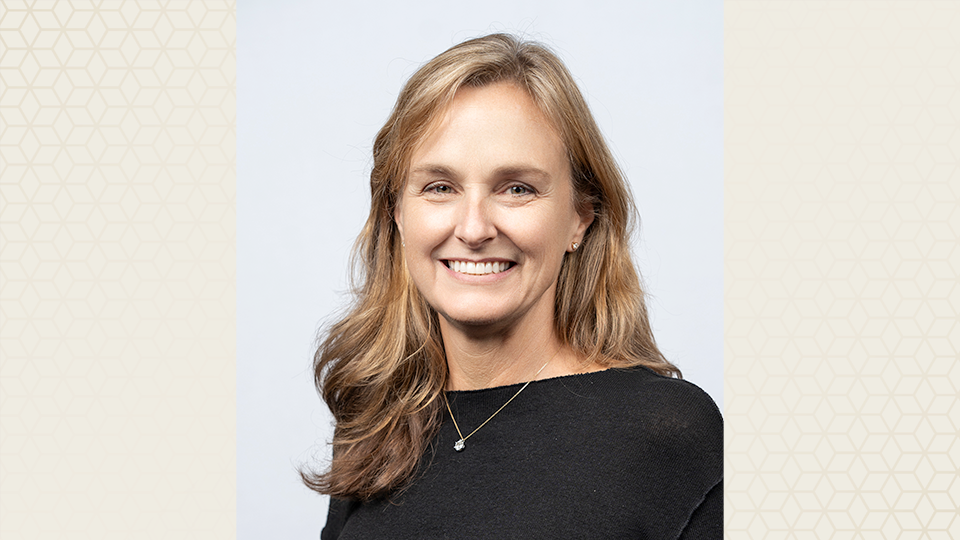
Leanne West, chief engineer of pediatric technologies at Georgia Tech and a national leader in pediatric health innovation, has been honored as a 2026 Innovator of the Year in Pediatric Health by the Atlanta Business Chronicle and selected as one of Titan CEO’s 2026 Georgia Titan 100 Honorees. These recognitions celebrate West’s leadership and impact in pediatric health innovation at both the local and national level. In January, West was also named chief research and innovation officer at Shriners Children’s, a role that expands her longstanding commitment to pediatric innovation.
For more than a decade, West has been instrumental in the partnership between Georgia Tech and Children’s Healthcare of Atlanta, working through the Pediatric Technology Center (PTC) to translate clinical needs into engineered solutions for children. In this role, she has worked alongside Children’s clinicians, nurses, and researchers to identify unmet needs, form multidisciplinary teams, and guide projects from early concepts through prototyping, validation, funding, and regulatory pathways. The Children’s Healthcare of Atlanta PTC established Atlanta as a nationally recognized hub for pediatric technology innovation enabling clinician-driven research, accelerating translational projects, and fostering a culture in which engineering solutions are shaped directly by real clinical experience.
In 2019, West began building a relationship with Shriners, working to understand their most pressing clinical needs. She then connected clinicians with researchers at Georgia Tech, Emory University, and Kennesaw State University to foster collaborations focused on real-world clinical challenges. She also supported teams with promising prototypes by helping them navigate national funding opportunities and pathways at the Federal Drug Administration (FDA), accelerating the transition from lab discoveries to patient care.
Over time, this steady engagement evolved into a strong research partnership. In June 2025, Shriners announced they are joining the robust pediatric innovation ecosystem in Atlanta by establishing the Shriners Children’s Research Institute (SCRI). SCRI will be co-located with Georgia Tech as the anchor tenant at Science Square. This investment will be transformational for the future of pediatric research and innovation in the state of Georgia.
“What excites me most is what we can accomplish together when we combine our strengths to align around a children-first mindset to improve the healthcare of children everywhere,” said West. “Kids will benefit in ways no one organization could achieve alone.”
West’s leadership in pediatric innovation doesn’t stop there. In November 2025, she consolidated three major gatherings into the first International Pediatric Healthcare Innovation Summit, combining the Pediatric Innovation Day, the International Society for Pediatric Innovation’s (iSPI) biennial PEDS2040 event, and the joint meeting of the FDA-funded Pediatric Device Consortia. The Summit highlighted the work of Children’s Healthcare of Atlanta, bringing together more than 150 representatives from children’s hospitals, startups, venture capitalists, clinicians, patients, and leaders from across the Georgia innovation ecosystem, strengthening the region’s global presence in pediatric health innovation.
As president of the International Children’s Advisory Network (iCAN), West continues to elevate the voices of young people with chronic and rare conditions and their caregivers. Under her leadership, iCAN partners with industry, regulators, and the FDA to ensure pediatric patients are included in device and drug development, clinical trials, healthcare education, and regulatory conversations. She also champions opportunities that train and inspire youth and early career professionals to pursue roles across healthcare and life sciences — from clinicians and innovators to public health leaders and patient advocates.
West served as an invited speaker at the 2025 World Health Organization’s World Children’s Health Day on the Importance of Clinical Trials for the Safety of Children, and at the FDA’s meeting on the Implementation of the Best Pharmaceuticals for Children Act and Pediatric Research Equity Act. She continues to contribute nationally through service on the Medical Device Innovation Consortium’s (MDIC) NEST executive committee to advance use of real-world evidence in regulatory submissions, particularly for pediatric devices, and the MDIC Patient Value committee. In addition, she serves on the iSPI executive team, the Patient Focused Medicines Development board, the Pediatric Trials Network steering committee, and as a judge for MedTech Innovator.
West’s awards and new role reflect the cumulative impact of more than a decade of leadership, partnership-building, and translational work across the worldwide pediatric ecosystem. West and her fellow honorees will be officially recognized at the 2026 Health Care Champion Awards on March 19 and at the Titan 100 Awards on May 7.
Laurie Haigh
Institute Communications