
NASA Summer Camp Inspires Future Climate Leaders
Oct 01, 2024 — Skidaway Island, Georgia
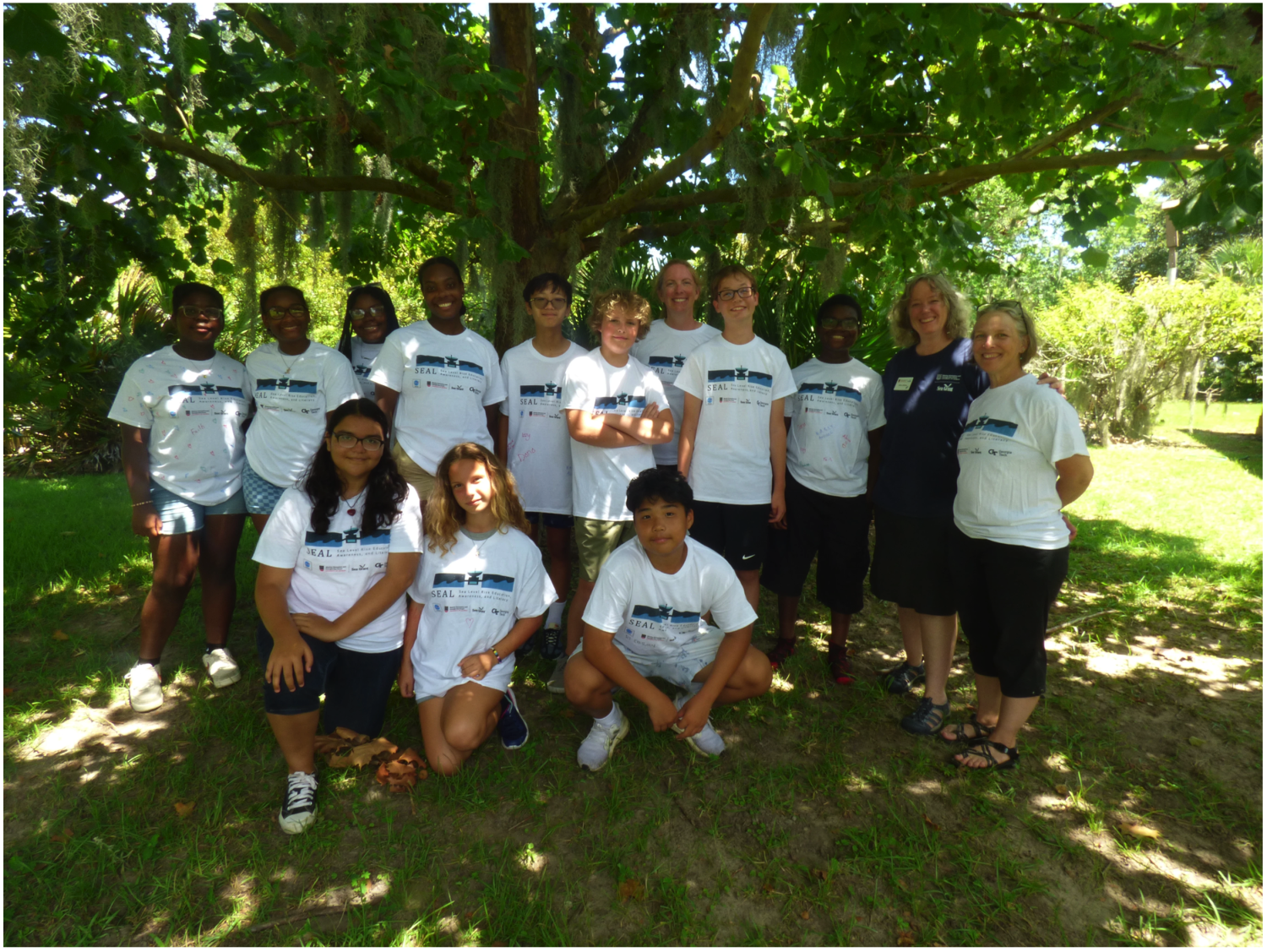
Rising Georgia 7th-8th graders learn how coastal areas are changing due to sea level rise.
The CEAR Hub partnered with the University of Georgia Marine Extension and Georgia Sea Grant to host a week-long NASA Sea Level Changemakers Summer Camp, introducing 14 rising 7th-8th graders to how coastal areas are changing due to sea level rise. CEAR Hub is a project that joins community organizations, local governments, and educational institutions together to develop the knowledge, tools, and strategies that make our communities more resilient.
Set at the UGA Marine Education Center and Aquarium on Skidaway Island, the camp offered students hands-on activities and outdoor educational experiences, where they analyzed real data collected by NASA scientists and learned about community adaptations to flooding.
Students interacted with experts from NASA’s Jet Propulsion Laboratory, the University of Georgia, and the Georgia Institute of Technology, gaining insights into satellite observations, green infrastructure, environmental sensors, and careers related to sea level rise. The camp also included a visit to the Pin Point Heritage Museum, where students engaged with leaders from the historic Gullah Geechee community of Pin Point. The camp concluded with a boat trip to Wassaw Island, where students observed the effects of sea level rise on an undeveloped barrier island and compared these observations with earlier findings from urban environments. Funding from the NASA Science Activation Program ensured that the camp was accessible to all students, eliminating financial barriers for groups traditionally underrepresented in STEM fields.
Russell Clark, a member of the Georgia Tech's Institute for People and Technology (IPaT), is CEAR Hub's principal investigator
Article originally posted on CEAR HUB news.
Walter Rich
Gillian Hayes Receives IPaT Distinguished Alumni Award
Oct 18, 2024 —
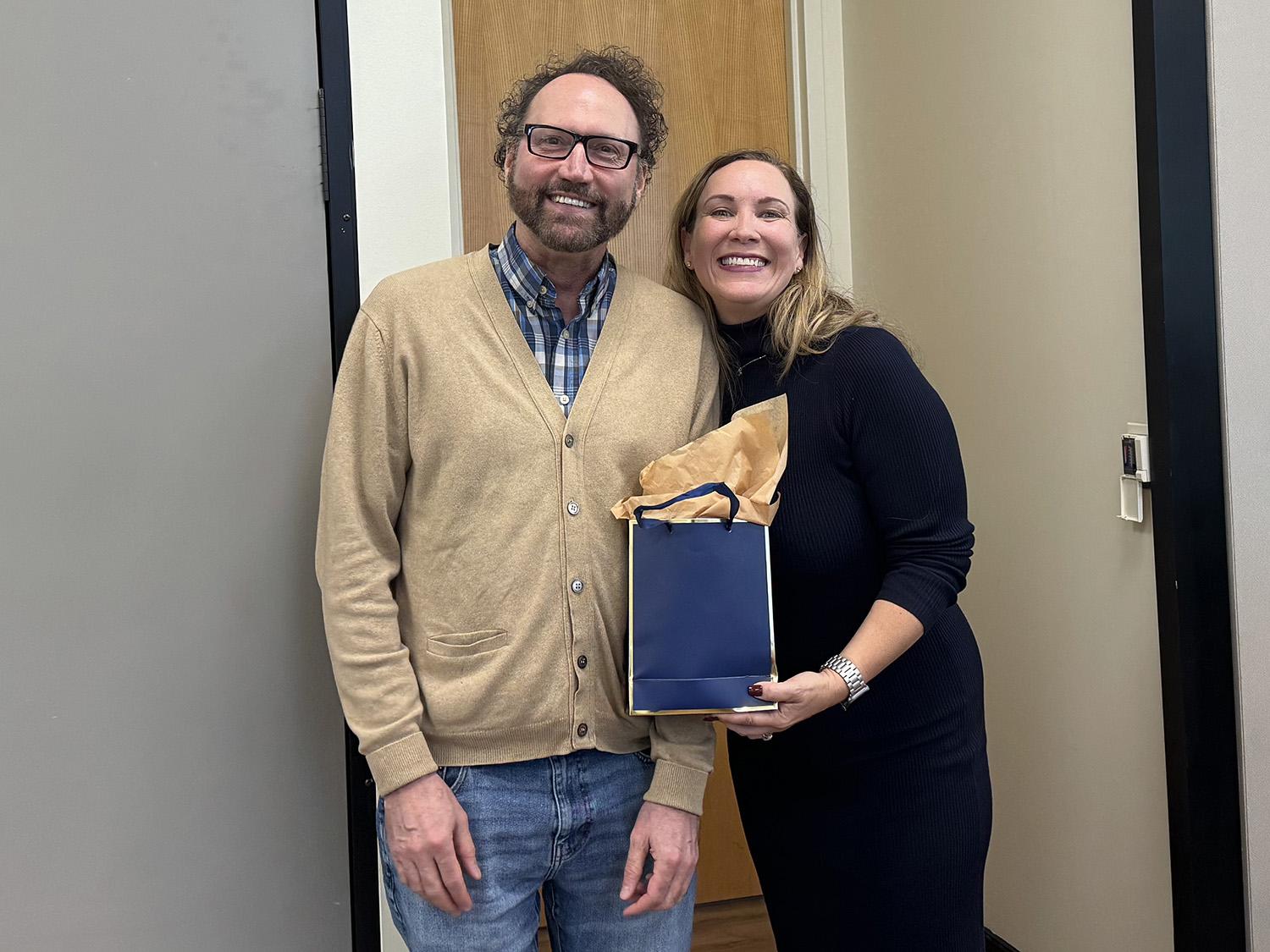
Michael Best, executive director of IPaT, presents Gillian Hayes with a gift bag before her IPaT distinguished alumnus talk on Oct. 17, 2024
Gillian Hayes, who received her doctorate in computer science from Georgia Tech in 2007, was honored with the Institute for People and Technology (IPaT) Distinguished Alumni Award. The IPaT award, a successor to the GVU Alumni Award, recognizes impactful research through people-centered technologies that help to shape the global future.
Her research interests are in human-computer interaction, ubiquitous computing, assistive and educational technologies, and health informatics. She designs, develops, deploys, and evaluates technologies to empower people to use collected data to address real human needs in sensitive and ethically responsible ways.
Hayes delivered IPaT’s distinguished alumni lecture on October 17, 2024 in the ballroom of the Technology Square Research Building. Her lecture, “Community-Engaged Research in Autism and ADHD Technologies,” explored the trajectory of her innovative work, sustained community research partnerships, and emphasized key milestones in the development of autism and ADHD technologies by her lab. Attention-deficit/hyperactivity disorder (ADHD) is a developmental disorder that can affect a person's ability to function in daily life.
Hayes is the vice provost for academic personnel and the Robert A. and Barbara L. Kleist Professor of Informatics at the University of California, Irvine. She holds joint appointments in the Donald Bren School of Information and Computer Science, School of Education, and School of Medicine at UC Irvine.
Walter Rich
Intelligent Machines Inspired by Living Systems
Please join us for a joint seminar hosted by Physics of Living Systems and the Institute for Robotics and Intelligent Machines!
Title: Intelligent Machines Inspired by Living Systems
New Neuro IRI Executive Director Town Hall
We invite you to join us for a hybrid town hall on Wednesday, November 6th at 3:15pm to discuss the search for the Executive Director of the new Institute for Neuroscience, Neurotechnology and Society (INNS). This event will be hosted in-person at the Pettit Microelectronics Building- 102A&B Conference Room and online via Teams. All Georgia Tech personnel and affiliated faculty are welcome!
CANCELLED: Youth Advocacy for Resilience to Disasters: Empowering Youth to Be Advocates for Change
THIS EVENT HAS BEEN CANCELLED AND WILL BE RESCHEDULED.
Speaker: Allen Hyde, Associate Professor in the School of History and Sociology at the Georgia Institute of Technology.
Intelligent Textiles for Physical Interactions
Speaker: Yiyue Luo, Assistant Professor at University of Washington ECE
Understanding the impact of floods on critical infrastructure networks
Speaker: Yiyi He, Assistant Professor, School of City and Regional Planning, College of Design, Georgia Tech
First Day of Classes: Spring 2025
First Day of Classes: Spring 2025
Independence Day Observance
Georgia Tech will be closed on July 4 in observance of Independence Day.
Juneteenth - Campus Closed
Campus will close in observance of Juneteenth National Independence Day
The day was recognized as a federal holiday on June 17, 2021, when President Joe Biden signed the Juneteenth National Independence Day Act into law.