
Neuro Next Seminar
Nanthia Suthana
Associate Professor
Department of Psychology
University of California - Los Angeles
To participate virtually, CLICK HERE
Speaker Bio
Neuro Next Seminar
Maria Geffen
Professor
Department of Psychology
University of Pennsylvania
To participate virtually, CLICK HERE
Lab Overview
Neuro Next Seminar
Wilsaan Joiner
Professor
College of Biological Sciences
University of California - Davis
To participate virtually, CLICK HERE.
Lab Overview
Neuro Next Seminar
Shawn Dotson
Assistant Professor
Department of Neuroscience
Georgia State University
To participate virtually, CLICK HERE
Faculty Host: Ming-fai Fong
Neuro Next Seminar
Xinzhong Dong
Associate Professor
Department of Neuroscience
Johns Hopking University School of Medicine
To participate virtually, CLICK HERE.
Lab Research
Building Resilient Communities: Insights from Kait Morano at Georgia Tech
Oct 28, 2024 — Atlanta

Kait Morano is the resilience planning director for the CEAR Hub and research scientist with Georgia Tech.
In a recent interview on The Weather Channel, Kait Morano, a research scientist from Georgia Tech, discussed disaster resilience and the strategies communities can adopt to withstand extreme weather events. The discussion was particularly focused on the aftermath of hurricanes and the opportunities for rebuilding that they present.
Understanding Resilience:
Morano emphasized that while events like Hurricane Helene, Hurricane Milton, and other powerful storms cause widespread devastation, they also provide unique opportunities for transformative change. "Communities can take advantage of funding sources available after extreme events from the federal government, private equity firms, and philanthropic organizations to build back better," she said. “The key is having post-disaster redevelopment plans in place to seize these opportunities and build resilience against increasing storm frequency and severity.”
The Role of Zoning:
The conversation also touched on the controversial topic of zoning. Morano acknowledged that while zoning can be politically and publicly contentious, post-disaster scenarios create a window for necessary change. "Often, zoning ordinances inadvertently encourage development in high-risk areas," she explained. “Post-disaster periods allow communities to reassess these policies and potentially shift development to lower-risk areas, enhancing overall safety and resilience.”
Moving Forward:
Morano's insights highlight the need for proactive planning and policy reassessment to create safer, more resilient communities. As extreme weather events become more frequent, her expertise underscores the importance of seizing post-disaster opportunities to implement long-term, sustainable changes.
For communities looking to weather the storms of the future, the message is clear: resilience is not just about surviving the next storm, but about preparing and planning to thrive in the face of inevitable challenges according to Morano.
---
Kait Morano is the resilience planning director for the CEAR Hub and research scientist with Georgia Tech. CEAR Hub, a research project supported by Georgia Tech’s Institute for People and Technology, is working with coastal communities to build a future informed by data, guided by strategy, and empowered by knowledge. Their work is organized around three core pillars: environmental sensors and decision support tools, community engagement and planning, and K-12 education and workforce development.
A portion of her interview with The Weather Channel on October 24, 2024 can be found here: https://fb.watch/vvk6ABVAe0/
Walter Rich
Challenging Erasure: Collaborative Architectural Documentation and Historic Interpretation
Speaker: Danielle S. Willkens, Associate Professor, School of Architecture, Georgia Tech
Abstract: How can we study and reveal the hidden, or repressed, histories within the built environment that illuminate a more complete and accurate record of our shared history? This talk will feature ongoing documentation, visualization, and historic interpretation work at modern civil rights sites in the southern U.S., and how expanded narratives can pave the way for a more resilient and inclusive future.
CREATE-X Meet Your Co-Founder
Meet Your Co-founder is a speed networking event for students to find co-founders. Do you have a startup idea but no teammates to build it with? Do you have skills you want to apply to a startup but don't have an idea? Come meet the co-founders you need to apply to Startup Launch!
Deepfakes Surge During Election Cycles
Oct 23, 2024 — Atlanta
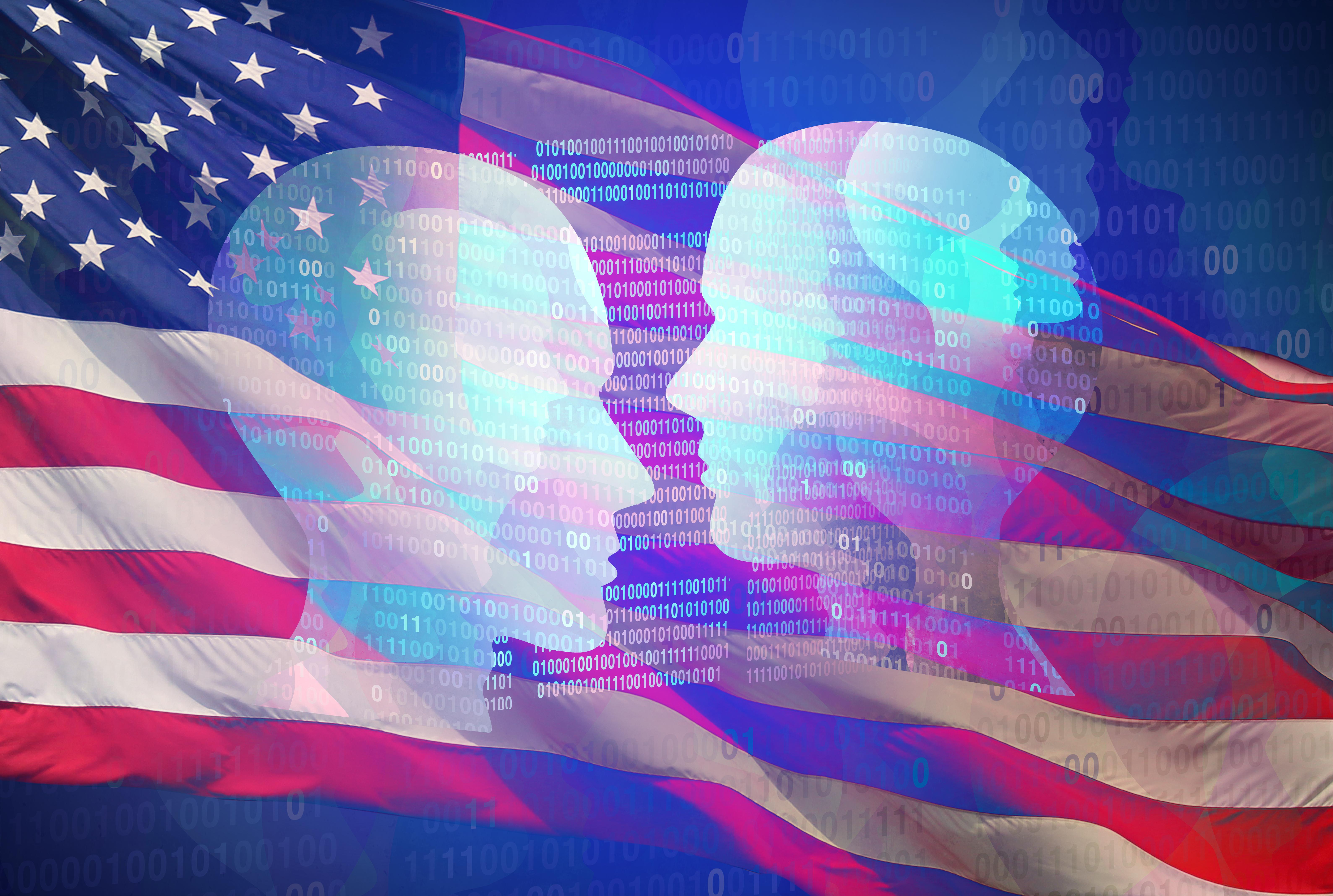
As the 2024 election cycle heats up, the use of deepfakes has surged, raising significant concerns about their impact on political campaigns and voter trust. These AI-generated videos, which can convincingly alter the appearance, voice, or actions of political figures, have become a powerful tool for misinformation.
Mark Riedl, a professor in the Georgia Tech School of Interactive Computing and associate director of the Georgia Tech Machine Learning Center, shared his concerns about the implications of deepfakes in politics.
“Misinformation and the role of deepfakes are on everyone’s mind as we go into election cycles,” Riedl said. “What we are seeing is that malicious actors are starting to use generative AI increasingly in the creation of misinformation campaigns.”
In this escalating conflict, battling the deepfakes, or aggressors, has become even more challenging.
“If we think of the arms race between the people who are using generative AI to create misinformation campaigns and the people using technology to detect them, the aggressors are well ahead,” he noted. This imbalance is troubling, as current detection techniques often fail to identify deepfakes or mistakenly flag genuine content, leading to what Riedl describes as “plausible deniability.” This plausible deniability allows individuals to dismiss real events as fabrications, further eroding public trust.
Due to the increasing sophistication of deepfakes during election cycles, robust detection systems and regulatory measures are urgently needed to safeguard democratic processes. “There isn’t a lot that regulation is really going to do to change the trajectory that we’re on. More enforcement, faster enforcement, faster shutting down of the bots and things like that will still be important,” Riedl explained.
As deepfakes become more prevalent, the challenge for technologists and policymakers is to stay ahead of malicious actors and ensure that the public can trust the media they consume. Vigilance and innovation are critical to preserving the trust and integrity of future elections.
Siobhan Rodriguez
Media Relations Representative
Institute Communications
Russell Clark Named Interim Director of Sustainability
Oct 22, 2024 — Atlanta
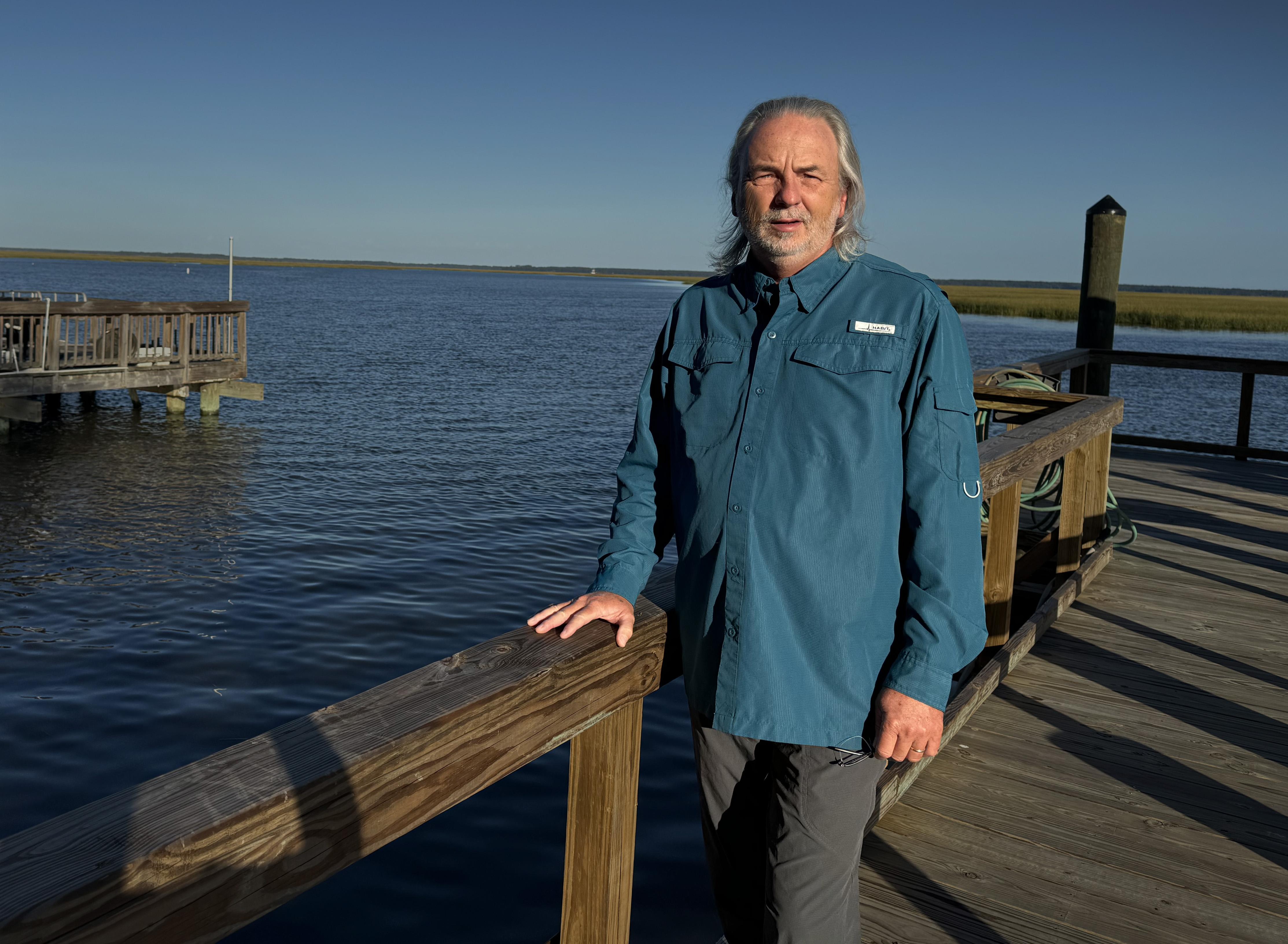
Russell Clark named the interim director of sustainability for IPaT.
Russell Clark, lead principal investigator of the CEAR Hub and senior research scientist at the Institute for People and Technology (IPaT), has been named the interim director of sustainability for IPaT where he can help drive the practice and culture of sustainability related to IPaT’s research projects.
“Sustainability has been an important and growing theme for Georgia Tech during the last several years as evidenced by Georgia Tech’s Sustainability Next plan,” said Clark. “I’m looking forward to this new role which aligns with the Institute’s strategic vision and goals.”
Clark has been supporting IPaT in various roles for many years and continues with a joint appointment as faculty in the School of Computer Science. He earned his doctoral degree from the College of Computing at Georgia Tech and was the co-director of the Georgia Tech Research Network Operations Center which supported a variety of research projects across campus.
He was also part of the leadership team creating the Smart Sea Level Sensors project that installed internet-enabled water level sensors across flood-vulnerable Chatham County via a working partnership between officials from the Chatham [County] Emergency Management Agency (CEMA), the City of Savannah, and Georgia Tech scientists.
In addition to IPaT’s research, Clark is working to incorporate educational opportunities for Georgia K-12 students to learn more about resiliency, sustainability, and emergency preparedness. Sharing the latest environmental, economic, and social sustainability research topics are part of his community engagement vision which he has already done by working with Georgia Tech’s Center for Education Integrating Science, Mathematics, and Computing (CEISMC) which enhances PreK-12 and post-secondary STEM education in the state.
At the college level, Clark, through CEAR Hub, is establishing a new Vertically Integrated Projects Program team which engages undergraduate and graduate students in ambitious, long-term, large-scale, multidisciplinary projects. His resilience and sustainable knowledge expertise has been utilized to teach and co-advise students across campus in the School of Civil and Environmental Engineering, the H. Milton Stewart School of Industrial and Systems Engineering, and Georgia Tech’s Lorraine campus in France.
“My long and deep involvement with the Georgia coastal community where I live today has created a passion for pursuing research focused on resilience and sustainability,” said Clark. “I hope to build on Georgia Tech’s rich history of sustainability to forge innovative relationships, elevate research and education, and improve the long-term economic and commercialization potential for the state of Georgia with our current and future research projects.”
Walter Rich