
Researchers Build AI Tutor Grounded in Course Materials
Apr 02, 2026 —
As students increasingly turn to artificial intelligence (AI) to help with coursework, some worry that their learning could be compromised. Georgia Tech researchers are working to counter this potential decline with an AI tool they hope will promote learning rather than hinder it.
TokenSmith is a citation-supported large language model (LLM) tutor that can be hosted locally on a user’s personal computer. The tutor only provides answers based on course materials, such as the textbook or lecture slides.
Associate Professor Joy Arulraj began the project with support from the Bill Kent Family Foundation AI in Higher Education Faculty Fellowship last year. The fellowship, led by Georgia Tech’s Center for 21st Century Universities, supports faculty projects exploring innovative and ethical uses of AI in teaching.
Arulraj has enlisted assistant professors Kexin Rong and Steve Mussmann to help build TokenSmith. Rong recently joined the Institute for People and Technology at Georgia Tech.
Mussmann said TokenSmith is a synergistic blend of a database system and a machine learning system. The model stores textbooks, textbook annotations by course staff, common questions and answers, a learning state of the student, and student feedback in a structured database system. However, machine learning plays a key role in the answer generation as well as adapting the system to the student, course staff guidance, and user feedback.
"What excites me most is demonstrating how data-driven ML and principled database systems design can reinforce each other — one providing adaptability and flexibility, the other providing structure and traceability — in a way that benefits students," Mussmann said.
Keeping the model local has been an important focus of the project. The team wanted to create an AI tutor that helps students learn from their class resources rather than just giving answers. With each response, TokenSmith cites the origin of the answer in the provided documents.
“One problem with LLMs is that they can hallucinate and provide wrong answers, but in this controlled environment, we can add these guardrails to make sure it’s actually helpful in an educational setting,” Rong said.
Rong said she feels that students often undervalue textbooks, and she hopes TokenSmith can motivate students to make better use of them.
“Textbooks can sometimes be daunting, but maybe if we combine them with the model, students might be more willing to read a paragraph or page in the textbook, and that could help clarify something for them,” she said.
Running the model locally is more cost-effective and helps preserve the user’s privacy. But running the new tool locally comes with technical challenges.
One challenge with creating the model is speed. Since it is a locally based model, TokenSmith depends solely on the user’s computer memory. Tests have also shown that the tutor currently struggles to answer more complex questions.
“We are interested in pushing the boundaries of these local models so that they give students good answers and also run fast enough to keep students engaged,” Arulraj said.
Morgan Usry, Communications Officer
Autonomous Vehicle Technology Symposium
The Atlanta Regional Commission (ARC) and Georgia Tech’s Center for Urban Research invite transportation researchers and professionals to participate in a symposium on autonmous vehicle technology.
How Scientists and the Public Think About AI and What That Means for Science Communication
Speaker: Todd Newman, Associate Professor of Life Sciences Communication, University of Wisconsin - Madison
Institute for People and Technology Announces Five Faculty Promotions
Mar 31, 2026 — Atlanta, GA

Pictured: Kala Jordan, Noah Posner, Peter Presti, Richard Starr, and Andrew Zhao.
The Institute for People and Technology (IPaT) at Georgia Tech is proud to announce the promotion of five research faculty whose work continues to advance the institute’s mission of shaping people‑centered innovation across disciplines.
Kala Jordan has been promoted to Research Scientist II. With a background spanning biology, health informatics, and STEM education, Jordan brings a multidisciplinary approach to her work. She plays a key role in AI‑CARING, leading studies that support the development of personalized collaborative AI systems designed to improve quality of life for older adults.
Noah Posner has been promoted to Senior Research Scientist. As manager of the Interactive Product Design Lab, Posner focuses on interactive experiences grounded in physical interaction. His research spans CAD‑based prototyping, rapid fabrication, and STEAM education, and he teaches courses in physical prototyping and industrial design.
Peter Presti has been promoted to Principal Research Scientist. Over his 22‑year career at Georgia Tech, Presti has collaborated with major industry partners and federal agencies. His research spans sensor systems, biometrics, wearable computing, signal processing, embedded systems, and integrated hardware‑software prototyping.
Richard Starr has been promoted to Senior Research Scientist. Starr oversees the IPaT Secure Data Enclave, developing and managing the institute’s secure infrastructure for healthcare data. His work ensures campus‑wide compliance with HIPAA, IRB requirements, and partnership agreements.
Andrew Zhao has been promoted to Research Scientist II. Zhao, a Georgia Tech alumnus with bachelor’s and master’s degrees in Computer Science, specializes in social computing. His work examines how social media facilitates information flow and connection, particularly around mental health and elections. He supports the CANDOR Portal and AI‑CARING projects, contributing full‑stack development, data pipelines, LLM fine‑tuning, and infrastructure management.
“These promotions are wonderful and well deserved. Hearty congratulations to Andrew, Kala, Richard, Noah, and Peter!” said Michael Best, executive director of IPaT.
“These promotions are a testament to the outstanding capabilities and contributions of IPaT’s research faculty community,” added Maribeth Gandy Coleman, director of research for IPaT.
Walter Rich
Transformer Explainer Shows How AI Is More Math than Human
Mar 31, 2026 —
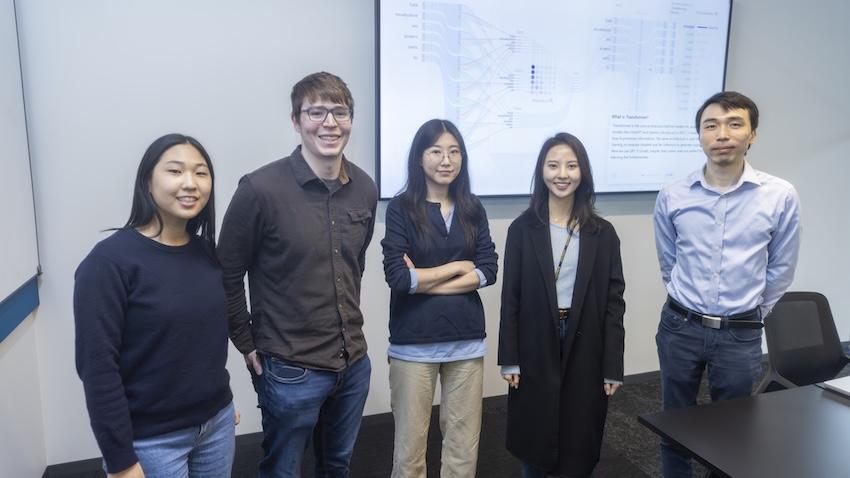
While people use search engines, chatbots, and generative artificial intelligence tools every day, most don’t know how they work. This sets unrealistic expectations for AI and leads to misuse. It also slows progress toward building new AI applications.
Georgia Tech researchers are making AI easier to understand through their work on Transformer Explainer. The free, online tool shows non-experts how ChatGPT, Claude, and other large language models (LLMs) process language.
Transformer Explainer is easy to use and runs on any web browser. It quickly went viral after its debut, reaching 150,000 users in its first three months. More than 563,000 people worldwide have used the tool so far.
Global interest in Transformer Explainer continues when the team presents the tool at the 2026 Conference on Human Factors in Computing Systems (CHI 2026). CHI, the world’s most prestigious conference on human-computer interaction, will take place in Barcelona, April 13-17.
“There are moments when LLMs can seem almost like a person with their own will and personality, and that misperception has real consequences. For example, there have been cases where teenagers have made poor decisions based on conversations with LLMs,” said Ph.D. student Aeree Cho.
“Understanding that an LLM is fundamentally a model that predicts the probability distribution of the next token helps users avoid taking its outputs as absolute. What you put in shapes what comes out, and that understanding helps people engage with AI more carefully and critically.”
A transformer is a neural network architecture that changes data input sequence into an output. Text, audio, and images are forms of processed data, which is why transformers are common in generative AI models. They do this by learning context and tracking mathematical relationships between sequence components.
Transformer Explainer demystifies how transformers work. The platform uses visualization and interaction to show, step by step, how text flows through a model and produces predictions.
Using this approach, Transformer Explainer impacts the AI landscape in four main ways:
- It counters hype and misconceptions surrounding AI by showing how transformers work.
- It improves AI literacy among users by removing technical barriers and lowering the entry for learning about AI.
- It expands AI education by helping instructors teach AI mechanisms without extensive setup or computing resources.
- It influences future development of AI tools and educational techniques by providing a blueprint for interpretable AI systems.
“When I first learned about transformers, I felt overwhelmed. A transformer model has many parts, each with its own complex math. Existing resources typically present all this information at once, making it difficult to see how everything fits together,” said Grace Kim, a dual B.S./M.S. computer science student.
“By leveraging interactive visualization, we use levels of abstraction to first show the big picture of the entire model. Then users click into individual parts to reveal the underlying details and math. This way, Transformer Explainer makes learning far less intimidating.”
Many users don’t know what transformers are or how they work. The Georgia Tech team found that people often misunderstand AI. Some label AI with human-like characteristics, such as creativity. Others even describe it as working like magic.
Furthermore, barriers make it hard for students interested in transformers to start learning. Tutorials tend to be too technical and overwhelm beginners with math and code. While visualization tools exist, these often target more advanced AI experts.
Transformer Explainer overcomes these obstacles through its interactive, user-focused platform. It runs a familiar GPT model directly in any web browser, requiring no installation or special hardware.
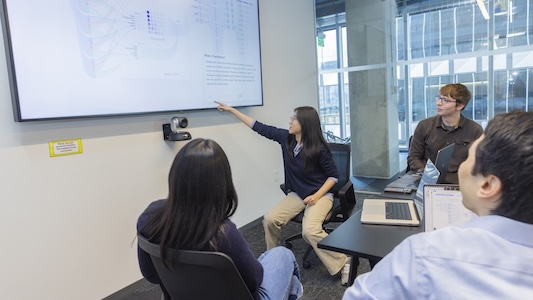
Users can enter their own text and watch the model predict the next word in real time. Sankey-style diagrams show how information moves through embeddings, attention heads, and transformer blocks.
The platform also lets users switch between high-level concepts and detailed math. By adjusting temperature settings, users can see how randomness affects predictions. This reveals how probabilities drive AI outputs, rather than creativity.
“Millions of people around the world interact with transformer-driven AI. We believe that it is crucial to bridge the gap between day-to-day user experience and the models' technical reality, ensuring these tools are not misinterpreted as human-like or seen as sentient,” said Ph.D. student Alex Karpekov.
“Explaining the architecture helps users recognize that language generated by models is a product of computation, leading to a more grounded engagement with the technology.”
Cho, Karpekov, and Kim led the development of Transformer Explainer. Ph.D. students Alex Helbling, Seongmin Lee, Ben Hoover, and alumnus Zijie (Jay) Wang assisted on the project.
Professor Polo Chau supervised the group and their work. His lab focuses on data science, human-centered AI, and visualization for social good.
Acceptance at CHI 2026 stems from the team winning the best poster award at the 2024 IEEE Visualization Conference. This recognition from one of the top venues in visualization research highlights Transformer Explainer’s effectiveness in teaching how transformers work.
“Transformer Explainer has reached over half a million learners worldwide,” said Chau, a faculty member in the School of Computational Science and Engineering.
“I'm thrilled to see it extend Georgia Tech's mission of expanding access to higher education, now to anyone with a web browser.”
Bryant Wine, Communications Officer
bryant.wine@cc.gatech.edu
AI for Reskilling, Upskilling, and Workforce Development
SPEAKER: Ashok Goel, Professor of Computer Science and Human-Centered Computing in the School of Interactive Computing at Georgia Tech
Archaeology and Technology: Where We're Headed and Why We Need You
SPEAKER: Allison Mickel, H. Bruce McEver Chair in Archaeological Science and Technologies, School of History and Sociology, Ivan Allen College of Liberal Arts
New Study Shows Explainability is a Must for Older Adults to Trust AI
Mar 31, 2026 —
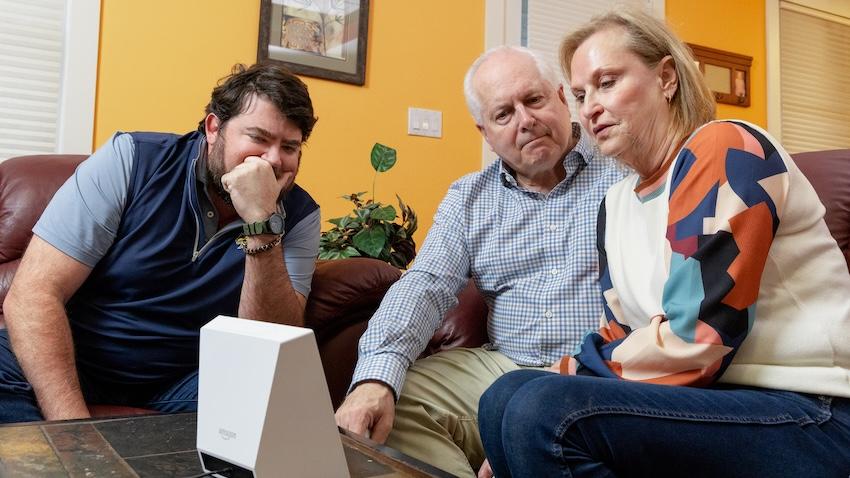
Voice-activated, conversational artificial intelligence (AI) agents must provide clear explanations for their suggestions, or older adults aren’t likely to trust them.
That’s one of the main findings from a study by AI Caring on what older adults expect from explainable AI (XAI).
AI Caring is one of three AI Institutions led by Georgia Tech and funded by the National Science Foundation (NSF). The institution supports AI research that benefits older adults and their caregivers.
Niharika Mathur, a Ph.D. candidate in the School of Interactive Computing, was the lead author of a paper based on the study. The paper will be presented in April at the 2026 ACM Conference on Human Factors in Computing Systems (CHI) in Barcelona.
Mathur worked with the Cognitive Empowerment Program at Emory University to interview 23 older adults who live alone and use voice-activated AI assistants like Amazon’s Alexa and Google Home.
Many of them told her they feel excluded from the design of these products.
“The assumption is that all people want interactions the same way and across all kinds of situations, but that isn’t true,” Mathur said. “How older people use AI and what they want from it are different from what younger people prefer.”
One example she gave is that young people tend to be informal when talking with AI. Older people, on the other hand, talk to the agent like they would a person.
“If Older adults are talking to their family members about Alexa, they usually refer to Alexa as ‘she’ instead of ‘it,’” Mathur said. “They tend to humanize these systems a lot more than young people.”
Good Explanations
The study evaluated AI explanations that drew information from four sources of data:
- User history (past conversations with the agent)
- Environmental data (indoor temperature or the weather forecast)
- Activity data (how much time a user spends in different areas of the home)
- Internal reasoning (mathematical probabilities and likely outcomes)
Mathur said older users trust the agent more when it bases its explanations on data from the first three sources. However, internal reasoning creates skepticism.
Internal reasoning means the AI doesn’t have enough data from the other sources to give an explanation. It provides a percentage to reflect its confidence based on what it knows.
“The overwhelming response was negative toward confidence scores,” Mathur said. “If the AI says it’s 92% confident, older adults want to know what that’s based on.”
This is another example that Mathur said points to generational preferences.
“There’s a lot of explainable AI research that shows younger people like to see numbers in explanations, and they also tend to rely too much on explanations that contain numerical confidence. Older adults are the opposite. It makes them trust it less.”
Knowing the Context
Mathur said that AI agents interacting with older adults should serve a dual purpose. They should provide users with companionship and support independence while reducing the caretaking burden often placed on family members.
Some studies have shown that engineers have tended to favor caretakers in the design of these tools. They prioritize daily tasks and routines, leaving some older adults to feel like they are merely a box to be checked.
She discovered that in urgent situations, older users prefer the AI to be straightforward, while in casual settings, they desire more conversation.
“How people interact with technological systems is grounded in what the stakes of the situation are,” she said. “If it had anything to do with their immediate sense of safety, they did not want conversational elaboration. They want the AI to be very direct and factual.”
Not Just Checking Boxes
Mathur said AI agents that interact with older adults are ideally constructed with a dual purpose. They should provide companionship and autonomy for the users while alleviating the burden of caretaking that is often placed on their family members.
Some studies have shown that engineers have strayed toward favoring caretakers in the design of these tools. They prioritize daily tasks and routines, leaving some older adults to feel like they are a box to be checked.
“They’re not being thought of as consumers,” Mathur said. “A lot of products are being made for them but not with them.”
She also said psychological well-being is one of the most important outcomes these tools should produce.
Showing older adults that they are listened to can significantly help in gaining their trust. Some interviewees told Mathur they want agents who are deliberate about understanding their preferences and don’t dismiss their questions.
Meeting these needs reduces the likelihood of protesting and creating conflict with family members.
“It highlights just how important well-designed explanations are,” she said. “We must go beyond a transparency checklist.”
Researchers Look to Bolster Technology Support for Menopause
Mar 30, 2026 —
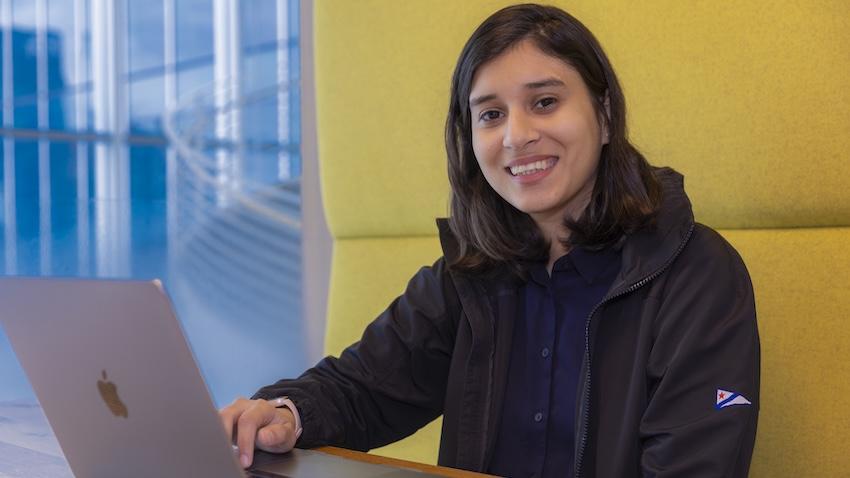
Women in need of supportive maternal and menstrual healthcare in patriarchal societies have increasingly found outlets for disclosure in online communities.
That support, however, begins to disappear in these restrictive cultures once women reach menopause, according to new research from Georgia Tech
Naveena Karusala, an assistant professor in Georgia Tech’s School of Interactive Computing, and master’s student Umme Ammara are working toward improving existing technologies and designing new ones for a demographic they believe has been neglected.
Karusala and Ammara co-authored a paper based on a study they conducted with women in urban Pakistan experiencing menopause.
“Women’s health is understudied in general, but menopause is more neglected than other women’s health issues,” Karusala said. “Our choice to focus on menopause is motivated by expanding how we holistically think about women’s well-being across their lifespan.”
Karusala and Ammara will present their paper in April at the 2026 ACM Conference on Human Factors in Computing Systems (CHI) in Barcelona.
Masking Symptoms
Menopause is diagnosed after 12 consecutive months without a period, vaginal bleeding, or spotting. The transition to menopause, called perimenopause, usually happens over two to eight years.
Hormone changes may cause symptoms such as irregular periods, vaginal dryness, hot flashes, night sweats, trouble sleeping, mood swings, and brain fog.
These symptoms can be debilitating in some cases and affect daily life. However, Ammara said women are pressured to remain silent, maintain appearances, and regulate their emotions to meet social expectations.
“Understanding menopause is important because a woman would be experiencing all these symptoms, and people will not understand those as actual symptoms,” Ammara said. “There’s been resistance to the idea of the medicalization of menopause. People don’t view it as an illness, but as a life transition and something that happens naturally.”
Feeling Isolated
The women interviewed by Karusala and Ammara either stayed at home full-time or were part of the workforce.
The researchers discovered that trusted family members might be the only sources women who stay at home and do not work turn to for disclosure.
“Women at home have the flexibility to take breaks or work at their own pace, so a lot of their experience is shaped by the emotional barriers they face,” Ammara said.
“That could come from their husbands and family members. Some are supportive and some are not. They might weaponize it and use that term against them, or they might dismiss what they’re going through.”
Ammara said it might be easier for women in the workforce to confide in their coworkers, but explaining to an employer that they need sick leave for menopause symptoms can be intimidating.
Even in online communities that have enabled women to anonymously share their health experiences, menopause is seldom discussed.
Raising Awareness
Karusala and Ammara argue in their paper that a public health approach could be the most effective way to spark conversation about menopause in a patriarchal culture in which technology use varies.
They said the challenge in implementing technologies geared toward menopause support is that the condition isn’t well understood in public. Improving maternal health, for example, is easier to promote within these societies because of the general understanding that motherhood is important.
“There must be an existing infrastructure to build on,” Karusala said. “For example, menstrual and maternal health are taught in schools and regularly discussed in primary care. Cultural and social meaning and importance are placed on motherhood.
“A lot of that doesn’t exist for menopause. Primary care doctors are unprepared to talk about menopause compared to other health issues.”
Design Solutions
Ammara said that the most effective way for technologies to make an impact on women going through menopause is to directly address systemic power structures around women’s health within Pakistani culture.
It can start with the husbands.
“Framing the issue for husbands to understand menopause should be at the forefront of designing technology solutions,” she said.
“In Islamic contexts, we suggest using faith-based framings. This has been proposed for maternal health in prior works that draw on Islamic principles to engage expectant fathers in providing care and support. Framing it around religious responsibility to involve men in the journey can also be done for menopause.”
Nathan Deen
College of Computing
Georgia Tech
The New Hybrid: From AI Tools to Pedagogical Systems
Title: The New Hybrid: From AI Tools to Pedagogical Systems
Speaker: Mairéad Pratschke